KDLL - Kenai

KDLL is our partner station in Kenai. KTOO collaborates with partners across the state to cover important news and to share stories with our audiences.

At a Soldotna gun shop, national news drives local sales

Two men on either side of a glass display case that has several pistols laid out on top of it
Shoppers like Steve Milliron (right), say they want to keep their ammo supplies up in case of shortages. (Photo by Sabine Poux/KDLL)

When there’s a big national news cycle, Michael Modrell knows.

Not just from the Google Alerts he gets in his email or the news he sees on his phone, but also from the business in his store.

“Any time anything happens with Congress or the Supreme Court or gun control is brought up, people always come in and talk about it,” he said.

Modrell manages Soldotna Ammunition on Kalifornsky Beach Road.

He said whenever there’s unrest or something big in the news in the Lower 48 — even if it has little or no connection to Alaska — people come in and start stockpiling.
That’s especially true when there’s any news related to gun control. Last week, Congress passed a gun law, the Bipartisan Safer Communities Act, which enhances background checks for young people and funds risk prevention programs, among some other measures.

“The gun control one always makes people feel like now is the time to hurry up and buy these things that they worry they won’t be able to get later in the year,” Modrell said.

But he said spikes in business are not exclusive to gun control conversations.

When the Supreme Court overturned Roe v. Wade last week, customers from all sides of the political spectrum came in to buy supplies and talk politics. That was also true in 2020 and 2021, during the election and Black Lives Matter protests.

“It doesn’t matter if it’s even happening in our community,” Modrell said. “It’s just, people fear that it’s happening at all, in our nation. They feel this is the time to get stocked up on whatever.”

Modrell said some customers are concerned about personal safety when riots are happening in the Lower 48. But he said in large part, buyers stock up because they’re worried about the ongoing ammunition shortage that has hit gun supply stores around the country. They think that any sort of unrest or chaos in the Lower 48 could make that shortage worse.

Shelves in a gun shop, with many empty spaces
Industry watchers say the ammunition is still impacting supply, though less so than in 2020. (Photo by Sabine Poux/KDLL)

That shortage started in 2020 came from a combination of national turmoil and production setbacks.

Modrell said the shortage has improved, as vendors and buyers have caught up with the pent up demand. Still, it isn’t entirely resolved. At his store Wednesday, there were rows of empty shelves where there would normally be stacks and stacks of boxes.

And, not unlike the toilet paper crisis early in the pandemic, panic buying has just been making the problem worse.

“It always causes that little bit of panic,” Modrell said. “And we financially benefit from it. But we try not to encourage it, because a panicked customer base doesn’t really help anything.”

Customer Steve Milliron comes into the store two or three times a week to check out new inventory. It’s not far from his house, and he knows the guys in the store.

He’s noticed the ammunition shortage. He said he was shooting less to spare his ammo when it was at its peak.

“What I think it’s causing me to do is just try to probably keep more of a supply of ammo than I did before,” Milliron said. “And I always try to replace what I shoot.”

When something does pop up, he said, he might be more likely to come in, since things aren’t always available. And he thinks his friends are doing much of the same.

“Not so much hoarding, but just because you don’t know when you can find it,” he said. “And sometimes a couple boxes of things will show up, just randomly, and you go, ‘Oh, I could use that.’ and you get it and you don’t see it again for months. So it was a good thing that you did.”

It’s not just recreational gun owners like Milliron that are driving sales.

Soldotna Ammo sells supply to subsistence hunters in rural Alaska. And Modrell said those hunters, too, are stocking up — buying more supply at one time in case ammo hits another supply chain hitch.

“I’ve been planning to try to go to Bethel and Mountain Village and a few of those ones around there to see what it’s been like there,” Modrell said. “I know the prices they’re charging for now are much higher because a lot of them, just like a lot of businesses, do a percentage over what they pay. And the cost for the ammo costs more now, the shipping it out there cost more now. There are hazmat fees that we didn’t use to have.”

But not everyone’s buying. Some people just want to see what other gun owners are thinking.

Modrell pointed to one customer on the security camera, who was browsing at a glass case. He said he comes in almost everyday, though he rarely buys anything.

“People spend more time in the shop, even if they’re shopping less,” Modrell said. “Because they want to talk about whatever big thing happened.”

As long as people feel like there are big things happening nationally, he’s not sure that traffic will let up any time soon.

New federal proposal for offshore drilling includes possible Cook Inlet oil and gas sale

Previous Cook Inlet lease sales have been canceled due to lack of industry interest. (Photo by Sabine Poux/KDLL)

There won’t be an oil and gas lease sale in Cook Inlet this year, or the year after that. An Obama-era proposal to hold a sale in the inlet was canceled this May due to a cited lack of industry interest.

But the Biden Administration may offer another sale down the line. In a new proposed five-year plan for offshore drilling, released Friday, the Department of the Interior floated the idea of auctioning off leases to oil and gas companies in the inlet in 2026. That’s in addition to 10 lease sales proposed for the Gulf of Mexico.

“It’s frustrating sometimes to weigh in again and again and feel like you’re not being heard,” said Liz Mering, advocacy director with Cook Inletkeeper, which helped get thousands of comments submitted in opposition to the sale last time. “But I think the administration did hear people last time and do want to hear people again,” she added.

The Department of the Interior issues a new oil and gas leasing plan every five years for federal waters. That includes anything more than three nautical miles off the U.S. coast.

The current plan from the Obama administration expires this summer. And while it also called for a lease sale in Cook Inlet, that sale never happened. Federal regulators said they didn’t hear enough interest from the oil and gas industry to go forward with that plan.

In the new, 500-page draft plan, the department said holding no more than one lease sale in Cook Inlet would allow for activity from the oil and gas industry and other industries, including fishing and tourism, as well as protections for marine mammal habitats.

The plan is just a proposal. And even with a lease sale on the books, the federal government could still change their minds.

Kara Moriarty is president of the Alaska Oil and Gas Association. She said it’s hard to tell whether a lease sale will actually pan out this time.

She said it will depend, in part, on what the market conditions are several years down the line. The Bureau of Ocean Energy Management, which oversees the offshore leasing program, canceled sales in 2006, 2008 and 2010 in Cook Inlet. Again, the agency sited a lack of industry interest in those cancellations.

“There are a lot of factors that go into whether companies bid and when they bid and how much they bid,” Moriarty said. “And that’s just something they keep pretty close to the chest because they don’t want to tip off any competitors.”

Still, she said she’s glad the door is open for a sale, even if it’s all very hypothetical. The plan does not include any potential lease sales in the Arctic — something that did make it into a proposed plan from the Trump Administration but was later shot down in court.

“I guess one is better than none,” Moriarty said. “And if there’s no interest, there’s no interest. I mean, there’s no harm, no foul if the federal or state government offers a lease sale and if nobody shows.”

The Department of the Interior will open up comments on the plan Friday,, which will be the start of a 90-day comment period.

The department is also holding virtual meetings to get input on the proposed plan next month.

Mering said that will be a chance to stop a lease sale from going through before it even starts.

“Certainly, Cook Inletkeeper will be asking people to again weigh in and making sure the Biden Administration is very clear on what the people in Cook Inlet want and protecting sustainable local economies, like fishing and tourism and a way of life here,” Mering said.

She noted it won’t be the last time for public comment on a sale.

If the federal government does ultimately decide to hold a Cook Inlet lease sale in the next few years, there will be additional chances for comment. That likely wouldn’t be until 2025 or later.

Abortion remains legal in Alaska, but some lawmakers hope a constitutional convention could change that

Demonstrators hold a large sign that reads "keep abortion safe and legal"
Roughly 200 people gathered at rush hour in Midtown Anchorage in May to rally for the protection of reproductive rights. (Photo by Jeff Chen/Alaska Public Media)

The U.S. Supreme Court voted to overturn the landmark case Roe v. Wade on Friday, ending federal protections for abortion rights and leaving decisions about the legality of abortion up to states.

For some states, that means an immediate reversal of the right to abortion. But in Alaska, the right is protected for now.

“Abortion is still safe and legal in Alaska,” said Rose O’Hara-Jolley, the Alaska director for the regional branch of Planned Parenthood. “The federal ruling has changed nothing as far as our state constitutional protection to the right to privacy. And so all of the rights that you had in place yesterday in Alaska for abortion access are still in place today.”

That right to privacy was written into the state’s constitution through an amendment in 1972.

“That covers privacy in all aspects of our lives, and one of those is our medical decisions,” O’Hara-Jolley said.

The Alaska Supreme Court has ruled repeatedly that abortion rights are guaranteed under that right to privacy.

Opponents of abortion would like to see the state’s constitution amended. And this year, they might have a once-in-a-decade chance to do that through a constitutional convention — where elected delegates could propose changes to the state’s constitution.

Alaskans vote every 10 years on whether they want to hold a convention. They’ve said no almost every time.

Conservative and libertarian lawmakers have said they see this year’s vote as a chance to address matters like abortion and the Permanent Fund Dividend.

The PFD question is what most interests Nikiski Republican Rep. Ben Carpenter. He said he has mixed feelings about holding a convention, but it could be a good way to address the state’s long-held fiscal woes.

“So I’m kind of leaning toward supporting a constitutional convention at this point,” he said.

Carpenter said he would like to see abortion outlawed, too.

Even if Alaskans do vote in November to hold a constitutional convention, that vote would be the first step in a years-long process. The Legislature would have to decide on a process for electing delegates. Alaskans would then vote a second time on delegates to the convention. Then, after a convention, voters would still have to approve any changes made by those delegates through another election.

And those changes may or may not include abortion rights.

“There are two ways to modify the constitution — to either explicitly say there is a right to abortion in the state of Alaska, or to do the opposite and prohibit abortion within Alaska law,” Carpenter said.

The Alaska Legislature could also pass a constitutional amendment without a convention, but that requires approval by two-thirds of both bodies as well as a general vote.

Conservative lawmakers did make attempts to move legislation through last spring, including SJR4, which would amend the constitution, and HB206, which would address the issue in statute. Alaska Gov. Mike Dunleavy, who’s running for reelection, said Friday that he’ll propose a resolution next session to address the abortion question in an amendment.

O’Hara-Jolley said they’re watching those efforts. And they note access to abortion was never equitable in Alaska — especially in the state’s more rural communities.

“We have the legal right, but it never was enough,” they said. “And so we need to not only be protecting that right here in Alaska, but working together to expand it.”

Several states have already made abortion illegal through so-called “trigger laws” that activated upon the Roe reversal.

The regional Planned Parenthood has been reorganizing to anticipate those changes, which resulted in the closure last month of the clinic in Soldotna.

The Soldotna clinic didn’t provide medical abortions, though one in Anchorage does.

In victory for commercial fishermen, court orders Cook Inlet fishery to reopen

""
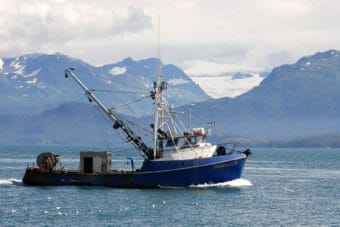
The area in question starts three miles offshore and extends south from Kalgin Island. (Redoubt Reporter photo)

Cook Inlet drift fishermen can fish the federal waters of the inlet this summer after all.

That’s after a district court judge shot down a federal rule that would have closed a large part of the inlet to commercial salmon fishing. Fishermen said it would have been a death knell for the fishery, which has 500 drift permit-holders.

One of those permit-holders is Erik Huebsch, of Kasilof. He’s vice president of the United Cook Inlet Drift Association, which filed the suit. And he said he’s pleased.

“Opening the EEZ is vital to the fleet,” Huebsch said. “Without opening the EEZ, the drift fishery is really not viable. That’s where we go to catch fish.”

The EEZ is the inlet’s exclusive economic zone. And it’s the federal waters that start three nautical miles offshore, south of Kalgin Island.

For years, management of that EEZ fell to the state. But in 2013, UCIDA filed a lawsuit in an effort to have more oversight from the federal government.

The courts sided with UCIDA, and the council that manages fishing in federal waters was tasked with drafting a new salmon management plan. When the state told the council it wasn’t interested in co-managing the fishery with the feds, the council decided to close that part of the inlet to commercial salmon fishing entirely.

That sparked another lawsuit. Cook Inlet drift fishermen argued that a closure does not count as a management plan.

In Tuesday’s decision, Judge Joshua Kindred largely agreed with the fishermen.

He said the federal closure was arbitrary and capricious and that the closure did not comply with national standards — including that it was based on political compromise and not on science. He added the urgency of the impending season meant it was necessary to vacate the rule immediately.

On Wednesday evening, Fish and Game said it would reopen the fishery Thursday.

“Any vessel fishing for salmon in Cook Inlet will be regulated by the State of Alaska under the laws of the State of Alaska,” said Brian Marston, Fish and Game’s area manager for Upper Cook Inlet commercial fisheries, in a Wednesday recording.

Huebsch said the decision verifies that UCIDA’s position on salmon management is the right one.

“This is the second court ruling we’ve had in our favor,” he said.

The state of Alaska was an intervening defendant in the case. Representatives from the Alaska Department of Law and NOAA Fisheries declined to comment.

The cities of Kenai, Homer and Soldotna all filed amicus briefs supporting the fishermen in the suit last year, arguing that the economic impact to their cities if there was a closure would be severe.

Ken Castner, the mayor of Homer, said this week would normally be the opener for this part of the inlet.

And he said those early salmon deliveries are really important.

“We need those deliveries down here, not only for the canneries that operate out of Homer, but also for all the restaurants that kind of stock their refrigerators and freezers with these early Cook Inlet fish,” he said.

An impact statement from the North Pacific Fishery Management Council said the federal area made up just under half of the revenue that comes from Upper Cook Inlet commercial salmon fishing, around $10 million. Homer has the highest average ex-vessel value from that part of the inlet, at about $2,647,402.

“And we really bore the brunt of the economic loss in that displacement of the fishing fleets that are down here,” Castner said. “And it’s a very large fleet that fishes out of Homer.

He’s pleased with the court’s decision.

But the judge didn’t side with the plaintiffs on all counts.

Another case, filed by three Cook Inlet drift fishermen by the Sacramento-based Pacific Legal Foundation, was consolidated with the UCIDA case. Those fishermen argued members of the council overstepped their authority and that the composition of the council was formed illegally.

The judge dismissed their argument, saying they could not find enough standing to back up those claims.

The judge also rejected one of UCIDA’s arguments — that the rule violated the National Environmental Policy Act. He said the fishermen did not flesh out that argument enough to make a convincing NEPA claim.

Beyond this season, the feds will have to work on a new management plan for the fishery. In his decision, the judge sent the matter back the matter to NOAA Fisheries for next steps.

Even with $5 gas, people are still driving RVs to Alaska

A man sitting on a camp chair beside an RV
Randy Ferguson of California said he wasn’t going to let high gas prices get in the way of his Alaskan vacation. (Photo by Sabine Poux/KDLL)

One gallon of unleaded gas costs, on average, about $5 in the U.S. today.

Those prices could be enough to give even the most zealous road-trippers pause. But vacationers hellbent on getting their dream Alaskan vacations say they aren’t going to let anything stop them — not this time.

“It’s been on my bucket list for 40 years,” said Randy Ferguson of Anaheim, Calif. from his camp chair in Soldotna.

Ferguson drove up from Anaheim in his RV for his first ever Alaska trip. And he said it’s living up to his expectations.

“It is. And I said, I don’t care how much the price of fuel is,” he said. “I’m going.”

Ferguson’s already hit Seward and Homer, and he plans to go up to Denali and Fairbanks, too.

That’s even though it costs as much as $500 to fill up his tank every week or so. He’s spent more on gas in this last month than he did on a 23-state road trip last year.

But it’s a price he’s willing to pay.

“Here’s the credit card, fill it up — bingo, bango, boingo, I’m as happy as can be,” he said.

John Saranzak is in a similar boat.

Saranzak is newly retried from Dayton, Ohio. And he has the same logic for making the trek now.

“I’m getting older, and I thought, better do it while I can,” he said. “That’s why we’re spending a lot of time here, too, to get to know the area, not just do the tour stuff.”

Still, he’s paying twice as much for gas as he had planned to when he was first budgeting three years ago. That includes the higher-than-normal gas prices in Canada, where he said he paid close to $8 a gallon on the way up.

“For the month of April, just driving was $2,300,” he said. “And for the month of May was $2,200 so far.”

Gas prices are up — and hitting records — across the U.S. It’s a spike that experts in large part attribute to Russia’s invasion of Ukraine, and one that does not seem to be letting up any time soon.

That’s something all drivers are noticing at the pump. But for vacationers driving RVs, which require a lot of fuel, those costs are particularly notable.

Klondike RV Park Owner Al Belknap said he’s seen a mixed bag of reactions from would-be campers.

“We had a lot of reservations already set up,” he said. “We take reservations real early, in January and February. And now we’re starting to see some cancellations. But I think a lot of people are trying to stick to their plan, no matter the cost.”

His campground was still packed in mid-June, with RVs sporting a wide array of license plates.

It’s a shift from the last two years, when COVID-19 restrictions made it hard for out-of-staters to get through Canada. Instead, Alaskans were driving RVs around their own state.

“That was pretty different for a couple years,” he said. “But now it’s back to normal, now we’re kind of battling the gas prices and getting knocked backwards a little from that. But I think a lot of people are trying to come. The last couple years have been rough. A lot of them have canceled a couple years in a row. And they want to come, bad.”

He said he hopes the bulk of the cancellations have already happened.

John Anderson with Heritage RV Park in Homer is seeing much of the same. He said most of his 100-plus RV sites on the Homer Spit are full of out-of-staters every night this summer, and he doesn’t anticipate a lot of guests will change course.

His and Belknap’s clients are mostly from the Lower 48. Alaskans coming down for the weekend might have different considerations to weigh.

Soldotna Parks and Recreation Director Andrew Carmichael said it’s too early to tell what will happen at Soldotna campgrounds, where the vast majority of visitors are coming from around Alaska.

He said last year was the biggest revenue year the city campsites had seen in many years.

“Last summer, we were up 22% from the prior year, but the fuel prices weren’t through the roof, either,” he said.

But that was mostly based on other factors. Carmichael said the state of the salmon runs in the Kenai River often play a big role in determining who comes and when.

“I mean, if people are going to come down, they’re going to come down for that purpose, to a large degree,” he said. “But then again, if you could say there was a silver lining to the COVID pandemic stuff is that it got people out and starting to recreate outdoors. So they are recreating outdoors more than they used to. So it’s just hard to say.”

There’s no sure way to tell if campers will cancel their plans for the city-owned sites yet. Sites are first-come, first-serve and the city doesn’t take reservations.

Over at the Klondike, Frances Williams, of Gooding, Idaho, is on the tail end of her trip. She planned the vacation last year, when gas prices weren’t as high.

She and her son flew to Alaska and drove a camper down. Still — it was expensive.

“I mean, it stressed our budget,” she said. “But we were already committed, so it was something — you just gotta do it.”

And they say the RV might be worth the splurge.

“It’s been fun. We’re outdoorsy people anyway,” Williams said. “So seeing Alaska that way, not being stuck to a hotel or anything, it’s been cool, just being flexible and being like, ‘Oh, let’s stop here.’”

When it comes to the prices, she said, it kind of is what it is.

Ferguson, of California, agreed. He didn’t mince words.

“Hell no. No. I am not changing my trip,” he said. “I’m going.”

In his eyes, the trip of a lifetime is worth every expense.

Major upgrade to Railbelt transmission lines could pave the way for more renewable energy

""
Some transmission lines on the Railbelt haven’t been upgraded in decades. (Photo by Sabine Poux/KDLL)

A plan to upgrade electrical transmission lines from Fairbanks to Homer could pave the way for more renewable energy transmission on the Railbelt.

That’s according to Curtis Thayer. He’s executive director of the Alaska Energy Authority, a public corporation of the state.

AEA and five Railbelt utilities announced yesterday at the Alaska Sustainable Energy Conference that they’re embarking on $200 million worth of upgrades to existing transmission lines.

“This is probably the largest infrastructure upgrade in 30 years on the Railbelt,” Thayer said. “And for all the utilities to be united and it not costing ratepayers additional money and not costing the state treasury — that’s a win-win.

Transmission lines carry electricity from one point to another on an electrical grid.

Thayer said most lines on the Railbelt are owned by AEA. Others are owned by the utilities themselves. And they’re all getting old — many have not been updated in decades.

That’s a problem, in part, because aging transmission lines can lead to blackouts. Chugach Electric Association has already been working to reconstruct transmission lines in Cooper Landing, for example, which it said will help with frequent outages there.

Thayer said it’s also important that transmission lines are in good shape as momentum for renewable energy projects in Southcentral grows — like the plan to build a 60,000-panel solar farm in Sterling.

“Today, we cannot transport that power to Anchorage or Mat-Su or Fairbanks because the transmission capacity isn’t there,” Thayer said. “So we have to update our transmission lines, and this is the first step to doing it.”

The project will be funded by the utilities’ excess bond payments for the Bradley Lake Project. That’s the 120-megawatt hydropower project on the other side of Kachemak Bay from Fritz Creek. The utilities finished paying off the bonds for that project last year.

That project supplies power to all the Railbelt’s utilities. And it’s poised now to expand as the Dixon Glacier nearby recedes and releases more water to be harnessed. Thayer said it’s another project that stands to benefit from better transmission infrastructure.

Site notifications
Update notification options
Subscribe to notifications