KDLL - Kenai

KDLL is our partner station in Kenai. KTOO collaborates with partners across the state to cover important news and to share stories with our audiences.
Safety board makes recommendations to curb mid-air plane crashes in Alaska

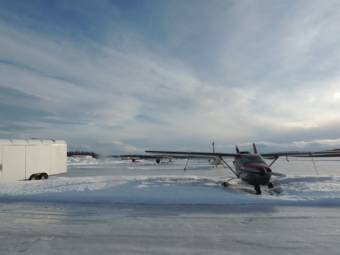
There are several common traffic advisory frequencies above Soldotna. The National Transportation Safety Board said there need to be requirements about tuning into and reporting on those frequencies. (Photo by Sabine Poux/KDLL)

The investigation into the mid-air plane crash that killed Rep. Gary Knopp and six others in Soldotna is ongoing. But the federal board that investigates airplane safety released a set of recommendations based on that incident last month.

In particular, the National Transportation Safety Board is asking the Federal Aviation Administration to require pilots to report where they are in the airspace when they’re flying within certain radio frequency zones called CTAFs.

CTAF stands for “common traffic advisory frequencies.” They’re radio frequencies that pilots can use to communicate with each other while they’re in the air.

“It’s a guide to say, ‘OK, if you live in the boundaries of this particular area, you should be on this frequency if you have a radio to be listening for other aircraft so you can help avoid a mid-air collision,'” said Paul Minelga, a Sterling-based pilot who worked for years with the FAA.

He said in most places in Alaska, reporting on CTAFs is highly recommended, but it’s not a requirement. The NTSB wants to change that.
The safety board said in its February report that requiring reporting could be a way to prevent mid-air collisions — of which there were 14 in Alaska between 2005 and 2020, including the accident in Soldotna.

The NTSB said it was not clear what radio frequencies each plane was using at the time of that incident.

Knopp’s plane, a Piper Aztec, departed from the Soldotna airport, which uses one CTAF — 122.5.

The other plane, a de Havilland Beaver belonging to High Adventure Air Charters, took off from Longmere Lake. There’s technically no CTAF associated with the lake but the report says pilots who fly around Longmere typically monitor the same channel as the Soldotna airport.

That gray area is an example of how the boundaries between CTAF zones can be blurred. In the airspace above Soldotna, for example, there are five different and overlapping CTAFs. So it’s not necessarily a given that pilots flying near each other will be communicating on the same frequency — if they are at all.

In its report, the NTSB said that could have played a role in the Soldotna crash.

“The airplanes departed from different locations, about 4 nautical miles apart, about the same time. They flew on converging flight paths for about 2 minutes until the collision,” the report said. “If a CTAF area had been established for the Soldotna area and a requirement had been in place for pilots to communicate their positions when entering the CTAF, the accident may have been avoided.”

Minelga said pilots in the Soldotna area are generally good about reporting on the CTAFs and letting other pilots know they’re in the area.

“But those are the local pilots,” he said. “If you have someone flying from a different area, you might not necessarily know.”

In addition to its suggestion about reporting, the safety board recommends the FAA designate single frequencies so pilots are on the same wavelength.

Minelga said that’s a conversation pilots have had locally before.

“There was a move by some of the people in the Experimental Aircraft Association chapter to actually designate an area around Soldotna bigger than the airport traffic area to have it on 122.5 and to kind of formalize the process where we are actually informally now,” he said, adding that the effort stalled out.

As for the reporting requirement, Minegla said he thinks it’s a good idea, from a pilot’s standpoint. He has multiple radios in his own plane and an Automatic Dependent Surveillance-Broadcast, or ADS-B — a technology that allows aircraft to send and receive three-dimensional data about where planes are in the airspace. It’s also not required by regulators.

But he said a mandate might be unenforceable. For example, not all pilots have radios. And it’s unclear how often pilots should have to announce themselves on the frequency.

“It’s not as easy as it sounds,” he said. “It never is.”

The FAA said it will review the NTSB’s recommendations.

Hilcorp fined for its response to Cook Inlet and North Slope leaks

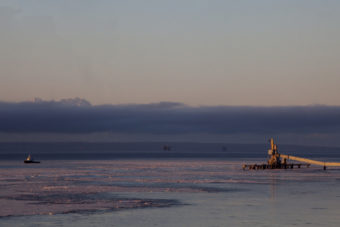
Cook Inlet oil platforms are visible from shore near Kenai, Alaska. (Photo by Rashah McChesney/Alaska’s Energy Desk)

Oil and gas company Hilcorp paid federal regulators $180,500 for taking too long to inspect and repair dozens of leaks in Cook Inlet and on the North Slope.

The Environmental Protection Agency said the oil and gas company took twice as long as it was allowed to monitor potential gas and chemical leaks from its Beaver Creek Unit facility near Nikiski. That’s among nearly 50 counts of violations outlined in a Feb. 7 docket from the EPA.

Bill Dunbar is a spokesperson for the EPA. He said the primary emission the agency is concerned about is methane, a potent greenhouse gas.

“Methane was really the predominant pollutant that we flagged,” Dunbar said.

He said the EPA requires timely reporting so that methane and other pollutants, known collectively as “fugitive emissions,” won’t escape into the atmosphere.

For example, Hilcorp is required to repair oilfield equipment within 30 days if it discovers that equipment is leaking fugitive emissions. But in 2019 and 2020, the EPA said Hilcorp was late making 18 different repairs or replacements in Prudhoe Bay — in some instances, more than 100 days after they were discovered.

“We believe, and the regulations were written to reflect this, that 30 days is plenty of time for a big outfit to be able to use much of their resources to fix the leak,” Dunbar said. “When the company takes longer than that, they’re going to get penalized. That’s what the law says.”

In addition, the EPA has requirements about how long a company can go before inspecting newly replaced or repaired machinery. The agency said Hilcorp failed to do many of those inspections on time, too.

The EPA also said in 2018, Hilcorp submitted reports that said an inspector was taking a look at two different sites at once — one unit on the North Slope and one near Kenai.

“It was noted by our experts that you can’t be in two places at the same time,” Dunbar said.

Liz Mering, advocacy director for Cook Inletkeeper, said she finds the flagged falsified reports troubling.

“Are there other inspection reports that are also falsified or wildly inaccurate? Are they being missed because it’s not as obvious as this issue? I think that’s a concern for everybody living in the area,” she said.

Hilcorp has a history of environmental violations in Cook Inlet, where it’s Southcentral’s primary natural gas producer.

The company was fined nearly $75,000 by a state of Alaska agency for violations late last year related to well testing in Cook Inlet. It was also ordered by a federal agency to replace a pipeline in Cook Inlet that leaked several times, most recently in 2021.

The Houston-based company was asked to pay $1.62 million in civil penalties by regulators in New Mexico for compliance failures there. Hilcorp later reached a settlement agreement with the state’s Oil Conservation Division and paid $932,000, according to the Santa Fe Reporter.

Mering said Inletkeeper is concerned about that history.

“And these small fines seem to have no impact on Hilcorp’s behaviors as far as fixing the circumstances that are causing these violations,” Mering said. “Which are set up for important environmental and human health safety standards.”

In a statement, Hilcorp spokesperson Luke Miller said the company has made efforts to improve its inspection reporting process and its air emissions monitoring.

This article was updated to reflect that Hilcorp reached a settlement with New Mexico’s Oil Conservation Division this winter.

Fisher Poets keeps up annual tradition from afar

Fisher Poets Clark Whitney, Meezie Hermansen and Steve Schoonmaker at Salmonfest 2021. (Photo by Sabine Poux/KDLL)

Commercial fishermen from Alaska to Maine have been gathering in Astoria, Oregon since the late 1990s to share spoken-word poems and shanties about life at sea.

Like many performances, the gathering has been on pause during the pandemic.

But this year and last, Fisher Poets has continued over Zoom. Two fishermen from the central Kenai Peninsula performed at this year’s gathering, held the last weekend in February.

They had some technical difficulties. But Steve Schoonmaker and Clark Whitney joined the virtual gathering just in the nick of time last Friday to deliver a poem and a song to a remote audience.

Schoonmaker, who lives in Kasilof, has been going to Fisher Poets in Astoria for over a decade.

He said he’s appreciative of the chance to meet up virtually, even if it’s not quite the same as being altogether. He says there’s a different kind of feedback when he’s in the same room as his audience.

“I can look at people, I can feel the energy in the room,” he said. “Then it becomes a performance.”

Here’s Schoonmaker reading his poem, “Reflecting the Sun.”

He’s kept up the in-person performances locally, including at open mics in Homer.

But he said he’s looking forward to getting back to the in-person Astoria gatherings next year.

“It becomes like a family down there, when you run into everybody,” he said “So that’s a huge part of it. We all get together again, we all bring back something and we do it again. Then the fans you meet, you get a relationship with them. So it’s a reunion. And 15 years go by just like that.”

Amanda Gladics agrees. She works with the Coastal Fisheries Extension at Oregon State University in Astoria and is on the Fisher Poets planning committee.

“You start to see people show up in town on Thursday night. And it starts with kind of a gathering of performers on Thursday night for a welcome gathering,” she said. “There’s just this real sense of community and camaraderie and respect, for both the work that those people do in their fishing seasons and the respect for the artistry and the writing.”

She’s been helping pull the gathering together since 2016. And she says year after year, it’s been an important time for the community that hosts.

“There’s a really strong support for fisher poetry and the Fisher Poets gathering here in Astoria, as well,” Gladics said. “So I love that there’s this really wide geographic connection and also this very local component to the gathering.

This year, she said the planning committee worked hard to maintain the sense of community at the gathering with rehearsals and virtual communal meeting spaces.

Clark Whitney, of Soldotna, said it’s amazing knowing how many fishermen are tuned in from around the country.

“I just want to stay a part of it,” he said. “So every chance I get I want to try to perform with them.”

Whitney has been writing poems since his early days on the water. And he said his poems would often turn into songs.

During the pandemic, he picked up the guitar. He incorporated the guitar into his performance at Fisher Poets this year, of a song he wrote called “I Wanna Be a Fisherman.” It’s from when he started fishing with his dad in Bristol Bay.

Charlie Pierce picks Edie Grunwald as running mate in Alaska governor’s race

A formal portrait of a woman wearing a red blazer
Pierce announced that Edie Grunwald was his pick for lieutenant governor in Kenai Saturday and in a video online. (Courtesy of Charlie Pierce)

Kenai Peninsula Borough Mayor Charlie Pierce has named Edie Grunwald as his running mate in his bid to unseat Republican Gov. Mike Dunleavy. Pierce, who’s running as a Republican, made the announcement in Kenai and via Facebook on Saturday in a prerecorded video.

Grunwald is a retired Air Force colonel who lives in the Matanuska-Susitna Borough. This will be her second gubernatorial race, having run as a Republican candidate for lieutenant governor in 2018.

Her most recent public service has been to chair the Alaska Parole Board after being tapped by Gov. Mike Dunleavy in 2019. She’s been a victims’ rights advocate since her 16-year-old son was kidnapped and killed in Palmer three years earlier.

She was also one of three Alaska National Guard leaders fired by former Gov. Sean Parnell during the 2014 National Guard scandal.

Parnell didn’t say outright at the time why he fired Grunwald and two others, according to contemporary reports by the Alaska Public Radio Network. But the firing came after a report from the National Guard that alleged leaders had failed to properly investigate allegations of sexual assault in the ranks.

Grunwald, for her part, said at the time it was a mistake and that she did thoroughly investigate complaints when they came up.

In her appearance alongside Pierce on Saturday, Grunwald said she wanted to purge ineligible voters from participating in elections.
“Alaskans deserve an accurate voter roll,” Grunwald said. “The Pierce administration will immediately begin to complete the updating of the voter rolls.”

The Division of Elections is headed by the lieutenant governor. It annually updates its voter rolls, a process called “list maintenance.” The division sends letters to registered voters who have not voted or contacted the division in four years. If, after repeated notifications, they still haven’t heard back, that voter becomes inactive in the state’s roll.

Grunwald also said in the video she would have more responsibility under Pierce than former lieutenant governors, although she didn’t elaborate.

“The lieutenant governor position will no longer be a hidden and silent office, but with the direction of Gov. Pierce, will take a robust and active role in the administration and direction of our state government,” she said.

Pierce said in the announcement that he plans to put together an administration that will be responsive to the needs of Alaskans.

“To quote John Donne, who wrote in 1642 ‘No man is an island,'” he said, “I will bring together a team of professionals in my administration that will foster and adhere to our promise of Alaskans first.”

Pierce will be one of two Republican challengers to Gov. Mike Dunleavy. The other is Rep. Christopher Kurka of Wasilla, who picked Homer’s Paul Hueper as his running mate. Democratic challenger Les Gara is also running. As is former Gov. Bill Walker, who was elected in 2014 as an independent.

What the ban on Russian oil could mean for Alaska

""
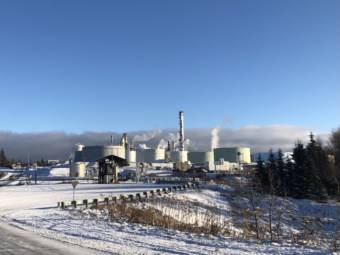
Marathon has historically imported crude from Russia and other countries to power its refinery in Kenai. (Photo by Sabine Poux/KDLL)

President Biden announced on Tuesday a ban on Russian oil and gas imports to the U.S.

Sens. Lisa Murkowski and Dan Sullivan are among a group of senators who had pushed for such a ban amid Russia’s ongoing attacks in Ukraine.

And in Juneau, the Alaska State Senate made a similar ask.

The goal is to cripple Russia’s economic power. Alaska, Hawaii and the West Coast of the U.S. together get between 300,000 and 7 million barrels of oil from Russia every month, according to data from the Energy Information Administration.

Not a lot of that supply heads to Alaska, although there is at least one facility in Alaska that has historically included Russian crude among its foreign imports — the Marathon Refinery in Kenai.

But Marathon isn’t currently importing Russian crude to power the refinery, said Kara Moriarty, head of the Alaska Oil and Gas Association. She said the facility stopped importing from the country around last year, though she isn’t exactly sure why.

“I just know at this time there are no Russian imports to Alaska I’m aware of,” she said.

Jamal Kheiry, a spokesperson from Marathon Petroleum, said the company doesn’t comment on its crude sourcing beyond the fact that it processes “mainly Alaska domestic crude along with limited international crude to manufacture gasoline, distillates, heavy fuel oil, asphalt and propane.”

Kara Moriarty, president and CEO of the Alaska Oil and Gas Association, at a House Resources Committee meeting Feb. 29, 2016. (Photo by Skip Gray/KTOO)

Moriarty said refineries like the Kenai facility will make decisions about where they source imports based on demand and the type of crude they need.

She guesses those factors — not the current crisis in Ukraine — were to blame for the change.

“Those circumstances change pretty fluidly,” she said. “And so I don’t know any rationale for recent, but I know that’s been some of the rationale in the past.”

Former Marathon plant manager Mark Necessary said he remembers importing some Russian crude during his time at the plant between the 1970s and 1990s. At that time, the refinery was under different ownership.

In a Senate speech last week, Sullivan quoted Ukraine’s Minister of Foreign Affairs, who had urged countries to implement full embargoes on Russian oil and gas

“‘Buying Russian oil and gas right now means paying for the murder of Ukrainian men, women and children.’ That’s the foreign minister of Ukraine,” Sullivan said. “What he’s asking for is something we can easily do.”

He suggested that the U.S. could fill in the gaps in production left by such an embargo.

But Moriarty said it’s too soon to tell what a ban on Russian oil could mean for Alaska’s own production.

“Because no one knows for certain how long this conflict is going to last,” she said. “No one knows the ramifications, depending on how long this is going to last. Does this open a market for us and for gas and North Slope gas? Again, I think it’s just too soon to tell.”

Homer man rescued after floating out to sea on a piece of river ice

Ice and rocks along the shore of Cook Inlet at sun
River and sea ice can be dangerous as air temperatures warm. The Coast Guard encourages people to stay away from ice above moving water this time of year. (Photo by Sabine Poux/KDLL)

A Homer man was walking on a piece of ice near Anchor Point on Saturday when it broke off and drifted into Cook Inlet, stranding him until a nearby charter boat came to his rescue.

Jaime Snedden, 45, was treated for hypothermia and is expected to fully recover, according to the U.S. Coast Guard.

But that’s a rare happy ending for such a story, said Nate Littlejohn, a petty officer with the Coast Guard. He said it’s also an important reminder that sea ice during periods of rapid warmth can be dangerous.

“We were very happy that things turned out the way that they did,” Littlejohn said. “We’re very thankful someone was around to help out.”

According to a trooper dispatch, Alaska Wildlife Troopers learned Snedden was floating out to sea around 11:11 a.m. Saturday. He was spotted near the Anchor Point Tractor Launch, where the Anchor River meets Cook Inlet.

The Coast Guard said Snedden was walking along the shoreline of the river when the ice broke off. The water temperature at the time was about 38 degrees and the air temperature was 30 degrees, the Coast Guard said in a post.

When a trooper arrived around 11:47, he found Snedden about 300 yards offshore, submerged except for his head and arms and clinging to a piece of ice. He was not wearing a life vest.

Littlejohn said the Coast Guard was notified just after the troopers and considered sending a helicopter for the rescue. But the closest helicopter was headed out to Kodiak to refuel.

So the guard sent out a broadcast.

“It’s called an urgent marine information broadcast,” Littlejohn said. “And what that does is it alerts any mariners that can hear this broadcast the location of a person in distress. And we indicate that we’re seeking assistance from anyone in the area that can help out.”

That broadcast got the attention of the F/V Misty, a charter boat belonging to Homer-based Driftwood Charters. The boat was about four miles away with seven people aboard.

When they reached Snedden, the crew of the Misty pulled him on board and brought him to a raft the trooper had rowed about 100 yards offshore. The raft brought Snedden to Anchor Point emergency medical services waiting onshore, and he was transported to South Peninsula Hospital in Homer.

“Undoubtedly, these folks saved a life by responding,” Littlejohn said. “They got there just before an Alaska State Trooper got there. And these folks were able to rescue this guy and get him to EMS, treated for symptoms of hypothermia that he was displaying.”

Littlejohn said river ice, like the piece that broke off in this case, is unsafe this time of year due to warming temperatures. Even though it’s early in the season to be experiencing breakup, he says conditions are currently ripe for melting ice.

“We’re just encouraging folks to stay off the ice,” Littlejohn said. “Ice on lakes may be perfectly safe in lots of places still. But we’re especially asking folks to be very mindful of sea ice and associated river ice.”

Troopers said Snedden is expected to fully recover.

Site notifications
Update notification options
Subscribe to notifications