KMXT - Kodiak

KMXT is our partner station in Kodiak. KTOO collaborates with partners across the state to cover important news and to share stories with our audiences.
Kodiak police identifies source of school threat

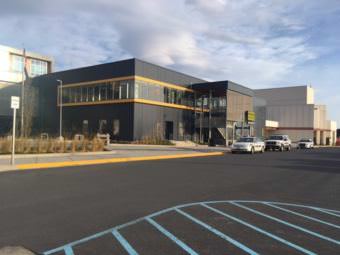
Kodiak Police Department vehicles in front of Kodiak High School. (Photo by Kayla Desroches/KMXT

The Kodiak Police Department put the middle school and high school on lockdown this morning because of a possible threat of violence.

According to Police Chief Ronda Wallace, they were investigating a statement a substitute teacher had overheard.
“Something to the effect of ‘I’m about to lose it, I could shoot up the school.’ Based upon that information, it made its way through the school to us.”

The school lockdown followed.

Wallace said police put up posts on each floor and worked their way through the school to try to identify who had made the statement.

That involved finding where the person had been when they made that comment and conducting interviews.

Wallace says they eventually located the student.

“What I can tell you at this point is that, after the interview, it was determined it was not a credible threat to the school, but because this is a student, which would be a juvenile, we can’t go into too much detail into that.”

She said the next step is in the school’s hands and the administration will take whatever action they need to.

Kodiak’s sea cucumber fishery a dive into dangerous, but prosperous market

Mark Blakeslee and his haul of sea cucumbers. (Photo courtesy Mark Blakeslee)

About 20 or 22 people dove for red sea cucumbers during the first 48 hours of one of Kodiak’s smaller fisheries that opened last week.

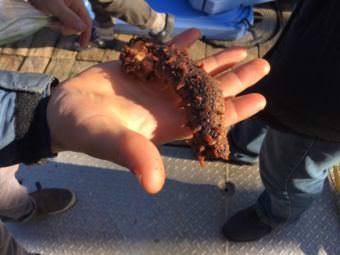
Diver Reuben Ivanoff holds up a bag of cooked sea cucumbers. They’re spiky, brownish, and long like slugs.

He and the crew, some of who are his family members, are hanging out on board their vessel, the New Dawn.

They’re biding their time before they can set off for the next period.

They and the other Kodiak divers will come to an agreement on when that opening will happen. They need to decide whether it’s safe.

Ivanoff said the weather was rough during the first opening too, and the New Dawn had participated despite some reservations.

“We had to. One guy goes, everybody goes. It’s not like 51 percent. It has to be unanimous.”

Sea cucumbers sell for high prices on the Asian market and are valued for more than taste.

According to some, they have cancer fighting properties and could boost fertility, among their other possible benefits.

It’s common for people overseas to buy dried sea cucumber, according to one diver. Sometimes as a base for soup.
But as for the experience of eating one fresh, crew member Vasilli Kalashnikov compares it with mushrooms.

“A little bit close with the texture, but not with the taste.”

Another diver in the harbor, Mark Blakeslee said sea cucumber is good as fritters or cooked up in butter and garlic like clams.

“Or you can slice the whole thing including the meat, the skin, and put wasabi on it and then chew on that fresh, and it’s kind of like chewing on rubber bands with wasabi on it.”

He says that’s how his Japanese crew member once prepared it.

Blakeslee went diving during the first opening this year.

Reuben Ivanoff shows off a cooked sea cucumber. (Photo by Kayla Desroches/KMXT)

He said divers hope to find large numbers of sea cucumbers in one place so they can scoop up more of them at once.

“Most boats have some kind of a drop camera. So you can go and look with your camera. They like to hide, so they’re hard to find with the camera even if they’re there, but if you see one or two, that means that there’s gonna be a lot probably.”

Blakeslee said the sea cucumbers often gather about 50 feet below the ocean surface.

“If you’re above 33 feet, you can dive all day as long as you want. And if you dip a little bit below that and then work shallow again, you can dive all day just kinda watching your nitrogen saturation so you don’t get decompression sickness when you get out.”

Diving can be dangerous.

“I think some people have had their air hose wrapped up in the propeller of a boat and dragged in and just panic. I don’t think anybody’s been cut up by a boat propeller, but it snagged or the air hose kinks. I wear a bailout bottle, a little tiny scuba tank on my back, so if the air from the compressor quits then I can just turn a valve and I unhook from the hose.”

It’s also a fairly brief fishery compared with some.

According to Alaska Department of Fish and Game area management biologist Nathaniel Nichols, the fishery could continue through the winter, but they usually reach their goal harvest level within the first few periods.

This year the goal is 120,000 pounds, Nichols said, and the first fishery period lasted 48 hours.

“We took about 47,000 pounds total. It’s a little less than we were expecting, but the weather conditions weren’t great for that first period, so I think that’s what the difference is there.”

Nichols said, taking the blustery weather into consideration, the next period begins Wednesday.

Chugach Alutiiq teachers preserve language in villages

Brandon Moonin teaches students Alutiiq in village of Tatitlek. (Photo courtesy of Brandon Moonin)

Two remote learning students just graduated from a Kodiak College Alutiiq language program.

They’re striving to keep the language alive in Port Graham and Tatitlek, two villages where Alutiiq, or Sugpiaq, people speak the regional dialect of Chugach Alutiiq.

Libby Eufemio, who runs the Alutiiq studies program, explains the Alutiiq nation covers a large chunk of geography, including the Kodiak archipelago, the southern Kenai Peninsula, and Prince William Sound.

She said the college’s occupational endorsement certificates enable students to teach the Alutiiq language.

“This type of degree is really important in more than just the education level,” she said. “It’s doing something really concrete that is gonna help preserve an ingenious language.”

One of the graduates, Brandon Moonin, works for Chugachmiut, an organization which brings education and other services to the Chugach region.

He teaches children of different ages in Tatitlek.

“Right now, I think we rated our village right on the brink of extinction for the use of the language in the village. It’s either grandparents or beyond that actually use it in the village, and our elders population is shrinking pretty fast.”

Moonin says he grew up with Alutiiq – his dad and grandparents were fluent speakers.

But he says he was nervous about teaching it.

“‘Cause it’s not really something I’ve ever done or something I’ve actually ever wanted to do, but since I think it was my first week of class, I stepped in, I could just see the kids were excited about what I was teaching,” he said. “They were able to take it right in, and they started using it around the village. Every time they would see me they would start talking to me in whatever they did pick up in class at all.”

His cousin, Ephimia Moonin-Wilson, is the other graduate and also works for Chugachmiut. She teaches in Port Graham, a village with fewer than 200 people.

Moonin-Wilson believes teachers can bring about a revival of the Alutiiq language, or Sugcestun, through their students.

“With the knowledge of having sentences, they can speak in the community and, hopefully, when they speak with their parents, their family, the elders, eventually the Sugcestun will be a natural medium in the community.”

Moonin-Wilson loves her students’ excitement to be in the classroom.

“They are learning and they want to learn more, and that really warms my heart up.”

Chugachmiut held a ceremony in late September to honor the graduates.

Kodiak art project encourages salmon discussion

Kitty Farnham, right, watches children write responses to fisheries-based questions. (Photo by Kayla Desroches/KMXT)

The first cohort of Alaska Salmon Fellows is wrapping up its pilot year with final projects.

The program brings together different innovators in the state, from policy makers to artists, and prompts them to start discussions about the salmon industry.

Local Salmon Fellow Anjuli Grantham organized one recent art event at the Baranov Museum as her final project.

The museum and its partners invited the public to see a slideshow of artists whose work reflects the relationship between Alaskans and salmon.

People gather on the museum grounds.

A projector plays a slideshow on a screen outside. It’s perfect weather for an event like this – not raining hard, but just overcast enough to keep people in town instead of out camping or hiking.

A Salmon Fellows organizer has made it in for the occasion.

Kitty Farnham is the director of leadership programs at the Alaska Humanities Forum, which organizes the program. She wore an Alaska Salmon Fellows jacket that featured an icon of colorful fish.

At the beginning of the event, Farnham explained all 16 Salmon Fellows are doing projects in their particular areas, like education, history or policy.

“Being the Humanities Forum, we’re really looking at it though the people lens, and all the data in the world is valuable, but without having the relationships between people in different sectors, there’s really no way to address solutions that don’t become embroiled in win-lose, and we’re looking for solutions that really work across our communities,” Farnham said.

After wandering in, some people stopped in the yard to chat and a couple play a game called corn hole, aiming bean bags at a hole in a board. The sacks thump against the wood.

Farnham said the project is meant to spark conversation. This is the kind of gathering Salmon Projections aims for.

“There’s some parallel projects around looking at management systems, relationships between organizations and the official regulating bodies, education,” Farnham said. “Really, also trying to change the narrative from one of we can’t agree on, you know, a sense of zero sum game and allocations to what’s best for our communities and for our salmon.”

On the porch, attendees snack on sushi.

Just inside the building, seaweed salad and smoked salmon are available alongside tea bags and a samovar full of hot water. By the end of the night, the platter of salmon is empty.

That’s one thing most people who attend have in common.

No matter what their relationship to the fishing industry, they usually eat fish.

And they tend to agree that the larger aim is to keep the fisheries healthy and strong.

Sports fisherman Brent Pristas said the state should focus on industry sustainability.

“I think we keep doing what we’ve been doing,” Pristas said. “As long as we value it and place a proper emphasis on the salmon over other kinds of development, I think it will continue.”

Ginny Austerman, a longtime Kodiak resident, said the local fishing industry needs community growth.

“Things like cold storage and more processing plants and jobs for local people are very important as well as making sure that there’s fish for next year,” Austerman said.

Rita Stevens agreed it’s important to build up local infrastructure.

“Like improve the dock situation for the boats and the storage of boats and the dry dock and having repair shops here instead of having to go down to Seattle (and) take the business away from Kodiak,” Stevens said.

The museum encourages more conversations like these by setting up pieces of paper covered with questions about fisheries and sustainability and asking people to scribble their responses.

The Salmon Fellows will convene again in a couple of weeks.

Farnham said they’re recruiting now for the next round of fellows, and the application period opens at the beginning of the year.

Juneau-based firm to help Baranov Museum redesign its ground floor

A look into one of the museum’s exhibits. (Photo courtesy of the Baranov Museum)

The Baranov Museum in Kodiak Alaska is contracting with Juneau-based museum design firm ExhibitAK to help with redesigning its exhibits.

The total project cost is about $750,000, Executive Director Sarah Harrington said, and the museum will kick off a capital campaign in mid-October.

Harrington said staff reached out for public input when they began the process in 2012.

“What we found is we had a lot of feedback based on the fact that our current exhibits were not very connected, and they weren’t self-guided in any kind of way.”

people expressed a desire for a more cohesive narrative to link the different exhibits together, she said, and the redesign will include that change.

“It will actually increase the number of objects that we’ll have on display,” she said. “We’ll be able to bring quite a few more objects down out of the collections storage and put them on display while trying to loop everything into more of a connected story.”

They’ll also expand the scope of the exhibit.

“Right now, we’re focused on really the Russian history, colonization, the early American period, and then whatever the current temporary exhibit is featuring, but this one will help us draw more attention to the fisheries, to all of the diverse communities that make up Kodiak’s community tapestry.”

Harrington said replace their exhibit cases and install some fake walls to help guide traffic through the museum.


Group of Alaskans go to Russia to visit birthplace of St. Herman

Sitting down for a meal in Russia (Photo courtesy Father Dimitrii Kultinov)

Recently, some Alaskans made the long trip to Russia to see the home of a beloved orthodox saint.

At the end of August, a group of about 16 people from all over Alaska went to Russia.

This trip wasn’t a normal vacation, but a sanctioned pilgrimage by the Russian Orthodox Diocese of Alaska.

They traveled through at least 12 time zones to reach the Russian community of Kadom, which was the home and birthplace of St. Herman of Alaska. One of the younger members of the trip was Triston Simeonoff. When he arrived in the rural town, he was struck by how familiar it seemed.
“In the town that we were in, Kadom. It made me feel it was still at home. It was just like Ahkiok. Dirt roads, kids running around freely, riding their bikes, playing outside.”

One purpose of the journey was to share stories of St. Herman and Alaska with locals.

The saint came to the Kodiak Archipelago in the late 1700s and lived out his life there.

For Walter Simenoff, Triston’s father, being able to go to St. Herman’s birthplace and tell people about his life was special.

“It was very emotional to see people that just heard about St. Herman over there.”

Going to the community that shaped such an important figure in Simenoff’s life made St. Herman seem more real.

“When you see it with your own eyes where he was from you can believe he is a saint now and it all fills the space where you were wondering about.”

The group also had another charge, to deliver four holy relics to Russia.

The relics consisted of the remains of St. Herman.

Father John Dunlop, a Russian Orthodox priest from Kodiak, was entrusted to transport them. He kept the relics on his body near his heart throughout the trip until they were safely delivered.

Dunlop felt a sense of purpose throughout the journey.

“I think it was a real sense of mission that we were uh bringing a piece of Alaska and a piece of history and even St. Herman himself, back to he had left. Almost like a homecoming.”

The group didn’t just bring holy relics to Russia. They also brought a lot of smoked salmon to present as gifts, which they ran out of pretty quickly.

The entire journey lasted about two weeks.

Father Dunlop hopes another trip can happen next year.

He also said there was some discussion of hosting a group from Russia in Kodiak.

Site notifications
Update notification options
Subscribe to notifications