KUAC is our partner station in Fairbanks. KTOO collaborates with partners across the state to cover important news and to share stories with our audiences.
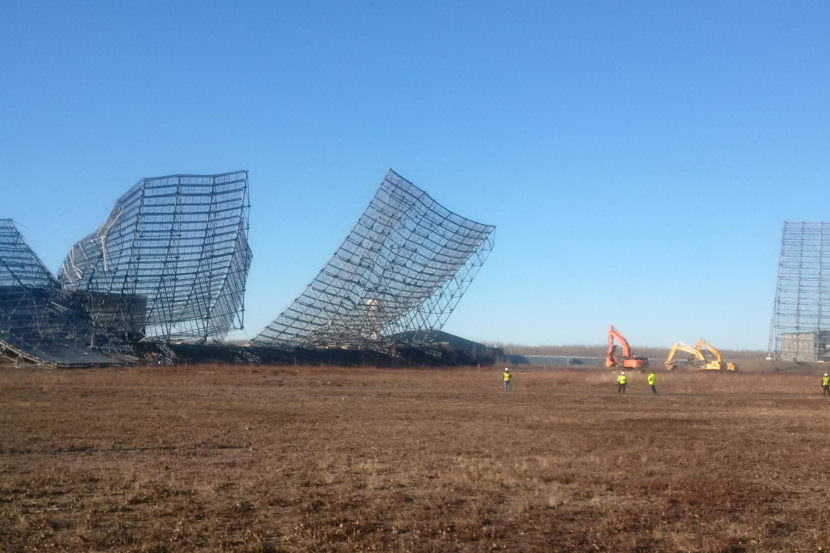
Workers pull down old radar structures that were part of the now-defunct Ballistic Missile Early Warning System at Clear Air Force Station in 2017. (U.S. Air Force Space Command)
Clear Air Force Station has a new name. In a ceremony Tuesday, the installation near Healy was officially renamed Clear Space Force Station.
Installation officials say the name change won’t affect Clear’s main mission, which is to scan the horizon for incoming enemy missiles and to alert the U.S. missile defense system, including the base at Fort Greely, to threats.
Clear’s ability to carry out that mission could be greatly enhanced in 2023 when an advanced, $1.5 billion radar system becomes operational. Construction work on the Long Range Discrimination Radar has been completed, and the Missile Defense Agency hopes to conduct a key operational flight test for the LRDR next year.
There are no Space Force personnel at Clear. Officials say for now Air Force military and civilian personnel will continue to operate the installation.
The U.S. Space Force is the newest branch of the military, established in December 2019. The 13th Space Warning Squadron at Clear falls under the Space Force’s command. That unit is based at Buckley Space Force Base in Colorado.
Clear is the third Air Force station to be re-designated as a Space Force facility. Six Air Force bases also have been redesignated as Space Force bases: three, including Buckley, are in Colorado, two are in California and one is in Florida.
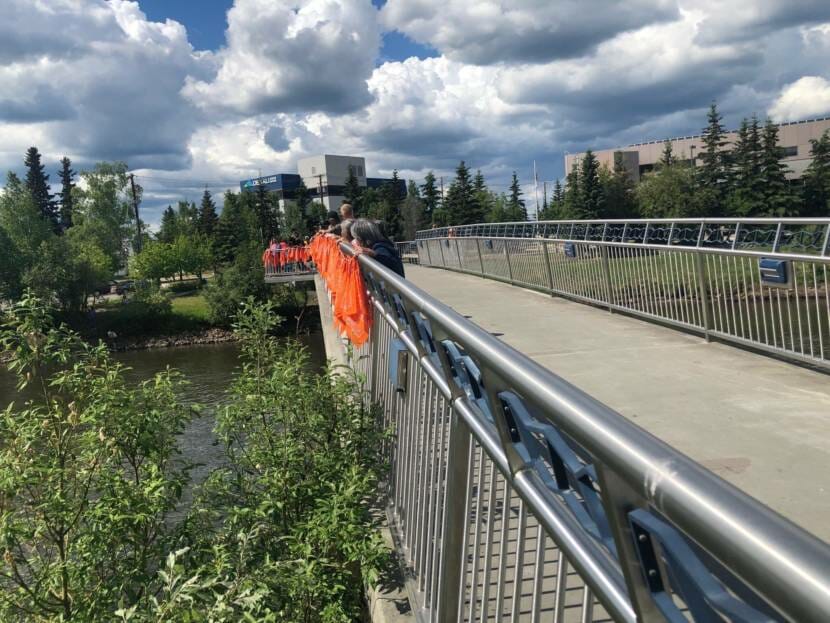
Two hundred and fifteen bandanas, one for each of the Native children whose bodies were found buried on the grounds of a former residential school in British Columbia, are hung from the Chena River footbridge in Fairbanks. (Dan Bross/KUAC)
A gathering was held in Fairbanks on June 13 to mourn and raise awareness about historic abuse, neglect and forced assimilation of Native children at government- and church-run residential schools in the United States and Canada. The Fairbanks event, and others like it in both countries, follows the discovery last month of the remains of 215 Indigenous children buried at a residential school in British Columbia, which closed in the late 1970s.
The event began with the tying of 215 orange bandanas to a clothesline, which was then strung along a footbridge over the Chena River in downtown Fairbanks. It was a symbolic gesture of acknowledgement and remembrance of the children found dead at the residential school in Kamloops, B.C.
Event organizer Sasha Housley addressed the gathering, emphasizing the generations of pain and loss residential schools have caused Native people in Canada and the United States.
“We acknowledge you,” she said. “He help carry your pain, we are your hope. We sing for you the songs you couldn’t sing at school. We will not forget your story or your history, for it is our story as well.”
Housley says her father was a boarding school survivor in Alaska, and although he never talked about his experience, she’s educated herself on residential schools.
“So when I found out the 215 children had been discovered in unmarked graves, it impacted me in a way I didn’t expect — well, deeper than I expected,” she said. “And I wanted to do something in memory of the children and to spread awareness.”
There were also songs, prayers, dancing and speakers, including Athabascan elder Fred John of Delta Junction. John attended residential schools in both Alaska and the Lower 48, including the Haskell Institute in Kansas, where he says many Native children died.
“Graveyard with tombstones, you know. And there were kids that died from 1884 at Haskell Institute,” John said. “Then one year my wife and I went to Carlisle Indian School, the first Indian boarding school that was made in the United States, and we visited the graves there — big graveyard, all Native kids from five years, four years on up. From all across the United States.”
John says his siblings also went to residential schools, and their experiences led to tragic outcomes.
“I had two sisters that, I’ll say, drank themselves to death. And all of them became alcoholic as a result of the boarding school,” he said.
Shirley May Holmberg has a background in behavioral health. She says she knows many people who were traumatized at residential schools.
“It was government’s effort to ‘take the savage out of the Indian,'” she said. “I have friends and family who have been affected by boarding schools. They experienced sexual abuse, physical abuse.”
Natasha Singh, with Tanana Chiefs Conference, said the only way to bring justice is to tell the stories of what happened at residential schools and pointed to the resilience of Native people to systematic oppression.
“The government sought to destroy our people though violence and genocide and cultural genocide,” she said. “It’s a beautiful day today because they failed, and we continue to thrive.”
The 215 bandanas, symbolic of the residential school children who died in British Columbia, will remain along the Chena River footbridge until the solstice, a span of 215 hours.
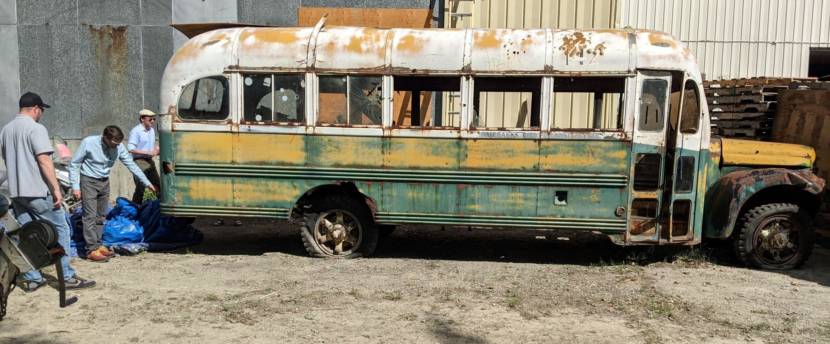
UA Museum of the North Director Pat Druckenmiller checks out Bus 142 last week with Colin Howard, left, and Aaron Warkinton, right, who work for Pennsylvania-based B.R. Howard Conservation. (Photo by Tim Ellis/KUAC)
Preliminary work began last week on a project to create a museum exhibit featuring the old bus where the central character in the book and movie “Into the Wild” spent his last days. The rusty relic was airlifted out of a remote spot off the Stampede Trail last year and brought back to Fairbanks, where it had been used decades ago as a city transit bus. And now, University of Alaska Museum of the North staff are planning a new outdoor exhibit that will tell the story of how Bus 142 became an American cultural icon.
Colin Howard and another artifact-conservation expert are conferring with Museum of the North staff about the fragile condition of Bus 142 project before the conservators head back to Pennsylvania, where their art- and artifact-conservation company is based.
“It provides a whole bunch of challenges,” Howard said. “I mean, she’s really dirty, and she needs a lot of work.”
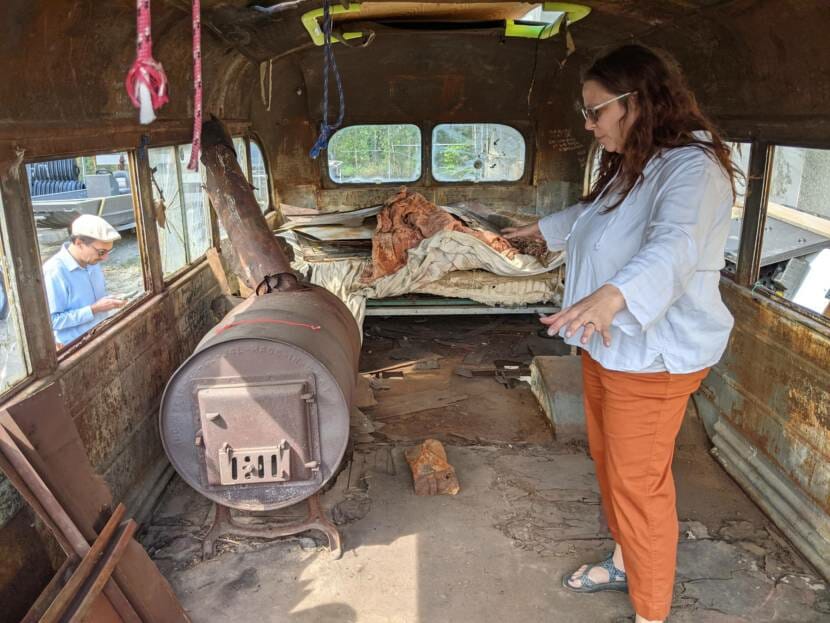
Museum of the North Senior Collections Manager Angela Linn explains conservation work needed to stabilize the floor of the bus and other parts of its interior. (Photo by Tim Ellis/KUAC)
He and his colleague, Aaron Warkinton, met with museum staff last Friday after spending a couple of days examining the old rig as part of their assessment on what’s needed to keep it from further deteriorating, and make it presentable to the public.
“So, we don’t want to make it brand-new,” Howard said. “I don’t want to make it look like it was just repainted. It carries a significant story for multiple decades, and we want to keep that story going.”
Those stories are told in part through the rust and chipping paint typically found on a 75-year-old vehicle, especially one that’s been sitting exposed to the elements at a remote site near Denali National Park since it was hauled back into there in 1961. The bus served as a shelter for hunters and hikers, including Christopher McCandless, the hapless wanderer profiled in Jon Krakauer’s account titled “Into the Wild.”
“So we just want to stabilize it, make sure that the corrosion is no longer active,” Howard said. “We want to stabilize flaking paint that’s coming off. There’s stories inside that are falling off the walls, literally.”
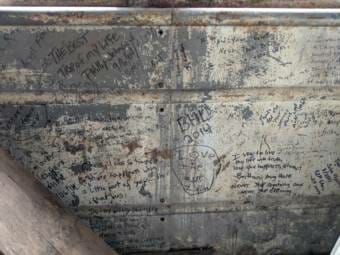
Those are the stories told through graffiti that’s been scrawled all over the bus and its few remaining windows. Many were left as an homage to the memory of McCandless, whose body was found in the bus on Sept. 6, 1992 by some moose hunters.
Many of those who reached the bus left messages addressed to McCandless and their fellow “pilgrims.” (Photo courtesy Tim Ellis/KUAC)
One of the scrawls reads, quote, “Godspeed Chris, and say hi to my mom from me!”
Another reads: “Thanx 4 the inspiration!”
Yet another simply says “He was here!”
“There’s Japanese kanji in there. Russian – people from all over the world have journeyed out there to interact with that relic,” Warkinton said. He says the graffiti attest to the universal appeal of the story of McCandless, a tragic figure who after graduating from college decided to escape society and its materialism and instead find the meaning of life. A search that led him deep in to the wilds of Alaska.
“I think he touched on something that a lot of people struggle with,” he said. “Like I’d mentioned earlier, about dealing with the modern world – it can be so overwhelming!”
Angela Linn, a senior collections manager at the Museum of the North, agrees.
“[You] know this is a story that really resonates with millions of people around the world,” she said. “And whether it’s because of the mystique of Alaska, whether they really identify with Chris McCandless and the transition he maybe was going through himself. That, [you] know, people see that in themselves.”
Linn, who’s managing the project, said that’s one of the main reasons why Museum of the North officials believe it’s important to preserve the bus and share its stories with the public.
“We think it’s really important to spend the money and the time and the great amount of effort to bring all those stories together,” she said. “And that’s part of what our job is in museums, is to get people to connect those dots within themselves.”
Linn said it has cost about $7,000 so far for Howard’s firm to assess the work needed on the bus and estimate how much it’ll cost to do it. The money was raised through online crowdfunding. And she’s hoping to raise additional money with crowdfunding help from Friends of Bus 142, an online group founded by McCandless’s sister, Carine.
Linn says much of the consulting and planning for the exhibit is being done by a 25-member interpretive team, which includes university faculty and members of the community.
She said if all goes well, the exhibit could be opened in 2023.
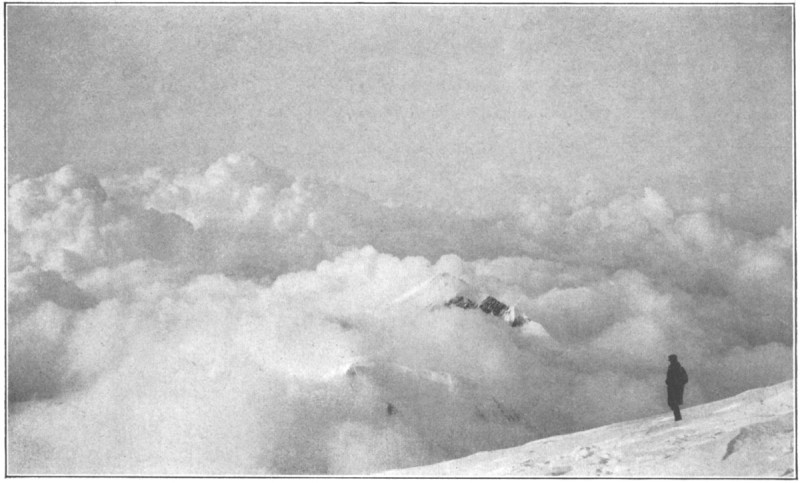
From Hudson Stuck’s “The Ascent of Denali” (Project Gutenberg)
Today is Walter Harper Day — honoring the mountaineer and guide who was the first person to climb to Denali’s highest summit. Alaskans are celebrating the day with work on a new statue of Harper and a special episode of the “Molly of Denali” TV show.
This is the second annual Walter Harper Day – it was passed into legislation in April 2020.
“Walter Harper left an indelible mark on Alaska history when, at the young age of 20, became the first person to stand atop the summit of Denali on June 7, 1913,” said Sen. Click Bishop who sponsored the bill.
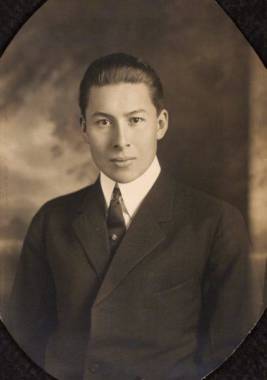
Formal Portrait, Walter Harper, 1916. (courtesy UAF Rasmuson Library)
Alaska historian Mary Ehrlander stumbled on Harper’s story when researching Hudson Stuck, the English immigrant, cowboy and Episcopal archdeacon of the Yukon River. But it was Harper’s story, she thought, that needed telling.
“I thought, this is a spectacular story! We will need to know about him. Every school kid should learn about Walter Harper,” she said.
Ehrlander wrote “Walter Harper, Alaska Native Son,” published in 2017. Ehrlander was the director of Arctic and Northern Studies at the University of Alaska Fairbanks.
In 1913, expedition co-leaders Hudson Stuck and Harry Karstens put together a team of Robert Tatum, Walter Harper — who was Stuck’s Athabascan guide — and two 15-year-olds, John Fredson and Esaias George. It took about three months to get from Fairbanks to the top. Fredson and George maintained the base camp for four weeks while the expedition team summited Denali. It was Stuck who thought that an Athabascan should be the first to step on to the taller, southern summit.
A group of Alaskans formed the Walter Harper Project at the time of the centennial of the first summiting, in 2013. They have a website, WalterHaper.org and are taking donations there to help erect a statue. Earlier this spring, Doyon Ltd. put $25,000 in the pot. Spokesperson Sarah Obed says that’s because Native history matters.
“We really hope to educate the public about Walter Harper and his accomplishments and his life, we believe his leadership is something to emulate,” she said.
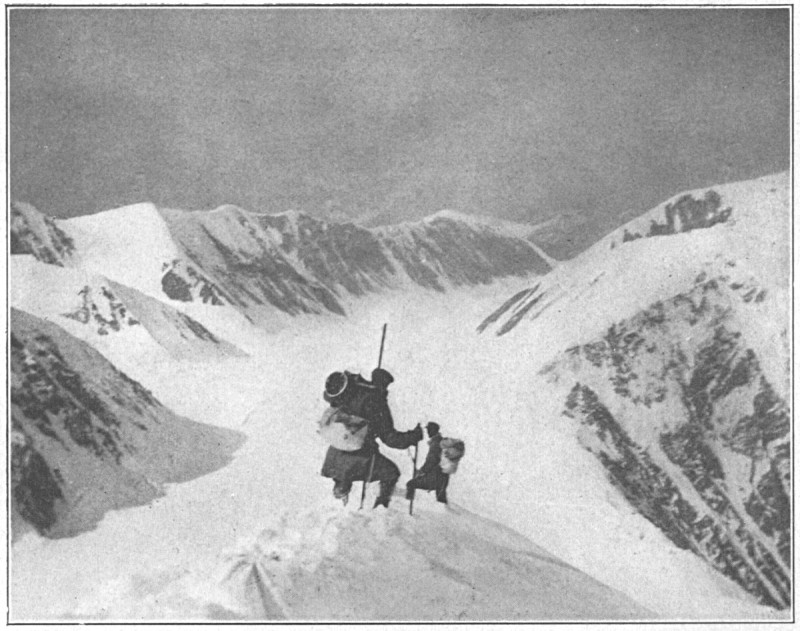
Beginning the descent of the ridge, looking down 4,000 feet upon the Muldrow Glacier. From Hudson Stuck’s “The Ascent of Denali” (Project Gutenberg)
Obed says Doyon has also offered a home for the statue, near the Chena River.
“It’s a prominent landmark here in Fairbanks, and homeland of the Athabascan people, and it will be a really great place for community members and visitors to learn about this part of our history.”
The committee has selected Gary Lee Price to design the Walter Harper statue, which is scheduled for unveiling a year from now on Walter Harper Day, 2022. Fairbankans may be familiar with Price’s work, as he did the sculpture of children in front of Denali School on Lathrop Street in Fairbanks.
Historian Ehlander says one of the models for that sculpture was Mike Harper, Walter’s grand-nephew.
“We loved the movement in that sculpture, and just how lifelike the children were. And we wanted to convey that energy and enthusiasm and love of life and love of nature that Walter had,” she said.
There’s also a special one-hour episode of the children’s animated series “Molly of Denali” marking the day, airing today on PBS Kids. That’s at 1 p.m. and 6 p.m. on KUAC-TV.
Ehrlander says it is not just the summiting of Denali that makes Harper remarkable, but his complement of subsistence skills and character traits.
“Here’s a guy who is universally admirable, whom every Alaskan could feel proud of,” she said.
Harper was only 25 when he and his wife, Frances Wells, died on the steamer Princess Sophia when it ran aground in Lynn Canal on Oct. 25, 1918. The couple were on their way to the Lower 48 so Harper could attend medical school.
Jenny Tse shows Alaska botanicals about to be mixed with green tea to make her award-winning blend. (Robyne/KUAC)
The first tea farm in Alaska is getting started this week near Fairbanks. And it’s geothermally heated.
Jenny Tse grew up in Fairbanks drinking coffee.
“I drink black coffee,” she said.
Not what you would expect from a world-class tea connoisseur. But Tse is an international-award-winning tea expert, consulted by artisanal growers in Hawaii, India and China And she runs the leading tea manufacturing company in Alaska. Now she will be starting the only tea farm in Alaska.
“I want people to know that tea in Alaska could be grown, be sustainable — and we can have amazing products here in the state,” Tse said.
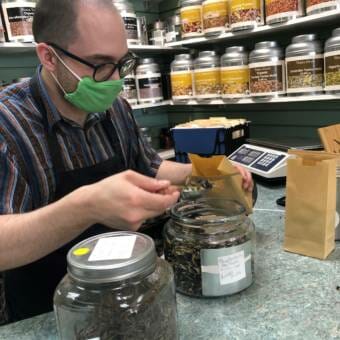
Joshua Amos pours out Blue Butterfly tea leaves for a customer at Sipping Streams Tea Company in Fairbanks. (Robyne/KUAC)
She came to the idea after 14 years as the proprietor of Sipping Streams, an artisanal tea store on the west side of Fairbanks.
“We do all our own packaging, and labeling and blending. Most people don’t realize we are the leading tea manufacturer in the state,” she said.
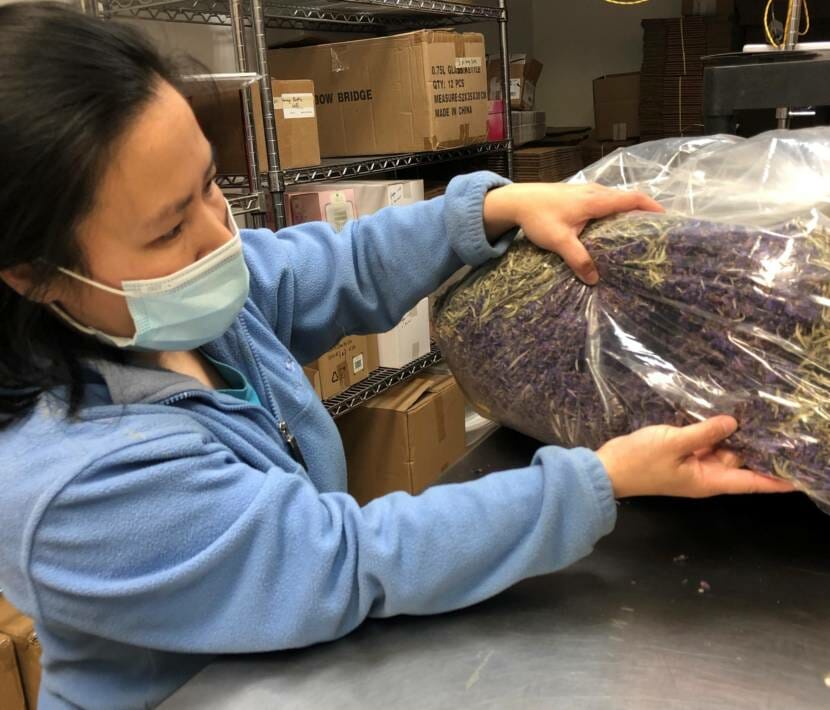
She shows visitors a large bag of dried fireweed blossoms, cranberries and the tea leaves that helped earn her reputation.
“Hand blending was the first international award we’ve ever won, with local fireweed and lowbush cranberries,” she said. “You might’ve seen a machine back there. I built this commercial grade dehydrator myself. So we dry the fireweed and the low-bush cranberries. And this is like a high-demand but limited amount because it’s wild-harvested and has to be hand done.”
Tse may have grown up drinking coffee in Alaska, but she does drink tea — all day, in fact. Outside her shop she pours a guest an expensive Hawaiian-grown blend.
But she didn’t discover tea until she was a student in Idaho working on her athletic training and education degrees. She needed to save money.
“I started switching because it was the cheapest thing on the menu,” she said.
She returned to Alaska to work as a trainer and physical therapist, then later as a high school math teacher. But she continued to research tea. She says she learned it could be transformative.
“And when I worked in physical therapy, people would tell me their stories about tea: having it in the South, sweet tea, ‘oh I am from Arkansas, blah blah blah,’” she said. “I’m like, ‘there’s something to this.’”
She started teaching tea classes, and eventually opened Sipping Streams Tea Company in Fairbanks. That got her to travel to tea farms in China and India.
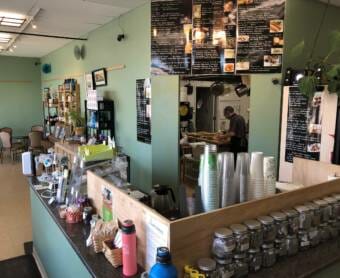
At Sipping Streams Tea Company in west Fairbanks. (Robyne/KUAC)
She has literally written the book on tea. “The Essence of Tea: The Transformational Journey of a Tea Connoisseur” became a bestseller on Amazon.
During the pandemic, Tse started a podcast interviewing international experts and a YouTube channel to reach customers who could not come into the shop. And she continued her online tea certification program with students across the country and in the UK.
She sent each student a small tea plant to grow indoors. And that sparked the idea of growing tea in Alaska.
“It’s got to be in soil, and I knew a lot of things about what the tea plant needed; it needed warmth, it needed humidity, it can withstand snow, but not 30 below. So, where in Alaska could you do that?” she said.
She thought of Chena Hot Springs and Bernie Karl, the entrepreneur who pioneered sustainable energy projects and year-round food production in geothermally heated greenhouses.
“I just asked him if I could use his greenhouse. He said, ‘here 45 will fit in here,’ because he has the gardening experience. He’s like, ‘you need to order 45 plants.’ I’m like, ‘okay, order 45 plants,’” she said.
The camellia sinensis trees came from a farm in North Carolina. It was a little nerve-racking as they were trucked across the continent and flown to Alaska. She has shared the tea plants’ journey on her Instagram account.
The trees arrived in Fairbanks Memorial Day weekend.
“It’s a wonderful experiment to really show sustainability in Alaska, if we collaborate. If you try,” she said.
As the story of her geothermally heated tea farm gets out, it has attracted the attention of researchers.
“Can we have your data? What data, I’m not a scientist! I just wanted these tea plants to grow and be amazing tea,” she said.
Tse is hoping to harvest the tea trees later this summer. She will be teaching a class on tea at the Fairbanks Summer Arts Festival in July at the tea farm at Chena Hot Springs.
A composite image of Venus made with data from NASA’s Magellan spacecraft and Pioneer Venus Orbiter. (NASA/JPL-Caltech)
A University of Alaska Fairbanks scientist is on the team for one of two unmanned missions to Venus announced by NASA this week.
UAF Geophysical Institute research professor and Venus expert Robert Herrick is on the science team of the Veritas mission, one of two Venus proposals chosen by NASA. Herrick says Veritas and the other mission, called DaVinci Plus, were selected following a competitive proposal process and will be the first to Venus since the Magellan mission ended in 1994.
“It’s been a multi-decade walk in the wilderness for people who are fans of the planet Venus,” Herrick said. “So it’s very exciting.”
Herrick says the schedule has not been finalized, but the tentative plan is for the $600 million Veritas mission to launch in 2028.
“The whole spacecraft has to be built and made ready to launch in the next handful of years, basically. And then there’s a lot more detailed planning on the science side of things that takes place as well,” he said.
Once in orbit around Venus, the Veritas spacecraft will gather high-resolution infrared and radar images and topography of the planet’s surface, which will be transmitted to Earth for analysis. Herrick’s area of focus is craters, which he says provide clues about a planet’s geologic history.
“Craters after they’ve been formed get modified by later volcanism or faulting, and that helps you figure out the time sequence of events on the planet,” he said.
Herrick says Venus is interesting from a geoscience perspective because it has mountains and other surface deformations, but its not known how they were created.
“So one possibility is that it’s a planet that has transitioned from being like the Earth to being like Mars, and another possibility is — something completely different,” he said.
Herrick says imagery gathered by the Veritas orbiter will aid the DaVinci Plus Venus mission by helping identify a target area for its surface probe. That mission is tentatively scheduled to launch in 2030.
Herrick says together the two missions will provide a better understanding of Venus, which could help identify potentially life-supporting planets in other star systems.
“Venus is about 90% the size of Earth, it’s 70% the distance from the sun that Earth is, so it’s essentially identical.” Herrick said. “Yet Venus is completely inhospitable to life currently, and Earth is a cradle of life. So as we look out at all the other planetary systems that we’re discovering, figuring out whether Earth-sized means Earth-like in part depends on figuring out how Venus and Earth ended up so different from a very similar starting point.”
Herrick says data from the Venus missions will be voluminous, providing years of work and opportunity for new discoveries by researchers and grad students, including at UAF.
Close
Update notification options
Subscribe to notifications
Subscribe
Get notifications about news related to the topics you care about. You can unsubscribe anytime.