KUAC - Fairbanks

KUAC is our partner station in Fairbanks. KTOO collaborates with partners across the state to cover important news and to share stories with our audiences.

Jury indicts Ft. Wainwright soldier for fatal shooting of Black Lives Matter protester in Texas

A Fort Wainwright soldier who fatally shot a Black Lives Matter protester in Texas last year was indicted last week by a grand jury in Austin, Texas.
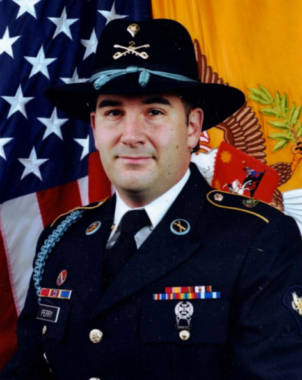
Army Sgt. Daniel Perry (U.S. Army photo)

Sgt. Daniel Perry was stationed at Fort Hood when he shot the protester on July 25, 2020, but on Sept. 1 he began a new tour at Fort Wainwright. A Fairbanks civil rights advocate worries the case could inflame local racial tensions.

A U.S. Army Alaska spokesperson said Wednesday that Perry is assigned to the 1st Stryker Brigade Combat Team. But the spokesperson could not answer other questions about why the 34-year-old infantryman was allowed to be stationed here despite facing a trial.

Travis County, Texas, Sheriff’s Office spokesperson Kristen Dark said Perry was formally charged on July 1.

“He was booked into the Travis County Jail on two charges: murder and deadly conduct,” she said in an interview Wednesday.

A local television news outlet says Perry flew from Alaska to Texas last week to surrender to authorities after a warrant was issued for his arrest. Dark said he was released soon after posting a $300,000 bond.

“He was booked into the Travis County Jail around 2:20 that afternoon, and he was released from custody at 2:36, I believe,” she said.

Perry was off-duty that summer night, working a side gig as an Uber driver. He reportedly was waiting for a fare when he encountered protesters at a downtown intersection around 10 p.m.

According to the indictment, as Perry tried to turn onto a cross street, he “recklessly engage[d] in conduct that placed a group of protesters walking in the roadway … in imminent danger of serious bodily injury.” The indictment said he was texting on his cellphone while making the turn as pedestrians were in the crosswalk. Then he drove into a group of people who were in the street. That’s the basis of the deadly conduct charge.

The indictment said Perry threatened one of the pedestrians and drove toward that person. But he wasn’t able to get very far because the street was filled with protesters.

One of them was 28-year-old Garrett Foster, who was carrying an AK-47, which is allowed under Texas’s open-carry laws.

Foster reportedly approached the car and Perry perceived that he was threatening him with the rifle, although eyewitnesses dispute that. Police say Perry drew his pistol, which he was legally allowed to carry, and shot Foster, fatally wounding him. An eyewitness recorded and posted a video of the incident.

Perry then drove away and later called police, who detained him briefly until he claimed he shot in self-defense. Perry and his lawyers argue he was justified to use deadly force under Texas’s Stand Your Ground law. Austin Police say they’re still investigating the shooting.

Both Perry and Foster are white. But BLM supporters say the shooting shows police don’t place a high priority on protecting protesters.

A Fairbanks civil-rights advocate said he’s also troubled about the case and its potential to further inflame local residents and activists who are angered over police brutality toward Alaska Natives and other people of color.

“There’s Blue Lives Matter marches that are going on,” said Bennie Colbert, a former head of the Fairbanks NAACP chapter. “There’s still a lot of activism with the Natives and the police department, and things of that nature. And then here we have the military situation. ”

Colbert said in an interview Tuesday that he’s speaking as a concerned citizen about the caseHe said he’s troubled that Army officials permitted Perry to come to Fort Wainwright despite the fatal shooting and, now, the indictment.

“I think the military, somebody, should have taken this into consideration before bringing this into our small community,” Colbert said.

“This could be a volatile situation,” he said. “So, people need to sit down and discuss it.”

According to the Travis County District Court Clerk’s office, the next court proceeding in the case is scheduled for July 22.

A person in the Travis County Attorney’s office who spoke off the record said barring a plea deal or dismissal of charges, it may take a while for the case to come to trial because of a backlog of cases leftover from the pandemic shutdown.

Pfizer vials, Zoom costumes and plexiglass: The Museum of the North is building its pandemic collection

A COVID-19 piñata waits to be smashed by Carolina Tolladay Vidal’s customers. The Museum of the North is looking for iconic objects like this to document Alaska’s experience of the pandemic. (Hannah Lies/Alaska Public Media)

As fewer COVID-19 cases show up at Alaska hospitals, many are hoping to put the COVID-19 pandemic behind them. But before too many people move on, the Museum of the North wants to collect culturally important objects that represent Alaska’s response to the pandemic.

Angela Linn is a senior collections manager at the University of Alaska Museum of the North.

“I have to always be thinking, like, 20 years, 40 years from now, what are people going to want to know about this crazy experience that we’ve all just gone through,” she said.

Linn is not curating an exhibit about the pandemic. But she wants to seize this moment, while people are still living it.

“For future generations, you know, that’s what we have to think about for museums,” Linn said. “It’s not what stories speak to me right now. It’s, what are people in the future — what will they find interesting and compelling enough to do research or put together an exhibit on this stuff?”

Some of the problem is figuring out what will be important later while it is happening now. Linn thought the Museum of the North should have some items about the pandemic in its permanent collection. As her idea came together earlier this spring, she reached out to public health officials, including Dr. Anne Zink, Alaska’s chief medical officer, who gave her some ideas.

“Oh, it would have been awesome if I could have gotten, like the first box of the first vaccine you know, that came into the state,” Linn said.

Linn connected with Lanien Livingston, the public information officer for Interior Alaska’s joint incident command.

At a mass vaccination clinic held at the Carlson Center in Fairbanks, Livingston was able to collect quite a few artifacts.

“A Moderna box, there was a Johnson and Johnson vial, a couple of Pfizer vials, stickers and some blank vaccination cards. All provided to me by public health.,” Livingston said.

Other people suggested to Linn that she look at the do-it-yourself response that Alaskans put together as the pandemic widened. Such as hand-sewn headbands and 3-D printed mask hooks and the different plexiglass barriers businesses came up with.

Linn is looking for iconic things. Symbolic things.

“Different things that people were doing like, Zoom squares as Halloween costumes, or you know, some of these out-of-the-world things,” Linn said.

Firefighters focus on protecting Chena Hot Springs Resort, homes as wildfire advances

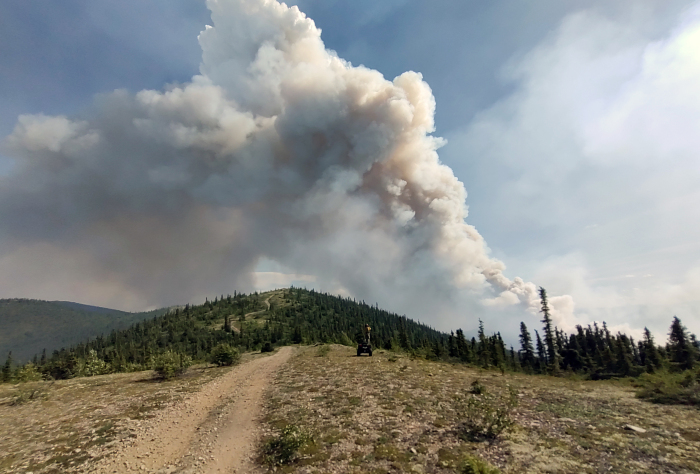
The Munson Creek Fire as seen from a ridge behind Chena Hot Springs on Wednesday, June 30, 2021. (Matt Nunnelly/Alaska DNR-Division of Forestry)

Winds on Friday pushed a wildfire near Fairbanks past a control line and closer to the Chena Hot Springs Resort and other outlying structures, according to the state Division of Forestry.

That forced firefighters to retreat from the advancing Munson Creek Fire. They’re now focused on protecting the resort and nearby homes and cabins, said state forestry information officer Tim Mowry.

The fire is estimated at 5,000 to 10,000 acres and is burning two miles south of the hot springs.

“We didn’t feel safe having the firefighters on the ridge, so the firefighters are falling back, and they’re focused now on setting up protection measures around structures at the hot springs and cabins and homes along Chena Hot Springs Road,” Mowry said. “That involves laying down hoses and pumps and setting up sprinklers and having them ready to turn on if the fire gets to that point.”

Mowry emphasized that the Chena Hot Springs Resort is a very defensible site. The resort is roughly 60 miles northeast of Fairbanks.

“There’s a good water source at the hot springs,” he said. “The hot springs actually has some of their own firefighting equipment up there because they’re obviously not in the fire service area. We’re working with with hot spring’s owner, Bernie Karl, to try to get information to folks and to make sure that the resort is safe.”

As of 4 p.m. Friday, no evacuation order had been issued, and guests and staff remained on site at the resort.

Karl told the Associated Press that the resort didn’t evacuate in 2004 when it was surrounded by a wildfire, and he didn’t plan to do it now.

“This place is safer to defend than Fairbanks,” he said, underscoring there are two rivers on either side of them and a runway in the middle.

Karl expected the resort to have 210 guests by Friday night.

“We tell people to come out and enjoy the smoke and take a soak,” he told The AP.

Forestry officials, however, cautioned the resort and area residents to be on “set” alert, meaning they have items packed and are ready to leave immediately if needed.

Mowry said there’s some relief in the forecast from the hot, dry, windy conditions that have ballooned the size of Monson Creek fire over the past few days.

The fire was first reported June 18 and was started by lightning.

Yukon River on track for dismal king and chum runs

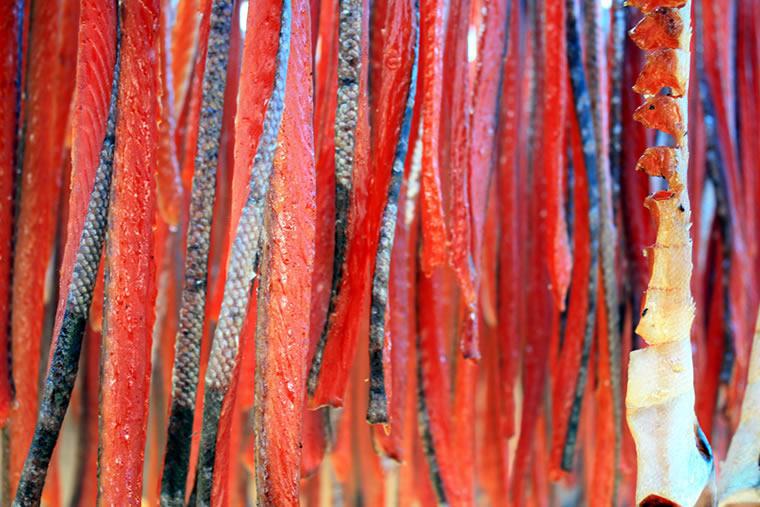
Yukon River salmon strips. (Courtesy of ADF&G)

The Yukon River Fisheries Drainage Association hosts weekly teleconferences where river residents, fishery organization leaders and government resource managers talk about what’s happening with salmon on the river.

There wasn’t much positive news during this week’s teleconference.

Yukon River Inter-Tribal Fish Commission chair Brook Woods has a dismal king salmon count from the Pilot Station sonar near the river’s mouth.

“As of Monday, June 28, just over 60,000 king have been counted at the Pilot (Station) sonar station, and that is only half the average count for this date,” she said.

Wood said the run is estimated to be about midway through, and if things don’t change, a border passage agreement with Canada and drainage-wide escapement goals won’t be met.

“If we’re not able to meet escaping goals, this will be the third year in a row,” she said.

The situation is even worse for summer chum salmon. State research biologist Fred West said just 31,000 are estimated to have passed the Pilot Station sonar as of Monday, well below the historic median of 500,000.

“That’s the lowest on record for this day. So yeah, so this is lower than the runs we saw in 2000 and 2001,” he said.

Deena Jallen, the state summer season management biologist, said managers had no choice but to close the fishery.

“I really feel that everyone is really struggling this year. We know it’s really hard. If there were a fish to be harvested I would you be wanting to let people harvest but there’s just no fish to be harvested so it has to be closed,” she said.

The Chinook and summer chum salmon fishing closure extends from the Yukon Rivers headwaters to its mouth as well as area coastal communities. Hooper Bay resident John Rivers lamented the situation.

“I’ve never seen Hooper they closed ever since I was a little boy to this day. It’s so sad to see it’s closed,” he said.

Martin Kelly of Pilot Station said communities need help filling the food void.

“Fish and Game and everybody else better be prepared to go out and get some crab or pollock or halibut and bring it to each household on the Yukon River,” he said.

Application for a federal disaster declaration is already in the works, according to Yukon River Inter-Tribal Fish Commission director for the Tanana Chiefs Conference, Stephanie Quinn Davidson.

“Just so folks know, that disaster declaration process takes a long time. We don’t anticipate that funding would be available to fishermen for at least a year, maybe possibly two years,” she said.

Quinn-Davidson said that a request submitted for a disaster declaration for last summer’s poor Yukon River salmon runs was just recently forwarded by the state to the federal government.

Developers hope to open electric vehicle charging stations along Alaska Railbelt by summer 2022

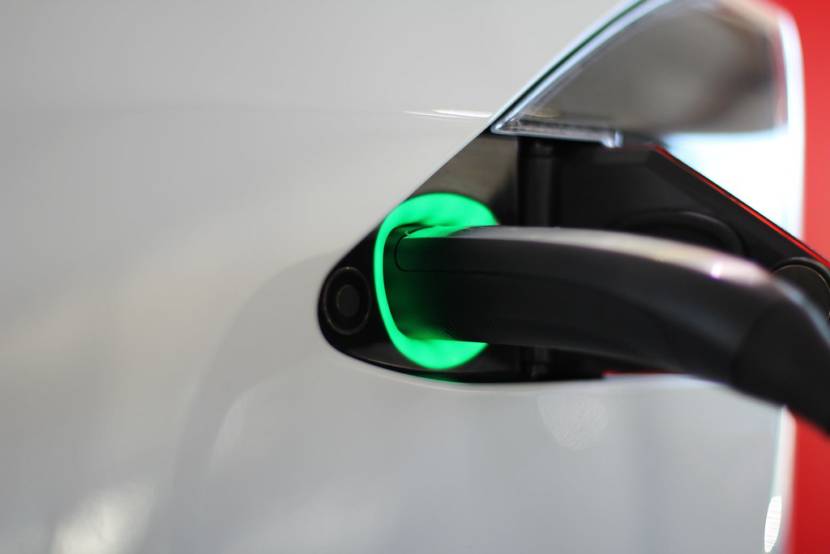
A Tesla Model S charging (Creative Commons)

Efforts are underway to build a network of electric vehicle charging stations along the Railbelt that developers hope could connect the Kenai Peninsula to Fairbanks by the summer of 2022.

The Alaska Energy Authority recently announced the award of grants totaling $1 million to help Railbelt businesses and other entities install electric vehicle chargers. The nine grant recipients ranged from the Seward Chamber of Commerce to the Three Bears grocery store in Healy.

AEA executive director Curtis Thayer said the state agency aims to help make long-distance travel along the Railbelt corridor more viable for electric vehicles.

“If you want to drive from Homer to Fairbanks right now, you can’t do it,” Thayer said. “But we’re hoping by this time next year that you will be able to drive from Anchorage to Fairbanks and charge your vehicle along the way.”

The AEA EV charger grant program is funded by Alaska’s share of a Volkswagen emission settlement. Thayer said the settlement money provides a way to jumpstart the installation of the chargers.

“I don’t think in the long run this is really a government program or something that the government should be involved in,” he said. “But with this initial funding that we had, and the need and the interests in electrical vehicles — we wanted to make sure people know that it could be done and they can use electrical vehicles for that 600-mile distance.”

Thayer noted that the grant recipients must pay a portion of the cost of installing their EV chargers.

“There was over another half a million dollars total that was matching,” he said. “So you have a lot of these grantees put up a lot of their personal funds to match these grants to be competitive. So I think a lot of people realize it’s kind of an investment in the future.”

The AEA selected grant recipients at locations between 50 and 100 miles apart but did not get any applications north of Healy, said Thayer. It plans to offer additional grants targeting that last portion of the route.

“We would love to find somebody in Nenana or in Fairbanks,” he said.

Meanwhile, Golden Valley Electric Association is independently planning to install two EV chargers at its Fairbanks headquarters. Association spokesperson Meadow Bailey said the co-op is interested in expanding the availability of EV chargers around its Interior service area.

“We recognize that as people start to adopt this technology and have more EV vehicles, one of the big limitations is the range they can travel,” she said.

Bailey said the co-op is also funding an independent fast charger project.

“This summer we partnered with ReCharge Alaska,” she said. “They are working to install a charger in Cantwell.”

ReCharge Alaska is a private company run by Chris Hall of Anchorage, a North Slope oil engineer with a passion for electric vehicles.

“This to me is another project that needs to be done,” said Hall about the Cantwell project. “This is the first endeavor ever for doing a DC fast charger in mainland Alaska. This is the first endeavor ever for trying to figure out how to make these things operate in the cold weather.”

Kirk Martakis is Hall’s friend and fellow EV enthusiast. He runs the Driving on Sunshine charging station in Cantwell, where he produces and sells solar energy to EV drivers.

“Once people really start seeing how good this is, you know, all the gas stations will have DC fast chargers,” he said.

Martakis said the 75-kilowatt fast charger he and Hall plan to install with the Golden Valley grant money will be five times faster than his current units. And he anticipates that will boost already growing demand.

“Last year we saw a tripling of the number of vehicles that stopped in. And this year we’re looking at doubling it,” he said. “Most everybody who comes and charges here are so grateful that somebody has stepped up to the plate to allow for them to be able to travel from Fairbanks to Anchorage and to the Kenai.”

Martakis and Hall both emphasized that the Golden Valley supported project is as much about providing a fast-charging option as field testing the technology in the Interior.

Everyone involved in expanding EV charging access, however, also points to regulatory hurdles that need to be surmounted. The Regulatory Commission of Alaska is currently considering changes to better accommodate EV charging stations.

Dinosaurs likely lived in Arctic year-round, according to recent Alaska discovery

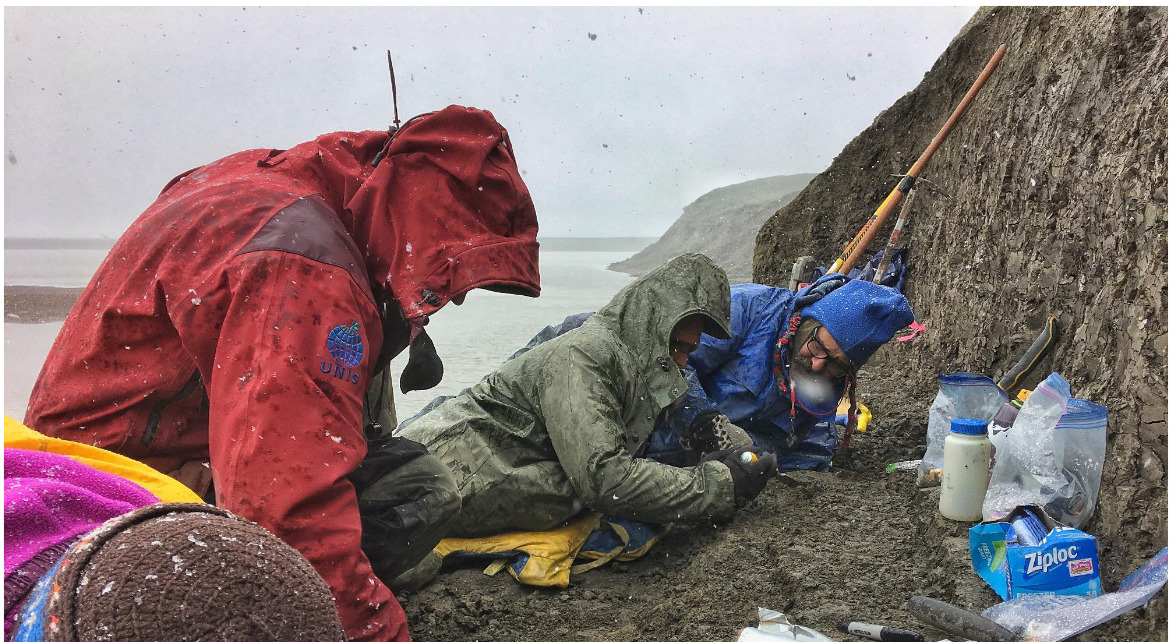
Researchers dig for dinosaur bones on a bluff on the Colville River (Photo courtesy of UAF)

The discovery of baby dinosaur bones on Alaska’s North Slope has paleontologists rethinking the animals’ lives and physiology.

University of Alaska Museum of the North director Pat Druckenmiller and colleagues from the University of Alaska Fairbanks and Florida State University made the discovery along the Colville River.

Druckenmiller said the area of eroding bluffs has yielded many dinosaur fossils over the last couple of decades. But these bones are different.

“Tiny little baby bones and teeth, not of adults and juveniles, but of actual very, very young animals that died either in the egg or just after they hatched,” he said.

The baby dino bones were found in sediments collected by University of Alaska Fairbanks and Florida State University scientists. They ranged from those of small bird like animals to giant Tyrannosaurus. Druckenmiller said the discovery of the baby dinosaur bones so far north indicates year-round residency.

“Dinosaurs likely had incubation periods upwards of five to six months for some species. And if that’s the case, a dinosaur laying its eggs in the spring would have been hatching them late in the summer,” he said.

If dinosaurs were migrating, they would have had very little time to move to lower latitudes with newborns, which suggests that the animals did not, in fact migrate.

“We think it’s more likely they actually managed and adapted to living in the Arctic conditions, year-round,” he said.

Given that the site where the bones were found was closer to the North Pole 70 million years ago, Druckenmiller said even in that era’s warmer climate, the dinosaurs endured pretty extreme conditions.

“Yes, it was cold. Yes, it was freezing conditions and probably snow. But at 80 to 85 degrees north you have to deal with three to four months of continual winter darkness. That’s the kind of world we don’t generally envision dinosaurs living in,” he said.

Druckenmiller said living in such relative cold is also telling about the dinosaurs’ physiology.

“If you lived up there year-round, you almost certainly had to have made your own body heat and probably maintain some elevated internal body temperatures,” he said. “And that, in a nutshell, is warm-bloodedness.”

Druckenmiller said that adds to evidence from other studies pointing to warm-blooded dinosaurs. Findings from the study are published in the journal Current Biology.

Site notifications
Update notification options
Subscribe to notifications