KYUK - Bethel

KYUK is our partner station in Bethel. KTOO collaborates with partners across the state to cover important news and to share stories with our audiences.

Dolena Fox is one of the world’s first female Yup’ik commercial pilots

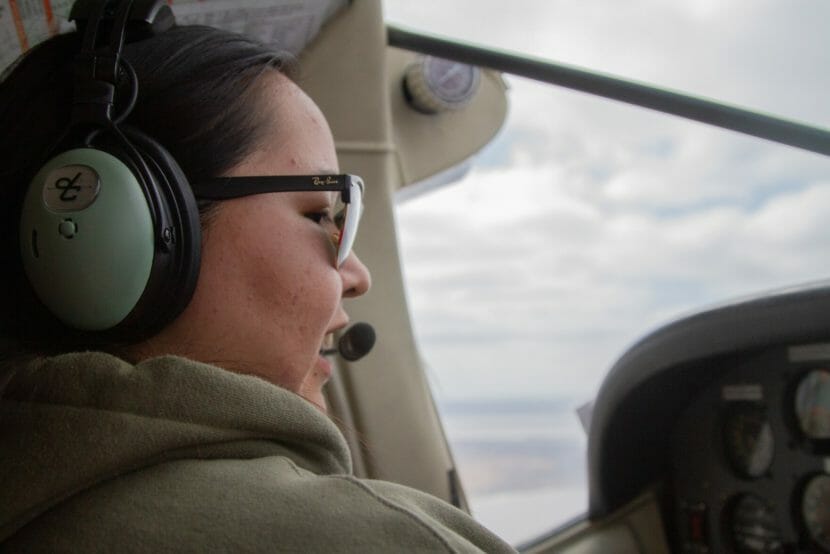
Pilot Dolena Fox flying a silver and blue-striped Cessna 207 to Tuntutuliak. (Photo by Olivia Ebertz/KYUK)

Pilot Dolena Fox is flying a silver and blue-striped Cessna 207 to Tuntutuliak. At 26 years old, Fox is at least a decade younger than her plane.

It’s the end of Fox’s first two-week shift as a commercial pilot. She said that the first 10 days have been exhausting but interesting.

“Lots of learning, and very challenging in a good way,” said Fox.

Fox grew up mostly in Kipnuk, and a little in Kwigillingok and Bethel, too. That meant lots of flying back and forth between villages. The first time Fox remembers being excited by the idea of flying was in middle school, when she flew with a female pilot for the first time. It sparked the idea that maybe she could fly too.

“That’s kind of like when it felt real. Like it’s achievable, you know?” said Fox.

Only about 6% of professional American pilots are women. At regional airline Grant Aviation, where Fox works, only five of their 60 pilots are female.

And Fox is the first female Yup’ik pilot to work for Grant. There’s been at least one other female Yup’ik commercial pilot before her: Lindsey Jean Laraux flew commercially in the Y-K Delta from 2007-2010.

Fox’s uncle Andy Fox also works for Grant. He’s worked for them on and off for 49 years. He said he was proud of her.

“Yeah. I sure am,” Andy said.
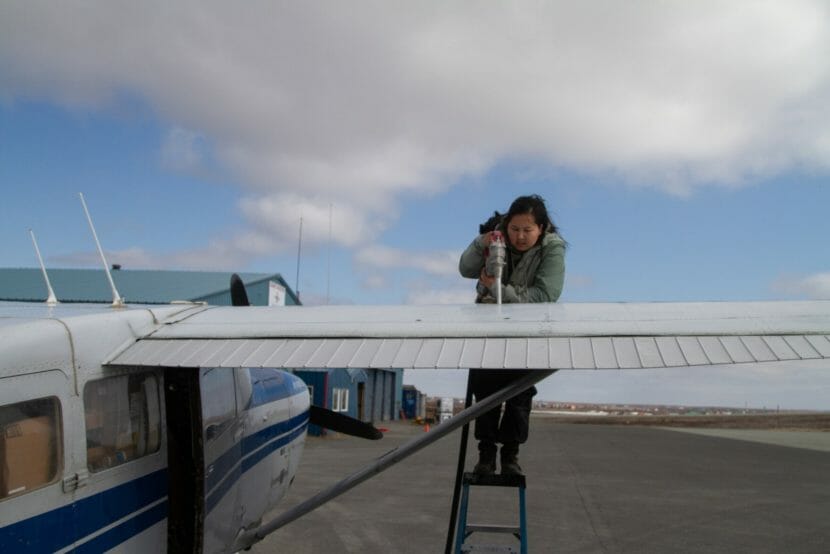
Dolena Fox refuels her plane before taking off. (Photo by Olivia Ebertz/KYUK)

Fox first worked near airplanes before pursuing her dream of flying them. She worked for a few years at Ravn, selling airplane tickets. Then, during the first year of the pandemic, Ravn went bankrupt and she lost her job. That was the final push she needed.

“And I was like, ‘Well, I’m just gonna go for it.’ So I did. I moved to Anchorage and I went to flight training,” said Fox.

Less than two years later, she had her private pilot’s license, her instructor’s certification, and her commercial pilot’s license.

On the way to Tuntutuliak, we chat about how the job has been. She said that the first village she ever flew to for work was her home village of Kipnuk. She said that it was a coincidence. When she landed, lots of people came to greet the plane.

Once we land in Tuntutuliak, Fox wastes no time in unloading her cargo. She passes each box to the gate agent, a man with a four-wheeler. There’s a box with a grocery store sheet cake, and another with blue sprinkle cupcakes. It’s someone’s birthday in Tuntutuliak. The agent swaps the cargo for passengers: a girl and her mom. Fox greets them and takes their luggage.

The dad who has dropped them off, Andrew Frank, said that it’s incredible to have a pilot in the Y-K Delta who can communicate in Yugtun with them.

“It’s always really impressive and makes us very proud that we see Native pilots. Elders that don’t know how to speak English can always talk to them,” said Frank.

Fox said that speaking Yugtun and flying locals around the Y-K Delta has been her dream since middle school. But she didn’t always think that dream could be a reality.

“For me personally, it was really hard to even just leave Bethel. To go to flight training and to go to school and to do something that I never saw as a successful goal. But I want more people to know that doing what they want to do is actually very achievable,” said Fox.

Helping people learn how to fly without leaving Bethel is the reason she got her instructor’s certificate. According to Grant Aviation, when there was a local flight school in Bethel there were more pilots from the Y-K Delta. Now, Fox is one of the only ones. Out of the 60 pilots at Grant, only five are from the region.

As far as what’s next for Fox, she may move on to bigger aircraft one day. But for now she’s content to fly in her home region.

“I feel like everything I have on the ground dissipates in the air. That’s all I have to care for: keeping the plane in the air. So everything else, all my problems or all my things I need to do in life, is left on the ground when I take off,” said Fox.

The Lily is a ghost barge, and she is floating down the Kuskokwim

A barge with a loader on it surrounded by chunks of ice on a river
The Lily at Bogus Creek, about 9 miles upriver from Tuluksak, on May 10, 2022. (Photo by Olivia Ebertz/KYUK)

Last fall, Alaska Logistics left two barges to freeze in Yukon-Kuskokwim Delta rivers. One has dislodged and become a free-floating ghost barge, winding down the Kuskokwim River. It’s been stuck at the Macivik Slough, just below Tuluksak, since May 10.

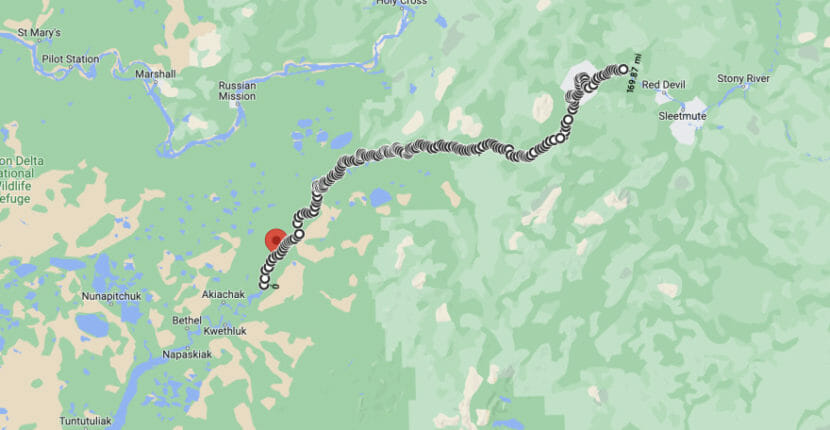
The ghost barge has a name. It’s called The Lily. It traveled about 170 river miles down the Kuskokwim after dislodging from the ice when the river broke up at Georgetown on May 8.

“I dunno, it just kinda caught us,” said Allyn Long, a co-owner and manager of Alaska Logistics.

Long said he made the decision to let the Lily freeze into the river when ice started to form around it in October 2021, and the barge’s accompanying tugboat experienced motor issues. But he did take a couple of measures to secure it for breakup. His crew tried to brace the barge against a sandbar, then they fastened the loader it was carrying to its top and pumped the barge full of water to try to weigh it down and keep it from capsizing.

“We pumped about 15 or 20 thousand gallons of water into it,” Long said.

But despite their efforts, the barge got loose and the loader on top moved.

Willie Phillips from Tuluksak saw it more than 150 miles into its journey. He took a boat out for logging and spotted it on May 10 as it was passing the village.

“It seems like it shifted a little bit forward. The front area was lower than the back,” Phillips said.

It moved past the village and lodged into a sandbar at the Macivik Slough. Other villagers along the Kuskokwim have been checking on it.

Someone in Akiak traveled up the river to take photos of The Lily and posted them to Facebook.

Long chuckles when he thinks about the barge entertaining Kuskokwim residents. He is not concerned about the barge drifting too far or floating out to sea.

“The likelihood of it getting out the mouth is very, very, very small. It’ll go aground somewhere. Probably even before, I’m gonna say, Napakiak. Yeah. That would be my guess. Somewhere down there, somewhere probably around Oscarville,” Long said.

Long said that it’s not safe to go after the barge until the ice is all cleared from the river. Ice has jammed on the Kuskokwim at Bethel. But once it’s safe, Long said that it should be easy to get the barge back.

“We have our own tugboats and different friends that would help find it. People kind of on standby with fishing boats,” Long said.

The Lily wasn’t the only Alaska Logistics barge to freeze into Y-K Delta rivers last fall. Another barge froze near Eek, but they anchored that one, and it’s stayed in place.

A map showing the barge's course down the river
The Lily’s journey down the Kuskokwim (Olivia Ebertz/KYUK)

In 2019, Alaska Logistics had another barge freeze in place and then drift down the Kuskokwim during spring break up in 2020. That one traveled from Aniak to Bethel.

Long said that his company has been moving freight by barge in the region for 20 years. He blames climate change for making freeze ups and breakups “more dramatic.”

When Long left the barges to freeze into the rivers in the fall, the U.S. Coast Guard told KYUK that they were planning to do an investigation to see if there was any wrongdoing on the part of Alaska Logistics. The Coast Guard did not return phone calls on May 12.

Sleetmute and Red Devil have declared local disaster emergencies following flood damage

An aerial photo of a village at a bend in a river
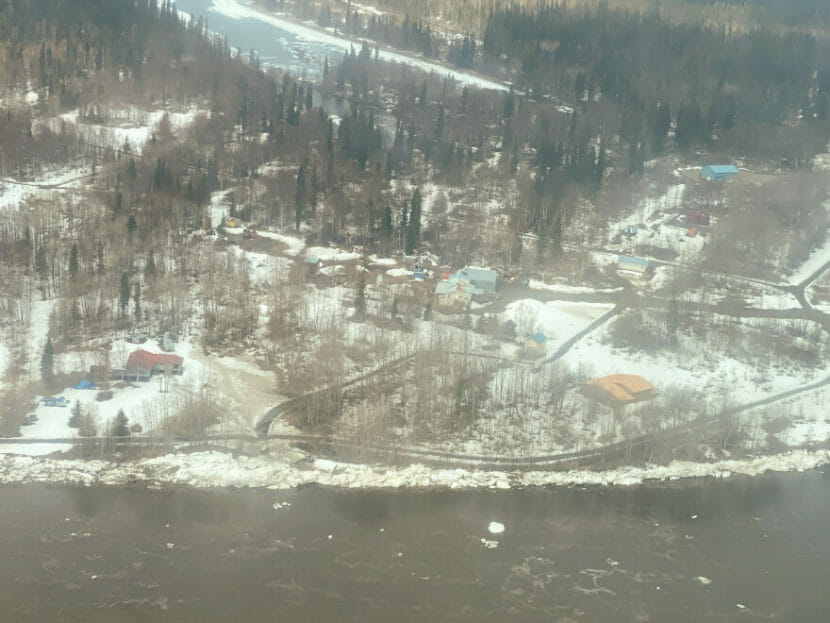
The upper Kuskokwim River community of Sleetmute as seen on May 10, 2022 following flood damage. (Photo by Olivia Ebertz/KYUK)

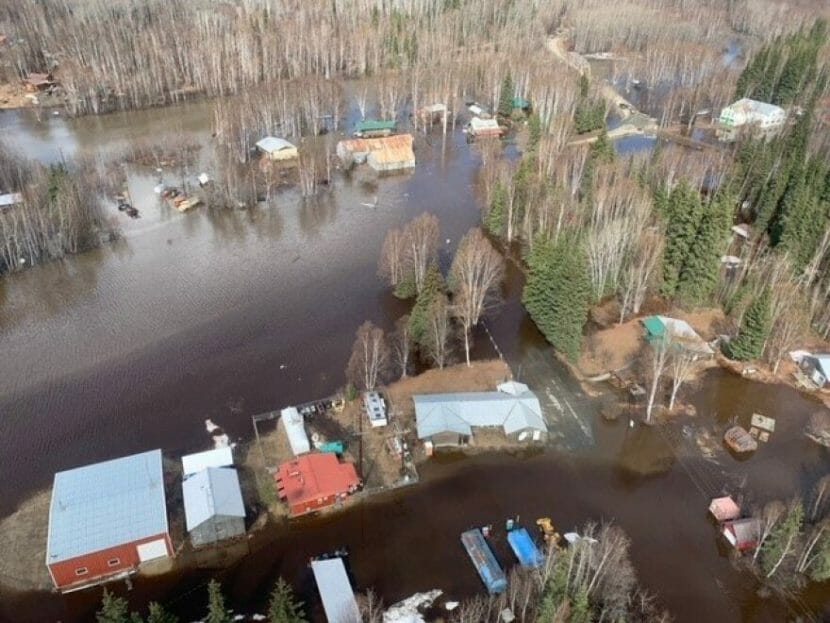
The upper Kuskokwim River communities of Sleetmute and Red Devil have both declared local disaster emergencies following flood damage the occurred on Sunday, May 8. The water has since receded, and the National Weather Service has ended its flood warning for the Kuskokwim River.

Tim Andreanoff lives in Sleetmute. He remembers the water rising fast, flooding his yard around 8 a.m. on Sunday.

“All of a sudden the water was just coming in so quickly. I had no time to move anything,” Andreanoff said.

The water swamped three snowmachines and a Yamaha boat motor. Andreanoff said that he had placed them beyond the usual flood point, but the water rose above that level.

“I can probably fix them. It’ll probably take about a week or more,” Andreanoff said, noting that it will depend on his ability to get parts. The water did not reach Andreanoff’s house, but others were not so lucky.

The state Emergency Operations Center reported that flood water inundated at least five homes in Sleetmute. Outside other homes, the water damaged insulation, freezers, and vehicles. Also damaged are roads, the dump, the cemetery, and Tribal equipment.

Downriver, in Red Devil, the state reported that flood waters damaged two roads, the runway, inundated a home, and contaminated water wells.

Theresa Morgan said that the flooding has turned her home in Red Devil into an island after the water washed out a nearby road.

“Once all this is all over and the danger is gone, we have to go back and forth with a boat to go to the post office,” Morgan said.

The state Emergency Operations Center said that it is coordinating flood response with the Yukon-Kuskokwim Health Corporation and the Association of Village Council Presidents. It said that the Red Cross is coordinating with community leaders in Sleetmute to provide flood assistance.

Flooding in Interior Alaska could cause slower internet, data speeds in Yukon-Kuskokwim Delta

Manley Hot Springs on Saturday, May 7, 2022. (Photo courtesy Alaska State Troopers)

GCI customers across the Yukon-Kuskokwim Delta could experience slower data and internet speeds.

GCI communications director Heather Handyside said that flooding at Manley Hot Springs in Interior Alaska on Saturday knocked out power to a repeater station that helps distribute internet to the Yukon-Kuskokwim Delta. The repeater has been running on backup battery power for over 48 hours, and that power is about to run out. GCI has been unable to install a generator at the site due to the flooding.

“We have a helicopter on standby. We tried to use ATVs, but because of the flooding, the ground is really muddy. So we haven’t been successful getting up there,” Handyside said.

When the battery dies, many Yukon-Kuskokwim Delta customers will notice a slow-down in data and internet speeds. Customers might not be able to stream video or do gaming. Other services should remain accessible.

“We think essential functions like email will remain intact. Definitely their voice service over wireless and voice over landline service will remain intact. That means 911 will remain available,” Handyside said.

The repeater that lost power is part of GCI’s TERRA network, which serves 45,000 people across 84 Alaska communities. Internet disruptions will occur until a generator is installed or power is restored to the area.

At Bethel forum, US House candidates address Roe v. Wade, salmon and public safety

Three candidates sit at a table onstage.
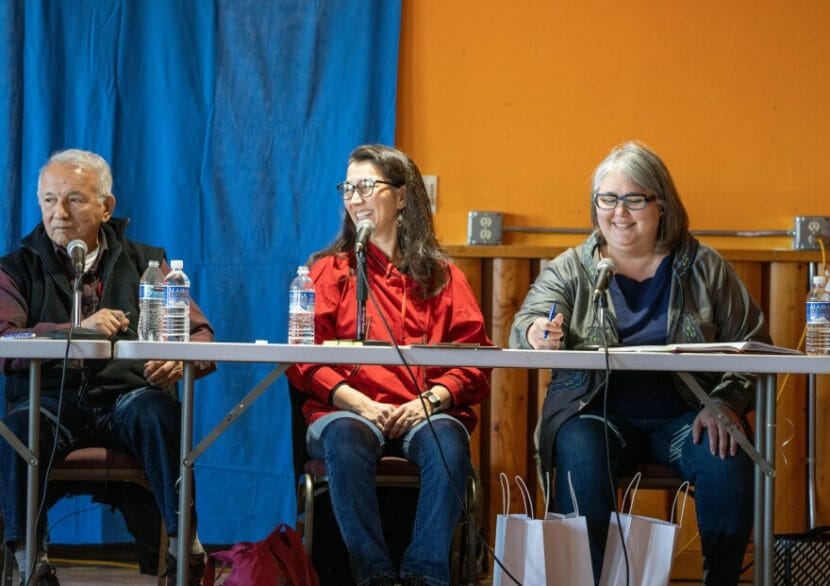
Emil Notti, Mary Peltola, and Tara Sweeney discuss rural issues in Bethel. (Photo by Elyssa Loughlin/KYUK)

Three Alaska Native candidates running in the special primary election for Alaska’s U.S. House seat came to Bethel for a candidate forum on May 6. Constituents attending the forum brought up three main issues important to them: abortion access, salmon conservation and public safety.

Four of the 48 candidates in the race were slated to attend: Emil Notti, Mary Peltola, Tara Sweeney and Sarah Palin.

Peltola, a Democrat, is Yup’ik and served as a legislator for the Bethel region for a decade. Most recently, she served as the executive director of the Kuskokwim Inter-Tribal Fish Commission.

Notti, a Democrat, is Athabascan from Koyukuk. At age 89, he’s the oldest candidate in the race. Notti is best known for being AFN’s first president and helping to author the Alaska Native Claims Settlement Act.

Sweeney, a Republican, is Iñupiat from Utqiagvik. She served as the assistant secretary of Indian Affairs during the Trump administration.

But Bethel resident Trim Nick did not attend the forum to see these three candidates.

“I came to see Sarah [Palin],” Nick said.

But Palin didn’t show. Heavy fog delayed Sweeney and Palin’s flight by hours. In the interim, Palin canceled her ticket and wasn’t able to get a new one. That’s according to event organizer and moderator Ana Hoffman, President and CEO of Bethel Native Corporation.

Hoffman asked the candidates six questions about rural Alaska issues. In one of the final questions, she asked the candidates if they supported overturning Roe v. Wade and allowing individual states to legislate abortion access. Alaska’s constitution protects the freedom to choose abortion, but that could change next year if a constitutional convention is held and the state constitution is amended.

Peltola and Sweeney both said that they were pro-abortion rights. Peltola said that she would work to defend Roe v. Wade. Sweeney added that she does not support government funding for abortion. Emil Notti said that he believes in state’s rights, which would mean overturning Roe v. Wade, but he said that the choice should remain legal at the state level.

“As far as abortion goes, I think that’s a three-way decision. It’s between a woman and her doctor, and the woman and god,” Notti said.

Multiple people who attended the forum said that abortion was the most important issue for them this election cycle.

“I wanted to ask what they will do about this Roe v. Wade because it’s really scary. It’s really alarming. And it definitely puts the safety of Indigenous women in the ring,” Bethel resident Victoria Sosa said.

Other attendees said that salmon conservation was their main issue. All three candidates spoke about the importance of protecting salmon during the forum. In a follow up interview with KYUK, each candidate said that they would work to reauthorize the Magnuson-Stevens Act. The act was originally authored by the late congressman Don Young, whose seat the candidates are vying to fill. Its aim is to protect threatened or overfished stocks.

Jayvin Williams was helping out at the event. His job was to pick up candidates from the airport and play a traditional drum during the forum when the candidates’ time to answer the questions was over. Williams said that there was one issue that was most important to him.

“I really think that public safety is the main issue,” Williams said.

Only one candidate, Peltola, offered solutions for local public safety during the forum. She responded to a question from Hoffman about how candidates would propose improving access to health care, public safety and education.

“Public safety is intertwined with so many other issues. A lot of people remain in dangerous households because of Alaska’s chronic housing shortages. So among other things, I will seek opportunities to increase our housing supply and make housing genuinely accessible,” Peltola said.

Later, in a response to a question about rural Alaska’s role in national security, Peltola said that she supports an increased military personnel presence in rural Alaska. She said that could also aid in local public safety with military officers acting as first responders in emergencies like floods or fires.

Sweeney also addressed national security.

“It’s about securing our borders, and ensuring that we continue to provide the necessary services to the rest of the country through our natural resource development. Whether it’s oil and gas up on the North Slope or critical minerals that this country needs so badly to wean itself off of the dependence that we have from China,” Sweeney said.

At the end of the event, Sweeney’s campaign handed out bags of muktuk from Utqiagvik. But Peltola, the local candidate, seemed to have the hometown advantage. Many constituents said that they were voting for her, including Bethel voter Madison Glore. She just turned 18 and is voting for the first time in this special primary election.

“I knew her [Peltola] personally. And I know her goals as a candidate. And I’m just excited to see where she takes it. I know a little bit about her and know what she wants. She is also Alaska Native, so that’s pretty exciting to see one up there,” Glore said.

If one of the four Alaska Native candidates running in this special election wins, they would be the first Alaska Native elected to the U.S. Congress.

The deadline to register to vote in the special primary election for Alaska’s U.S. House seat is May 12. Ballots must be postmarked by June 11.

Time is running out for the Alaska Legislature to pass tribal recognition bill

Rep. Tiffany Zulkosky, D-Bethel, speaks during a House floor session in the Alaska Capitol in Juneau on Feb. 23, 2020.
Rep. Tiffany Zulkosky, D-Bethel, speaks during a House floor session in the Alaska Capitol in Juneau on Feb. 23, 2020. Zulkosky authored House Bill 123 which passed the House in January but has been stuck in its final Senate committee since Feb. 10. (Photo by Skip Gray/KTOO)

Time is running out for the Alaska Legislature to pass a bill recognizing Alaska’s 229 federally recognized tribes. House Bill 123 faces just one last committee before it can be voted upon on the Senate floor. Most Democrat and Republican legislators have a reason to try to get the bill passed before the session ends.

If the bill passes, the State of Alaska will have to start recognizing Alaska’s tribes as sovereign nations. Tribes are inherently sovereign, and the United States federal government already recognizes them as such. The federal government engages with tribes on a nation-to-nation basis, but the state does not.

Bethel Rep. Tiffany Zulkosky authored the bill. It passed the House in January, but it’s been stuck in its final Senate committee since Feb. 10. It has been heard five times in the Senate State Affairs Committee, which is many more times than it was heard in other committees. It will be heard once more Thursday afternoon.

The bill must pass out of committee this week or the next to get heard on the Senate floor before the session ends. That requires the majority of the five committee members to approve the bill. The committee chair, Sen. Mike Shower, has expressed support for the bill. His aide told KYUK that there have been multiple committee hearings because Shower wants to make sure the other committee members understand it.

The most opposition has come from committee member Sen. Lora Reinbold. She said that she thinks 229 tribes is a lot, and she’s not sure about granting them sovereignty because she doesn’t understand how they get their members.

“AFN general counsel talked and I asked her, ‘How is a tribe defined? Is it a bloodline, etc.?’ And basically what she said is they’re moving away from the bloodlines. They’re moving away from the regional, but again, no one could tell me how exactly tribal members were chosen,” said Reinbold during a floor session on April 4.

Tribal sovereignty means that each tribe has the inherent authority to govern itself and make its own decisions about membership.

Sen. Scott Kawasaki is the lone Democrat on the committee. He said that Reinbold is a fringe voter and doesn’t represent the other three Republicans on the committee. The bill could still move out of committee without her support. Kawasaki said that it’s important that the Legislature pass this bill before the session ends. If they don’t, the bill will become a ballot measure.

The ballot measure could draw more Democratic voters to the polls during the midterm elections, which Republicans don’t want.

“If there were a large Native Alaskan contingency that went to the polls, that typically votes blue, then there could be the potential for some upset elections in certain regions. I think that that is on the minds of most of the Republican folks,” said Kawasaki.

But Kawasaki said that it could also work against Democrats. The ballot measure could draw voters who don’t support tribal Sovereignty and would vote against it.

An aide for Shower said that his office won’t say whether or not he intends to try to move the bill out of committee on May 5.

Kawasaki said that Shower is usually very diligent about telling committee members ahead of time whether or not he intends to move a bill. But Kawasaki said that there has been radio silence on HB 123 so far.

Republican and Democratic legislators from both the House and Senate have signed on to co-sponsor the bill, including Y-K Delta Sen. Lyman Hoffman.

Site notifications
Update notification options
Subscribe to notifications