Nat Herz, Alaska Public Media

Tali Birch Kindred, daughter of deceased state Sen. Birch, takes step toward trying to fill his seat

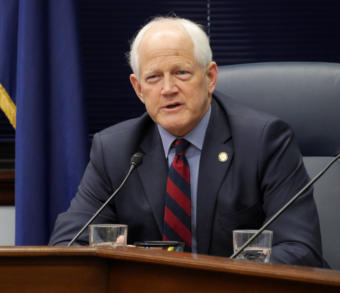
The late Sen. Chris Birch, R-Anchorage, in 2017, when he was a state representative. (Photo by Skip Gray/360 North)

The daughter of recently-deceased state Sen. Chris Birch is seeking to replace him, according to documents she filed with state regulators Friday.

Tali Birch Kindred, an attorney for an oil company called Oil Search, filed a financial disclosure with the state, a prerequisite for people applying to fill Birch’s seat.

Another candidate, Al Fogle, also filed the required financial disclosure Friday. Fogle ran unsuccessfully last year for one of the two state House of Representatives seats in Birch’s district.

In accordance with state law and Republican Party rules, GOP leaders in Birch’s district are collecting applications from people interested in replacing Birch. They’ll choose three candidates to recommend to Republican Gov. Mike Dunleavy, who will pick Birch’s replacement.

That replacement will then have to be confirmed by a majority vote of state Senate Republicans. They will then have to seek reelection next year if they want to keep the job.

With ANWR drilling on its doorstep, an Alaska Native village is poised to profit

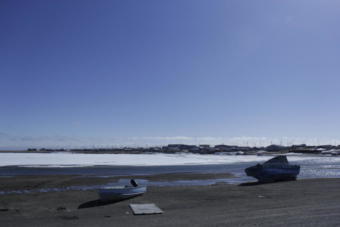
Kaktovik sits on an island in the Arctic Ocean on Alaska’s northeast coast. It’s the only village within the Arctic National Wildlife Refuge’s coastal plain, which Congress opened to oil exploration in 2017. (Photo by Nat Herz/Alaska’s Energy Desk)

After Congress opened the Arctic National Wildlife Refuge to oil drilling in 2017, the Kaktovik Iñupiat Corp. (KIC) should have been poised for a new era of prosperity.

Instead, its businesses were mired in lawsuits.

The corporation, which grew out of the 1971 Alaska Native Claims Settlement Act, was designed to generate profits for indigenous Iñupiat shareholders from Kaktovik, on the Arctic coast — the only village inside the refuge boundaries.

That auspicious location put the corporation in a prime position to strike deals with oil companies seeking to do business in the refuge’s coastal plain. But a contract to clean up an old federal well elsewhere on the North Slope had gone awry, with more than $5 million in losses for a company that’s 51 percent owned by KIC, according to court documents.

The company filed a lawsuit in April to recover the money. But with that case unresolved a month later, KIC’s businesses were facing more than a half-dozen of their own lawsuits from an array of creditors.

Then, John Rubini stepped in.

Rubini is one of Alaska’s most successful investors; his real estate company’s properties include several of Anchorage’s largest buildings, like the downtown offices of oil company ConocoPhillips. Forbes calls him one of the state’s two richest men.

In May, Rubini helped stave off the creditors and, with the corporation and a few other investors, formed a joint venture. The idea is to merge KIC’s local knowledge and proximity to the refuge with the investors’ deal-making experience, Rubini said in a phone interview.

“If there’s going to be development activity, I wanted to make sure that the community of Katovik had the tools and resources to participate fairly and effectively in that process,” Rubini said.

Rubini’s interest in Kaktovik underscores how the coastal plain’s opening has put the village in a new spotlight. It’s still too early to know if petroleum even exists in the refuge in commercially-viable quantities. But if it’s found, Kaktovik’s residents are simultaneously positioned to be among the biggest beneficiaries, and to experience some of the biggest disruptions.

The isolated village, on the oil-rich North Slope, already straddles the divide between traditional and modern. Oil industry taxes have helped pay for infrastructure in Kaktovik that’s lacking in other rural Alaska communities; its homes have flush toilets, and there’s a $16 million new basketball gym. Meanwhile, residents still subsistence hunt for caribou, and some of KIC’s board members double as captains of the boat crews that hunt whales off the coast.

While sharp divisions still exist over oil drilling in the village, a string of recent political and business decisions have increasingly set Kaktovik on a course aligned with development. Last year, Kaktovik’s city council ousted an anti-drilling mayor, Nora Jane Burns.

“We want to make sure that the actual voice of Kaktovik and its people are heard. That hasn’t been the way it’s been in the past,” said Charles Lampe, a KIC board member and drilling proponent.

Charles Lampe, a whaling captain and Kaktovik Inupiat Corp. board member, sits at a community meeting in Kaktovik last month. (Photo by Nat Herz/Alaska’s Energy Desk)

Opponents of development, meanwhile, have been increasingly marginalized in Kaktovik — and have turned elsewhere for help.

In December, Burns, the former mayor opposed to drilling, flew to Fairbanks. She was part of a group of Kaktovik residents that also included Evelyn Reitan, another drilling opponent, who was working at the time as the city administrator.

In Fairbanks, the delegation held an unusual meeting with leaders of the Gwich’in people, a different Native group that lives outside the coastal plain. The Gwich’in people, citing possible harm to the caribou they subsist on, have lobbied relentlessly to keep the refuge closed to development — much to the frustration of Kaktovik’s Inupiat drilling supporters, who see the coastal plain as their land to manage.

When Kaktovik’s drilling supporters found out about the summit, it didn’t sit well, since many view the Gwich’in people as adversaries in the fight over the refuge. But Burns, who remains on the city council, said she felt compelled to go, though she knew it would “upset some people.” She and other Kaktovik drilling opponents have the same concerns as the Gwich’in, about the caribou, she said.

“You have to hear what they have to say, because they eat the same animals that migrate into our land,” she said

Bernadette Demientieff, a Gwich’in leader who participated, said she didn’t want to get into the specifics of the discussion, though she called the meeting a “healing and honest conversation.” But the event didn’t help the drilling opponents’ standing in Kaktovik: The village’s new mayor, Amanda Kaleak, subsequently fired Reitan from her job as city administrator.

Kaleak declined to be interviewed about city politics and her own views on development, saying she had to remain “unbiased.” But last year, when Burns was still mayor, Reitan had worked with her and the rest of the city council to issue a statement on Kaktovik’s behalf that called federally-run oil and gas development a “hostile process being imposed by government agencies acting in bad faith.”

Evelyn Reitan, an opponent of oil development in the refuge, worked as Kaktovik’s city administrator until she was fired recently. (Photo by Nat Herz/Alaska’s Energy Desk)

Reitan said she wasn’t given an explanation for her firing. She said she thinks a lot of things went into the decision — though she also said that she saw the move as driven by people she’s clashed with in the village, who support oil development.

The stakes

To understand what’s at stake in Kaktovik, the best place to look is 175 miles to the west — at Nuiqsut, another North Slope Inupiat village that Kaktovik residents on both sides of the drilling debate cite as a cautionary tale.

Nuiqsut sits at the edge of the National Petroleum Reserve in Alaska, an Indiana-sized tract of federal land that’s become a hot oil prospect in the past few years.

Kuukpik Corp., the Native claims settlement corporation that’s Nuiqsut’s version of KIC, owns more than 200 square miles inside the reserve’s boundaries. And it’s leveraged those holdings into lucrative oilfield-service contracts and land use agreements with oil companies. Those deals, in turn, help sustain annual dividends of $30,000 for each of Kuukpik’s shareholders.

The flip side of that? Oil developments have slowly encircled Nuiqsut; a major oil processing facility is visible on the horizon. As much as one-third of the area that residents use for subsistence hunting and fishing has been affected by development, according to Kuukpik. And some residents fear that diminished air quality is affecting their health.

A recent poll of 93 people conducted by Kaktovik’s city government found half in favor of oil development in the coastal plain, 30 percent opposed and the rest undecided.

But even opponents of drilling say they’re frustrated by the way the federal government has thwarted development on Kaktovik’s corporate lands inside the refuge.

On a map, Kaktovik is a dot, on the Beaufort Sea coast midway along the refuge’s northern edge. But residents see a huge swath of the refuge lands to the south, all the way to the Brooks Range mountains, as their territory, too.

The Iñupiaq people have thousands of years of history on the North Slope, and some used Barter Island as a seasonal home to fish, and hunt for marine mammals. When they weren’t along the coast, they were hunting sheep and caribou in the mountains.

Kaktovik sits on Barter Island, on the Beaufort Sea coast. (Photo by Nat Herz/Alaska’s Energy Desk)

“None of this country is wilderness. It never has been. It has been continuously used and occupied by us and by our ancestors for millennia,” Kaktovik residents wrote in “In This Place,” a 1991 manifesto that outlines their views about land and development.

Through the 1971 Native claims settlement act, Kaktovik’s village corporation received a little less than 150 square miles, or less than 10 percent of the area that Congress opened to oil leasing two years ago.

Edward Rexford, pictured in his office in Kaktovik, works for KIC and is an avid supporter of oil development in the Arctic Refuge’s coastal plain. (Photo by Nat Herz/Alaska’s Energy Desk)

Even that comparatively small, corporate-owned area was off-limits to drilling until lawmakers’ 2017 vote. And Kaktovik’s residents, along with everyone else, are barred from driving four-wheelers into the surrounding Arctic Refuge land — unless they have a Native allotment and a special federal permit.

“The federal government took all our property, all the resources in the mountains, and gave us just a sliver,” said Edward Rexford, an avid supporter of oil development who works for KIC. “We felt kind of shortchanged.”

Land already leased

The support for development among Kaktovik residents stems, in large part, from the ample benefits they’ve already derived from oil production in Prudhoe Bay, to the west.

Drilling boosters envision an array of new gains that could come from development on the coastal plain: jobs, cash flowing into the village, new infrastructure like natural gas piped in to heat people’s homes, or even road access.

Kaktovik Iñupiat Corp., with two other companies, has already formed a business partnership that’s asked for federal approval to collect geologic data about the refuge that could be sold to the oil industry.

Those types of ventures — partnering with or working for other, larger businesses involved in the search for oil in the refuge — are likely to yield the most immediate benefits for KIC.

But beyond getting a chunk of the drilling action, more direct benefits to Kaktovik could come from development on the 150 square miles of coastal plain owned by KIC — which is also the area closest to the village. Oil production from those corporate lands could generate a lucrative stream of royalties for KIC and Arctic Slope Regional Corp. ASRC is the regional Native corporation for the entire North Slope, and it owns the rights to the oil beneath KIC’s land.

An aerial view of the Arctic National Wildlife Refuge near Kaktovik. (Photo by Nat Herz/Alaska’s Energy Desk)

Congress placed a 2,000-acre limit on oil infrastructure in the refuge in its 2017 vote. But that limit only applies to federal land, not corporate land. And ASRC has already leased its entire 150-square-mile area to oil companies Chevron and BP.

The agreement was signed in 1984, and afterwards, the oil companies spent $40 million on the only oil well ever drilled on the refuge’s coastal plain. The companies have gone to extraordinary lengths to keep the results secret, though a recent New York Times investigation suggested they were not promising.

When the coastal plain remained closed to drilling, ASRC allowed Chevron and BP to suspend their lease payments. But since Congress opened the area in 2017, those payments have resumed, said Teresa Imm, an ASRC executive who works on resource development.

Imm, in a phone interview, declined to discuss the financial details of the lease. But she said ASRC is proceeding cautiously. It’s too late, she added, for companies to make plans to drill exploratory wells next winter; if there was a proposal for the following winter, ASRC would work with Kaktovik to try to provide economic opportunities while minimizing negative impacts on the village, Imm said.

“Everybody thinks there’s this rush to the finish line. But because ANWR’s been sitting there unopened for years and years, there’s lots of work that has to be done to get ready for a program, including on our lands,” she said. “It’s a constant dialogue.”

How close to home?

Not everyone in Kaktovik trusts ASRC to safeguard the village’s interests, given that the regional corporation — Alaska’s largest privately held company, with some 12,000 employees — has its own financial interests at stake.

ASRC is based in Utqiagvik, 300 miles to the west, and that distance means that the corporation’s executives won’t feel the impacts of drilling as acutely as Kaktovik’s residents.

The corporation does, however, stand to receive an unusually large share of any oil revenue: Normally, the Native claims settlement act requires that regional corporations like ASRC share 70 percent of their resource development revenue with the 11 other regional corporations. But that requirement doesn’t apply to the corporate lands outside Kaktovik, because ASRC acquired the oil rights through a special land trade with the federal government.

Carla Kayotuk, a drilling opponent from Kaktovik, described being galvanized when she heard a former North Slope Borough mayor and ASRC board member, George Ahmaogak, talking on the radio. Ahmaogak, Kayotuk said, was vowing to block oil development around Teshekpuk Lake, a different area of the North Slope where he and other Utgiagvik residents have hunting and fishing cabins.

“I’m like, ‘Wait a minute!’” Kayotuk said. “‘You’re willing to open up my homelands for oil development but you don’t want it in your area?’ I’m like, ‘No, I’m not going to be quiet any more.”

Drilling opponents like Kayotuk said there’s already evidence that the village’s needs are being skipped over in the opening of the refuge.

For years, Kaktovik’s residents and institutions pushed for provisions in refuge-related legislation that would protect the village from and compensate it for impacts that arise from oil development. But none were expressly included in the 2017 bill — no Congressionally-mandated provisions to divert any of the oil revenue to Kaktovik, or to accommodate the village’s subsistence practices.

“The political process that led to the final vote to open ANWR required the legislation to be stripped down to its bare financial bones, without any of the meat addressing environmental protections, subsistence use and access, community impact aid and other provisions that define our region’s stake in the venture,” Sayers Tuzroyluk Sr., president of the pro-drilling Voice of the Arctic Iñupiat, wrote in an opinion piece last year.

U.S. Sen. Lisa Murkowski, who led the push to open the refuge to drilling in the 2017 tax bill, was unavailable for an interview, a spokeswoman said.

Kaktovik’s drilling boosters said they have no interest in oil development that would harm the spots residents hunt and fish; they use those areas, too.

“We want to make sure those places are identified and set off-limits, and make sure that the development isn’t going to intrude,” said Lampe, the village corporation board member, who also captains a whaling crew. Opponents of development, he added, “think that we’re trying to make where it’s just going to be a big oil field out there. That’s not what we’re trying to do.”

But Burns, the anti-drilling city council member and former mayor, said she thinks it will be tough for Kaktovik to stop development from happening in the areas that companies find petroleum.

“No matter what we say or do, I think they’re going to try to go where the oil is easily extracted,” she said.

Lampe said KIC is taking steps to keep oil development from dividing the community, namely by issuing a new class of shares.

In Nuiqsut, where the village corporation pays huge dividends stemming from nearby oil production, that dynamic has created something of a generational split: older residents who own shares tend to support development, while younger people who lack them are more likely to oppose it. Kaktovik’s village corporation wants to avoid that problem, and last month, its board decided to roughly double the number of its shareholders.

It’s better to do that, Lampe said, “before one drop of oil is developed, before any money is taken in.”

“We want to make sure that it doesn’t only benefit the original shareholders,” he added. “Because there are so many more of us that are going to be affected by development.”

Ravenna Koenig contributed reporting to this story.

PFD fight splits Alaska GOP, leaving some aligned with Democrats

Labor leader Vince Beltrami ran for state Senate as an independent in 2016 against incumbent Republican Cathy Giessel. He lost, but he now finds himself agreeing with her on key fiscal issues. (Photo by Wesley Early/Alaska Public Media)

Typically, some of the most intense fights at the Alaska State Capitol are between factions of Democratic and Republican lawmakers.

But one of the biggest ideological fractures complicating this year’s legislative session is within the GOP. And that’s creating some strange bedfellows as legislators fight over Republican Gov. Mike Dunleavy’s line-item budget vetoes.

To understand where this story is going, you have to go back 2 1/2 years, to when labor leader Vince Beltrami was running for state Senate against an incumbent Anchorage Republican, Cathy Giessel. The campaign, to put it mildly, got a little chippy.

Beltrami, in one video ad, accused Giessel of “name-calling,” and said she didn’t have “a record to run on.”

Fast forward to a month ago, when Beltrami — who lost the election — was at the Alaska Oil and Gas Association’s annual conference and ran into Giessel, who’s now Senate president. To reiterate, 2 1/2 years ago, Beltrami and Giessel were sworn enemies.

“Walked up, shook my hand, we talked for a minute, and I said, ‘You’re doing the right thing,’” said Beltrami, president of the Alaska AFL-CIO. “I think she was a little flabbergasted to hear that from me.”

It’s rare for Giessel and Beltrami to agree on almost anything, politically. But in the current standoff between Dunleavy and the Legislature, many Republican lawmakers, including Giessel, are defecting, and they’ve joined with Democrats and moderates to oppose the Republican governor.

During Wednesday’s failed vote to override Dunleavy’s vetoes, Anchorage Republican Sen. Natasha von Imhof lambasted the governor, saying he was purposefully throwing the state into a severe recession.

Anchorage Republican Sen. Natasha von Imhof speaks during Wednesday’s joint session of the Alaska Legislature. (Gavel Alaska video)

In a phone interview Thursday, she questioned an idea floated by some Republican lawmakers aligned with the governor — that before reducing dividends, the state should consider taxing residents to pay for government services.

“I do not know of any Republican Party in the U.S. that endorses an ever-increasing cash payout from the public treasury. And when you add a tax increase, this is sounding like complete socialism to me,” von Imhof said. “That is a far-leftist or a progressive value. That’s not even a Democrat value. I don’t think Nancy Pelosi’s even talking about that.”

Von Imhof said it’s a Republican principle to balance between competing needs — and that those needs include a prosperous private sector, which in turn calls for government services like education, public safety and human welfare.

Wasilla Sen. Mike Shower is on the other side of the Republican divide from von Imhof — he’s part of the GOP faction that skipped the Juneau vote on the vetoes and instead has been meeting in Wasilla, as Dunleavy asked lawmakers to.

Sen. Mike Shower, R-Wasilla, at a committee hearing this year. (Photo by Skip Gray/360 North)

Shower supports deeper cuts than von Imhof, and he said her position on the PFD only holds if you see the dividend as the government’s money. Shower doesn’t — he said the payments are Alaskans’ personal share of profits from the state’s natural resources.

Von Imhof, he said, “is talking about a bigger government that costs more money, and wants to use the dividend money that belongs to the people to pay for the government.”

“Is that a Republican concept?” he asked. “Or, is me wanting to keep the government smaller, more efficient, and keep money in people’s pockets more a Republican concept?”

Experts say that when it comes to the dividend, the split within the Republican Party correlates with income. Wealthier Republicans tend to see the dividend as a government program like any other that can, and should, be diverted to support critical state services.

Those with lower incomes see it as a unique benefit to living in Alaska that shouldn’t be considered part of the government at all.

Those differences are especially glaring right now. But Glenn Clary, the chair of the Alaska Republican Party, said he’s not worried that they’ll plague the party through election season next year.

“I’ve been at this a long time. And the terrain changes every session,” he said in an interview.

Clary said the two sides of the split have to start communicating, and repairing their relationships. And he said party leaders can help with that.

“We would offer ourselves to do that, to bring legislators together so that they can start mending fences and start communicating more, to find those places where they can agree and move on,” he said.

For Beltrami, the labor leader, the GOP’s internal split presents an opportunity. He said polls have shown Dunleavy’s approval rating declining since the vetoes, and Republicans who stay aligned with him will present a big target for groups like Beltrami’s.

“The people that are out in Wasilla that are hitching their wagon to this governor — not to be too hyperbolic, but they are writing their own death warrant in the next election if they’re in districts that are not just so solidly red,” Beltrami said.

Like Clary, though, Beltrami said there’s still plenty of time for things to change. In the meantime, he said, he’s finding himself working with new allies, like Giessel.

As polar bears encroach on this Alaska village, feds charge man with illegally shooting one

Chris Gordon, center, sits during a meeting about polar bear management in Kaktovik in June. Federal prosecutors charged him Wednesday with shooting and killing a polar bear in violation of the Marine Mammal Protection Act. (Photo by Nathaniel Herz / Alaska’s Energy Desk)
Federal prosecutors have charging a North Slope man with killing a polar bear in violation of the Marine Mammal Protection Act.

Prosecutors said 35-year-old Chris Gordon shot the bear outside his home in the coastal Alaska village of Kaktovik, which has become a destination for both polar bears and tourists as Arctic sea ice has melted.

“Mr. Gordon allegedly left butchered whale meat outside in front of his yard of his residence for a substantial period of time, which attracted polar bear, as well as other animals,” Ryan Tansey, a Fairbanks-based federal prosecutor, said in a phone interview.

Gordon then shot the bear, Tansey said.

Reached by phone Thursday, Gordon declined to comment. He has an initial court appearance in Fairbanks scheduled for next month.

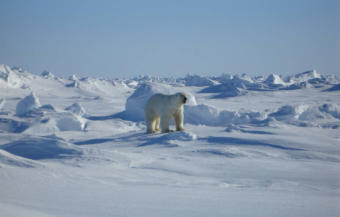
A male polar bear near Kaktovik. (Photo courtesy U.S. Fish and Wildlife Service)

The Marine Mammal Protection Act allows the killing of animals in self-defense. But Gordon did not tag or report the polar bear as required, Tansey said.

Coastal Alaska Natives are also allowed to harvest polar bears for subsistence, or for crafts, but only if that’s done in a non-wasteful manner. In this case, prosecutors said Gordon left the bear carcass in front of his house for five months without salvaging any part of it.

Tansey wouldn’t say how the case came to prosecutors’ attention. But a press release about it said the investigation that led to the charges was done by the U.S. Fish and Wildlife Service, which manages the nearby Arctic National Wildlife Refuge.

Some residents of Kaktovik have been voicing concerns about their ability to protect themselves from the encroaching polar bears.

“The bear’s underneath my house in the morning when I go to work,” Mike Gallagher, a city council member, said at a public meeting last month. “Would it be your kid? Would it be my kid? It could be anybody down the street. These bears are getting used to people. They’re domesticated.”

If convicted, Gordon faces up to a $100,000 fine, and a year in prison.

Alaska lawmakers’ veto override vote fails in Juneau as protesters occupy GOP session in Wasilla

Alaska lawmakers failed Wednesday to override some $400 million in budget vetoes by Gov. Mike Dunleavy, as fewer legislators were present in Juneau than the 45 votes needed to reverse the governor.

The vote, held in a joint session of the House and Senate, was 37-1 in favor of overriding Dunleavy. Lawmakers from both parties made emphatic speeches to justify their rejection of the governor’s steep spending cuts to the state university system, health care and the arts.

North Pole Republican Rep. Tammie Wilson was the only “no” vote.

“This is not the Alaska I grew up in,” said Anchorage Republican Sen. Natasha von Imhof, who voted to override the vetoes. “This is not the future I want for our great state.”

Amid a legal dispute with the House and Senate majority caucus leadership, some 20 Republican lawmakers aligned with Dunleavy have declined to meet in Juneau, where Wednesday’s vote took place. Instead, they’ve held brief meetings this week at Wasilla Middle School, where the governor asked lawmakers to convene in a special session to consider legislation to pay Alaskans’ annual permanent fund dividend checks.

Leaders of the largely-Democratic House majority and mostly-Republican Senate majority have insisted that the Legislature has the legal authority to choose Juneau as their meeting place, even if Dunleavy sets the session agenda. The disagreement has split lawmakers between the two locations, with Friday the constitutional deadline for overriding the governor’s vetoes.

As the lawmakers in Juneau convened for their vote, protesters occupied the Wasilla Middle School gymnasium where the Republican legislators were trying to meet, chanting: “Don’t hide! Override!”

The GOP lawmakers left the room, with Anchorage Republican Sen. Mia Costello telling the Anchorage Daily News that the legislators would return for another meeting Thursday.

By Wednesday afternoon, there was no indication that either of the two competing groups of lawmakers would agree to join the other before the end of the week. But if that happens, the Legislature could take another vote on overriding the vetoes by its Friday deadline.

This story has been updated. 

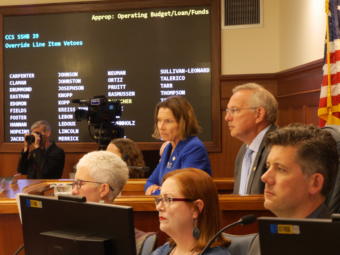
Alaska Senate President Cathy Giessel, R-Anchorage, and House Speaker Bryce Edgmon, I-Dillingham, preside over Wednesday’s failed vote by the Legislature to override Gov. Mike Dunleavy’s line-item budget vetoes. (Photo by Aidan Ling/Gavel Alaska)

In 4 a.m. emails, demonstrations and in-person ambushes, Alaskans press lawmakers on budget vetoes

Linda Hulen, an Anchorage teacher, speaks about Alaska Gov. Mike Dunleavy’s budget vetoes with Anchorage GOP Reps. Gabrielle LeDoux (left) and Laddie Shaw after Republican legislators held a meeting in Wasilla. (Photo by Nat Herz/Alaska Public Media)

Anchorage Republican Rep. Sara Rasmussen was taking her small children out of a bath recently when someone showed up at her door. They wanted to talk about Alaska Republican Gov. Mike Dunleavy’s line-item vetoes of some $400 million from the budget, including steep cuts to the state’s university system.

“I had to take my three-year-old to the door in his towel, because I didn’t have time to get him dressed,” Rasmussen told reporters at a news conference Monday.

That door-knock was one piece of a huge grassroots advocacy effort sparked by Dunleavy’s vetoes. In interviews, lawmakers said they’re experiencing an unprecedented flood of calls, emails, correspondence and in-person conversations in advance of a vote on the vetoes expected this week — with people urging them to overturn or uphold the governor’s decisions.

Alaskans are approaching their legislators for in-person lobbying, in some cases drawing on their personal connections and stories. They’re holding rallies and sleepovers to broadcast their messages. And they’re barraging lawmakers with phone calls, text messages and emails by the hundreds.

Fairbanks Democratic Sen. Scott Kawasaki spent 12 years in the state House before being elected to his Senate seat last year, and he said he’s never seen this level of activism. He got some four-dozen emails between midnight and 8 a.m. Monday, he said, and he asked the Legislature’s support staff to check whether the messages came through some type of delivery system.

“They’re not using a proxy service. There are literally people up at four in the morning that are sending us emails about the overrides,” Kawasaki said. “It is almost an insurmountable number.”

Kawasaki spoke in a phone interview from Juneau, where most lawmakers have gathered for a special session called by Dunleavy. Dunleavy asked the Legislature to convene in Wasilla, but most members of the majority caucuses in the state House and Senate argue that lawmakers have the authority to choose where they meet.

In Wasilla, a minority group of Republican lawmakers largely aligned with Dunleavy has been holding its own meetings. On Monday, dozens of people showed up to demonstrate and speak with lawmakers.

After the Republicans finished their brief meeting, Shirley and Jerry Dewhurst of Big Lake started a conversation with Eagle River Sen. Lora Reinbold. The Dewhursts pressed her to override the vetoes by telling her about their daughters who graduated from the state university system and still live in Alaska. But Reinbold seemed unmoved.

The university system, she told them, is “still going to get lots and lots and lots of money.”

“They still have their land. They still have their buildings,” she said. “It’s how you look at it — half-empty or half-full.”

The Dewhursts are in their 70s — they work in real estate, and they said in an interview that they’re not normally the types to be political advocates. But, Jerry added, “We believe in our education system. We believe in funding needs. We can’t always just keep cutting.”

Republican lawmakers sit at a meeting Monday at Wasilla Middle School. (Photo by Nat Herz/Alaska Public Media)

Similar scenes were being repeated in different corners of the middle school.

Carol Anne Wolfe, a retired social worker, drove to Wasilla from Anchorage specifically to have a conversation with Rep. Laddie Shaw, R-Anchorage. Shaw used to work in law enforcement, and he also worked with Wolfe’s husband, she said. So she tried to connect with Shaw by speaking about her experience working with the vulnerable people that she thinks would be affected by Dunleavy’s vetoes to social services.

“I just appealed to him on a personal level,” Wolfe said. Shaw, she added, “has worked with these folks. And I think he knows, in a personal way, how this is going to impact people.”

Kawasaki, who opposes the governor’s vetoes, said he thinks the messages are coming in about 20- or 30-to-1 in favor of overriding them. Nonetheless, some Alaskans are still pushing their legislators to sustain the cuts.

Mike Coons of Palmer works with a conservative senior citizens group; he was in Wasilla asking lawmakers to uphold Dunleavy’s veto of $21 million in cash benefits for the elderly.

Coons, in an interview, said the real hit to senior citizens was when lawmakers reduced the size of permanent fund dividends in recent years. He had in-person conversations with lawmakers in Wasilla, but he said he’s also made “more than dozens” of phone calls, listing off some of the legislators by their first names: Senate President Cathy Giessel, R-Anchorage; House Speaker Bryce Edgmon, I-Dillingham; and Anchorage Democratic Rep. Harriet Drummond.

“I’ve called Cathy, I’ve called Bryce, I’ve called Drummond. Of course, I called the Republicans,” Coons said. “You know, go right on down the line.”

Alaskans have also held large rallies in Juneau, Wasilla and elsewhere during the special session.

https://twitter.com/seachanger/status/1148713694236303360

Last week, a group opposed to Dunleavy’s vetoes held a sleepover in downtown Anchorage; another Anchorage anti-veto rally was scheduled for late Tuesday, with a concert by the Alaska pop band Portugal. The Man.

The unanswered question is how much impact these emails, arguments and demonstrations will have.

The Dewhursts, the couple from Big Lake that spoke with Reinbold about the university system, weren’t expecting much.

“Closed ears. They’ve got closed ears,” Shirley Dewhurst said.

Reinbold, in an interview, disagreed.

“We are listening,” she said. “We do have town halls, we do get on the radio, we do have emails, we do meet with people in our offices. It’s been very, very busy.”

Several lawmakers said they’ve been having trouble keeping up with all the email correspondence; another senator, Republican Mike Shower of Wasilla, had 1,700 messages to sort through, according to one of his aides.

In an interview, Shower sounded inclined to support the governor’s vetoes, though he said he’s been having cordial conversations with people who disagree with him.

Most of the messages he’s getting aren’t from people in his district, he said, and so right now, he’s not being swayed.

An email to a constituent from Wasilla Republican Rep. Cathy Tilton. The constituent had asked Tilton to vote to override Alaska Gov. Mike Dunleavy’s vetoes; Tilton responded by suggesting that the constituent run for her seat.

“Because we have to get this done, and nobody said this was going to be easy. Because I’m having to look at people and say, ‘Your agency is going to get cut. Your job might go away,’” he said. “That’s not easy, to look at people and tell them that. But I’m staying respectful.”

One particularly creative response to constituent feedback came from Rep. Cathy Tilton, R-Wasilla, who’s been aligned with the governor. When one constituent emailed to ask her to vote to override the vetoes, Tilton sent back a message that ended with a link to the state’s election laws.

“Clearly, you possess different ideas. Your perspective would offer the voters of District 12 a meaningful choice,” Tilton wrote. “I encourage you to run for office. I look forward to discussing these complicated issues on the campaign trail.”

Site notifications
Update notification options
Subscribe to notifications