Quinton Chandler, KTOO

Q&A: Education department transparency questioned after University of Alaska investigation

Betsy DeVos U.S. Secretary of Education Betsy DeVos speaking at the 2017 Conservative Political Action Conference (CPAC) in National Harbor, Maryland.
U.S. Secretary of Education Betsy DeVos speaking at the 2017 Conservative Political Action Conference, or CPAC, in National Harbor, Maryland. (Flickr Photo by Gage Skidmore)

President Donald Trump’s Department of Education is being questioned on its lack of transparency because it hasn’t publicized results of a major investigation into sexual harassment and sexual assault cases on University of Alaska campuses.

The university released the results, but BuzzFeed News reports the education department has not. It’s a departure from past practice.

Because the Department of Education hasn’t been answering reporters’ questions, it’s unclear if it’s a temporary side effect of the transition or true policy shift. Victim advocates are worried the Obama-era practice of releasing Title IX investigation results has ended.

I discussed the story with BuzzFeed National Reporter Tyler Kingkade, who reports on sexual violence and domestic abuse. This interview has been edited for length and clarity.


Can you sum up what these advocates were concerned with for me?

So, usually when the department would finish a Title IX investigation, it would send out a press release to reporters saying whether or not the school violated Title IX and include the voluntary resolution agreement and the resolution letter.

It’s not crazy to think that the university would have gotten these materials and decided to just push it out on their own, but what was strange was that the education department didn’t have much to say when we asked them, “Hey where’s the materials for this? Why haven’t you guys announced anything? Are you going to announce anything?” And to this week we still don’t have access to these letters on the department’s website.

And to be fair to the department, when I asked about the agreement and the letter of findings, the department promptly shared both of those documents with me, they emailed them to me. But the agency not having them available on their website, what is the underlying problem with that?

Yeah, so I talked with advocates this week, as well, just to follow up. And they’re still concerned because while the department is willing to give away these materials now to reporters who ask for them, they’re worried about what students and parents are going to have access to.

And I know that other universities when they’re under investigation, or even if they’re not and they’re just trying to stay up to date with best practices and what the federal government expects schools to do, they do read these as well. So you can bet that if a school does come under investigation next week for alleged Title IX failures, they’re probably going to look at what happened at the University of Alaska to see what the Office for Civil Rights is looking for schools to do. That’s one issue.

The other is, the advocates just want students to be aware that this is an option. They really want to push hard that students can file Title IX complaints if they think that their rights have been violated. It’s more about the advocates saying that they just don’t want to see any rollback of any transparency.

You mentioned in your report that the department didn’t answer BuzzFeed’s questions about whether the documents would be put on the website eventually. In my own experience, I made a request asking for comment on the investigation, and a spokesperson for the department, I’m quoting him, he told me the department “is not really doing interviews right now while we continue our transition and staffing up process.”

“I’m actually hearing the same thing even from insiders who work on sexual violence issues and Title IX issues, who say in previous administrations under both Democrat and Republican presidents, they’ve had much more access to speak to people in the department early on just to talk to them. And these would be off the record conversations that they’d have. What I’m hearing that they aren’t even getting their phone calls returned.

And one thing to be fair about the lack of the response from the Education Department on the University of Alaska case is that they really are still in transition. They don’t have someone appointed yet to be the … you know, in charge of the communications office. There’s not a lot of players in place yet at the education department. So, there’s a lot still unanswered.

But, I think what a lot of the advocates and activist groups on these issues on sexual assault issues are approaching this as is they’re going to be loud and boisterous early on to show that they’re paying attention. There were a lot of them that were a lot of them that were pretty opposed to Betsy Devos’ nomination because she did not pledge to continue the Obama-era policies on Title IX. And so, I think there’s a bit of them just trying to make a show of force.

All right Tyler, is there anything I didn’t ask you about that you think is important to point out on this issue?

This is definitely an issue where the questions are lying at the Education Department. It’s not necessarily with the university. The advocates, I think, were lucky in this case that the University of Alaska was so forthcoming about their investigation, and a lot of them give them credit because of the University of Alaska Fairbanks interim chancellor a couple of years ago issuing an apology for how cases were handled.

There’s still people who think the university has a ways to go but I think nationally, people are looking at the university as being a bit more transparent and wishing some more schools down in the Lower 48 would follow their lead and post more of these documents and answer more of these questions about Title IX.

Title IX investigation brings many University of Alaska failings to light

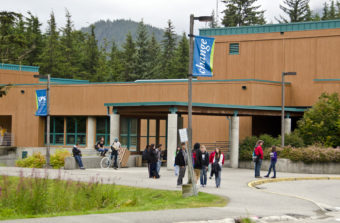
University of Alaska Southeast (Photo by Heather Bryant/KTOO
The University of Alaska Southeast on Aug. 19, 2013. (Photo by Heather Bryant/KTOO)

The U.S. Department of Education’s Office for Civil Rights said in a letter that the University of Alaska System badly failed students and staff who were sexually harassed and assaulted.

OCR began a Title IX investigation of the university system three years ago. The investigation focused on cases from 2011 to 2015. Title IX is the federal law that outlaws discrimination against, or the exclusion of, any person from a federally funded education program or activity because of their sex or gender.
The University of Alaska is trying to make its campuses safer for students and employees by doing a better job resolving sexual discrimination and assault cases. The university is following OCR’s orders to change the way Title IX cases are handled.

OCR made a list of 23 specific cases as examples of the university’s Title IX failures. The schools responsible for each case weren’t identified.

The first problem in the list is the system’s failure to investigate or finish investigating multiple reports of misconduct.

“In 2013 a student was found in a university residential building intoxicated, unconscious, and wrapped in a blanket with her clothing partially undone.  She said that she had met a soldier, but could not recall what had happened because she had blacked out. The soldier was ultimately court-martialed for sexually assaulting the student and university staff testified at the court-martial for which the soldier received three years of confinement and a dishonorable discharge.  The case records indicate that Residence Life handled the situation and the university failed to conduct a Title IX investigation or offer the student any interim measures, but it did investigate and discipline the student for underage drinking on the night of the sexual assault.”

The university has also prematurely stopped investigating employees accused of sexual harassment or sexual assault many times after the accused person resigned.

“In 2013, a student reported that a professor was sexually harassing female students.  The complainant stated that she knew at least four students with whom the professor had had a sexual relationship.  When interviewed, a female professor said that several students had complained about this professor’s conduct towards female students.  The documents provided to OCR contained a draft Title IX investigation report, concluding that the respondent behaved inappropriately with students and recommending a letter of expectations of behavior from the Dean.  The investigation was not completed, and neither a final report with findings nor a letter from the Dean was issued.”

OCR also found that investigations took too long at each of the system’s three universities. In addition, multiple times university investigations were “delayed or suspended” when law enforcement investigated.

“In 2015, university police reported the sexual assault of a female student by a member of a men’s athletic team to the university’s Title IX office and Residence Life.  Ten days later, university police reported to the Title IX office that two other students allegedly had been raped by the same respondent.  Soon after the complainants reported their sexual assaults, members of the athletic team began calling the complainants and their friends ‘whores.’ Investigation of all three cases was put into abeyance at the request of the district attorney’s office. OCR received no indication that the university resumed the investigation.”

And the list keeps going.

UAS Title IX Coordinator Lori Klein, right, and UAS Chancellor Rick Caulfeld, left, hosted a public forum to discuss the Office for Civil Rights investigation findings on Thursday, Feb. 23, 2016.
UAS Title IX Coordinator Lori Klein, right, and UAS Chancellor Rick Caulfeld, left, hosted a public forum to discuss the Office for Civil Rights investigation findings on Thursday, Feb. 23, 2016. (Photo by Quinton Chandler/KTOO)

Lori Klein was hired to be University of Alaska Southeast’s full-time Title IX coordinator in 2016. In the past, the position was part-time. OCR stressed in its findings that each university must have at least one Title IX coordinator to help their schools comply with federal law.

“I think the biggest trend that I saw when I reviewed the findings from that past time was a failure of documentation,” Klein said.

OCR found the majority of the three universities’ records were “incomplete and poorly maintained.” There were very few cases from campuses in rural communities and many files from the 2011-2012 academic year had no record of investigations.

“In OCR’s belief, and rightly so, if it’s not documented it might not have happened,” Klein said. “How are they supposed to know? How am I supposed to know? How is anyone supposed to know if it’s not documented? Did it happen or did it not happen?

OCR and the University of Alaska negotiated a list of ways the university will fix its shortcomings and on Feb. 17, university president Jim Johnsen signed it.

That agreement is long and it would take a long time to summarize everything in it, but here are a few of the requirements:

The university has to rewrite a number of policies and regulations.

Klein said, “that’ll be one of probably those priority areas that we address immediately.”

During an investigation, each university has to give equitable rights to the people reporting assault or harassment and to the people accused. For example, in some past scenarios, only the accused person got copies of witnesses’ names, their statements or other documents used in their case. And only the accused could object to people appointed to sit in on their hearing who they thought were biased.

Some of the requirements, Klein said the university system has already adopted. UAS is trying to do a better job teaching its satellite campuses how Title IX cases are handled and now rural campuses are reporting more assaults and harassment.

“While it feels counterintuitive, I think the reports are reflective of the fact people now understand the process better, that it is more transparent,” Klein said.

Now, each of the system’s three universities require all faculty and staff to take Title IX training and they provide training opportunities for students.

In 2016, all three universities entered formal agreements with local police departments and the Alaska State Troopers that establish the universities’ rights and the agencies’ rights during a Title IX investigation.

Also, students who report sexual harassment or assault, won’t be punished if they broke minor university policies like multiple students who were punished for drinking in the past.

OCR said in a letter to the university system that if the university doesn’t meet the agreement’s conditions, the office will force them through administrative or judicial proceedings.

Juneau-Douglas students win over 15 awards in academic decathlon

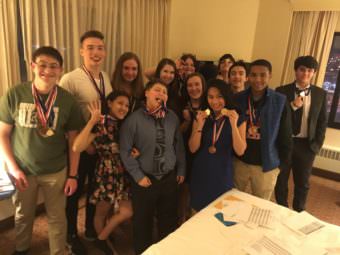
The 13 Juneau-Douglas High School students who competed in the 2017 Alaska Academic Decathlon, Tasha Elizarde, bottom right.
The 13 Juneau-Douglas High School students who competed in the 2017 Alaska Academic Decathlon in Anchorage on Friday including Tasha Elizarde, bottom right. (Photo courtesy Karina Reyes)

Juneau-Douglas High School walked away from the Alaska Academic Decathlon in Anchorage with multiple awards Saturday including two team awards – one for highest improved aggregate score for the Large Schools Division and a bronze medal in the Team Super Quiz Competition.

Juneau-Douglas Librarian and Academic Decathlon Adviser Karina Reyes said the four-day decathlon is a statewide competition that turns students into “Renaissance people.”

“They learn how to do interviews, speeches, write essays, they study history, literature, art, music, economics, science and social studies,” Reyes said. “And all of those are under a banner of a larger theme for the year and this year’s theme was World War II.”

Reyes added that the focus wasn’t just on how the war was fought. The students also studied the art and music produced during that period, they learned about the era’s important literary figures and they studied the economic issues of the day.

This year’s competition was Tasha Elizarde’s third time competing in the academic decathlon. She’s a senior at Juneau-Douglas and said the competition is so intense the decathletes started studying right after the competition’s theme was announced last April, almost a year before the decathlon.

“We study every Saturday for about three to four hours and then outside of that, we study on our own,” Elizarde said. “Like I said earlier, we have this 4-inch binder of study materials, and we just read them through day, night, like whenever we can find time to do that.”

Elizarde said a lot of people are intimidated by the decathlon, but she thinks it’s actually really fun. She said the decathlon gave her a community where she felt safe to learn, fail and discover her own interests. She highly recommends it.

The JDHS academic decathlon teams pose with their medals.
The JDHS academic decathlon teams pose with their medals on Saturday. (Photo courtesy Karina Reyes)

Thirteen students made two teams to represent Juneau-Douglas at the decathlon. They won 15 individual medals and several other honors. They competed against more than 130 students from 11 other high schools.
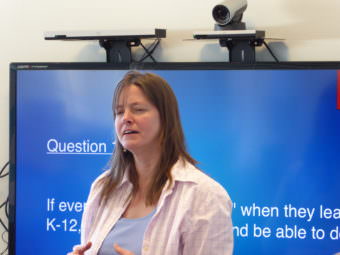
Tasha Elizarde is one of the students who placed. She won a gold medal in literature and a bronze medal in art.

Education ‘cafes’ connect communities, ideas and action

Juneau educators, students and parents met at two local libraries Saturday and discussed how to give every Alaska student a quality K-12 education. The grassroots group Great Alaska Schools organized the two Community Cafés, one in the Mendenhall Valley Public Library and one in the Juneau Downtown Library.

These meetings, or cafés, weren’t about money. The point wasn’t to recruit people to call their legislators and ask for K-12 funding. It wasn’t even about showing people a slideshow of facts and figures.

Alyse Galvin, middle, is the co-founder of Great Alaska Schools. She led the discussion.
Alyse Galvin, middle, is the co-founder of Great Alaska Schools. She led the discussion at the Juneau Downtown Library on Saturday. (Photo by Quinton Chandler/KTOO)

Alyse Galvin co-founded Great Alaska Schools and led the talks.

“Today’s conversation is about gathering the people that we talked about: the parents, the students — you noticed there are a lot of students in there — educators, community members, anyone who cares about kids being ready for life coming together and saying, ‘Well, what would that look like if public education was doing the right thing for every student?’”

The café in the downtown library was in a little room with a tiny fruit and veggie buffet and little tables dressed up in red and white checkered tablecloths. It drew about 20 people including a Department of Education official, the Juneau School Board president and a couple of Juneau principals. But, there were also former educators, students and concerned neighbors.

“And the beauty of this particular meeting, called a café – it’s really not a meeting-meeting, it’s purposely called a Community Café — is that people feel level,” Galvin said. “They’re at the same level no matter whether they have 28 years teaching experience, or they’re a student that’s a freshman in high school.”

Galvin said her group wants all these people to give the Department of Education ideas on how schools can improve for all Alaska’s students.

Participants listen during the Great Alaska Schools Community Cafe in the Juneau Downtown Library, Saturday.
Participants listen during the Great Alaska Schools Community Café in the Juneau Downtown Library on Saturday. (Photo by Quinton Chandler/KTOO)

One of the questions she asked the café’s patrons to think about was:

“If we’re doing the job right, how would every student look? What would they have? What would they know?” Galvin asked.

She said normally to answer that question we’d look up students’ grades in math or reading.

“But what I’ve heard this morning in our café is, ‘Actually, we also care about whether students know how to collaborate, do students know how to do simple ‘life hacks’ they called it, like changing a tire or balancing a checkbook,” Galvin said. “There’s some things that are living skills. Do students know how to have healthy relationships?”

Galvin said these are examples of measurable skills that don’t get measured.

Great Alaska Schools has held these community cafés before in communities around the state. Galvin said not only did people have great ideas, they also followed up on them. As examples, she remembered programs started in Fairbanks and Anchorage.

“And people come out with ideas I would have never thought of, things like, ‘I’m an elder, I’ll come in and share stories.’ ‘I’m a community member. I’ll help build sleds after school because I heard students say they want more hands-on learning,’” she said. “We’ve had after-school programs like Spanish club that started from two years ago — a café. We have things like parents tutoring students after school that started from a café years ago.”

Galvin isn’t sure any of that would have happened if people weren’t invited to sit down and talk about their ideas.

She also encouraged people to volunteer at their local schools and to take an online survey the state launched to identify Alaskans’ education priorities.

School counselors help with things from academic support to grieving

Juneau school counselors wear multiple hats.

They help with career readiness, relationship counseling and last year some students had an unfortunate reminder that their counselors can help them grieve.

Unexpected deaths can have a ripple effect in Juneau.

Last fall, a music teacher for both Floyd Dryden Middle School and Thunder Mountain High School died from a heart attack, and a 17-year-old Thunder Mountain student died from an accidental gunshot wound.

Kelly Hansen is the counselor at Floyd Dryden Middle School.
Kelly Hansen is the counselor at Floyd Dryden Middle School, Wednesday, Feb. 15, 2017. (Photo by Quinton Chandler/KTOO)

Kelly Hansen is the school counselor at Floyd Dryden.

“I think that whenever there is a loss or some sort of situation where there is a pretty large impact, it can really impact families, so there’ll be kids at the high school that have siblings at the elementary or at the middle school that might know the family or have a connection with the teacher,” Hansen said.

After the deaths, the district’s crisis response team comprised of counselors, psychologists and administrators offered support. Hansen said some of the kids at Floyd Dryden came looking for her.

“There was a few kids that kind of needed a quiet place to talk and to listen,” Hansen said. “I didn’t feel like it disrupted my day or my week more than normal. I feel like we responded and provided support where we needed to.”

She said during a crisis other staff also let her know which kids are having a hard time and she makes a point to check up on them.

Phil Merrell is the counselor at Thunder Mountain High School. He said schools are like small communities and anytime there’s a loss, emotions run strong.

“When one of those persons is lost, everyone is affected, everybody feels it to varying degrees,” Merrell said. “So for sure, there’s a change, there’s a sense of loss, but at the same time there’s a deepening sense of community, too, in that, ‘OK, we can come together, we can support each other.’”

Now it’s a new year and Merrell was reluctant to say his kids were back to normal, but he said there’s definitely a new sense of positivity in the school.

Phil Merrell is the counselor at Thunder Mountain High School.
Phil Merrell is the counselor at Thunder Mountain High School, Thursday, Feb. 16, 2017. (Photo by Quinton Chandler/KTOO)

While the recent deaths highlighted the role school counselor’s play in a crisis, Merrell said that’s not the only part of their jobs.

“It’s not easy to be in school, it’s not easy to be a young person in our culture,” he said. “… That generation Y, this idea of when do you become an adult, what is adolescence is just stretching and stretching a whole lot.”

Merrell said he serves as a bridge for students. He said he tries to support them socially, emotionally, academically and in finding future careers.

Hansen added that counselors can serve to boost morale throughout the school.

She said that she meets with kids and parents to talk about their classes, issues at home or at school.

She helps connect families with services they might need – everything from introducing them to the right administrators to helping them find food.

She serves as a mediator, she’s a case manager for kids with disabilities, and she said counselors are just a safe place for kids.

“Kind of going back (to) kids knowing that they have someone they can talk to that will keep their confidence and that they won’t break confidentiality unless it had to do with the safety of them or someone else,” Hansen said.

In a recent budget meeting, multiple residents and school principals asked the Juneau School Board to make funding for counseling staff and social-emotional needs a priority in their budget.

Middle school sports travel is back on the school board’s agenda

The Juneau School Board is revisiting its 2013 travel ban for middle school sports.

The 2013 school board disappointed a lot of people in Juneau when it voted to stop middle school sports teams from traveling out of town. At the school board meeting Tuesday, Superintendent Mark Miller said he read dozens of pages of documents to wrap his head around the previous board’s decision. Miller wasn’t working for the district when the decision was made.

Juneau Schools Superintendent Mark Miller at a Juneau School Board meeting on in December 2016. (Photo by Quinton Chandler/KTOO)
Juneau Schools Superintendent Mark Miller at a Juneau School Board meeting in December. (Photo by Quinton Chandler/KTOO)

“Well, there are a number of issues around it. One was equity. It seemed that as the number of students that were able to travel went down that the socioeconomic status of the students who was traveling went up.”

He also said that it looked like the middle school travel program was “dying” over time.

“If you look at the numbers it went from 120 to something around 60, to something around 30 over three years,” Miller said. “So I think it was a matter of equity, impact on student instruction, (and) impact on the number of days the kids and teachers were missing.”

He said the board decided the costs were too high.

More than three years have passed, five of the board members who voted on the issue are gone and the hard feelings in the community haven’t gone away. That’s why Miller said the current school board asked him to take another look.

After his investigation, Miller asked the board to consider whether middle school travel would hurt student learning and teacher instruction and other questions.

“Is it going to be equitable? Can we ensure that any student who wants to travel for middle school sports can, regardless of whether they can afford it or not?” Miller asked. “What is the impact on the community? I have people come to me hour — day after day saying, ‘We can’t have another raffle or another car wash, you’re tapping us out.’”

Miller also made rough estimates on the cost of a travel program. He estimated $25,000 per year to pay for students who couldn’t afford travel rates, $20,000 to $40,000 in administration costs and about $10,000 for contingency planning. He also estimated another $50,000 to $70,000 would have to be raised by the community, the City and Borough of Juneau, or the school district.

After hearing Miller’s report, the board decided to review the travel issue at its March 14 meeting. Policy Committee Chair Emil Mackey said his committee would review the travel policy’s language and highlight changes the board might want to make.

Jon Kurland speaks at the school board meeting Tuesday.
Jon Kurland speaks at the school board meeting Tuesday. (Photo by Quinton Chandler/KTOO)

Jon Kurland served on an independent committee formed after dozens in Juneau objected to the 2013 school board’s decision to end middle school sports travel. He looked at Miller’s report to the school board and agreed with the superintendent’s concerns for equity and the effects on classroom instruction, but he slightly disagreed on some of the cost estimates.

“I think he was filling the role that the superintendent should fill in trying to give a reasonable sense of what the costs would be,” Kurland said. “I think he was in some cases looking at a worst case, assuming that every middle school sports team would want to travel every single year.”

Kurland said based on his conversations with parents and coaches, that’s not really realistic. He hopes the district does vote to let middle schoolers travel again. He said that those travel opportunities offer incredible life experiences that the kids shouldn’t miss.

Site notifications
Update notification options
Subscribe to notifications