Alaska's Energy Desk

Arctic Refuge lease sale goes bust, with no bids from major oil companies

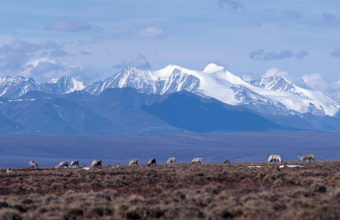
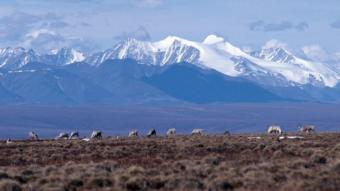
Caribou graze on the coastal plain of the Arctic National Wildlife Refuge, with the Brooks Range as a backdrop in October 2010. (Public domain photo by U.S. Fish and Wildlife Service)

One of the Trump administration’s biggest energy initiatives suffered a stunning setback Wednesday, as a decades-long push to drill for oil in Alaska’s Arctic National Wildlife Refuge ended with a lease sale that attracted just three bidders — one of which was the state of Alaska itself.

Alaska’s state-owned economic development corporation was the only bidder on nine of the parcels offered for lease in the northernmost swath of the refuge, known as the coastal plain. Two small companies also each picked up a single parcel.

Half of the offered leases drew no bids at all.

“They held the lease in ANWR — that is history-making. That will be recorded in the history books and people will talk about it,” said Larry Persily, a longtime observer of the oil and gas industry in Alaska. “But no one showed up.”

The sale generated a tiny fraction of the revenue it was projected to raise.

It was a striking moment in a 40-year fight over drilling in the coastal plain, an area that’s home to migrating caribou, polar bears, birds and other wildlife. It also potentially sits atop billions of barrels of oil, according to federal estimates.

But amid a global recession, low oil prices and an aggressive pressure campaign against leasing by drilling opponents, oil analysts have for months been predicting little interest in the sale, and their forecasts were confirmed Wednesday.

Read all of the bids received here.

Persily took the sale as evidence that while drilling in the refuge remains a long-held dream of some politicians, it is no longer treasured by oil companies.

“It was, in the oil industry terms, a dry hole. A bust,” he said. “They had the lease sale, the administration can feel good about it, but no one’s going to see any oil coming out of ANWR.”

Kate MacGregor, Deputy Secretary of the Department of Interior, announces bids at the BLM’s lease sale of tracts within the Arctic Coastal Plain of the Arctic National Wildlife Refuge on Jan. 6, 2021 (Screenshot from BLM)

Even Kara Moriarty, head of the Alaska Oil and Gas Association, acknowledged that the sale results weren’t as “robust” as expected. But she said the industry still supports future access to the coastal plain.

“Today’s sale reflects the brutal economic realities the oil and gas industry continues to face after the unprecedented events of 2020, coupled with ongoing regulatory uncertainty,” she said in a statement.

The lease sale raised a total of $14.4 million in bids, according to the Bureau of Land Management, the federal agency that held the sale. Nearly all of that came from Alaska’s state-owned economic development corporation, the Alaska Industrial Development and Export Authority.

Half of the cash will go to the federal government, and half will go back to the state of Alaska.

The amount raised is nowhere near what was projected when a Republican-led Congress officially opened the coastal plain to drilling in 2017 as part of the Tax Cuts and Jobs Act.

The bill ordered two lease sales, the first by the end of this year, with the revenue aimed at offsetting massive tax cuts.

Despite the low interest, Alaska’s Congressional delegation applauded the sale on Wednesday, and so did officials with the Bureau of Land Management, describing it as historic and a success.

Opponents blasted the sale.

Defend the Sacred AK, a group opposed to oil development in the Arctic National Wildlife Refuge, stands in front of the Anchorage BLM office on Jan. 6, 2021, the day of the first-ever oil lease sale for the Refuge. (Jeff Chen/Alaska Public Media)

“I laughed out loud. It was a joke. A joke to the American people,” said Desirée Sorenson-Groves, director of the Arctic Refuge Defense Campaign. “I’ll tell you, I have a message to those who bid today, there were only three. But here’s the message: ‘You will never ever drill in the Arctic Refuge. We’ll stop you.’”

The land that received no bids on Wednesday will not be leased in this sale.

Of the two small companies that did win leases, one is Regenerate Alaska, a subsidiary of Australia-based 88 Energy. The other is Knik Arm Services, a small Alaska company managed by an investor named Mark Graber.

The state-owned Alaska Industrial Development and Export Authority, which dominated the sale, has never held federal oil leases before.

But Alaska politicians, including former Republican Gov. Frank Murkowski, recently pushed the corporation to bid, citing the lack of industry interest. Murkowski, in an interview Wednesday, said he expects the corporation to eventually partner with companies to do the actual drilling.

“We’ll see how good an investment it is when we see what the interest is from some companies to negotiate,” he said.

The oil leases are still not finalized.

That process, which includes an antitrust review by the U.S. Department of Justice, typically takes about two months. But the Trump administration is expected to rush to issue the leases formally before the president leaves office in two weeks.

Even if it succeeds, additional oil leasing and drilling in the refuge will face headwinds, said U.S. Rep. Jared Huffman, D-Calif., a longtime drilling opponent.

He said his next step will be pushing for “permanent protection” for the Arctic refuge. He’s likely to have support from a Biden administration. The president-elect and his appointee to lead the Interior Department have both said they oppose drilling there.

Huffman said he‘s open to a compromise with drilling boosters — from the state of Alaska to Indigenous Iñupiaq leaders in Kaktovik, the only community inside the refuge’s boundaries —  that would provide them with alternative paths toward economic development.

“We’re not hostile to taking care of the interests here, and helping put folks on a path of economic development that makes sense and that’s sustainable,” Huffman said.

“But whether it’s the climate crisis or the market factors or the extreme logistic and environmental impropriety of drilling in this place, it’s not going to happen,” he said. “It’s just not. And so I think the state of Alaska and the folks in Kaktovik should cut a deal.”

Roger Herrera, a retired BP executive and longtime lobbyist for an Alaska group that pushed Congress to open the refuge, said he was “hugely disappointed” in the results of the sale.

“Alaska is a natural resource state. You take away its natural resources and it has basically nothing,” he said in a phone interview. “Alaska’s motto of ‘North to the Future’ should be re-examined, because I don’t think it has much meaning now.”

Here’s what you need to know about the Arctic National Wildlife Refuge’s first-ever oil lease sale

An icy, snow expanse of land.
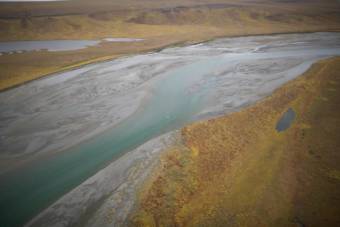
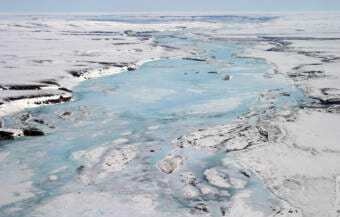
The Canning River in the Arctic National Wildlife Refuge. (Randy Brown/USFWS)

Two weeks before leaving office, the Trump administration is planning to hold the first-ever oil and gas lease sale in the Arctic National Wildlife Refuge.

The sale, scheduled for 10 a.m. Wednesday in Alaska, is a controversial milestone in a 40-year battle over whether to drill for oil in a part of the refuge called the coastal plain.

So, how did we get here after such a long debate? And what will happen next?

Here’s what we know so far.

What, exactly, is the coastal plain?

The coastal plain, also known as the 1002 Area, is the northernmost slice of the Arctic National Wildlife Refuge, along the Beaufort Sea.

A map of Alaska, outlining the Arctic National Wildlife Refuge.
The Arctic National Wildlife Refuge’s coastal plain is shown in orange. USGS map)

It covers an area roughly the size of Delaware, and makes up about 8% of the refuge, in northeast Alaska.

There’s one village within the coastal plain, Kaktovik, where Inupiaq political leaders support drilling even as residents are divided on the issue. The land is also home to migrating caribou, birds, polar bears and lots of other wildlife. And, it’s thought to sit on top of, potentially, billions of barrels of oil.

A view from an airplane of vast tundra.
A view of the Arctic National Wildlife Refuge’s coastal plain on Friday, June 14, 2019, from a flight from the village of Kaktovik to the village of Fort Yukon. (Nat Herz/Alaska’s Energy Desk)

For decades, conservation groups and Gwich’in tribes who live just outside the refuge have fought to protect the coastal plain from oil development, while many Alaska politicians have fought to open the area to drilling.

After so much debate, how did the government get to a lease sale?

Part of that story starts in 1980.

That’s when Congress passed the Alaska National Interest Lands Conservation Act. The act created the Arctic National Wildlife Refuge. Before that, it was the smaller Arctic National Wildlife Range.

The act designated millions of acres of the refuge as wilderness, but not the coastal plain. Instead, in Section 1002 of the act, Congress asked the Interior Department to study the possibility of oil development in the coastal plain. (And it subsequently became also known as the 1002 Area.) Congress also reserved the power to decide later whether to open it to drilling.

And so began the fight over what to do with the land, which went unresolved for decades.

And then came 2017.

What big change happened in 2017?

The Tax Cuts and Jobs Act.

Republican U.S. Sen. Lisa Murkowski worked with the White House to open the coastal plain to drilling as part of the massive tax bill. It was pushed into the bill as a way to create revenue to offset tax cuts.

Lawmakers stand around a pdium.
Sen. Lisa Murkowski delivers remarks about the opening of the 1002 area of the Arctic National Wildlife Refuge. President Donald Trump, Congressman Don Young and Senator Dan Sullivan listen on. (White House video screenshot)

The bill directed the federal government to carry out two lease sales in the coastal plain by the end of 2024, with the first by the end of this year.

The Congressional Budget Office estimated that the leasing program could generate $1.8 billion over a decade, to be split between Alaska and the federal government.

But critics of the sale, including the watchdog group Taxpayers for Common Sense, say they expect the dollar-figure to be much lower.

Since Trump signed the tax bill into law, the federal Bureau of Land Management has led the environmental review process that’s required before a lease sale can take place.

Opponents of the sale say the administration picked up a lot of speed — too much speed, they argue — to lock in oil drilling in the weeks after the November presidential election. BLM set Jan. 6 as the date for a lease sale in early December, while a 30-day comment window was still ongoing.

What is the Trump administration selling exactly?

It’s offering drilling rights to 22 tracts of land that cover about 1 million federal acres of the coastal plain, or about 5% of the whole refuge.

The highest bidder on each tract will get a 10-year oil and gas lease for that piece of land. If a tract gets no bids, then no one gets the lease.

A map shows the Arctic National Wildlife Refuge coastal plain broken into numbered tracts, with some of them shaded gray in the southeast corner to show which pieces of land have been removed from the upcoming lease sale.
A map of the Arctic National Wildlife Refuge coastal plain shows the tracts of land that will be included in an oil and gas lease sale on Jan. 6. The Bureau of Land Management has removed the numbered tracts shaded gray. (Screenshot BLM document)

What happens Wednesday?

Those interested in buying the oil leases had to submit sealed bids to the government last month.

At 10 a.m. Wednesday in Alaska, government officials will open those bids in an event streamed online, and accept the highest offers.

What happens after the sale?

The leases will not be issued on Wednesday.

The Department of Justice will need to conduct an antitrust review. And winning bidders also must sign paperwork and pay.

The process to issue the leases usually takes about two months, but the Trump administration will likely try to finalize the sales in just two weeks, before Democratic President Joe Biden is sworn in Jan. 20.

Bernadette Demientieff, director of the Gwich’in Steering Committee, testifies at a U.S. House hearing in March 2019. (Liz Ruskin/Alaska Public Media)

Wait. Aren’t there a lot of lawsuits?

Right. Looming over the sale are four lawsuits, filed by environmental organizations, the Gwich’in Steering Committee, tribal groups and a coalition of 15 states.

In court documents, they argue the Trump administration’s oil-leasing program for the refuge is rushed and legally flawed, and any agreements based on it — including any leases — should, basically, be canceled.

In three of the lawsuits, the groups requested a preliminary injunction.

That means they wanted U.S. District Court Judge Sharon Gleason to stop the government from issuing any oil leases for the refuge, and from allowing any seismic oil exploration, until the broader lawsuits are resolved.

But Gleason denied those requests late Tuesday afternoon.

What do we know about who will bid on the oil and gas leases?

Not a whole lot.

BLM spokeswoman Lesli Ellis-Wouters said Monday that the agency has received bids, but she declined to say how many or who they came from.

Oil and gas companies aren’t talking publicly about their plans for the sale either.

A spokesman for the Arctic Slope Regional Corporation, which seemed like a likely contender to participate in the sale, confirmed by email Tuesday that it is not bidding.

Oil industry analysts have said they expect interest to be lukewarm in the sale for many reasons.

A major one is the opposition.

People standing in front of white capitol dome holding banners that say protect the Arctic.
Rep. Deb Haaland, at podium, spoke at a rally in Washington, D.C. to oppose drilling in the Arctic National Wildlife Refuge in 2018, a few weeks before she was sworn in. President-elect Joe Biden says he will nominate Haaland to lead the Department of the Interior. (Liz Ruskin/Alaska Public Media)

Opponents to drilling in the refuge have raised concerns about its impacts on Indigenous people, the global climate, and wildlife, including the caribou that give birth in the coastal plain and the polar bears that den there.

They’ve lobbied oil companies, banks and other financial institutions to stay away from developing the refuge. A number of major banks say they won’t fund oil projects in the Arctic.

Also, drilling in the Arctic is expensive, and last year’s oil price war, paired with the pandemic, hit the industry hard.

On top of that, there’s uncertainty around future oil demand, how much oil actually exists under the coastal plain and the changing presidential administration.

Citing concerns about limited industry interest, Alaska politicians have recently lobbied for the state to step into the sale.

And, in a very unusual move, the board of the state-owned Alaska Industrial Development and Export Authority voted to bid up to $20 million on the leases.

An AIDEA spokeswoman declined to say this week whether the corporation actually decided to submit any offers.

Who can bid on the leases?

The federal rules are kind of vague, and say those who can hold a lease include pretty much any private, public or municipal corporation organized under the law.

Ellis-Wouters, with BLM, says bidders must have an intent to develop the land.

Who supports drilling in the refuge and who opposes it?

It’s a complicated answer.

Alaskans are divided on the issue, just like the country is.

Many Alaska politicians, including the current Congressional delegation, have long fought to open the coastal plain to drilling. Oil and gas industry trade groups also support developing the coastal plain, along with the Kaktovik Iñupiat Corporation, the Arctic Slope Regional Corporation and Alaska’s governor. They argue it’d be good for jobs, the economy and state revenue, and say drilling can happen without harming the land and animals.

On the other side, environmental and conservation groups have long tried to keep oil rigs out of the refuge. They counter that there’s no way oil development can happen in the coastal plain without harming wildlife and the tundra, and without exacerbating climate change in a place that’s already warming fast. Among some of the most vocal opponents are the Gwich’in, an Indigenous group who say the land is sacred and whose members hunt caribou that commonly give birth in the refuge.

Caribou graze on the coastal plain of the Arctic National Wildlife Refuge, with snowcapped peaks of the Brooks Range as a backdrop. (USFWS)
Caribou graze on the coastal plain of the Arctic National Wildlife Refuge, with the Brooks Range as a backdrop. (USFWS)

President-elect Joe Biden says he also opposes drilling in the refuge, but can he reverse oil leasing?

If the oil leases are finalized before Biden takes office, it could be more difficult to reverse course.

It’s possible Biden could try to buy the leases back.

Also, just because a company has a lease doesn’t mean it can immediately go develop the land. Analysts have said it’s possible a Biden administration could hold up the process for companies to get the permits they need to search for oil and build their infrastructure.

“What they would try to do is make it so difficult, so onerous, to get the array of permits that the companies just kind of say, ‘Well, we’re not going to spend 10 years just trying to get a simple permit, we’re going to put our money and our investment elsewhere,’” says Andy Mack, a former Alaska natural resources commissioner.

Meanwhile, in federal court, the lawsuits are expected to continue to wind through the system, and a judge could later rule to cancel the leases.

Still, the 2017 tax law exists, ordering a second lease sale in the coastal plain by the end of 2024. Congress would have to pass a law to undo that part of the tax act if it doesn’t want to follow through.

What questions do you have that we missed? Email reporter Tegan Hanlon at thanlon@alaskapublic.org

Alaska Public Media’s Nat Herz contributed to this report.

Editor’s note: This post has been updated.

Federal judge could rule as soon as Tuesday on request to halt oil leasing in Arctic refuge

Caribou graze on the coastal plain of the Arctic National Wildlife Refuge, with the Brooks Range as a backdrop in October 2010.
Caribou graze on the coastal plain of the Arctic National Wildlife Refuge, with the Brooks Range as a backdrop in October 2010. (Public domain photo by U.S. Fish and Wildlife Service)

A federal judge in Anchorage says she could rule as soon as Tuesday on a request by environmental groups to block the Trump administration from carrying out the first-ever lease sale in the Arctic National Wildlife Refuge.
The government is planning to hold the sale Wednesday morning.

It’s a major moment in a 40-year fight over whether to drill for oil in the northernmost slice of the refuge, called the coastal plain.

But looming over the sale are four lawsuits, filed by environmental organizations, tribal groups and a coalition of 15 states. In court documents, they argue that the Trump administration’s oil-leasing program for the refuge is rushed and legally flawed.

In three of the lawsuits, the groups are requesting a preliminary injunction.

Basically: They want U.S. District Court Judge Sharon Gleason to stop the government from issuing any oil leases for the refuge, and from allowing any seismic work to explore for oil there until the broader lawsuits are resolved.

On Monday, Gleason heard arguments by videoconference on why she should — and shouldn’t — intervene.

Lawyers for The Audubon Society and three other environmental groups told Gleason that the Trump administration failed to comply with a series of environmental laws designed to protect the refuge, and didn’t disclose the potential global-warming consequences of oil development.

They also said massive seismic trucks rolling across the tundra to search for oil this winter would harm the refuge. And, they argued, that if oil leases are issued, it’ll be harder for the government to ever reverse course.

“Those leases transfer rights,” said Earthjustice attorney Kate Glover. “It makes it difficult for BLM to change its mind and undo decisions later.”

On the other side Monday were lawyers for the federal government, the North Slope Borough, the Kaktovik Inupiat Corporation and oil and gas industry trade groups. They told Gleason that the lawsuits were premature. Even if a company got an oil lease, it would still need other approvals to develop the land, said Attorney Paul Turcke, with the U.S. Department of Justice.

“Issuance of an oil and gas lease does not have any direct effects on the environment, since it does not authorize drilling or any other ground-disturbing activities,” Turcke said.

Gleason said she aims to have a decision by the end of the day on Tuesday.

A map shows the Arctic National Wildlife Refuge coastal plain broken into numbered tracts, with some of them shaded gray in the southeast corner to show which pieces of land have been removed from the upcoming lease sale.

Meanwhile, the deadline has already passed for companies to submit their bids to the federal Bureau of Land Management for the oil lease sale.

BLM Alaska spokeswoman Lesli Ellis-Wouters said Monday that the agency had received bids in the lease sale, but she declined to say how many or who they came from.

The agency says it will open the bids during an event streamed online Wednesday, starting at 10 a.m.

The government is offering drilling rights to 22 tracts of land that cover about 1 million acres of the coastal plain, or roughly 5% of the refuge.

After the sale, the leases still must go through a review process before they’re finalized. That usually takes about two months, but it’s likely the Trump administration will try to complete the process before it leaves office on Jan. 20.

In the lead-up to Wednesday, big questions remain about how much interest the oil industry has in the leases, and what the changing administration will mean.

President-elect Joe Biden has said he opposes drilling in the refuge, and will permanently protect the land, but hasn’t said how.

Federal judge will weigh request to block oil leasing in Arctic refuge

The Canning River and Arctic coastal plain. (Lisa Hupp/USFWS)

With the first-ever oil lease sale in the Arctic National Wildlife Refuge just two days away, a federal judge in Anchorage will consider a request Monday to stop the Trump administration from issuing the oil leases.
U.S. District Court Judge Sharon Gleason will hear oral arguments by videoconference at 1 p.m., in a case brought by the National Audubon Society and three other environmental groups.

The groups argued in a lawsuit filed in August that the federal government failed to follow numerous laws meant to protect wildlife, land, water and people when it crafted its oil-leasing program for the Arctic refuge in northeast Alaska.

The Trump administration is now set to open bids Wednesday in the first-ever lease sale in the refuge. It’s offering drilling rights to 22 tracts of land that cover about 1 million acres in the northernmost slice of the refuge, called the coastal plain.

But whether the oil leases actually go to the highest bidders could be up to Gleason.

The environmental groups are asking her to block the government from issuing the leases until the broader lawsuit is resolved. They’re asking for a decision by Wednesday, and Gleason has said she’ll try to enter a ruling by then.

There are two other similar requests also working their way through the court system.

The groups say the Trump administration is rushing to lock-in oil drilling in the refuge in the president’s final weeks, before the court can determine the legality of its plan.

“Its haste threatens permanent harm by locking in government decision-making and scarring the Refuge in ways that cannot be undone,” wrote lawyers for the National Audubon Society and other environmental groups in their request for a judge to intervene.

The federal Bureau of Land Management is the agency handling the lease sale. It has defended its process, saying it’s following the 2017 tax law, which opened the refuge to drilling after decades of debate. The law says the government must hold the first lease sale in the refuge by the end of 2021.

Each side will have 20 minutes Monday to argue their points in federal court. People can listen to the hearing at 877-402-9757, with access code 1461160#.

Alaska’s state development corporation approved to spend up to $20M on ANWR oil leases

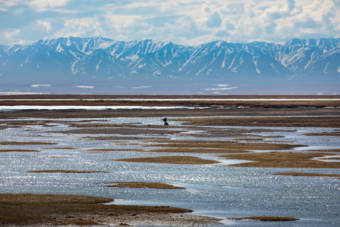
Research biologists pause among the wetlands of the coastal plain, with the Brooks Range in the background. (Lisa Hupp/USFWS)

Alaska’s state-owned development corporation can now spend up to $20 million to buy oil leases in the coastal plain of the Arctic National Wildlife Refuge.

The board of the Alaska Industrial Development and Export Authority unanimously approved the spending Wednesday night.

“I believe resource development is our future,” said AIDEA board member Albert Fogle. “A stronger resource development industry will trickle down into the other industries.”

The idea is that AIDEA could buy the drilling rights to tracts of land offered in the Trump administration’s lease sale on Jan. 6. And then, at some point, partner with companies to do the actual drilling.

It’s a way for the state to secure the rights to drill in the coastal plain in case no one else bids on the leases.
It’s a controversial move.

‘A ticket to decades of litigation’

Public comment at Wednesday’s meeting was dominated by people who opposed AIDEA bidding on the federal oil leases.

Some cited concerns about drilling’s impact on the global climate, and on wildlife in the coastal plain, including polar bears and caribou.

“The Arctic refuge is a majestic landscape on which people and animals alike depend,” said Karlin Itchoak, state director for The Wilderness Society. “The Alaska Native communities like the Gwich’in and the Inupiaq have relied on and protected the refuge for millennia.”

Some asked: Why not put the $20 million toward diversifying Alaska’s economy instead?

“You are trying to patch a declining industry that the state of Alaska is already way too heavily invested in,” said Julian Dan, a graduate student at the University of Alaska Fairbanks.

Matthew Jackson, from Ketchikan, described AIDEA buying leases as “a ticket to decades of litigation.” It’d bring the state a lot of risk, some said.

Others said if oil companies really want to drill in the refuge, they’ll buy the leases themselves.

Diane Preston, from Fairbanks, was among many who blasted AIDEA for not providing more time for Alaskans to weigh in on whether it should spend money on oil leases.

The agency posted the text of the resolution approved Wednesday just two days before the meeting.

“I think it’s pretty unconscionable to have a short few days’ process for public comments on such an important issue, particularly during the pandemic and holiday week,” Preston said.

“I don’t think that speaks well for you … those of you who thought you could do this kind of under the radar.”

The board accepted emailed comments this week, and said it got more than 300.

It set aside 90 minutes for public comments by phone on Wednesday. Then it went into a two-hour, private executive session.

‘You need more production. You need more leases.’

Shortly before 8 p.m., the public meeting resumed.

Board member Anna MacKinnon, a former state legislator, defended AIDEA’s timeline.

She said the federal Bureau of Land Management didn’t post the details of the coastal plain lease sale until early December.

And in the days following, she said, conversations ramped up about AIDEA bidding on the leases because of opinion columns written by former Alaska Govs. Bill Walker and Frank Murkowski.

At Wednesday’s meeting, Murkowski told board members the state has an “extraordinary opportunity” to buy the leases because, he argued, they’d basically be 50% off. The state gets half of the lease-sale revenue.

“The future of the state, from the standpoint of oil production, is more production,” he said. “You need more production. You need more leases.”

Murkowski has long supported opening the coastal plain to oil development, and his daughter, U.S. Sen. Lisa Murkowski, spearheaded the provision in a 2017 tax act to allow drilling there, reversing decades of protections.

Board members said ensuring oil development happens is good for the economy.

Board Chair Dana Pruhs said approving the money for the leases is also a way to protect “the sovereign rights of the state” and “40 years of everybody’s efforts to open up the coastal plain in ANWR.”

That’s because if a tract doesn’t get any bids in next month’s lease sale, then the federal government maintains control of it.

And two weeks after the lease sale, President-elect Joe Biden takes office. Biden has said he opposes drilling in the refuge, and that he’ll take steps to permanently protect the land.

A map shows the Arctic National Wildlife Refuge coastal plain broken into numbered tracts, with some of them shaded gray in the southeast corner to show which pieces of land have been removed from the upcoming lease sale.
A map of the Arctic National Wildlife Refuge coastal plain shows the tracts of land that will be included in an oil and gas lease sale on Jan. 6. The Bureau of Land Management has removed the numbered tracts shaded gray. 

Wednesday’s vote means AIDEA’s director, Alan Weitzner, now has the authority to evaluate the land available to lease and decide on bidding.

He has until 4 p.m. next Thursday to submit any sealed bids to the Bureau of Land Management.

The federal government will open all of the offers on Jan. 6 and award the leases to the highest qualified bidders.

But two major uncertainties still loom.

Groups opposed to drilling have asked a federal judge to step in and block the upcoming sale. A ruling is expected by Jan. 6.

Also, the Anchorage Daily News reported, Wednesday’s vote by the board could be challenged because of unconfirmed appointees.

The lease sale is set, but how much oil actually is under ANWR’s coastal plain?

The Canning River in the Arctic National Wildlife Refuge. (Randy Brown/USFWS)

Supporters of drilling in the northernmost slice of the Arctic National Wildlife Refuge often point to its oil potential as a reason to develop the remote stretch of land.

But what does the federal government actually know about how much oil sits under the refuge’s coastal plain, which will be put up for sale on Jan. 6?

While geologists say the rock formations, oil seeps and old seismic results seem promising, big questions remain about where the oil is trapped, and exactly how much of it there is.

“We don’t know very much about this area,” said David Houseknecht, senior research geologist for the U.S. Geological Survey and expert on the coastal plain.

“There are a lot of uncertainties that are difficult to quantify in the absence of better quality data,” he said.

What the government does know about the amount of oil in the coastal plain dates back decades.

In 1998, the USGS calculated there’s anywhere from 4 to 12 billion barrels of recoverable oil under the federal lands, which cover an area roughly the size of Delaware.

A map of the Arctic National Wildlife Refuge coastal plain shows the tracts of land that will be included in an oil and gas lease sale on Jan. 6. The Bureau of Land Management has removed the numbered tracts shaded gray. (Screenshot BLM document)

That’s a whole lot of oil, said Houseknecht, but also — a wide range.

“That range is so big because there’s been no wells drilled on federal land and because the seismic data is pretty old and low resolution and erratic,” he said.

Companies use seismic technology to map underground rock formations, and hunt for oil. The seismic data for the coastal plain is from the mid-1980s.

Technology has come a long way since then, Houseknecht said.

“Going into a lease sale in the coastal plain, with the only data being 35-year-old, 2-D data is quite unusual,” he said.

A worker stands in front of a vibe truck being used as part of BP’s 3-D seismic program at Prudhoe Bay this winter, to the west of the Arctic National Wildlife Refuge’s coastal plain. (Elizabeth Harball/Alaska’s Energy Desk)

An Alaska Native village corporation is trying to get approval to conduct 3-D seismic exploration, using massive trucks that roll over the tundra and vibrate the ground. Conservation groups argue the work will cause too much harm, including to the tundra and to polar bears that den there.

Another key piece missing from the USGS assessment is any data from actual wells drilled in the coastal plain in search of oil, Houseknecht said.

That’s because there’s just one, drilled back in the 1980s, on Alaska Native land. And the results are a closely-guarded secret.

“I signed a confidentiality agreement, and it didn’t have an end date on it,” said Mark Myers, a geologist and former commissioner of the Alaska Department of Natural Resources.

Myers is one of the few people who have seen the results from the test well, outside of the big oil companies that paid for it.

“I can’t comment on it, in terms of what I saw,” he said. “Even though it was a lot of years ago.”

A New York Times investigation based on legal documents suggested the results were not promising.

But Houseknecht said companies with that well data still have critical knowledge.

USGS interpreted the old seismic data to show most of the oil is likely in the western part of the coastal plain and said the other side didn’t appear to have the right conditions to hold a lot of petroleum.

Houseknecht said those companies with the well results, however, would know a lot more about the rocks underground on the eastern side of the refuge, and their potential.

“Whether that source rock is present or absent, whether that reservoir rock is present or absent, is huge,” he said.

Houseknecht said more is not known about the oil potential of the coastal plain because it wasn’t until late 2017 that Congress decided to open the land to drilling, after decades of protections.

An application in 2018 for new seismic work stalled.

The USGS also had the 1980s seismic data commercially reprocessed a couple years ago, Houseknecht said, which resulted “in a much better resolution than we do internally.”

The agency had planned to conduct a new oil assessment using the reprocessed data, he said, but after the 2017 tax act was passed, the Interior Department called off the work.

Houseknecht said the department did not give a reason why.

Myers, the former commissioner, said even without updated seismic data, he thinks one big selling point for oil companies is the fact that the coastal plain is onshore, making it cheaper to access than offshore prospects.

And, he said, there just aren’t a lot of opportunities for companies to get in early on a potentially massive oil find.

“I would say ANWR falls in that high risk, high potential — not high risk of oil, but high risk of execution,” he said. “When you put it all together, will that attract somebody? I think it will.”

When Myers says high-risk of execution, he means there’s opposition that could derail a company’s project.

Critics of drilling in the refuge say the land should be protected, and they’ve raised concerns about oil development’s effects on ecosystems and the global climate. The coastal plain is home to polar bears, migrating caribou and other wildlife.

Conservation and some tribal groups have already filed several lawsuits that aim to stop the lease sale.

While oil potential will likely be the first thing companies weigh when deciding whether to bid in the sale, Myers said, they’ll also take into account a string of other factors, including the lawsuits, costs and the changing administration.

President-elect Joe Biden has said he opposes drilling in the Arctic refuge.

Site notifications
Update notification options
Subscribe to notifications