Alaska's Energy Desk

Alaska state-owned agency to weigh bidding in ANWR lease sale

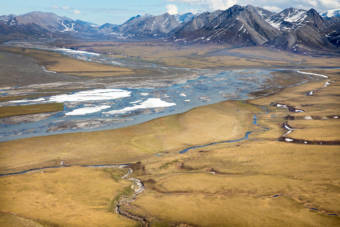
The coastal plain is the northernmost piece of the Arctic National Wildlife Refuge. It covers about 1.5 million acres, or about 8% of the vast refuge. (Lisa Hupp/USFWS)

Alaska’s state-owned development corporation may bid in the upcoming oil and gas lease sale in the coastal plain of the Arctic National Wildlife Refuge.

The Alaska Industrial Development and Export Authority is asking its board to allow it to spend up to $20 million on the sale.

The board will consider the request at its meeting late Wednesday afternoon.

The proposed resolution was first reported Monday by the Anchorage Daily News.

AIDEA’s director, Alan Weitzner, said if the corporation acquired a lease — or multiple leases — it would then partner with companies that would do the drilling. The goal is to develop the land, he said.

“There’s an opportunity here to really establish some economic growth for the state of Alaska,” Weitzner said in a phone interview Tuesday.

AIDEA’s request comes as speculation looms over whether the oil industry has much interest in bidding in the Jan. 6 lease sale.

A map of the Arctic National Wildlife Refuge coastal plain shows the tracts that will be included in an oil and gas lease sale on Jan. 6. The Bureau of Land Management has removed the numbered tracts shaded gray. (Screenshot BLM document)

The sale is surrounded by controversy and lawsuits and will be held two weeks before President-elect Joe Biden takes office. Biden has said he opposes drilling in the refuge and will take steps to permanently protect the land.

Former Alaska Govs. Bill Walker and Frank Murkowski recently urged the state to submit at least the minimum bid on the oil leases so it can secure the drilling rights in case no one else puts in an offer.

If no one bids, the federal government will maintain control of the land “that we have fought long and hard to responsibly develop,” Walker wrote in an opinion column published in the Daily News.

The AIDEA board is scheduled to meet at 3:30 p.m. Wednesday and will take public comment by phone for 90 minutes, the agenda says.

Critics say the corporation did not give enough notice of its proposal to bid.

“AIDEA’s disregard for the public process is evident when providing public notice of meetings only three working days before meeting to discuss and vote on this important and far-reaching resolution,” Veri di Suvero, executive director of the Alaska Public Interest Research Group, wrote in comments to the board Tuesday.

The upcoming lease sale stems from a tax act passed by Congress in late 2017. The bill included a provision that opened the coastal plain to drilling after decades of protections.

The federal Bureau of Land Management posted the details of the sale earlier this month, and on Friday announced it was taking about 30% of the acreage off the table.

Weitzner said if the board approves AIDEA’s proposal, he would then evaluate the remaining 1 million acres and decide on bidding.

He would have until just 4 p.m. on Dec. 31 to submit any offers to the Bureau of Land Management, which will open the sealed bids on Jan. 6.

Weitzner said he was not aware of the corporation submitting bids for federal oil and gas leases in the past.

The $20 million he’s proposing to use to pay for the leases in the refuge would come from the corporation’s Arctic Infrastructure Development Fund, created by the state Legislature.

In last-minute move, Trump administration removes nearly 475k acres from ANWR oil lease sale

The Canning River in the Arctic National Wildlife Refuge. (Lisa Hupp/USFWS)

The Bureau of Land Management has eliminated close to 475,000 acres of federal land from its upcoming oil and gas lease sale in the coastal plain of the Arctic National Wildlife Refuge.

BLM’s announcement Friday evening shrinks by about 30% the acreage companies can buy drilling rights to.

The agency started accepting bids for the remaining roughly 1.1 million acres on Monday and plans to hold the first-ever lease sale for the coastal plain on Jan. 6.

https://www.facebook.com/BLMAlaska/photos/a.293261867399962/4049600611766050

The 10 tracts removed from the sale are in the southeastern corner of the coastal plain.

BLM says it decided to cut that land from the sale based on comments it got during a 30-day call for nominations period that ended last Thursday, including concerns about caribou, polar bear and bird habitat.
According to the U.S. Geological Survey, the removed land does not have a high potential for oil.

“Most of the tracts removed from the sale are gas prone and have negligible oil potential,” David Houseknecht, USGS senior research geologist, said in an email.

Those opposed to the lease sale have launched criticism at the government’s timeline.

More than a dozen groups, including the Gwich’in Steering Committee, are trying to block the sale and the government’s approval of any seismic work in the coastal plain. They’ve filed motions for a preliminary injunction, and a federal judge says she’ll make a ruling on the requests by Jan. 6.

The groups argue that the government’s plan to open the coastal plain to drilling is rushed and flawed. They say development in the area will cause irreparable harm to wildlife, the tundra and the climate.

But those who support the sale argue it’s good for the economy, jobs and will create more revenue for the state and federal government.

BLM says it’s accepting sealed bids for the oil and gas leases until Dec. 31. The government plans to open those bids on Jan. 6 and will stream the event online.

President-elect Joe Biden will take office two weeks later, and says he opposes drilling in the refuge.

Investigation blames U.S. Forest Service for giving Alaska grant used for Roadless Rule fight

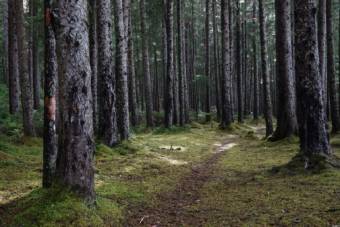
The Tongass National Forest is the largest temperate rainforest in the country. With exceptions, the Clinton-era Roadless Rule restricted road building and industrial activity in around 55% of the national forest. Advocates for its repeal said it posed unnecessary hurdles to development projects, like logging, mining, and renewable energy (Photo by Erin McKinstry/KCAW)

A federal watchdog agency says the U.S. Forest Service acted illegally when it awarded a $2 million firefighting grant to the state of Alaska in 2018. The state had asked for the grant to gather input on a proposal to exempt the Tongass National Forest from the Clinton-era Roadless Rule. 
The U.S. Department of Agriculture’s Office of Inspector General issued its report Wednesday. The report says the Forest Service illegally awarded the $2 million to the state through a grant program intended to support fire suppression in state-owned forests. 

A Washington, D.C.-based spokesperson for the Forest Service, Larry Moore, said that the money had been set aside for the state. But he says none of it actually ever changed hands. The agency says it’s working with its in-house lawyers to determine how to reallocate the money. 

That means the state is on the hook for any expenses the grant was meant to reimburse. The $2 million grant was to be matched by state funds. It’s not clear how much the state spent gathering input from industry groups and local stakeholders. The governor’s office did not immediately respond to questions for this story.

The USDA watchdog does not directly accuse state officials of wrongdoing — in fact, documents obtained by Alaska’s Energy Desk show that the state told the Forest Service exactly what it was requesting the money for. But investigators say that money never should have been awarded as part of the firefighting grant.

Investigators say it’s above-board for the Forest Service to provide funding to gather input on rule changes. But they say awarding that money to the state without informing other interested parties that money was available for that purpose violated federal law and regulations.

The investigation was prompted by a story last year from former Alaska’s Energy Desk reporter Elizabeth Jenkins. She uncovered documents showing the state had paid the Alaska Forest Association more than $200,000 to influence the rulemaking process. At least one Southeast Alaska tribe was also reimbursed for travel expenses estimated at a few thousand dollars.

Two members of Congress then requested the investigation.

State officials, including Gov. Mike Dunleavy and Natural Resources commissioner Corri Feige, said last year the state had not misspent any federal money from the grant.

Nearly 8,000 gallons of ‘slop oil’ spilled at onshore Hilcorp facility near Cook Inlet

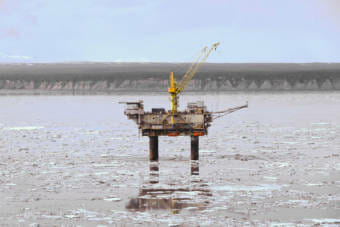
Hilcorp’s Anna Platform in Upper Cook Inlet. The state says nearly 8,000 gallons of oil leaked out of an underground line at Hilcorp’s onshore Trading Bay facility near Cook Inlet. (Photo courtesy Cook Inletkeeper)

Oil and gas company Hilcorp is cleaning up an oil spill on the western side of the Cook Inlet, about 20 miles northwest of Kenai.

That’s according to a report Wednesday from the Alaska Department of Environmental Conservation. The state says nearly 8,000 gallons of “slop oil” leaked out of an underground line at Hilcorp’s onshore Trading Bay production facility.
The slop oil is about 80% crude and 20% water. It’s considered waste and can’t be sold down the pipeline, said the state’s report.

The oil mix pooled in the soil and on top of it but did not go into the Cook Inlet waters, according to Crystal Smith, central region manager for the environmental conservation department.

An operator first noticed the leak Tuesday afternoon.

In a statement Wednesday, Hilcorp spokesman Luke Miller said the underground line was “immediately isolated” and the spilled oil remained within a tank containment wall.

Nine Hilcorp employees on site recovered about 630 gallons of the spilled oil Tuesday, according to the state’s report. More workers were headed to the area to help with cleanup. Also, Hilcorp said, environmental specialists were traveling to the scene.

The state says it has received no reports of impacts to wildlife so far.

The cause of the leak remains under investigation.

Gwich’in, conservation groups ask court to block ANWR oil leasing

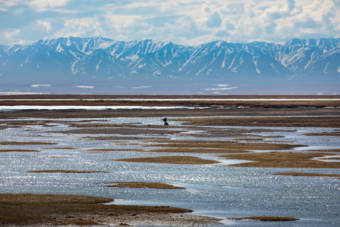
Research biologists pause among the wetlands of the coastal plain, with the Brooks Range in the background. (Lisa Hupp/USFWS)

The Gwich’in Steering Committee, village councils and more than a dozen conservation groups on Tuesday asked a federal judge in Alaska to step in and block the upcoming sale of oil drilling rights in the coastal plain of the Arctic National Wildlife Refuge.

Their motions for a preliminary injunction come in three ongoing lawsuits that challenge the Trump administration’s controversial oil leasing program for the refuge.

“We will not stand idly by while the Trump administration auctions off the wildest place left in America at bargain basement prices,” said a statement from Adam Kolton, executive director at Alaska Wilderness League.

The Trump administration has scheduled the first-ever lease sale in the refuge’s coastal plain for Jan. 6, and it’s moving toward allowing seismic work in the area this winter.

But the groups behind the recent court filings are asking a judge to prevent the administration from doing both until the ongoing lawsuits are resolved.

The legal standard for getting an injunction is higher than it is for winning a normal legal case.

Brook Brisson, a senior staff attorney at the Anchorage law firm Trustees for Alaska which represents the Gwich’in and several conservation groups, said she believes they can prove there will be irreparable harm unless an injunction is issued.

“Exploration, drilling, gravel mining, road building, building pipelines. Those are all very clearly incredibly harmful to the coastal plain and its resources,” she said.

The Bureau of Land Management, which is conducting the lease sale, counters that it’s following the law and has made science-based decisions to determine where and under what conditions oil development can occur.

The groups opposed to the sale are asking the court to decide whether to grant the requested injunction by Jan. 6.

If the court does decide to step in, it could push a decision on the lease sale into the next administration. President-elect Joe Biden takes office Jan. 20 and opposes oil development in the refuge.

This story has been updated with information on a third motion for a preliminary injunction filed Tuesday on behalf of the Native Village of Venetie Tribal Government, Arctic Village Council and the Venetie Village Council.

Solar project in Northwest Arctic villages set to break ground next spring

Aerial view of the Native Village of Shungnak
The Native Village of Shungnak (Photo courtesy of Northwest Arctic Borough)

Construction is set to start next spring on a solar battery project in the Northwest Arctic villages of Shungnak and Kobuk. It’s the latest renewable project for a region routinely struck by high energy costs.

It’s always been expensive to provide energy to rural Alaska. With most communities not falling on the road system, locals are forced to barge and fly in diesel fuel to power generators. There is a state program that reduces energy costs but with the state’s budget crisis, it’s unknown how long that program will be around.

Edwin Bifelt said even with state support, energy in rural Alaska remains pricey.

“Even with Power Cost Equalization, people see rates anywhere from 20 cents up to 40 to 50 cents a kilowatt-hour, which is four or five times the national average,” Bifelt said.

Bifelt, who grew up in the village of Huslia, is the founder and CEO of Alaska Native Renewable Industries. The company specializes in providing renewable energy to rural Alaska communities.

ANRI wrapped up the construction of Alaska’s largest rural solar farm in Kotzebue earlier this year, a 576-kilowatt project with more than 1,400 solar panels. Combined with the local electric co-op’s wind turbines, it’s estimated that Kotzebue is about 50% powered by renewable energy.

Now, ANRI is contracted with the Northwest Arctic Borough for just over $2.1 million to construct similar arrays in the villages of Shungnak and Kobuk, the easternmost communities in the borough. Bifelt said he expects the arrays to lower utility bills in the villages.

“Definitely see a decrease in the amount of diesel fuel that they have to fly in every year, but it’s tough to say right now what end effect it’s going to have for residents in the long run,” Bifelt said.

Kobuk and Shungnak combined have about an eighth the population of Kotzebue. Bifelt said the two new arrays will follow a similar design to the Kotzebue project, but they will be much smaller.

“The tentative design we have is for approximately a 38-kilowatt array in Kobuk and a 186-kilowatt array in Shungnak, I believe,” Bifelt said.

Bifelt said rural energy projects aren’t new to the region, though his company puts an emphasis on hiring locals to help with construction rather than fly up workers from larger cities.

“Just to provide some temporary jobs, provide some new skills for people within the community relating to renewable energy, and giving them education and experience with solar,” Bifelt said.

Construction of the solar arrays should wrap up by summer next year.

Moving forward, Bifelt anticipates rural renewable energy will be more important as lawmakers struggle with funding Power Cost Equalization. In 2019, a procedural delay in the legislature held up those funds, and there have been proposals from Gov. Mike Dunleavy and more conservative lawmakers to use funds from the program to help balance the state’s deficit.

Bifelt said the uncertainty over PCE should worry rural Alaskans.

“I guess it’s something we don’t think about enough, just because it’s been around the past 30-plus years,” Bifelt said. “But who knows if it’ll be there the next 10, 15 years, and then what situation communities be in at that point.”

Without PCE, Bifelt said rural Alaska residents could end up paying double for their energy costs.

Over the next decade, he said investing in solar, wind and hydroelectric power could save rural communities from potentially drastic hikes in energy bills. The more positive impact to the environment from these renewable resources is a bonus.

Site notifications
Update notification options
Subscribe to notifications