Alaska's Energy Desk

Trump administration to auction oil drilling rights in all federal lands of ANWR coastal plain

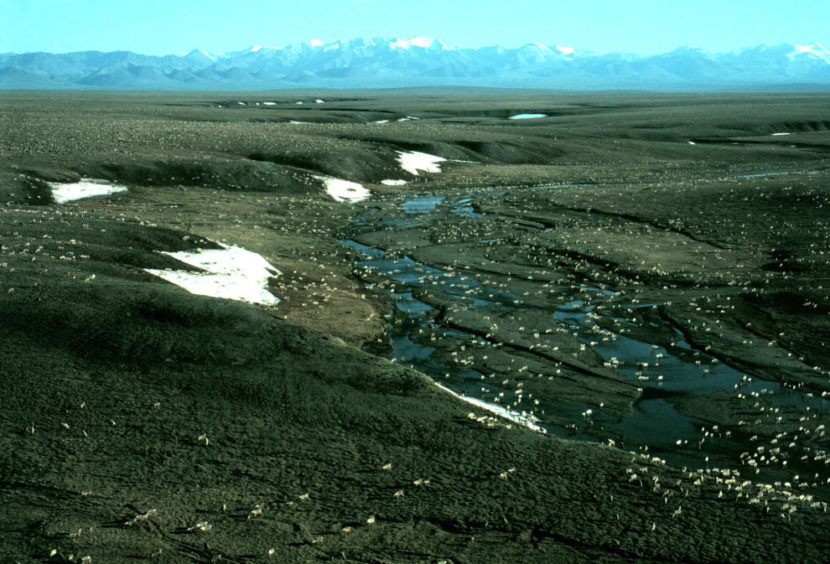
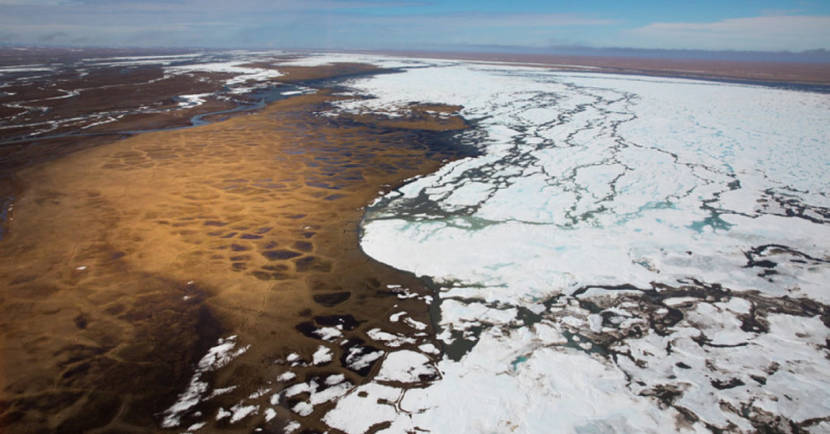
The Arctic Coastal Plain (Department of Interior Photo)

The Trump administration intends to auction off drilling rights in all federal lands of the Arctic National Wildlife Refuge’s coastal plain in its upcoming oil and gas lease sale. That’s according to the government’s 83-page document released Monday that details the terms of the first-ever lease sale in the northeast Alaska refuge, which is scheduled for Jan. 6.

The controversial sale will follow decades of fighting over whether to drill for oil and gas in the coastal plain.

Monday’s document says oil companies and other interested parties will be able to bid on tracts that cover the coastal plain’s nearly 1.6-million federal acres, an area about the size of Delaware that makes up about 8% of the refuge.

Supporters of the sale, including Alaska’s Congressional delegation, say it’s good for jobs and the economy. But those opposed, including conservation and some tribal groups, raise concerns about impacts to wildlife, the climate and Indigenous people. They also continue to blast the Trump administration for rushing to lock in oil drilling in the refuge before the swearing-in of President-elect Joe Biden, who opposes development there.

“What you see is agencies rushing, disregarding science, disregarding human rights in an effort to turn over the entire coastal plain of the Arctic refuge to oil and gas companies,” said Brook Brisson, senior staff attorney at Trustees for Alaska, an Anchorage-based environmental law firm that has filed one of the lawsuits that aims to block oil and gas development in the coastal plain.

Brisson and others opposed to drilling in the refuge point out that Monday’s sale announcement comes with 10 days still left in the “call for nominations” process. That’s a 30-day window when oil companies and other interested parties can tell the federal Bureau of Land Management which blocks of land within the coastal plain they’re most interested in bidding on — a step designed to guide the government’s decisions about which tracts to include in the auction.
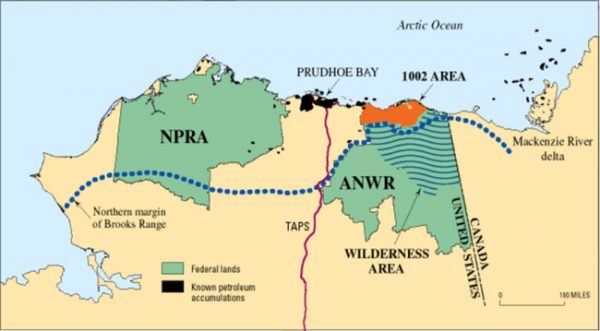
The Arctic National Wildlife Refuge’s coastal plain is shown in orange. The area covers about 1.6 million area, roughly the size of Delaware, and makes up about 8% of the refuge. (USGS map)

Typically, that confidential comment period closes before the date of a sale is announced.

The BLM, which is conducting the lease sale, has defended its timeline, saying it has been working toward a sale since the tax law was passed in late 2017. It said it’s allowing for each step in the process to take place, and it says it will still consider the comments received after Monday.

“What’s important to note there is we reserve the right to amend that detailed statement of sale,” Kevin Pendergast, BLM’s deputy state director for resources in Alaska, said in an interview last week. “It may change, it may not.”

The agency will not accept bids until after the comment period closes, said Lesli Ellis-Wouters, a spokeswoman for BLM Alaska.

According to the statement of sale posted online Monday, the minimum bid will be $25 per acre. Companies can submit their sealed bids to BLM between Dec. 21 and Dec. 31. Those bids will be unsealed at the 10 a.m. auction on Jan. 6, which will be broadcast online.

It’s unclear which companies will show up to a drilling rights auction for the refuge. So far, oil companies aren’t talking publicly about it.

Conservation groups have vowed to keep up the pressure to try to deter companies from bidding. Already, multiple lawsuits have been filed challenging the government’s environmental reviews of drilling in the coastal plain, and an array of big banks have said they won’t finance oil development in the refuge.
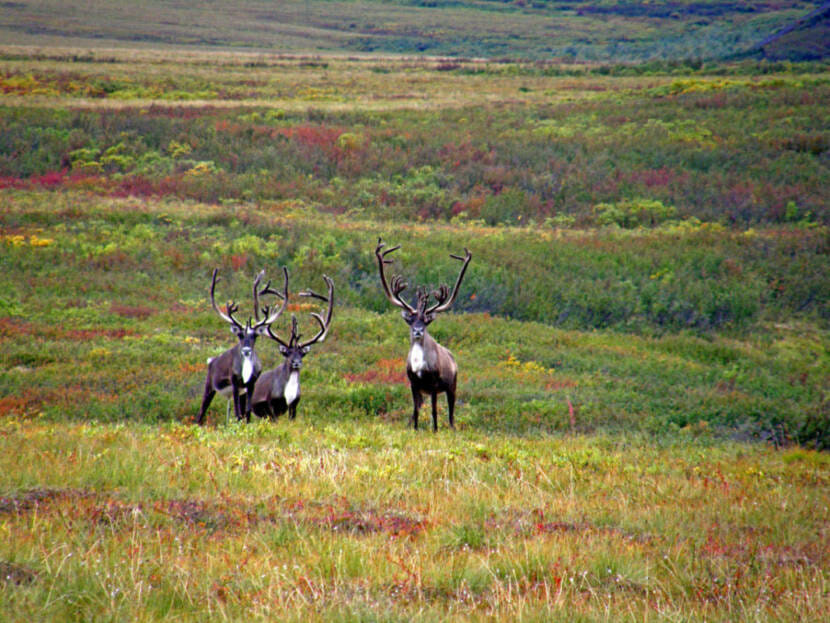
Caribou from the Porcupine Caribou Herd in 2007. The herd often calves on the Arctic Coastal Plain. (Andrew Ramey/USGS)

In a letter to Interior Secretary David Bernhardt on Monday, three Democrats in the U.S. House of Representatives pledged to work with Biden, to “undo any illegal steps the Trump administration is taking to rush these leases out the door.” They also said they’d fight to repeal the move to open the coastal plain to leasing that Congress included in a 2017 tax bill.

That massive bill — the Tax Cuts and Jobs Act — opened the area to drilling after decades of protections. It also required two lease sales within seven years, with the first to include at least 400,000 acres of the coastal plain and to be scheduled by the end of 2021.

Asked why the government decided to offer all roughly 1.5 million acres of federal land in the January sale, BLM Alaska spokeswoman Lesli Ellis-Wouters said, “Currently, there is no reason to exclude tracts from this lease sale.”

“The BLM has the right to withdraw tracts from leasing after nominations and comments are received and bids will not be accepted until after the nomination and comment period closes,” she wrote in an email.

Alaska’s Congressional delegation strongly supports opening the refuge to drilling, saying it will provide jobs and benefit the economy.
A line visible from seismic testing conducted in the mid-1980s pictured here in 2007 (Image from U.S. Fish and Wildlife Service)

Also on Monday, the federal government said it’s considering a request from the Kaktovik Iñupiat Corporation to conduct seismic testing in the coastal plain as early as Jan. 21, the day after Biden takes office.

The proposal would allow for the “harassment” of up to three polar bears that could occur during the seismic exploration program, including possible disruption to “migration, breathing, nursing, breeding, feeding, or sheltering.”

That move was swiftly criticized by environmental groups.

This is a developing story. Check back for updates.

Relief and disappointment as Bristol Bay reacts to Army Corps’ Pebble permit denial

Two attendees at a public hearing on the draft environmental review of Pebble, which the U.S. Army Corps of Engineers held in Newhalen in March 2019. (Izzy Ross/KDLG)

When the U.S. Army Corps of Engineers last week denied the Pebble Limited Partnership a federal permit to develop a mine under Section 404 of the Clean Water Act, it surprised people on both sides of the issue.

“I was ecstatic. I was elated. I was so happy to hear that it was finally over,” said Billy Trefon, Jr. from Nondalton, one of the villages closest to where the mine would have been built.

To the south, in Iliamna, Iliamna Development Corporation CEO Lisa Reimers said people feel hopeless.

“Well, we feel like it was — we were lied to by the Army Corps because they said politics wouldn’t be involved. And it ended up being politics,” she said. “The Army stated they’d recommend to build a mine, then out of nowhere they changed their minds.”

Pebble would have been one of the largest gold mines in the world. The Army Corps said last week that the mine proposal didn’t follow Clean Water Act guidelines.

For Trefon, in Nondalton, the project also went against the traditional teachings of elders.

“I was raised up listening to elders telling me that, if you take care of the land, the land will take care of you,” he said. “And it has been doing that for centuries, milleniums. So to us this land is important. The water is important.”

People around Bristol Bay, including Trefon, have focused on Pebble to the point of exhaustion, investing years to understand the issues around the project and its potential impacts.

Many were resigned, and for opponents of the project, the Army Corps’ decision released a wave of relief. Lindsay Layland is the deputy director of United Tribes of Bristol Bay, one of the regional groups opposing the mine. She’s also a commercial fisherman.

“As a fisherman, I’m just… I’m so happy, you know, I’m so proud of the effort that folks in the bay and beyond have put forward, and come together on,” she said.

Opposition to Pebble has been a unifying issue for the three major sectors of Bristol Bay’s fishery. Much of the advocacy over the past decade and a half has been centered on protecting Bristol Bay’s sockeye salmon run — the largest wild salmon run in the world.

“It really comes down to this amazing coalition, this amazing, diverse group of people — from commercial fishermen, to tribes, to sport fishermen, to subsistence fishermen, to hunters and anglers,” Layland said.

The debate has influenced people of all ages. Hailey Carty is a 13-year-old from Dillingham who’s in eighth grade. Pebble has always been a topic close to home.

“This has been something I’ve been protesting against for a few years now, and for it to finally be denied is really, really exciting,” she said.

Many of the people who live in the region and opposed the project also see this as a win in a fight to prioritize and protect subsistence practices.

“This is our land, our food sources, our animals, everything kind of runs off the water,” Carty said. “And for something to be taken away, can affect so many different things. It can just destroy many, many things.”

But for those who backed the project, the decision comes as a harsh blow. The mine proposal had recently seemed poised to succeed.

Sue Anelon works for the Iliamna Development Corporation. Iliamna is another community close to where the mine would have been. Anelon says the area is economically depressed. She sees the Army Corps’ denial as a bad decision for the state as well as the Lake Iliamna region.

“I’m very worried right now, because there’s a lot of people without jobs — they’re depending on the government,” she said.

Anelon said people have to wake up to the economic reality in the state. She pointed out that when Pebble was operating in the area several years ago, it provided jobs. That meant they were able to more fully participate in a cash economy.

“I’ve seen the good and the bad,” she said. “When Pebble was here and a lot of people were working, they were paying for their own groceries, they were paying their own fuel. They were buying trucks, they were buying Hondas. People were paying for things. Now they can’t do that. They have to rely on the government.”

Reimers, the CEO of Iliamna Development Corporation and a board member for Iliamna Natives Limited, has supported the project for years. She disagrees with the Army Corps determination that it was “contrary to the public interest.”

Reimers believes that regional entities like the Bristol Bay Native Corporation have not provided viable economic opportunities for communities like Iliamna, and she said that people who live near the proposed mine site and wanted the project are deeply disappointed.

The Pebble partnership said in a statement that the Army Corps’ decision is a “lost opportunity” for the region, and that it plans to appeal the denial.

In last-minute push, Trump administration announces ANWR lease sale for Jan. 6

porcupine_caribou_herd
The Porcupine Caribou herd in the Arctic National Wildlife Refuge’s coastal plain. (Photo courtesy U.S. Fish and Wildlife Service)

In a last-minute push, the Trump administration announced Thursday that it plans to auction off drilling rights in the Arctic National Wildlife Refuge in just over a month, setting up a final showdown with opponents before President-elect Joe Biden takes office.

The sale, which is set for Jan. 6, could cap a bitter, decades-long battle over whether to drill in the refuge’s coastal plain, and it would seal the administration’s efforts to open the land to development.

“We’ve followed a very logical and fairly lengthy, certainly very involved and public-oriented process to get us to this point. And this is the next logical step,” said Kevin Pendergast, deputy state director for resources with the Bureau of Land Management in Alaska.

But conservation and tribal groups who oppose oil and gas development in the coastal plain strongly disagree. And they blasted the administration on Thursday, saying it’s cutting corners so it can hand over leases to oil companies before Biden, who opposes drilling in the refuge, is sworn in and can block it.

“You’re one mile from the finish line and you decide to take a shortcut is what this screams to me, and you hope you don’t get caught,” said Matt Newman, a senior staff attorney at the Native American Rights Fund in Anchorage. He represents three Gwich’in tribes who live near the refuge and oppose drilling on the coastal plain.

“This just smacks in the face of a normal procedure,” he said.

BLM’s announcement of a sale date Thursday came just about two weeks into its “call for nominations,” a 30-day window when oil companies and others can tell the government which tracts of land they’re interested in bidding on.

Typically, once that period ends, confidential comments are analyzed to inform which pieces of land will be offered in a lease sale — and then the date of a sale is announced, said Athan Manuel, a lobbyist for the Sierra Club, which is opposed to drilling.

“The oil and gas program is usually more scheduled and systematic and by the book,” Manuel said. “That’s not happening with this case.”

Pendergast countered that the government is following regulations, including providing a 30-day notice of a lease sale.

A statement about the sale will be posted online Monday, detailing which areas the government will offer for leasing. The call for nominations ends 10 days later, on Dec. 17.

“We’re allowing for the various steps of the process to take place,” Pendergast said. “We can put those together in different ways at different times.”

Matt Lee-Ashley, a former deputy interior secretary under President Barack Obama, described the Trump administration as “hell-bent on selling off the Arctic Refuge on its way out the door, rules and laws be damned.”

“This whole boondoggle can and should be tossed in the trash by the courts or the next administration,” Lee-Ashley, who’s now a senior fellow at the Center for American Progress, a left-leaning think tank, said in a prepared statement.

Already, conservation and tribal groups, as well as a coalition of 15 states, have filed lawsuits challenging the Trump administration’s environmental reviews. Opponents have also secured pledges from an array of banks that say they won’t finance oil development in the refuge.

“Today we put the oil industry on notice,” said a statement Thursday from Jamie Rappaport Clark, head of Defenders of Wildlife. “Any oil companies that bid on lease sales for the coastal plain of Arctic National Wildlife Refuge should brace themselves for an uphill legal battle fraught with high costs and reputational risks.”

The coastal plain, also known as the 1002 Area, covers about 1.6 million acres; it’s roughly the size of Delaware.

It represents about 8% of the vast refuge. And while it’s home to polar bears, caribou and other wildlife, it’s also thought to hold billions of barrels of oil.

The Arctic National Wildlife Refuge’s coastal plain is shown in orange. The area covers about 1.6 million area, roughly the size of Delaware, and makes up about 8% of the refuge. (USGS map)

In a dramatic shift after nearly four decades of protections, a Republican-led Congress approved legislation in 2017 that opened up the coastal plain to oil development. It required two lease sales within seven years, the first scheduled for no later than the end of 2021.

In Kaktovik, the only community inside the coastal plain, some residents greeted Thursday’s news with enthusiasm. Matthew Rexford, Kaktovik’s tribal administrator, said drilling could boost the local economy.

“We have watched oil and gas development on the North Slope for almost 50 years,” he said in a phone interview. “And we believe that through the stringent regulatory environment and the oversight of our home rule borough, the North Slope Borough, all impacts from exploration and development can be mitigated to preserve the area.”

Alaska’s Congressional delegation, which has pushed to open the coastal plain to drilling, also praised Thursday’s announcement, saying development will create jobs. Kara Moriarty, head of the Alaska Oil and Gas Association, said it’s also good for the industry.

“Having a lease sale is the first step of getting access to responsibly developing resources that are needed to meet global demand,” Moriarty said.

Moriarty said she would not call the administration’s process rushed, since drilling in the refuge has been debated for decades. But she did say oil companies will have less time to prepare their bids than they normally do.

It remains unclear who might participate in a coastal plain lease sale. Oil and gas companies aren’t talking publicly about whether they plan to bid.

BLM says the sale will be conducted by video livestream.

Alaska Public Media’s Nat Herz contributed to this story.

This story has been updated.

Crews working to clean diesel spill in Northwest Arctic village water treatment plant

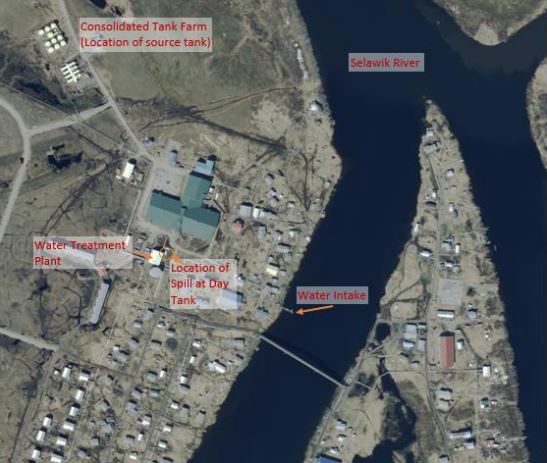
City of Selawik and the location of the diesel spill (Google Earth graphics courtesy of Alaska Department of Environmental Conservation)

A response crew is working to clean up a diesel fuel spill in the Northwest Arctic village of Selawik.

According to a release from the state Department of Environmental Conservation (DEC), the spill originated last Wednesday at a fuel tank for the village’s water treatment plant.

Officials say the fuel was transferred from a city fuel tank to the plant tank, though the transfer was left unattended for about seven and a half hours before the operator was alerted to the spill and shut off the valve at roughly 10 p.m. The spill was reported to DEC at roughly 1:30 a.m. Thursday.

The city tank holds just under 46,000 gallons of diesel and the water plant tank has a capacity of roughly 4,000 gallons. DEC’s Sarah Moore says officials are still trying to determine the total amount of diesel spilled.

“We know that there’s still 35,000 gallons approximately left in the tank following the release, and that source tank itself wasn’t damaged. It was an overfill due to transferring,” Moore said. “So we know that 35,000 gallons is still in the tank and is not threatening to release at this time. So we have a ballpark estimate, but are still working on some more concrete numbers about the volume spilled.”

A response crew has cleared 750 gallons of diesel so far, but due to fresh snow cover, DEC officials say it’s difficult to determine the total amount of diesel or the extent of the spill at this time.

“It can be a bit of a double edged sword,” Moore said. “It takes more work to find out where the diesel is because you have to dig holes in the snow and see if you can find it, but it also helps keep it more contained.”

The spill is about 610 feet from the Selawik River, a water source for the village.

Coast Guard officials arrived in Selawik on Tuesday to help provide safety and response equipment. Moore says, in keeping with pandemic safety mandates, the only people doing the cleanup are people from Selawik.

This story has been updated with comments from the Alaska Department of Environmental Conservation.

Largely insulated from COVID-19, Unalaska is watching its wastewater for signs of trouble

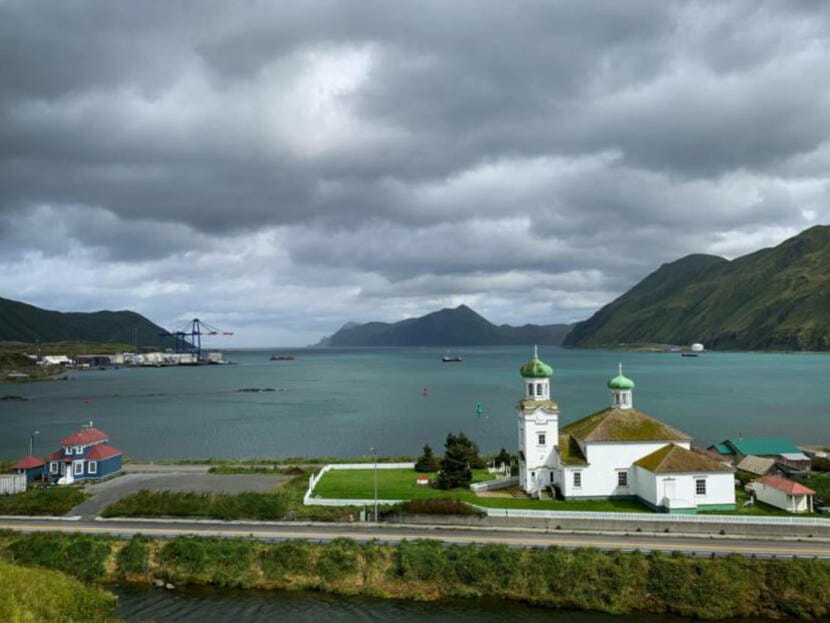
Unalaska pictured on August 30, 2020. (Hope McKenney / KUCB)

Unalaska and Dutch Harbor sit 800 air miles away from Anchorage. And the community of about 4,500 year-round residents more than doubles during peak fishing seasons.

It’s one of few places in the state that has been largely untouched by the coronavirus. Since the onset of the pandemic, the community has only recorded 107 cases, 85 of which were from one factory trawler.

As part of its mitigation strategies, in July the island began testing its wastewater for traces of COVID-19, mirroring efforts by universities and municipalities across the country. And despite the island’s first case of community spread two weeks ago, the virus is still below the detection level to identify it in Unalaska’s waste.

At Unalaska’s wastewater treatment plant, about 350,000 gallons of waste and greywater run through the facility every day. That’s about 70 gallons per Unalaskan per day.

“If somebody has COVID-19, they’re shedding this virus in fragments,” said Karie Holtermann, lab manager at the plant. “It’s in their GI tract, they’re shedding it into their feces, into their urine. And so we’re trying to pick that up in our testing here.”

Holtermann has lived in Unalaska for about two years. Her background is in the public health sector as a microbiologist in Los Angeles and the San Francisco Bay Area, and she’s worked as a research technician and engineer in oceanography labs in San Diego, Seattle and on the Red Sea in Saudi Arabia.

She said sewage testing has been successfully used as a method for early detection of other diseases, such as polio. And at the start of the COVID-19 pandemic earlier this year, she saw a Netherlands-based study that concluded that wastewater serves as an early warning system for viral spread because it can detect virus in people who haven’t been tested or who have mild or no symptoms.

“What they’ve all seen is that wastewater monitoring can predict an outbreak a week before showing up at the clinic,” Holtermann explained. “And once it is shown that COVID-19 is in a community, it’s able to show the beginning, the tapering and the resurgence of an outbreak.”

About 77 universities in 27 countries are doing this testing — including University of Alaska Anchorage, which is partnering with communities around the state, according to Holtermann. To help Unalaska track community spread of the coronavirus, she got permission from the city to purchase the appropriate equipment, developed a method and then began testing Unalaska’s waste.

“The equipment that you need to be able to test for COVID-19 is a high speed centrifuge, a vortex mixer, micropipettes, a [quantitative PCR] machine, a spectrophotometer and consumables,” she said.

Every week since July, Holtermann has taken two to three wastewater samples from around Unalaska during peak flow times, dipping a bucket hanging from a rope down into a few of the 10 lift stations located around the island.

“We go all around the clock,” she said. “So, at midnight, three o’clock in the morning — it’s a very interesting view of Unalaska.”

Then Holtermann concentrates the samples in her lab using a high speed centrifuge, extracts RNA and turns it into DNA, and puts it in a quantitative PCR machine to make billions of copies of viral DNA. After about 24 hours, she tests the samples for SARS-CoV-2, the virus that causes COVID-19.

“But we haven’t gotten positives in the community yet,” Holtermann said.

And that’s good news, she said, because it means the levels of the virus in the community are still too low to detect. But she said that could change. If it does, this testing could be used to try to pinpoint where the positive cases are coming from.

“So you can’t target it to a certain house, by any means,” explained Holtermann. “But you can definitely look at a part of town — it may be on the Unalaska side, or it may be coming from the UniSea side, or it may be from the spit. So you could probably target which area it’s from.”

While the island has yet to see widespread transmission of the virus, local health officials say they anticipate more positive cases with the upcoming influx of workers for the winter fishing season. In the meantime, Holtermann said she’ll continue to test Unalaska’s wastewater every week and do her part to keep the island safe.

Emergency access road opens for Northwest Alaska village facing coastal erosion, rising sea levels

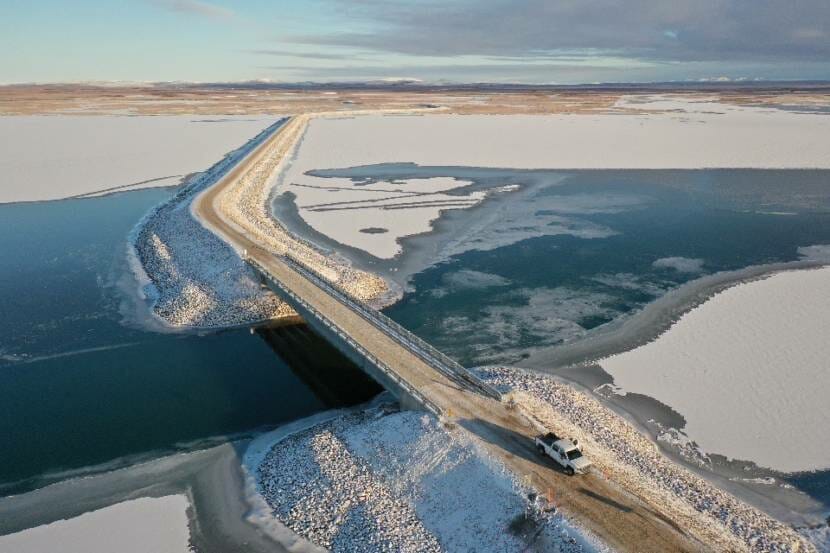
Kivalina Access Road (Photo courtesy of Jonathan Hutchinson, Alaska Department of Transportation)

After two years of construction, the Kivalina Access Road project is now usable by the community. It’s the first step in the process to potentially relocate the entire Northwest Alaska village from the threat of an eroding coast and rising sea levels.

Kivalina sits on a barrier island, surrounded by the Chukchi Sea. The area is prone to heavy wind and rainstorms. The protection of sea ice has become less reliable. Sea levels have risen with climate change, and so the ocean has chewed into the shore.

“It was always eroding,” said tribal administrator Millie Hawley. “We’re on a small spit of land that has diminished in size over the last century.”

The storms also bring the risk of flooding. Hawley said it had been difficult to evacuate people from the village during emergencies.

“According to the U.S. Coast Guard, it takes at least a day or two to come assist us,” Hawley said. “In a state of emergency, that’s just not acceptable.”

The solution was to build an eight-mile gravel road from the northern part of the community near the airport. The road stretches over the Kivalina Lagoon, allowing evacuees to head to a higher ground area known as K-Hill.

After three years of planning and two years of construction, the lion’s share of the road was completed at the end of October. Jonathan Hutchinson is the project manager with the state Department of Transportation.

“The project is substantially complete,” Hutchinson said. “There’s a need to install dust pallets next summer, and without getting into details, minor concrete finish work on the bridge.”

Hutchinson said the road is usable now, though that has brought up a new concern.

“One of the safety concerns that I’ve heard from the community has been lighting the route,” Hutchinson said. “Because you’re crossing the lagoon, everything’s going to be dark. Typically late fall, it’s going to be pretty dark by then when you’re wanting to evacuate on that road.”

With the new road, the community is also looking to relocate its school.

It’s part of a wider conversation to move the entire village and its more than 400 residents. A similar move was made by residents of the Western Alaska village of Newtok.

Residents of Shishmaref near the Bering Sea have discussed a move as well. Some scientists estimate the entire community could be underwater by 2025. Hutchinson said there is already a school site in mind.

“At the very end of the road, we’re putting a staging pad that’s intended to support future development in that area for the construction of the school,” Hutchinson said.

Hawley with the tribe said final inspections on the road are set to happen in early summer. For now, she said locals are getting use out of the new road.

“It’s been used every single day for subsistence,” Hawley said. “We’ve got access to our fishing sites even if the lagoon didn’t freeze over; we’re able to go there.”

As for the school, construction for that project is expected to break ground late next fall.

Site notifications
Update notification options
Subscribe to notifications