Alaska's Energy Desk

Former Gov. Walker leads effort to take over Alaska’s gas pipeline megaproject

Alaska Gov. Bill Walker and Alaska Gasline Development Corporation head Keith Meyer during a meeting in Beijing. (Photo courtesy Alaska Governor Bill Walker’s Office)

For more than 40 years, the state has tried and failed to bring natural gas from Alaska’s North Slope to market. Now, a new private venture — formed by some familiar players — wants to make an attempt. 

Former Gov. Bill Walker led a press conference on Monday with the group who call themselves Alaska Gasline & LNG, LLC.  

Walker is a man with a mission. He has spent decades working to bring the megaproject into existence.  And, much like he has in the past, he emphasized what it could bring to the state — jobs, money, cheap energy.

“You know we’re not out to get rich off of this project, we want to make it happen,” he said.

Walker was joined by the man he tapped to lead the state’s gasline corporation during his administration — Keith Meyer. As the state’s highest-paid employee, Meyer ran the Alaska Gasline Development Corporation for two years before he was ousted after Gov. Mike Dunleavy was elected. 

This is the second time this year Meyer has pitched taking over the state-led gasline project.   In January, Meyer went to the state corporation with an idea to take the project over again, this time with private backers. At the time, he would not disclose the company that was backing him.

Walker and Meyer are partnering with Fairbanks entrepreneur Bernie Karl and a labor union — Laborers Local 341.

Right now, those four are the only investors in their new venture. But Walker said that could change. 

“While there’s four now, we think there will be 400 or 4,000 because I think Alaskans are ready for this project to happen,” he said.

The group is responding to a message from leaders of the state’s gasline corporation who said this spring that they want to transition the project over from state control into private hands. They’re hoping to transfer the project by the end of the year. 

According to a written statement from the state corporation, “State of Alaska policymakers have made it clear that adequately funded third parties will need to fund Alaska LNG construction and lead the project forward. Any party with the appropriate resources and qualifications to help advance the Alaska LNG project is welcome to participate in the strategic path for Alaska LNG that the AGDC board defined this past spring.”

The corporation estimates the project will cost about $38.7 billion to build.  Alaska has struggled to hit the right market conditions to make its expensive project a reality. And, demand dropped in 2020 in part due to the COVID-19 pandemic, driving gas prices even lower. 

But Meyer and Walker are undeterred.  They point to the success of a years-long federal permitting process. 

Meyer says the next step is to move the project into the market; get it in front of people who may want to invest in it.

“It’s a very good time in the LNG industry, the world is moving to natural gas as a much cleaner hydrocarbon. So we now have 42 countries that import LNG,” he said.  “So the industry has matured and Alaska is in a beautiful position to really participate in this industry.”

Meyer says if the state will turn the project over to their venture, they’re aiming to get it built by 2028.
 

There’s more sea ice in the Chukchi Sea than last fall, but it’s still historically low

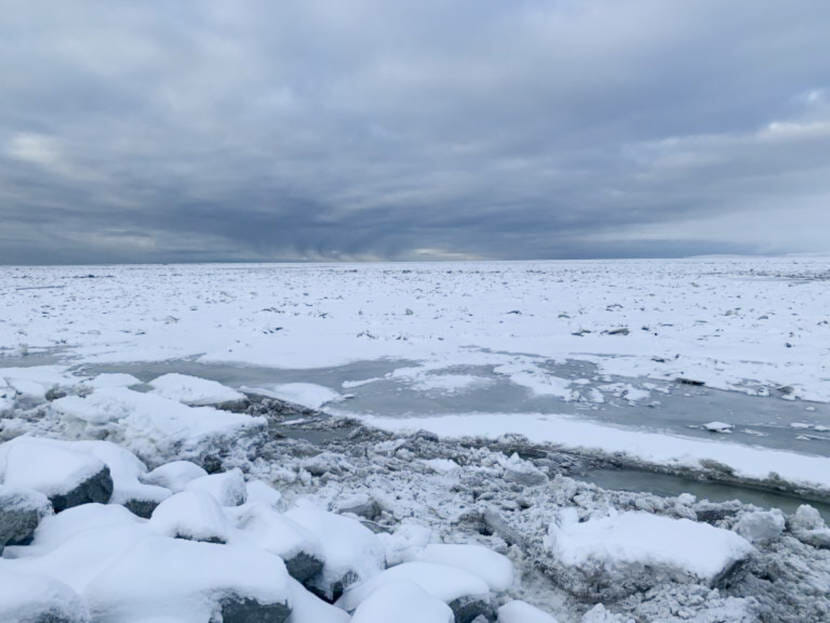
Snow piles on sea ice in the Kotzebue Sound. (Wesley Early/KOTZ)

Researchers track the extent of Arctic sea ice every year — essentially, how far it extends from the North Pole. The Arctic sea ice pack is smallest in the fall, after melting and receding all summer and right before it starts growing again through the winter.

There’s more sea ice this fall in the Chukchi Sea than there was at this time last year. But the ice closer to Alaska’s shores is lagging behind.

Rick Thoman, a climatologist with the International Arctic Research Center in Fairbanks, broke the news about the amount of ice in the waters off the coast of Northwest Alaska this year.

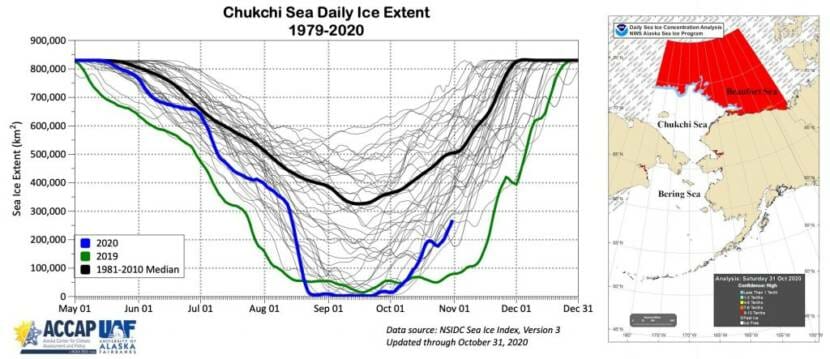
“We have much more, about three times more ice in the Chukchi Sea than we did last year,” Thoman said.

Last year saw the lowest fall sea ice extent in the Chukchi Sea on record. Thoman says this year’s sea ice extent is still way below the historical average, and most of this year’s ice is in waters north of Alaska.

(Courtesy of Rick Thoma/International Arctic Research Center)

“When we talk about the Chukchi Sea here, we’re talking basically to about 78 North,” Thoman said, “so that’s hundreds of miles north of Utqiagvik.”

In the southern Chukchi Sea, Thoman says there’s still a lot of open water. In fact, even though there’s more ice across the entire Chukchi, the ice near Kotzebue and Point Hope is actually weaker than last year.

“Kotzebue Sound is mostly open water at this point,” Thoman said. “So especially on the Russian side, we have even less ice than we had last year at this time.”

Thoman says this year’s forecast calls for storms throughout the coast of Northwest Alaska. Stormy seas make it difficult for sea ice to form.

“We’re going to have a turn towards warmer stormier weather in the Bering and Southern Chukchi Sea,” Thoman said. “We’re going to be very late with starting to form ice south of Point Hope. And we could easily be looking at no ice in the open Chukchi Sea, north of the Bering Strait, well into December.”

Thoman says historically, that ice was formed by mid-November or even as early as October.

Cruise ban ends, but the coast isn’t clear for the 2021 season in Alaska

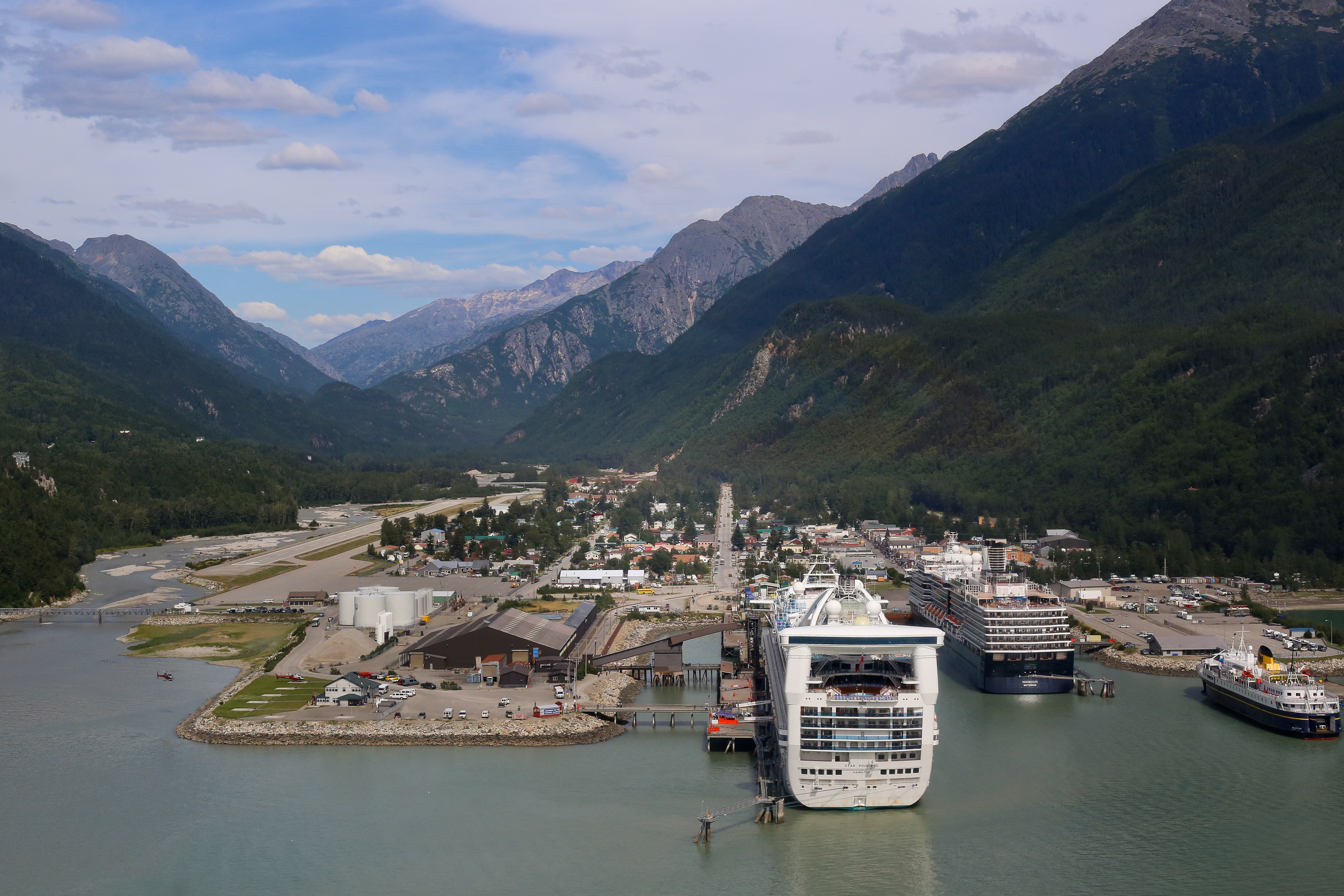
Skagway, as it appeared from the air, in 2015.
Skagway, as it appeared from the air, in 2015. (Photo by S. Millard/National Park Service)

The federal government’s 7-month ban on cruising has officially come to an end, but that doesn’t mean the cruise industry has a clear path into Alaska next spring.

The No Sail order from the U.S. Centers for Disease Control and Prevention will be replaced with what’s called a Conditional Sailing Order instead. It’s basically an acknowledgement that the health system isn’t ready for unrestricted cruising and it comes with a requirement for cruise ships to apply and register with the CDC to sail.

That’s significant for communities like Skagway, whose economies are tied to the cruise ship industry.

“Our survival as a community could very well depend upon how all of this shakes out,” said Skagway Mayor Andrew Cremata.

He says cruise ships are responsible for well over 90% of his town’s economy.

The Conditional Sailing Order also says the cruise industry needs a plan that satisfies local ports. That really matters in tiny, remote towns like Skagway, where the nearest hospital is 100 miles away by ferry or seaplane and the local clinic only has two ventilators.

Cremata says Skagway can handle it.

“We’re ready to have a cruise ship season. I have zero doubt about that,” he said. “We’re prepared to deal with COVID, we’re prepared to deal with the influx of people to deal with the intricacies of whatever we need to do to make sure we have an economy here. Unfortunately, all of these factors beyond our control prevents us from doing that. So keep our fingers crossed, I guess.”

But there’s a potential, serious obstacle. A maritime law says foreign flagged cruise ships need to stop in Canada between U.S ports. And Canada’s port is closed to cruise ships through next February. That’s a couple of months before Alaska’s cruise season starts, but cruise companies need to plan their itineraries now. There are no guarantees that the closure won’t be extended as COVID-19 case counts rise in the U.S.

That’s got Alaska’s two U.S. Senators exploring waivers and workarounds to the law that may help Skagway and other Southeast port towns that depend on the cruise industry.

Cremata says he’s grateful that the delegation is exploring ideas that could bring the town’s economy back to life. But he says those ideas are just the start of a solution–real economic recovery hinges on the ports and borders being open.

And they’re going to need an economic bailout if the cruise ship season fizzles for the second year in a row.

“We don’t like to have our hand out, we don’t like to say, we need help,” Cremata said. “But even in the best case scenario, we’re going to need help. In a worst case scenario, we’re gonna need a lot of help.”

And there’s one more wrinkle: earlier this week the CDC renewed the travel warning it originally issued in March. It’s the agency’s highest warning — level-3 — and basically tells travelers that even if they can sail on cruise ships, they shouldn’t.

Tongass Roadless Rule exemption leaves subsistence users feeling left behind

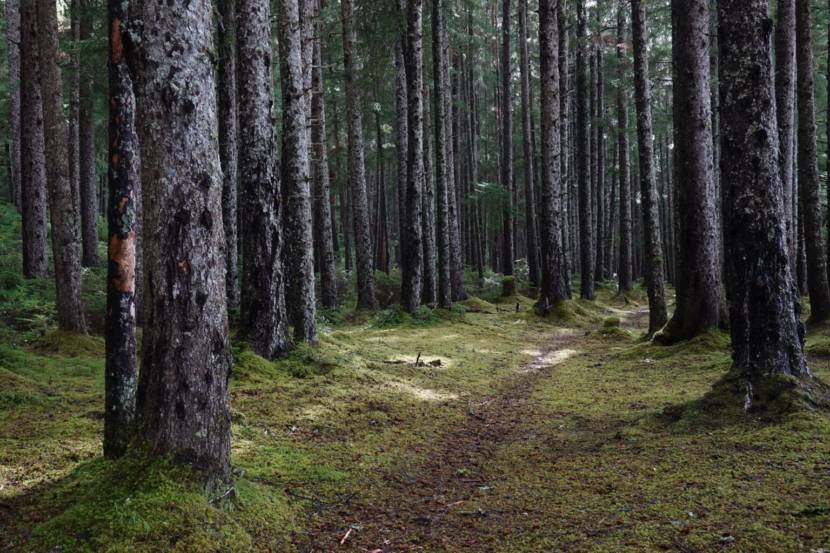
The Tongass National Forest is the largest temperate rainforest in the country. With exceptions, the Clinton-era Roadless Rule restricted road building and industrial activity in around 55% of the national forest. Advocates for its repeal said it posed unnecessary hurdles to development projects, like logging, mining and renewable energy (Photo by Erin McKinstry/KCAW)

The announcement on Wednesday that the Trump administration will lift protections against development in the Tongass National Forest sparked strong reactions. For many Southeast Alaskans who rely on the Tongass for food, the news is personal.

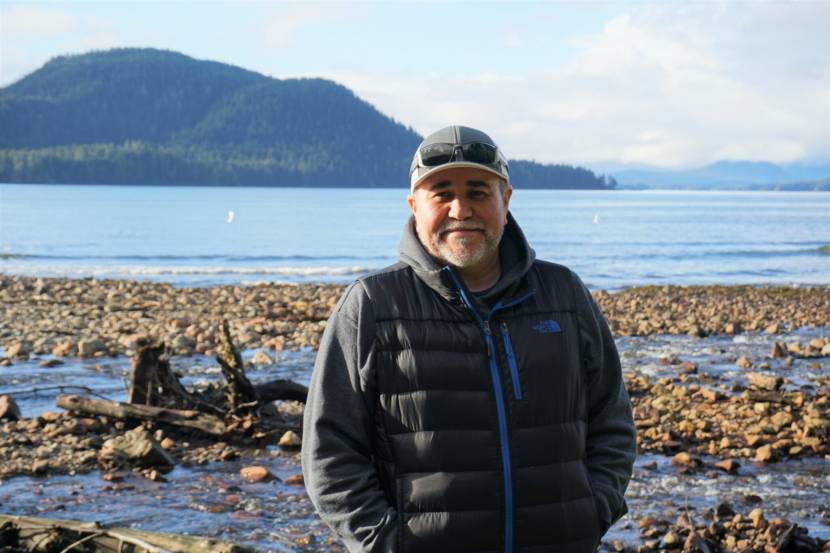
On a rare sunny afternoon in the Tongass, Chuck Miller showed me a spot near the water where his grandmother would often take him. He pointed out where they’d collect salmonberries, blueberries and huckleberries, giving Tlingit names for each.

“And then my grandmother would show me some of the plants we could use for medicinal purposes,” Miller said.

He eats many of the same foods as his ancestors. He hunts seal, collects seaweed, and fishes for salmon.

“I like to use the word Tlingit soul food,” Miller said. “It makes you feel good on the inside.”

He said he’s not political, and he doesn’t know all the ins and outs of what a full exemption of the Roadless Rule means for the Tongass National Forest, which is bigger in land area than the entire state of West Virginia. But anything that could threaten his subsistence way of life makes him nervous.

“If they allowed roads into certain areas where it affects our harvesting, I’m not a big fan of that,” he said. “You’re gonna get more population, more pollution and then some things might get overharvested.”

Chuck Miller poses for a photo near where he and his grandmother used to collect berries and medicinal plants. “Our Tlingit people have been eating food off the land since time immemorial. It’s a very important part of our culture,” Miller said. (Photo by Erin McKinstry/KCAW)

Miller isn’t alone. At a U.S. Forest Service hearing in Sitka last fall, commenters advocated unanimously to keep protections for the Tongass in place. Subsistence users and environmentalists worry that opening more than nine million acres of the Tongass to potential development for logging or mining could disrupt vital habitat for the species many depend on like Sitka black-tailed deer and salmon.

Eric Jordan is a Sitka-based commercial fisherman, but he feeds his family salmon too. He recalls what clear-cut logging did to salmon streams and wildlife habitat in the last century.

“Around Southeast, the people who live here understand how damaging that was to our ecology, and they do not want it reintroduced,” Jordan said.

The immediate return of industrial-scale timber operations to Southeast isn’t likely, mostly for economic reasons. But that doesn’t ease Don Hernandez’s worries. He lives in Point Baker on Prince of Wales Island, and like many of his neighbors, a significant portion of what he eats is hunted, fished or gathered.

“Ten years down the line, depending on what pressures may come from industry, once the long-term protections are eliminated, we could see a push to have more large-scale clear-cutting on the Tongass again,” he said.

He chairs the Southeast Alaska Regional Subsistence Advisory Council, which advises the federal board on important hunting and trapping decisions on federal lands.

The Forest Service’s final environmental impact statement states that the full exemption of the Roadless Rule in the Tongass will have “minimal adverse and beneficial effects” on subsistence users. It posits that increasing road access could open up hunting and fishing areas to those who don’t have boats and spread subsistence use over a larger area, rather than concentrating it in more accessible places.

But Hernandez said he thinks the costs far outweigh the benefits.

“When you spend the amount of money that it takes to build a road in Southeast Alaska, you have to extract a lot of timber to justify building those roads. So it’s not just a small impact,” he said. “And yes it does provide access for subsistence users and people use the roads. But, over time, all the negative impacts from the road building and clear-cutting, it takes a toll.”

Proponents of the changes say they’ll allow for more economic development opportunities like mining, communications and renewable energy projects. But for many people who live in and around the nation’s largest temperate rainforest, it’s all about the long view.

Take Allysia Witherspoon. She, her husband and their two children live in Sitka and rely on hunting and fishing for a good portion of their household needs. She says they’re nervous about what the decision to roll back protections for the Tongass will mean long term for subsistence resources — especially after the lion’s share of Alaskans implored the federal government to keep the Roadless Rule in place.

“It’s kind of alarming that no matter what research has been provided and all the comments of all the people who live here that they would try to do the exact opposite,” Witherspoon said.

Wednesday’s decision to overturn Clinton-era protections for 55% of the Tongass could be challenged in court. Congress could also get involved or a future administration could start the years-long process of reinstating the Roadless Rule in Southeast Alaska.

Editor’s note: This story was produced as part of a collaboration between KCAW and Alaska’s Energy Desk. Erin McKinstry is a Report for America Corps member.

Alaskans react to Trump Administration’s Roadless Rule rollback in the Tongass

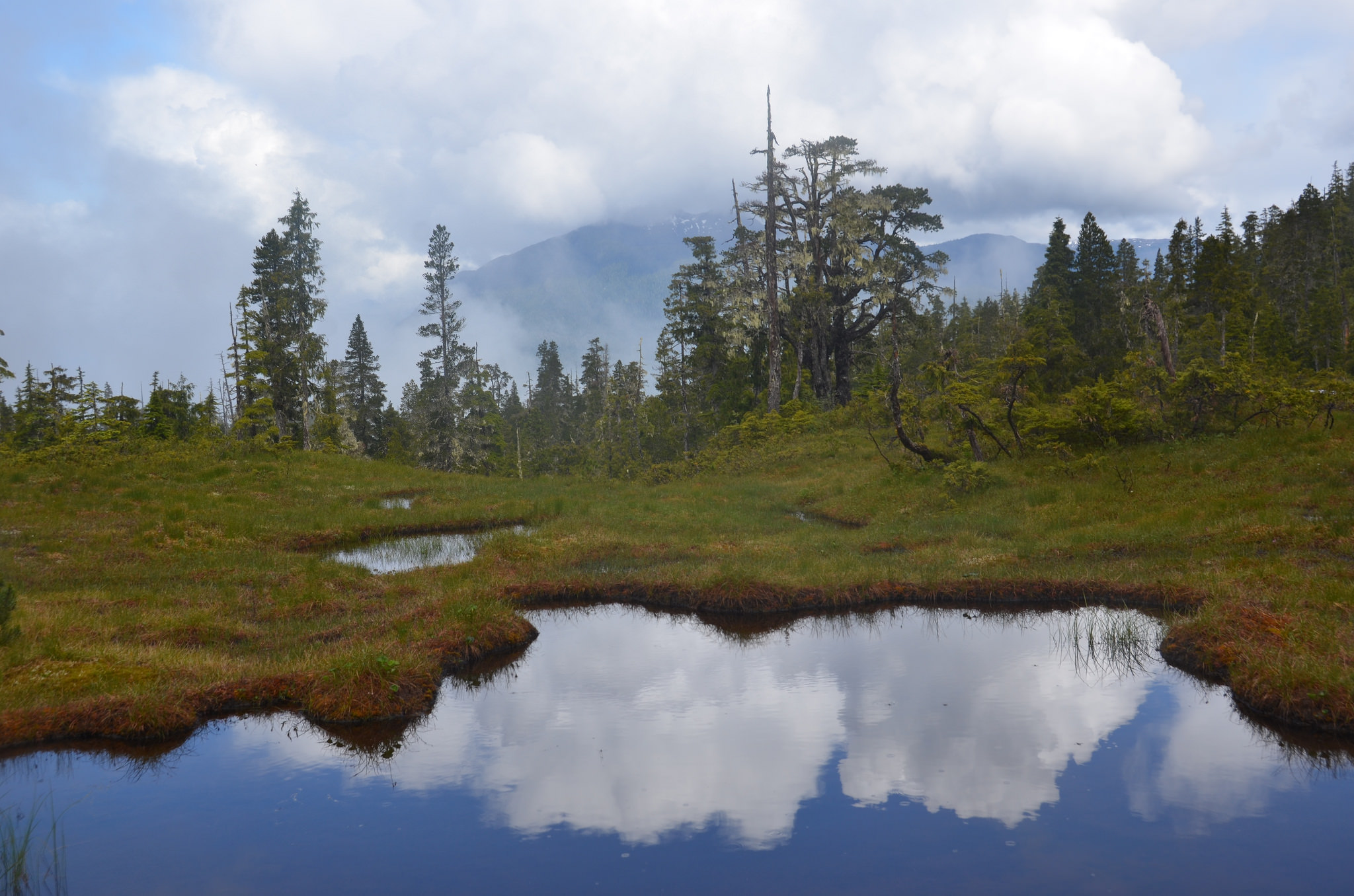
The Tongass National Forest near Wrangell, Alaska, 2016.
The Tongass National Forest near Wrangell, Alaska, 2016. (Creative Commons photo by Rob Bertholf)

Alaska’s congressional delegation and governor are welcoming the Trump administration’s decision to fully exempt the Tongass National Forest from the Clinton-era Roadless Rule. That’s a federal regulation that generally restricts road-building and industrial activity on national forest lands that don’t already have them.

Industry figures are also applauding the decision.

“The forest products industry … has been imperiled for some time,” said Tessa Axelson of the Alaska Forest Association, a Ketchikan-based timber industry group. “There’s a handful of small operators that are working on the Tongass, harvesting timber. In order to continue to survive, those businesses are dependent on a predictable supply of timber.”

And lifting the rule, she says, provides that predictable supply. She says the industry supports hundreds of jobs, including businesses that aren’t directly related to logging. But she says she doesn’t think lifting the rule will mean large-scale timber operations will come roaring back.

“We have no belief that that level of operation in the Tongass will occur again,” she said.

The U.S. Forest Service says lifting the Roadless Rule would open up about 168,000 old-growth acres to potential logging. That’s about 2% of the area protected by the rule, or 1% of the total Tongass.

But it’s not just about timber. Frank Bergstrom is a mining consultant in Juneau with some 40 years of experience. He says it could make mineral exploration more attractive to investors.

“There’s no roadmap to these things,” he said. “It’s just, maybe it’ll lead to a little more optimism.”

But he says development projects still require other forms of federal review.

“This is one obstacle that has at least been diminished. But there’s a long road to hoe,” he said.

Roadless Rule supporters dispute that it held up economic development in the region. The U.S. Forest Service routinely approved waivers for energy, mining and infrastructure projects in designated roadless areas, says Austin Williams of Trout Unlimited in Anchorage.

“The only reason for a full repeal of the roadless rule on the Tongass is to open up areas for logging,” he said. “Every single other alternative would have allowed non logging projects to move forward as they have in the past.”

The public comments received inside and outside Alaska were overwhelmingly in support of keeping the rule. An information request from the Southeast Alaska Conservation Council found that 96% of public comments from within and outside Alaska favored keeping the rule in place.

Executive Director Meredith Trainor says it was pretty overwhelming.

“Just 1% of the total responses out of 15,000 that they looked at that they analyzed — just 1% wanted to see a total exemption from the Tongass,” she said.

Tribal leaders say people forage, hunt and fish in protected lands.

“Of course our reliance on the Tongass for our way of life. That is what we’re trying to protect as Natives in Southeast Alaska is our way of life,” said  Joel Jackson, president of the Organized Village of Kake on Kupreanof Island.

His was the first of a half-dozen tribes to withdraw its cooperation with the Forest Service. He says it became clear early on that their voices weren’t being listened to.

“They just completely ignored our, our input and input to the other five tribes. So I felt very disrespected,” he said.

Ken Rait is project director at the Pew Charitable Trusts, and he helped push for the original 2001 Roadless Rule. He says the federal government has downplayed the temperate rainforest’s value as a carbon sink as the effects of climate change worsen. And he says that because federal timber sales are a loss for federal taxpayers, economic arguments don’t add up.

“This decision has no basis in science. It has no basis in rational kind of fiscal policy. And it has no basis in so far as public support,” he said.

The Trump administration’s decision could be reversed through a court challenge or an act of Congress. Alternatively, another presidential administration could revisit the rule — but that would require public comment, meetings and another multi-year process.

Until then, some 9.4 million acres in the Tongass are no longer bound by the restrictions under the Clinton era Roadless Rule.

Trump administration approves Conoco’s Willow project in National Petroleum Reserve-Alaska

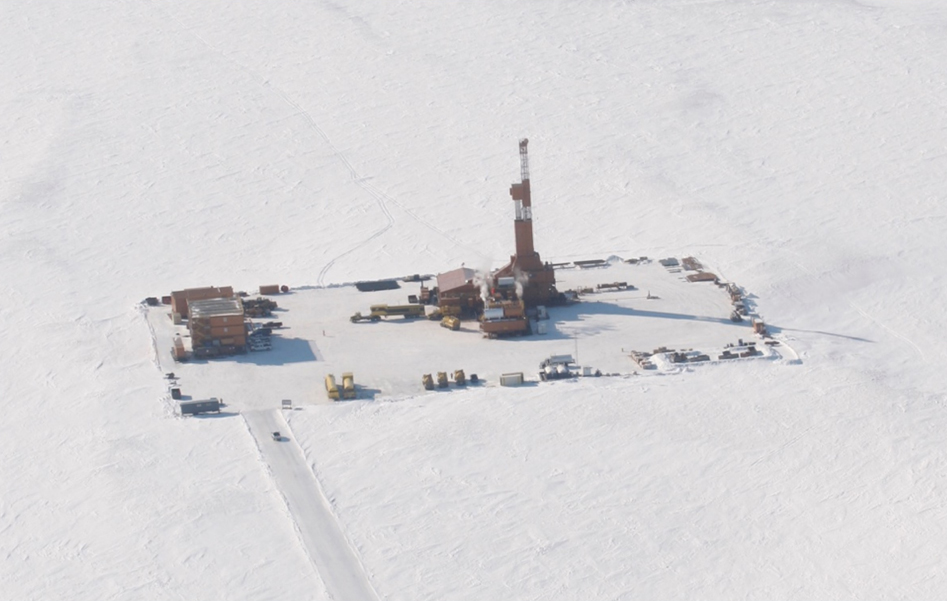
ConocoPhillips’ undeveloped Willow prospect, pictured here, is still being explored. The company announced this week that it’s selling a one-fourth stake in Willow and other projects in Alaska. (Photo courtesy ConocoPhillips)

The Trump administration has approved ConocoPhillips’ development plans for its massive oil project in the remote National Petroleum Reserve-Alaska, on the western North Slope.

Interior Secretary David Bernhardt signed the record of decision for the Willow project on Monday, earning praise from Alaska’s Republican Congressional delegation and governor, and condemnation from environmental groups.

The decision allows Conoco to construct up to three drill sites, plus an oil processing facility, pipelines, roads and other infrastructure.

The Willow project would be the North Slope’s westernmost oil field, and the Department of the Interior says the project could produce up to 160,000 barrels of oil a day, over 30 years.

U.S. Sen. Dan Sullivan said in a statement celebrating Willow’s approval that “the NRP-A is slated to be among the hottest energy prospects in the world.” Bernhardt said in a statement that the project will help keep oil flowing down the trans-Alaska pipeline, and will lead to hundreds of jobs.

“President Trump made his administration focus on American energy independence and the freedom it provides from day one of his term,” Bernhardt said.

But environmental groups are blasting the project, and say it poses significant risks to wildlife, including caribou and polar bears, and is a threat to the Teshekpuk Lake area, one of the Arctic’s most important habitats. Also, they say, it will further contribute to climate change in an already rapidly-warming region.

“The world remains mired in a global pandemic and the oil markets are experiencing continued volatility, yet this administration has once again opted to barrel forward with unnecessarily aggressive oil and gas development,” said a statement from Kristen Miller, conservation director at Alaska Wilderness League.

Conoco described the federal government’s approval of the Willow project as a “key milestone” and says construction could begin as early as next year. The company says it’s planning for oil production to begin in 2026, though it has also said the project could be delayed if Ballot Measure 1 passes, which supporters of the measure say they don’t believe.

More drill sites could be later added at Willow. The Interior Department says it will decide later on whether Conoco can add two additional drill sites. The oil and gas company requested the deferral on that piece of its proposal so it could do more community outreach, according to the federal agency.

Listen to Midnight Oil bonus episode: How a small, Arctic village found itself in the middle of Alaska’s new oil boom

Site notifications
Update notification options
Subscribe to notifications