Alaska's Energy Desk

Hilcorp to quietly take over BP’s stakes in Prudhoe Bay and other oil field assets

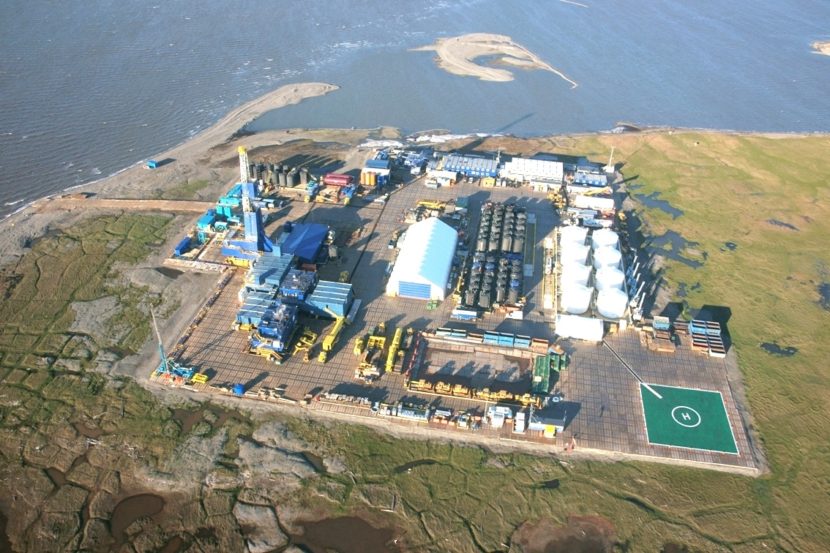
Point Thomson is approximately 60 miles east of Prudhoe Bay. (Photo courtesy Exxon)

A big piece of one of Alaska’s largest oil industry deals is set to quietly close by the end of the day Tuesday.

Hilcorp Energy Company will take over BP Alaska’s oil and gas leases within Point Thomson, Milne Point and the massive Prudhoe Bay oil field. The transfer is expected to happen around midnight, and marks the close of a major part of the $5.6 billion deal first announced by the oil companies last August.

It follows an announcement from state commissioners late Monday afternoon that they’d approved the sale of BP’s oil field assets to Hilcorp after a months-long analysis of the transaction and after stress testing Hilcorp’s finances.

“Today’s announcement represents a major milestone in the BP-Hilcorp review process,” Gov. Mike Dunleavy said in a statement Monday about the commissioners’ approval.

The sale will launch Hilcorp into the position of Alaska’s second largest oil producer, and the privately-owned company will become the operator of Prudhoe, the largest oil field on the North Slope and one of North America’s most productive. It will also move BP one big step closer to exiting the state after more than 60 years.

Meanwhile, the second key piece of the sale remains under review.

The Regulatory Commission of Alaska is still assessing BP’s sale of its pipeline assets, including its interest in the 800-mile trans-Alaska pipeline. The RCA has said it will reach a final decision by the end of September.

Sean Clifton, with the Alaska Division of Oil and Gas, said the two companies alerted the state in April about plans to split the deal into two parts. The companies also publicly announced several other changes to the transaction as an oil-price war and the coronavirus pandemic sent crude prices plummeting.

“This is not something DNR needed to approve, being a business decision among private parties,” Clifton said about the decision to divide the deal.

BP and Hilcorp said little publicly Tuesday about closing the first chunk of that deal. There didn’t appear to be any large events planned by the companies to mark the transfer.

A BP spokeswoman confirmed Tuesday that the company anticipated closing the first part of the sale by the end of the day. She declined to comment further. A Hilcorp spokesman also declined to comment.

Mark Myers is a geologist and energy consultant, who has served as a DNR commissioner in Alaska and as the national director of the U.S. Geological Survey. He said one of the biggest changes some Alaskans may first notice is Hilcorp’s smaller workforce.

“They’re a leaner company,” he said in a phone interview Tuesday. “So they’re going to do it with less people.”

Over the nearly year-long review of the sale, Hilcorp has faced criticism for its safety and environmental record and received praise for its innovation and ability to revive aging infrastructure, including at Milne Point.

Myers said he didn’t expect any immediate changes to oil production out of Prudhoe Bay.

Hilcorp, he said, will be working with two other main partners: ExxonMobil and ConocoPhillips, which each own a roughly one-third stake in the field.

Myers said he anticipated Hilcorp will first focus on training its employees, transitioning the hundreds of BP workers it has hired and learning more about the complexities of the oil field.

“There are a lot of opportunities, but they’re going to have to compare them within that field and run the economics on them as well,” he said.

BP has said up to 50 of its employees who planned for early retirement will help with Prudhoe Bay operations for 90 days after the sale closes.
Federal fisheries agency to staff: Keep “COVID-19” and “pandemic” out of documents

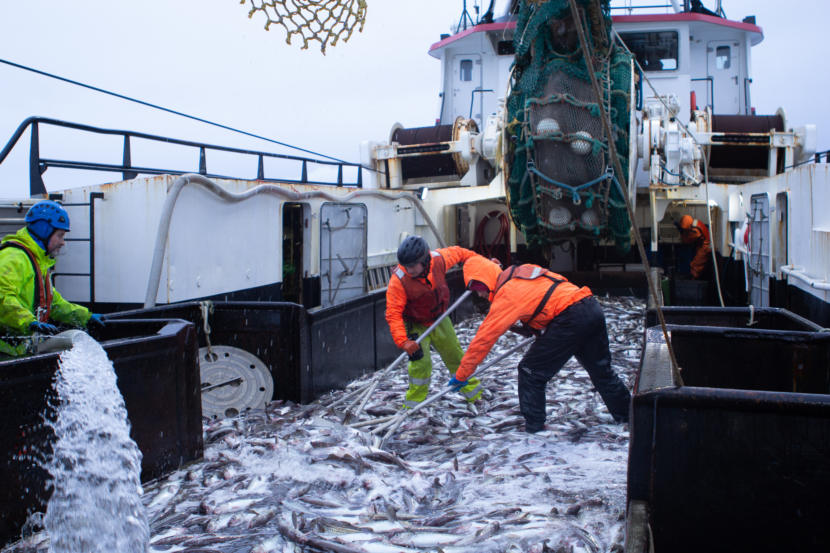
Crew members shovel pollock on the deck of a Bering Sea trawler last year. (Nathaniel Herz/Alaska’s Energy Desk)

A federal fisheries management agency has barred some of its employees from making formal references to the COVID-19 pandemic without preapproval from leadership, according to an internal agency document.

The National Marine Fisheries Service, part of the Commerce Department, manages federal fish stocks in partnership with appointed regional councils. Fishing crews and seafood businesses have been asking the agency to relax regulations as the COVID-19 pandemic has complicated their operations. There have also been outbreaks among industry workers.

The National Marine Fisheries Service’s guidance document, dated June 22, applies to the agency’s formal rules and management announcements. According to the document any reference to COVID-19 or the pandemic in publicly available documents must be approved by Sam Rauch, an attorney who’s NMFS’ Deputy Assistant Administrator for Regulatory Programs.

The four-page memo outlines the agency’s “preferred approach” is making “no reference to anything COVID related,” and it offers preapproved replacement phrases such as “in these extraordinary times.”

“This option assumes that the action can be supported by using facts, impacts, etc., that we would also use under normal circumstances,” the memo says. “No reference to any stay-at-home orders, travel restrictions, or anything COVID related is needed.”

The memo outlines a second option to be used on a “limited basis” when requests or comments require “some reference to the current situation.” It offers preapproved phrases such as “due to existing health mandates and travel restrictions,” though it says even minor changes require agency review.

A final option allows direct mention of COVID-19 or the pandemic on an “extremely limited basis” with leadership approval.

In a statement, National Marine Fisheries Service spokesman John Ewald said the memo is meant to “ensure timely and consistent rulemakings during COVID-19,” and he wrote the agency has been posting pandemic-related information on its website. He did not explain why the agency prefers to avoid mention of the pandemic.

One Alaska fisherman, Linda Behnken, said she finds the document “mystifying,” given how the agency has taken a number of actions in direct response to the pandemic. In her state, for example, it has waived requirements that federal monitors be on board some vessels to collect data and ensure compliance with regulations.

That announcement does mention the COVID-19 pandemic. But those words are omitted from a different, temporary rule that was formally announced in the Federal Register last week, in direct response to the disease.

The rule was adopted after a recommendation by the North Pacific Management Council, and it loosens limits on transfers of fisherman-owned harvest quota.

It’s aimed at reducing the risk of fishermen and crew spreading COVID-19 by traveling, according to testimony at the council meeting where the rule was discussed, and comments submitted beforehand. But the rule only refers to “government mandates and travel restrictions,” not the pandemic itself or COVID-19.

“Directions to not directly mention COVID-19, or the pandemic, in creating the rationale for those actions is hard to explain,” said Behnken, who runs a group of small-boat operators called the Alaska Longline Fishermen’s Association. “Other than, possibly, this administration is ready to move on and doesn’t really want to be focused on the pandemic any more.”

President Donald Trump has consistently played down the threat from the coronavirus, suggesting early on in the pandemic that it would “disappear.” He recently said he wants less testing for the coronavirus and has urged cities and states to open up despite a dramatic rise in the number of cases.

Mark Begich, a Democratic former U.S. senator from Alaska, said he was “shocked” by the memo, adding that he thinks it’s consistent with Trump administration efforts to downplay the impact of climate change by avoiding use of the words. Begich, who once chaired the Senate subcommittee with oversight of the National Marine Fisheries Service said minimizing the effects of the pandemic confuses the public and amounts to “denial.”

“Just saying it doesn’t exist does not mean that it’s not happening,” he said. “This is just putting people at risk, and not being honest and transparent about the situation we face in this country — which is getting more severe because of the lack of acknowledgement.”

Progress slows on mine project near Haines

A view up Glacier Creek towards Saksaia Glacier and the mountains that hold copper-zine-silver-gold-barite deposits that Constantine Metal Resources is planning to mine. (Photo by Claire Stremple/Alaska's Energy Desk - KHNS)
A view up Glacier Creek towards Saksaia Glacier and the mountains that hold copper-zine-silver-gold-barite deposits that Constantine Metal Resources is planning to mine. (Photo by Claire Stremple/Alaska’s Energy Desk – KHNS)

Drillers are usually on the mountain at the Palmer Project north of Haines 24 hours a day, seven days a week by mid-summer.

But this year, Constantine Metal Resources announced a belated and quiet work season. The Canadian metals company has no plans to drill at the mine project this summer.

It means there are far fewer workers at the project this year.

Last summer, the Canadian metals company employed about 60 people, roughly half of them locals. This year, it has just one full-time and three part-time employees. The company may make additional hires, according to staff.

Its vice president will also step down, but remain with the company as a part-time consultant. The company did not announce a replacement.

And, no drilling means the company is spending less money on the Southeast project this year compared to 2019. Still, it’s leaning on its Japanese partner company to help finance the roughly $2 million price tag for summer work. The company will sacrifice equity in exchange for the cash.

The Palmer Project promises to be a diverse metals mine with copper, gold, zinc, silver, and barite. Critics argue that mining could harm the nearby Chilkat River’s salmon run, but many residents hope a metals mine could bring high paying jobs to the region.

Field work this year will include surface evaluation of new prospects, surface mapping, core logging and selected sampling. The company will prepare five acres of land for future underground exploration.

Even though the company has state permits to begin construction of a large underground tunnel at the site, it will not begin that construction this year. The permits for Constantine’s underground exploration are valid while under review by the state Department of Environmental Conservation.


Trump administration wants to open millions of more acres to oil development on Alaska’s North Slope

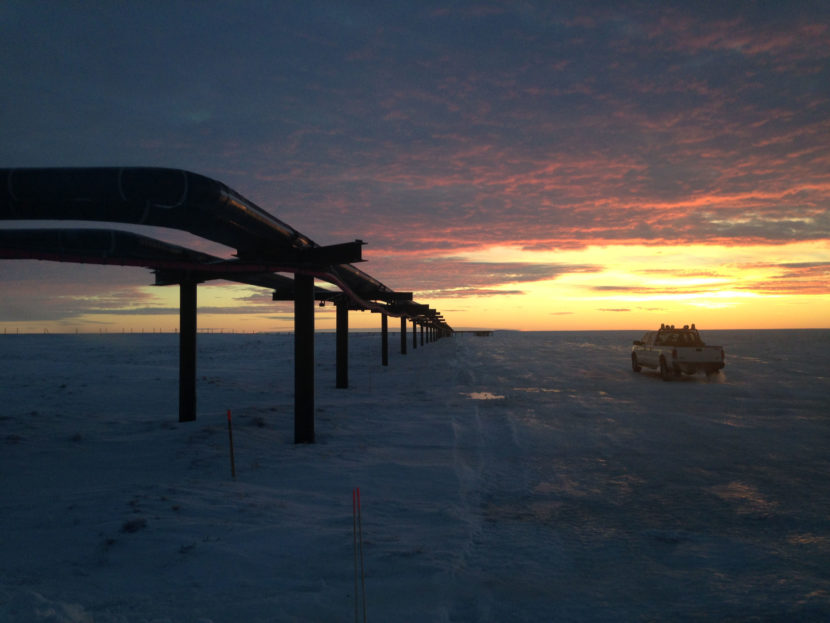
Pipelines stretch toward the horizon in the National Petroleum Reserve-Alaska. (Photo by Elizabeth Harball/Alaska’s Energy Desk)


The Trump administration is proposing to open millions of additional acres to oil and gas development in the National Petroleum Reserve-Alaska, a move blasted by environmental groups and praised by Alaska’s governor and other state and federal officials.

The Interior Department’s Bureau of Land Management released its final environmental impact statement Thursday for a new management plan for the 23-million-acre reserve, which sits west of Prudhoe Bay.

The plan would make 82% of the area available for drilling, up from the 52% that’s open under an Obama-era document. The Trump proposal would expand leasing into another 7 million acres that’s currently protected from development — an area just larger than the state of Vermont.

The reserve is estimated to hold about 8.7 billion barrels of oil, according to the U.S. Geological Survey.

But it’s also home to important habitat for birds and caribou, including the Teshekpuk Lake area in the reserve’s northeastern corner. And conservation groups point to the 1976 Naval Petroleum Reserves Production Act, which directs the interior secretary to uphold environmental and subsistence values in NPR-A.

Those groups decried the new plan Thursday, describing it as reckless, rushed and shameful, as well as a threat to the Teshekpuk Lake area, subsistence and the climate.  The area was off-limits to drilling in the Obama-era document, and would become completely open under the Trump administration plan — though there would be limits on when and how development could occur.

“This is really giving away vital habitat for caribou and migratory birds and will only exacerbate the climate crisis,” Nicole Whittington-Evans, Alaska program director for Defenders of Wildlife said in a phone interview. “So, we feel this is bad for the Western Arctic and it’s bad for the planet.”

In a statement, the Interior Department described the reserve as critical for “American energy dominance and national security.” And it said the plan has stipulations to protect the Teshekpuk Lake area, including “timing limitations” for major construction.

“We’ve looked to open up some additional areas to leasing based on new information while also using management prescriptions to protect important wildlife, habitat and subsistence uses,” Bureau of Land Management Alaska State Director Chad Padgett said in the statement.

The BLM released its draft environmental impact statement last fall.

But the preferred alternative announced Thursday was not part of it. Some conservation groups criticized the agency Thursday for not allowing communities to provide input on the option.

In its statement, the Interior Department said public comment led to the creation of the new and preferred alternative.

Gov. Mike Dunleavy thanked Trump’s administration for proposing to open more land to development, calling it a better balance than the Obama-era plan. Alaska’s congressional delegation also praised the decision.

The BLM will next prepare a final Record of Decision, which could be published as early as late July and will guide future lease sales in the reserve.

Alaska’s Energy Desk reporter Nathaniel Herz contributed to this report.

Correction: This story has been corrected to show that the Bureau of Land Management will produce a final record of decision in at least not next 30 days, not within the next 30 days. 


Trump wants to bail out Maine lobster fisherman. Alaska’s seafood industry is unimpressed

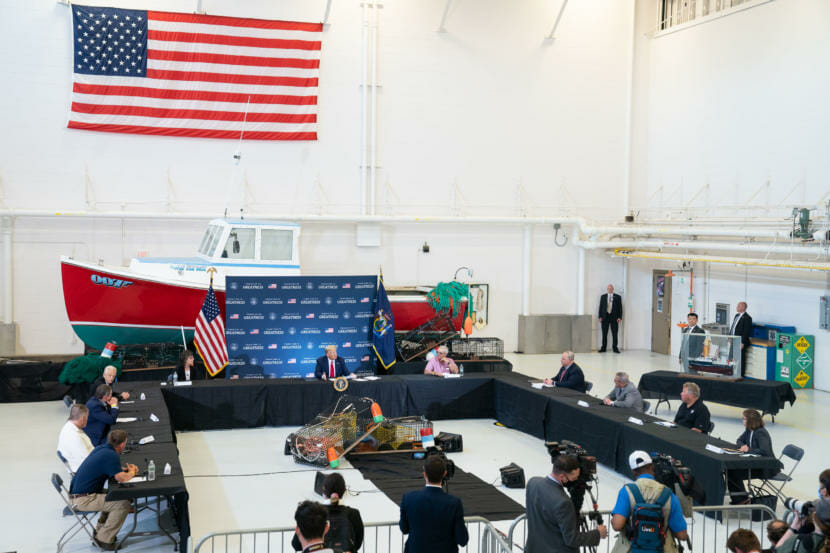
President Donald J. Trump participates in a roundtable on supporting America’s commercial fisherman Friday, June 5, 2020, at Bangor International Airport in Bangor, Maine. (Official White House Photo by Joyce N. Boghosian)
President Donald J. Trump participates in a roundtable on supporting America’s commercial fisherman on June 5, 2020, at Bangor International Airport in Bangor, Maine. (Official White House Photo by Joyce N. Boghosian)

Fishing businesses across the country have suffered during President Donald Trump’s trade war against China: They’ve faced big tariffs that cut into their exports.

Trump announced an effort to fix the problem Wednesday. But Alaska fishing groups say they’re deeply displeased because the relief is targeted solely at the lobster industry, which is centered in Maine.

“It’s not our first experience of feeling like we got punched in the gut. But to me, that’s what it felt like,” said Stephanie Madsen, who runs the At-Sea Processors Association. That’s a group of huge Seattle-based vessels that harvest pollock in the Bering Sea and process it in onboard factories.

Trump’s announcement comes after he held a roundtable earlier this month with commercial fishing interests in Maine, where he called complaints about Chinese tariffs on lobster “easy to handle.”

On Wednesday, he followed up by issuing a formal memorandum in response to what Trump described as “punitive” and “retaliatory” actions against a “crown jewel of America’s seafood industry.”

The memo directs Trump’s administration to provide assistance to Maine lobster fishermen and businesses, and to possibly impose retaliatory tariffs on China.

Madsen, in a phone interview Thursday, said that Maine lobstermen are hardly the only fishermen hurt by the trade war.

Crew members shovel pollock on the deck of a Bering Sea trawler last year. (Nathaniel Herz/Alaska’s Energy Desk)

Her group’s members had been capitalizing on the fast-growing Chinese market. But once the trade war started, pollock faced Chinese taxes as high as 37%, slashing exports nearly in half.

“All of our growth strategy is focused on China. So, to basically be locked out of that market over the last couple of years has been really hard to take,” said Matt Tinning, the At-Sea Processors Association’s director of sustainability and public affairs.

The problem isn’t specific to Alaska pollock, either — industry players across the state saw Trump’s announcement as an affront to Alaska’s entire fishing industry.

Other species of Alaska fish have found markets in China, too. And those exports have also suffered since the trade war began, said Jeremy Woodrow, executive director of the Alaska Seafood Marketing Institute.

“A lot of our crab species, our flatfish species, a lot of our salmon species are exported to China as well,” he said. “All of those have been hit with unbalanced tariffs — tariff rates as high as 35% to 42%. And those just really impact the price of fish here in Alaska, and depress the value of our industry.”

Alaska industry leaders said they think Trump singled out Maine because of the time he spent there earlier this month, and the audience he gave the state’s fishermen and fishing businesses.

They noted that Trump hasn’t had the same face time or relationships with Alaska’s fishing industry. But Julie Bonney, who represents a group of Kodiak trawlers and fish processors, said that would be welcome.

“If he wants to come to Alaska and have a roundtable with us about our industry, we’d be all over it,” she said. “And I’d love to be sitting at the table with him.”

A White House spokesman didn’t immediately respond to a request for comment Thursday.

State investment agency approves $500K for summer work on Ambler Road

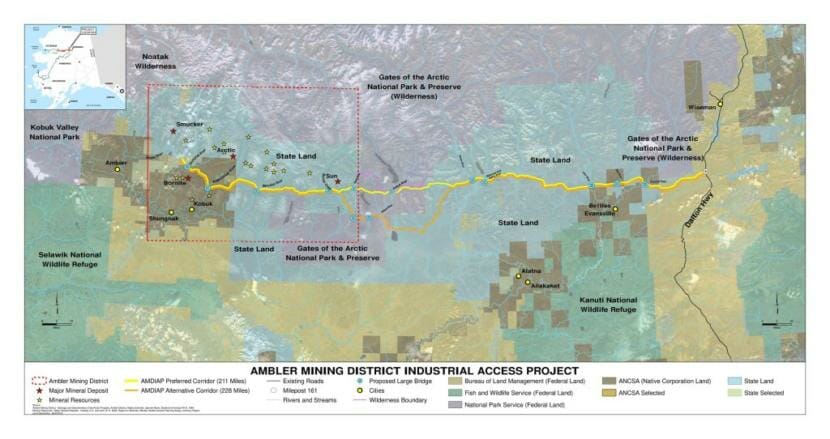
A map of the proposed Ambler Road project (Map courtesy of the Bureau of Land Management)

The Alaska Industrial Development and Export Authority board voted to put $500,000 into the controversial Ambler Road project on Wednesday. The state agency is in charge of making investments and providing loans to various business interests across the state.

The Ambler Mining District Industrial Access Project, commonly known as the Ambler Road project, has been a lightning rod for controversy for years, pitting the desire to expand business and mining interests in the state against the concerns over impacts to the environment and subsistence.

The road would lead to the Ambler Mining District, northeast of Kotzebue, which has deposits of copper and other metals that companies want to be able to truck across the state.

Board members heard public testimony over the phone from people across the state. Supporter Michael Jesperson of Anchorage says that Alaska is too dependent on oil, and needs to develop other industries like mining.

“We need to look to the future, not just now,” Jesperson said. “My kids need jobs when they graduate college. I would like the economy to improve and the value of my house to go up. None of that’s going to happen in a bad economy.”

However, to get to the site, the road would start near the Dalton Highway and cross Gates of the Arctic National Park. Environmentalists have expressed strong opposition to building a road through a national park. The Army Corps of Engineers completed its final environmental impact statement at the end of March. It says that the road could affect air and water quality, wildlife migration and erosion.

Residents like John Horner of Kobuk are fearful that building the road could affect access to caribou and other sources of subsistence hunting.

“This is going to affect my kids and their kids’ futures as well,” Horner said. “We cannot eat money. One word that comes to mind with this Ambler Road is ‘genocide.’ You guys are slowly going to kill off our culture, our way of life which defines who we are as Indigenous people.”

As AIDEA has weighed financially supporting the Ambler Road, a new factor has come into play in the last several months: the COVID-19 pandemic. As businesses across the state struggle to stay afloat due to the pandemic, the AIDEA board has received criticism from the public over who they’re giving funds to. The first meeting the board held during the pandemic was in March and saw overwhelming opposition to giving funds to the Ambler Road. During that meeting, the board approved putting $35 million dollars into the Arctic Infrastructure Fund, while simultaneously designating the Ambler Road as an Arctic project.

While testimony was much more even this time around, just over half of the testimony was in opposition to the Ambler Road.

“I implore you, do not go ahead with this expenditure for the benefit of overseas-headquartered megacorporations,” Palmer resident Loren Karro said. “Put the money towards helping Alaskans survive these extraordinary times.”

The company that’s been developing a prospect in the Ambler Mining District is Ambler Metals LLC, a Fairbanks-based subsidiary of Trilogy Metals, based in British Columbia.

While many village governments have come out in opposition to the road, regional borough governments have taken a more measured approach. In testimony on behalf of the Northwest Arctic Borough, Siikauraq Martha Whiting says that the borough supports AIDEA putting the money toward the project, but emphasized the importance of reaching out to villagers.

“We request that you continue building relationships with stakeholders within the Northwest Arctic Borough, especially in the communities of Ambler, Shungnak and Kobuk, as this project is in their homeland and in their backyard,” Whiting said.

The up to $500,000 approved for the road by AIDEA this week will be matched by Ambler Metals LLC. It is to go towards aerial photography of the proposed route, public outreach and hiring an external program manager.

Editor’s note: Martha Whiting serves on the board of directors for KOTZ Broadcasting.

Site notifications
Update notification options
Subscribe to notifications