Alaska's Energy Desk

American Seafoods has had more than 100 COVID-19 cases on fishing vessels scheduled to come to Alaska this summer

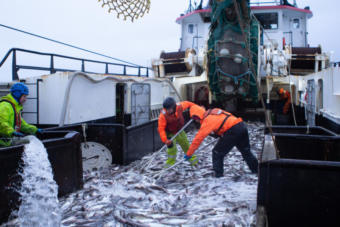
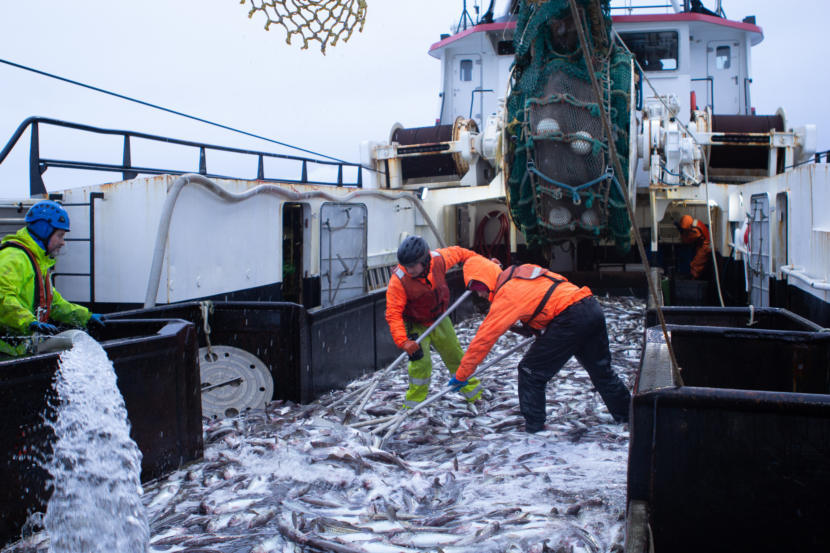
Crew members shovel pollock off the deck of a Bering Sea fishing boat earlier this year.
Crew members shovel pollock off the deck of a Bering Sea fishing boat in 2019. (Photo by Nathaniel Herz / Alaska’s Energy Desk)

As America’s meat producers contend with thousands of COVID-19 cases among processing workers, seafood companies have drafted rigorous plans to ward off similar spread of the disease as their summer season looms in Alaska.

But with that season still gearing up, the industry has already been shaken by its first major outbreak, aboard a huge vessel with an onboard fish processing factory. Last week, Seattle-based American Seafoods confirmed that 92 crew from its American Dynasty ship had tested positive for COVID-19 — nearly three-fourths of 124 people onboard.

Fishing executives had been working long hours to prevent just that type of disaster, and the news hit them hard.

“It was like, ‘Wow, I can’t believe this.’ We had done so much — each company had worked so hard to try to avoid this happening,” said Brent Paine, executive director of United Catcher Boats, a trade group whose members fish for pollock and cod off Alaska and another whitefish called hake off Washington and Oregon. “None of us have ever worked so hard in our lives than we have in the last two months, without a doubt.”

The American Dynasty, which is 30 feet shorter than a football field, came into port in Washington after fishing for hake — a spring season that functions as a kind of tune-up before vessels steam to Alaska for the summer pollock fishery. Once at shore, a crew member reported feeling sick to the vessel’s medic, then tested positive for COVID-19, American Seafoods said in a prepared statement.

A day later, the company reported another 85 cases, plus six more Thursday. Then, late Thursday evening, county health officials elsewhere in Washington reported that 25 crew members on two other American Seafoods vessels had also tested positive for COVID-19.

All three vessels are still scheduled to fish for Alaska pollock later this summer, though “schedules aren’t set at this time,” Suzanne Lagoni, an American Seafoods spokeswoman, wrote in an email message. Dozens of other Seattle-based boats are also expected to arrive in the Aleutian Islands this month to participate in the summer pollock fishery.

Seafood industry officials and health-care providers note that Alaska has imposed stricter quarantines for fisherman than the measures used by American Seafoods before the its crews fell ill. But they also acknowledged that the outbreak shows just how badly things can go wrong in a fishing vessel’s cramped quarters — which poses a bigger risk for the remote Alaska communities near factory trawlers’ fishing grounds, given the lack of health-care infrastructure there.

The clinic on the Aleutian Island of Unalaska, home to the state’s largest fishing port, has just three ventilators.

“That poses one of our worst-case scenarios — that high volume at one time,” said Melanee Tiura, chief executive of the nonprofit that runs the clinic. “That could very quickly exhaust all resources in rural Alaska — one boat coming in with, potentially, 124 infected individuals.”

During the summer pollock season, factory trawlers and onshore plants process the harvest from the Bering Sea into surimi, the fake crab sometimes found in sushi; they also supply filets for products like McDonald’s Filet-O-Fish sandwiches. The fishery is big business, with an annual harvest that can be valued at more than $1 billion after processing.

American Seafoods is the biggest player, with 17 percent of last year’s total catch, according to a report filed with federal regulators in April. It owns six vessels that catch and process fish onboard, five of which carry more than 100 crew, and the company’s primary investor is a New York-based private equity firm called Bregal Partners.

After American Seafoods first announced its positive tests, industry observers and medical experts quickly identified the company’s quarantine procedure as a possible weakness that could have allowed COVID-19 to slip onto its trawlers.

Other seafood companies have required employees to quarantine for 14 days before they’re tested and cleared them for work, since, according to the Centers for Disease Control and Prevention, the incubation period for the disease can run that long.

But though American Seafoods tested workers before they were allowed to board vessels for the hake fishery, its minimum quarantine in advance was just five days.

Just as it can take 14 days for infected people to show COVID-19 symptoms, it can also take that long for the virus to be detectable in a test, said Dr. Geoffrey Gottlieb, an infectious disease physician and virology researcher at the University of Washington Medical Center. He described a five-day quarantine as “cutting corners.”

“From a public health, medical, virology, testing rationale, it doesn’t make sense,” Gottlieb said. “You might get away with it some of the time. But if enough boats or if enough industries are doing this kind of thing, it’s certainly likely that at least at some point, that strategy is not going to work.”

Asked why American Seafoods chose the five-day quarantine period instead of two weeks, Lagoni, the spokeswoman, wrote that the company “closely monitored” information from the CDC and worked with state and local health departments “to establish initial screening and testing protocols.” Last week, she added, American Seafoods extended its quarantine to 14 days.

The 14-day quarantine period is actually a requirement for fishing companies operating in Alaska, and Lagoni said the company will be following all of the state’s mandates for fishing.

The Alaska officials leading the state’s response to COVID-19 are having discussions with the CDC and Washington Department of Health about what happened on the American Dynasty, said Incident Commander Bryan Fisher.

“We’re going to obviously learn a lot based on the investigation,” he said. “And we’re just going to use that to strengthen our processes and protocols up here.”

In Washington, as fishing vessels prepared for the spring hake season there, the industry received very little support and guidance from state and county public health agencies, said Paine, who heads the United Catcher Boats trade group.

Companies and trade groups developed protocols with the help of a maritime medical service, Discovery Health MD, he said. But it was “all voluntary,” and each company was on its own, Paine added.

“We didn’t have a group of expert epidemiologists that know viruses telling us exactly what we needed to do. There was zero support,” he said. “We didn’t know what was going to work.”

Gottlieb, the University of Washington virology researcher, said that if companies can put appropriate quarantine procedures in place before boarding, fishing crews stand a good chance of remaining uninfected with COVID-19, largely because of vessels’ isolation at sea.

But if an infected person is allowed onboard, he added, the risk is “exceedingly high,” with the resulting spread mirroring what’s been observed on cruise ships, meat processing plants and American Seafoods’ vessels.

“The virus is going to do what the virus does,” Gottlieb said. “If folks aren’t doing what needs to be done from a public health point of view, and what we know needs to be done from a medical and testing point of view, it’s not surprising that this kind of thing is going to happen — and this is a prime example.”

Western Alaska just had it’s toastiest May on record

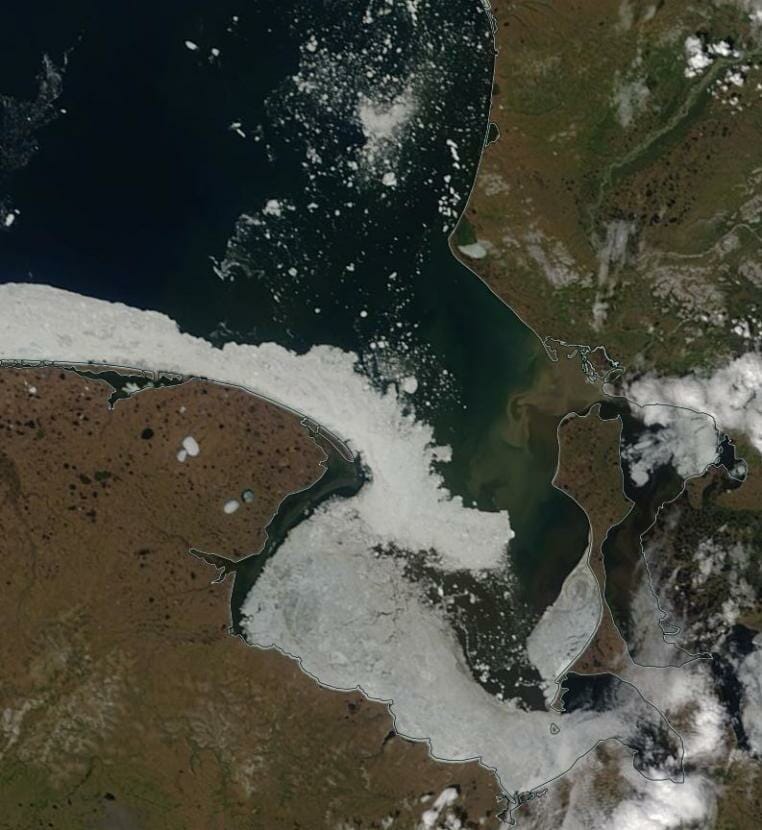
Moderate Resolution Imaging Spectroradiometer (MODIS) image of Kotzebue Sound on June 7, 2020. (Image courtesy of Alaska Arctic Observatory and Knowledge Hub)

This year, Western Alaska had its warmest May on record. It was the fourth warmest May for the state as a whole. Certain conditions aren’t as blistering as last year, but maintain the recent trend of a warming Arctic.

Climatologist Rick Thoman with the International Arctic Research Center in Fairbanks says last month was in the top ten warmest Mays for most regions in the state. An exception was the North Slope region which saw a high pressure system of cool air.

“That kept the easterly winds going quite smartly across the North Slope,” Thoman said. “And with more normal ice conditions this year than in the past few years, that cooling breeze off the ice pack kept temperatures down a bit.”

However, from Point Hope down to the Bethel area, this May was toastier than ever. Thoman says sea ice in the Bering Sea has mostly melted. Sea ice in the Chukchi Sea is taking longer to melt than last year, which saw the earliest sea ice melt on record, but Thoman says it’s still much earlier than normal.

“Not that early and less open water at this point than we had last year, but compared to the longer term normal, this ice loss is well ahead of schedule,” Thoman said.

Thoman says that temperatures have been considerably warmer on average since about 2012. In years past, Thoman says sea ice break-up normally occurred in mid to late June.

“Some years back in the 80s it actually was in the first days of July,” Thoman said. “Nowadays, typically we’re seeing the ice melt get underway in earnest starting in late May. This year a little bit later than that, but again part of that long term trend.”

Thoman says that current climate predictions for June show an increased chance of warmer than normal temperatures across Western and Northwestern Alaska, with the Southwest Bering Sea due for a drastically warmer month.

“Their ocean temperatures are way above normal and that puts another thumb on the scale for Northwest Alaska,” Thoman said.

While most areas of the state saw an increase in overall temperature during May, it was more drastic in Western Alaska, where some regions were as high as 10.5 degrees warmer than average.

Juneau is getting an electric city bus, making it the first city in Alaska to have a plug-in in its fleet

zz
Juneau’s electric bus is made by the company, Proterra. (Photo courtesy of the City and Borough of Juneau)

Juneau is about to become the first city in Alaska to get a permanent electric bus in its fleet. (The Municipality of Anchorage leased an electric bus for a four-month trial period in 2018.)

The City and Borough of Juneau received a $5 million federal grant to purchase electric buses and charging stations. The first is expected to quietly hit the streets sometime October. 

A spokesperson for Juneau’s Capital Transit said most of its busses will remain diesel-powered for now. But it plans to replace seven of it’s aging vehicles with electric busses by 2022. 

Additional funding for this project comes from Alaska’s share of a multi-billion dollar legal settlement from Volkswagen. The car company was sued in 2016 after it illegally sold cars that masked pollution levels during emissions tests. 

In recent years, Juneau has become an enthusiastic adopter of electric vehicles. It’s been compared to places like Portland, Oregon when it comes to plug-ins per capita. 

Alaska’s COVID-19 plans for fishing communities are now being put to the test

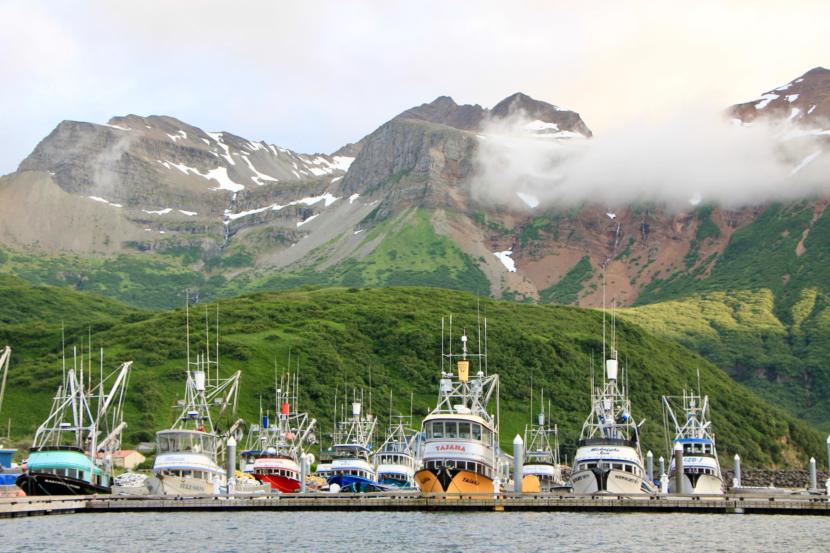
Fishing boats, about half as many as their might be in a good season, wait for an opener in Chignik’s city harbor. (Photo by Alex Hager / KDLG)

In a normal fishing season, Dan Martin would fly straight from the Pacific Northwest to the Aleutian Islands, where his pollock trawler, the Commodore, would be waiting for him to take the wheel.

But this year, the veteran skipper is stepping onboard in Seattle, where he, four crew and two federal fisheries observers are taking COVID-19 tests and hoisting a quarantine flag. Then they’ll squeeze onto the vessel for a week-long voyage to Alaska’s biggest fishing port, Dutch Harbor in the Aleutian Islands.

“We might have to eat in shifts,” Martin quipped. “Because I don’t know that we can fit that many people at our galley table.”

There’s no hospital anywhere in the Aleutians, and Dutch Harbor has not yet seen a single confirmed case of COVID-19. Martin says the industry’s biggest fear is bringing the virus in with them.

That fear is not theoretical: A different vessel that fishes for Bering Sea pollock, with an onboard processing plant, returned to a Washington port last week with at least 86 people infected with the disease. And in Alaska, 14 nonresident seafood industry workers have already tested positive for COVID-19.

In Dutch Harbor, Martin and his crew will sit on the boat for another week to finish out their 14-day quarantine. Then, during their months-long season, the only time they’ll get off the boat is for outdoor recreation with each other — no trips to the town swimming pool or dinners at the Norwegian Rat Saloon. Martin said he’s girding himself for a long summer on the boat’s tight quarters.

“If you have the guy who squeezes the toothpaste in the middle, versus somebody who rolls it up from the bottom — that might be something that tips somebody over come the end of the August, and you’ve just been shut in with these people for three months,” he said.

Alaska’s seafood industry sprawls across dozens of communities and thousands of miles of coastline. But one common theme is that this summer’s fishing season represents uncharted waters.

Crew members shovel pollock off the deck of a Bering Sea fishing boat earlier this year.
Crew members shovel pollock off the deck of a Bering Sea fishing boat in 2019. (Photo by Nat Herz / Alaska’s Energy Desk)

With hundreds of millions of dollars worth of fish still available for harvest, thousands of fishermen and processing plant workers are set to arrive in coastal Alaska communities from Outside, where COVID-19 infection rates are much higher. But seafood companies, fishermen and local leaders say they’ve set up systems to limit the risk that the visitors could spread infection and overwhelm rural Alaska’s limited health-care infrastructure.

“I feel calm. I feel prepared. We have put a lot of work into this plan,” said Melanee Tiura, chief executive of the nonprofit that runs the sole clinic in Unalaska, the island community that includes Dutch Harbor. “Our solid processes and our good relationships between industry, with the Coast Guard, with our medevac planes, with the city — I think that we’re going to do very well.”

Tiura said her organization expects to see cases over the course of the summer, but is far better prepared to handle them than at the start of the pandemic. It’s secured multiple testing units and helped set up a quarantine site, where people with COVID-19 can recover without the risk of infecting their colleagues or co-workers, she said.

But a major local outbreak would still present serious challenges: Unalaska’s clinic has just three ventilators for the community’s 4,500 people.

For state officials, the goal this summer is to keep COVID-19 from spreading from industrial settings into surrounding communities, said Bryan Fisher, incident commander for Alaska’s response to the pandemic.

The state has mandated quarantines and other precautions for independent fishermen, and required fishing and processing businesses to draft protective plans that, in many cases, include requirements for testing and strict lockdowns at plants. There are also new recommendations aimed at keeping the disease from spreading on processing plant floors, given problems in Outside meat plants, Fisher added.

So far, the state’s efforts appear to be succeeding, even as workers have tested positive for the disease in some isolated coastal towns, Fisher said.

“We haven’t seen, to date, any community transmission spread with those cases associated with the fishing industry,” he said.

Tests inside and outside Alaska

In most coastal towns, the salmon season is still weeks away. But after two months of negotiation between seafood companies, fishermen, local governments and state officials, plans for the movement of thousands of seasonal workers are finally coming to fruition.

Those plans vary between different areas of the fishing industry, and independent fishermen who own their own boats have to follow a special mandate imposed by Gov. Mike Dunleavy.

But there are similar themes involving widespread testing and quarantining. Take the plan adopted by Silver Bay Seafoods, which operates processing plants in Sitka, Prince William Sound, Bristol Bay, Kodiak and the Aleutians.

Before flying to Alaska, seasonal workers must quarantine themselves for two weeks, with twice-daily checks for symptoms, then test negative for COVID-19, Abby Fredrick, a Silver Bay spokeswoman, wrote in an email.

After flying to plants in Alaska, workers will go through another, monitored two-week quarantine, with a final test at the end.

So far, the company has tested nearly 200 people outside Alaska, with one positive result, Fredrick said. More than 200 employees have been tested inside the state without any positives.

The Ocean Beauty seafood plant in Kodiak. (Photo by Eric Keto/Alaska’s Energy Desk)

Other companies have slightly different protocols: Trident Seafoods, one of the country’s largest, is flying workers to Anchorage, quarantining them in hotel rooms under the watch of security guards for two weeks, then testing them at the end of that period. Once they’re cleared, they’re flown to remote processing plants on chartered planes to minimize exposure.

Trident wouldn’t say exactly how many of its workers have tested positive. But it’s finding cases in less than 2% of employees at the end of the quarantine period, said spokesman Shannon Carroll.

Positive tests prove the system “is working”

In addition to the 14 nonresident seafood industry workers who have tested positive for COVID-19 inside Alaska, one particular company has caught more 10 infected workers before they’ve even flown to the state, said Fisher, the incident commander.

“Each of those cases that were discovered, whether it was out of state or in state, is proof that the system we put in place is working — to make sure that we’re not spreading the virus in a processing plant, or on a fishing boat, or more particularly in communities where the fisheries are happening,” Fisher said in a phone interview.

The state has also made strong recommendations about how seafood companies will manage the floors of their processing plants, to keep COVID-19 from spreading there, Fisher said. The disease has infected thousands of workers in meat processing plants outside Alaska.

The state’s recommended precautions include segregating employees into self-contained working groups, which would make it easier to track and isolate them in the event that someone tests positive. Other recommendations include avoiding close contact, using personal protective equipment and installing physical barriers between workers, Fisher said.

Those measures are not required, he said. But companies have gone “above and beyond,” he added.

“What industry has told us is they understand the need to keep the communities safe that they’re working in,” Fisher said. “They understand the implications of what it would mean to have a widespread community outbreak coming from one of their plants.”

Once processing workers arrive at their plants for the summer, many won’t be allowed to leave for the duration of the season, as a number of companies are putting their properties on lockdown.

To keep workers from going stir-crazy, Trident has invested in ping-pong and karaoke at one of its plants, and it’s offering streaming yoga and other workout classes, and video games, during quarantines.

Silver Bay bought extra gym equipment, movie and gaming centers, books and billiards, Frederick said. It’s also helped arrange English classes for employees who were stuck between seasons at an isolated plant in the Aleutians, and in Sitka, residents donated an array of games “to show their support for Silver Bay’s commitment to isolate from the community,” she added.

In Valdez, the local government is paying for a security checkpoint on the road that connects processing plants with the rest of town. Designated “runners” from the plants can pick up mail and supplies in town, but they must be segregated from other workers, with private living spaces and non-communal meals, according to agreements that Valdez’s two major seafood companies have signed with the city.

“Everybody wants this to succeed,” said Mayor Jeremy O’Neil, who’s also the administrator of Valdez’s hospital. “From the get-go, the work with the fish processors, the fishing fleet, has been very collaborative.”

O’Neil acknowledged the power of COVID-19 to throw “wrenches” and “curveballs” at the city’s plans, adding: “The jury’s still out on what lies ahead over the next couple of months.”

“It’s going to be a long summer,” he said.

Waiting for the fishermen to go home

Uncertainty also persists in Bristol Bay, which has seen some of the loudest outcry over the Dunleavy administration’s plans to proceed with the sockeye fishery.

On the east side of the bay, which is home to most of the region’s major processing plants, Samaritan’s Purse, the evangelical Christian relief organization, flew in equipment Monday for a 30-bed field hospital that can be used if an outbreak develops.

Dan O’Hara, mayor of the surrounding Bristol Bay Borough, praised seafood companies for drafting and executing plans to keep their summer workforce isolated from local residents.

Boats sitting in the Dillingham boat yard, Tuesday, April 21, 2020. (Photo by Isabelle Ross/KDLG)

“They’ve done an excellent job of taking care of what they said they were going to do,” he said.

O’Hara said the borough is taking its own precautions, including hiring “safety monitors” to make sure fishermen and processing workers are abiding by state and company health mandates. But if cases of COVID-19 become unmanageable, the borough Assembly can also shut down fishing by cutting off access to its dock.

That could cost the borough millions of dollars in revenue, but it has enough set aside in savings to survive for a year or two, O’Hara said.

“We’re not beholden to anybody,” he said. “I don’t care what the governor says: If this comes to a place where we feel that this is a threat to our elderly people and our citizens, that dock will be shut down in a heartbeat, I guarantee you.”

On the west side of the bay, anxiety has been more acute in the hub town of Dillingham. With fishermen starting to arrive, Jamie O’Connor, a spokeswoman for the local government, said the city is still waiting for Dunleavy’s administration to send security contractors to help enforce state health mandates.

Health Commissioner Adam Crum, in an email Monday, said the contract was being finalized, though he would not provide details.

Robin Samuelsen, a Dillingham Native leader, said he’s pleased that seafood companies have been testing plant workers and catching cases that way. He was also happy to see three city policy officers greeting new arrivals at the airport Monday, he said.

But the impending arrival to Bristol Bay of thousands of independent fishermen, who aren’t subject to seafood company policies, is still making him nervous, Samuelsen said.

“A lot of these fishermen think it’s the Wild West out here,” he said. “We can’t wait until we see them leaving.”

During summer without cruise ships, researchers will study fecal bacteria on Southeast Alaska beaches

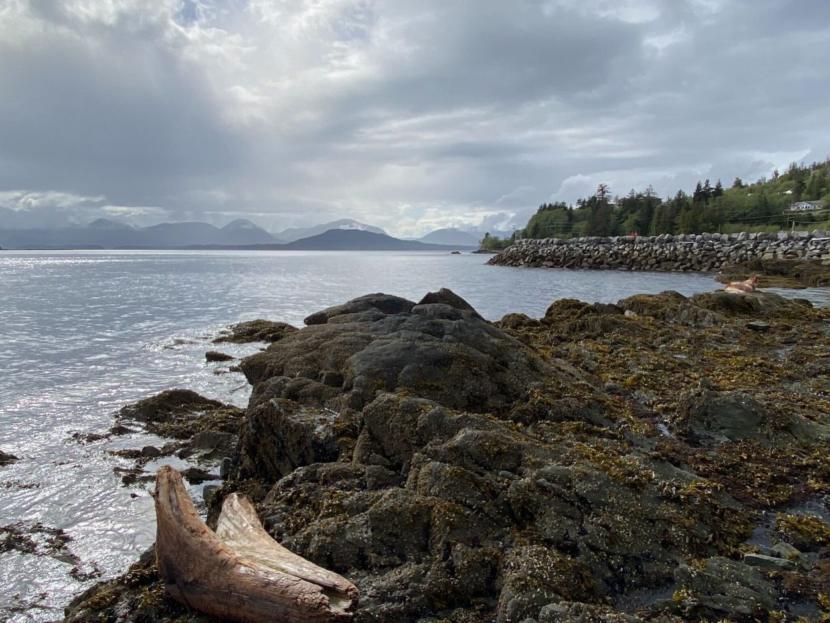
Two sites near Mountain Point, shown here on a gray May day, are among those monitored for elevated levels of fecal coliform and enterococci bacteria. (Eric Stone/Alaska’s Energy Desk)

A state and federal program that monitors bacteria levels at Ketchikan-area beaches is back for another year. And researchers with the EPA-funded BEACH program say they have a unique opportunity this summer.

It’s an exciting time to be a water scientist in Southeast Alaska. For the past three summers, researchers have measured bacteria levels at Ketchikan-area beaches in an effort to prevent waterborne illness. And this summer, just as in years past, technicians will wade into the water looking for fecal bacteria.

But this year, they’ll have a chance to see what levels look like without cruise ships.

Gretchen Augat helps run the BEACH monitoring program for the state Department of Environmental Conservation.

“So, for the marine water quality monitoring piece of the project, and other projects throughout the state the data collection without the cruise ships present will be a unique opportunity for the spring and summer,” she said in a phone interview earlier this month.

Data from this summer could help researchers determine what — if any — effect cruise ships have on bacteria levels.

The BEACH program looks for two main types of bacteria: enterococci and fecal coliform. Those particular microbes don’t necessarily cause illness themselves, but they serve as indicators. If levels are too high, that means possible fecal contamination.

“Along the Ketchikan coastline, there are several potential sources,” Augat said. “Those include boats and harbors and launch areas, small cruise ships, private watercraft and ferries, individual septic tanks.”

Public and private sewer outfalls are another potential source of fecal bacteria, Augat said.

She was quick to point out that this summer won’t be a perfect comparison to years with cruise ships. Factors like ambient temperature and rainfall can greatly influence bacteria levels. Warm weather allows bacteria to multiply faster, and heavy rain can wash bacteria trapped on the ground downhill towards the sea. And no two years have the same weather.

But Augat said a lack of cruise ships isn’t the only exciting thing about the BEACH program this year. Augat says technicians with Ketchikan’s federally-recognized tribe will record some new data this year: they’ll be looking at turbidity — essentially, how cloudy the water is — along with wave height and direction. But what for?

“That’s to develop a beach model that we’re hoping to use in the 2021 recreational season. It’s an EPA model,” she said. “It’s called Virtual Beach.”

It’s predictive model — a complicated series of statistical calculations that allow researchers to estimate bacteria levels without measuring them directly.

“So we will do less sampling, not weekly sampling, as the years go on,” she said, “and be able to use this predictive model to help us let you know if there’s an advisory at any of the beaches.”

For this summer and the next, though, technicians will continue to wade into the water at 13 sites up and down the coast of Ketchikan every week.

State regulators fine Hilcorp $30,000 for meter-related violations on Kenai Peninsula

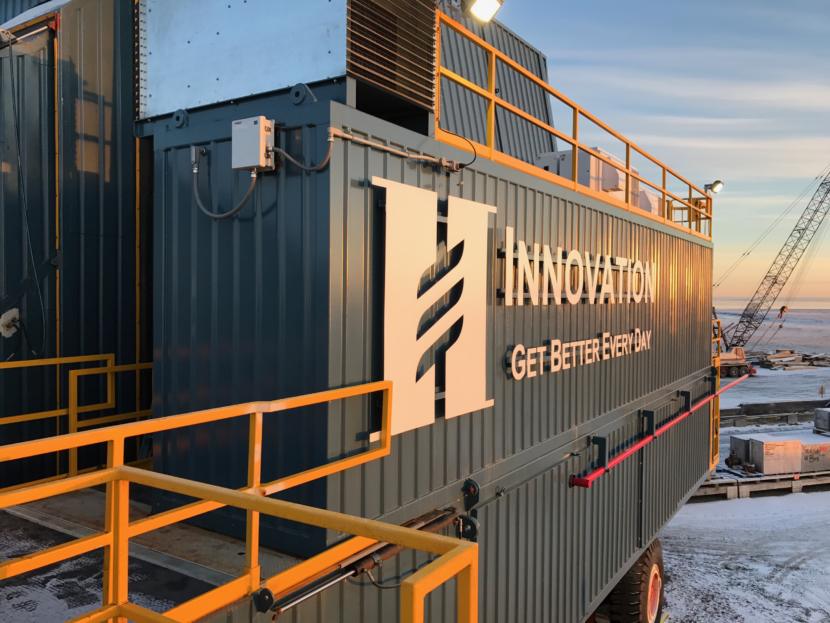
Hilcorp’s Innovation drilling rig on the North Slope. (Photo courtesy of Hilcorp)

State regulators have fined Hilcorp Alaska $30,000 for meter-related violations at an oil and gas field on the Kenai Peninsula. They cited the company’s history of violations as a factor behind the penalty.

The Alaska Oil and Gas Conservation Commission wrote in its May 14 order that Hilcorp failed to submit required meter performance reports for the Beaver Creek unit in the Kenai National Wildlife Refuge. Those reports detail how accurately a meter measures the volume of oil or gas leaving a field. The state uses those volumes to calculate royalties that Hilcorp pays to the government.

Hilcorp’s violation stems from an agreement with the commission in October. The commission allowed for new metering equipment, but required the monthly performance reports.

“Oil custody transfer meters are essentially the state’s cash register,” Jeremy Price, chair of the commission, said in a statement. “AOGCC strives to ensure the till is always accurate.”

In setting the penalty, the commission said, it considered Hilcorp’s “lack of good faith in its attempts to comply with the imposed conditions, its history of regulatory noncompliance and need to deter similar behavior.”

“While improvements in Hilcorp’s compliance can be shown in the past 2 years, the recurrence of failing to account for approval conditions imposed by AOGCC calls into question the effectiveness of corrective actions implemented in responses to past enforcement actions,” the commission’s order said.

The commission said Hilcorp had similar, recent violations in Alaska at the Granite Point and Trading Bay units in Cook Inlet.

It provided Hilcorp with notice of the proposed fine in March.

Hilcorp Alaska spokesman Luke Miller said that when the company received the notice, it took corrective steps and provided the required reports. Hilcorp has not disputed the commission’s findings.

“We also took measures to ensure the quality control of our recordkeeping related to this issue,” Miller said in a statement. “We will continue to work closely with AOGCC to ensure compliant, safe and responsible operations.”

The commission says it has received the data and a corrective action report from Hilcorp. The information indicates the oil metering equipment is giving accurate readings.

Site notifications
Update notification options
Subscribe to notifications