Alaska's Energy Desk

With a Roadless Rule decision pending, tribal governments petition for new process

Tongass National Forest
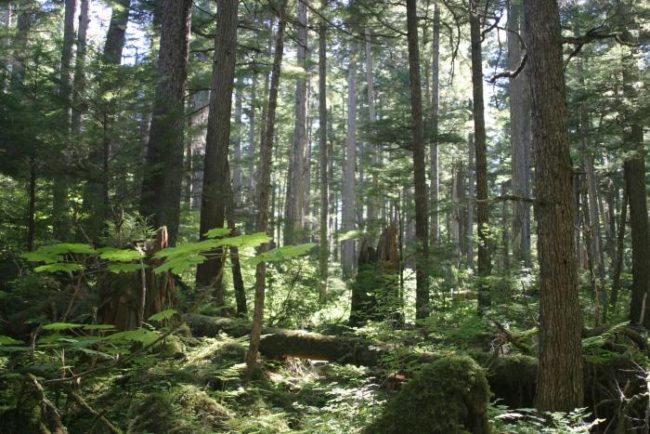
Part of the Tongass National Forest on Douglas Island pictured in 2004. (Creative Commons photo by Henry Hartley)

Nine tribal governments in Southeast Alaska submitted a petition to the United States Department of Agriculture on Tuesday, asking for another rule making process for the Tongass National Forest. 

The federal agency is close to announcing what’s likely to be a full exemption of the Roadless Rule in the Tongass, which the state has long requested. 

But there’s been discord between the Department of Agriculture and tribal governments, who’ve repeatedly stated Roadless Rule protections should stay in place. In an unreleased federal report, 96% of the public said they disagreed with changes to the Roadless Rule, too. An exemption would make it easier for new roads to be built in the forest — opening up access to logging. 

Joel Jackson, the President of the Organized Village of Kake, was one of the leaders who signed the petition. He’s concerned about damage to fishing and hunting areas, and he said Kake’s concerns have felt ignored by the federal agency. 

“They seem to minimize our way of life,” Jackson said.

The petition outlines the creation of a Traditional Homelands Conservation Rule to protect important areas for Tlingit, Haida and Tsimshian peoples. 

In 2018, the State of Alaska petitioned the U.S. government for the Roadless Rule exemption in the Tongass. Tribal governments were supposed to be playing an integral role in that process, but have been critical of how the federal agency has handled things — saying that deadlines were rushed and that a meeting was scheduled during the chaos of the coronavirus pandemic, making it difficult to attend. 

The petition asks the Department of Agriculture to create a new, more robust consultation process. Marina Anderson, the Tribal Vice President of Kasaan, says that would bring in more science to help guide the process. 

“That best available science includes Traditional Ecological Knowledge,” Anderson said.

It’s unclear how long the Department of Agriculture has to respond to the tribal governments’ petition. The agency accepted former Gov. Bill Walker’s petition to reexamine the Roadless Rule after four months

Wrong fuel caused Alaska Forestry plane to crash in Aniak in May

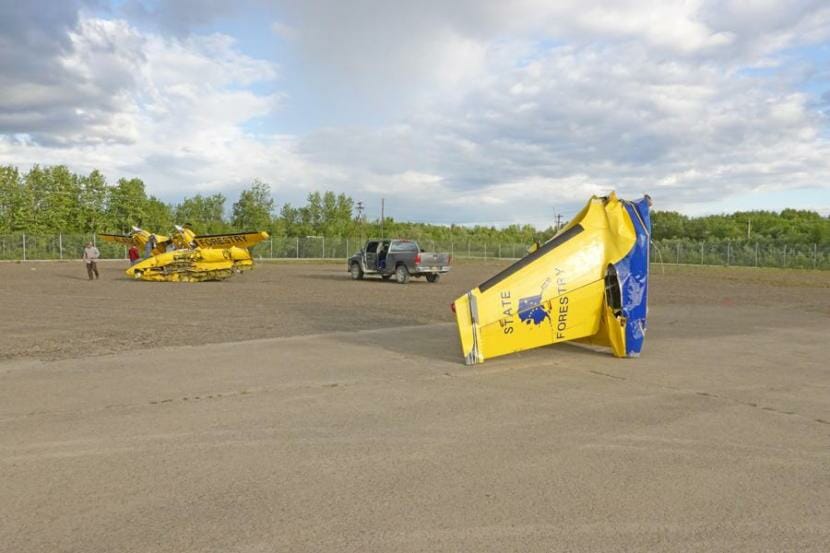
airplane wreckage a Division of Forestry plane that crashed during takeoff in Aniak
The remains of a Forestry plane that crashed during takeoff in Aniak on Thursday, May 28. (Courtesy of Dave Cannon)

The wrong fuel caused an Alaska Division of Forestry plane to plummet into freezing water in May, according to a preliminary report from the National Transportation Safety Board.

Three firefighters and one pilot took off from the Aniak runway on May 28. They were first heading to McGrath, and then to Soldotna to start fighting fires, but they didn’t make it.

Instead, they crash-landed in a pond right off the runway. All four survived. Three had injuries that required surgery, including the pilot, Mark Jordan.

The NTSB report says that a vendor tasked with filling up the plane was unclear which kind of fuel to use for the type of airplane and filled it up with the wrong kind. The Forestry airplane is an Aero Commander 500 Shrike, which only uses a certain type of fuel.

The fuel vendor asked the pilot if he wanted “prist with your jet.” Prist is a type of chemical that prevents fuel from gelling in planes that fly higher altitudes. And “jet” refers to Jet A fuel. The pilot said no. The fuel vendor filled it up with Jet A fuel, and wrote that down on a receipt that he then handed the pilot, who signed it.

Jordan said that as he took off, he felt “mechanical turbulence” and the aircraft struggled to climb. Unable to maintain altitude, he aimed for the shallow pond. That was the last thing he remembered. Five Aniak teenagers happened by and saw two of the firefighters struggle out of the plane. They helped rescue Jordan and the three passengers. The plane itself is totaled.

“Like with any accident or incident, we conducted an after-action review of the incident to try to pull any lessons learned out of it that we could, to see if there needs to be any policy changes or anything that we can do to make for a safer aviation program,” said Tim Mowry, spokesperson for the Alaska Division of Forestry.

Mowry said that those changes will not be made until NTSB issues its final report, which will be roughly six months from now.

Meanwhile, Jordan is out for this fire season. The three other firefighters are also recovering. Mowry said that only one of them, who is from Aniak, has recovered enough go back to fighting fires.

Alaska judge dismisses lawsuit against backers of oil tax initiative

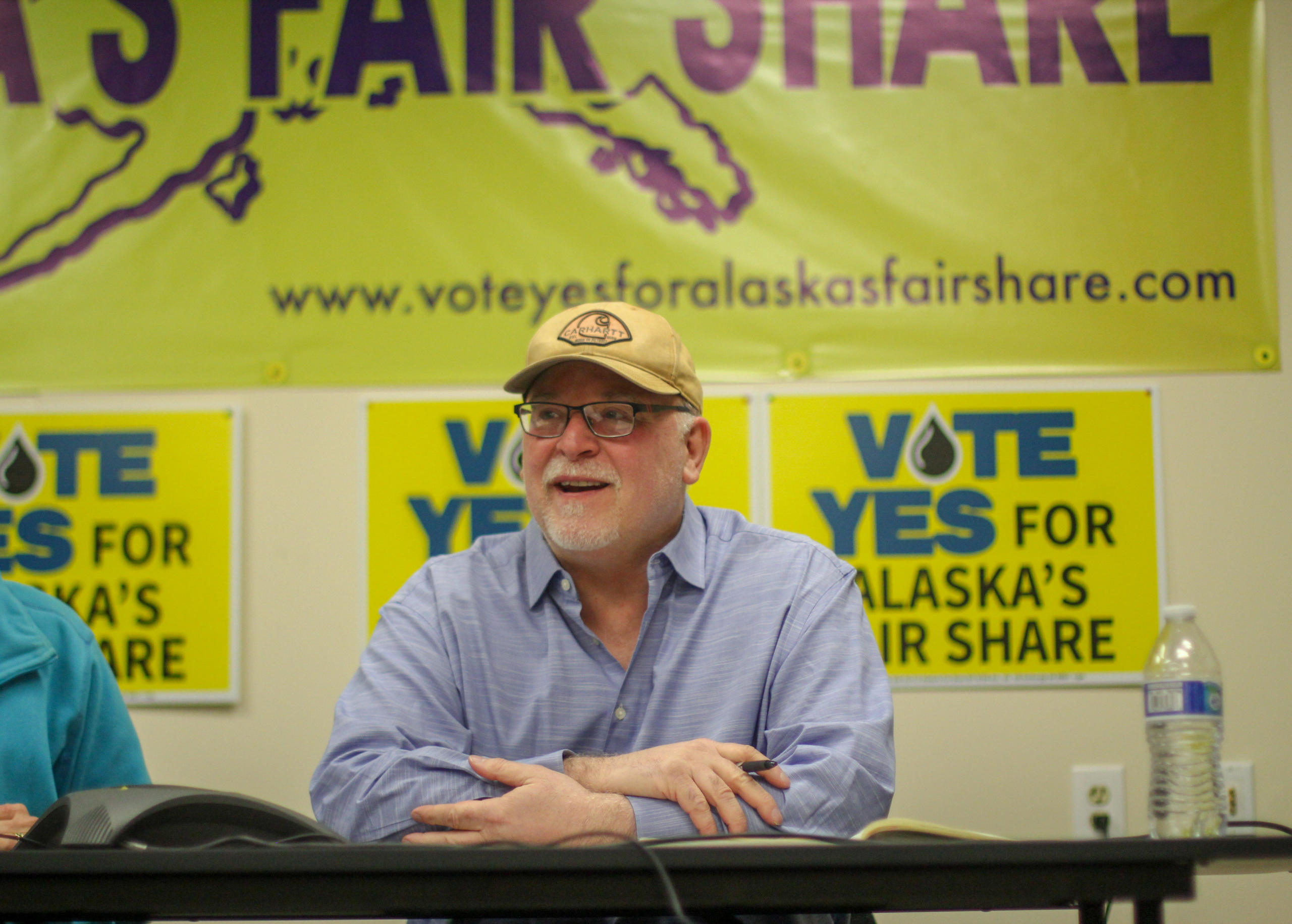
Anchorage attorney Robin Brena sits at a meeting of the citizens initiative campaign to raise taxes on Alaska’s largest oil producers on Thursday, January 16, 2020. (Photo by Nat Herz / Alaska’s Energy Desk)

An Alaska judge on Thursday dismissed a lawsuit against the backers of a ballot initiative that would raise taxes on the state’s three largest oil fields.

The Resource Development Council for Alaska and five other industry trade groups filed the lawsuit in April. They argued that people gathering signatures to get the initiative on the ballot were paid more than $1 per name, a violation of state law. They wanted those signatures tossed out.

The group backing the initiative, Vote Yes for Alaska’s Fair Share, denied the claim, and called on the court to dismiss the lawsuit.

On Thursday, Superior Court Judge Thomas Matthews did just that.

In a 30-page order, he said the state law that prohibits payment greater than $1 per signature is a “unconstitutional restriction on free speech” and could hinder signature gathering. He said disregarding the “technical violation” of the law would promote First Amendment rights by allowing voters to weigh-in on the initiative.

“By contrast, disregard of thousands of otherwise valid signatures operates like a sledgehammer on a mosquito,” he said. “It may do the job, but it wreaks havoc in the process.”

He asked: “Why should voters be disenfranchised because a circulator fails to meet technical statutory requirements?”

Initiative sponsor Robin Brena, an oil and gas attorney from Anchorage, applauded the judge’s decision in a statement on Thursday.

“Clearly our opposition decided they can’t win at the polls so they tried to get the courts to strip Alaskans of their right to vote for Alaska’s Fair Share,” he said.

Matt Singer, an attorney for the industry groups, said they would likely appeal the decision.

“We respectfully disagree with some of what the judge found,” he said.

The oil tax initiative is headed to Alaska’s statewide ballot in November. It would raise the minimum tax and eliminate oil tax credits for Alaska’s largest oil fields. It would also require oil companies to publicly report their revenues and costs from those fields.

So far, Brena’s group has reported raising about $660,000 in support of the initiative — a chunk of it from Brena himself with dozens of smaller donations from individuals.

The group OneAlaska — formed last year to oppose the initiative — has raised nearly $9.9 million, much of it from ExxonMobil, BP, ConocoPhillips and Hilcorp.

Scientists hope to find what Alaska’s water quality is like without cruise ships

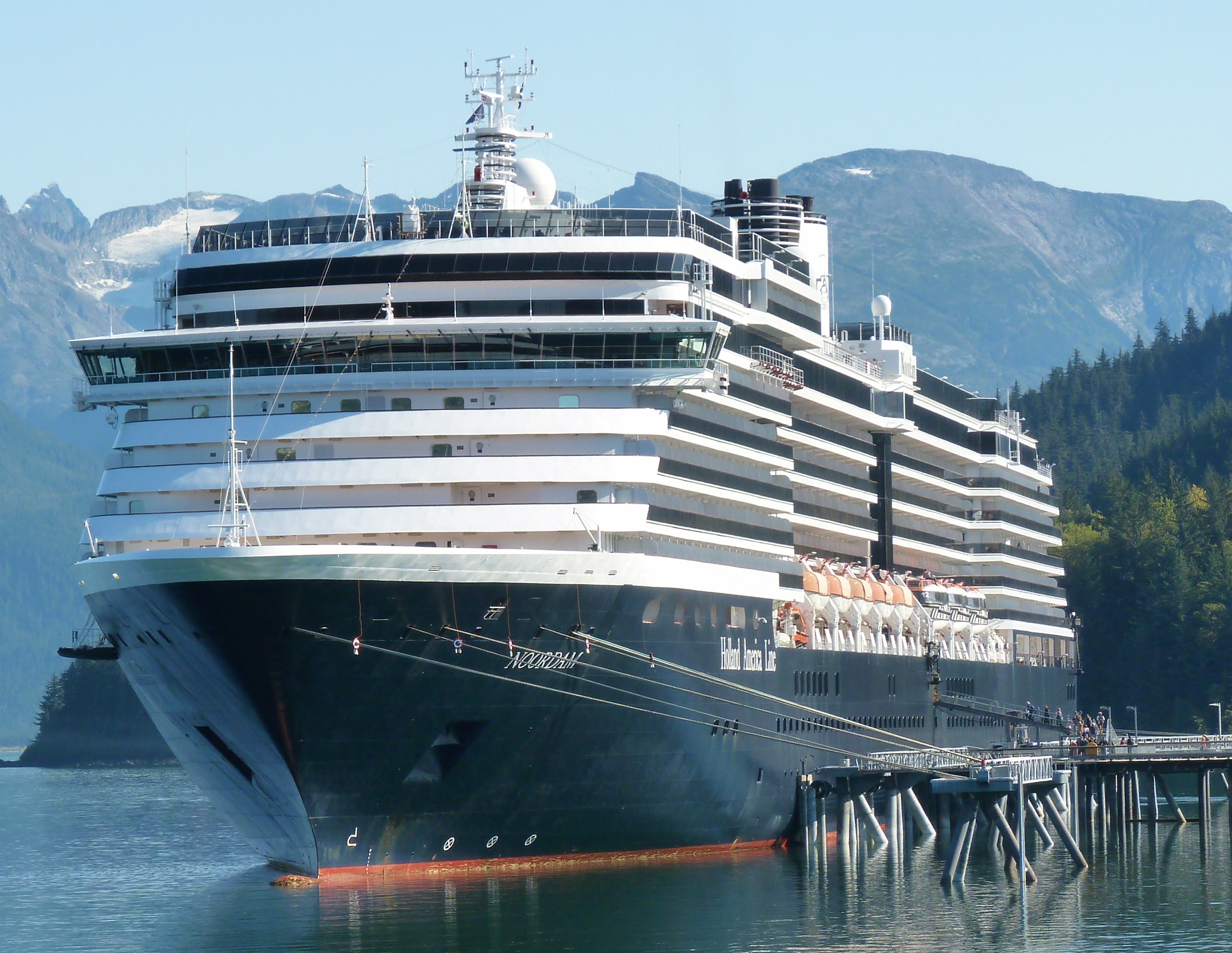
The cruise ship Noordam brought close to 2,000 passengers to Haines on Sept. 20, 2017. It and other ships carried more than 1 million passengers this summer, helping increase the region's tourism economy. (Ed Schoenfeld/CoastAlaska News)
The cruise ship Noordam brought close to 2,000 passengers to Haines on Sept. 20, 2017. It and other ships carried more than 1 million passengers this summer, helping increase the region’s tourism economy. (Ed Schoenfeld/CoastAlaska
News)

It’s a relatively quiet summer on Alaska waters, since COVID-19 mostly cancelled the cruise ship season and limited tourism. But this hiatus is an opening for scientists to gather water quality data in harbors across the state.

It’s flat calm on Portage Cove in Haines, Alaska, as a small charter boat comes into the harbor.

“I was a science teacher for 22 years,” said Patty Brown, “So now I’m just a freelance scientist, it turns out.”

Brown is a Haines resident with a degree in Natural Resources Management. She was contracted to sample water for Alaska’s Department of Environmental Conservation. She and other “freelance scientists” from Ketchikan to Nome are working for DEC’s Ambient Harbor Monitoring project for the next two years.

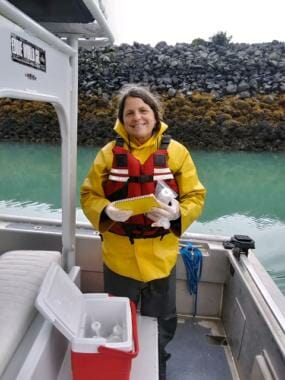
A woman standing on the deck of a boat
Patty Brown in the Haines Harbor on July 7, 2020. (Photo by Claire Stremple / KHNS)

She puts on gloves and uses a syringe to pull water from a handful of testing sites around the harbors in Haines and Skagway, which would usually be packed with cruise ships and other boat traffic. But this year, the water is quiet. No commuter ferry, no tours, no ten-story cruise ships towering over the tiny coastal towns.

“We’re seizing the moment to get a baseline data for years when there’s not cruise ships and not little tour boats,” she said.

“So we’re finding out what what’s here in spite of them and then next year, they get a measurement of saying ‘Hmm, what’s changed because of them.’”

DEC planned this project before COVID-19, so this opportunity for baseline water data came as a surprise.

“We went from having a period where we’ve got, you know, over a million visitors and tons of voyages going on to different communities. And now we suddenly have this, this pause, essentially in, in cruise ship activity,” said Brock Tabor, who manages the project for DEC. He said it will be a useful tool in understanding the impacts of cruise ships and shipping traffic.

The agency has been testing some local waters for years, but last year the state legislature funded an expanded project—multiple test sites at 18 harbors along the coast. It’s a response to community concerns about cruise ship activity. And there are yearly beach closures in Southeast Alaska due to bacteria in the water.

Related: During summer without cruise ships, researchers will study fecal bacteria on Southeast Alaska beaches

He said they’re testing for things associated with wastewater discharges: bacteria, pH, certain dissolved metals, and conductivity ammonia, which is a pollutant that’s often associated with wastewater. They’re also measuring dissolved oxygen and water temperature.

For the next couple of years, Tabor will receive this data from people like Brown in harbors across the state that usually see a lot of cruise ships and activity on the water.

Back in Haines, Patty Brown hustles up the harbor ramp to the parking lot. Her samples are stowed in a small cooler for the plane ride to a Juneau lab.

“We leave early on Thursday and go to Skagway first and then Haines and try to catch the same flight to put this stuff on,” she explained.

By this winter, the data set from this summer will be in Brock Tabor’s Juneau office. He says numbers should tell a story about what is and isn’t happening in Alaska’s coastal waters.


Backers of Donlin Gold mine are suing the research firm that said the mine couldn’t be built

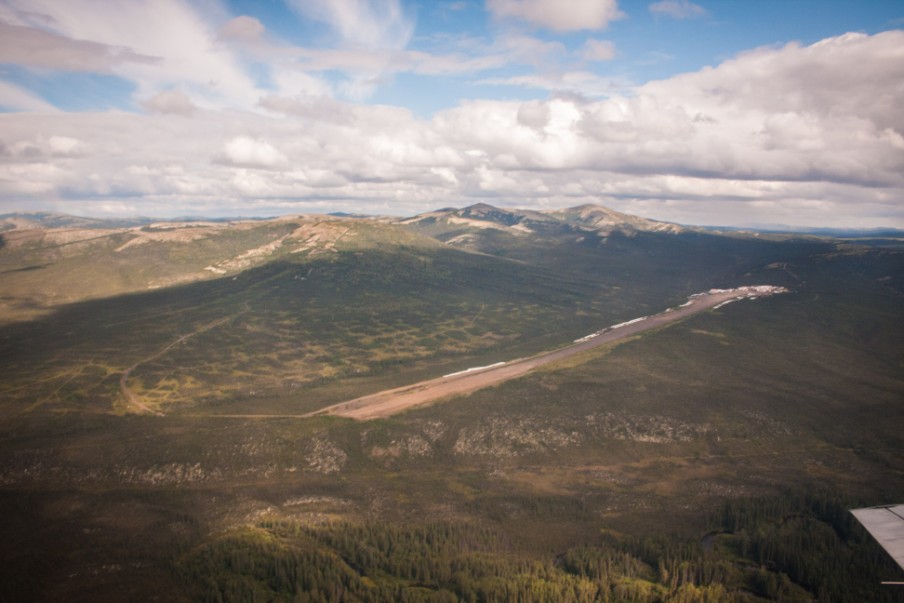
Donlin runway and camp site in summer 2014.
The proposed Donlin Gold mine would be one of the biggest gold mines in the world if completed. (Photo by Dean Swope/KYUK)

NovaGold, one of the companies developing the proposed Donlin Gold mine, has filed a lawsuit against a short-selling research firm. That firm released a report in May opining that the proposed Donlin Gold mine would not be built, and that NovaGold was overvalued.

The short-selling research firm, J Capital Research, and its clients make money from stock prices dropping. The firm released a report making the case that the proposed Donlin Gold mine is not going to be built because it’s too expensive to do so.

The day J Capital Research released its report, NovaGold stock prices fell from around $10 per share to $8 per share. By the end of June, the stock had recovered much of those losses. In an interview in June, NovaGold CEO Greg Lang called the report misleading.

“More than anything else, I think we’ve all experienced it, but it’s indicative of the power of misinformation when it spreads on the internet,” Lang said at the time.

NovaGold released a line-by-line rebuttal. Its partner, Barrick Gold, which is one of the biggest gold mining companies in the world, has not responded to a request for comment. Now NovaGold is suing J Capital Research for damages. Alaska’s Energy Desk reached out to NovaGold and J Capital Research for comment, but did not receive one from either entity by publication.

NovaGold’s stock rose slightly after it announced the lawsuit, and it’s now trading at nearly the same price as before J Capital Research firm came out with its report.

State gives Italian oil giant six more months to make $2.7M rent payment on Alaska leases

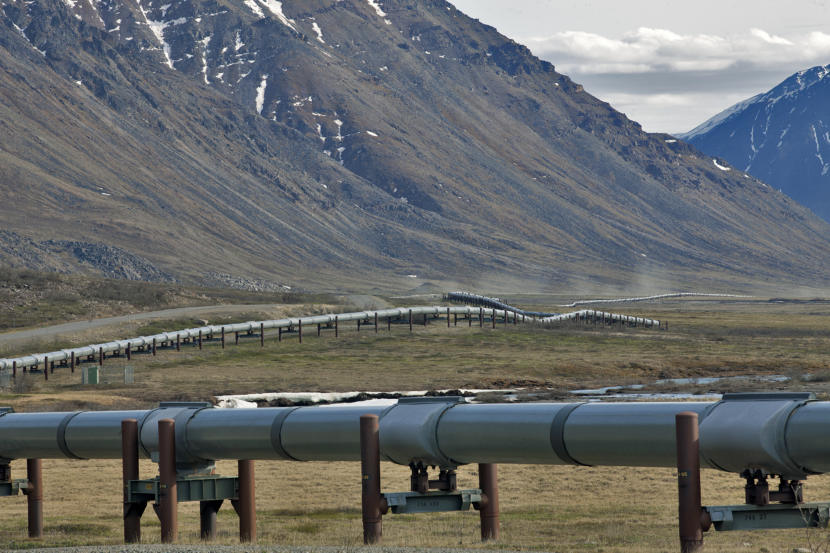
An above-ground section of the Trans-Alaska Pipeline System near the Toolik Lake Research Station in the North Slope Borough. (Photo by Rashah McChesney/Alaska's Energy Desk)
An above-ground section of the Trans-Alaska Pipeline System near the Toolik Field Station in the North Slope Borough. (Photo by Rashah McChesney/Alaska’s Energy Desk)

The state Department of Natural Resources is giving Italian oil giant ENI a six-month break on a nearly $3 million rent payment for oil and gas leases on the North Slope.

It’s the third time DNR has granted such an extension in the past three months, citing the coronavirus pandemic’s impact on the oil industry.

Sean Clifton, a policy and program specialist with the state Division of Oil and Gas, said he’s not aware of the department ever allowing similar extensions for oil and gas leases before this year.

“But,” he said, “these are pretty extraordinary times.”

Falling demand driven the pandemic, paired with an oil-price war earlier this year, led to a glut of oil on the market. Crude prices tanked, and oil companies cut spending and suspended drilling across the globe, including in Alaska. Hundreds of oil field service workers lost their jobs in the state.

In a letter on May 21 to Natural Resources Commissioner Corri Feige, ENI asked for a one-year extension on its payments for 110 exploration leases encompassing about 275,000 acres southeast of Prudhoe Bay. ENI said the economic impact of the pandemic and the unforeseen drop in crude prices “significantly curtailed” its cash reserves. The company said it needed time to budget and reevaluate its business plans for the leases.

Oil companies must make annual rent payments to the state on their oil and gas leases. Under state law, Feige has authority to grant extensions if she finds “reason of war, riots, or acts of God” have prevented them from paying.

ENI’s bill for the exploration leases was originally due by Aug. 1. Now, the company has until Feb. 1 to pay about $2.7 million, Division of Oil and Gas Director Tom Stokes said in a response to ENI in early June.

Stokes said President Donald Trump and Gov. Mike Dunleavy have declared states of emergency over the pandemic. The restrictions, he said, “have placed an unanticipated burden on Alaskan businesses that justifies an extension of time within which to make payments.”

In May, DNR also granted months-long extensions to Accumulate Energy Alaska and Burgundy Xploration for about $4.6 million in rent payments on leases. And, in late April, it granted an extension for nearly $90,000 in lease payments for the struggling Mustang oil project.

At the federal level, the Trump administration has cut the amount oil and natural gas companies must pay for access to US-government-owned land.

Clifton underscored that, in Alaska, the state will still collect the companies’ lease payments in the current fiscal year — it’s not lost revenue — and “has the upside of keeping our North Slope oil producers in business during these unprecedented times.”

Site notifications
Update notification options
Subscribe to notifications