Alaska's Energy Desk

For Tongass projects, critics say environmental rollback could cut the public out of the process

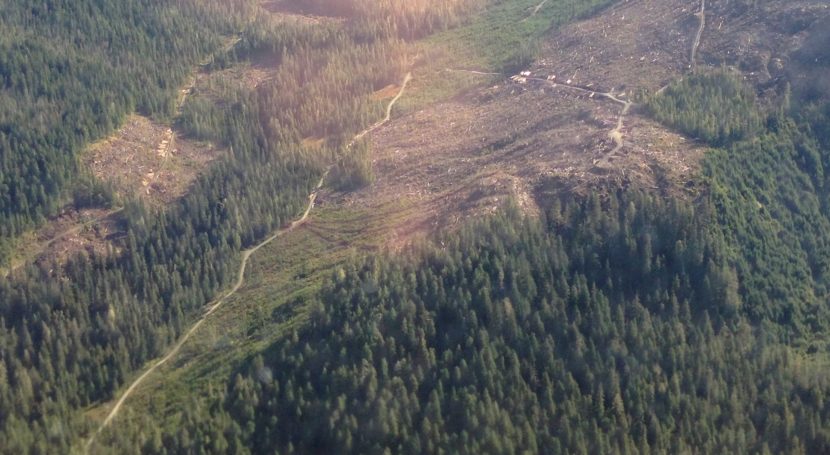
This clear-cut in the Tongass National Forest on Kupreanof Island north of Petersburg is visible from the air in 2014.
A clear-cut in the Tongass National Forest on Kupreanof Island in 2014. (Photo by Ed Schoenfeld/CoastAlaska)

Gov. Mike Dunleavy recently praised President Donald Trump’s decision to make changes to bedrock environmental policy. Proponents say the changes streamline a burdensome regulatory process that hampers development on federal lands. In the Tongass National Forest, they come at a time when sweeping management changes were already underway. 

Natalie Dawson, the executive director at Audubon Alaska, compares the changes to the National Environmental Policy Act to a late-night text.

“It used to be like the morning text message where it was thoughtful and you had a night to sleep on it. And you thought about your actions and what you may or may not want to say. And now, we can kind of go with heat of the moment decision making.”

Changes include removing the requirement to analyze cumulative impacts, like climate change, for new projects to take place on federal lands.

Dawson thinks another impact of the late-night text version of NEPA will be less public engagement. She says public input was a founding principle of the NEPA framework. Now, that’s being degraded.

This is all happening when the Tongass — the nation’s largest national forest — was already going through some controversial management changes. It’s slated to be totally exempted from the federal Roadless Rule, which could open up more access to logging. Under old NEPA, that public process was already fraught, with critics claiming the U.S. Forest Service didn’t listen to the public or tribal governments’ feedback to keep those protections in place. 

Under new NEPA, Dawson says getting a word in on future projects will be a lot harder. One change is that only substantive comments will be accepted. This means that expressing general concerns about logging near deer or salmon habitat isn’t going to cut it. 

“There was this phrase called, ‘to the fullest extent possible encourage and facilitate public involvement,’” Dawson said. “So ‘to the fullest extent possible.’ That language is now gone.”

“You may not have the time to sit down with all the maps and documents and provide a site-specific analysis of the federal agency action, and yet you are an incredibly important stakeholder in this process,” she said.

In the last few years, public meetings held throughout Southeast Alaska to discuss changes to the Roadless Rule were well attended. Dawson says that in the future, it’s not clear if public meetings with federal agencies will even take place. Before, meetings were held when there was substantial interest or controversy. Now, public meetings will only occur “when appropriate.” She says it’s also unclear who among the various federal agencies will make that determination. The same goes for decisions about whether a project is significant enough to trigger a full environmental review. 

Dawson thinks the region recently saw a preview of what these changes could mean. The largest proposed timber sale in the Tongass in decades wasn’t allowed to move forward because it violated NEPA. Dawson says that project might not have the same barriers in another go-round. 

Tessa Axelson, executive director of the Alaska Forest Association, says the ruling on that sale was a setback for the timber industry, and she thinks streamlining NEPA will be a good thing.

“I don’t see anything necessarily that is going to result in the loss of public input into the process,” Axelson said.

The timber industry group has long pushed for changes to NEPA. Axelson says under the old version, projects could be held up for many years — making it difficult for struggling operators to bid on federal timber sales and plan for a predictable supply.

“What we want is a process that is responsive to the law and also ensures that the professionals, that agencies are held to a standard for producing things timely and in such a way that is not so burdensome to small business operators,” Axelson said.

Still, Axelson doesn’t think an exemption to the Roadless Rule in the Tongass and revisions to NEPA will do enough to ensure a better outlook for Alaska’s timber industry. It’ll be up to federal agencies to plan enough timber sales that actually come together. 

In the meantime, all of this could change in November. President Trump’s NEPA revisions can be undone by a new presidential administration. 

North Pacific Seafoods on hook for $500,000 after quarantining workers without pay

The Naknek inriver opener on July 18, 2020. (Photo courtesy Sage Smiley/KDLG)
The Naknek inriver opener on July 18, 2019. (Photo courtesy Sage Smiley/KDLG)

A Seattle-based seafood processor will pay out nearly half a million dollars to workers at a Bristol Bay cannery after settling a lawsuit filed in June.

The processor, North Pacific Seafoods, was sued for false imprisonment and failing to pay the workers, among other charges. The workers, who were from Mexico and the United States, were on their way to Naknek to work at the Red Salmon Cannery for the summer salmon season. The suit alleged that the workers arrived at the hotel and were forced to gather in a crowded hallway for several hours before they were tested for COVID-19. They were then told to go to their hotel rooms and wait.

When three of the workers tested positive for COVID-19, all of the workers at the hotel were told they had to quarantine without pay in the Crowne Plaza Los Angeles Airport Hotel or else they would lose their jobs.

“We think that it is a fair and just compensation for the workers that were held for 12 days at a hotel without being paid,” said Jonathan Davis, a managing partner of San Francisco-based Arns Law Firm, which filed the lawsuit.

As a result of the settlement, most of the workers are eligible to receive up to $2,685 if they sign a release negotiated with North Pacific. The specific amount depends on how long they were in Los Angeles.

KDLG reached out to the company for comment, but it did not respond in time for this broadcast.

With permit for controversial mine nearly in hand, Pebble CEO says he’s sure opposition will soften

A map showing the proposed route from Cook Inlet to the mine site.
A map from the final Environmental Impact Statement shows the route Pebble and the Corps decided was the best option. (Pebble EIS/Corps of Engineers)

The proposed Pebble Mine upstream from Bristol Bay cleared a major regulatory hurdle Friday with the publication of the final environmental impact statement.

Pebble Chief Executive Tom Collier said it’s the most significant day for the project in 15 years.

“The umpire in this case is the Corps of Engineers, and the Corps of Engineers has looked at this rigorously and has determined that the project will not damage the fishery,” he said.

A coalition of fishermen, Native organizations and environmental groups that oppose Pebble dispute that. They say the mine does put the fishery at risk. They point to findings in the report that say the mine will impact some 200 miles of streams and 4,000 acres of wetlands. Native corporations that own land along the mine’s transportation corridor say they’ll never grant Pebble permission to use their property.

Collier said opponents will change their minds as the proposal becomes more real and the economic benefits more certain.

“I have a couple of confidentiality agreements that preclude me from making any specific comments about the status of any negotiations – in fact, even preclude me from saying that I am negotiating with someone,” he said. “But you know, where I stand today, I remain confident that we will be able to get the access we need to build that road.”

The Corps could issue its final decision on permitting as soon as next month.

If the permit is granted, Collier will get a salary bonus of $12.5 million. Collier said two-thirds of that bonus is contingent on the decision holding up in court.

Bureau of Land Management approves route for Ambler Road

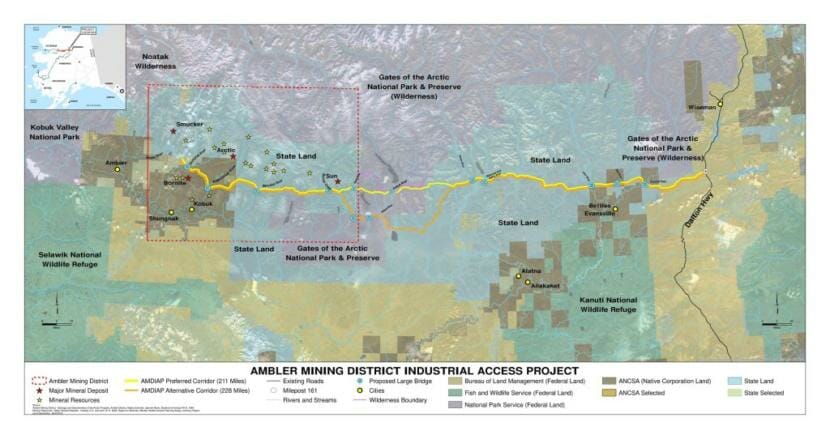
Map showing the BLM-approved route for the Ambler Road
A map of the proposed Ambler Road project (Bureau of Land Management)

The Bureau of Land Management has approved the proposed route for the controversial Ambler Road project.

In its record of decision released Thursday, the BLM approved a route for the private access road that would span 211 miles from the Dalton Highway and cross Gates of the Arctic National Park to get to the Ambler mining district in Northwest Alaska.

The road has been touted by Ambler Metals LLC, a subsidiary of British Columbia-based company Trilogy Metals. The company hopes to use the road to access deposits of copper and other metals in the mining district, then to truck ore out.

Environmentalists have strongly opposed the the road, especially the decision to route it through a national park. Subsistence hunters in the area are concerned about possible effects on the migration of caribou, a staple in the local subsistence diet.

The BLM completed its environmental assessment of the road in March, acknowledging potential impacts to air and water quality, wildlife migration and erosion.

Seward salmon plant shuts down with 34 COVID-19 cases and more expected

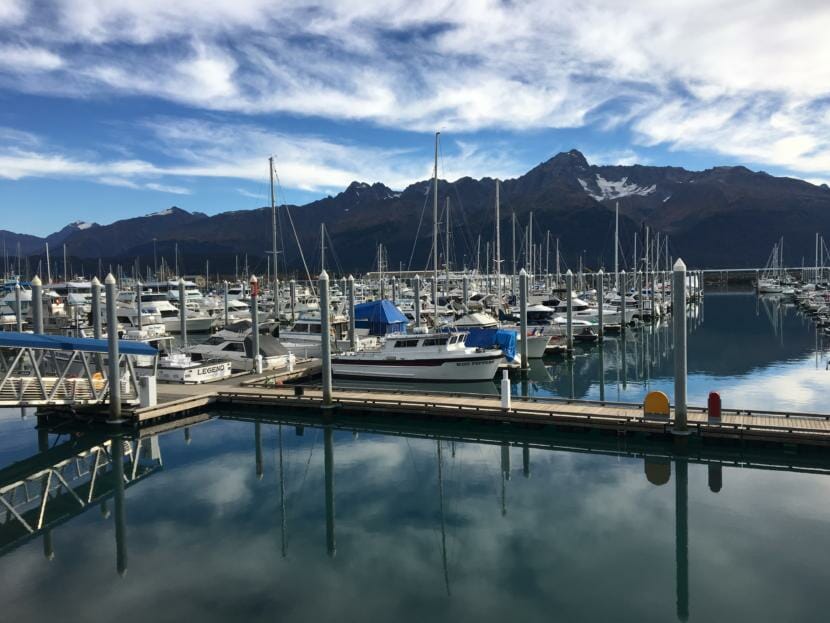
Seward small boat harbor. (Alaska Public Media file photo)

OBI Seafoods has shut down a salmon processing plant in the Kenai Peninsula town of Seward after at least 34 workers there tested positive for COVID-19, according to a local official.

The plant has about 260 workers, who are a mix of residents and nonresidents, according to Scott Meszaros, Seward’s city manager. He said 90 employees have been tested so far, and that more positives are expected as the remainder of the workers are tested.

All employees who tested positive are being moved to Anchorage, he added.

OBI Seafoods was created earlier this year from a merger between Icicle Seafoods and Ocean Beauty Seafoods — Icicle Seafoods owned the Seward plant before the merger. Officials with the new company didn’t immediately respond to requests for comment Wednesday.

Seward has suddenly become a hub for seafood industry COVID-19 cases, as a factory fishing vessel with 85 infected crew is expected to arrive in town later Wednesday from the Aleutian Islands. The crew from the American Triumph, operated by Seattle-based American Seafoods, will also be moved to Anchorage for isolation.

Meszaros said the city is doing “everything it can” to protect residents, and the crew from the vessel will be monitored by security.

He also praised OBI Seafoods for the efforts it made and the money it spent to protect its employees and to try to keep the virus out.

“They’ve given us their plans, they’ve followed their mandates,” he said. “I feel very secure in saying they’re doing it right and we are supportive of what they’re doing. In lieu of that, all it takes is one sick individual to come into that environment — and they can’t keep the people that live here out of the plant.”

This is a developing story and will be updated as information becomes available. 

Alaska fishing communities feared getting COVID-19 from industry. They haven’t.

Several fishing boats in Bristol Bay
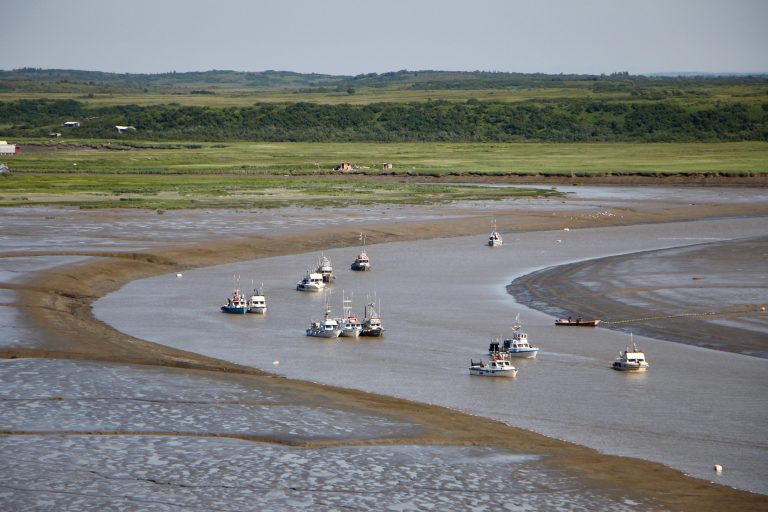
Fishing boats in Bristol Bay last year. (Alex Hager/KDLG)

As this year’s summer fishing season approached, local leaders across Alaska issued dire warnings about the thousands of plant workers and fishermen headed to their communities.

They feared the workers could bring COVID-19 in with them, quickly overwhelming small local hospitals and clinics. In Bristol Bay, home to the world’s largest sockeye salmon fishery, some residents called on Gov. Mike Dunleavy to cancel the season, citing the region’s traumatic experience with the 1918 pandemic flu, which killed at least 30% of its population.

In the month since the Bristol Bay season kicked off, some seafood companies have experienced isolated cases among workers in their processing plants. And other outbreaks have infected dozens of seafood workers elsewhere in the state — most recently, 85 crew members on board a Bering Sea factory trawler.

But midway through summer, with the Bristol Bay season winding down, seafood company executives and public health authorities can point to a remarkable fact: The industry has been almost completely successful in keeping its seasonal workers and fishermen from infecting Alaska residents.

“We haven’t seen any evidence of jumping the fence from the seafood industry to the community,” Bryan Fisher, a top state emergency response official, said in an interview earlier this month.

In the Bristol Bay Borough, home to the region’s largest concentration of fish processing plants, there have been dozens of cases of COVID-19 among nonresident seafood workers — but just one case among residents.

Gene Sanderson lives in the borough year-round, and his house is on the grounds of a processing plant, where he works as a watchman during the winter.

When thousands of fishermen and processing workers started arriving to the area for this summer’s salmon season, Sanderson and his wife left for their cabin.

Sanderson, in a phone interview, said he was initially skeptical that the fishing industry would be able to keep the virus confined to boats and processing plants. But after a month of calm, he and his wife returned to their home early.

“It’s gone amazingly — knock on wood,” he said. “Fishermen are starting to come out of the water, and they’re starting to head out of town.”

Now that it’s almost over, Sanderson says he’s happy the Bristol Bay season went forward, bringing its yearly boost of jobs and tax revenue to the region.

Across Alaska’s fishing towns, local leaders have similar messages to share, as officials report that almost all cases of the virus among seasonal workers have been successfully contained. The only exception is at a processing plant in Juneau which, unlike many of the other plants across the state, employs some resident workers.

Fishing industry players say this did not happen by accident. The state of Alaska, under pressure from the leaders of concerned fishing communities, imposed strict quarantine mandates and required companies to draft rigorous COVID-19 containment plans.

Those companies enacted comprehensive testing regimes and barred processing workers and fishermen from leaving company property or even getting off their boats.

Dan Martin, the Commodore’s captain, drives the boat out of the port of Dutch Harbor on Wednesday, January 23, 2019. (Photo by Nathaniel Herz / Alaska’s Energy Desk)

“It is, seriously, like prison,” said Dan Martin, the skipper of a vessel that fishes for pollock out of Dutch Harbor, the Aleutian Island fishing port.

Typically, crew members get to stretch their legs every few days after each fishing trip; they can go for hikes, rent movies or catch a ride into town for dinner at the Norwegian Rat saloon.

This year, in the six weeks Martin has spent on his vessel so far, he got off just twice — once to help another crew with some electronics, and a second time to fly home for a break.

Martin said he’s proud of his fellow fishermen for the lengths they’ve gone to protect residents of Dutch Harbor and neighboring Unalaska. But he also said the restrictions are driving them a little crazy, especially because the fishing this summer has not been good.

“It’s almost an untenable situation — slow fishing and all these things compounded, and you’re in each other’s face 24/7 and it goes on and on and on,” he said. “I can definitely see people getting onto the ragged edge by the end of the season.”

So far, though, officials have praised companies for staying vigilant even as the fishing season and pandemic drag on. In the Southeast Alaska town of Petersburg, Karl Hagerman, a local emergency response official, said he watched as the crab season kicked off, straining one processor’s capacity as it waited for more workers to finish quarantine.

While more workers would have been useful to the company, he said, “they’re sticking with their quarantine.”

“They’re protecting the workers that are on the line right now, as well as the workers that are going to be on the line as soon as they’re done with their quarantine. And they’re protecting the community,” Hagerman said. “I’ve got to hand it to them — they’re doing a great job.”

Outside of Bristol Bay, there are still months left in the salmon season, and there are winter fisheries for other species. Which means that no one — from public health authorities to the fishing companies themselves — is declaring victory yet.

“We fully recognize, as an industry and as a company, that we have a long way to go. We are not done adjusting our plans and learning from what we know of COVID,” said Julianne Curry, a spokesperson for Icicle Seafoods. “Every single day, we incorporate new things that we learn into our plans.”

Icicle, which processes pollock on a massive ship docked in Dutch Harbor, has already been absorbing lessons from the events of the summer, Curry added. She said the company’s early experience showed how important it is to swiftly isolate not just infected workers, but also their close contacts — those who hadn’t tested positive for the virus but who had spent time around someone who had.

Early on, two to four close contacts of an infected person might still have been quarantined in a room together, Curry said. Now each one is isolated in their own room.

Health-care experts, emergency response officials and seafood industry leaders all said open communication was a key factor in the apparent success of their containment efforts. Fisher, the state official, said that local pressure for tight mandates and enforcement was important, too.

“The community concern about bringing in out-of-state, out-of-country workers really helped us all focus on that,” he said. “They were valid concerns, we took them to heart, and industry certainly did, too.”

Site notifications
Update notification options
Subscribe to notifications