Alaska's Energy Desk

A Chilkat mask leaves a lasting impression of how ‘we took care of each other’ during the pandemic

Keeping with tradition, Lily Hope covers her weaving. She won't publicly share photos until the blanket is finished. (Photo by Elizabeth Jenkins/KTOO)
Lily Hope weaving a Chilkat blanket in 2016. (Photo by Elizabeth Jenkins/KTOO)

Chilkat weaving has been practiced for hundreds of years by Indigenous people in the Northwest Coast. The intricate design is a kind of woven record, documenting history and clan migration.

In Juneau, one weaver wanted to create a work of art to reflect the biggest story of our time: the coronavirus. And Chilkat weaving seemed like the perfect medium to express that.

For Lily Hope, being hunkered down with her family has been a creatively productive time.

“If the day was an orange, we are squeezing the drops out of it,” Hope said.

She’s a weaver and has been busy creating a commissioned Chilkat blanket in a private studio, a process which can take upwards of two years.

But recently, she made something else on a much tighter deadline at home, after she learned about an opportunity to create art about what’s going on right now. In early April, First American Art Magazine sent a call out for Indigenous artists to create masks, similar to the ones worn to prevent the spread of COVID-19.

“It was so intense to weave it on my floor with my children around me, in the midst of coordinated Zoom (calls) for my child who’s in public school and doing homeschool with my other four children,” Hope said. “It was a lot.”

She drew inspiration from her mother, the late master weaver Clarissa Rizal, who created a full Chilkat mask several years ago.

David Eckerson models Lily Hope’s “Chilkat Protector” mask. (Photo by Sydney Akagi)

Hope’s piece is called “Chilkat Protector.” It’s made from merino wool and cedar bark warp. Two ermine tails graze the cheeks. The mask covers the nose and mouth. In their place are the distinct ovoid shapes of the Chilkat face, an expression that’s confident and reassuring.

The mask isn’t something to be worn to the grocery store. It’s a work of art reflective of survival.

“When the person goes out, if they are a carrier, they are essentially protecting their whole community from being sick (by wearing a mask), and that’s foundational to the Tlingit, Haida, Tsimshian peoples. … My aunt says it best: ‘The mask serves to record that we took care of each other during this time.'”

Hope’s kids have begged her to make them one, too, but she estimates it took around 60 hours to weave the mask on a small loom. She has five kids, so that didn’t seem practical.

Hope wanted “Chilkat Protector” to show weavers were here during the pandemic and get the message across that Chilkat weaving warrants the designation of fine art and fine contemporary art.

The mask has gotten an enthusiastic response online, and Hope received a Judge’s Choice award from First American Art Magazine.

Her piece stands out: It’s one of the only COVID-19 masks woven in the Chilkat tradition — a skill which has seen a revival, but weavers like Hope are still few.

However, Hope thinks weaving hasn’t always gotten the artistic respect it deserves. It’s seen as craft, rather than a fine art.

And while she was happy her mask was recognized in the exhibition, she thinks the art world still has a ways to go until it fully accepts weaving into the fold.

“A carved mask wins over the bead work, over the quill work, over the weaving,” Hope said. “And I love First American Art for putting it into the world. But I’m like, that is the constant conversation: Men’s work is fine art and recognized as best of show, and women’s work is still hustling to catch up.”

But “Chilkat Protector” seems to be changing that.

The Burke Museum in Seattle recently acquired it, and Hope said for the first time in her career, she’s created a commission calendar for other museums which have shown interest in her weaving another COVID-19-inspired mask.

Editor’s Note: This story has been corrected to reflect the mask was woven on a small loom, not a lap loom. 
After a warmer-than-normal April, Utqiaġvik sees first record low since 2007

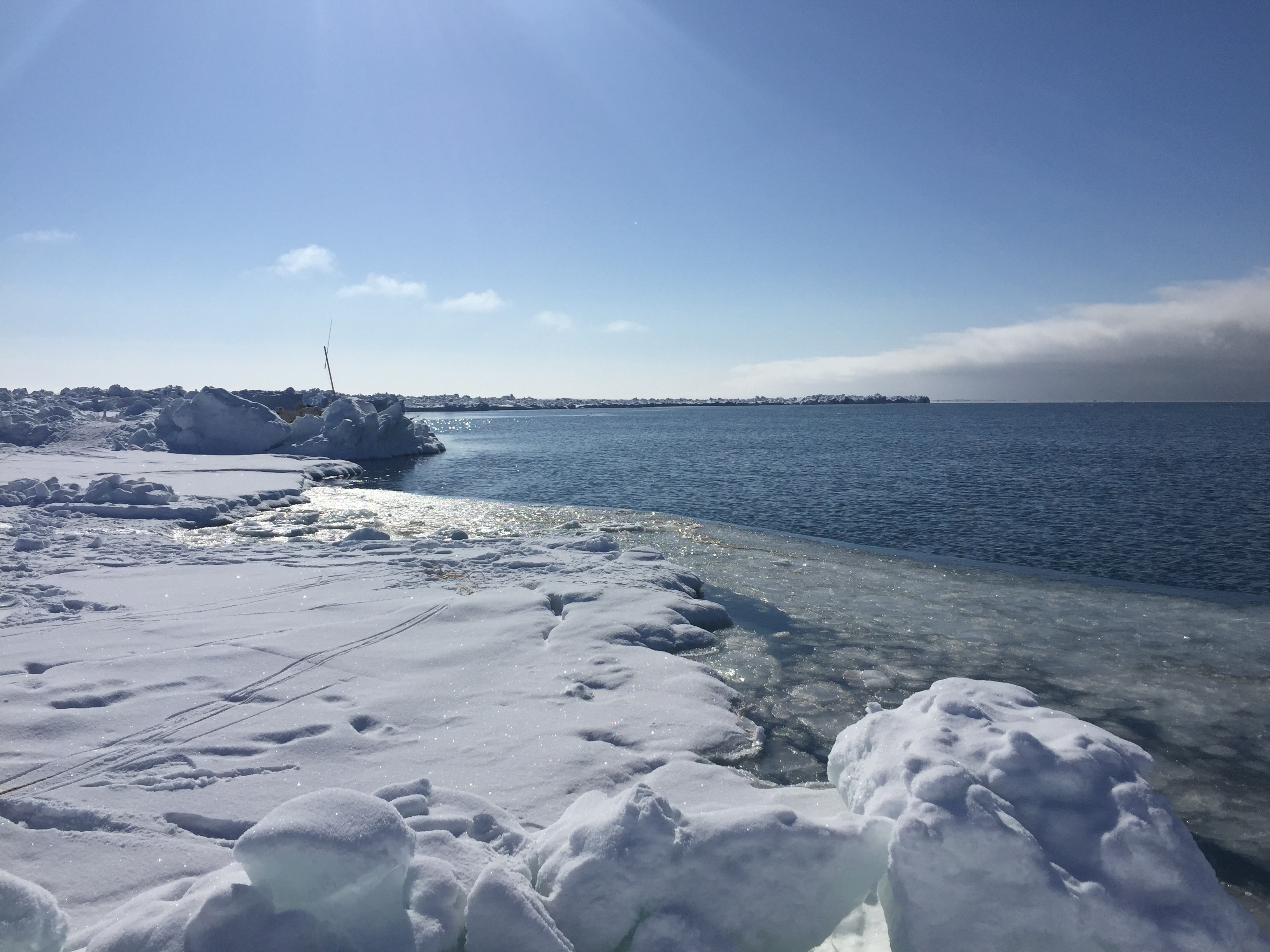
The shorefast sea ice off Utqiaġvik, which local whalers use as a platform for their spring hunt. April 21, 2019. (Photo by Ravenna Koenig/Alaska’s Energy Desk)

For the first time since 2007, Alaska’s northernmost city has recorded a record low daily temperature reading.

On Wednesday morning, temperatures in the North Slope hub community of Utqiaġvik reached 20 degrees below zero, a record low for April 29.

Rick Thoman, a climatologist with the International Arctic Research Center in Fairbanks, said that Utqiaġvik saw all of the ingredients for a cold day on Wednesday.

“At Utqiaġvik, there was some wind, and it’s the direction the wind needs to get really cold, and that’s an offshore wind — kind of a southeast  breeze helping pull in some of that cooler air from the inland to the coast,” Thoman said.

In a tweet, Thoman said Wednesday was also the latest date in the season for a temperature of 20 below or colder in the area. The previous record was a low of  minus 24 on April 28, 1964.

https://twitter.com/AlaskaWx/status/1255564927579779072

Thoman said that the frigid Wednesday temperature doesn’t represent the month of April as a whole for the North Slope, however.

“Of course, the record low is really just one day,” Thoman said. “For April as a whole, this was the sixth-warmest April in the last century at Utqiaġvik.”

Thoman said that while this is the first record low day in Utqiaġvik in just over 12 years, there have been overwhelmingly more record high temperature days in the area.

“One hundred and twelve daily record highs have been set or tied,” Thoman said. “So in a football game, if the score was 112 to nothing, or 112 to one, that would really be quite remarkable.”

Thoman said that current models from the National Oceanic and Atmospheric Administration call for a higher chance of warmer-than-normal temperatures for Utqiaġvik in the month of May.


Coronavirus toll on Alaska oil industry grows by 300 as Doyon Drilling announces layoffs

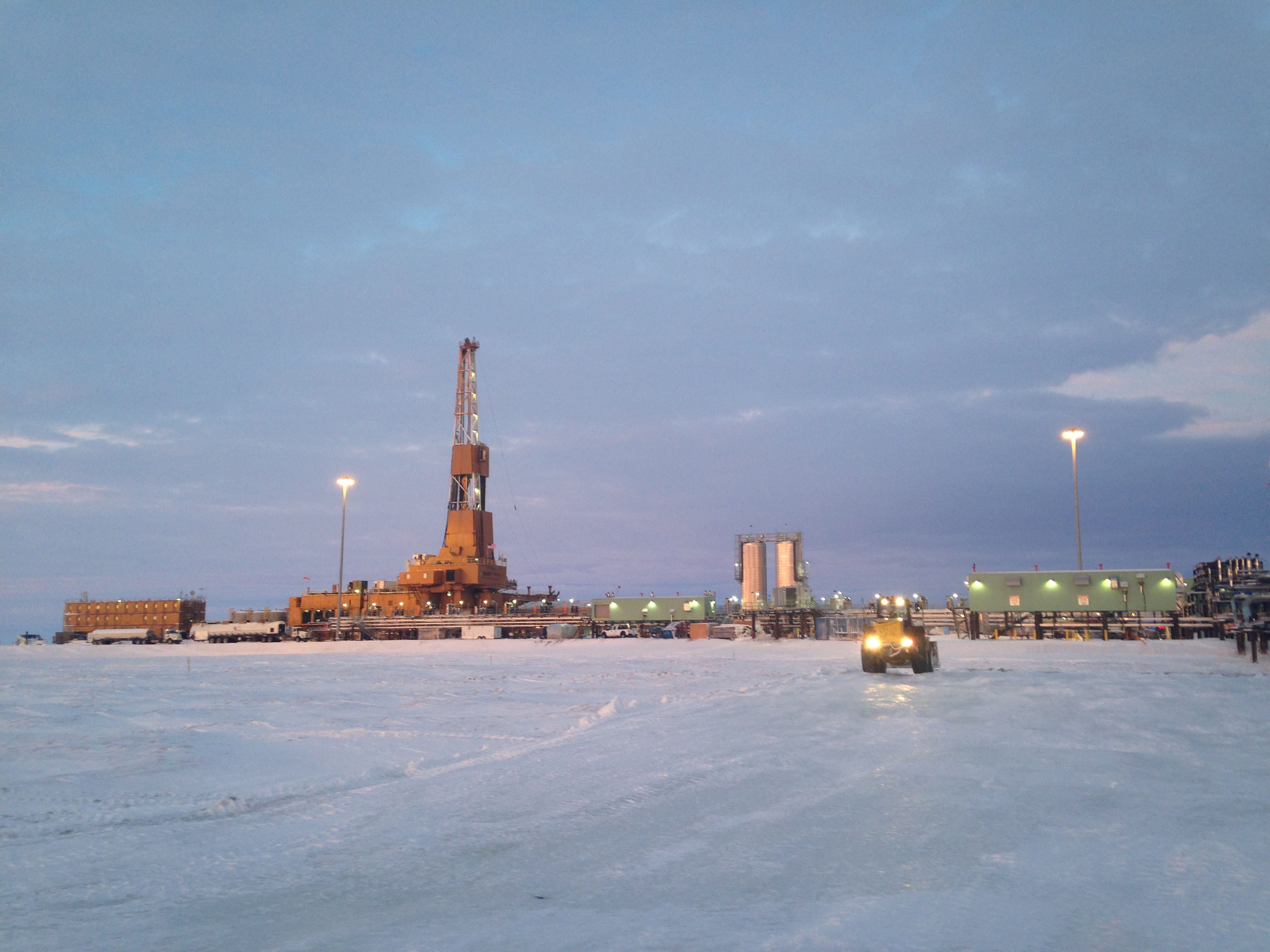
A Doyon drill rig putting in new wells at the ConocoPhillips CD5 drill site on the North Slope. (Rachel Waldholz/APRN}

Another North Slope oil-field contractor said Thursday that it is laying off 300 workers as the coronavirus pandemic continues to hammer the industry in Alaska and around the world.

Doyon Drilling, a subsidiary of the Interior Alaska Native regional corporation Doyon Ltd., said in a notice to the state that the layoffs are expected to be permanent “until the crisis is over and the industry recovers.”

“As a result of the unforeseen business circumstances resulting from the sudden and dramatic effects of the coronavirus outbreak, the declaration of a national emergency and the drop in oil prices on our business and client’s operations, Doyon Drilling will be demobilizing its rig fleet on the Alaska North Slope and conducting layoffs,” Ron Wilson, the company’s president, wrote in the notice.

Doyon officials did not immediately respond to a request for further comment.

Other major oil-field service companies have already notified the state of more than 250 layoffs, and one of Alaska’s major producers, ConocoPhillips, announced Thursday that it’s cutting daily production in half, to 100,000 barrels from 200,000, in June.

A global crash in demand for oil tied to the pandemic has caused the price of the commodity to plummet: Alaska North Slope crude was as high as $57 a barrel in February, before falling to $13 on Thursday.

Doyon said last month that its workers had already been “severely” affected by a decision by ConocoPhillips to suspend the company’s drilling program.

The company operates eight drilling rigs and has “over 300 employees,” according to its website. Doyon Ltd.’s oil-field service business — which includes Doyon Drilling and three other subsidiaries — generated $126 million in revenues in 2018, according to the company’s annual report.

ConocoPhillips to cut Alaska oil production by 100,000 barrels per day

A unit at the edge of ConocoPhillips’ Kuparuk oil field on Alaska’s North Slope in 2016. (Photo by Rachel Waldholz/Alaska Public Media)

ConocoPhillips announced Thursday that it will cut oil production in Alaska by about 100,000 barrels per day for the month of June in response to “unacceptably low oil prices.”

That’s about half of Conoco’s daily production in the state, and roughly a fifth of the crude that typically flows down the trans-Alaska pipeline.

“It’s incredibly significant,” said Kara Moriarty, chief executive of the Alaska Oil and Gas Association. Conoco is Alaska’s largest oil producer.

“It will have an impact on state revenue, royalties, production tax,” Moriarty said.

The coronavirus pandemic and an oil price war have bludgeoned the oil and gas industry, and Thursday’s announcement from Conoco is the latest fallout. The oil and gas company announced sharp curtailments in production across the country, and a loss of $1.7 billion in its first quarter of 2020.

The cuts in Alaska will impact the Kuparuk River, Mooses Tooth and Colville River units, ConocoPhillips Alaska said in a statement.

“The curtailment will essentially leave the oil stored in the reservoirs, available for resumption of production at a later date,” it said.

Conoco will not shut in the fields entirely “because of the cost and complexity of a total field shut down,” wrote Conoco Alaska spokesperson Natalie Lowman in an email. “We want to be able to respond quickly if market conditions improve.”

In its statement, Conoco said the cuts to production underscore “the extraordinary challenges currently facing the oil and natural gas industry in Alaska and elsewhere.”

The pandemic has destroyed demand for fuel as cruise lines cancel sailings, and people drive less and book fewer flights. That paired with the oil price war has led to a glut of crude rapidly filling storage tanks. Oil prices have plummeted.

“It’s a very painful reminder today that Alaska is part of a global oil industry that is reeling from dynamics no one ever could foresee,” Moriarty said.

Last week, the estimated value of a barrel of North Slope crude dropped to an unprecedented negative $2.68 and crawled back to $10.67 by Wednesday — still the lowest price since the late 1990s.

Oil producers, including Conoco, have already announced cuts to spending in the state, and oilfield service companies are laying off dozens of workers.

Conoco is the first major producer to announce significant cutbacks to production in Alaska related to the current oil prices.

Hilcorp said in a statement that it currently has two drill rigs operating on the North Slope and one in the Cook Inlet. At this time, it said, it has “no announced production cuts other than following Alyeska Pipeline’s proration directive.”

Alyeska Pipeline Service Co., the company that runs the trans-Alaska pipeline, announced last week plans to cut oil flow by about 50,000 barrels a day, or about 10%.

Exxon Mobil declined to comment on its plans for production in Alaska ahead of its Friday announcement of first quarter financial results. A spokesperson for BP said the company does not comment on day-to-day operations.

Conoco says it will start ramping down production in late May.

“Any extensions of the curtailment beyond June will be determined on a month-to-month basis,” the company said.

Conoco did not announce any layoffs in Alaska on Thursday. It said the cuts will not impact the trans-Alaska pipeline.

In a statement Thursday, the co-chairs of the Alaska Legislature’s House Resources Committee said Conoco’s cutbacks are another troubling reminder of the economic challenges the lie ahead for Alaska due to the pandemic.

“This news deals a blow to the state’s widening deficit and underscores the need for a comprehensive strategy to address Alaska’s financial crisis,” said the statement from Rep. John Lincoln, I-Kotzebue, and Rep. Geran Tarr, D-Anchorage.

During the first quarter of 2020, ConocoPhillips says its daily production in Alaska totaled 218,000 net equivalent barrels of oil per day.

This story has been updated.


‘The first glance at what’s coming’: Oilfield service companies alert state of more than 250 layoffs in Alaska

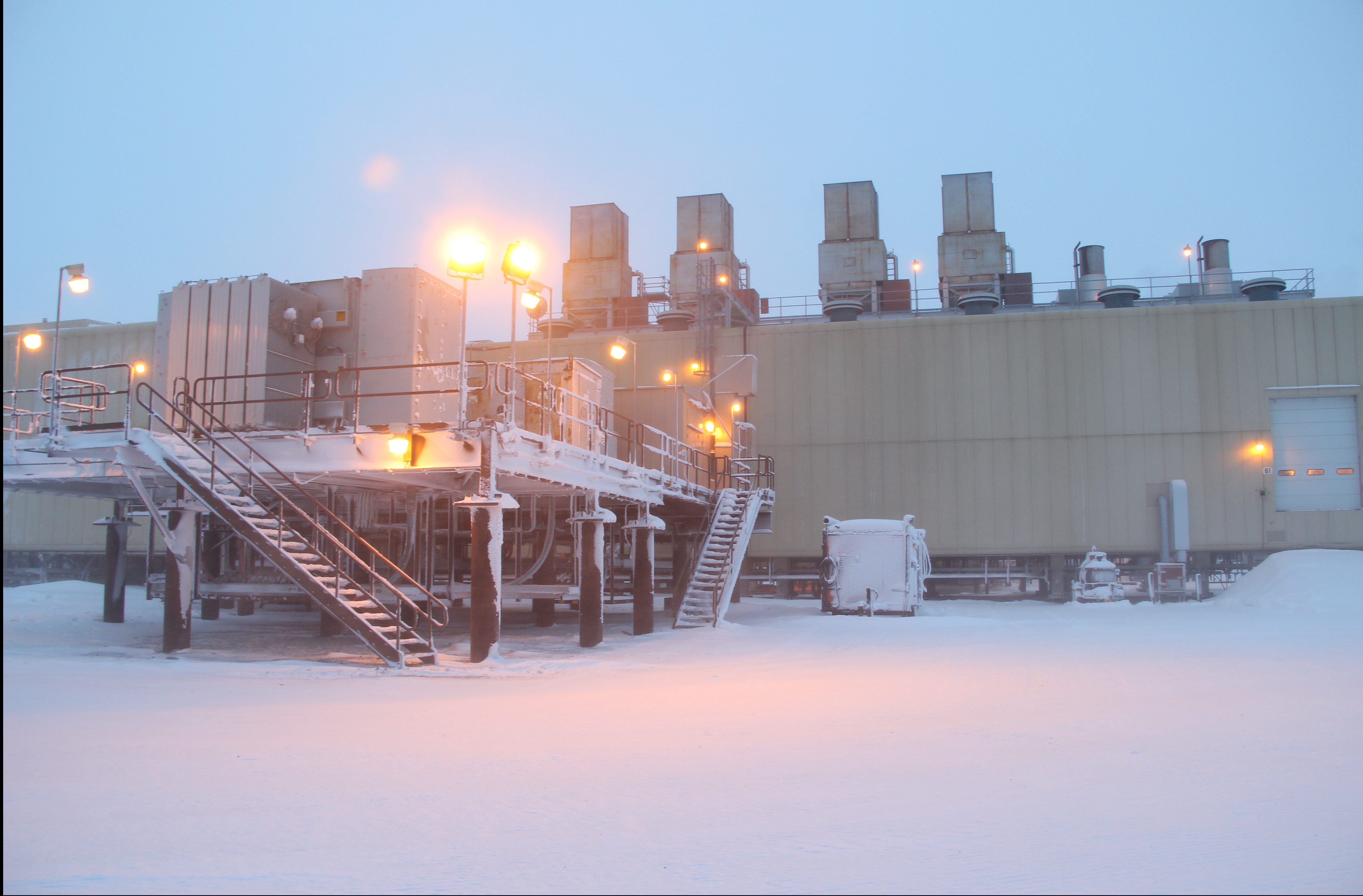
ConocoPhillips’ CD5 drill site. (Photo by Elizabeth Harball/Alaska’s Energy Desk)

Four oilfield service companies have alerted the state of sweeping layoffs at their North Slope operations as the coronavirus crushes demand for fuel, oil prices crash and drilling activity declines.

The job cuts announced in Alaska include 63 layoffs at Baker Hughes, 81 at the Schlumberger Technology Corp., about 80 at Halliburton Energy Services and more than 50 at the Peak Oilfield Service Co., according to the companies’ notices sent to the state over the past month, the most recent filed Monday.

“I think that’s just the first glance at what’s coming,” said Rebecca Logan, chief executive of the Alaska Support Industry Alliance, an oil and mining trade group.

Across the country, companies that provide oilfield services and equipment are cutting jobs and bracing for bankruptcy as the pandemic launches the oil and gas industry into a tailspin. Baker Hughes, Schlumberger and Halliburton have dismissed workers and slashed spending at their operations across the globe.

Logan described the past few months as a “double whammy” for service companies on the Slope. First came the virus and travel restrictions that complicated the typical two-week rotations. Companies also slimmed down to essential functions to reduce the number of workers at camps.

Then came the rapid drop in oil prices.

“That pretty much took the wind out of everyone’s sails,” Logan said. “Now there’s not really work to go back to.”

Oil giants including ConocoPhillips have cut spending in Alaska and reduced drilling on the Slope. The company that runs the trans-Alaska pipeline also recently cut North Slope oil production by 10% as the world wrestles with a glut of oil that’s filling up storage tanks.

According to the service companies’ notices to the state, the layoffs include heavy equipment operators, engineers, technicians, mechanics and others.

In the notice dated Monday, a representative for Baker Hughes wrote that the pandemic poses unprecedented challenges.

“These unforeseeable business conditions and the COVID-19 natural disaster have suddenly, dramatically and negatively impacted the market and reduced the overall need for the services and products provided by Baker Hughes,” the notice said.

Alaska had an estimated 6,350 oil industry service jobs in 2019, according to Neal Fried, an economist at the state Department of Labor and Workforce Development.

The department is still tabulating how the pandemic has impacted the state’s workforce numbers in March and April, with the new data expected to be released in May.

Fried said he anticipates the data will show more job losses in the oil and gas sector than what’s revealed in the notices filed with the state. Only certain factors trigger a notice such as plants closing and mass layoffs.

Logan said she doesn’t expect the downturn to end anytime soon. Neither does Tom Walsh, board president of the Alaska Support Industry Alliance and managing partner at Petrotechnical Resources of Alaska, an oil and gas consulting firm.

“The workload is going to diminish further,” he said. “I think this is the beginning of the downturn and I think it will be far more impacting than what we’ve seen so far.”

Walsh said he expects his company’s workload to decrease by at least 30% over the next few months. The company doesn’t employ many full-time workers, he said, so they haven’t gone through layoffs but, without work to do, some have filed for unemployment.

Last week, the estimated value of a barrel of North Slope crude dropped to an unprecedented negative $2.68 on Monday and crawled back to $11.60 by the end of the week — still the lowest price since the late 1990s. By Monday, it had fallen again, dipping to $8.97.

Walsh said the price collapse comes as the industry is just starting to recover from the last downturn.

The total number of oil and gas jobs in Alaska plummeted from about 15,300 in late 2014 to 9,100 three years later, rising back to an estimated 10,500 jobs by this February.

‘We’ve never really clawed back any margins,” Walsh said. “And now this hits and, it’s like, there’s just no more room to squeeze anything out of the costs of doing business up here.”

Supreme Court ruling could be setback for proposed mine near Haines

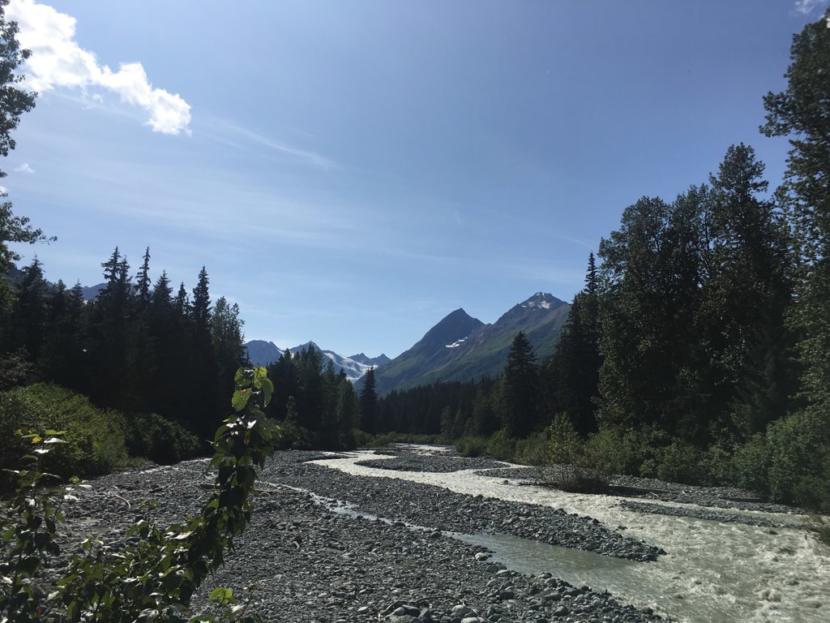
A view up Glacier Creek towards Saksaia Glacier and the mountains that hold copper-zine-silver-gold-barite deposits that Constantine Metal Resources is planning to mine. A Supreme Court decision in April 2020 regarding the Clean Water Act could be a set-back for the project. (Photo by Claire Stremple/KHNS)

The Supreme Court ruled last week that the Clean Water Act applies to pollutants that reach protected waters, even from a distance. Conservationists say it’s a win for clean water. It could mean stricter permitting is required for Constantine Metal Resources’ expansion plans for a mine project near Haines. But, state regulators remain tight-lipped about what might happen next.

Conservation groups have been waiting on the outcome of the federal case County of Maui v. Hawaii Wildlife Fund to see how far the Clean Water Act goes.

Hawaii Wildlife argued that even if someone pumps polluted water into the ground, they’re responsible for where it ends up. And if it ends up in surface waters, like the ocean, it’s regulated by the national Clean Water Act. Six out of nine justices agreed, and closed what some called a loophole in the law.

“This decision is important to us here in the Chilkat Valley, but it’s also important across the country,” said Shannon Donahue, the Upper Lynn Canal Organizer for Southeast Alaska Conservation Council (SEACC).

The decision is important to her because she wants the copper-silver-zinc mining project near Haines to be more strictly regulated in their next phase of construction.

“We’d like to see the permit revoked,” she said. “And we’d like to see Constantine apply for the appropriate permit.”

SEACC is among the green groups that told state regulators they approved the wrong permit for Constantine’s project. They argue that the mining company’s plan for wastewater jeopardizes a major source of salmon for the region. They say that even though the company plans to pump wastewater into the ground, it’s close enough to a nearby stream that it has the same effect as if they were dumping directly into the stream.

State regulators listened. They put the permit under review last September, and said that their final permit decision hinged in part on the outcome of the Supreme Court Case.

“And what this means is that they’re going to have to apply for a new permit rather than just just allowing Constantine to operate under that waste management permit,” Donahue said.

But Gene McCabe, the manager of the state’s wastewater program, wrote in an email that it’s too soon to tell if the Maui case applies to Constantine. He and other regulators are still waiting on the results of a tracer dye study they requested from the company. The study’s results should reveal whether or not there’s significant connectivity between the groundwater and the surface water.

Gov. Mike Dunleavy made a visit to the potential mine project site with Alaska Department of Environmental Conservation Commissioner Jason Brune last September, just as the agency pulled the initial permit back for review. The agency made it clear to Constantine that the permit was in effect while under review.

Constantine’s Vice President of External Affairs Liz Cornejo said the company will comply with whatever state regulators decide.

Site notifications
Update notification options
Subscribe to notifications