Alaska coronavirus news

Live updates and information on COVID-19 in Juneau and Alaska
Alaska health officials report death of Juneau woman from COVID-19

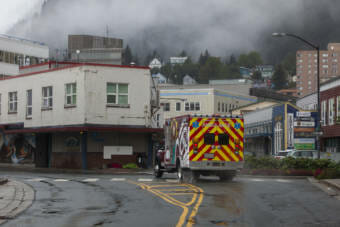
An ambulance drives through downtown on August 28, 2020 in Juneau, Alaska. (Photo by Rashah McChesney/KTOO)

Alaska health officials say that a Juneau woman in her 30s has died of COVID-19. It’s not clear when she died. 

The state reported a total of 21 new deaths among Alaska residents. One was in February of this year, and the rest were from May through July. 

Over the course of the pandemic, 22 Juneau residents have died from COVID-19.

The state reported 63 cases of COVID-19 in Juneau last week among residents and visitors to town. That’s down 44% from the week before, when there were 112 cases. The counts don’t include positive results from home tests.

There were 2,553 cases reported across the state. That includes 686 non-resident cases — 329 of those were on vessels at sea related to tourism.

Statewide, 65 people with COVID-19 are in the hospital, and one is on a ventilator. One person is being treated for COVID-19 infection at Bartlett Regional Hospital in Juneau.

COVID-19 vaccinations are now available for anyone 6 months old or older. Juneau Public Health offers vaccine clinics on Wednesdays and Fridays.

In Juneau, call 907-586-6000 or go to www.juneau.org/vaccine  to make an appointment. 

Correction: Cases were down 44% from the previous week’s total.

Kicked off their cruises, COVID-positive tourists are going home on Alaska flights and ferries

""
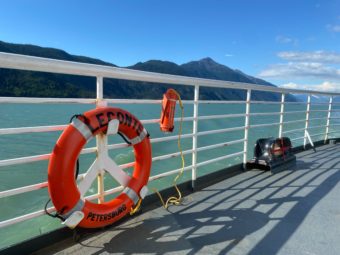
The Alaska ferry LeConte traveling toward Juneau on Aug. 3, 2022. (Photo by Claire Stremple/KTOO)

COVID-positive travelers say they were not allowed to board their cruise ship in Skagway this week. Instead, they say that Holland America helped them book travel on a state ferry and then an Alaska Airlines flight out of Juneau — the day after their positive tests. 

Diana and Larry Lehrer were supposed to set sail from Skagway on Holland America’s Koningsdam after a bus tour through the Interior and Canada. But they tested positive for COVID-19 when they reached Skagway on Tuesday.

“The first test went fine and the second one didn’t,” said Diana Lehrer. 

The next day the couple was on the state ferry, sitting masked near the front windows. The MV LeConte was packed with passengers from Skagway and Haines headed to Juneau.

“They wouldn’t let us on the cruise ship because that’s asking for trouble, so they gave us the option of quarantining here in Skagway or going home,” Diana said.

Diana said she was aware when she booked the package that if she or her husband tested positive during the bus trip, they wouldn’t be allowed on the cruise ship.

“We knew it could happen, but we didn’t think it would happen to us,” she said.

She said Holland America took care of them after they tested positive. The company paid for their hotel and delivered meals to their room. 

“They walk you through everything,” she said. “They totally rebooked our travel back. They made it very easy.”

A Holland America spokesperson said that’s not the company’s policy. It will only help customers reschedule travel after they quarantine for five days.

But Mr. Lehrer later confirmed in an email that after one night in isolation in Skagway, a Holland employee did book their travel. He wrote: “We only had to make one phone call to Holland America’s scheduling phone number and they did their magic in less than ten minutes.” 

Skagway Mayor Andrew Cremata says ferry or plane travel out of Skagway for travelers with active COVID-19 cases is not part of the municipality’s port agreement with Holland America.

“I know that that happens,” said Cremata.

“There’ve been groups of people with COVID at the airport that have been sent home, and they’re trying to fly out, and then there’s groups of people that have been put on the ferry,” he said.

You don’t have to test negative to board one of the state’s ferries or Alaska Airlines flights, but they both have a policy that you should not travel if you are sick.

Laura Bronk and her husband were on the same tour as the Lehrers — then they were on the LeConte, too, after a positive test. Bronk said their tour guide recommended the ferry over a small plane out of town.

She says the cruise company offered them five nights in isolation in Skagway, but they decided to get on the ferry instead. She said Holland was going to reimburse them for the ferry ticket.

“Your vacation’s over, you might as well go home,” Bronk said.

As for the Lehrers, the couple plans to catch flights from Juneau home to the East Coast. They say their symptoms are mild — a runny nose and a little bit of a cold.

Reformulated COVID vaccine boosters may be available earlier than expected

Fingers holding down and writing on a vaccination card
The FDA is trying to make “bivalent” COVID vaccines, which target two different antigens, available as soon as September. (Photo by Robyn Beck/AFP via Getty Images)

The Biden administration may scrap plans to let more younger adults get second COVID-19 boosters this summer. Instead, officials are trying to speed up availability of the next generation of boosters in the fall, NPR has learned.

The new strategy is aimed at trying to balance protecting people this summer with keeping people safe next winter, when the country will probably get hit by yet another surge.

But the possible shift is being met with mixed reactions. The Food and Drug Administration could make a final decision by the end of the week.

The dilemma facing the FDA is that the immunity many people have gotten from getting vaccinated or infected has been wearing off. At the same time, the most contagious version of the virus to emerge yet — the omicron subvariant BA.5 — is making people even more vulnerable.

So as COVID is starting to become more serious than a cold or flu again, most people younger than age 50 aren’t eligible for fourth shots — second boosters — to protect themselves. In response, the FDA was considering opening up eligibility for second boosters for all adults.

But letting more people get boosted with the original vaccine now could interfere with plans to boost them with updated, hopefully more protective vaccines in the fall to blunt the toll of the winter surge.

That’s why the administration is considering shifting the focus to the next generation of boosters. Moderna and Pfizer-BioNTech were already scrambling to comply with the FDA’s request to get new, hopefully more powerful “bivalent” boosters ready by October or November that target both the original strain of the virus and omicron subvariants BA.4 and BA.5.

The FDA is trying to get the companies to make those shots available even sooner — possibly as soon as September, according to a federal official familiar with the situation who is not authorized to talk about it publicly. The possible shift was first reported by The Washington Post.

If the bivalent boosters can be accelerated, the FDA would skip opening up fourth shots of the original vaccines this summer and just wait for the new double-barreled omicron vaccines in the fall.

The possible shift is provoking mixed reactions.

Some think it is the smartest strategy. Three shots are still protecting most younger, otherwise healthy people against serious illness, they say. And boosting people again now, and then so soon again in the fall, could confuse people, potentially eroding their willingness to get any boosters, according to some experts.

“I think this will increase trust,” Dr. Monica Gandhi, a professor of medicine at the University of California, San Francisco, wrote in an email to NPR. “We can’t give a booster now and then again in 1.5 months or two months – that will decrease trust.”

And giving two shots too close together could actually backfire from a health perspective, according to some experts.

“I think this is the right call,” Dr. Celine Gounder, a senior fellow at the Kaiser Family Foundation, said during an interview with NPR. “If you get a booster now with the original formulation of the vaccine, this may in fact be counter-productive. It may prevent the second booster dose given this fall from taking and from you developing an immune response to that booster.”

But others aren’t so sure. They say the new vaccines may not be significantly better.

“People should not regard them as some sort of magic bullet that gives them super-strong protection,” says Dr. John Moore, an immunologist at Weill Cornell Medicine. “These are not going to be magic bullet game-changers because they’re not that much better than the already available vaccine boosters.”

It’s also unclear whether the new boosters can be ready by September. And who knows if BA.5 will even been the main virus by the fall and winter?

“I don’t see the benefit waiting for a BA.5-specific booster since BA.5 may be in the rearview mirror and well past us by the time that’s available,” says Dr. Peter Hotez, dean of the Baylor College of Medicine National School of Tropical Medicine.

People younger than 50 should at least have the option to protect themselves now, especially with BA.5 already surging, some say.

“You’re talking about you know literally hundreds of millions of people who are at a higher risk than they need to be for months,” says Dr. Robert Wachter, chair of the department of medicine at the University of California, San Francisco.

“And that will mean potentially millions of preventable infections, certainly thousands of preventable hospitalizations, and probably hundreds of preventable deaths.”

Copyright 2022 NPR. To see more, visit https://www.npr.org.

Sens. Joe Manchin and Lisa Murkowski have tested positive for COVID-19

Two photos, one of Joe Manchin and one of Lisa Murkowski
Sens. Joe Manchin, D-W.Va., and Lisa Murkowski, R-Alaska, both announced Monday that they tested positive for COVID-19. (Photos by Anna Moneymaker/Getty Images; Tom Williams/CQ-Roll Call, Inc via Getty Images)

Sens. Joe Manchin, a conservative Democrat from West Virginia, and Lisa Murkowski, a Republican from Alaska, have tested positive for COVID-19, they both announced Monday.

“This morning I tested positive for COVID-19,” Manchin said. “I am fully vaccinated and boosted and am experiencing mild symptoms. I will isolate and follow CDC guidelines as I continue to work remotely to serve West Virginians.”

Murkowski also tweeted out her diagnosis, saying, “After experiencing flu like symptoms I recently tested positive for COVID-19. I will be following guidance and advice from doctors and will be quarantining at home in Alaska while continuing my work remotely.”

Meanwhile, a letter from President Biden’s physician said his COVID-19 symptoms “have now almost completely resolved,” after he tested positive last Thursday.

Manchin, the chairman of the Senate Energy & Natural Resources Committee, said earlier this month he would not support major climate change spending right now due to inflation, but said he is open to negotiations at a later time.

Manchin’s position comes a little more than a year after President Biden pledged to cut carbon emissions in half by 2030.

Democrats are trying to advance several pieces of legislation this week before heading out on August recess. One of those is a reduced version of the president’s economic agenda focused on healthcare spending. That measure is being passed through the process known as budget reconciliation, which would require all members of the Democratic caucus present to pass. So Manchin’s absence on top of that of Vermont Sen. Patrick Leahy, recovering from a fall, and the uncertain return of Delaware Sen. Tom Carper, who tested positive for COVID-19 last week, risks delaying that bill.

They are also attempting to pass a bill to boost domestic production of semiconductors, which has some Republican support, so it’s unclear whether these Democratic absences are a hurdle or a roadblock for that bill.

Copyright 2022 NPR. To see more, visit https://www.npr.org.

Fairbanks man’s rafting trip turns into wilderness COVID ordeal

A large helicopter on a sandbar by a river
A North Slope Borough Search and Rescue helicopter landed along the Canning River to pick up David Hamilton. (Photo courtesy of David Hamilton)

A Fairbanks man is recovering from COVID-19 after getting seriously ill during a 12-day wilderness rafting trip on the North Slope.

Seventy-seven-year-old David Hamilton is an experienced backcountry traveler and was part of a group floating the Canning River earlier in July. Hamilton says another member of the party had COVID-19 but didn’t know it until they were out on the remote river.

“He was pretty miserable there for a few days, and we did everything as far as following protocol, masking and distancing and so on,” he said. “But I got COVID out there.”

Hamilton says he’s fully vaccinated and boosted, but he also has asthma, and he quickly became very sick.

“Pretty tired, wiped out, achy, had a bad headache, a really bad cough, couldn’t stop coughing,” he said. “And my blood pressure went off the top too, so I knew as was in — I had to get out of there.”

An aerial view of ANWR's coastal plane and the Canning River
The Canning River, seen here in 2018, flows from the Brooks Range into the Beaufort Sea along the western edge of the Arctic National Wildlife Refuge. (Photo by Lisa Hupp/U.S. Fish and Wildlife Service)

Hamilton used a satellite phone to call 911 and began communicating with an operator.

“She asked what’s the nearest town, and I said Kaktovik, and she says how do you spell that,” he said. “Then she said is there any roads, or can an ambulance get to you, and I said ‘No, Kaktovik is about 150 miles away and there’s no roads at all out here. I’m in the middle of nowhere Alaska, on the North Slope on a gravel bar on the Canning River.’”

Hamilton says the operator gave him the number for North Slope Borough Search and Rescue, which sent a helicopter out of Utqiaġvik that picked him up and flew him to Deadhorse.

He said that a medevac plane landed about 10 minutes after he got to Deadhorse, and within an hour and a half he was at the hospital in Fairbanks.

“It was just slick,” Hamilton said. “It was just really highly professionally done.”

He emphasized the value of his $125 per year medevac insurance.

“If you ever had to pay for one of those, it would just bankrupt you I’m sure,” he said.

Hamilton says he’s testing negative now and has largely recovered. He says he’s been doing wilderness trips his entire life and plans to continue.

Health officials remind vulnerable Alaskans to seek COVID treatments early

""
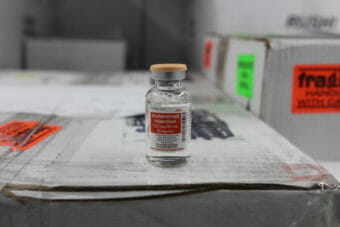
A vial of monoclonal antibody treatment at the Alaska Native Tribal Health Consortium warehouse on Oct. 5, 2021 (Photo by Lex Treinen/Alaska Public Media)

State health officials are reminding eligible Alaskans to seek COVID treatments if they test positive.

There are a wide range of factors that could qualify you for a COVID treatment, including being older than 50, being pregnant, being unvaccinated or not up to date on your COVID vaccines, and being immunocompromised. Certain medical conditions, like asthma; cancer; dementia; and kidney, liver or lung disease can also make you eligible.

In a public health presentation last week, state physician Dr. Lisa Rabinowitz said it’s especially important for older Alaskans to know how to access treatment right now, as the BA.5 omicron variant spreads widely.

“We’ve definitely seen an increase over the last few months of hospitalizations in this older age group,” she said.

State pharmacist Dr. Coleman Cutchins said eligible Alaskans should seek treatment right away if they test positive for COVID. Treatments must be started five to seven days after the onset of symptoms in order to be effective.

“Once someone gets severely ill, it’s really too late for these,” he said. “Don’t watch and wait. Don’t say, ‘Hey, my symptoms started, I want to see if I get worse.’ Because by the time you get worse, it’s probably too late for these drugs to do any good.”

There are four treatment options currently available. One is a monoclonal antibody treatment and the others are antivirals.

Remdesivir is the only treatment option for kids under 12. It’s given by IV, mostly at hospitals.

Paxlovid is available for people 12 and older. It reduces the risk of hospitalization by 88%, and it’s now widely available around the state. As of this month, pharmacists can prescribe Paxlovid, not just primary care providers. Patients take the pills at home over five days.

Recent studies have shown that some people have had rebound cases after taking Paxlovid. That means they tested positive, took Paxlovid, and then tested positive again a week later. Cutchins emphasized that rebound cases have been as common in people who took Paxlovid as they’ve been in those who didn’t. And in both groups, rebound cases are very rare.

“It’s not a reason to not take this drug,” he said. “We’re not hearing about more severe rebound cases. And in the clinical trials, even in retrospective data, it’s less than 1% of people.”

Molnupiravir is available for people over 18, and reduces hospitalization by 30%. It can be a good option for people with kidney and liver disease, who might take medication that disqualifies them from taking Remdesivir or Paxlovid.

Bebtelomivab is the only monoclonal antibody treatment still available. Cutchins said it will likely only be available through August.

A chart comparing four covid treatments
The COVID treatments currently available include one monoclonal antibody treatment and three antivirals. (Screenshot from DHSS’ ECHO presentation on July 13, 2022.)

People who are moderately to severely immunocompromised may be eligible for a monoclonal antibody called Evusheld. It’s given every six months to prevent, rather than treat, COVID-19. You could be eligible if you’re older than 12 years old and are immunocompromised, or have a history of allergic reactions to COVID vaccines. For example, Rabinowitz said people who’ve had chemotherapy or an organ transplant might benefit from Evusheld.

If you qualify for one of these treatments, there are a few ways to get them.

All four of them require a prescription, so your primary care doctor is a good place to start. They’re typically low cost or free, Cutchins said.

If your doctor is hesitant to prescribe you a treatment, Rabinowitz said be sure to explain why you think you qualify.

“Advocating is the key,” she said. “There’s been a lot of changes to treatment, and even clinicians are trying to keep up and make sure they’re up to speed on everything.”

If you don’t have a primary care provider, officials suggest contacting a local public health clinic, urgent care clinic or pharmacy. Cutchins said now is a good time to find a primary care provider if you can.

“Even aside from pandemics and COVID, there’s a lot of really good reasons to have a personal relationship with a healthcare provider you can trust,” he said.

A federal website lists pharmacies and clinics that “test to treat,” meaning they can test patients for COVID and prescribe treatments at the same location. In Alaska, there are locations in Sitka, Kodiak, Kenai, Homer and Naknek. Cutchins said he expects more pharmacies to test to treat now that pharmacists can prescribe Paxlovid, but he acknowledged that staff shortages at pharmacies could limit the practice.

The state health department also operates a COVID helpline, which Alaskans can call for help finding treatment options. The number is 907-646-3322.

Site notifications
Update notification options
Subscribe to notifications