Arctic

Can TikTokkers sway Biden on oil drilling? The #StopWillow campaign, explained

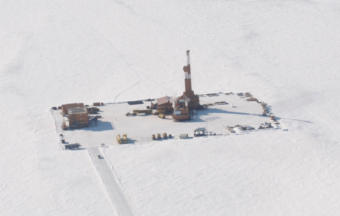
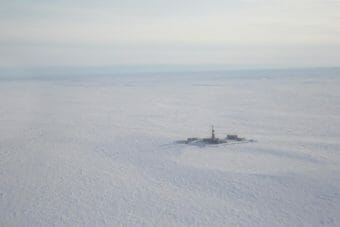
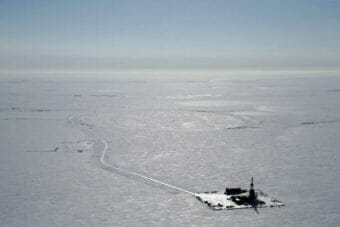
ConocoPhillips’ undeveloped Willow prospect, pictured here, is still being explored. The company announced this week that it’s selling a one-fourth stake in Willow and other projects in Alaska. (Photo courtesy ConocoPhillips)

Any day now, the Biden administration is expected to decide whether to approve a controversial oil drilling project that’s become a galvanizing issue for Gen Zers passionate about climate change. They’ve taken their message to platforms like TikTok, amassing top views on videos outlining the issue. They’ve also sent millions of letters to the White House.

Supporters of the so-called Willow Project say drilling in Arctic Alaska will lower oil prices and boost national security. But its opponents say it comes with unacceptable environmental consequences and disincentivize a transition to cleaner fuels.

That leaves the Biden administration stuck in the crosscurrents of its own conflicting priorities — and Gen Zers are prepared to read the decision as a clarification on where the country’s political power lies.

Here’s an overview of where things stand.

First things first: What is the Willow Project?

The Willow Master Development Plan is a $6 billion proposal from ConocoPhillips to drill oil inside the National Petroleum Reserve in Alaska.

The oil giant says the project could deliver up to $17 billion in revenue for federal, state and local governments, creating over 2,800 jobs.

Willow would also yield an estimated 600 million barrels of oil, a volume nearly 1.5 times the current supply in the U.S. Strategic Petroleum Reserve. The Biden administration says boosting oil production could help keep consumer energy prices down — a statement that economists caveat, saying it’d take years to actually see prices drop.

Willow’s proposed development would unfold on the North Slope of the petroleum reserve, a 23 million-acre region that represents the largest undisturbed public land in the U.S.

The Bureau of Land Management describes the proposed site as “critical” to local wildlife, supporting “thousands of migratory birds” and serving as “a primary calving area” for local caribou. Beyond the region, the BLM says the project would release 9.2 million metric tons of annual carbon pollution, which contributes to human-caused climate change. That’s equivalent to the emissions of roughly 2 million gas-powered cars.

The decision comes at a key crossroads for the Biden administration

The Trump administration initially approved the Willow Project in late 2020, but a federal judge vacated development permits, saying initial federal reviews failed to include measures to mitigate the impact on polar bears.

On Feb. 1, the BLM published a new environmental impact analysis of the plan, proposing one fewer drilling sites and less surface infrastructure such as roads and pipelines. ConocoPhillips called it “a practical way forward”.

Ultimately, Interior Secretary Deb Haaland formally gets the final say. She could approve the original ConocoPhillips plan, greenlight the BLM’s revised plan, halt the project altogether or take any action in between.

The Interior Department initially said that the revised plan still left substantial concerns about Willow’s impact on greenhouse gas emissions.

But halting Willow would put the Biden administration in a tricky political position. The president made a campaign promise not to start any new drilling on federal lands — but, in office, he’s prioritized lowering energy prices amid uncertainty in the global oil market.

But more than four days have passed since the end of a formal 30-day review period on the BLM plan, the date many observers had been expecting a decision.

On Friday morning, the Interior Department told NPR it had no update on the timing of a decision. White House Press Secretary Karine Jean-Pierre confirmed during Friday’s press briefing that the president had met with the Alaskan congressional delegation about the project last week but that the decision would ultimately come from the Interior Department.

Who supports the project?

As the wait drags on, the debate only grows louder.

On Wednesday, Alaska’s congressional delegation urged swift approval for the BLM plan, citing, above all else, the need for economic relief.

“We all recognize the need for cleaner energy, but there is a major gap between our capability to generate it and our daily needs,” wrote the two Republican Senators and one Democratic representative in an opinion piece for CNN.

“Even those who practice a subsistence lifestyle in Alaska — living primarily off the land and water — rely on boats, snowmachines and ATVs, and those all need fuel. In rural parts of our state, gasoline prices have been as high as $18 a gallon.”

Alaska Native leaders themselves are split on whether the project will be a positive impact to the community. Leaders for Voice of the Arctic, a coalition of Inupiat North Slope leaders, says yes: The estimated $1 billion in taxes alone would fund critical education, police and firefighting improvements.

But leaders of the City of Nuiqsut and Native Village of Nuiqsut, the residential areas sitting closest to the proposed development site, said in their own scathing letter that their input hadn’t been heard.

“It seems that despite its nod to traditional ecological knowledge, BLM does not consider relevant the extensive knowledge and expertise we have gained over millennia, living in a way that is so deeply connected to our environment,” they wrote directly to Haaland.

And who’s behind the #StopWillow campaign?

Opposition to the project has spread so far and fast on social media. TikTokkers say the decentralized nature of the issue is well suited to the platform: It’s popular because there’s no unified message or group dominating the conversation.

“This is an economic issue, an environmental issue and a social issue,” explained Alex Haraus, a 25-year-old environmentalist whose videos on the Willow Project have been viewed millions of times.

“A lot of times in the past, we’ve seen groups take a stance on one thing and say that’s why everyone should care. But in this case, we’ve really just said, ‘here are all of the reasons why you should care. Pick whatever you’re passionate about and talk about it in your own way,'” Haraus said.

The formula worked. Hashtags like #willowproject, #stopwillow and #stopthewillowproject have appeared in TikTok’s daily top 10 lists, beating out hot celebrity feuds and universal trends like #springbreak. Posts tagged with #willowproject have attracted over 88 million U.S. views in the last month alone.

As of Friday, a change.org petition calling for an end to the project had amassed more than 3.1 million signatures, and a letter-writing form hosted by the advocacy group Protect the Arctic has tracked over 1.1 million unique letters to the White House.

What will the decision say about Biden’s political priorities?

Elise Joshi, a 20-year-old climate activist who’s been posting environmental content for the last two years, says she hasn’t seen this much interest in a climate issue “in a long time, maybe ever.”

Joshi says the 30-day review window for the project lent an omnipresent, slow-moving emergency (climate change) a tangible deadline. But just as urgent, Joshi says, is the feeling that the Biden administration could betray the very people who put the president in power.

“I hope the administration sees the same people who we worked with on climate legislation are rallying against [Project Willow],” she said, adding that she was among the activists invited to the White House signing of the Inflation Reduction Act.

“This isn’t the Trump administration. This is someone we voted for,” she added.

Neither Joshi nor Haraus sees the decision on the Willow Project as the end to Gen Zers’ interest in stopping oil drilling. But if successful, #StopWillow could serve as a key argument for how digital attention is remaking the landscape of political power.

“If this doesn’t represent an issue that’s resonating with general Americans, then I don’t know what does,” Haraus said.

Copyright 2023 NPR. To see more, visit https://www.npr.org.

Federal judge rules in favor of ConocoPhillips to keep Willow drilling data secret

An aerial view of one of the exploration pads and wells that ConocoPhillips drilled during the 2018 exploration season at its Willow prospect. (Photo courtesy of Judy Patrick Photography/ConocoPhillips Alaska)

A federal judge has blocked the public release of exploration data from five oil wells drilled in the National Petroleum Reserve as part of ConocoPhillips Alaska’s Willow project.

Wednesday’s decision by U.S. District Judge Sharon Gleason preempts a state law intended to encourage oil and gas development on the North Slope by requiring companies to make data publicly available after two years.

Gleason determined that the state law was overridden by federal law because the five wells were drilled in the federal National Petroleum Reserve as a result of federal oil leases. She concluded that federal disclosure rules — which require the data be released after ConocoPhillips’ federal lease expires — should be followed instead.

ConocoPhillips filed its lawsuit against the Alaska Oil and Gas Conservation Commission last year after unsuccessfully asking the Alaska Department of Natural Resources for an extension of the privacy period.

A spokesperson for the Alaska Department of Law, which represented the state in the lawsuit, said attorneys there are evaluating Gleason’s decision, which could be appealed.

The Willow project, which was the subject of the lawsuit, remains under environmental review by the Department of the Interior. A final decision is expected within days.
At its peak, Willow is expected to produce as much as 180,000 barrels of crude oil per day. State estimates indicate it will generate between $5 billion and $9 billion in tax revenue during its lifetime, and local governments in the North Slope Borough will receive billions more in direct payments from the federal government, which will collect significant tax revenue as well.

Project opponents say Willow oil would contribute to global climate change, with one analysis concluding that if oil is burned, it would create 287 million metric tons of carbon dioxide, more than seven times the amount of carbon released by the state of Alaska in 2020.

This story originally appeared in the Alaska Beacon and is republished here with permission.

On its own: How local organizations piece together search and rescue operations along Alaska’s Arctic coastline

Joe Leavitt at the Barrow Volunteer Search and Rescue Base in Utqiaġvik. (Emily Schwing)

This is the third part of a series. Read the first part here and the second here.

Most evenings, Joe Leavitt, can be found passing the time with a deck of cards at the Barrow Volunteer Search and Rescue Base in Utqiaġvik. He usually plays solitaire by himself.

“Once in a great while, we will have a pinochle game,” he said.

This far north, the weather and climate are generally pretty unforgiving year round. In winter, winds are bitter cold and the season is long and dark. In summer, rains are frigid and winds can make the Chukchi Sea rough. The landscape too can be disorienting. The North Slope Borough includes eight communities scattered across more than 95,000 square miles. There are no trees and landmarks are few and far between.

Leavitt has been a volunteer here for decades and he knows all too well how quickly things can go from good to dangerous.

“I was rescued last summer,” he said. “My boat broke down and they actually went and retrieved my boat for me and helped me get home and it’s a good thing because when we are doing our hunting, we don’t have to pay for the rescue.”

But, that could change. Because according to the Arctic Council, all marine traffic increased by 44% through the Northwest Passage between 2013 and 2019. That means more boats, which could mean more rescues.

“Maybe if a lot of people start coming up here and change everything, maybe you’ll start having to pay for your own rescue,” he said.

a blue two-story building
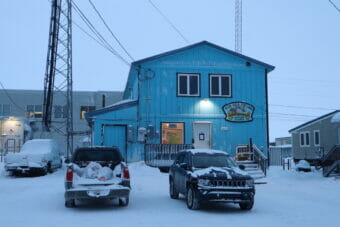
The Barrow Volunteer Search and Rescue Base has been in operation since the 1970s. The closest U.S. Coast Guard base is in Kodiak, roughly 940 miles due south of Utqiaġvik. By sea, that distance more than doubles. It could take up to 24 hours for those assets to arrive and respond to an emergency, so immediate search and rescue operations fall to local organizations. (Emily Schwing)

Leavitt is also a whaling crew captain. In Utqiaġvik, the region’s rich whaling culture is on full display. Most people walk around town wearing jackets emblazoned with the name and flag of their whaling crew.

According to Leavitt, whaling seasons and search and rescue are the two things that bring the whole community together. And whether searching for a whale, or someone who’s lost in a boat or on a snowmachine, he said people up here never stop looking.

“We had [a few] incidents where people walked home and they thought they were dead and they actually went to their own memorial service. People have done that up here,” he said.

The volunteer search and rescue base operates on a shoestring budget, raising money through pull-tab sales and working with the tribal government and the North Slope Borough to fill gaps.

Curtis Lemen is the base mechanic, one of its few paid employees. He maintains two boats, both decades old. He said one of them was out of commission last year waiting on a new motor. A snowmachine parked nearby is one Lemen might use for parts in the future. In January, he went at least two weeks without a paycheck. Finding a regular and reliable source of funding is challenging.

“That is our hindrance. We barely get by with some of the maintenance that we do,” he said.

a man in a blue shirt poses for a photo inside
Curtis Lemen is the mechanic for the Barrow Volunteer Search and Rescue Base. (Emily Schwing)
vehicles and a boat in a garage
A garage across the street from the Barrow Volunteer Search and Rescue Base houses all of the organization’s assets. The equipment is expensive to buy and to maintain. (Emily Schwing)

The North Slope Borough also operates a search and rescue program. At roughly $14 million dollars, its annual budget is more robust. The program’s key assets, two airplanes and two helicopters, are housed in a giant hangar alongside Utqiaġvik’s runway.

Josh Grier is the chief pilot. He said the North Slope is on its own.

“To be able to stage [a rescue] up here typically takes days to be able to get a Coast Guard asset or National Guard assets. Twenty-four hours probably at the very bare minimum, sometimes longer,” he said.

The closest U.S. Coast Guard base is roughly 940 miles due south of Utqiaġvik. By sea, that distance more than doubles. Last October, a Coast Guard helicopter hoisted a crewmember off a Canadian icebreaker 200 miles northeast of Utqiaġvik. The medivac was successful, with help from the borough, but Grier said they wouldn’t have been able to do it alone.

“We have hoist capabilities, but we are not capable,” he said.

He said it would take a much more robust training program and budget to be able to take on that kind of rescue at the borough level.

whale bones create an arch outside, in the snow
Utqiaġvik’s famed whalebone arch highlights the whaling culture in America’s farthest north and predominantly Indigenous community. As marine traffic in the Arctic increases in this region of the world, there are many questions about search and rescue capabilities — whether for medical emergencies on cruise ships, or spills from oil tankers. (Emily Schwing)
an indoor building says "Barrow Whalers"
Utqiaġvik is the only community in Alaska with both a spring and fall whaling season and the community’s rich whaling culture is on full display here in the local high school and all over town. (Emily Schwing)

In 2019, nearly 500 passengers were hoisted by helicopter off a cruise ship in southern Norway — the largest rescue of its kind in Norwegian history. Leadership from the Arctic Council’s Emergency Prevention, Preparedness and Response working group said the incident could be a harbinger for what is to come in the Arctic.

Two years before that rescue, a graduate student in California wrote a dissertation on search and rescue preparedness in Alaska’s Arctic region and found that no single organization in the Arctic has enough resources for adequate search and rescue response, but, together, organizations like the U.S. Coast Guard, the North Slope Borough’s Search and Rescue Department and the Barrow Volunteer Search and Rescue Base are formidable. In fact, experts say that kind of cooperation in the Arctic will become essential as more and more ships pass through the region.

Last August, the Coast Guard, emergency response in Utqiaġvik — including search and rescue — and even the local hospital held a tabletop scenario in which dozens of cruise ship passengers needed help.

“We’re preparing for it and seeing where our gaps and resources lie,” said North Slope Borough Director of Search and Rescue Heather Dingman. “But at the moment, we wouldn’t be able to do any hoisting over the water.”

She added there are other ways her organization could help in an emergency. “If a cruise ship had a landing pad, we could be of assistance.” She said the borough also does something called “search and radio.”

“Where we fly over the water and we can provide communications about sailboats and things like that to the ground,” she said.

For volunteers like Tony Akpik though, it doesn’t matter what’s in the budget, or how many assets do or don’t exist. If needed, he said, he’d always be ready to assist in an emergency.

“We help each other. Everybody, no matter who you are,” he said.

a man smiles inside, wearing a winter jacket
Tony Akpik says volunteering for the local search and rescue base gives him a sense of purpose. (Emily Schwing)

Akpik is Joe Leavitt’s nephew and works on Leavitt’s whaling crew. He credits his uncle with his willingness to help his community. Akpik said volunteering gives him a sense of purpose.

“It takes the community to pull up the whale and we pull up 20, 30 whales a year and it takes the whole community to do that, so we just keep it that way,” he said.

This ongoing series is made possible through a grant from the Climate Justice Resilience Fund.

A year after Russia invaded Ukraine, a walrus discovery is caught up in geopolitics

Cape Serdtse­-Kamen’, a headland on the northeastern coast of Chukotka, has been reported as a walrus haulout since the 1920s. (Anatoly Kochnev)

Last October, research biologist Tony Fischbach made a startling discovery. Using satellite imagery, Fischbach and his team counted 200,000 Pacific walruses on one Russian beach at Cape Serdtse­-Kamen’, bordering the Chukchi Sea.

It suggests that the most recent population estimate, which measured about 260,000 Pacific walrus in the world, may have been an undercount.

A year ago, Fischbach would have been able to quickly confirm the finding with his Russian colleagues. But since the U.S. severed many research ties with Russia at the start of the Ukraine invasion, he doesn’t know when that will happen.

Fischbach studies walrus populations for the U.S. Geological Survey, a federal agency that studies natural resources and the hazards that threaten them.

For decades, stretching back to the Cold War, Russian and American scientists have been close partners on Pacific walrus research. U.S. and Soviet researchers began flying joint aerial surveys to count the animals in 1975.

“Even during my career — almost 30 years — there are people I’ve worked with the entire time,” said Fischbach. “They’ve been on ships with us shoulder to shoulder working closely together. We gathered data together, we published it together, that’s been our tradition.”

Walrus are an important subsistence animal for coastal Bering Sea communities. But as climate change speeds sea ice loss, the habitats and migration patterns of these massive marine mammals are changing in new and unpredictable ways.

But walrus don’t recognize international borders. And after Fischbach and his American colleagues made their exciting population discovery last year, it’s been hard to move the research forward without Russian input.

Since Russia invaded Ukraine last February, the U.S. imposed sanctions and began to cut off government funding and research relationships with Russian government-affiliated research institutions.

As a result, Fischbach, a federal employee, has had no communication  with his colleagues across the Bering Strait.

“We don’t want them to be put in any danger for communicating with Americans. And due to our sanctions, we also need to step back and not have direct communication,” he said.

There is a caveat to the count that Fischbach needs his Russian colleagues to clear up. The 200,000 estimate relied on walrus density measurements made in Alaska — that is, how closely the walrus pack together when they haul out on shore.

Fischbach said they won’t know their measurement is correct until Russian scientists publish their own density data and confirm Fischbach’s team accurately interpreted the satellite images.

“Our approach is to continue doing what we can and hope that they can do what they can,” Fischbach said. “We’ll publish our findings and our data. They can access that, they can publish their findings and their data. And we can move our science forward.”

This new format for scientific progress is like playing a long-distance game of telephone through formally published findings.

The strained relationship between Russia and the U.S. has also slowed research at the university level.

Vladimir Romanovsky, a Russian-born permafrost scientist at the University of Alaska, Fairbanks, said increased tension with the outside world has made it riskier for Russian scientists to work with foreign agencies. It’s a tricky path to navigate, he said, because the government also wants international recognition for their science.

“On the one hand, they push [Russian scientists] to work with Western scientists and publish in Western literature. But on the other hand, if you’re doing it, you always have a chance to get in trouble,” Romanovsky said. “That’s Russia.”

Romanovsky said Russian scientists who accept funding from abroad also risk being labeled a “foreign agent” by their government.

“Which is very serious in Russia. You can go to jail for that,” Romanovsky said.

Universities aren’t subject to the same sanctions that federal agencies like USGS are, so Romanovsky can still communicate virtually with his Russian colleagues. But meeting in person has proved difficult as the international scientific community has moved to exclude Russia from conferences in the last year.

Romanovsky said while it’s still possible to continue ongoing projects with his Russian colleagues, starting any new collaborations will be difficult.

“It’s hurting, not immediate right now. But [in] the future, definitely, there is much more problems with the future,” he said.

Romanovsky wants to bring some of his colleagues to Alaska for a research visit in the fall, but he said getting them visas will be nearly impossible.

Meanwhile Fischbach is waiting to see if his Russian colleagues confirm the giant walrus count with their own scientific paper. There’s no way to know when the publication is coming, but he said he trusts they’re working on it.

BLM proposes allowing ConocoPhillips to drill most of its Arctic Willow project

An aerial view of one of the exploration pads and wells that ConocoPhillips drilled during the 2018 exploration season at its Willow prospect. (Photo courtesy of Judy Patrick Photography/ConocoPhillips Alaska)

The Bureau of Land Management announced Wednesday that it is inclined to allow ConocoPhillips to develop Willow, the company’s proposal for oil drilling on federal land in the Arctic, near the village of Nuiqsut.

The agency suggests trimming the proposal from five drill sites to three. That would mean roughly 219 wells, some 32 fewer than the company asked for.

The recommendations are in a planning document, called a final supplemental environmental impact statement.

A map of the North Slope showing Willow's drill sites
This map from the Bureau of Land Management shows the site of the Willow development on the North Slope of Alaska. Willow’s drill sites are marked by squares. (Bureau of Land Management image)

The BLM’s parent agency, the Department of Interior, now has 30 days to issue a decision. Interior immediately emailed a statement pointing out that it still has the power to block Willow.

“The Department has substantial concerns about the Willow project and the preferred alternative as presented in the final SEIS, including direct and indirect greenhouse gas emissions and impacts to wildlife and Alaska Native subsistence,” the statement says.

Alaska’s congressional delegation, the governor and many North Slope leaders support Willow, saying it will bring needed jobs and revenue.

Environmental groups call the project a “climate bomb.”

“This would be the largest single oil drilling project proposed anywhere in the U.S., and it is drastically out of step with the Biden administration’s goals to slash climate pollution and transition to clean energy,” Earthjustice attorney Jeremy Lieb said in an emailed statement.

The city and tribe of Nuiqsut also oppose the development.

Polar bear attacks are extremely rare, and many questions remain after fatal mauling in Wales

A polar bear, seen from behind, standing on a small rise looking out over snowy flats.
A polar bear looks out over a barrier island on the Arctic coast of Alaska. (U.S. Fish and Wildlife Service)

There are many unanswered questions about the fatal polar bear attack in Wales on Tuesday, all pointing to the biggest question of all: Why did it happen?

As the community grieves the loss of two residents, researchers and officials are delicately trying to learn more.

That includes Geoff York, the senior director of conservation at Polar Bears International.

York says polar bear attacks are extremely rare — the last fatal mauling in Alaska was more than three decades ago — but the big, white bears are not an uncommon sight in Wales.

Listen:

The following transcript has been lightly edited for clarity.

Geoff York: (My) first reaction was absolute sadness. I’ve been to Wales. I’ve worked with people in Wales. It’s a fantastic community, a strong community. And, yeah, my heart goes out to all those involved, friends and family across the region, I’m sure who are still trying to understand what happened. Like you said, these attacks in Alaska are thankfully very rare. And they’re even more rare in January, that far north. That region right now has a lot of sea ice, and polar bears should be out on that ice hunting seals.

Casey Grove: Let’s talk about that a little bit more, because it seems like in past years, where there hasn’t been as much sea ice — and we’ve talked about that, as the climate continues to warm, year after year — that the problem for polar bears is that they need that sea ice as a platform to hunt from, right?

Geoff York: Right. Polar bears have evolved as a what we’d call an “obligate predator.” They hunt other animals for the sole source of all of their calories. And they’ve specifically evolved for a high fat marine mammal diet. It’s almost impossible to replace, outside that marine environment. Those calories just don’t exist on shore, especially in the Arctic. And so they’re very highly refined for a very specific type of prey and a very specific source of energy that keeps them going through those long winters.

Casey Grove: I guess, given all that, and with the understanding that this just happened on Tuesday, what do you make of all that? I mean, why would this have happened?

Geoff York: We just don’t know right now. Details are still coming out. Key partners like the U.S. Fish and Wildlife Service, key partners with the state of Alaska, haven’t been able to get into town. They’re also being very respectful that that community is grieving and still reeling from the actual events that happened there. So we just don’t know all of those details yet.

Casey Grove: Gotcha, yeah. What kind of things would folks heading there — trying to figure out what happened — what would they be looking at?

Geoff York: The team going in will look at a number of things. They’ll definitely try to get their hands on the bear itself and see if there’s, you know, clear indications of the bear being in poor body condition. They’ll look at the age of the bear, the health of the bear, if they can, the sex of the bear. And then they’ll talk to local community members about the events leading up to and during the event itself and just try to get as much information as possible. It’s difficult to do in these times as people are traumatized by what happened. But it’s also critically important that we get as much information from these events as possible, so we can share lessons learned and share information with other communities going forward. The end goal is to try to keep people safe.

Casey Grove: Yeah. If the sea ice is doing well, right now, in that area, are there reasons why polar bears might still be very hungry or might be even starving, even with that?

Geoff York: I think that’s an interesting question. And it may well become the crux of questions asked in coming months. And I think it’s important to separate kind of two things. On the one hand, historically, so even going back beyond written records, polar bears have attacked and killed people, potentially for food, regardless of sea ice conditions. So linking one event to this larger environmental phenomenon that’s ongoing today is always a bit risky. That being said, we know that the Chukchi Sea has experienced dramatic changes in sea ice, both sea ice extent, sea ice volume, and then how sea ice behaves during the course of the year, becoming much more dynamic, even during the winter. What we don’t know is what’s fully happening down the ecosystem, what changes are occurring underneath the ice, and how are those changes communicating back to a species like polar bears that live on top of the ice and make their living from all of that productivity, as that entire region changes, as that lid of ice that’s historically been in place for much longer periods of time and has been much more stable over those periods of time, changes. You know, as to what comes next, there are a lot of questions. And change’s already happened, in some cases, if we’re seeing it manifest itself in polar bears.

Site notifications
Update notification options
Subscribe to notifications