President Donald Trump’s executive order seeking to find new ocean expanses in the Atlantic and the Arctic for offshore drilling isn’t likely to reach its goals anytime soon but instead, will kick off a yearslong review and legal battle.
Trump signed the order Friday aimed at dismantling a component of former President Barack Obama’s environmental legacy.
“This executive order starts the process of opening offshore areas to job-creating energy exploration,” he said, adding it would create jobs and help wean dependence on foreign oil.
Nonetheless, U.S. oil imports have declined in recent years as domestic production has boomed. And experts question Trump’s authority to reverse established restrictions, saying the question likely will be decided in the courts.
President Donald Trump signed an order Friday morning rolling back restrictions President Barack Obama imposed late last year on offshore oil leasing in the Arctic.
The entire Alaska delegation was at the White House for the signing, and Trump gave Sen. Lisa Murkowski the pen.
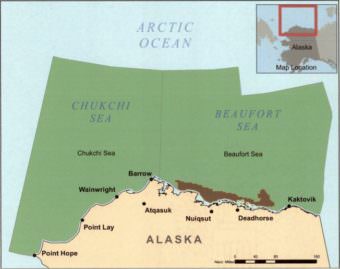
Map of Obama Arctic withdrawal area. (Map by Bureau of Ocean Energy Management)
Interior Secretary Ryan Zinke told reporters the Trump’s order will reverse Arctic withdrawals Obama signed in the final weeks of his presidency.
“And generally I can tell ya’, all of us should get worried about last minute actions from an administration,” Zinke said.
Obama signed and order in December to withdraw much of the Arctic, and parts of the Atlantic, from leasing for “a time period without specific expiration.” Environmentalists say the section of law Obama used, known as 12-a, doesn’t allow for a reversal. They claim it amounts to permanent protection. A legal challenge is almost inevitable.
Zinke said Trump’s order will also instruct him to review the five-year offshore leasing plan.
In November, President eliminated the Arctic from that plan. Zinke said he has two years to conduct the review and the current plan will remain in effect for now.
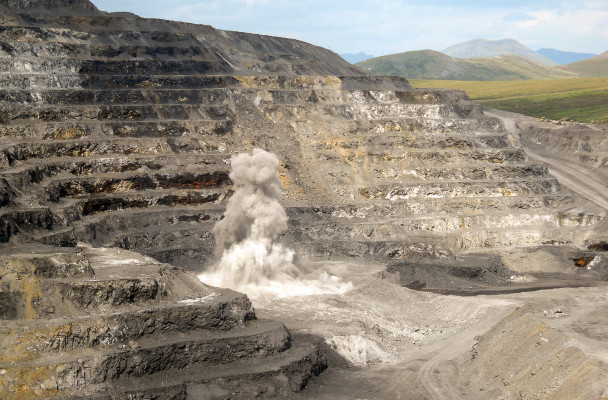
The Red Dog Mine in 2010. (Photo by Alaska Public Media)
After a borough meeting Tuesday night, a new payment in lieu of taxes, or PILT, agreement has been struck between the Northwest Arctic Borough and Teck Alaska, the operator of Red Dog Mine.
For the next 10 years, the borough will receive annual payments from Teck Alaska based on a fixed asset value of Red Dog mine, which is estimated to be between $14 million and $18 million per year.
Wayne Hall, superintendent for environment and community relations with Teck Alaska, said the annual payments to the borough have increased since the previous agreement.
“There was a previous PILT agreement that was for five years, which expired a year and a half ago, and we’ve been under a severance tax until this new agreement has come into effect with the approval of the ordinance on Tuesday.”
The borough previously received $11.6 million annually, but now, the new PILT agreement has an estimated value of $20 million-26 million per year over the course of its 10-year duration.
Hall said it’s also a retroactive agreement, dating back to Jan. 1, 2016.
In addition, Teck Alaska will create a village improvement fund to be distributed by the borough towards community services and infrastructure, with input from its 11 villages. The fund will be opened with $11 million and will receive $4 million-8 million per year based on a certain percentage of Red Dog’s gross profits.
Red Dog Mine sits on land owned by the NANA regional corporation and has been in operation since 1989. According to the corporation’s website, during the mine’s existence, NANA has received $1.3 billion in net proceeds payments from the mine and distributed $820 million of that to other shareholders and corporations.
The Northwest Arctic Borough Assembly approved the new PILT agreement on Tuesday night following a public hearing.
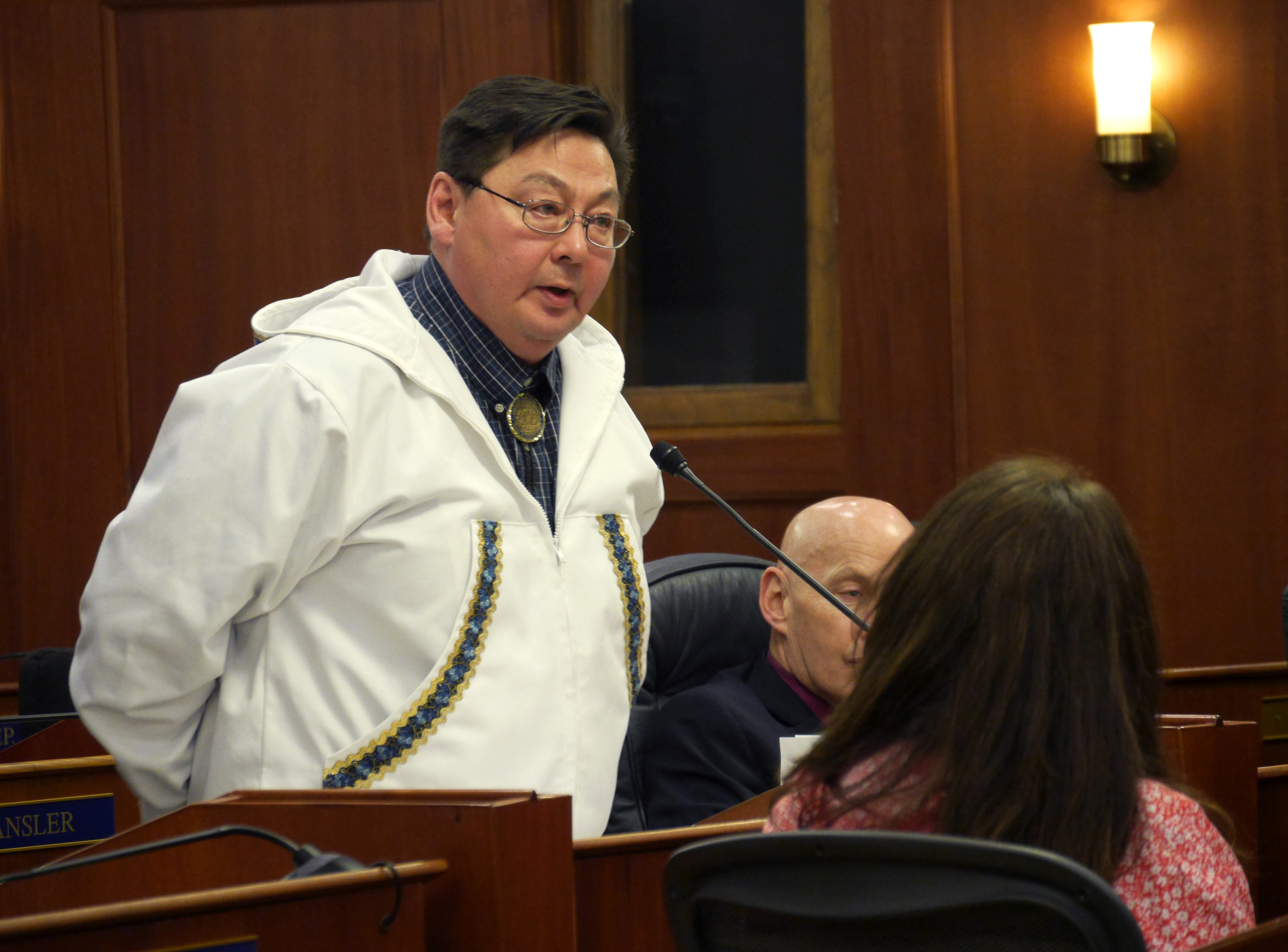
Rep. Dean Westlake, D-Kotzebue, speaks in support of House Bill 78, during a House Floor Session on Feb 3, 2017. (Photo by Skip Gray/360 North)
House Bill 211 sponsored by Kiana Democrat Dean Westlake met opposition in a House session early Monday afternoon.
The act would require, through statute, that nonresident hunters have a hunting guide present to hunt caribou from the Western Arctic, Central Arctic, Porcupine and Teshekpuk herds.
Westlake said during the House session that passing HB 211 would put Alaska on par with regulations applied to the Canadian half of the porcupine caribou herd.
Opposition for the regulation came from North Pole’s Tammie Wilson, Kenai’s Gary Knopp, Big Lake’s Mark Neuman and Healy’s Dave Talerico.
Wilson said she trusts the Board of Game and that regulation for what Westlake proposed already exists.
“I just want to make it clear the Board of Game right now has tools it can use, even in this instance,” Wilson said. “They can make a nonresident hunter apply for a drawing permit, the board of game can limit those number of permits and reduce the number of nonresidents in the field.”
Neuman added that trying to provide management of wildlife through statute is difficult because it’s not as flexible as regulation set by the Board of Game.
After the four opposing representatives presented, the session was moved to the next day’s calendar leaving the possibility for a vote Wednesday or a future date.
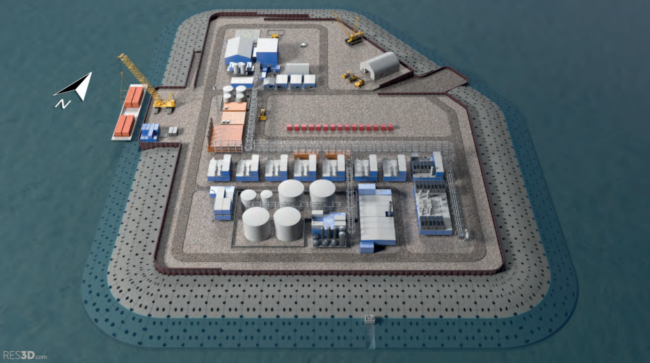
Hilcorp’s design plans for the gravel island it aims to build in federal waters in the Beaufort Sea, as submitted to federal regulators in 2015. (Image courtesy BOEM)
Last week, Hilcorp was finally able to fix a fuel line in Cook Inlet that regulators say started leaking gas in December. But the oil and gas company and its allies are still struggling to contain another issue: environmental groups, which argue that Hilcorp’s problems in Cook Inlet disqualify the company from drilling for oil in the Arctic Ocean.
Earlier this month, Lois Epstein of the Wilderness Society in Anchorage wrote an op-ed in the Alaska Dispatch News. Epstein’s headline read: “Hilcorp’s Cook Inlet leaks underscore Arctic risks.”
“I certainly have, and I know others have, enormous concerns about Hilcorp being the operator of this new operation in the Arctic,” Epstein said in an interview. “Because it’s a company that doesn’t appear to have a strong handle on its operations.”
Epstein noted that Hilcorp’s gas leak in Cook Inlet took months to fix, as dangerous ice conditions prevented divers from getting to the pipeline. The company also had to shut down two other pipelines in the Inlet this spring due to suspected leaks. Epstein said the incidents raise questions about a project the company is pursuing hundreds of miles to the north.
Hilcorp is moving ahead with the only offshore drilling project currently planned in federal Arctic waters. It’s called Liberty. Hilcorp wants to build a gravel island in shallow waters about six miles from the Beaufort Sea coast. According to plans submitted to the Bureau of Ocean Energy Management, the oil would flow to shore via a buried subsea pipeline.
Epstein said that Hilcorp’s gas leak in Cook Inlet was hard to fix — and repairing a pipe or cleaning up an oil spill in Arctic waters would be a lot harder.
“You do have lots of other challenges in the Arctic,” said Epstein. “You have storms, you have certainly cold, you have remoteness, you have the inability to respond very quickly because you don’t have the people power and the infrastructure.”
A growing number of national environmental groups agree with Epstein — including the Center for Biological Diversity and Greenpeace. They’re calling for the federal government to scrutinize Hilcorp’s safety record before approving the Liberty Project. And as President Donald Trump weighs an executive order to step back the Obama administration’s five-year moratorium on Arctic drilling, some groups argue the gas leak shows oil development in the Arctic shouldn’t happen at all.
But the pushback from the oil industry has come hard and fast.
“It’s nonsensical; it makes no sense to say, ‘because we had a leak over here means they will never be able to respond to a leak in the Arctic.’ It’s just a fabrication,” said Kara Moriarty, who leads the Alaska Oil and Gas Association.
Moriarty wrote her own op-ed in the Alaska Dispatch News. It was just one of a wave of opinion pieces condemning environmental groups’ arguments, which appeared in both local and national media.
Moriarty argued recent incidents involving Hilcorp don’t mean the company can’t operate safely in the Arctic.
“When something happens, the company responds, they change their behavior, they pay their fine, and they change their process — that’s why you have regulatory oversight,” said Moriarty. “It’s not to say, ‘oh, a company did something and we fined them, and and now they shouldn’t do anything else in Alaska again.'”
Hilcorp didn’t agree to an interview for this story, but in an emailed statement, Hilcorp’s Alaska Senior Vice President David Wilkins said the Liberty project is “vastly different” from its operations in Cook Inlet. However, Wilkins noted Liberty is similar to two other projects Hilcorp is already operating in state waters in the Arctic, called the Endicott project and the Northstar project.
“We are dedicated to safe and responsible operations with every project, every day,” Wilkins wrote in the email.
The federal Bureau of Ocean Energy Management is currently working through the environmental review process for the Liberty project. The agency expects to begin a 60-day public comment period this summer.
And despite the oil industry’s objections, environmental groups are sure to bring up the Cook Inlet gas leak when arguing Hilcorp shouldn’t be allowed to drill in the Arctic.
Open water, seen from the beach in Unalakleet in November 2015. (Photo by Zachariah Hughes/Alaska Public Media)
For decades, Alaska has struggled to get running water and sewer systems to its rural communities. An estimated 3,000 households — or about 10,000 people — still lack both. Now, that job may be getting harder, as climate change exacerbates old problems and creates new ones.
For years, the village of Unalakleet has piped in drinking water from a creek several miles away. The water main runs along the beach, buried underground.
Or, at least, it was buried. In the last several years, that beach has taken a beating. City council member Judie Kotongan remembers one storm in particular.
“The surf just was pounding — it moved Conexes,” Kotongan said, describing shipping containers sitting by the water. The storm tore away parts of the bank, exposing the water main.
Unalakleet has always had fall storms, but in recent years the village has lost its armor. Sea ice forms later, and storms have eaten away at the coast line.
Kotongan says residents worry one big storm could cut off their drinking water supply.
“It’s very urgent,” she said. “We’ve been struggling with water problems ever since that storm.”
It’s not just Unalakleet. Communities around the state are dealing with new threats to water and sewer systems from environmental changes linked to global warming.
Bill Griffith oversees the Village Safe Water program, among others, at the Alaska Department of Environmental Conservation.
“It does feel at times like you thought you had the water and sewer challenge already solved for some communities, and now you’re going back to the drawing board,” he said.
Griffith has been working on these issues in Alaska since 1993 and funds projects all over the state. He said there’s been a shift in the kinds of requests he receives.
Thawing permafrost is warping water and sewer lines. Along the coast and rivers, erosion is threatening the lakes that communities use for drinking water or the lagoons where they dump sewage. Streams and reservoirs that used to be reliable sources of water are now less reliable.
“It’s one of those things that you might have been looking at for a while but you just weren’t connecting the dots,” Griffith said.
But sometime over the last five or ten years, he realized that more of the issues coming across his desk were linked to warming temperatures. There’s no real way to quantify it: the state doesn’t track which maintenance problems are caused by environmental change (though Griffith hopes to start).
But Griffith said, from where he’s sitting, it’s pretty clear.
Perhaps the most dire example is the village of Newtok, in Western Alaska, which has been trying to relocate for more than a decade.
The village is losing about 70 feet of land each year to the Ninglick River. Erosion has wiped out the sewage lagoon, and residents are now forced to empty their honey buckets into the rivers.
Laura Eichelberger is a researcher and assistant professor at the University of Texas at San Antonio. She visited Newtok last summer to study the impacts of the community’s limited access to clean water.
Eichelberger described raw human waste and toilet paper floating in the same water where people keep their boats.
“I’m almost at a loss for words on how to describe that,” she said. “Because it shows you how few options people have when both of the rivers that they rely on for subsistence are also their sewage lagoon.”
Newtok’s drinking water source is also at risk. It sits about 60 feet from the river, and the village expects to lose it sometime this year.
Eichelberger said residents are doing a remarkable job managing under intolerable circumstances. But ultimately, something’s got to give.
“The environment is now changing faster than we can respond,” she said. “It’s not that we weren’t contending with melting permafrost, or problems with turbidity, or poor water quality, or damage to infrastructure, or flooding or erosion before. But the pace of that in particular areas is problematic.”
That rapid change is also hitting the North Slope Borough.
Last August, the village of Point Lay lost its fresh water source when its reservoir suddenly drained into the Kokolik River. Ice wedges in the permafrost separating the lake from the river had disintegrated.
“You have to say it’s climate change, global warming, whatever you want to call it,” said Kenneth Robbins, an adviser to the North Slope Borough mayor. “The permafrost is more active than it has been in the past.”
Robbins said permafrost temperatures are rising. The active layer, which thaws each year, is expanding. And sudden disasters are more likely — like Point Lay’s reservoir simply disappearing.
“Yes, it’s a natural lake. Yes, it’s near a natural river. They both change in shape, and historically did those things happen? Absolutely,” said Robbins. “But I think they’re happening more often now than they used to.”
Robbins said the borough has purchased a desalination unit in case Point Lay or another village has to rely on salt water. There’s an effort underway to drill groundwater wells. And the borough is now using different engineering techniques to install water and sewer lines into permafrost.
Whatever happens, Robbins said, he’s confident people on the North Slope will adjust.
“The culture and the people have lived here for thousands of years,” he said. “I think if they’ve proven anything, they adapt.”
Are you seeing climate change impacts on infrastructure in your community? We want to hear from you! Email akenergydesk@alaskapublic.org or connect with Alaska’s Energy Desk on Facebook.
Close
Update notification options
Subscribe to notifications
Subscribe
Get notifications about news related to the topics you care about. You can unsubscribe anytime.