Arctic

What is the Arctic Council and how does it work?

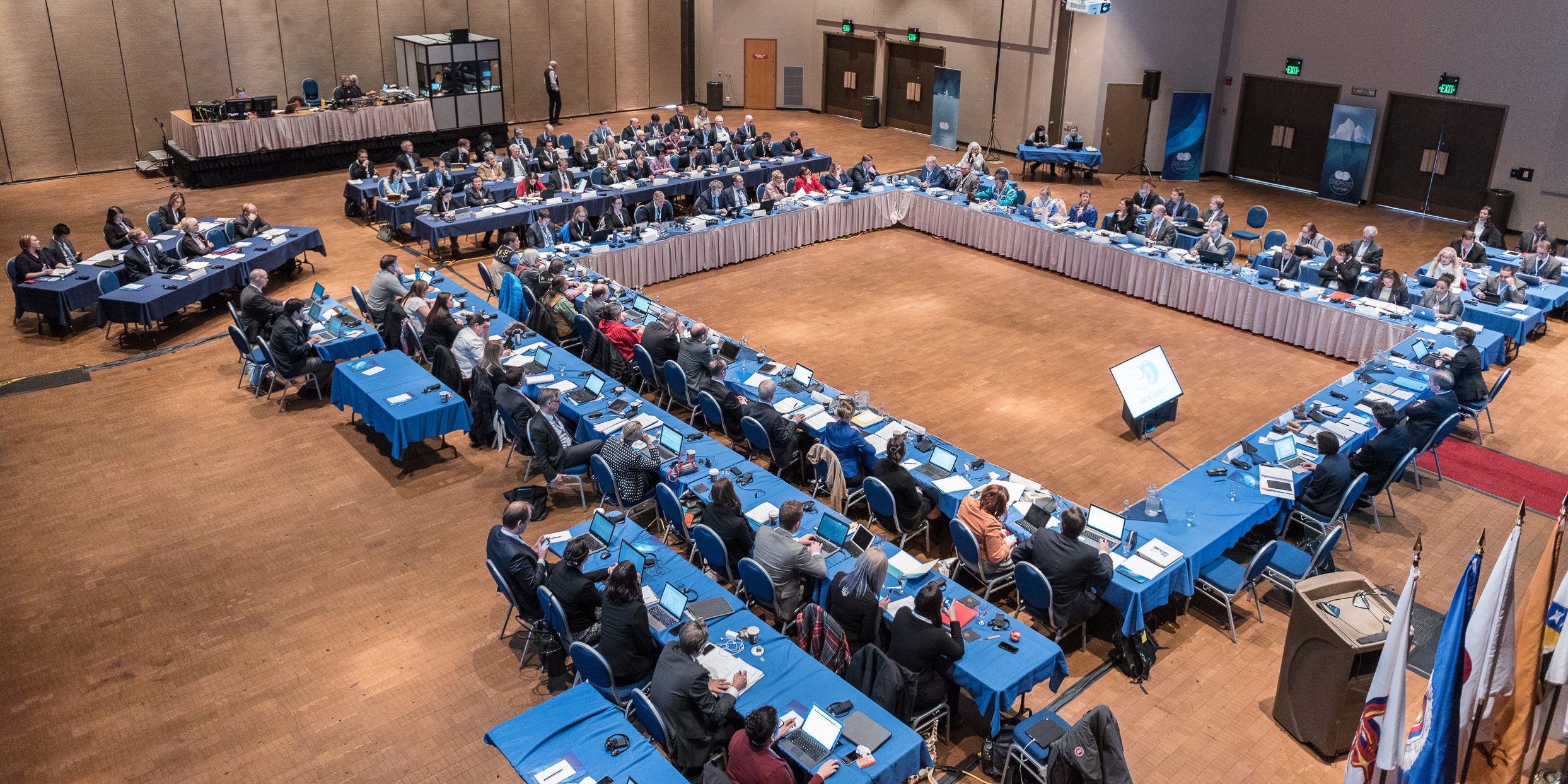
Arctic Council’s Senior Arctic Officials met in Juneau’s Centennial Hall in March 2017. (Photo courtesy of Linnea Nordström/Arctic Council Secretariat)

Members of the Arctic Council wrapped up their recent meeting in Juneau approving measures related to protecting or monitoring areas of the Arctic for the effects of climate change or potential development.

Listen to the full story about the Arctic Council meeting in Juneau:

Created just over 20 years ago, the Arctic Council is an intergovernmental forum made up of representatives from eight Arctic nations and six circumpolar indigenous groups.

Roberta Burns gets her paycheck from the U.S. State Department, but she told state lawmakers in Juneau recently that she really represents the Arctic Council.

“This is the highest-level forum in the world in which indigenous people sit at the table with states and represent themselves,” Burns said. “This is great story about voice and ownership of issues that affect indigenous persons. I think that’s a great part of the Arctic Council and is really quite unusual. And, in my view, very exciting.”

Burns calls it a concept, not a thing, and not an official international organization with any real authority. It can only help shape policy.
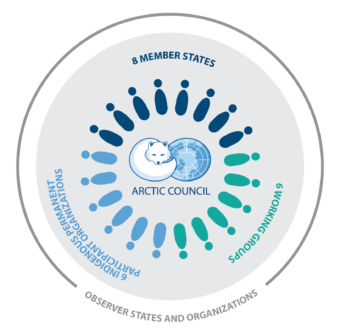
Arctic Council illustration
Burns chairs a working group focusing on community issues like renewable energy, water and sanitation, and mental health and suicide prevention. The working groups and task forces at the lower level of the Arctic Council do much of the nuts-and-bolts work. They have over eighty projects in progress.

Amy Merten said part of their effort sometimes involves working out nuances or subtleties between different languages. Merten chairs a working group focusing on projects related to Arctic search and rescue, and spill prevention and response.

“The interactions with all of the different countries that all have different experiences and perceptions, I think, actually helps the U.S. develop its response program,” Merten said. “I also think that the uniqueness of the Arctic Council having Permanent Participants as equal voices is so powerful.”

Permanent Participants are representatives of the six Arctic indigenous groups.

One of the Permanent Participants, James Gamble of the Aleut International Association, said they don’t get to vote when the eight countries reach consensus, but their voices are never ignored.

“I think they really recognize that we bring a lot to the table in terms of the Arctic Council work, because we bring community perspectives, for one thing, indigenous and cultural perspectives,” Gamble said. “And, we also bring traditional knowledge to the Arctic Council which would be difficult for the Arctic Council to really consider in any other way.”

In addition, there are over thirty Observers to the Arctic Council from non-Arctic nations and organizations. Not only does Alexander Shestakov of the Ottawa-based World Wildlife Fund observe, he’s also expected to participate at the working group level. Shestakov wants to see the Council evolve from just scientific research to recommending policy and shaping decision-making.

“In the many areas of our life in the Arctic, we are at a certain threshold. When we pass this tipping point, the Arctic will be something new, a totally new Arctic,” Shestakov said. “I’m not saying it will be much worse Arctic or better Arctic. It will be a different Arctic. We need to be absolutely clear that that’s what’s ahead.”

Representatives from each of the eight countries, called Senior Arctic Officials, form the mid-level tier of the Arctic Council. U.S. Ambassador David Balton is chairman of that group.
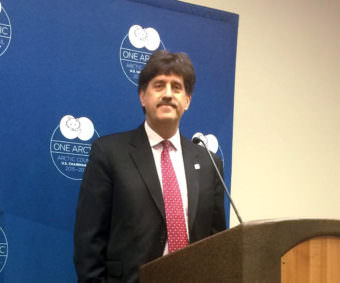
U.S. Ambassador David Balton, chair of the Arctic Council's Senior Arctic Officials, speaks to reporters during a March 2017 meeting in Juneau.
U.S. Ambassador David Balton, chair of the Arctic Council’s Senior Arctic Officials, speaks to reporters during a March 2017 meeting in Juneau. (Photo by Matt Miller/KTOO)

“The real interests of the United States and the Arctic have really to do with the state of Alaska and its needs and its interests,” Balton said. “Keeping the Arctic a peaceful and stable place is certainly a non-partisan issue in the United States.”

Senior Arctic Officials reached consensus in Juneau on topics ranging from an inventory of marine and terrestrial protected areas to a proposed ship waste management plan and a project to reduce carbon emissions from diesel generation at a Russian reindeer farm.

Foreign ministers will give their final blessing to those proposals this May in Fairbanks.

An Arctic indigenous food guide will also be unveiled and a collective target on reduction of black carbon emissions may be announced.

Also in May, Finland will assume chairmanship of the Arctic Council from the United States. Aside from focusing on implementing the Paris climate agreement, Balton said he expects more continuity than change from the Finns over the next two years.

The Trump Administration earlier vowed to withdraw from the Paris agreement, but Balton said he has yet to see anything definitive regarding possible changes.

“There has been no particular focus on the Arctic yet that this Administration has announced, any new direction,” Balton said. “There have been signals about climate change policy, but even those are not – at least not to me – clear yet.”

Balton said they’re recommending U.S. Secretary of State Rex Tillerson, now the chairman of the Arctic Council and backer of the Paris agreement, attend the ministerial meeting in May in Fairbanks.

Ask a Climatologist: Arctic sea ice drives climate around the globe

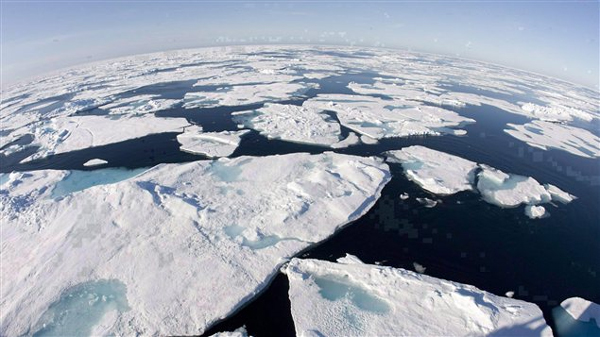
Ice floes float in Baffin Bay between Canada and Greenland above the Arctic circle on July 10, 2008. (Photo by Jonathan Hayward, Canadian Press.)

Arctic sea ice extent hit a new record low in March for the third year in a row. That sea ice, or lack of it, drives climate patterns around the globe.

But how?

We put that question to Brian Brettschneider for the segment, Ask a Climatologist.

He says it’s all about energy. Sea ice reflects most of the sun’s energy back into space. Less sea ice means the entire Arctic basin is absorbing a lot more energy. “So its like having a 60 watt light bulb, taking it out and replacing it with a 70 watt light bulb. Over time, that adds up,” Brettschneider says.

Across the globe, the entire atmospheric circulation pattern is driven by temperature differences between the tropical latitudes and the Arctic. Brettschneider says that’s because the tropics have more warmth than they can handle and the Arctic is in a heat deficit. The winds in the atmosphere are constantly trying to equal that out.

“It’s like pouring hot water into a cold bathtub,” he says. “The temperature tries to even itself out, but if you change the temperature of the water, the way that evens out is going to be different.”

Brettschneider says more warmth in the Arctic ocean affects the jet stream, the polar vortex and where big high and low pressure systems set up around the globe.

Arctic winter sees record low sea-ice cover

Ice floes float in Baffin Bay between Canada and Greenland above the Arctic circle on July 10, 2008. The seven lowest levels of sea ice cover have all been recorded in the last seven years. (Photo by Jonathan Hayward, Canadian Press.)

It’s been a chilly winter here in the Interior and elsewhere around the state. But for the Arctic Ocean, it’s been one long warm spell. That’s led to another record-low year for formation of Arctic winter sea-ice cover.

Experts with the National Snow and Ice Data Center say formation of sea ice around the Arctic Ocean probably petered out about two weeks ago. On Wednesday, they finally declared that the extent of sea-ice cover on the Arctic Ocean has grown as much as it’s going to this year.

Mark Serreze is a senior research scientist with the Snow and Ice Data Center.

“What we have now is what we call the lowest maximum on record,” Serreze said.

Serreze said well-above-average warmth over the Arctic Ocean since fall has led to well-below-average sea-ice formation. So much so that the center declared this year’s Arctic sea-ice maximum extent was the lowest in 38 years, since satellite monitoring began.

“Part of what’s going on is it was so darn warm this winter over the Arctic Ocean, especially out on the Atlantic side,” Serreze said.

Center officials say the sea ice probably reached its maximum extent on March 7th, when it covered about 5-and-a-half-million square miles of the Arctic Ocean, including portions of the Bering Sea that lie south of the Arctic Circle. That’s about 470,000 square miles less than the 38-year average. And it’s about 37,000 square miles less than the 2015 maximum extent, the previous record-setting low. 2016 set the third-lowest maximum extent on record.

“This is the third year we’ve seen these extreme low values of sea ice,” Serreze said.

The center said it’s been a warm fall and winter for the Arctic Ocean, with temperatures averaging 4-and-a-half-degrees Fahrenheit above the norm. The air over the Chukchi Sea northwest of Alaska and the Barents Sea north of Scandinavia was even warmer, averaging around 9 degrees above the norm.

“And so that prevented sea ice from growing, in part,” Serreze said. “And it’s looks like we’ve probably got a lot of very thin ice about there.”

Serreze said Arctic sea ice is already beginning to melt and recede, setting the stage for a very low sea-ice minimum extent that the center will declare in September.

“So we’re starting the melt season in a deep hole right now,” Serreze said. “And we’ll see how things work out this spring and summer, but I’m expecting we’re going to have a very, very low September extent.”

Serreze said seasonal weather conditions around the Arctic will determine whether the minimum sea-ice extent will set another record. He said the minimum is the more important and telling metric.

“That’s the one that really matters in the end,” Serreze said. “And what we’re seeing is that September extent is going down quite quickly right now.”

Serreze said the polar ice cap won’t last long if the region continues to warm at this rate.

“We are on course sometime in the next few decades, maybe even earlier, to have summers in the Arctic where, you go up there at the end of August, say, and there’s no ice at all,” Serreze said.

Serreze said that means, aside from some scattered icebergs and clusters of pack ice, the view from space in the fall of around 2040, will be of a blue Arctic Ocean.

New book features Arctic indigenous culinary traditions, preparation methods

A reindeer ranch in Nome is encouraging a whole new generation of herders. (Photo by Mitch Borden/KNOM)

A unique guide that combines the traditional knowledge of reindeer and caribou food preparation, as well as other Arctic recipes and culinary traditions, is set to be released in a few months. The cookbook may provide Alaskans with new ideas for economic opportunities in a changing Arctic.

Listen to the story about reindeer food guide:


“This is the plate with a lot of reindeer food. And this is very traditional” said ViviAnn Labba Klemensson in her video blog on luckyreindeer.com. “I’m going to tell you what each piece is. This is the tongue from the reindeer. It’s boiled and we eat it like it is. It’s really a delicacy.”

“This is intestines filled with reindeer blood,” said Klemensson, a reindeer herder of the Swedish Sami people, as she described some of her favorite dishes.

Klemensson’s video blog covers topics ranging from reindeer biology and herding techniques to commenting on development that threatens her herd’s grazing grounds and persevering in a male-dominated profession.

“We’re actually doing something really essential,” said Klemensson inside a lavvu or a cone-shaped tent. “We’re smoking the reindeer meat. And this is yum! It’s really a delicious, delicious food when it’s ready.”

For the indigenous people of the circumpolar north, nothing is wasted when harvesting domesticated reindeer or the larger, migratory subspecies known as caribou. Everything from the animal is used.

Sinew is used for sewing. Hide, antlers and bones, of course, are used for clothing and tools.

“The Sami people and the reindeer herding people, they used to use a lot of reindeer skin and hide to make handicraft,” said Klemensson in another segment of her video blog.

Now, possibly for the first time ever, thousands of years’ worth of traditional knowledge is being compiled into a new book about Arctic culinary traditions and indigenous food culture. But it’s not just an ordinary cookbook.

“We call it, rather, a cookbook about people, ” said Anders Oskal, director of the International Centre for Reindeer Husbandry in Norway.

Oskal actually prefers to call it a food book.

“Traditional food, traditional ways of preparing food, traditional dishes, and also modern dishes, newer dishes,” Oskal said. “But we had a steady focus on what we might term the food systems of the Arctic indigenous peoples and the culinary traditions that go with it.”

The project was commissioned by the Arctic Council with youth from the Arctic’s various indigenous groups compiling the traditional knowledge.

“We need to have to some long-term responses to this, which is one reason why it’s very sensible for us to work with youth,” Oskal said. “We have to work on these issues today. If we start working on this in 20 years, 30 years, we’re going to lose out. We’ll be running next to the bicycle, to put it that way.”

Oskal said they want to use traditional knowledge to build local economies from within.

“That’s a pathway by which we can have a development based on own knowledge, our own premises and our own people,” he said. “And trying to make the opportunities of a changing Arctic, opportunities for all.”

James Gamble of the Aleut International Association is one of the indigenous representatives to the Arctic Council called Permanent Participants.

“It’s not just about reindeer,” Gamble said. “In the Aleutians, it’s about pickled seal fin, and it’s about other recipes from other Permanent Participants.”

Gamble sees the food book as key in taking advantage of the latest opportunities in education and entrepreneurship that are opening up with potentially troubling changes in a warming Arctic.

“But can we take advantage of them? ” Gamble asks. “There’s going to be more shipping through the North Sea route. Does that mean that there’s more opportunity, for instance, for bringing food products to different places and having an avenue to transport and sell things?”

Oskal said the food book is now being edited and will be unveiled at the Arctic Council’s ministerial meeting in Fairbanks in May.

House Majority Leader Chris Tuck pushes reforms to improve voter turnout

Sally Williams uses a sticker that says cucuklillruunga, or "I voted" in Yup'ik to teach the phrase at the Togiak voting site on Aug. 16, 2016. (Photo by Molly Dischner/KDLG)
Sally Williams uses a sticker that says cucuklillruunga, or “I voted” in Yup’ik to teach the phrase at the Togiak voting site on Aug. 16, 2016. (Photo by Molly Dischner/KDLG)

In the last Legislature, a Democrat-sponsored bill aimed at increasing voter turnout in Alaska, especially in the Bush. It didn’t get a single hearing in the Republican-led House of Representatives.

Now, Rep. Chris Tuck, an Anchorage Democrat, is in a powerful position leading the new House majority, and has reintroduced the legislation and the bill is making some progress.

Cindy Allred works for Get Out the Native Vote, an organization that has been active registering and encouraging voting among Alaska Natives, many of whom live in rural areas.

“We do have a big concern that there are more challenges to registering to vote in rural Alaska, to voting in rural Alaska as well,” she commented. “There are communities in Alaska that don’t even have a polling station.”

Get Out the Native Vote put their weight behind passing PFD voter registration and has been working with Tuck on House Bill 1.

“There’s a couple of us who just got together and said “How can we help modernize Alaska’s system? How can we try to make it more equitable?” said Allred.

Tuck’s bill is comprehensive. It would give people the option to permanently vote by mail and allow for same day registration, among other things.

Grace Mulipola worked on Get Out the Native Vote in Bristol Bay.

“Some of the people are not there on election day, either because they have doctors appointments or they’re out doing their subsistence. So, I think that’s one of the biggest barriers in the rural areas,” she said.

In addition to getting people registered to vote, Mulipola helped set up early voting stations in Bristol Bay, part of District 37, for the 2014 general election. According to Division of Elections data, general election turnout there has fluctuated. Increases in early voting sites and registration haven’t always coincided with higher voter turnout.

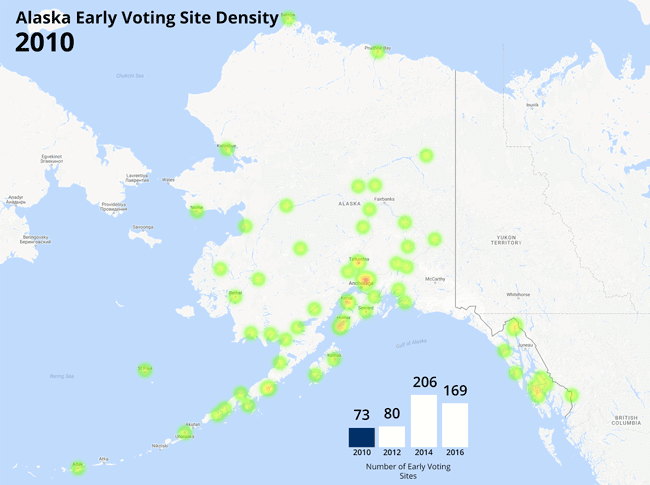
Tuck’s bill ensures that early voting stations stay the same year after year, but it doesn’t directly address the number or placement of such voting sites. According to Division of Elections, since 2010 the number of early voting sites in Alaska has increased from 73 to 169.

This animated heat map shows sites where voters could vote early in recent general elections. It's based on data from the Alaska Division of Elections. (By Ashwin Kiran)
This animated heat map shows sites where voters could vote early in recent general elections. It’s based on data from the Alaska Division of Elections. (By Ashwin Kiran)

So why didn’t this bill go anywhere last session? Tuck chalked it up to partisan politics.

“Well, we had a different makeup of the Legislature. We had a different majority, minority situation,” he said. “This year, I went from being minority leader to majority leader. And uh… we’re not going to be treating people the way we were treated because we weren’t allowed to have our bills heard, even though some of them were good ideas.”

Rural Alaska tends to vote blue, which means higher turnout in the Bush may help Democrats in statewide races.

Former Democratic U.S. Sen. Mark Begich invested heavily in rural Alaska in his 2014 campaign against Republican Dan Sullivan. His brother, Tom Begich worked on the campaign before being elected last year to represent District J in the Alaska Senate.

“In my brother’s U.S. Senate race, early voting was a critical issue for us,” said Tom Begich said.

The campaign hired organizers in 40 villages and set up 16 offices from Barrow to Bethel and put a big emphasis on early voting in hopes of increasing rural turnout.

“When we analyzed where there was early voting and where there wasn’t at the time, we noted that where there wasn’t early voting, turnouts tended to be a little bit lower,” he noted.

The rural vote was instrumental in Begich’s 2008 win against longtime Republican incumbent Ted Stevens, but Begich lost to Sullivan in in 2014, despite investing heavily in rural Alaska.

Early voting is only one part of Tuck’s bill, but it has the potential to make voting more accessible for rural communities. For now, House Bill 1 is being workshopped in the House State Affairs Committee.

Italian company submits plan to drill for oil in the Arctic

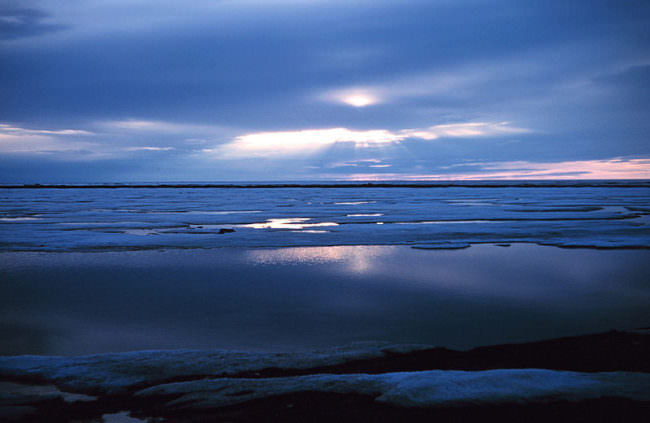
Melting ice of the Beaufort Sea near where Eni hopes to drill for oil. (Photo courtesy NOAA)

Italian energy company Eni this month submitted an exploration plan to drill for oil in federal waters in the Beaufort Sea.

Last November, the Obama administration removed the Arctic Ocean from new oil and gas leasing for five years, but Eni secured its leases before that decision was made.

The company currently holds 75 leases in federal waters in Beaufort and Chukchi Seas, according to its website.

Eni has already built a man-made gravel island four miles offshore in state waters. Drilling would extend from the island into federal waters.

The Bureau of Ocean Energy Management is reviewing the exploration plan. If the federal agency deems the plan complete, it will begin a 30-day comment period before approving it.

Texas company Hilcorp is also moving through the regulatory process to drill for oil in federal Arctic waters from a gravel island it aims to build six miles offshore in the Beaufort Sea. The company says it could ultimately produce about 60,000 barrels of oil per day.

Site notifications
Update notification options
Subscribe to notifications