North Slope

Attack in Saudi Arabia highlights Alaska’s diminishing role on the global oil stage 

https://www.flickr.com/photos/specialk80731/8229830783/in/pool-northslope
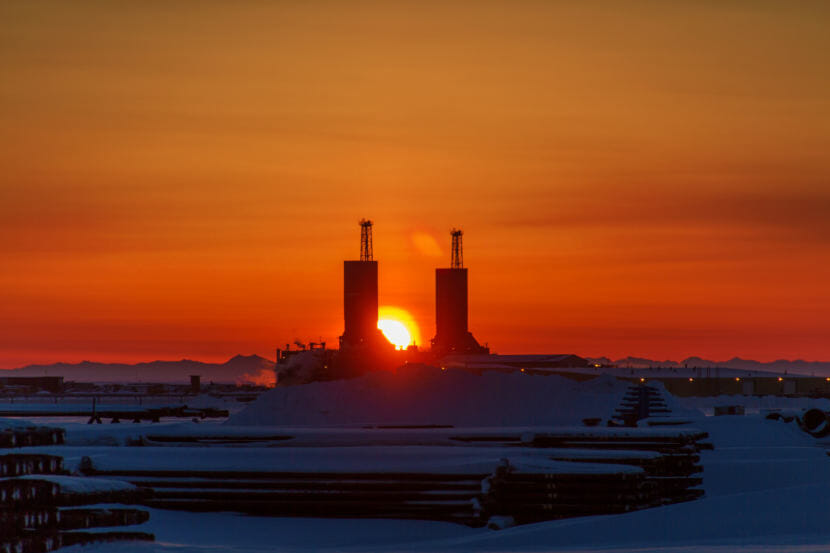
Sunrise on the North Slope behind the two new Parker drilling rigs. (Photo courtesy Kevan Dee)

Over the weekend, attacks on an oil field and processing facility in Saudi Arabia knocked out more than 5% of the world’s daily oil production.

It was the biggest disruption of global oil supply in decades.

Politically, the attacks have generated a lot of momentum. And, briefly, oil prices spiked.

In Alaska, that meant that on Monday, Sept. 16, North Slope crude prices jumped to their highest level in more than two months.

But that jump was short-lived, and the incident hasn’t had a lasting impact on oil prices — or what those prices are predicted to be in the future.
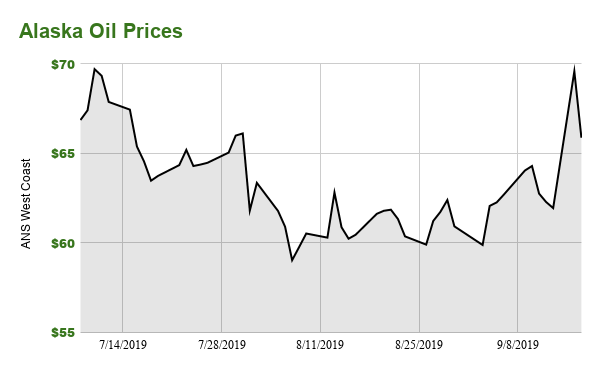
(Graphic by Rashah McChesney/Alaska’s Energy Desk, using data from the Alaska Department of Revenue)

There are a few reasons for that. One is that Saudi Arabia’s energy minister announced on Monday that it is already supplying oil to customers at pre-attack levels. Prince Abdulaziz bin Salman pledged that that country would be back at normal production by the end of the month.

“It was surprising news, and the market reacted thinking there was going to be a lot of supply taken off the market, and it turns out the news wasn’t as bad as feared,” said Alaska Department of Revenue Chief Economist Dan Stickel.

Typically, when oil prices inch up, that’s good for Alaska’s budget. But, a one-day bump in prices isn’t going to do much for Alaska’s bottom line.

“Any short-term volatility isn’t going to have much impact on the budget,” Stickel said. “Right now, prices are below what we had in the latest revenue forecast.”

That revenue forecast is the state’s semi-annual prediction of how much money will be coming in and where it comes from. It’s a big part of how the state develops its fiscal plan. And the price of oil is central to that forecast.

Right now, the Department of Revenue is getting ready to put out its semi-annual forecast. It usually comes out in December.

But some things are going to be different this year.

In the past, the state would bring in oil experts from other parts of the country and the rest of the world. In a closed-door meeting, the outside experts and state economists would come up with an oil price prediction that would drive state spending for the next year.

Stickel said they’re not doing it that way this year: “We are going to look at the futures market as the basis for our price forecast.”

That’s it. No price-forecasting session. No out-of-state experts. Just state employees checking futures and using global oil prices as an indicator of what’s in store for the state.

Stickel said there are a few reasons for the change. A big one is money.
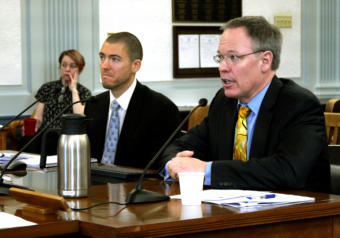
Department of Revenue Commissioner-designee Bruce Tangeman, right, presents the spring revenue forecast to the Senate Finance Committee in Juneau on March 18, 2019. He was accompanied by the department economist Dan Stickel.
Alaska Department of Revenue Chief Economist Dan Stickel, left, with Revenue Commissioner Bruce Tangeman at a Senate Finance Committee meeting in Juneau on March 18, 2019. (Photo by Skip Gray/360 North)

“We’re going to save a lot of time and expense by just using the public forecast source,” Stickel said. Paying the dozens of state employees and outside experts to gather in one place was expensive.

Also, there’s a lot of widely-available information now about global oil markets — and the things that drive prices — that wasn’t available when the state started predicting oil prices.

Stickel said the shift will also help people understand how Alaska is getting its oil price predictions.

“The idea is that it won’t be a group of us just sitting down and deciding on the price forecast. It will have a rather transparent protocol,” he said. “Anyone can say, ‘OK, this is how they grabbed the futures market price.’”

Another factor is that Alaska’s production has declined. The state is putting less oil into the market than it used to.

Stickel said Alaska’s production represents about 0.5% of daily global demand.

It isn’t clear if the change in the way the state forecasts the price of its oil will have a measurable effect on the way the state does business.

Rather, it’s a reflection of Alaska’s diminishing role in the oil markets that it sells into.

“Alaska is now a price taker,” Stickel said.

As opposed to being a price maker. Being a price taker basically means that the state doesn’t produce enough oil to impact prices in the markets that it sells into.

“We used to be a more significant supplier to a smaller market. Now we’re a smaller supplier in a more global market,” he said.

Seattle City Council votes to withhold business from Arctic Refuge oil companies

Seattle skyline. (Creative Commons photo by Bryce Edwards)

The Seattle City Council voted Monday to avoid doing business with any company that leases land in the Arctic National Wildlife Refuge to explore for oil.

Council member Mike O’Brien sponsored the resolution.

“The attempt here to make it clear to anyone attempting to do business up there,” said O’Brien. “We will be certainly trying to figure out how to prevent those leases from going forward, but we want to make sure that nobody shows up to buy the land, because it is understood that the social license to drill in the Arctic has now been removed by the American people.”

The U.S. House of Representatives and the U.S. Senate voted to allow oil exploration and lease sales in the refuge in the 2017 tax bill. That’s been a goal of Alaska’s congressional delegation for decades. It’s also a priority of President Donald Trump’s Interior secretary: The Interior Department is working to hold the first ANWR lease sale before the end of the year.

The Seattle City Council took a voice vote on the proposed ANWR boycott, with no audible opposition.

O’Brien is on the board of the Sierra Club. Several environmental groups have been campaigning to pressure corporations to steer clear of the Arctic Refuge.


Rural Alaska clinics depend on broadband internet. What happens when it goes out?

Gail Alstrom is operations manager of the St. Mary’s Sub-Regional Clinic. The clinic has about 30 employees, including lab and X-ray technicians, health aides and higher-level health care providers. (Photo by Liz Ruskin/Alaska Public Media)

Think of the tools a doctor needs to assess your health or treat you for disease or injury. Broadband may not have been at the top of the list.

But for rural Alaska, broadband internet service is vital for health care delivery, despite sometimes-tenuous links in the chain that allows health care to function far from the road system.

Take St. Mary’s in the Yukon Delta.

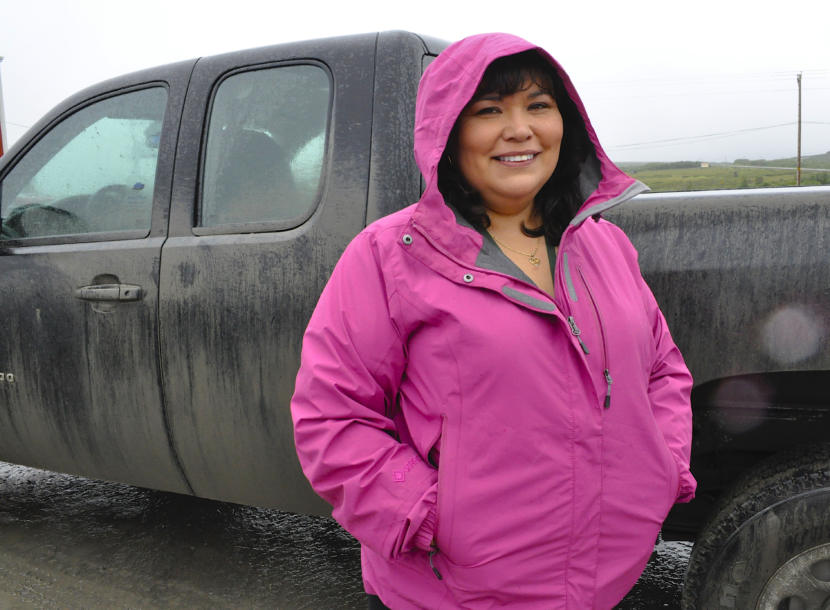
Gail Alstrom points out the sights while bumping along a gravel road in an extended-cab pickup.

“So this is St. Mary’s, and we have about 550 people here,” she told a group of visitors. “The clinic is there on the hill.”

Alstrom is the operations manager at the St. Mary’s Sub-Regional Clinic, part of the Yukon Kuskokwim Health Corp. The clinic has 30 employees and serves a population of 3,000 including surrounding villages, each of which has its own, much smaller clinic.

All of them need a reliable broadband connection.

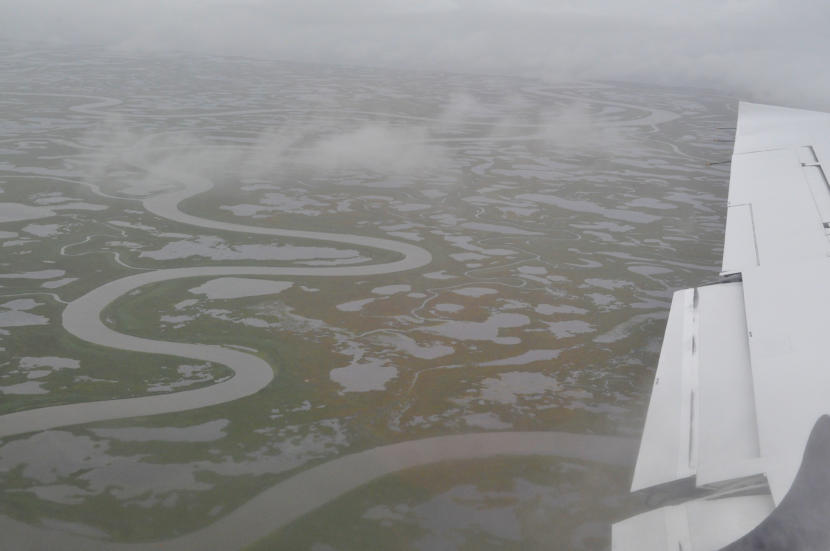
St. Mary’s is on the meandering Andreafsky River, near its union with the Yukon River. (Photo by Liz Ruskin/Alaska Public Media)

“When things go down, which seems to be a lot, we have to revert back to what we call downtime procedures,” Alstrom said.

It used to be that downtime mostly disrupted telemedicine, like video appointments and remote consultations. But now, even routine visits at rural clinics require broadband service to access the patients’ electronic health records. Alstrom is reminded of it every time an internet outage throws them back in time to the 20th century.

“When our subregional clinic opened, everything was paper. You documented your (patient’s visit) on paper. And then you faxed it. And then you waited. And then you called to make sure it was there, ” she said. “And then you re-faxed it because it probably didn’t make it.”

Alstrom said internet service in St. Mary’s is getting better.

“I think the last real outage spanned about three or four days,” she said. “No internet, no cell phones.”

For a town that’s not on a fiber-optic line, St. Mary’s is relatively fortunate. It’s one of 84 communities on GCI’s TERRA network, a system that draws from fiber-optic and, through a network of towers and mountaintop repeaters, beams broadband into villages on microwaves.

Stewart Ferguson is the chief technology officer at Alaska Native Tribal Health Consortium in Anchorage. (Photo by Liz Ruskin/Alaska Public Media)

Stewart Ferguson, chief technology officer for the Alaska Native Tribal Health Consortium, said GCI’s system is a big advancement for clinics, particularly in Western Alaska where it’s most prevalent.

“Because of that, that lets us come into villages and do more video, do more telehealth and actually put in electronic health records,” he said, adding that electronic records are becoming essential for patient care.

“It’s where we can look at their history, their allergies, their meds. It’s where we prescribe for them. It’s how we do medical orders. It’s how we can make referrals to the next level care. It’s how we do consultations,” he said. “We can’t almost imagine doing health care without having these modern tools.”

Yet a handful of clinics in Alaska’s tribal health system still get their internet via old-fashioned satellite, and they aren’t able to make the switch to electronic health records — satellite internet is just too slow.

But Ferguson believes the next big thing in Alaska broadband will be … satellites. Specifically, low Earth orbit satellites that will be smaller than the traditional kind and thousands of miles closer.

“The promise is that these will start to appear over Alaska in the next one to two years,” Ferguson said. “And that’s a game changer. Because then you can have high-speed, hopefully low-cost bandwidths, without this latency.”

It could provide the link that finally brings the smallest and most remote Alaska clinics up to speed.

US House votes to block drilling in Arctic Refuge; bill unlikely to become law

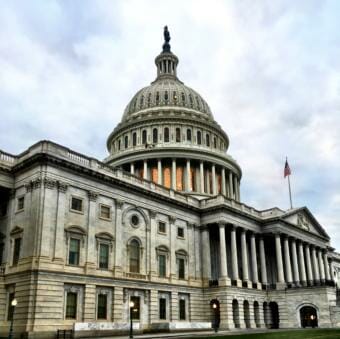
The U.S. Capitol building in Washington, D.C.
The U.S. Capitol building in Washington, D.C. (Photo by Liz Ruskin/Alaska Public Media)

The U.S. House of Representatives voted Thursday to close the Arctic National Wildlife Refuge to oil development.

But, as Alaska Congressman Don Young pointed out, there’s almost no chance the Senate will pass it.

“You’re wasting our time,” the Republican representative told drilling opponents during the floor debate. “It will not go anywhere. That’s why I’m not going to get really excited and go over there and — never mind.”

The vote, though, shows House Democrats are still trying to slow the Trump administration’s momentum on bringing industrial development to the refuge in northeastern Alaska.

There were 225 members who voted to block oil development in the refuge, while 193 voted against the bill. Four Republicans crossed the aisle to vote “yes.” Five Democrats were among the “no” votes.

So far, it’s produced no sign of a pause from the Trump administration. A few hours after the House vote, the Bureau of Land Management released its final environmental report on oil leasing in the refuge. Officials said they plan to hold the first ANWR lease sale by the end of the year.

Trump administration rolls out final environmental review for Arctic Refuge oil leasing

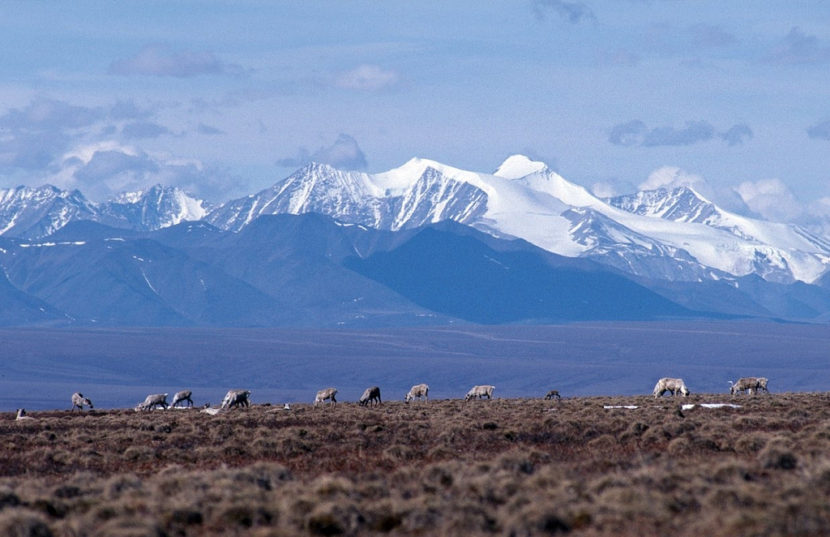
Caribou graze on the coastal plain of the Arctic National Wildlife Refuge, with the Brooks Range as a backdrop in October 2010.
Caribou graze on the coastal plain of the Arctic National Wildlife Refuge, with the Brooks Range as a backdrop. (Creative Commons photo by U.S. Fish and Wildlife Service)

On Thursday, President Donald Trump’s administration took one of the last steps to allow oil drilling in the Arctic National Wildlife Refuge.

The U.S. Interior Department has released its final environmental analysis for oil lease sales in the northernmost 1.6 million acres of the refuge, known as the coastal plain. The agency is expected to sign a final decision on oil leasing in the refuge in roughly 30 days.

In its final environmental impact statement, the agency selected a preferred option that would give oil companies the chance to express interest in close to the entirety of the refuge’s coastal plain.

Interior had proposed alternatives with tighter restrictions, including one that would put hundreds of thousands of acres off limits to help protect caribou habitat.

Still, during a call with reporters, Bureau of Land Management Alaska State Director Chad Padgett said he believes the agency’s preferred choice would strike the right balance between economic development and protecting the environment.

“I’m confident that we are on track to do what Congress has asked us to do in a safe and balanced way, that advances the president’s goals of job creation and energy independence with the minimal impact to the area,” Padgett said.

There are restrictions to how oil companies can develop in the area under the preferred alternative, including limitations on how much surface area can be covered by infrastructure.

But environmental groups immediately condemned Interior’s analysis, calling it a “sham.”

In an interview, Susan Culliney with Audubon Alaska said she isn’t surprised the Trump administration’s preference is to try to maximize the amount of land available for oil leasing.

“No matter how you cut it, we don’t think oil drilling belongs in the Arctic Refuge, but this is a particularly bad way to do it,” Culliney said.

The issue has long been hugely controversial, and following Congress’ vote to allow drilling in the refuge in 2017, Interior’s push to make it happen has been tumultuous.

An effort to allow early-stage oil exploration in the refuge last winter stalled. Joe Balash, the Interior official spearheading the effort to hold a lease sale, recently left the Trump administration to take a job at an oil company.

And Thursday, the U.S. House of Representatives passed a bill that would once again block oil development in ANWR. That legislation is largely symbolic, as it has little chance of passing the Republican-led Senate. Still, it sends a strong signal regarding Democrats’ position on drilling in the refuge ahead of next year’s presidential election.

Alaska’s political leaders condemned the House bill and praised the release of the environmental review.

“I’m hopeful we can now move to a lease sale in the very near future, just as Congress intended, so that we can continue to strengthen our economy, our energy security, and our long-term prosperity,” said Sen. Lisa Murkowski, R-Alaska, who played a pivotal role in passing the legislation that allowed for oil development in ANWR.

Arctic Slope Regional Corp., an Alaska Native corporation with a significant stake in potential oil development on the coastal plain, also welcomed the release.

“We are encouraged the Department heard our voices and incorporated our concerns into the final EIS. We look forward to a successful lease sale and strongly believe exploration and production can incorporate cultural and environmental protections while providing for the nation’s energy security,” ASRC said in a statement.

Neets’aii Gwich’in leaders from Alaska Native communities south of the refuge, who have long opposed drilling there, accused the Interior Department of downplaying potential impacts.

“Any impacts to the Porcupine Caribou Herd from changes in migration patterns, lower fertility rates, and loss of habitat will have significant adverse social, cultural, spiritual, and subsistence impacts on our people,” Native Village of Venetie First Chief Margorie Gemmill said in a statement. “This process must be stopped.”

With the release of the final environmental review, leaders at Trump’s Interior Department reiterated that they aim to let oil companies bid on land in ANWR’s coastal plain before the end of the year.

This story has been updated.

After leaving Trump administration, Balash will work for oil company that’s developing an Alaska project

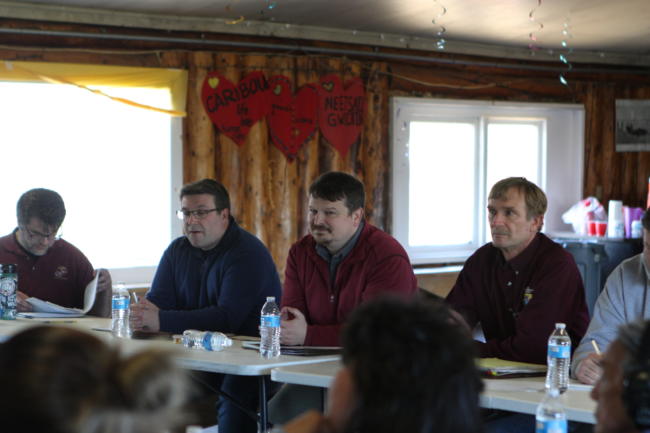
Joe Balash, who served as assistant secretary for land and minerals management at the U.S. Interior Department in the Trump administration, sits at a meeting on oil leasing in the Arctic National Wildlife Refuge earlier this summer in Arctic Village, whose indigenous Gwich’in residents are fighting the development. (Photo by Nat Herz/Alaska’s Energy Desk)

Joe Balash, the high-level Alaskan appointee at the U.S. Department of the Interior who pushed to open the Arctic National Wildlife Refuge to oil leasing, is taking a job with an oil company seeking to develop a major project in Alaska.

Balash, an assistant secretary at the department who oversaw the Bureau of Land Management, left his job last week, without saying if he’d taken a new job elsewhere. The Washington Post reported Wednesday that Balash has accepted a position with Oil Search, a Papua New Guinea-based company that first expanded into Alaska in 2017.

Before his federal job, Balash — who went to high school in North Pole and still has family in Alaska — worked as a special assistant to Sarah Palin when she was Alaska’s governor, then later served as the state’s natural resources commissioner. At the Interior Department, he’s been an advocate for the Trump administration’s strategy of “energy dominance,” pushing to open more federal lands to drilling in the Arctic Refuge and in the National Petroleum Reserve-Alaska.

Oil Search is advancing a project on the North Slope called the Pikka development, which could ultimately produce as many as 120,000 barrels of oil a day — boosting the total amount of oil extracted in the state by about one-fourth. The project is 100 miles west of the Arctic Refuge on state- and privately-owned land, not federal land, though the company had to secure a federal wetlands permit from U.S. Army Corps of Engineers.

Balash declined to comment Wednesday when contacted by Alaska’s Energy Desk, but he confirmed to the Post late Tuesday that he would begin working for Oil Search. He said he would abide by a Trump administration ethics pledge that, for five years, blocks high-level appointees from lobbying the agency where they worked — though he added that he would supervise Oil Search employees who do work with the Interior Department.

Environmental organizations quickly blasted Balash for accepting a job in the oil industry.

“Throughout his time at Interior, Joe Balash spearheaded efforts to suppress science, ignore indigenous rights and sell off the Arctic Refuge for drilling at all costs,” the Sierra Club’s Lena Moffitt said in a statement. “Now, he’s shamelessly seeking to profit from this destruction while the American people and our public lands pay the price.”

Site notifications
Update notification options
Subscribe to notifications