Northwest

Alaska lawmakers release draft harassment policy

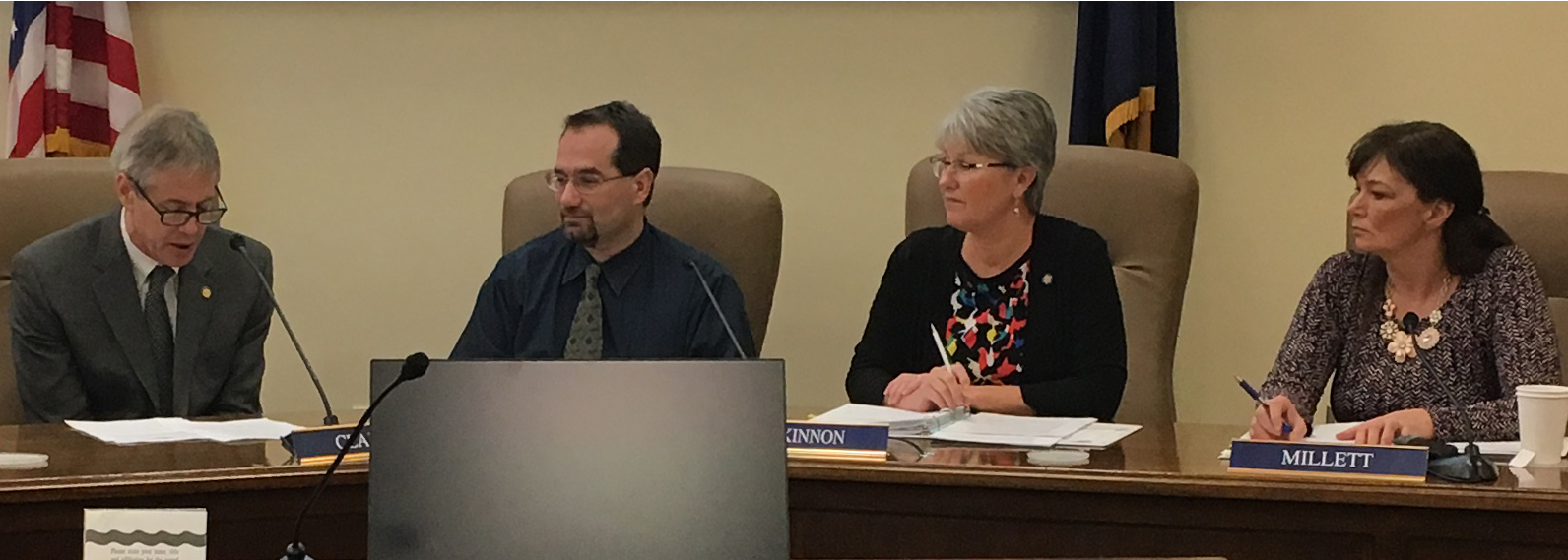
Rep. Matt Claman (D-Anchorage), left, talks during a meeting of the Legislative Council subcommittee on sexual and other workplace harassment, Jan. 25, 2018. Legislature human resources manager Skiff Lobaugh, Sen. Anna MacKinnon (R-Eagle River) and Rep. Charisse Millett (R-Anchorage) listen. (Photo by Andrew Kitchenman/KTOO)
Rep. Matt Claman (D-Anchorage), left, talks during a meeting of the Legislative Council subcommittee on sexual and other workplace harassment on Jan. 25. Legislative human resources manager Skiff Lobaugh, Sen. Anna MacKinnon (R-Eagle River) and Rep. Charisse Millett (R-Anchorage) listen. (Photo by Andrew Kitchenman/KTOO)

Lawmakers have released a draft policy that would revise how the Legislature handles sexual and other workplace harassment.

The draft is modeled on Oregon’s policy. It is much more detailed than the current version, which the Legislature adopted in 2000.

Anchorage Democratic Rep. Matt Claman is the vice chair of the subcommittee working on the policy. He said the Oregon guidelines had the clearest procedure to file a complaint of any examined by the subcommittee.

“There was consensus on the committee to base our policy and procedure on that Oregon procedure, that looked to make a lot of sense,” he said.

Harassment became an issue in the fall, when legislative aides and women outside of the Legislature alleged sexual harassment by Kiana Democratic Rep. Dean Westlake, who resigned in December.

The Oregon policy requires that independent investigators handle complaints against legislators. The Alaska draft policy is not yet clear about how these complaints would be handled. Claman said the Legislature’s human resources manager may be in the best position to investigate lawmakers.

The draft policy would require the House speaker and Senate president to appoint special committees on conduct that would covene if a lawmaker has been investigated for alleged misconduct. These committees would have equal numbers from the majority and minority parties. The committees would recommend to each chamber whether to take disciplinary action. Then the chamber would vote the next day that it convenes.

The draft policy would give people one year to file a formal or informal complaint about harassment. Claman said the filing period should draw from existing federal standards.

Claman said the subcommittee plans to meet weekly until it finishes work on the draft policy. He didn’t put a deadline on its work, but says it would work steadily. Its next meeting is scheduled for Tuesday.

Walker appoints Kotzebue resident Lincoln to vacant House District 40

John Lincoln of Kotzebue was appointed by Gov. Bill Walker to represent House District 40 in the Alaska Legislature.
John Lincoln of Kotzebue was appointed by Gov. Bill Walker to represent House District 40 in the Alaska Legislature. (Photo courtesy NANA Regional Corp.)

Gov. Bill Walker has appointed Kotzebue resident John Lincoln to serve as the state representative for District 40, which covers North Slope and Northwest Arctic boroughs. Walker made the appointment on Wednesday night, the deadline to fill the vacancy under state law.

The position became vacant on Dec. 25, when Dean Westlake resigned over allegations of sexual harassment by legislative aides and women outside of the Legislature.

Lincoln is the vice president responsible for managing lands for NANA Regional Corp.

The appointment is subject to confirmation by the House Democrats.

Walker faces Wednesday deadline to fill District 40 seat

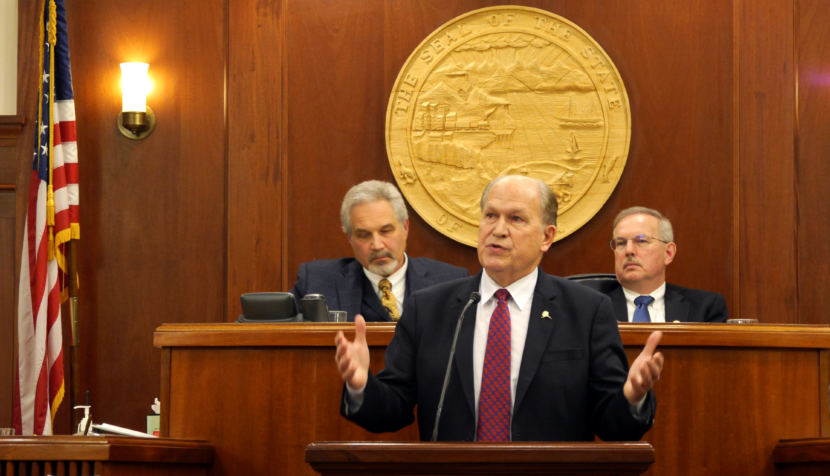
Independent Gov. Bill Walker addresses the Alaska Legislature on Jan. 18, 2018, in the Alaska State Capitol in Juneau. Senate President Pete Kelly, R-Fairbanks, and House Speaker Bryce Edgmon, D-Dillingham, are seated at the dais behind him. It was Walker's fourth State of the State Address. (Photo by Skip Gray/360 North)
Independent Gov. Bill Walker addresses the Alaska Legislature on Jan. 18 for his fourth state of the state address. Walker has until Wednesday at midnight to fill the vacant District 40 House seat. House Democrats must approve the pick. (Photo by Skip Gray/360 North)

Gov. Bill Walker faced a deadline today to pick a state representative for District 40, which covers North Slope and Northwest Arctic boroughs. Walker hadn’t announced a decision by 5 p.m.

The seat became vacant on Dec. 25, when Dean Westlake resigned following allegations of sexual harassment by female legislative aides and women outside of the Legislature.

Walker spokesman Austin Baird said Walker chose to look outside of the first three candidates nominated by the local Democratic party.

“Gov. Walker, after reviewing the three initial candidates that were forwarded by House District 40 — he did do interviews in person here in the state Capitol with all three of those candidates — in addition, though, after communicating with the Democratic Party in House District 40, is also going to interview two other people,” Baird said.

Those new candidates are Kotzebue resident John Lincoln and Utqiagvik resident Abel Hopson-Suvlu.

Baird said Walker wants someone who is well prepared, but declined to say why Walker didn’t limit his choices to the original nominees: Kotzebue city council members Eugene Smith and Sandy Shroyer-Beaver and Utqiagvik resident Leanna Mack.

The pick must receive support from a majority of the 16 state representatives who are Democrats before taking office.

District 40 Democratic Party Chairwoman Jane Winzer said Walker’s office consulted with the local party. But Winzer said she’s frustrated that the local party didn’t have the time to open up the application process again. State law requires the government appoint a replacement within 30 days.

“If they wanted another list of three, to me, the only fair way to do that is reopen an application and so forth,” she said. “But by the time that they were really looking at that, it was too late.”

Winzer said many of the qualified residents in the district avoid partisan politics due to their work with Alaska Native corporations. And some potential candidates would have taken a pay cut to join the Legislature.

“Even if they can work the rest of the year at their regular job, it is still going to be a significant financial blow, probably,” she said. “Especially the last couple of years, with not knowing how long the session’s going to last.”

Kotzebue’s John Lincoln is the vice president responsible for managing lands for NANA Regional Corp. Abel Hopson-Suvlu of Utqiagvik is adviser to the president of Arctic Slope Native Association.

Nominees for vacant House seat meet with Walker, describe qualifications

State seal podium 2016 06 19
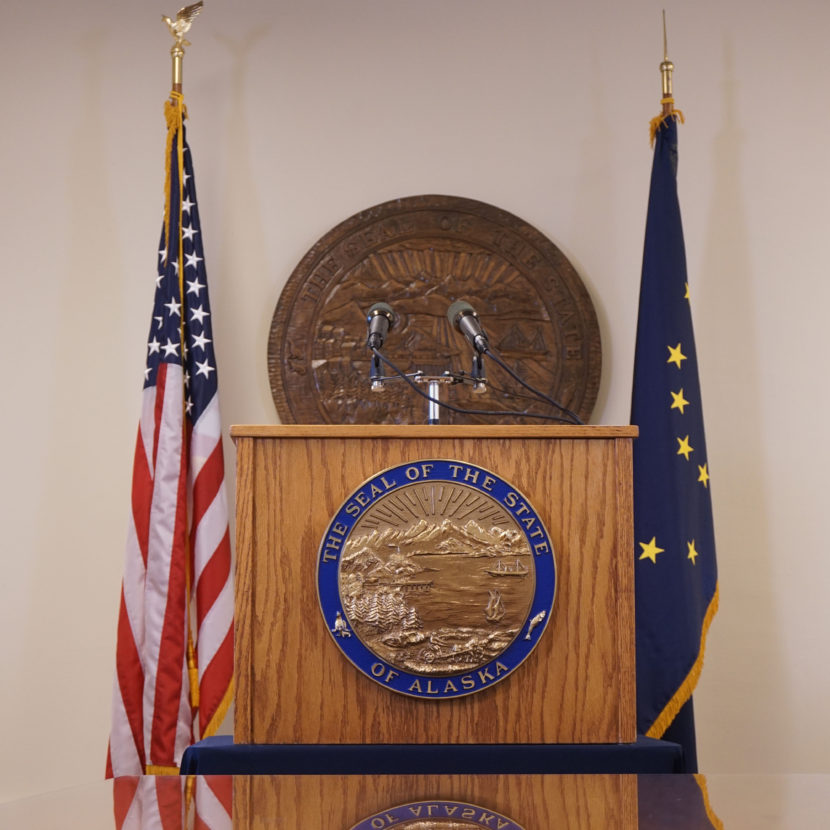
The seal of the state of Alaska in the governor’s temporary offices in Juneau in June 2016. Gov. Bill Walker met Monday with the three nominees for the vacant District 40 House seat. (Photo by Jeremy Hsieh/KTOO)

Gov. Bill Walker met Monday with the three nominees for the now vacant District 40 seat for the Alaska House. The district covers the North Slope and Northwest Arctic boroughs and is open because former Rep. Dean Westlake resigned after allegations of sexual harassment. Walker may make a decision soon.

Two of the nominees, Sandy Shroyer-Beaver and Eugene Smith, have years of experience on Kotzebue’s city council. The other, Leanna Mack of Utqiagvik, said her community involvement makes up for her relative lack of political experience.

Shroyer-Beaver said her more than 30 years in politics have prepared her. She has served on city council and the school board and worked with regional tribal organization Maniilaq Association.

“I’m just a normal person,” she said. “I’m from Kotzebue. I wasn’t born there, but I was raised there. I lived there my whole life. I’m a mom. I have five children. I have four grandchildren. I work with kids. I’ve loved that for years. I worked for Maniilaq in the foster care program. Everybody knows me in our region.”

Shroyer-Beaver said she’d like to increase public safety in rural Alaska, including in North Slope and Northwest Arctic boroughs. She also said she’d focus on education and protecting Alaska Permanent Fund dividends.

“We have people who are counting on these funds they get every year because we have a shortage of employment opportunities,” she said.

Both Shroyer-Beaver and Smith are on Kotzebue’s city council.

Eugene Smith also has decades of experience in the city’s politics and has served as the mayor and with Maniilaq Association.

“Well, I’ve been on city council for 21 years straight and took a hiatus and now I’m back on the council,” he said. “I’ve also got tons of management experience, being the CIO (chief information officer) for the health corporation for many years, so I do understand budgeting.”

Smith said he would listen to constituents to determine his priorities. He said he would work closely with the mostly Democratic House majority on a plan to close the multibillion dollar state budget deficit.

“It makes a lot of sense to look at all the means possible to trying to resolve the state’s situation,” he said. “I just believe by working together, you know, in a nonpartisan way, I think that we can solve this problem.”

Leanna Mack is the only nominee who hasn’t served in political office. She’s the deputy adviser to North Slope Borough Mayor Harry Brower, focused on regulations that affect borough residents.

Mack doesn’t feel that drawing from permanent fund earnings will solve the state’s budget problem.

“I think that’s just a short-term solution and a long-term solution needs to be looked at, as well as all the other industries that are in Alaska and that are starting to ramp up,” she said.

Mack also has worked as a volunteer in the community. She works with local cheerleaders. And she’s become heavily involved in suicide prevention since the death of her brother’s best friend.

“The last several years, we’ve had the largest team during the community walks and we’ve also been the top fundraisers for the community walks,” she said. “And I think it’s another way for all of us to get together and catch up with one another, as well as continue to celebrate our friend’s life and the time we were able to spend with him.”

The district Democratic Party nominated the three candidates from a group of eight applicants. Walker has nine days to fill the vacancy. Kiana Democrat Westlake resigned after he was accused of inappropriate behavior with female aides and women outside of the Legislature.

Walker also must fill the vacancy caused by Sen. Mike Dunleavy’s resignation. Dunleavy resigned to focus on running for governor.

Walker plans to meet House nominees before making pick

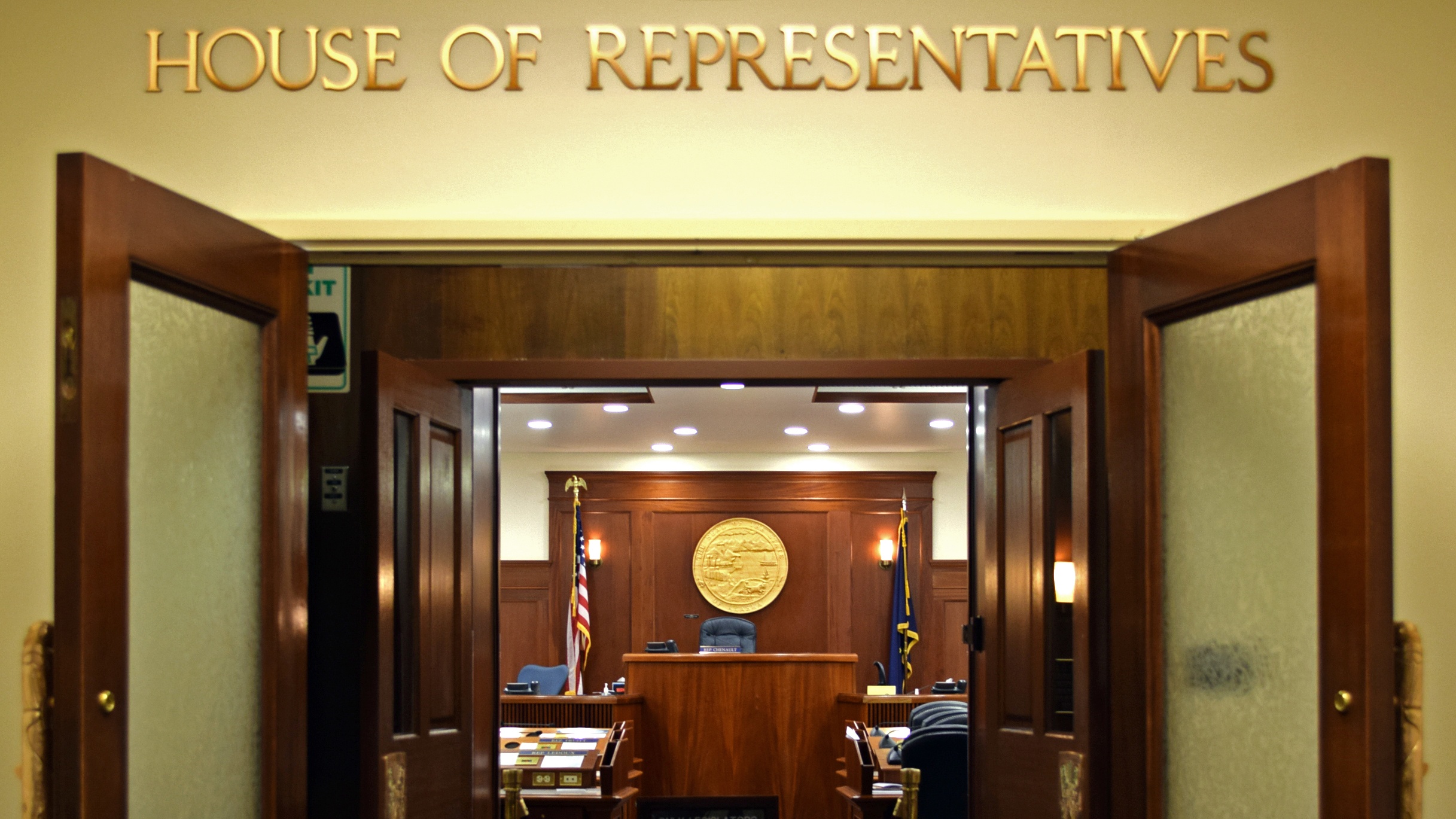
The Alaska House of Representatives entrance in the Capitol in Juneau, Feb. 6, 2015. (Photo by Skip Gray/360 North)
The Alaska House of Representatives entrance in the Capitol in Juneau in February 2015. Gov. Bill Walker is choosing between three nominees to fill former Rep. Dean Westlake’s position. (Photo by Skip Gray/360 North)

Gov. Bill Walker will pick one of three finalists to fill the Alaska House seat left vacant by Dean Westlake, who resigned after he was accused of harassing female aides.

Utkiagvik resident Leanna Mack, Kotzebue City Councilwoman Sandy Shroyer-Beaver and Kotzebue Councilman Eugene Smith were nominated by the District 40 Democratic Party.

A majority of the 16 Democrats in the House must approve Westlake’s replacement.

Walker spokesman Austin Baird said the governor’s team is vetting each candidate’s background.

“He’s working to line up their travel schedules with his and he does plan on meeting each of the finalists before he does make a decision,” Baird said.

Walker has until Jan. 24 to make a pick.

“The governor is motivated to make a selection quickly because of the legislative session starting up next week,” Baird said. “But the key in this process is picking someone whose values and beliefs are actually in line with the residents of House District 40, so if it does take up to the deadline, then that is the reason why.”

The session begins Tuesday.

Ocean Energy Management bureau proposes oil and gas lease sale of almost all outer continental shelf

A bearded seal, or ugruk, on the sea ice.
A bearded seal, or ugruk, on the sea ice. (Courtesy of Kawerak Subsistence Program)

Almost the entire U.S. outer continental shelf is being considered for gas and oil exploration as a result of a new draft proposal released by the Bureau of Ocean Energy Management under the Trump administration.

Last week, U.S. Secretary of the Interior Ryan Zinke announced that more than 98 percent of the outer continental shelf is included in a national outer continental shelf program, a proposed oil and gas leasing program that would begin in 2019.

This proposal completely reverses the previous administration’s program, which currently makes 94 percent of the outer continental shelf off limits to oil and gas leasing.

When Kawerak’s marine advocate Austin Ahmasuk first saw the proposal on Thursday, his reaction was shock:

“We were invited to participate in a BOEM teleconference on the draft proposed program, and we weren’t totally sure what to expect, because things had not been made public on the BOEM website, and they were being unveiled whilst BOEM was releasing its initial few facts on what the draft proposed program would be,” Ahmasuk said.

The draft proposal recommends that 19 lease sales be held in the Alaska Region, 11 of them in areas that have not been considered for oil and gas leasing in decades or ever before.

Kawerak (and the Eskimo Walrus Commission) released a statement summarizing that the entities, “oppose oil and gas leasing / exploration in the Hope, Navarin, St. Mathew Hall, and Norton Basins,” the statement said. “These basins are vitally important to our survival, and oil and gas activities pose a serious threat to marine life and safety in these areas.”

In addition to those four basins, lease sales are also being proposed in the Gulf of Alaska, the Aleutian Basin, and elsewhere.

Ahmasuk said the best case scenario is if all of those basins are removed from the final proposal.

“Alternatively, if they do go through, we would very much want our perspective and our indigenous knowledge, our traditional knowledge, to be incorporated into the decision making process,” he said. “That is something that we have advocated for very strongly in all of these state or federal decision making (processes).”

Online commenting on this proposed five-year national OCS program began Monday and will last for a 60-day period until the next draft proposal is released.

According to Bureau of Ocean Energy Management, the bureau received about 816,000 comments during the initial public comment phase in the summer before they released this new draft proposal.

Ahmasuk is maintaining his optimism regarding the final decision on oil and gas leasing in Alaskan waters, despite being disappointed by this initial proposal.

He asserts that local and regional voices are still being heard on this issue.

“In the draft proposed program, Kawerak’s comments as well as several other tribes who submitted comments during the scoping session, our comments are listed in the appendix,” he said. “But it’s not totally clear how BOEM arrived at its rationale for opening up some of these areas, considering there hasn’t been any activity going on for forty years now, and in consideration of Kawerak’s decades-long work on advocating for the Northern Bering Sea.”

If nothing changes between this draft and the final proposal, then the first oil and gas lease sale in the Beaufort Sea will take place in 2019.

Bureau of Ocean Energy Management is hosting a public meeting at the Dena’ina Center in Anchorage at 7-10 p.m. Jan. 23 to discuss the outer continental shelf program.

Correction: A previous version of this story incorrectly called it the Bureau of Energy Management. It is the Bureau of Ocean Energy Management. This story has been updated to fix the error.

Site notifications
Update notification options
Subscribe to notifications