Northwest

In Nome, state experts ponder responses to Bering Sea crises

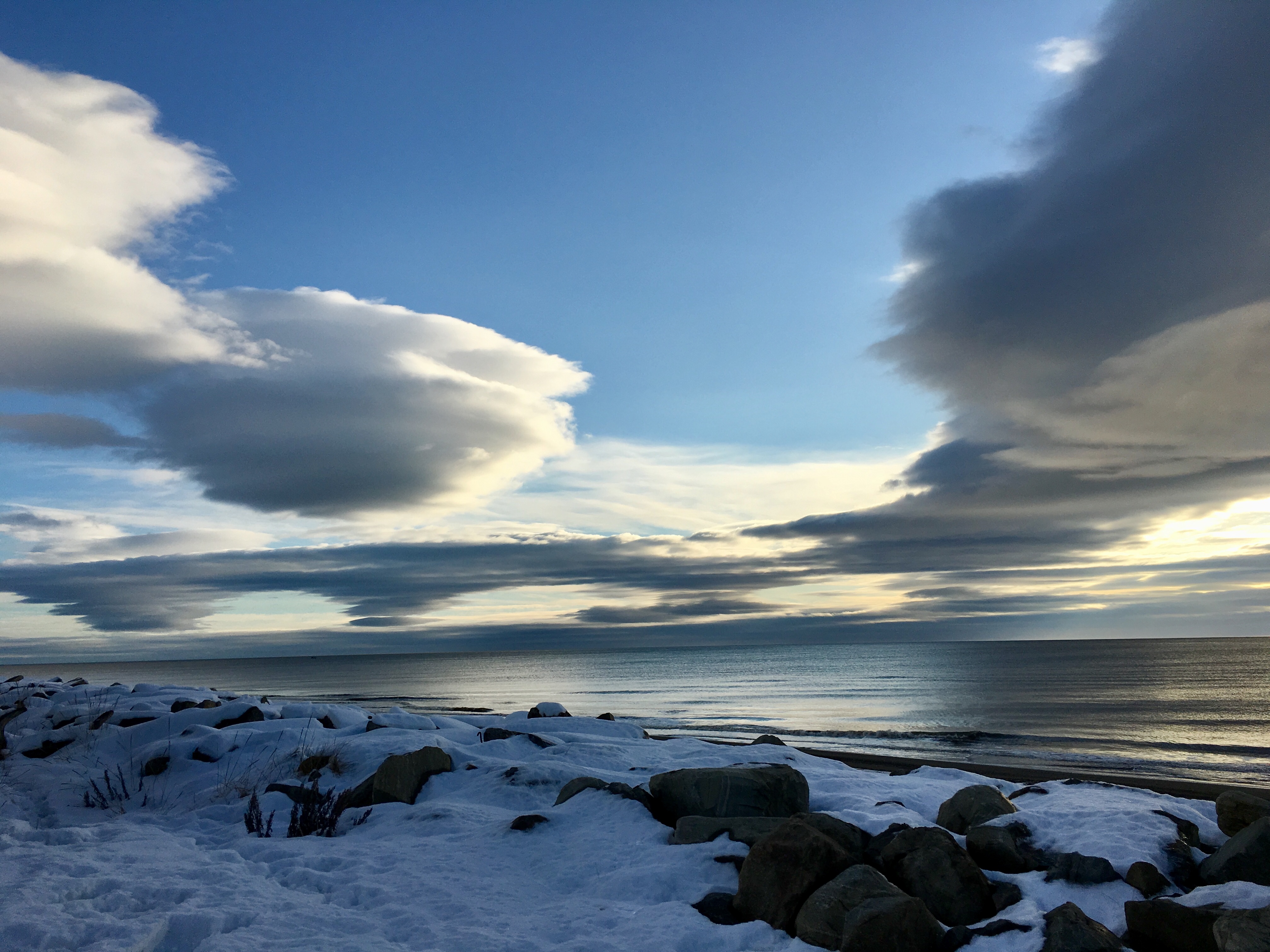
Bering Sea coastline near Nome, October 2017. (Photo by Zoe Grueskin/KNOM.)
Bering Sea coastline near Nome, October 2017. (Photo by Zoe Grueskin/KNOM)

Experts from around the state gathered in Nome to discuss marine mammals and how multiple entities can respond to different types of emergencies that may happen in the Bering Sea.

Mandy Migura with the National Marine Fisheries Service was one of the presenters at a “Strait Science” talk hosted at University of Alaska Fairbanks Northwest Campus.

Migura discussed how marine mammal stranding events take place in Alaska sporadically but have been rising in numbers since tracking began in the 1980s.

“Strandings involve live marine mammals. these may be animals that are unable to return to their natural habitat without some kind of assistance. And they may be injured, they may be entangled in gear or marine debris, they may be entrapped — ice entrapment, ice may form up and they’re in an area where they can’t get back to where they should be — or they may be disoriented, may be a health issue or something in the environment that’s affecting them.”

Migura is Alaska’s marine mammal stranding coordinator and said dead marine mammals can also be categorized as stranded.

With more cases of marine mammal strandings being reported, the Bering Sea marine ecosystem is currently in a volatile state.

Nome-based marine advisory agent Gay Sheffield mentioned how sharks have been found more frequently in the Bering Straits region, with the latest one documented in Gambell in summer 2017.

On the other side of St. Lawrence Island, a stellar sea lion was harvested last year in Savoonga, which she said is uncommon.

Migura said local and regional partners reporting this kind of information greatly benefits the National Marine Fisheries Service.

“We don’t have enough staff across all of the coastal states to be everywhere to be able to track all of these marine mammals, so we like to have partners in this,” Migura said. “Sometimes it’s the partners who are actually able to collect data on uncommon species that we would not be able to have otherwise.”

According to Migura, NMFS uses the gathered info from its partners for case studies on healthy or non-healthy subsistence harvested animals, and for the office to do bio-surveillance.

Not only are the types of animals found in the Bering Sea changing, but so is the vessel traffic; as the other presenter Sadie Wright mentioned Thursday night.

The lead for oil spill response for marine mammals under NMFS, Wright said in 2012, her office saw few written protocols for oil spill response in the Arctic, so they started to write regionally specific ones.

“Iin 2012 you guys started seeing some oiled seals in this region, and there was more oiled wildlife observed here in 2013 and 2014,” she said. “And the communication, sampling, and response to that left a lot to be desired. We wanted to figure out how to make communications better so that we could trade information more quickly with the people that live here, so we could figure out what was going on and what could be done to help.”

Happening concurrently with the Strait Science presentation was an oil spill workshop on Friday at UAF’s Northwest campus.

Multiple employees from Kawerak, including Austin and Brandon Ahmasuk, along with Sheffield, Wright and Migura, sat down with other experts like Michael Ziccardi, director of the oiled wildlife care network in UC Davis, California.

As this group of ten individuals discussed response plans to an oil spill in the Bering Sea, it became apparent that this would be a complex scenario, potentially involving a multitude of federal U.S. agencies and maybe even Russian entities.

Sheffield pointed to incidents on the Russian side of the Strait, where at least three fuel-carrying vessels have sunk to the bottom of the sea over the last decade.

Wright emphasized that NMFS and the other entities planning for a potential disaster now will help restoration and recovery efforts later.

“When a disaster happens, we can be ready to respond quickly,” Wright said. “Not only to help animals who might be injured or hurt, but to learn more about why they’re injured or hurt or dead, so that we can try to figure out if there’s something that we can do, big picture, to prevent that from happening. Or to help improve their situations so that they can recover more quickly after a disaster.”

If a big oil spill were to happen in the Bering Straits region right now, then Wright said most likely the Coast Guard would lead the response with various state agencies.

However, it is unclear as to how quickly they would respond, as the nearest agency is based 500 miles or more away from Nome.
Maximum harvest reduced for Nushagak Peninsula federal subsistence caribou hunt

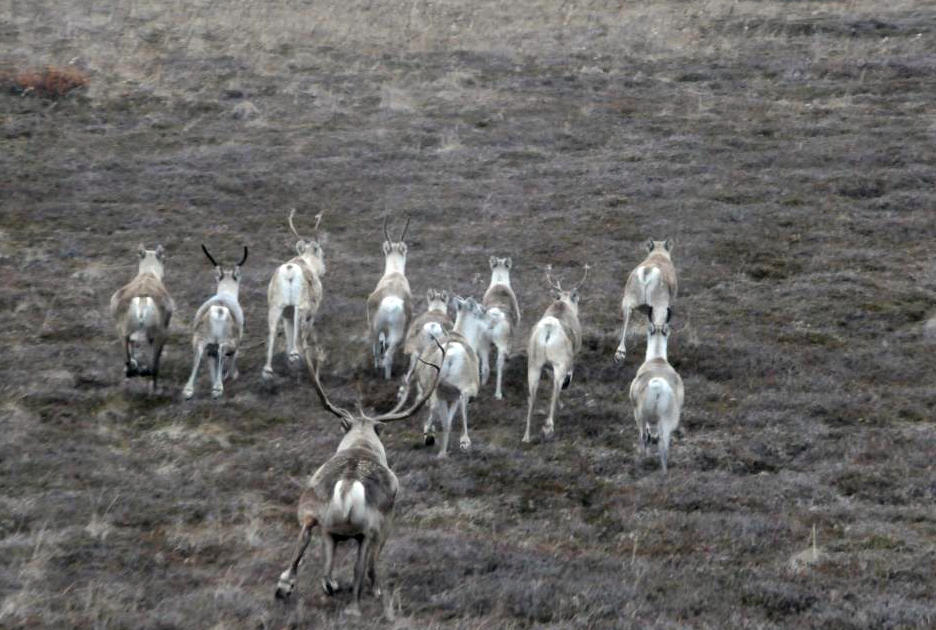
Caribou on the Nushagak Peninsula. (Photo courtesy Andy Aderman/U.S. Fish and Wildlife Service)

The managers of the federal subsistence caribou hunt on the Nushagak Peninsula have reduced its maximum harvest from 300 to 218.

The original harvest limit was set at a planning committee meeting in August before the hunt opened.

Togiak National Wildlife Refuge announced that refuge managers and wildlife biologists have determined that the herd cannot sustain a harvest of greater than 218 caribou.

Refuge biologist Andy Aderman said that the refuge made the determination by analyzing the summer caribou survey data and estimating the herd size.

“(The Nushagak Peninsula Caribou Management Plan) said we could harvest anything above 750 caribou and our estimate was 968,” Aderman said. “That would suggest 218 would be the appropriate amount to harvest from that herd. We just kind of re-looked at that 300 number and said, ‘That might be just a bit much.’”

The goal of the Nushagak Peninsula Caribou Management Plan is to keep the herd size large enough for hunting and small enough to avoid overgrazing the peninsula or a boom-bust population cycle.

Currently, only 23 Nushagak Peninsula caribou have been reported harvested.

If the limit of 218 caribou were taken, then it would be the second largest harvest of the herd.

Last year’s harvest of 378 caribou set the record. The next largest harvest was in 2001, when hunters took 127 caribou.

The federal hunt remains open to qualified subsistence users until March 31 or until the harvest limit is taken.

The bag limit per hunter is three caribou.

Seavey attorney: Report shows musher didn’t drug dogs

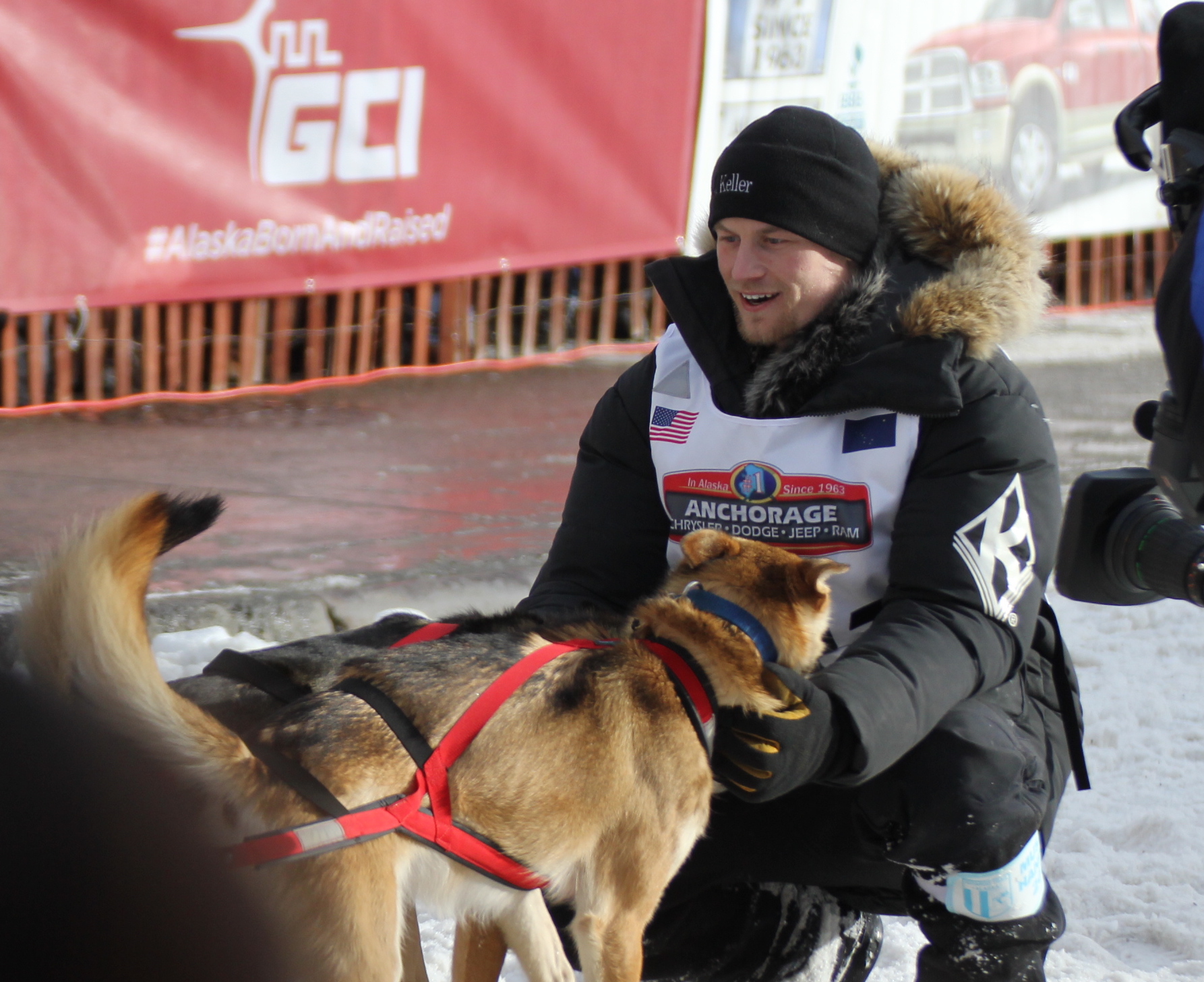
Defending Iditarod champion Dallas Seavey greets his leaders prior to the ceremonial start of Iditarod 2016. (Photo by Ben Matheson/Alaska Public Media.)

An attorney for four-time Iditarod champion Dallas Seavey released a toxicology report Wednesday that he says proves the musher did not drug his dogs in last year’s race.

Seavey has claimed innocence since the Iditarod announced in October that dogs on his team tested positive for the banned painkiller Tramadol.

According to the new toxicologist’s review, Seavey’s dogs did not receive Tramadol until hours after reaching the finish line in Nome.

Clint Campion, a former district attorney, said that proves Seavey did not give the drug to the dogs and that someone else did.

Campion revealed the new information at a news conference organized by a Bay Area public relations firm.

Seavey has hired both Campion and the firm to represent him.

“He doesn’t want to speculate about why someone would do that or who might’ve done that,” Campion said.

Still, some have speculated that a rival musher or someone opposed to dog mushing tried to sabotage Seavey.

Seavey finished second in the race and was away from the dog yard when he says the doping occurred.

The Iditarod did not penalize him for the positive tests. The race’s board said they made that decision because of an ambiguous rule that has since been rewritten.

But Seavey withdrew from this year’s race in protest after the Iditarod named his dogs as those that’d failed the tests.

On Wednesday, Campion said the Iditarod should admit it made a mistake.

“We’d like them to say that we mistakenly released Dallas’ name, that the evidence shows that it’s completely unclear or it’s impossible to believe that Dallas would’ve this and that we want to remove any suspicion about Dallas’ involvement in drug doping,” Campion said.

Seavey’s evidence comes in the form of the 20-page report, written by Patricia Williams, an expert toxicologist who lives in Louisiana. Williams described herself as a huge fan of the Iditarod.

Williams said she offered to conduct the review for free after hearing what’d happened.

“I was shocked, and I said, ‘Whoa.’ I said, ‘Look, let me get all the lab work and let me see what I can see,’” Williams said.

Williams said she saw a lack of understanding on the part of the Iditarod’s toxicologist in how quickly dogs metabolize Tramadol, as well as evidence the testing instruments were not calibrated correctly.

Williams also said the high levels of Tramadol found in the tests indicate the drug was given well after Seavey arrived in Nome.

“This is definitely a dosing after the trail,” Williams said. “Every musher should be worried about this. Every sponsor should want to tighten security and make sure this never happens again.”

Campion agrees that security needs to be improved and said the Iditarod should adopt anti-doping regulations more in line with the International Federation of Sleddog Sports.

He said that would bar the release of a musher’s name if a confidential investigation finds doping rules have not been broken.

Asked whether Seavey is considering legal action in regards to the release of his name, Campion said the musher is not ruling anything out.

“His goal is to move forward from this, but he hasn’t taken anything off the table,” Campion said. “As to the next steps, we’re not ready to talk about that yet.”

In a written statement, the Iditarod Board of Directors said it’s not ready to talk about the report, saying the board is still reviewing the new information.

But the board’s news release Wednesday repeated earlier statements that the board never blamed Seavey directly for the positive drug tests.

The 2018 Iditarod starts March 3.

Iditarod mushers demand board president resignation, don’t get it

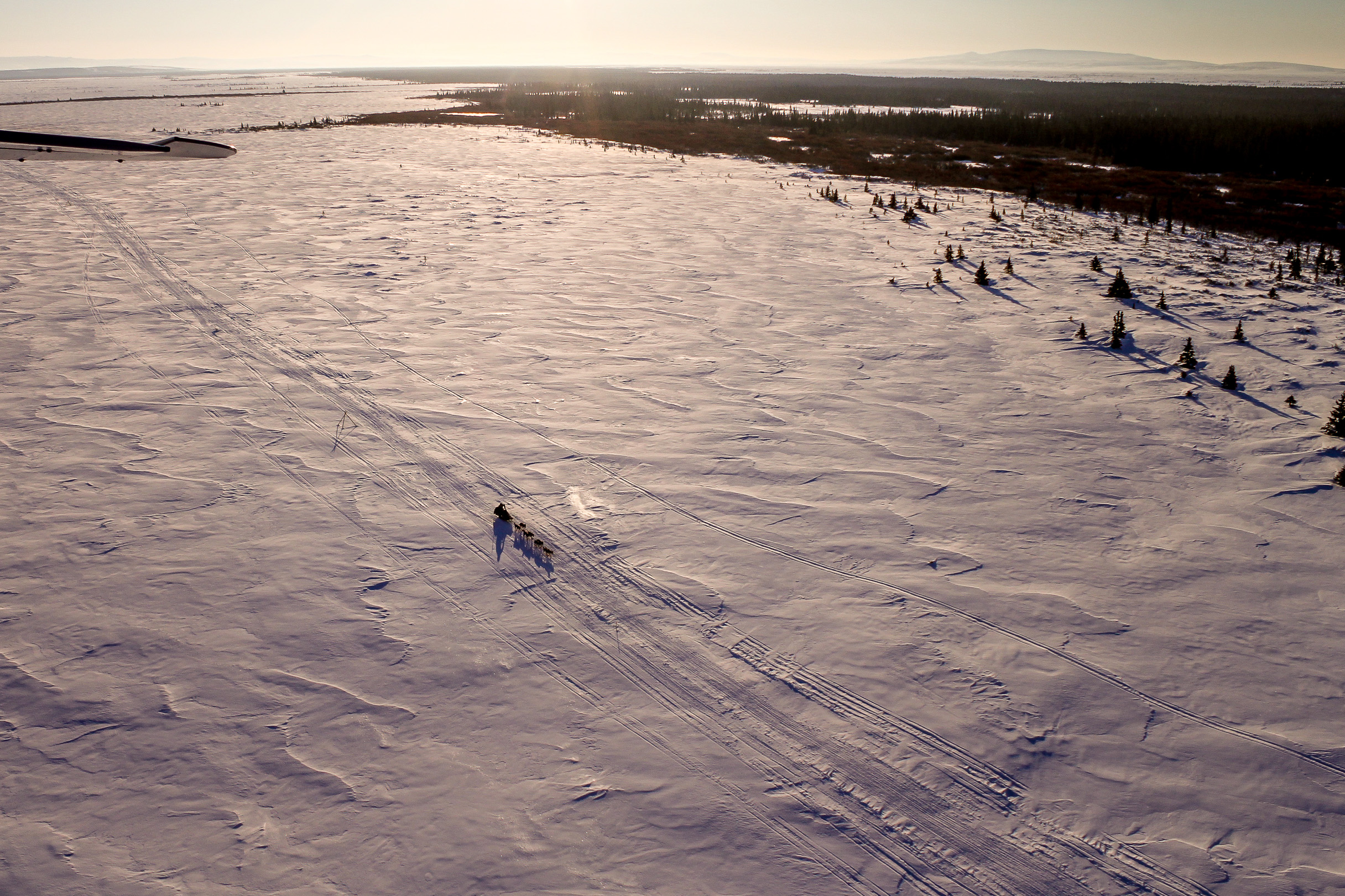
Dallas Seavey runs into Nome on Tuesday, March 14, 2017, during the Iditarod. (Photo by Ben Matheson/KNOM)

With only three weeks until the 2018 Iditarod, there’s more drama swirling around Alaska’s premier long-distance dog mushing event.

The Iditarod Official Finisher’s Club called for the immediate resignation of Iditarod Board President Andy Baker.

The club’s letter to the board, first reported by the Anchorage Daily News, said Baker has “jeopardized the integrity of our whole livelihood through his poor leadership.”

The club calls itself the “players’ union” for Iditarod mushers.

The letter comes after controversy surrounding a dog-doping scandal that caused four-time champion Dallas Seavey to withdraw from this year’s race and a confidential consultant’s report, leaked to news media, that recommended board members with conflicts of interest step down to avoid losing sponsors and trust.

Despite the Finisher’s Club demand that Baker resign to avoid what the letter says will be “negative discourse” overshadowing this year’s race, Baker did not step down.

After the Board of Directors’ meeting Friday in Anchorage, the board released a statement saying its members had decided unanimously to make no changes.

Shortly thereafter, Baker spoke to reporters about his reaction to the letter.

“There’s so much emotion and there’s so much emotion this time of year, with, the mushers are getting ready for the race,” Baker said. “Everybody wants the race to do well. So I took it very positively. Everybody wants the race to do better, and the board, our whole focus is we want to have a safe race, we want dogs to be safe, we want mushers to be safe and we want a successful race.”

However, Baker said there may be changes coming after this year’s Iditarod that will be in line with recommendations from a December report by consultants with the Foraker Group.

Among other things, the report said the Iditarod should replace board members with conflicts of interest to restore trust with mushers, sponsors and race fans.

Baker, brother of Iditarod musher John Baker, says the board agrees but has not yet made a formal decision on the matter. He added that having board members with close ties to mushing has always been seen as a benefit to the race.

Finisher’s Club President Wade Marrs did not respond to a request for comment in time for this story.

Meantime, the Iditarod announced  the race would restart in Willow on its normal southern route after the March 3 ceremonial start in Anchorage.

After years shut, a rural tannery re-opens for business

Dennis Sinook walks through the Shishmaref Tannery, which was cleared out for the season after re-opening to handle 850 hides this year. (Photo by Zachariah Hughes/Alaska Public Media)

In the small community of Shishmaref, there’s a local business like no other. It’s a tannery, set up to process hundreds of seal hides a year sent from subsistence hunters.

After fits and starts, it closed down for several years. Now, the tannery is back in business. But not without challenges.

“This is a Shishmaref slipper,” 65-year-old Percy Nayokpuk explained, holding up a single slip-on shoe made of shimmering gray seal skin with black beaver trim and blue beadwork.

“Good slippers for up north, I tell you. Don’t get no Crocs if you’re gonna live around here, get a pair of these,” Nayokpuk said, returning the slipper to a shelf in the corner of the store his family has run since 1960.

Percy Nayukpuk has run his store in Shishmaref since 1990, when it took it over from his father. (Photo by Zachariah Hughes/Alaska Public Media)
Percy Nayukpuk has run his store in Shishmaref since 1990, when he took it over from his father. (Photo by Zachariah Hughes/Alaska Public Media)

There is plenty else for sale. Walrus ivory earrings are near the candy bars behind the counter. Draped casually below a stereo speaker is a wolf pelt.

But the seal products are extra special.

Families here have long relied on hunting ice seals, in part because the fur is exceptionally good protection from the cold, used to make beautifully mottled hats and thick outer mittens.

These house slippers were sewn in Shishmaref.

And on the other side of town, in a squat one-story building, is a place dedicated to fur crafting.

“This is the work area,” Dennis Sinook said, standing in a dim, chilly room lined with work tables and tanks. “When people first come in, they come in and drop the seals off here. First we’ll invoice them, count how many seals they have, what kinds of seals they are.”

Sinook manages the business for the Native Village of Shishmaref, which owns the tannery.

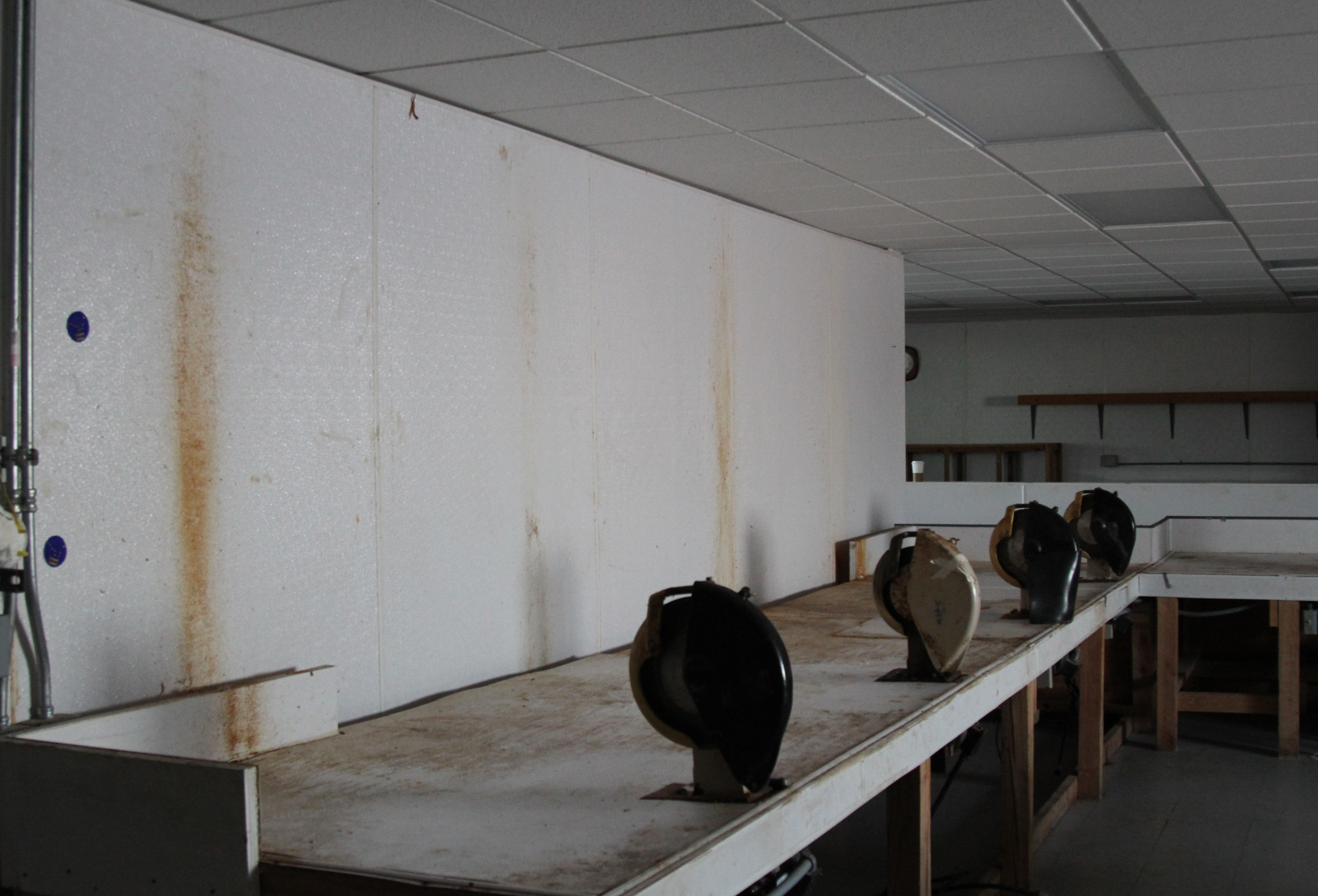
Fleshing machines had kicked off fat onto the walls. Dennis Sinook said they’d gotten to most of it, but run out of cleaning supplies before they could fully remove all the stains as the Shishmaref tannery was closed up for the season early in January. (Photo by Zachariah Hughes/Alaska Public Media)

On the white walls are a few yellow marks, splatter kicked off from what look like circular saws mounted atop work-tables.

“These are fleshing machines,” Sinook said. “It fleshes the fat right off of the seal.”

In essence, tanning hides is a process of taking some oils out, and putting others back in, until the material is pliable enough to refashion into garments.

The going rate is $19 per linear foot. And though they’ll tan some other types of animal hides, according to Sinook, seal is the most cost-effective.

After being closed down for several years, the tannery reopened last fall.

It’s set to now be a seasonal operation, getting underway in October amid the fall seal hunt, and running to early January.

This year there were seven employees, and Sinook is pleased with the run.

“We did 850 seals in three months,” Sinook said. “That is the most I’ve ever seen them do.”

According to Sinook, the business took in $25,000-$30,000.

This is the only tannery of its kind in Alaska right now, and there’s enough pent up demand that Sinook had to put a limit of 10 hides per family.

But all over the building are signs of just how hard it is operate a business in a town this far off the road system.

The ceilings are extra low to cut down on heating costs.

There’s a small wind turbine outside to add supplemental power.

In a backroom are giant wooden drums that spin the hides dry as a last step in the tanning.

Next to them are giant bags of sawdust shipped from the Lower 48.

Sinook buys each bag at $10.11, but by the time its been freighted all the way to Shishmaref the per-bag cost is $70.

Salt, which they also use in quantity, is cheaper.

“We get that from Costco,” Sinook said matter-of-factly.

Like much of western Alaska, Shishmaref’s lack of critical infrastructure is a barrier for business opportunities and local economic development.

As we spoke, Sinook was worried because a check he mailed to his bank still hadn’t cleared. Mobile deposits aren’t an option because the tannery has no Internet, an expensive extra utility. The

town doesn’t have piped water, so Sinook has to haul 600-800 gallons a week from the Washateria.

“I been using a four-wheeler and a trailer with a 200-gallon tank,” Sinook said. “It would be a lot easier if we had running water here.”

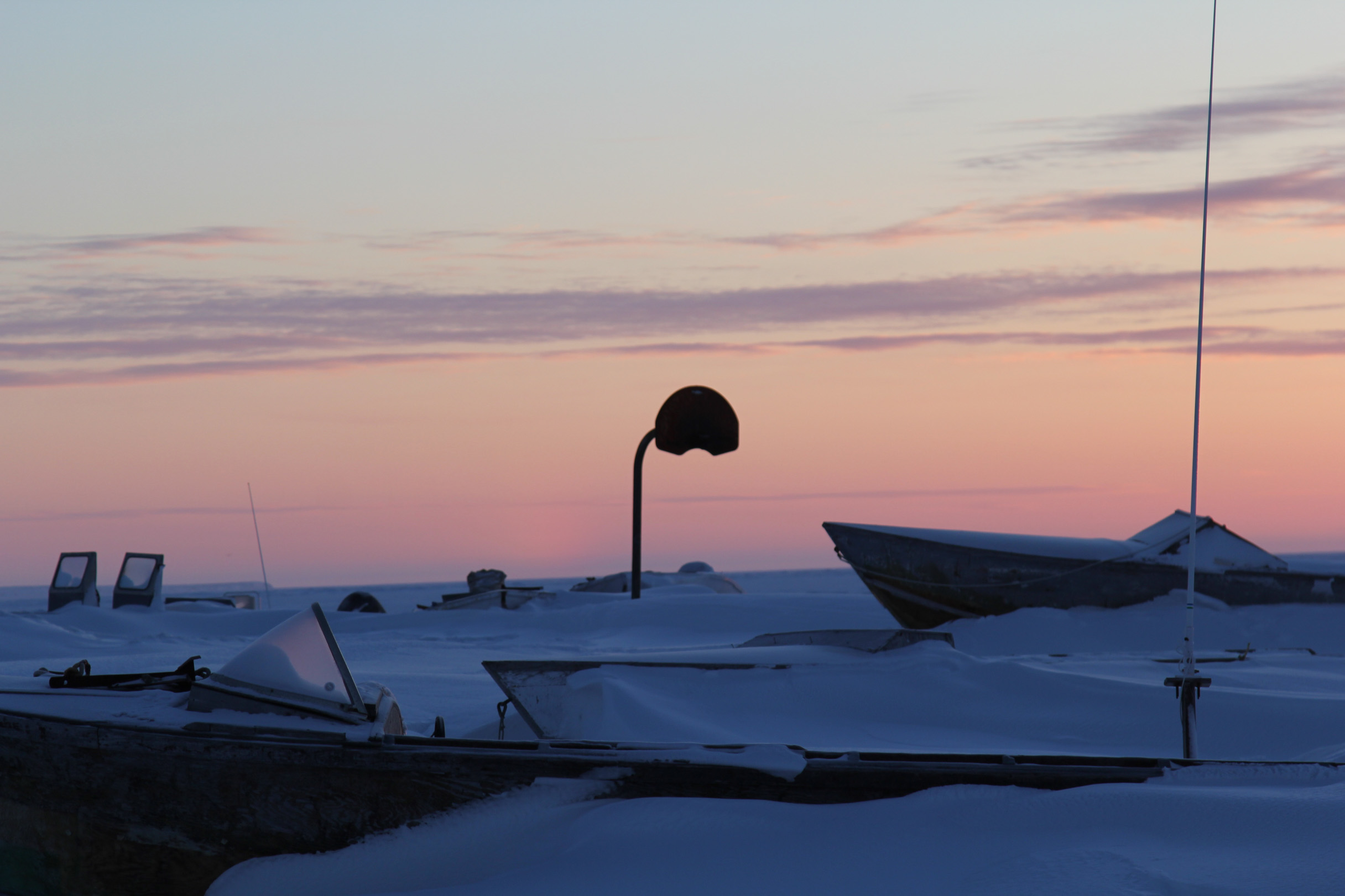
Sunrise over the lagoon in Shishmaref. (Photo by Zachariah Hughes/Alaska Public Media)

Many of these are the same problems that hampered the tannery from its beginning.

Tony Weyiouanna was a much younger man in the 1980s, when the community started looking into the idea of a tannery.

“From the time we started talking about it to when it opened the doors it probably was about four years,” Weyiouanna recounted at his office in Nome, where he now works for Kawerak, the Bering Strait’s regional non-profit.

Back then, Shishmaref’s village council wanted to find economic opportunities that made use of their local resources.

Among them were many traditional skin sewers who knew how to turn animal hides into good-looking, practical garments, along with ample hunters who remain experts at harvesting ice seals from the waters of the Chukchi sea.

The idea was to take the tanning and sewing that was happening in homes and replicate it on a commercial scale, creating efficiencies in the traditional methods by pooling resources.

Some of the finished hides went back to the families that brought them in, like taking wool to be spun into yarn you can use at home.

Others skins were purchased by the tannery, and sewers were employed to turn them into gloves, slippers, hats and more.

When Weyiouanna started managing the tannery in 1991, he expanded business, advertising to hunters and trappers across Alaska, telling them to mail their hides to Shishmaref.

“We needed our tanners to be busy all the time, from morning till quitting time,” Weyiounanna said.

The advertising worked, and the tannery was receiving all kinds of furs: Beaver, wolf, sea otter, bear.

Weyiouanna hired elders to teach younger women how to sew traditional garments, and had buyers for the finished products across the state.

According to Weyiouanna, in the mid-’90s the tannery was an economic engine, handling hides from across the state and bringing in hundreds of thousands of dollars — much of which stayed in Shishmaref and the region.

“It made an impact,” Weyiouanna said.

But it was never an easy business to keep running. Weyiouanna left the tannery in 1995, and wasn’t keeping tabs more than a decade later when things got rocky.

“I didn’t really pay attention too much on why it shut down,” Weyiouanna said. “Maybe mismanagement.”

Now that it’s back, Dennis Sinook thinks the tannery can thrive again in Shishmaref.

But the time commitment has been a drain on his personal life.

Sinook is an accomplished subsistence hunter — and that’s part of what he loves about living here.

He had bright-red caribou haunches curing in the sun outside his house from a successful trip out into the country a day earlier.

A massive polar bear hide hangs on his living room wall.

It’s hard giving up subsistence opportunities for all the headaches that come with running a business, and he’s weighing whether he’ll return to the job next fall.

Regardless, Sinook hopes years from now Shishmaref’s tannery is still in business.

“Hopefully someone can see what I see,” Sinook said. “To keep it open. To keep it alive. To keep people sewing.”

The craft of making things from seal is something he doesn’t want to see go away.

Sinook is not alone. At least one other community in the region, Brevig Mission, is thinking about setting up a tannery of its own.

This journalism project was made possible by a fellowship from Marguerite Casey Foundation, which supports low-income families in strengthening their voice and mobilizing their communities to achieve a more just and equitable society for all.

Alaska House Democrats confirm Lincoln to District 40 seat

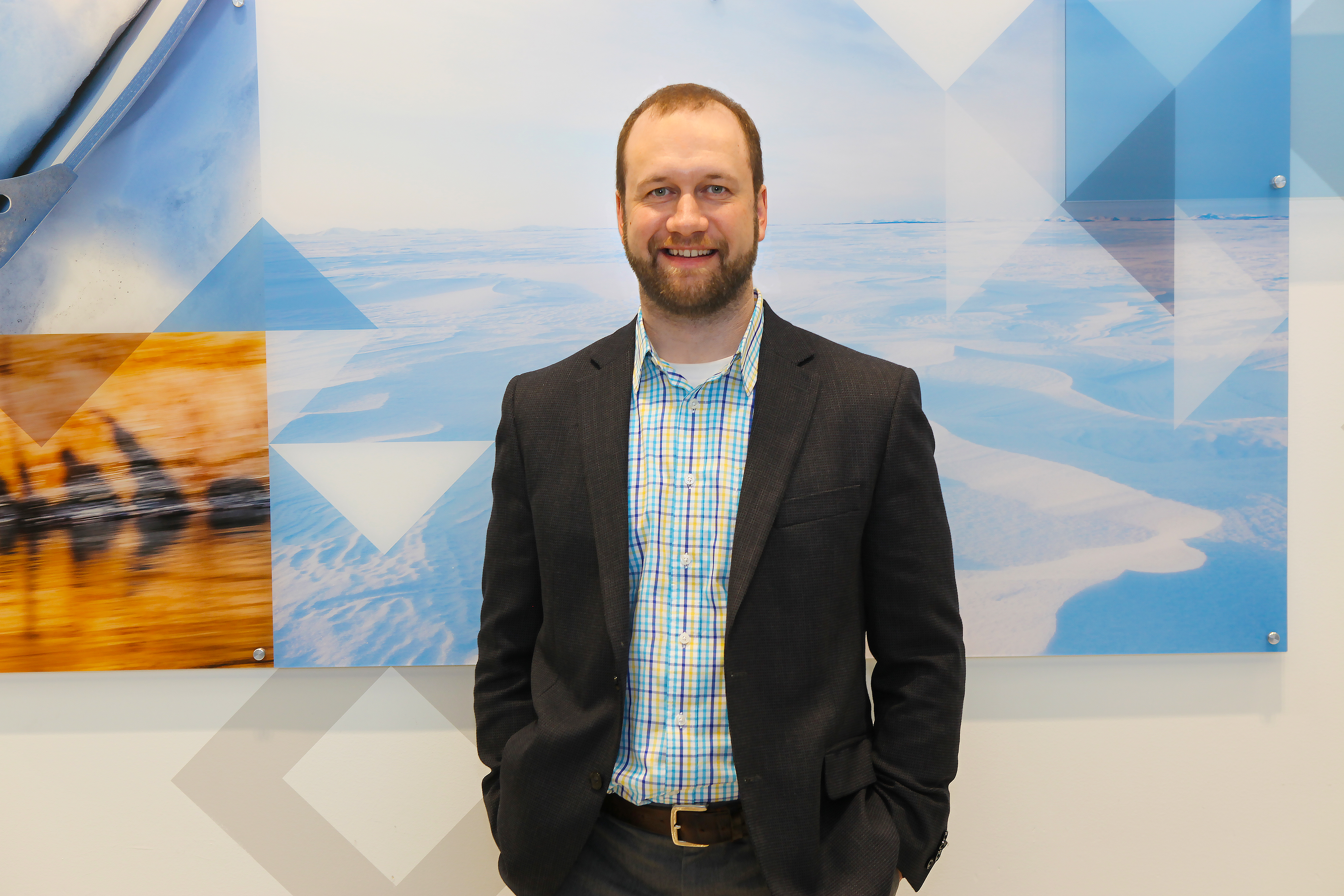
John Lincoln of Kotzebue was appointed by Gov. Bill Walker to represent House District 40 in the Alaska Legislature.
John Lincoln of Kotzebue was appointed by Gov. Bill Walker to represent House District 40 in the Alaska Legislature. The Alaska House Democrats unanimously confirmed the pick on Thursday. (Photo courtesy NANA Regional Corp.)

The Alaska House Democrats voted unanimously on Thursday evening to confirm Kotzebue resident John Lincoln to be the District 40 representative. The vote to confirm Gov. Bill Walker’s choice was required by state law.

House Speaker Bryce Edgmon was enthusiastic about Lincoln’s appointment.

“He brings a blend of real-world experience, some very sterling academic credentials, and I think having (been) born and raised in the Kotzebue area and having family ties to both ends of House District 40, I think makes him uniquely suited for the job,” said Edgmon, a Dillingham Democrat.

Lincoln is a vice president responsible for managing lands for NANA Regional Corp. He graduated from Stanford University.

Edgmon says he expects Lincoln to be in Juneau early next week.

The position became vacant when Dean Westlake of Kiana resigned due to allegations of sexual harassment by female legislative aides and women outside of the Legislature.

District 40 includes North Slope and Northwest Arctic boroughs, as well as three communities in the Yukon-Koyukuk Census Area – Allakaket, Bettles and Hughes.

Site notifications
Update notification options
Subscribe to notifications