Southwest

Lawmakers question why Pebble hasn’t filed for environmental permits yet

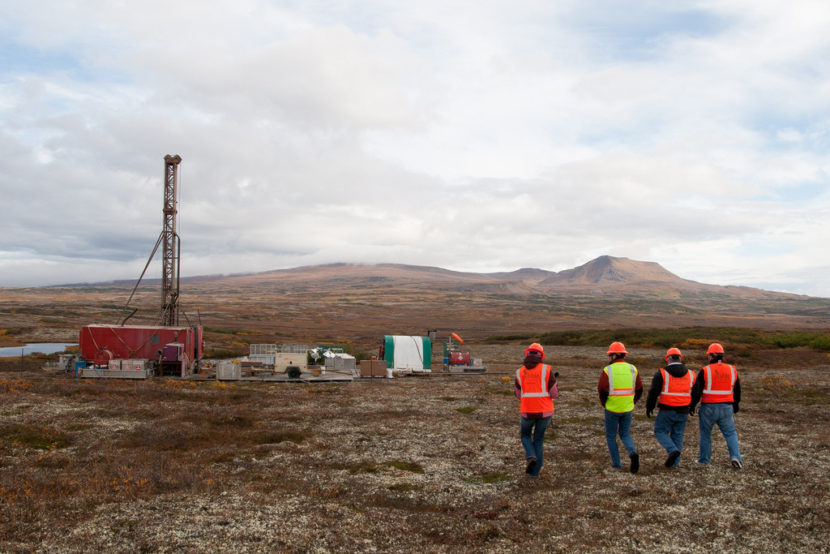
Members of the media walking to an exploratory drill rig. Photo by Jason Sear, KDLG – Dillingham
Members of the media walking to an exploratory drill rig at the Pebble Mine Exploratory site in 2013. (Photo by Jason Sear/ KDLG)

The proposed Pebble Mine was Exhibit A at a hearing in the U.S. House on Wednesday. The EPA took steps to block the southwest Alaska mine even though Pebble Partnership hasn’t applied for permits yet. The Republican-led hearing was supposed to be a critical look at environmental regulation, but the focus shifted as lawmakers of both parties kept asking the same question: Why hasn’t Pebble filed for its permits yet?

Dillingham’s Kimberly Williams, director of an anti-mine group called Nunamta Aulukestai, said EPA did not act prematurely to block the mine. She said the threat of what the project might mean for Bristol Bay salmon and salmon prices has hung over the region’s economy for years.

“For us it has created some risk in our fishery. It has created anxiety,” she told the committee. “Why should I invest in the fishery? Why should my children invest in this fishery in Bristol Bay? Because there may be risks that come down.”

Pebble CEO Tom Collier told the House Resources Committee that his company has been treated unfairly. But several lawmakers said he could set the project on a more normal regulatory path by applying for environmental permits.

“But you can’t start a process until you file a permit. This is all part of making it go forward,” Rep. Debbie Dingell, D-Michigan, told Collier.

“Congresswoman, I so respect your view and particularly your late husband’s on this issue,” Collier said.

He has a lot of Washington experience and was a confident witness, but this was a bit of a gaffe: Dingell’s husband isn’t dead, just old and retired from Congress. But, asked repeatedly, Collier cited lots of reasons why he hadn’t filed for the permits yet.

“You wouldn’t want us to file if we learned that there was another possible environmental risk that we should investigate before we file,” he told one committee member. “You wouldn’t want us to file if we didn’t have the money to go forward, because there was a market change. For the last two and half years, Congressman, we haven’t filed because of EPA’s actions.”

EPA’s action against the mine is on hold, due to a legal challenge. Still, Collier said the agency’s move has made it hard to attract investors. He said Pebble has already spent $750 million preparing to file for permits, and nothing in law requires them to apply before they’re ready. And Collier said talk about the project’s alleged risks to the environment is uninformed. The CEO said no one knows the scope or details of the current proposal.

“Were we to file an application today – were I to file an application – it would be a dramatically different project than what has been talked about in the past,” he said.

Rep. Ruben Gallego, D-Arizona, suggested another reason for the delay: Collier’s bonus. Company documents show Pebble’s parent company will pay its CEO $12.5 million if he can get an  Army Corps of Engineers permit within four years of applying. Collier’s bonus would drop to $7.5 million if it takes six years. Collier said it’s not a reward for delaying the application, just for getting it right.

“Yes, I am incentivized to submit such an airtight permit application that the process goes through relatively promptly,” he said.

Alaska Congressman Don Young spoke only briefly at the start of the hearing and was uncharacteristically subdued.

“My position on this is this affects state land,” he said. “That’s very important.”

If the Pebble mine is a choice between tapping an enormous gold and copper deposit or protecting the world’s greatest red salmon run, Young isn’t choosing, not from that menu.

“You take away the rights of state, without due process, it’s sometimes questionable,” he said. “It’s not federal land. There’s a difference there.”

Young is a former chairman of the Resources Committee, but he didn’t chair this hearing and didn’t stay for much of it. Steve Lindbeck, a Democrat hoping to unseat Young, said that was an insult to Alaskans. Young’s spokesman said the congressman had another hearing to attend, on commercial space launches.

Dillingham woman missing after leaving Juneau treatment center in March

LoriDee Wilson, 30, of Dillingham was reported missing in Juneau in late March.

A Dillingham woman has been missing in Juneau for nearly three months. The family of 30-year-old LoriDee Wilson has no information on her whereabouts, but hopes she’ll be found alive.

Wilson came to Juneau in mid-March to get drug addiction treatment program at the Rainforest Recovery Center.

Wilson’s older sister Gwen Larson said she last spoke to her younger sister on the phone on March 24th. At that point, Wilson had been at the hospital less than two weeks, but Larson said she seemed to be in a good state of mind during the phone call.

“And apparently that evening, she walked away,” Larson said. “We got notified that she was no longer at her treatment center on 28th or 29th of March, and so my father went down that weekend, and stayed down there for a while looking for her.”

The family reported Wilson as missing to the Juneau Police Department, and in early April, Larson also went down to Juneau to look.

She posted photos of her sister: 5-foot-4 and 130 pounds, with curly, dark brown, shoulder-length hair. Larson said there were several reported sightings of Wilson during that time, but she couldn’t confirm any.

“So I was constantly watching the bus routes, and I’d go to the store and just sit in the parking lot in hopes that I’d accidentally run into her. Because we don’t know what kind of state she’s in, if she’s OK, or … we just don’t know,” said Larson.

To Larson’s knowledge, Wilson doesn’t know anyone in Juneau outside the hospital, and she has not made contact with her friends, parents or three young sons back in Dillingham.

And, to add to her family’s concerns, Wilson is now overdue for a throat surgery that she gets each year due to a childhood accident that left her airway constricted.

“She hasn’t scheduled that yet, we talked to her doctor. And this is a thing she has to get every year, she has to have her throat dilated, for the last 20 years she’s had it done,” Larson explained. “We’re worried for her that she could choke, because usually when it’s close to surgery time, she has to have soft foods.”

Larson said the past few months have been difficult on the family, but they are holding out hope that Wilson is still alive.

“If she hears this, we love and care for her and we want her to call us,” said Larson, “and her kids miss her.”

If you have any information regarding LoriDee Wilson of Dillingham, call the Juneau Police Department at (907) 586-0600 or contact Gwen Larson at (907) 843-1412.

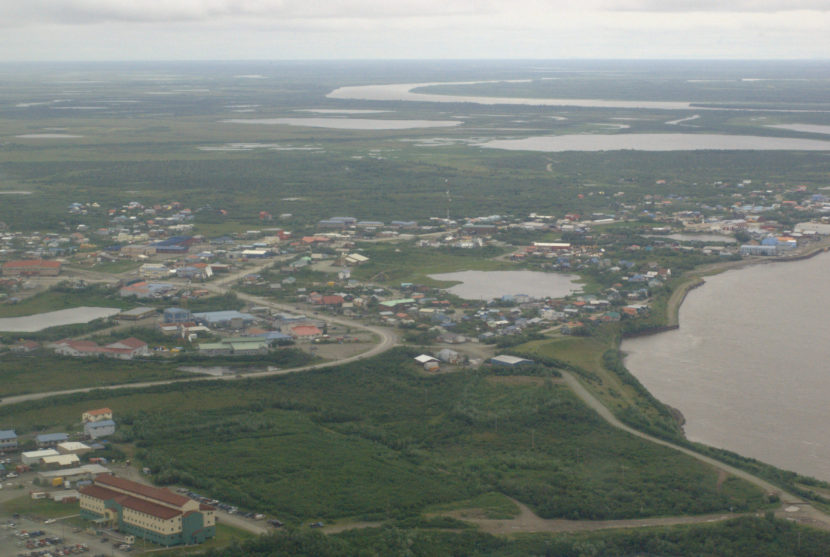
Building in a wetland is never easy. In Bethel, it just got harder.

bethel aerial
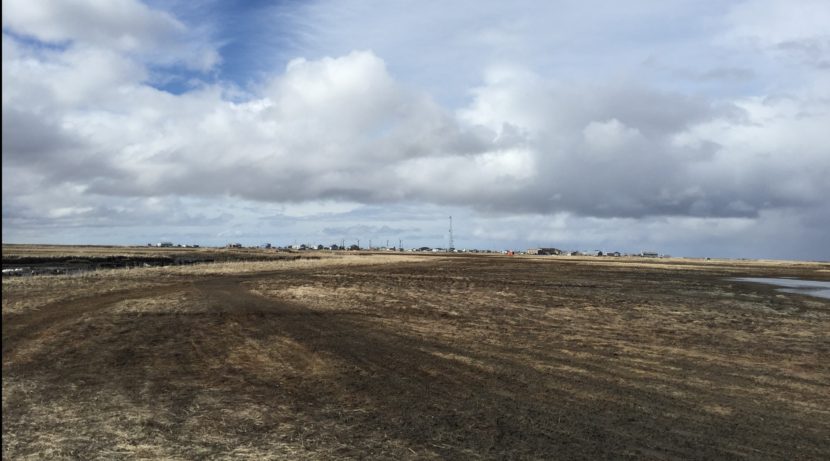
Bethel on July 23, 2012. Much of the Yukon-Kuskokwim Delta is wetland, so development is subject to permitting through the U.S. Army Corps of Engineers. (Creative Commons photo adapted from Holy Trinity Orthodox Church)

Construction in the Yukon-Kuskokwim Delta has never been easy. It’s hard to build things in a wetland, and the construction season is short. For some, that season just got shorter. A federal change could mean waiting months to get a construction permit that used to take only days.

Whether you realize it or not, every time you do any new construction in Bethel, you have to get the permission of the federal government — the U.S. Army Corps of Engineers, to be exact.

“We’re in a wetland everywhere here, and so any new construction you do is most likely in a wetland,” Ted Meyer, director of Bethel city planning, said.

Meyer said this permitting process is one way the federal government protects wetlands. But with that protection comes red tape that Bethel residents are now going to have to cut through themselves.

Ryan Winn, chief of the Corps’ regulatory division, said Bethel used to have something called a Regional General Permit. That’s like a blanket permit for all construction that happens over five years. It gave the city the authority to approve construction permits without going through the Corps every time. But Winn said that Bethel’s general permit was taken away because of disuse.

“To actually issue a regional general permit takes a lot of time and work load, right? So in order to justify spending that time, there needs to be a high volume of similar activities in a certain area that would justify us doing this work up front,” Winn said.

Winn said Bethel doesn’t meet that volume, so now individuals will have to go through the Corps to get a construction permit. That permit only took around 10 days with the city, but Winn said a project could take years to approve if the building site could have a significant effect on aquatic habitat. There’s no straight answer. Every site is different.

“Individual permits within 120 days, but sometimes depending on the continuous nature of a project, it could take longer,” Winn said.

Bethel City Manager Ann Capela asked the Corps to take over the permitting process for the city last spring.

“And the Corps said, well, we were moving towards taking that over anyway, so I had sent a letter that the city will no longer administer the Corps permits as of last year,” Capela said.

According to the Corps, Bethel’s general permit would have expired Aug. 31, even if Capela hadn’t requested the change. Capela said she asked for the switch because the city didn’t have a planner last year and couldn’t properly do its own reviews. She added that the city had been getting a bad deal by taking on that responsibility in the first place.

“The Corps wanted us, the city, to do this for free. We are busy with our own required issues, let alone do the extra work for the Corps,” Capela said.

Bethel is now in the second month of the new review process. Winn said the Corps will reexamine Bethel’s general permit at the request of the city in the future, but until then, residents should plan on planning ahead.

Feds lift caribou hunting ban on Nushagak Peninsula

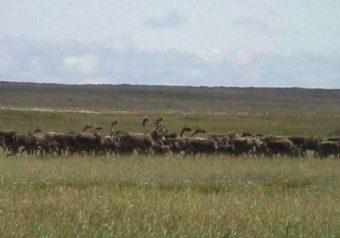
The Federal Subsistence Board approved more hunting opportunities on the Nushagak Peninsula Thursday. (Photo courtesy of KDLG)

Federal lands on the Nushagak Peninsula will be open to more Alaska residents for caribou hunting this year. The Federal Subsistence Board made the announcement Thursday.

Andy Aderman is a wildlife biologist at the Togiak National Wildlife Refuge and says the change should hopefully see more of the oversized herd taken in the year ahead.

“The people in the local communities here who have hunted that herd in the past will continue to be able to hunt that herd. The season’s been extended to include October and November,” Aderman said.

The population has grown to more than 1,700. But the federal closure could be reinstated if that number dips below 900 animals. Aderman says 750 would be the ideal number.

“If we could keep it at that number, we think we could sustain that for long, long time. But that’s the trick; trying to keep it there. And things like weather and access are huge in what happens as far as how many caribou are killed.”

The state will likely open its own hunting period on non-federal lands in the same area to try and maintain the herd size.

Dual language program helps student succeed in Yup’ik and English

A view of Kwingillingok from near the site of the old school that has been removed. (Photo by Hillman/Alaska Public Media)

Educators in Kwigillingok are preparing their students for bright educational futures – in both English and Yup’ik. They’re part of a nationwide expansion of dual language programs, where kids learn in two languages at the same time. And in Kwigillingok, it’s working.

Most of the students have already arrived at the rural Kwigillingok School by foot, bike, or four-wheeler when Principal Megan Rosendall’s voice booms out of the intercom system, welcoming them by their school mascot name.

“Good morning Eagles! The language of the day is Yugtun!”

That means when students are in the halls or at recess, they’re supposed to speak to each other only in the Yup’ik language. That applies to all of the students – kindergarten through 12th grade. First-grader Chloe Lewis tries her best as she pulls on her jacket and heads to the playground. She starts reciting her most recent science lesson, announcing how to say ankle and skin in Yup’ik.

She rushes outside with her friend Isiah Igkurak, and they figure out who will be “it” in a game of freeze tag.

“Ink pink, you stink,” Isiah says, pointing at his classmates’ shoes and chattering in Yup’ik. “Chloe you were out!”

Chloe Lewis plays with her friend on the school playground in Kwigillingok. (Photo by Anne Hillman/KSKA)

Despite the day’s language rules, as they zip around the playground, Chloe and some of her friends default to using English. Chloe grew up speaking mostly English at home. Others grew up mostly using Yup’ik. But in school, they’re all required to use both. Chloe says sometimes it’s a struggle.

“A little bit hard because sometimes I don’t know how to speak in Yup’ik.”

But she says it’s very fun to learn.

Long-time Kwigillingok teacher Karen Paul says it wasn’t always this way. When she went to school more than 30 years ago and when she started teaching, students only used Yup’ik through the third grade.

“We had all Yup’ik teachers, and we taught them all in Yup’ik,” she recalls. “Reading, writing, social studies, science, and math.”

Then, the Lower Kuskokwim School District changed courses. Math had to be taught in English.

“I didn’t really agree with it,” Paul says. “But we had no choice.”

The district experimented with a few different models, like adding an extra year called “3T” to transition from Yup’ik to English and trying to teach English in phases. But six years ago, they started a new program – dual language.

“Dual language teaches both English and Yup’ik and at first, again, I didn’t like it. Because I thought students would lose Yup’ik language.”

But now, Paul has changed her mind. Test scores show that kids in Kwingillingok are reading and writing in Yup’ik better than ever before.

Gayle Miller was the director of academic programs and curriculum at the Lower Kuskokwim School District when they chose to transition from teaching only in Yup’ik through the third grade to using the dual language model. She says the district made the change because students were leaving school without being fully proficient in either language. Switching from teaching in only Yup’ik to only English was “throwing them off the language cliff.”

Adding the extra transition year didn’t help. Miller says they consulted with the communities in their district and learned that most people wanted their kids to be proficient in both languages. So the district began researching different dual language teaching models and eventually settled on a method that was successful in Texas, where it was designed to help primarily Spanish-speaking communities.

“Their population was similar to ours: people who were low-economic students, people who were transitioning from one language to another and did not have proficiency in either language,” Miller recalls. A group from the district even traveled to Texas to watch it in action.

The Gomez & Gomez model includes starting kids off learning language arts in their strongest language then eventually teaching that lesson in both. Math is always in English. Science and social studies are always taught in Yup’ik. The students get a solid bilingual base all the way through the fifth grade, and teaching methods are more interactive.

So far, the district is seeing mixed results. “We have seen some improvements in some schools, not in all schools,” says Miller. “Which was a surprise to us because we made a concerted effort to monitor the implementation and encourage really strong implementation.”

Miller says it comes down to school and staff engagement. The schools that are really excited about the model are doing better. She says they will continue providing training to staff and improving their Yup’ik language teaching materials.

Back in Kwigillingok, 6-year-old Chloe says she likes getting to use both languages at school.

“How do you decide which one you want to use?” I ask.

“Just by using my brain!” she replies, giggling.

The dual language program gets Chloe thinking in Yup’ik and English. Which is exactly what it’s supposed to do.

Bristol Bay communities working on processing plants

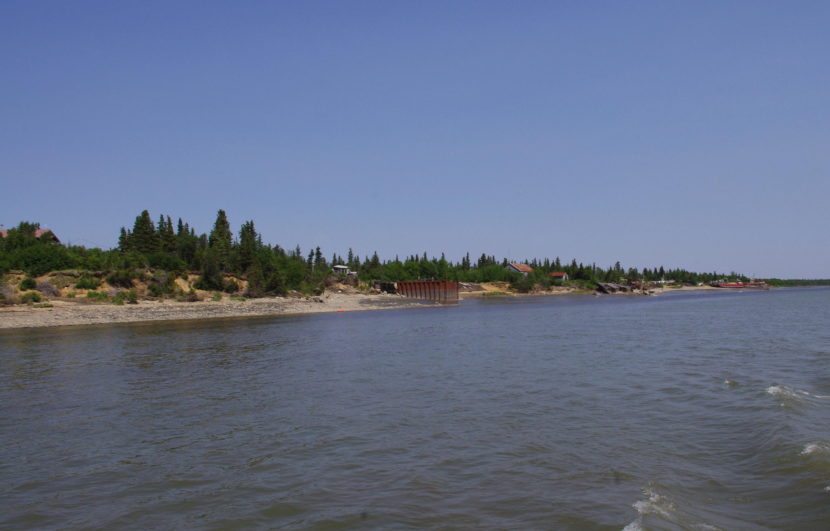
Levelock is shown in this June 2015 photo. The community on the Kvichak River is working to build a fish processing plant, which it hopes will open next year. (Photo by Molly Dischner/KDLG)

For decades, many of the processors in Bristol Bay have been large companies, with offices in Washington and parent companies in foreign countries. But two small communities are developing locally-owned processing plants.

Bristol Bay’s fishing communities have long been dependent on the companies that turn raw fish into a salable product and get it shipped out of the bay. The communities of Port Heiden and Levelock want to take on that role themselves and – hopefully – keep more of the decisions, and the benefits, local.

Native Village of Port Heiden Business Development Director Adrianne Christensen said the Meshik Processing Center should be up and running this summer.

“We wanted to start a locally tribally owned processing plant so that we could create a longer season for our fishermen, also to have our fishermen fish closer to home so they don’t have to go all the way up to Ugashik to fish, and to provide them with a higher price for their fish because we’ll be doing direct marketing and have a higher quality product,” she said. “That will mean more jobs and more pay for the fishermen.”

Right now, Port Heiden is waiting on some freezer equipment ordered from Anchorage. Once it arrives, and the fish are hitting, they’ll buy up to 10,000 pounds per day – hopefully from local fishermen. There are about half a dozen Bristol Bay fishery permit holders living there.

Meshik will start off by selling fish primarily in-state.

“So selling to the school districts, selling to Anchorage markets, and selling to local stores first,” she said.

Once it gets going, Christensen says the processing center wants to buy during a longer season than typical processors, starting with kings, and staying open through to silvers.

Eventually, they also want to expand and purchase a Japanese freezer system.

“We are working on getting that technology but because it’s very expensive we are getting the funding together to be able to purchase it,” she said. “The one small freezer system that we want to purchase is over a million dollars.”

To the northeast, Levelock Packing is probably a year out from operations. Village Council President Alexander Tallekpalek said they’re waiting on final approval for a $2 million dollar infrastructure grant from Bristol Bay Economic Development Corporation. In the meantime, they’ve been building the plant piece by piece using community block grants for the past five years and planning it for more than two decades.

“Right now we have about $1.8 million into the project,” Tallekpalek said. “Every year we purchase materials and equipment and build the processing plant with local hire for the past five years. And all the projects were small projects, but at the end of the day, we’re going to have a fully equipped processing plant.”

Last winter, the community went to the state Board of Fisheries and asked for more commercial fishing opportunity on the Alagnak River. After BBEDC agreed to help fund management for the project, the board agreed to create a new plan there, about eight miles from the village.

Levelock Packing wants to buy fish from the five local permit holders, as well as others from the region who want to fish the new area. Tallekpalek said he’s heard interest from set-netters from Dillingham, Iliamna Lake communities and elsewhere the Naknek-Kvichak District who are interested in fishing the new section.

Like Port Heiden, the plant wants to provide a market during the shoulder seasons.

“We plan to fish before the regular commercial sockeye season, and then we plan to do some fall fishing after the commercial sockeye season,” he said. “So we plan to harvest more than just regular sockeye. We’d like to do silvers and chums and that’ll keep our fish plant open longer.”

The longer season would be good for fishermen, and for employees. Tallekpalek said the plant will employ about 30 people, and he’s hoping most will come from the Bristol Bay region. Like most processors, the village is also working on housing for the employees.

Despite plans for a building and a fishery, Levelock doesn’t know where it’ll sell its fish. Tallekpalek said a roundtable is planned this fall to work on marketing plans and figure out what sort of product the plant will produce – whether frozen fillets or otherwise.

For both communities, the plants are part of a larger effort to develop more robust local communities.

“Right now, our community is about 70-some people, and the majority of us adults here, we all have jobs with the fish plant, with our barge, and with the high tunnel and some of the small grant projects that we’ve got here,” Tallekpalek said. “So we’re all getting a lot of work and a lot of excitement with the fish processing plant.”

Site notifications
Update notification options
Subscribe to notifications