Southwest

Committee to work out differences on bill drawing from rural power fund

The state House and Senate are trying to work out their differences over a bill that would draw money from the Power Cost Equalization Endowment Fund.

The $900 million fund subsidizes the high cost of electricity in rural areas. Because the state government has a $4 billion deficit, some lawmakers have suggested drawing money from the fund to pay for other state costs.

Sen. Lyman Hoffman, D-Bethel, speaks in support of Senate Bill 196 on April 13 in this screenshot from the Gavel archive.

Bethel Democratic Sen. Lyman Hoffman crafted a bill that would limit the draw from the PCE fund to years when the fund earnings are more than what’s needed for the power cost equalization program. This program costs about $40 million per year.

The Senate unanimously passed the measure, Senate Bill 196.

But the House made changes to the bill. These changes made it less likely that excess fund earnings would be redirected back into the fund.

Those changes concern Hoffman. When it was time for the Senate to decide Wednesday whether it would agree with the House’s changes, Hoffman spoke up.

“They changed the formula on how the excessive earnings will be distributed,” Hoffman said. “And I believe that that formula will potentially put the fund in jeopardy and want to go back and revisit the differences between what the Senate has done, which is a more sound approach to the fund.”

As a result, there will be a conference committee to rewrite the bill so that both houses can agree to it.

Hoffman will be the Senate chairman of the committee, which will also have Eagle River Republican Sen. Anna MacKinnon and Fairbanks Republican Sen. Click Bishop. The House members will be chairman Dillingham Democrat Bryce Edgmon, Eagle River Republican Dan Saddler and Fairbanks Democrat Scott Kawasaki.

The Legislature formed the conference committee on what was an otherwise quiet day in the Capitol.

Pulled back into Pebble, EPA retiree says he’s done

Retired Environmental Protection Agency scientist Phil North. (Photo by Liz Ruskin/APRN)

Retired Environmental Protection Agency scientist Phil North, the man the Pebble Partnership says was the mastermind behind the effort to block its proposed mine in southwest Alaska, spent a full day answering questions from a congressional committee Thursday.

Now that the staff of the House Science Committee is done questioning him, North says his involvement in the Pebble mine is over.

“I hope it is,” he clarified, in an interview on the steps of the Rayburn House Office Building, in the U.S. Capitol complex. “You know, it’s hard to predict what will happen. I thought I was done when I retired.”

North’s whereabouts was unknown – at least to Pebble executives – for nearly two years.

But the company eventually found him. Pebble compelled his return to the U.S. from the Asia-Pacific, where he was on a grand tour with his family, to answer questions related to a lawsuit over the proposed Pebble mine. North sat for questions from Pebble attorneys in Washington, D.C. two weeks ago, and then received a Congressional subpoena to answer more questions. North says the House committee is requiring confidentiality, so he was not free to disclose what was discussed in the closed session.

Pebble claims North improperly colluded with anti-mine activists.

“Mr. North was part of a group at EPA that made up their minds that this project should be vetoed before any of the science that they alleged they did was done and that they manipulated the process in such a way as to make that outcome become a reality,” Pebble CEO Tom Collier said in an interview with KDLG this month

Collier points to emails that he says show North helped mine opponents draft their petition to the EPA. Then, according to Pebble, North disappeared when questions and lawsuits arose.

North, though, says he’s just been traveling with his family, not dodging or absconding. He says they left a paper trail when they bought a car in Australia and registered it at an address where they lived for a time, and where they continued to receive mail.

“And that’s a public record. They could have found it if they wanted to,” North said. “So this idea that we were somehow trying to avoid being found, is really, I mean, that’s kind of silliness.”

North says his wife was posting their location on Facebook. And you can still see their profiles on the likes of AussieHouseSitters.com and TrustedHouseSitters.com.

Before he retired, North says he was just doing the job he was paid to do: protecting aquatic resources, in this case, Bristol Bay, using the powers Congress granted in the Clean Water Act.

“I was the staff person for that program,” he says, “so I was the person who had to initially evaluate the information, to collect the information and evaluate it, and then say, ‘how should we proceed?’”

North says the actual decision to use a lesser-known passage of the Clean Water Act against the mine, before Pebble applied for a permit, was made by higher-ups at EPA.

“I initiated the idea,” he said. “But to characterize me as some conspirator, it doesn’t match the facts. It’s a misrepresentation of the way the process works.”

The House Committee on Science, Space and Technology plans another Pebble hearing April 28, featuring EPA regional Administrator Dennis McLerran. North doesn’t expect to attend. He is no longer under any subpoena. He plans to rejoin his wife and children on the island of Bali and then decide which country to visit next.

Togiak tribe banishes Dillingham man for 10 years

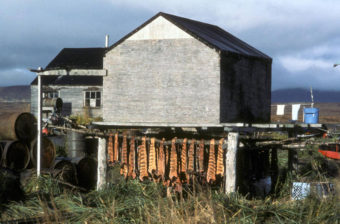
Fish drying in the village of Togiak. (Public Domain photo by U.S. Fish and Wildlife Service)

The Togiak traditional council has rolled out the “not welcome” mat to a Dillingham man they say has been importing alcohol and drugs into the community.

This is the second time in a year that the Togiak tribe has banished an individual from the village. Last fall, local air carriers were informed that the first of them, a 23-year-old from Dillingham, was no longer welcome in Togiak. On Friday letters went out that the second had been banished as well. He, a brother to the first, is 26 years old.

“I think we need to do this, to protect our future children, and our elders, because they’re vulnerable. It’s been getting worse, and we’re saying enough is enough,” said traditional council president Jimmy Coopchiak.

The tribe has decided not to publicly release the men’s names. Because the allegations of drug and alcohol importation leveled against the men are not based on state criminal complaints or filed in open court, KDLG has withheld their names from this report.

Local airlines confirmed that the tribe had asked them not to allow either of these brothers passage to the village.

Banishments from tribal lands in Alaska are not necessarily common but are not unheard of. The procedure appears to be of renewed interest as communities wrestle with the epidemic of heroin and meth use.

“It’s rare, but we are exercising our sovereign authority as a federally-recognized tribe,” said Togiak tribal court clerk Helen Gregorio.

Gregorio said banishment begins with a petition to the tribal council, which then meets with the court’s three-judge panel. Once the banishment order has been signed, the tribe says its police force will arrest the men if they set foot on their tribal lands.

The first man was banished for life, the most recently banished for the next 10 years.

Coopchiak said the council is taking more petitioned cases under consideration right now, these involving actual tribal members who live in Togiak.

“If it’s a tribal member, we have the authority to revoke their membership in our tribal membership,” he said.

Coopchiak and other officials in Togiak, a dry village, say the amount of hard drugs and alcohol coming in has spiked dramatically in the past two years. They blame that in part on direct cargo flights from Anchorage, and a lack of enforcement. They say they are asking the state and federal governments for help, hoping for funding and expanded jurisdiction for their tribal police and court.

Bethel pizza joint first to sell legal alcohol after 40+ years of prohibition

Fili’s Pizza. (Photo by Dean Swope/KYUK)

Legal alcohol sales have come to Bethel. Fili’s Pizza restaurant received its first alcohol shipment and began selling beer and wine when the eatery opened at 11 a.m. Friday.

As of 1:30 p.m. the restaurant said it’s sold three alcoholic beverages, marking the first legally sold alcohol in Bethel in more than 40 years.

Fili’s Pizza restaurant received its alcohol license from the Alaska Alcoholic Beverage Control Board this week. Restaurant owner Fili Saliu says the license arrived in the mail Wednesday, and the restaurant placed its first wine and beer order that evening.

Fili’s is the only Bethel restaurant to hold a liquor license. Two other entities, AC Quickstop and Bethel Native Corporation’s Bethel Spirits, hold Bethel’s two other liquor licenses — both for package liquor stores, which have not yet opened.

In aftermath of fire, Emmonak declares disaster

Emmonak fire at Kwik'Pak Fisheries 2016-03-22
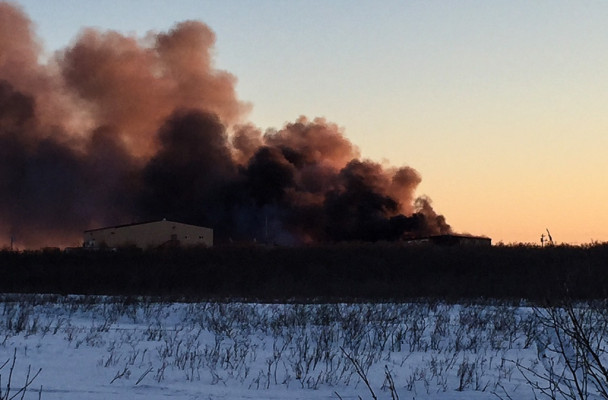
A fire engulfs the Kwik’Pak Fisheries warehouse in Emmonak in March 2016. The blaze destroyed five buildings and caused at least $3 million in damage. The fire’s cause is under investigation. (Photo courtesy Alaska State Troopers)

The City of Emmonak has issued a disaster declaration after a fire destroyed five commercial fishing buildings last month, causing $3 million of damage.

The city manager sent the declaration to Gov. Bill Walker and the Alaska State Legislature, requesting $750,000 in emergency funding.

That money would pay for a new fire truck, cover upgrades to city water lines, and match the city’s donation to the Yukon Delta Fisheries Development Association.

In addition to owning the five destroyed buildings, the association runs Emmonak’s commercial fishing and processing industry, which employs almost 2,000 people around the Yukon River Delta.

Without emergency aid, Emmonak City Manager Martin Moore said the fire’s damage could cripple the area’s economy.

“The community cannot afford to miss a fishing season and the people and businesses will suffer irreparable harm without immediate assistance to rebuild in time for the 2016 season,” he wrote in the disaster declaration.

The city itself is donating $150,000 to the association. That donation will cut water usage fees in half for subsidiary Kwik’Pak Fisheries, provide four acres of land to rebuild on at half the standard rate, and allow free use of the city’s heavy equipment to clean up debris from the fire.

Rep. Neal Foster, D-Nome, will request emergency funding on behalf of the City of Emmonak.

Cama-i Dance Festival celebrates resilience after tough year in Y-K Delta

One performer leads the Nunamta Yup’ik Singers and Dancers at the 2016 Cama-i Dance Festival in Bethel. (Photo by Laura Kraegel/KNOM)

Between low snow, tight finances and a series of suicides, the Yukon-Kuskokwim Delta has had a hard year. That’s according to organizers of the 2016 Cama-i Dance Festival, which ended Sunday night in Bethel.

Their goal for this year’s festival was to recognize the resilience of Y-K communities and get people drumming, dancing, and celebrating.

“You can rise above what’s going in your life,” said Peter Atchak. “You just have to work together and be together.”

Atchak is an emcee and organizer of the 2016 Cama-i Dance Festival. He said this year’s theme was all about honoring resilience: “Nunalgutkellriit Piniutiit Cauyakun. Community Strength Through Drumming.”

Community strength has been critical in the Delta, according to Atchak’s fellow organizer Linda Curda. She said the entire region has experienced tough times lately, but one community in particular inspired the theme, after suffering four suicides in about two weeks last fall.

“This past year, Hooper Bay has experienced just tragedy,” said Curda. “So we looked at some of the issues, and what did we want to do? We wanted to say that this festival is about the strength of who we are. We wanted to really nurture that, support it, and applaud it.”

Wilma Bell-Joe is from Hooper Bay, and she said the community is still grieving.

“It was a big hurt, but we’re trying to go back,” she said.

That’s back to celebrating the good things, without forgetting what happened. Bell-Joe works with the youth dance group in Hooper Bay. She said her dancers learn about Yup’ik values and healthy living as part of practice.

The young performers were invited to join the Hooper Bay Traditional Dancers at Cama-i this year. While the adults and elders missed the festival due to poor weather in Hooper Bay, Bell-Joe said her group got out in time and was thrilled to take the stage.

“To hear that the Traditional Dancers included them, that totally tickled everybody,” she said. “They’re like, ‘We’re actually doing what our ancestors did!’ It’s pretty cool to walk in the footsteps of an ancestor.”

During the three-day celebration at the Bethel Regional High School, more than two-dozen groups took turns performing. In addition to the Hooper Bay dancers, the festival featured groups from across the Y-K Delta, the state of Alaska, and the Lower 48 — from Anchorage and the Aleutians to Chevak and California.

All of the groups came together on Saturday night for the Heart of the Drums. The performance had drummers wrap around the gym and beat their instruments in unison.

Curda said the Heart of the Drums began 15 years ago to celebrate the passion and tradition shared by all the performers and people in attendance.

“At Cama-i, we have many different languages and many different dance styles,” said Curda. “But drumming is just that common connection — that common heartbeat. It’s our common humanity and heartbeat.”

Cama-i organizers also recognized invididuals for their contributions to the community. The festival was dedicated to the late Paul John of Toksook Bay for his efforts to keep Yup’ik dancing and drumming alive in the Delta.

Byron Nicholai (center) and the Toksook Bay Traditional Dancers perform at the 2016 Cama-i Dance Festival in Bethel. (Photo by Laura Kraegel/KNOM)

Chevak’s David Boyscout won the Living Treasure Award for influential elders. The 91-year-old teaches ancient Cup’ik dances to the youth, and he accepted his award from Chevak over a live video feed.

A new Miss Cama-i was also crowned. Olivia Shields of Toksook Bay won the cultural pageant and will represent the Delta at this year’s Alaska Federation of Natives Convention and World Eskimo-Indian Olympics.

Drummers and singers perform from the Barrow Dance Group. (Photo by Laura Kraegel/KNOM)
Dancers perform with Broken Walls. The group includes Alaska Natives and Native Americans from the Lower 48. (Photo by Laura Kraegel/KNOM)
Site notifications
Update notification options
Subscribe to notifications