Southwest

Bristol Bay’s sockeye runs are breaking records, but the fishery’s growth has left many locals behind

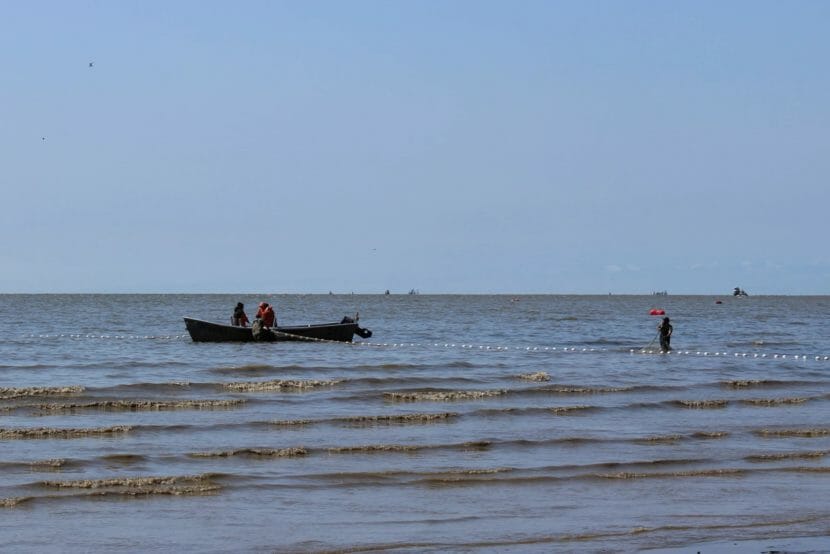
Set netters in Naknek. July 11, 2019. (Photo by Sage Smiley/KDLG)

This summer, 79 million sockeye returned to Bristol Bay. It was the largest run on record. But over the past half-century, there has been a dramatic shift in who fishes commercially in Bristol Bay. Local permit ownership has declined sharply, and research shows that’s due in part to a regulatory change to Alaska’s fishery management from the 1970s.

Propelled by years of low salmon returns and more people coming to the state to fish, Alaskans voted in 1972 to amend the state’s constitution and implement a limited entry system. This system restricted the number of commercial fishing permits in areas around the state, including Bristol Bay.

Its purpose was to reduce pressure on the state’s fisheries and help financially sustain fishermen who depended on them. The original permit applications were also meant to favor rural residents. But since limited entry began, local permit ownership in Bristol Bay has declined by 50%. Residents now own around one-fifth of drift permits.

William P. Johnson finished his sixty-second year captaining his own boat last summer. He grew up commercial fishing with his mother in Igushik. He worked on drift boats before he eventually bought his own. He said fishing in the 1960s and 70s was tough — the runs were low and there was steep competition. Limited entry was meant to address some of those problems, and supporters say it did. But it also fundamentally changed how local people were involved in the industry — and how the industry affected communities closest to the state’s fisheries.

“In the early years, there were many people who were participating in a fishery,” said Johnson, who lives in Dillingham and is a member of the Curyung Tribe. “They hired their local people from their village to participate with them. And with the out-migration, you can see the effect that it has on the monetary return to individual village people through their commercial fishermen.”

Fred Torrisi came to Dillingham as a lawyer with the state’s legal services in the 1970s. He said before limited entry, anyone could fish as long as they had a gear license.

“Limited entry was a major switch in that you got [the permit] once, based on your past performance and economic reliance on the fishery. And then it was sort of like a piece of property: You could transfer it to somebody else, or you could use it, but without one you couldn’t fish,” he said.
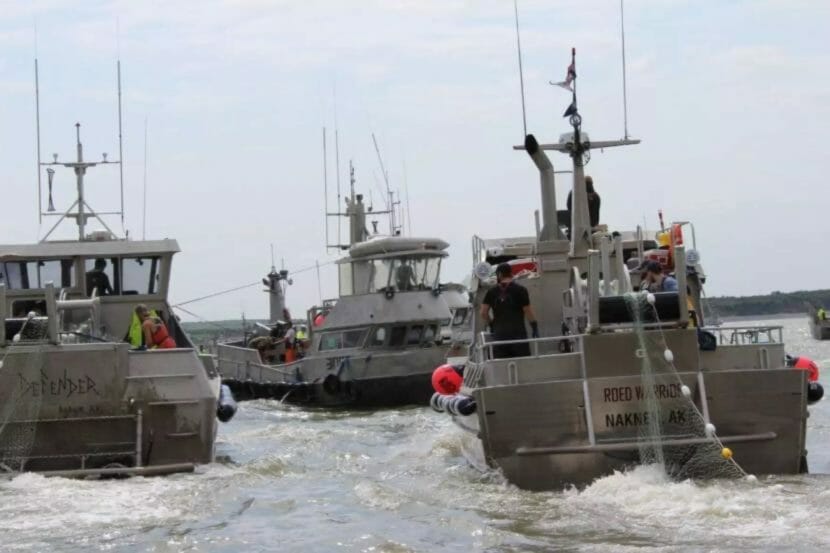
Naknek’s in-river opener. July 18 2019. (Photo by Sage Smiley/KDLG)

Decades of research shows that across the state, rural and Alaska Native fishermen face significant economic and cultural barriers to commercial fishing.

Rachel Donkersloot, an anthropologist who focuses on fisheries in Alaska, headed the latest study on the impacts of the state’s limited entry system. The 40-page report, called “Righting the Ship,” was commissioned by the Nature Conservancy and published last year.

“At the time of limited entry, they had increasing pressure on stocks, rising participation of non-residents, and a lot of concerns in the state,” she said. “They were somehow trying to address crises in our salmon fisheries. It was well understood that commercial and traditional harvest of fishing resources — that was the major source of economic livelihood in all of these Alaska Native communities in the bay.”

According to Donkersloot and other researchers, the permit application was supposed to favor rural fishermen, but it fell short. Torrisi said permit eligibility was determined by a point system. But it was confusing.

“It was meant to determine who really needed a permit, who really had been relying on it in the past,” Torrisi said. “So they had this point system, and it was based on — did you have a gear license in 1969 and 70, what percentage of your income came from fishing and those sorts of things.”

During the application period in the early 1970s, Torrisi said, there was poor public outreach to Bristol Bay communities, so some people weren’t aware of the change.

The state tried to address those problems, Torrisi said. It created the Commercial Fisheries Entry Commission as part of the new system, which held legal hearings in rural Alaska to address legal challenges. But limited entry meant that permits were freely transferable — so they could be bought, gifted, or inherited.

“The problem of course was that they couldn’t say [the permits would] stay there,” he said. “When they established the system, [the permits] became transferable. And if they weren’t transferable, they ran into constitutional problems. There was nothing to stop them from migrating, as any property does, towards those with more wealth.”
""
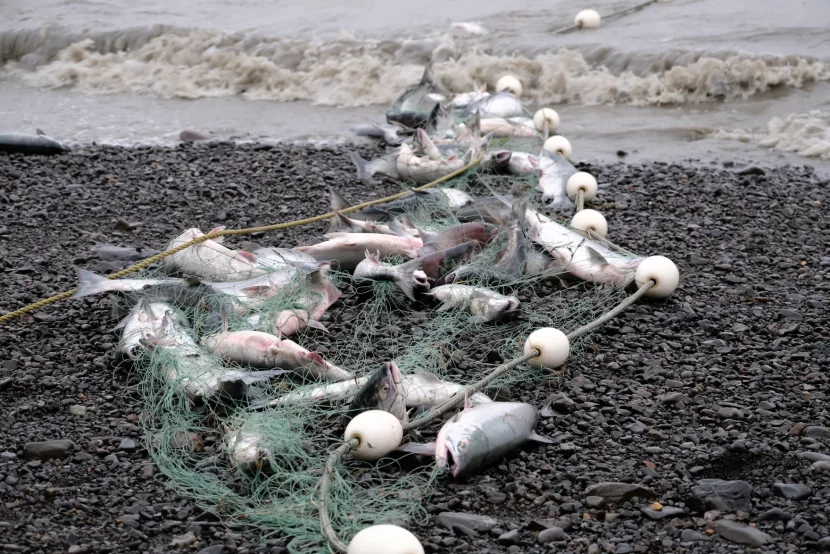
Water washes over fish in a subsistence net on Kanakanak Beach. (Photo by Brian Venua/KDLG)

Fishery growth left some locals behind

In the nearly 50 years since the change, the value of Bristol Bay’s fishery has grown exponentially. The fishery was valued at $2 billion dollars in 2019. But most of that revenue leaves the state.

“What matters most in terms of the benefits from fisheries is where the permit holder lives,” Donkersloot said, pointing to a study from the Institute of Social and Economic Research.

It has always cost a lot to run a commercial fishing operation. But many local fishermen face higher barriers to entering the industry than those coming from outside the region.

Donkersloot said the gap in access to the fishery between urban and non-resident fishermen and locals often boils down to financial circumstances — like access to capital and credit history. The average price of a Bristol Bay drift permit this year is more than $230,000, according to the Commercial Fisheries Entry Commission.

When limited entry was implemented, the report says, it didn’t include safeguards to help local operators continue to fish.

After limited entry was implemented, the makeup of permit ownership shifted rapidly. The report states that seven years into the program, Alaska Native permit holdings in Bristol Bay had declined by 21%. The communities of Pilot Point, Levelock, Egegik, Ekwok, Pedro Bay and Nondalton have lost over 75% of their permit holdings, and there has been a similar decline in the Southeast Alaska villages of Angoon, Kake, Metlakatla and Hydaburg.

Donkersloot said residents of Bristol Bay tend to earn the least even though they rely on that income more when compared to their urban and non resident counterparts. Local boats tend to be smaller and less efficient at harvesting than non-local vessels. Because other economic opportunities are limited, they also experience greater pressure to sell their permits.
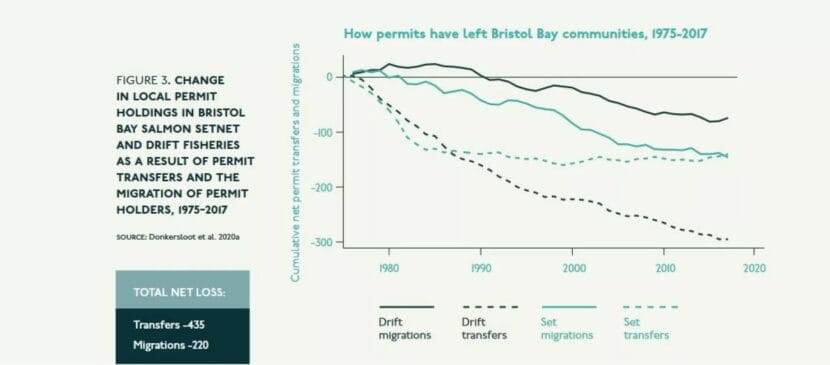
A graph from ‘Righting the Ship’ that shows how permits have left the Bristol Bay region. (Reporter01/’Righting The Ship’ From The Nature Conservancy)

Johnson, who has fished in the area his whole life, said he was able to hold onto his permit because he worked all year round. But many local people in the fishery weren’t able to do so.

“There was a change because people, because of the poor runs, began selling their permits,” he said. “And, of course, that impacted mainly the local people. They couldn’t afford to make a living fishing, and so many of them ended up selling their permits just to get by for a couple years.”

As permits left the region, Johnson said, local involvement in the fishery has changed, which has changed the local economy, although he added that the success of some of the Native corporations following the Alaska Native Claims Settlement Act has helped to improve local economies in other ways.

“Many people that I know sold their permit because they didn’t have the resources to maintain a profitable operation,” he said. “I was able to keep in to the fishery because I worked during the off-season. And so I was able to raise a family and it became a limited entry permit.”

Dillingham resident William P. Johnson finished his sixty-second year captaining his own boat last summer. July 22, 2022. (Photo by Brian Venua/KDLG)

A “cultural disconnect”

The limited entry system also didn’t take into account cultural differences around fishing, Donkersloot said. She calls it a “cultural disconnect.”

“That refers to the cultural values and motivations that often inform fishing practices, particularly in smaller villages and Alaska Native villages. And these can be at odds with the highly competitive and the sometimes aggressive nature of the fishery today,” she said. “So it’s often the smaller scale livelihoods that tend to be eroded when you transform a fishery into a fishery under transferable access rights.”

The out-migration of fishing permits from rural Alaska is a controversial and complex topic. The decline in local permit ownership is intertwined with a broader movement of people from rural to urban areas; along with selling permits to nonresidents; permit owners have also moved away from the region. The report points out that legislators, Alaska Native community leaders, residents and economists have repeatedly tried to address these forces. For instance, the state has a loan program for permits. The Legislature has also attempted to reduce loan caps and promote workforce development.

Bristol Bay has seen especially robust efforts to try to stem the flow of permits leaving the region. The Bristol Bay Economic Development Corporation has a longstanding permit loan program, where residents can get loans to buy into the fishery. It also offers technical assistance and training for people who don’t qualify for financial programs. While that has helped to a certain extent, the report says it hasn’t stopped out-migration of permits — or the people who hold them.

A path forward

Donkersloot’s study on the system says the state should help to find a way to increase commercial fishing access for local fishermen. The report lays out a few paths forward that Donkersloot says have worked in other regions and countries that have dealt with similar problems. They include provisions for small-scale operations, apprenticeship permits, and creating locally designated permits.

“What those solutions share in common is that in one way or another, they all serve to anchor some form of access to a region in perpetuity. So it means that there’s access — opportunity that can’t migrate away, it can’t be sold away,” she said.

Donkersloot said that the solution isn’t to exclude others from the fishery. Instead, she said, the state needs to support opportunities for rural residents to work in fishing.

“We should also be thinking about how do we carefully and fairly ensure that family fishing livelihoods, community-based and small-scale fishing livelihoods in the bay are a part of the picture in the future,” she said. “This is about sustainable economic development and Bristol Bay, and you cannot have that conversation without thinking about fisheries.”

As the fishery celebrates another huge run, Donkersloot said it’s important to think about who is able to participate in the fishery, and why.

A sunset in the Nushagak District. (KDLG file photo)

Fat Bear Week is on: Here’s a guide to Katmai’s bulky bruins and how to vote for your favorite

2022 Fat Bear Week Bracket (Courtesy explore.org)

Ladies and gentlebears, welcome to Fat Bear Week 2022!

This annual, weeklong competition from Katmai National Park and Preserve is a celebration of a summer’s worth of hard work, a hat tip to a healthy ecosystem and a collection of survival stories. The bears of Alaska’s Katmai National Park have been busy all summer feasting on salmon and stocking up on nutrients for their winter hibernation, and they’ve got the fall bods to prove it.

What started as a one-day event in 2014 conjuring the attention of a few thousand nature conservancy social media followers has grown into a weeklong tournament boasting almost 800,000 votes last year. There are Katmai bear cam watchers in every part of the country, fat bear curriculums in classrooms, fat bear campaign posters, fat bear Spotify playlists and, of course, fat bear bets on who will be crowned the champion.

Similar to March Madness, Fat Bear Week is a bracket-style, single-elimination tournament. The much-anticipated 2022 bracket was released bear-by-bear Monday during a live online event, and we’re here to break it down for you.

Who’s in the bracket?

You can find the complete list of all 12 contenders, before-and-after photos and short biographies at fatbearweek.org. I’ll be sharing more about individual behemoth bears and their mega matchups in the coming days. Without deep diving into a full bracket review, I do want to take this opportunity to thank the rangers for a more equitable lineup this year with regards to the lady bears. We won’t talk about 2021, but let’s just say I’m happy to see so many hard-working mamas back up in this game. I don’t want to unfairly sway folks (cough, 435 Holly) but I’d love to see (cough, 435 Holly) some of these fabulous fat females (cough, cough, 435 Holly) find their way to the crown, for example 435 Holly or 128 Grazer or even a 909 Jr. Bean-yoncé upset (’cause she’s a young queen, and she knows it).

How does it work? How do I vote?

Fat Bear Week runs Wednesday, Oct. 5 through Tuesday, Oct. 11. Each day, one or two matches will be posted on fatbearweek.org. Between 9 a.m. and 5 p.m. Alaska time, you may vote for one bear in each match. The winner of each match is announced that evening and advances to the next round.

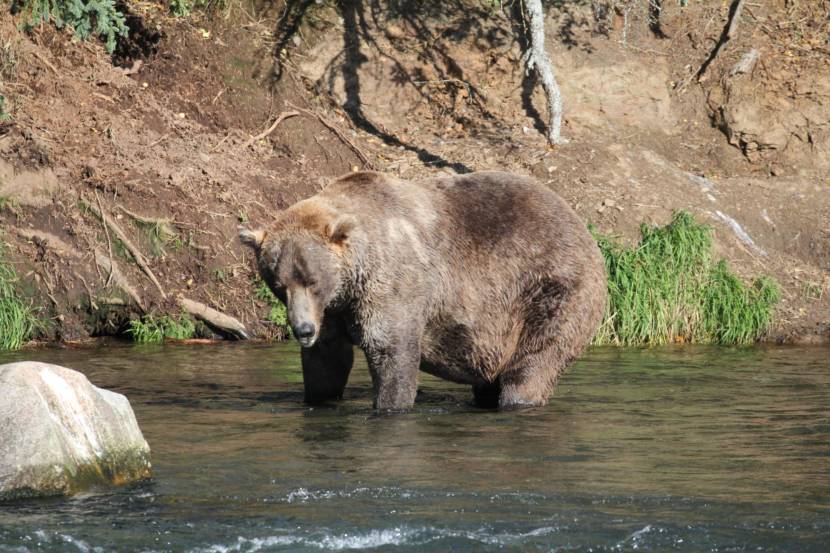
Bear 128, a competitor in the 2022 Fat Bear Week bracket. (Photo by L. Law)

Which fat bear do I vote for?

The voting rubric is different for different people. Some folks believe you should only vote for the physically, empirically, literally fattest bear. Some believe it’s a matter of weight gain — that is, you should determine which bear was most successful in becoming a fat bear between spring and fall. Others believe that fatness is a symbol of overall survival and that one should vote on a fat bear’s skills, success and story arc. Who here is giving off main character vibes? Vote for them.

Personally, I love Fat Bear Week for the poetry. For the 435 Holly in us that wants to be a good mom to any and all our children. For the 480 Otis in us — calm and patient and poised beyond measure. For the 901 in us that “sleeps, eats, and passes on her genetics,” in the words of Katmai National Park ranger Kim Grossman.

Whether you’re a Fat Bear Week fan for life or a newcomer to the scene, I hope you find a bear to put your weight behind. It can be a tough world out there, and yet, we’re all finding our way. I’m here for the gargantuan glow-ups. Let’s celebrate!

This story originally appeared in the Anchorage Daily News and is republished here with permission.

Get ready for Fat Bear Week

Otis, last year’s Fat Bear Week champion, photographed on Sept. 16, 2021. (Photo by C. Spencer/National Park Service)

The highly anticipated annual celebration of Katmai National Park’s most rotund bears kicks off this week. Fat Bear Week returns Wednesday with a tournament to decide the Katmai brown bear that best exemplifies “fatness.” The competition began in 2014 and has grown into a national phenomenon.

As some of the world’s largest brown bears bulk up for the winter, the tournament gives voters a chance to celebrate the success of Katmai’s bears as they prepare for hibernation. The competition is also meant to highlight the large sockeye salmon runs of Bristol Bay.

Last year, an older bear named Otis took the crown for the fourth time. Around 800,000 people voted in Fat Bear Week 2021.

The competition is arranged as a single-elimination tournament, where the public can vote in one-on-one fat bear matchups each day until one is crowned champion.

The brown bears up for this year’s title will be revealed in a live stream on Monday at 3 p.m.

The warm-up competition, called Fat Bear Junior, is going on right now. A two-year-old cub called 909’s yearling is up against a litter of three cubs that were born last winter. The winning cub will compete against the adult fat bears next week.

You can visit www.fatbearweek.org to vote.

Swiss paddlers arrive in Bethel after 700 mile journey down the Kuskokwim

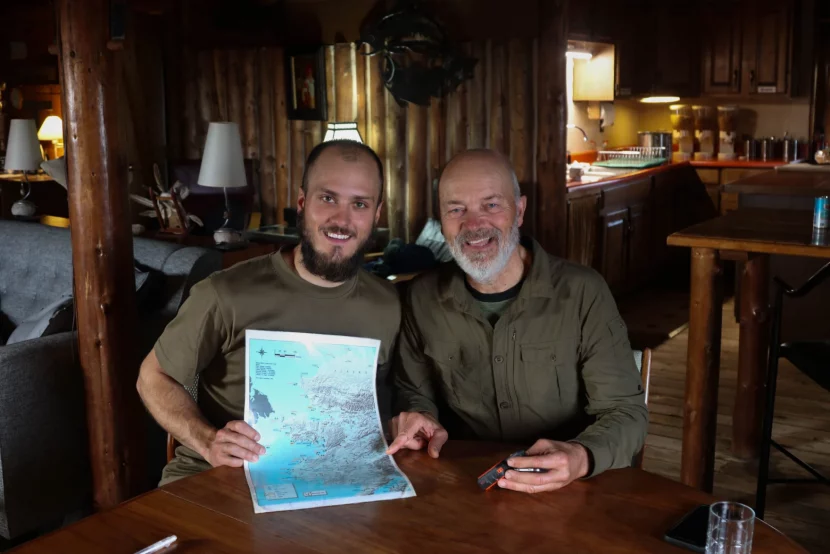
Thomas and Tomi Isenschmid with a map of their route down the Kuskokwim. (MaryCait Dolan/KYUK)

A father and son from Switzerland paddled ashore at Lomack Beach in Bethel last week. They had kayaked around 700 miles down the Kuskokwim to get there from Lake Minchumina, but Thomas and Tomi Isenschmid’s journey got off to a rocky start.

Their first challenge was to carry all of their gear, kayak, tent, food and supplies, 10 miles from their starting point at Lake Minchumina to the North Fork of the Kuskokwim. They had to carry 350 pounds of gear across the tundra, Tomi said.

It took him and his father, Thomas, a week of walking back and forth from their camp to their starting point on the river. Their hiking boots got soaking wet trudging through the soggy tundra.

At first they couldn’t even find their entrance point to the Kuskokwim, the river they’d traveled from Switzerland to paddle down.

“The first day we made a terrible mistake, you know. We went more or less in a circle. We worked for six or seven hours, completely frustrated,” Thomas said. “We were doubting whether we could do it.”

A trapper in Lake Minchumina helped them with directions. They’d been looking on the left, but the way out was on the right.

“And then the next morning we made it to the North Fork,” Thomas said. “And that was really highlight: when you see the water of the North Fork for the first time. That was really great.”

The Isenschmids said that once they started paddling down the river it got easier. It felt more like the adventure Thomas had planned to do with his son. In a year off from work, he did a trip with each of his three adult children.

Thomas estimated that only four parties have paddled that far down the Kuskokwim, at least in the past 30 years.

Getting onto the river didn’t mean their challenges were over. Their first day paddling, a black bear with two cubs stood up behind their tent and smashed it down. Thomas was able to scare her away with bear spray, and there was no damage to their tent. But when they got back to their boat they found it ransacked: parts broken, supplies pulled out.

“That was the second moment where we thought ‘this is the end.’ First day on the river. This is the end,” Thomas said.

But they were able to fix what they needed to to get back on the water. There’s still a small chunk ripped out of one of their Klepper foldable kayak’s seats. The kayak is a German design inspired by traditional Yup’ik kayaks, Thomas said proudly.

“You’re very busy, and you’re busy with really the basics,” Thomas said. “How can I stay warm? How can I get food?”

The Isenschmids did a 100 mile, week-long kayak trip to prepare in Switzerland. But it’s a different experience in Alaska in that you’re far away from help if there’s an emergency.

“When you think: ‘Is this it? Is this the end?’ You start feeling the heat rising in your body and you start thinking there is nowhere you can go,” Thomas said. “There is no immediate help, not even within a day or two. And this is really a special feeling. But it’s also a good feeling. Because you can see you can really do it.”

After two weeks of paddling, they reached McGrath. From then on they started to encounter more people as they traveled down the river.

In Akiak, people brought them food, coffee, and dried fish when they camped by the village for two nights. One night, they went into town to play bingo and they won the $228 jackpot.

They said that many locals they encountered also gave them advice, like the best fishing spots or which channels to take.

“Some people were telling us how it was like 50 or 60 years ago,” Thomas said. “How they camp and how it has changed. It’s interesting to hear and exchange, and people are really very nice.”

The Isenschmids aren’t the only ones to complete challenging paddling trips in the area this summer. Thomas Dyment and Luke Wenger paddled 850 miles from Fairbanks to Bethel.

Lower Kuskokwim students return to classrooms that served as weekend storm shelters

A river flooded over its banks, right up to the front of a school building
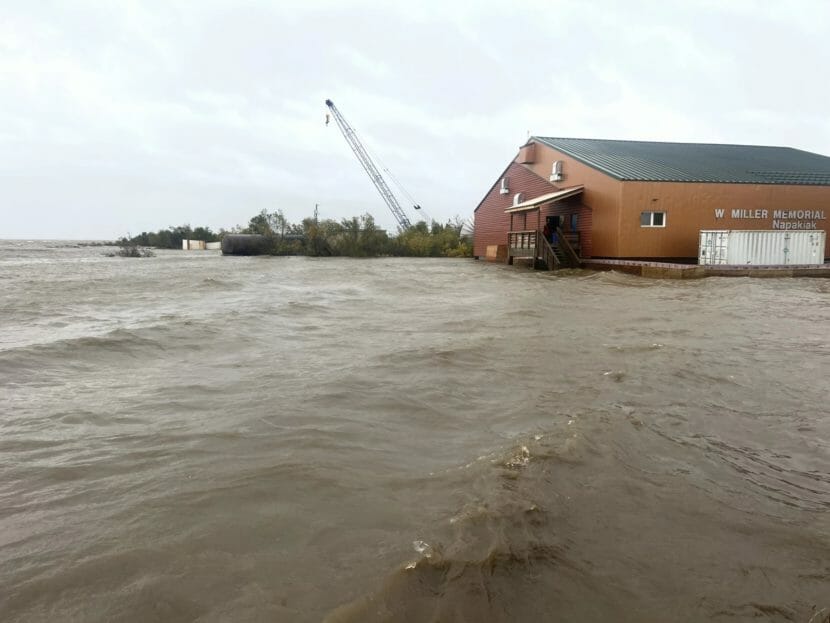
The William Miller Memorial School in Napakiak, Alaska on Sept. 18, 2022. (Courtesy Bethany Hale)

Western Alaska’s massive storm last weekend sent residents of six communities in the Lower Kuskokwim School District to their school buildings for refuge. Classrooms turned into bedrooms, gyms into informal dining halls.

Superintendent Kimberly Hankins says those same classrooms are filled with students again, with schools already returning to instruction Monday even as staff begin to clean up and take stock of damages.

“Everyone is sort of back in session and trying to attend to student learning while we also attend to storm cleanup and assessment of damage in and around, not just the main school building, but all of our facilities,” Hankins said.

According to Hankins, schools served as evacuation centers in Newtok, Kipnuk, Nightmute, Kwigillingok, Kwethluk and Tununak. At one point, as many as 70 people were sheltering in Newtok’s school building. In all six communities, residents have since been able to return home.

So far, damage to the school buildings seems to be limited. For Hankins, it’s a point of pride that people can turn to the school in times of crisis.

“I’m just happy that we have the space to offer in order to shelter folks when situations like this happen,” Hankins said. “We work closely with the community so that folks receive the message that they are welcome to come up to the school and they can seek safety there.”

Although no school interiors flooded, there was significant erosion in some communities that brought the buildings much closer to the shoreline.

In Newtok, Hankins estimated that the school building is now only 90 feet from the water, down from about 125 before the storm.

In Napakiak, the school is only 75 feet from the water. That’s after the back half of the school was demolished this summer, which would have put the building even closer to the riverbank. Some boards beneath the school and piping running to the building were also damaged in Napakiak. Teachers evacuated their housing, which sits closest to the river, as water rose to their doorstep.

Both Napakiak and Newtok already had plans in place to retreat from the water because of erosion concerns even before the storm. Newtok is relocating the entire town to higher ground, while Napakiak is moving its community further back from the river.

Hankins said that the district is continuing to assess the safety of the buildings. With continued erosion, there could come a point that these schools might be deemed unsafe for use.

“Certainly student and staff safety is always our number one priority, so our team is constantly assessing and reassessing,” Hankins said. “I’m really hopeful that we won’t see additional fall storms that are as impactful as what we just experienced. But, you know, we never know what’s to come.”

For now, local maintenance staff will be working on cleaning up debris left from the storm. As a clearer picture of damages emerges, the school district may send extra staff out to communities that need more resources.

Dillingham’s housing crisis has teachers sleeping in the school

A man stands holding a cat in a classroom, with a large stack of totes nearby
Science teacher Dan Bonser holds his cat, Nix, in the classroom he and his family have stayed in since they arrived in Dillingham in August. (Photo by Izzy Ross/KDLG)

One afternoon in early September, Dan Bonser walked up the stairs in Dillingham’s middle-high school to Room 200. It’s the middle school science room — where his family sleeps.

“Some of our bedding is over there. And then the first two totes over there — food,” he said pointing across the classroom.

There was a lot of turnover in the Dillingham City School District last spring. The district hired 22 new staff members for this year — a quarter of the entire staff. Unable to find homes in town, some are living at the school.

Bonser moved from Oklahoma to Dillingham last month with his wife, Lisa. Their daughter, CJ, also moved with them and is an instructional aide for the special education program. The family lives in Room 200 with their two cats, sleeping on air mattresses.

Bonser said the first few weeks have been tough.

“I’ve done a lot of different jobs in my life. And I’ve never been this exhausted,” he said. “It’s a lot.”

Dillingham’s housing shortage is acute, but it’s not unique. Across the country, people are struggling to find places they can afford to rent or buy. In Alaska, the average home sales price jumped almost 9% last year. And in rural communities, the problems are compounded by the costs of shipping in building materials and the lack of construction workers and contractors.

“The common thread is — tight housing market, rising sales prices and limited availability. And that’s home buying,” said Rob Kreiger, an economist with the Alaska Department of Labor. “On the rental side of things, broadly speaking, rent’s way up, vacancy rate’s way down, which suggests a tight rental market, as well as a tight home buying market. And that’s pretty much consistent throughout most of the areas that we have data for.”

Kreiger said the state doesn’t have a good handle on what the rental market is like in rural parts of Alaska. But in general, housing prices are high, and there are few homes for sale in rural areas.

“I think you have those two factors,” Kreiger said. “I think that would probably sum it up for most of the kind of larger rural hubs as well.”

Bonser said when they were offered the teaching jobs, the school district said it would help them navigate the search.

“We have a bead on one house, but it needs to be connected to the sewer, and there’s not enough plumbers to get that done and the homeowner’s been waiting a long time for that to happen anyways,” he said.

The school district’s new human resources director, Lindsay Henry, was able to find a place for herself and her dog. She said other new staff were able to find housing, too. But it’s tricky when newcomers aren’t familiar with the state.

“I think what is difficult for people who are coming who don’t have a familiarity with Alaska, is that they hear about people working in the bush. And in most of those bush communities, they do provide housing, and Dillingham is kind of unique in that it’s a Class A city and we don’t have to provide housing for teachers,” she said.

Henry said the district tells staff that housing is a challenge and tries to help them find something. Officials can send teachers phone numbers and the names of landlords in town.

“But we can’t take on that liability or responsibility of actually negotiating housing for them. So it’s a challenge in many ways,” she said.

It’s also competitive. Henry points out that a lot of organizations in Dillingham hire people from out of town and need housing for them. That includes the hospital, Fish and Game and the university.

The housing shortage in Dillingham is intertwined with a national shortage of teachers. Other schools have turned to teachers from other countries through the J-1 visa program. But that program also requires a plan for housing.

Dillingham’s new superintendent, Amy Brower, spent five weeks staying at the school before she found a place to live. At a recent school board work session, Brower said there were several candidates who turned down job offers because they couldn’t find anywhere to stay.

“We had some really good, high-quality candidates that wouldn’t come because of housing,” she said. “So we’re at a point where, with the number of teachers that are not out there — and I said not — and the quality of teacher that we’re looking for, we’re going to have to find some way to do something to help get them here.”

The administration is working with the fish processor OBI Seafoods to rent out crew quarters during the year. Brower said the school is working with the City of Dillingham to find long-term solutions as well. The district has discussed applying for grants to build new housing units or renovate existing ones. That could include an Alaska Housing Finance Corporation grant, which would allow a company to build housing teachers could then rent out.

Until then, some teachers will continue to search for a place to sleep — outside of the classroom.

Site notifications
Update notification options
Subscribe to notifications