Western

How 2 Russian men fled to Alaska in a small boat

""
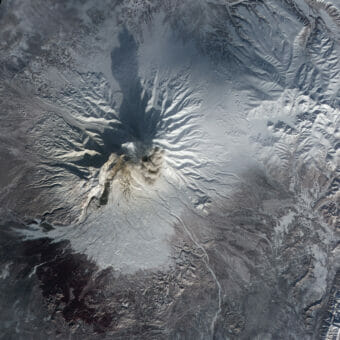
An aerial view of St. Lawrence Island, circa 2015. (Photo by Laura Kraegel/KNOM)

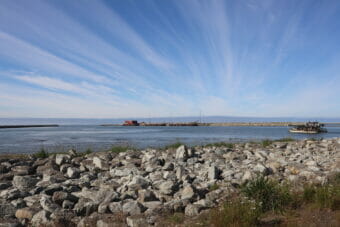
The two Russian men from Chukotka arrived in a 16-foot fishing boat in the St. Lawrence Island village of Gambell in October, hoping to avoid being drafted to fight in Ukraine.

They spent three months in detention, then were released earlier this month in Washington state. That’s where Charlie McCann, a feature writer for The Economist’s long-form magazine “1843,” caught up with them.

McCann has written a detailed account of why — and how — the men escaped Russia to seek asylum and new lives in the United States. In her story, she also describes two men with lives familiar to many Alaskans.

Listen:

The following transcript has been lightly edited for clarity.

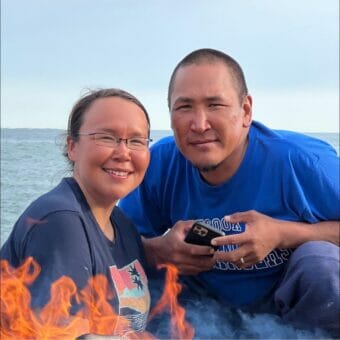
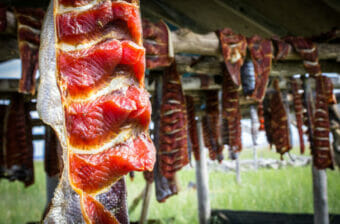
Charlie McCann: Yeah, their names are Sergei and Maksim, and they are from a very small town in Chukotka province called Egvekinot, which is right on the coast, a coastal town. And Sergei and Maksim have known each other since they were teenagers. They met through their parents, who work together in the local fishing industry. And Maksim himself became a fisherman, catching mainly what he calls red fish, salmon. And Sergei is a trucker who runs his own haulage company.

Casey Grove: It sounds like things became fairly strained as Russia had invaded Ukraine, and, you know, it seems like kind of a mystery to us what was sort of going on with Russian people in Russia at that time. What was their experience like?

Charlie McCann: Yeah, that’s a great point, and that’s why it was so fascinating to speak with them about their views on what was happening at the time. I mean, they are very much opposed to the war in Ukraine. Both of them said to me that, you know, “Why are we there? What is the point of this war? So many people are dying,” and they both use that word “evil.” They said, you know, this is evil. Sergei in particular, he’s very outspoken. He has basically been an irritant to the Russian government for quite some time. He was talking about how a lot of money was earmarked for road construction in Chukotka, you know, a province that really desperately needs roads, and yet the roads weren’t being built.

And so he would sort of rail against local corruption to anyone who would who would listen to him, frankly. He tells me that he was arrested in June and detained for a couple of days. Once he was detained by the government and warned in this way, he decided, “I’ve got to leave, I’ve got to leave this country.” And then a month later, conscription began. Military officers began knocking on the doors of men in his town, trying to haul them off to Ukraine. And so Sergei and Maksim both got that knock on the door and knew exactly who it was, because the whole town had been sort of buzzing with the news of the mobilization. Neither of them answered that knock on the door, because if they had, they would have been sent packing to the front. And I think it was it was that knock on the door that made Sergei realize, “Now is the time.”

Casey Grove: Well, you know, I guess we know that they made it, at this point. But tell me about their journey. I mean, what was that like, how did they survive crossing the Bering Sea?

Charlie McCann: It was nerve-racking for so many reasons, right? So they they set off going down the Chukotka Peninsula. And so they’re worried about being discovered, you know, found out by the people in these towns. They always stuck to the same story, which was that they were looking for dead walrus so that they could remove the tusks and sell them. And then, of course, they were constantly terrified of being found out by the border patrol. This is a really heavily militarized part of Russia, towns kind of crawling with border patrol. And then the other huge concern, of course, was just dealing with the sea.

The first day or two was smooth sailing, but they encountered storms. There was one particularly terrifying moment on their fifth and final day of this voyage. And can you imagine? These are two men who have left everything behind in Russia. They left their lives behind, everything they know, everyone they know, to strike out and try to make new lives in America, if only they can make it there. And by this point, they are so close. They’re, I think, they’re only about 20 miles from Alaska. And then Sergei, he sees these enormous waves. They start to feel the wind. They see the water’s getting choppier. They pull out their weather app, and they see the cyclone is right there, they’re heading right for it. They didn’t even think about returning to shore. This might be their last chance to make it to the U.S., and so they just persisted. You know, the water got rougher and rougher. There was a moment when Sergei said it felt as if they were in between two walls of water. The waves were that big. Both of them getting sprayed by the water. The bilge pump is working overtime. And yet they survived, because Maksim spent so much of his life on the water. He’s really an adept boatsman, and he just managed to ensure that they sort of skirted the cyclone. They’re never pulled in too far, into the eye of the storm. And somehow they made it.

Casey Grove: Yeah, it’s amazing. I mean, they showed up in Alaska, and this is St. Lawrence Island, the little village of Gambell. How were they welcomed? And then how did that welcoming party sort of change pretty quickly?

Charlie McCann: Yeah, well, they said it was at first a little bit tense, kind of understandably so, because they’re wearing their camo jackets. And apparently, a bunch of locals had gathered on the beach to check out what was going on, and apparently they wondered, “Are these guys Russian soldiers?” But Sergei and Maksim quickly explained the situation. They were communicating via Google Translate, and said, “No, no, no, we’re not, we’re definitely not Russian soldiers. We’re actually here because we’re trying to escape the Russian military. We’re here to declare asylum.” And at that point, they were welcomed by the locals. They fed them and I think Sergei and Maksim apparently tried to return the favor. They had brought so much food with them that there was kind of a bit of an exchange of food. And at some point, the local police force was was involved. Some police officers came up, and I think they were taken to the police station where they spent the night. And at some point, (Immigration and Customs Enforcement) got involved as well. But I think they were helicoptered out of Gambell by the Coast Guard and deposited in Anchorage where ICE took over.

Casey Grove: I got the impression, too, that they were obviously very happy to have made the crossing alive, and to make it to the United States and to try to start this new life here. But things are a little different now than they were when people were defecting from the Soviet Union, right? And so tell me about the rest of their journey, to the point where you actually had a chance to talk to them, because they spent quite a bit of time in detention, right?

Charlie McCann: Yeah, they were very surprised. I think they were probably expecting some bureaucracy, of course, but they weren’t expecting what happened. And what happened was, they were taken into ICE custody, and they were flown from Anchorage to Tacoma, Washington, where they were put in a detention facility, and where they are kept for months and months. And they say that they had very little idea of what was happening to them. And the situation was this: Asylum seekers who arrive on American soil without permission to be in the country, because they haven’t, you know, got the appropriate visa or whatever, they are detained. This has now been the case for a couple of decades. And they will basically be detained until they’re able to post bail.

They were detained for three months, in conditions which sound pretty miserable. They were in one very large room with about 70 other detainees. The food was pretty miserable. They said it was rice and beans and beans and rice, pretty much the whole time. And you know, they weren’t allowed outside. I think they were allowed outside for maybe like an hour a day or something into the yard. And it was difficult, I think, because of those conditions, but also because the uncertainty of their situation, not knowing how long they would be in there, and not knowing how they would get out. And of course, the language barrier was difficult, as well. So I asked them how they coped with the situation. And they said that it was sheer escapism. They managed to get some Russian language books, so they were doing a lot of reading. Sergei said he read 19 books, and they were reading, I guess fittingly, Russian classics. You know, Dostoyevsky, Tolstoy, Pushkin. Eventually, they were able to post bail, and they were let out earlier this month.

Casey Grove: Wow, yeah. So they they bail out, and then you flew out to Washington to talk to them. What was that like? And I guess also, I mean, what did they say about their hopes for the future?

Charlie McCann: When I met them, Sergei had been out for all of five days. And Maksim was released just the day before. They were really acclimating both to being in the U.S but also to being free after this three-month ordeal. You know, Sergei talked about catching up with the news, catching up with what was happening in Russia and the war in Ukraine. Maksim was very quiet, very reserved, possibly because, you know, he’d just been let out of what felt like jail. And so he may well have been sort of overwhelmed. But I think they’re just, yeah, they’re basically kind of getting their feet on the ground. A volunteer who’s helping them was looking for a bike so they can get around.

I think Sergei, he has a little bit of English, and I think he’s probably trying to improve it. They’re out now right? So they’re super hopeful about the future, and they’re trying to make plans. You know, Sergei, he’s a really dynamic energetic guy. And he basically is thinking about the next steps and thinking about what jobs he might do in the U.S. You know, he was saying that he had noticed how much plastic trash and aluminum cans he’d seen around around Tacoma. He was thinking it’d be great to get a, you know, like a deposit-recycling scheme going. Maksim, again, he’d only been out for a day. So I think he’s still kind of collecting himself. But I asked him, “What do you think you might want to do?” And he said that he is hoping to be reunited with his fishing boat.

Casey Grove: A true fisherman!

Charlie McCann: Exactly.

Casey Grove: They also said something about wanting to come back to Alaska.

Charlie McCann: Sergei said, “Look, we’re people of the north, where we’re used to the Arctic climate.” And so their thought initially had been that they would return to Anchorage. I think Maksim still felt that he would. And Sergei, you know, being a real entrepreneurial type, was thinking maybe Anchorage but that also he would see, you know, he would go wherever, sort of supply and demand, as he put, it would take him.

Donlin mine promises revenue for all Alaska Native corporations, but critics point to environmental risks

""
Mine worker Justin Andrew examines and core samples at the Donlin mine camp on Aug. 11. Outside is the hillside that would be dug for its gold if the huge mine is developed. (Photo by Yereth Rosen/Alaska Beacon)

In the rolling uplands of Southwest Alaska’s Kuskokwim River basin is a massive deposit of gold that poses some profound questions about the future of the region’s Yup’ik people and Indigenous people elsewhere in the state.

The Donlin Gold mine, which is on the cusp of being constructed after two decades of exploration and planning work, would be one of the largest open-pit gold mines in the world. A project being pursued by a partnership that includes one of the world’s largest mining companies, Donlin would produce 39 million ounces of gold, operate for nearly three decades and employ hundreds of workers a year, according to the partnership’s plan.

Donlin is especially exciting, say supporters, because of its location — on Alaska Native land, with Alaska Native ownership of the mineral rights, and in a predominantly Native region long plagued by economic woes and public-service deficits.

“That region happens to be one of the places suffering the most significant poverty and infrastructure deficit of any place in America,” Matt Singer, an attorney for the Yup’ik-owned Calista Corp., the Bethel-based regional corporation that owns site’s subsurface minerals, said at a state court hearing this week on a dispute over the mine plan. The Kuskokwim Corp., the Yup’ik-owned village corporation for the area, owns the surface rights.

But Indigenous opponents in the region say the costs of the mine to fish, wildlife and culture, in the form of damaged habitat and long-term pollution, outweigh any potential dollar gains.

“While this area of Alaska is one of the lowest in cash income, it is the highest in community harvest of fish and game resources not only for basic nutrition, but as the bedrock of identity and cultural values for the people of the region,” the Orutsararmiut Native Council, a Bethel-based tribal government, says on a website devoted to opposition to the Donlin project.

While there is much debate over the environmental impacts of the project — which Donlin Gold LLC, the developer, insists can be minimized — a key point of contention is the role that Donlin could play in the economic well-being of all Alaska Native corporations.

The Donlin Mine airstrip, with the camp at the far end, is seen from the air on Aug. 11. The mine site is in the hilly terrain near the Southwest Alaska’s winding Kuskokwim River. (Photo by Yereth Rosen/Alaska Beacon)

Should Donlin go into production, all regional and village Native corporations would be entitled to some of the revenues. That is because of a provision in the 1971 Alaska Native Claims Settlement Act that directs 70% of the profits from natural-resource development by one corporation to be shared among all the 12 regional Native corporations. Related to that profit-sharing provision, called 7(i) after its legal nomenclature, is another provision called 7(j) that mandates redistribution of shared profits from regional corporations to the smaller corporations representing Alaska’s approximately 200 villages.

The profit-sharing is unique among Indigenous institutions in the world, and it is intended to reflect Alaska Native values of sharing and community.

The revenues are critical to some corporations to “keep their lights on and their doors open,” Kristina Woolston, external affairs manager for Donlin Gold LLC, said during a tour of the mine site last summer. “This is really the project on the horizon that could have the biggest impact on the intent of ANSCA.”

But Beverly Hoffman, a tribal elder in the region, contends the promise of wealth distribution is giving false hope.

“It sometimes hurts my heart, sitting here in my home in Bethel, Alaska, to know that there’s revenue sharing and the way corporations are set up,” she said in a telephone interview. Her view, after collecting what she characterizes as paltry corporate dividends over decades, is that 7(i) revenues tend to wind up concentrated in corporate offices rather than in the regions where shareholders have needs.

“Turn around and look at the corporate salaries,” she said. “Who’s really going to benefit? Me, my people, the shareholders? Absolutely not,” she said. “

Donlin’s potential role as a profit-sharer is highlighted by the case of another mine: the Red Dog Mine, which began production in 1989. Long one of the world’s biggest zinc producers, Red Dog operates on property owned by NANA Corp., the regional Native corporation for the Inupiat people of Northwest Alaska.

Through 2021, Red Dog had produced a cumulative $1.6 billion in 7(i) payments to other Native corporations, along with the more than $1 billion in revenue that went directly to NANA. That is aside from payments to the state and borough in taxes, shareholder wages and other economic benefits.

A group photo from a “No Donlin” march held in Bethel in 2018. (Photo provided by Mother Kuskokwim coalition)

Red Dog profits are among the dominant sources of 7(i) revenues, though Native corporations’ North Slope oil profits have been the top contributors, according to a 2018 study conducted for the ANCSA Regional Association. Red Dog’s role has grown over the years. Until about 2004, total 7(i) profit sharing was usually under $50 million a year, but the total jumped in the years following to four to six times that amount, thanks in part to the way increased zinc prices boosted Red Dog’s profitability, according to the study.

But Red Dog is aging, and the mine’s NANA-owned resources are expected to be depleted by 2031.  Plans are for the mine to live on and continue producing revenue for the region and its employees; NANA and the company’s corporate partner, mine operator Teck Resources, are seeking to extend operations to different zinc deposits located farther inland. However, those deposits, called Aktigirup and Anarraaq, are on state land, where production would yield no 7(i) or 7(j) revenues to be shared.

Donlin, if developed, would do much to fill in the gap expected to be created by the loss of NANA’s Red Dog distributions. Not only that, but it would also provide enough revenue to fund a level of local government in the region, which currently lacks any borough-level structure, according to a report from the University of Alaska Anchorage’s Institute of Social and Economic Research.

Like some other development projects that affect Alaska’s indigenous people, the Donlin debate has exposed a schism between corporations, many of which favor the project, and tribal organizations, many of which oppose it. Some organizations are addressing the schism by being officially neutral, including the Bethel Native Corporation, where Hoffman won a board seat last May.

The relationship of money to the traditional subsistence lifestyle comes up in the debate.

Even in its exploration phase, the mine has been an economic boon in the region and “one of the most successful Alaska Native-hire businesses in Alaska,” said the ISER report. It said that 90% of those hired at the 200-person Donlin camp are Native corporate shareholders.

Yago Jacob of Napaskiak, one of the Calista shareholders employed at the Donlin Mine, holds up a sliced piece of a geological core on Aug. 11. About 90% of the workers at the mine’s camp are shareholders of the Native corporation that owns the mineral rights, a high rate of hire that has won praise. (Photo by Yereth Rosen/Alaska Beacon)

Generating such personal income is important even to those pursuing traditional subsistence lifestyles, mine supporters argue.

One Alaskans who is looking favorably at Donlin is Willie Hensley, an architect of the Alaska Native Claims Settlement Act and a longtime leader from the NANA region that has benefitted from Red Dog. He said he is impressed with Donlin’s planning and outreach, and that it is unrealistic to dismiss the economic payouts that Donlin could provide, even from a traditional perspective.

“It takes money to be on subsistence,” Hensley said. “You can’t take a boat trip up and down the river for moose and not pay $10 a gallon.”

Opponents see the promise of Donlin money as destructive.

“This is a make-or-break deal for the Yup’ik culture as a whole and goes against every ounce of our culture,” said Sophie Swope, the director of an anti-Donlin coaltiion called Mother Kuskokwim and a newly elected member of the Bethel City Council.

Among those who say the mine’s costs are overlooked is the Yukon-Kuskokwim Health Corp., which in 2016 passed an anti-mine resolution that acknowledged the promised revenues but cited the “extreme hazards and excessive risks it would pose to the health and welfare of the people of the Yukon-Kuskokwim Delta Region.”

Beverly Hoffman, far right, poses with fellow opponents of the Donlin Mine in Bethel. The mine is proposed for development in the hilly terrain near the Kuskokwim River. (Photo provided by SalmonState)

Positions are also mixed among elected officials who are highly regarded by Yukon-Kuskokwim residents. U.S. Sen. Lisa Murkowski favors the mine, for example, while Tiffany Zulkosky, a former Bethel mayor who represented the region for two terms in the state House, is an outspoken opponent, as is her successor, newly elected state Rep. C.J. McCormick.

Some people and organizations have changed their positions over time, like the Association of Village Council Presidents, a consortium representing 56 tribes in the Yukon-Kuskokwim Delta. The association in 2006 announced its support for the mine but in 2019 passed a resolution rescinding that support.

Even within families and among close friends in the region, Donlin is a divisive subject. That includes Beverly Hoffman’s family.

Pete Kaiser, who in 2019 became the first Yup’ik musher to win the Iditarod Trail Sled Dog Race, is related to Hoffman by marriage, for example. He is sponsored by Donlin — support that is in addition to the mining company’s role as one of the main sponsors of the race — and that makes for some awkwardness reminiscent of the way national political polarization has affected personal relationships.

“His mother and I are close friends,” she said. “We don’t really talk about Donlin. It’s like Trump for some people.”

This story originally appeared in the Alaska Beacon and is republished here with permission.

FEMA sent ‘unintelligible’ disaster relief information to Alaska Native people after Typhoon Merbok

Boats and fishing gear jumbled together along the shore outside a village.
The storm surge from Typhoon Merbok brought high water 17 miles inland to Chevak from the Bering Sea coast, where boats parked on the Ninglikfak River were tossed around like bathtub toys. These boats aren’t just for recreation; they offer residents a way to access subsistence food resources, including fish and moose. (Emily Schwing/KYUK)

After Typhoon Merbok slammed into Alaska’s west coast in September 2022, the Federal Emergency Management Agency hired a California-based company to translate information into two Alaska Native languages about how to apply for disaster recovery assistance. Typhoon Merbok damaged homes and destroyed subsistence fishing and hunting tools and camps all over the Y-K Delta and on the Seward Peninsula.

The translated documents were supposed to offer information on how to apply for financial assistance. On the Y-K Delta, at least half the population, about 10,000 people, learn Yugtun, or the Central Yup’ik dialect, before they learn English. Another 3,000 people speak Iñupiaq further north.

Julia Jimmie, a translator at KYUK, said that the Yugtun translations were incorrect. Other Indigenous language speakers also didn’t understand the translated documents. Two sources on Nelson Island agreed: they were not Central Yup’ik. Another source from Chevak said that it wasn’t Cup’ik. Siberian Yup’ik speakers also couldn’t make sense of the documents.

Tara Sweeney, the former Assistant Secretary of Indian Affairs under the Trump Administration, also said that the Iñupiaq translations were wrong; her great-grandfather helped develop the Iñupiaq alphabet.

“We don’t use characters like the letter ‘e’, or the way some of the words seem to be put together or structured,” Sweeney said.

To refer to the documents as translations would be wrong, said linguist Gary Holton.

“That is an amazing understatement,” Holton said after reviewing some of the documents. “The only thing you might gather from that is there are a couple of dates, but you wouldn’t know what those dates are for. I would say the only useful bit of information in there might be if there’s a reference to a website or something.”

Holton spent 20 years documenting Alaska Native languages at the University of Alaska Fairbanks’ Alaska Native Language Center. He said that whoever created the Yup’ik translations just lifted full phrases from a compilation of language and folklore from Far East Russia known as the Rubtsova texts. It was published in the Soviet Union in the 1940s.

According to Holton, in at least one of the documents where FEMA’s news release says “State News Desk,” the translated version reads, “when she said so, the dog ran farther off from the curtain.” In another section of the same document, what should be a translation of information about the Small Business Administration reads, “that one said that I should draw a line on the ice when he gets close.”

“I mean, imagine if someone, you know, took all of your folktales and then interviewed your great-grandmother about her experiences growing up. And had all of this information recorded, and wrote it down, and then scrambled it and stuck it in various different ways and made kind of a collage out of it,” Holton said. “It’s offensive.”

Sweeney agreed. She said that the work is not only a waste of federal funding, it’s insulting to Alaska’s Indigenous people.

“There’s a lot of that historical trauma of being beaten in schools because they were speaking their Indigenous languages, which is why there’s a generation of us in Alaska that struggle with fluency,” Sweeney said.

A screenshot from the Accent on Languages website advertising the company's services for disaster relief situations.
Accent on Languages touts work it has done in Alaska on its website. (Www.Accentonlanguages.Com)

The company contracted to do the work is Accent on Languages, whose website boasts a 100% customer satisfaction rate and touts its recent service in Alaska “after emergency flooding.” CEO Caroline Lee declined to answer questions about how or why the mistakes happened and what she plans to do to ensure that something like this doesn’t happen again.

The company’s Iñupiaq translations were meant to help language speakers in the Bering Strait Region who were impacted by Typhoon Merbok. But at least one of Accent on Languages’ Iñupiaq translations was actually done in the Inuktitut alphabet. Inuktitut is an Indigenous language spoken in Northeastern Canada. The mistake should have been an easy catch because the Inuktitut alphabet is made up of syllabic characters, unlike Iñupiaq where many of the letters are identical to the Latin alphabet.

A FEMA brochure
A Federal Emergency Management brochure incorrectly presented as an Iñupiaq translation. It is written using the Inuktitut alphabet – a language spoken in the central and eastern Canadian Arctic – though speakers say it is garbled in that language as well.

At least two Inuktitut speakers in Canada said that a tri-fold glossy brochure created for FEMA by Accent on Languages is unintelligible.

FEMA spokesperson Sharon Sanders said that some of the translations were up to two weeks late. Her colleague, Tom Kempton, said that he had suspicions about the inaccuracies from the beginning. He said that the final products looked strange.

“I don’t speak, you know, Yup’ik. What we were seeing coming back, I mean, when I first saw the Iñupiat [sic] ones I was like, ‘What is this?’ It was all, like, hieroglyphic,” Kempton said.

According to FEMA, the agency paid $27,800 for the translations. The money comes out of a larger contract Accent on Languages holds with the U.S. Department of Homeland Security. There are at least half a dozen news releases and other documents that have been translated incorrectly.

“It’s a problem for underrepresented, minority communities if this is the type of information that’s being disseminated and people can’t even understand it,” Sweeney said. “Services to American citizens are being denied, especially in time of need. That is egregious.”

FEMA spokesperson Sharon Sanders said that the translations were not widely distributed, but they were sent to at least two radio stations and two newspapers in Western Alaska. And in October, a month after Typhoon Merbok hit the state, multiple staff members of Alaska’s Congressional delegation reported receiving the incorrect Iñupiaq translation at Alaska Federation of Natives (AFN), the largest annual gathering of Alaska Natives.

Staff from both Sen. Lisa Murkowski and Rep. Mary Peltola’s offices said that they informed the agency that the translations had many problems. In response, Sanders said that the mistranslated documents were removed from FEMA’s website. The agency also hired an Alaska-based company to continue the work.

Fuel tanks stand amid flooded shoreline on the edge of a village.
High water from Typhoon Merbok caused a fuel spill and damaged Newtok’s diesel fuel tanks. The storm surge also shifted boardwalks across the community and further exacerbated coastal erosion. The Federal Emergency Management Agency contracted with a California-based company to provide documents for Yup’ik and Iñupiaq
language speakers impacted by the storm, but the company’s produced “unintelligible” work, according to speakers of both languages. (Emily Schwing/KYUK)

In a December statement, FEMA said that it was “committed to enhancing [it’s] capacity to work with Tribal Nations … which includes providing culturally competent services and translating FEMA products into Native American languages… ” But whoever wrote that statement later misspelled both Yup’ik and Iñupiaq.

“All I can say is, you know, FEMA is a people-first agency,” Sanders said. “We’re people helping people who have been hurt, right? So when we don’t get it right, that really matters to us. And we work really hard then to make sure we do get it right.”

To date, the agency has paid roughly $7,600 per applicant to people whose applications for disaster relief were approved. To put that into perspective, the agency paid the original translation service, Accent on Languages, more than three times that amount, which is also more than the median annual income in the Yukon-Kuskokwim region.

Population survey shows that Alaska’s wood bison herd is healthy and growing

Wood bison calf
A wood bison calf in Alaska, June 17, 2007. (Creative Commons photo by pbarbosa)

It’s been another good year for Alaska’s wood bison herd. A recent population survey shows that the Lower Innoko and Yukon Rivers herd is healthy and growing.

The herd was started in 2015 with the transplant of 130 animals from Alberta, Canada. The bison suffered significant losses in 2018 and 2020 due to heavy snows, winter rains and late springs, but better weather over the last two years has seen a rebound with record and near-record calf production.

Department of Fish and Game wood bison biologist Tom Seaton says a Nov. 28 population survey reflects significant herd growth.

“The minimum count of bison out there was about 150, so the population grew about 45% in this last year, and about 19% of that was just from natural growth from having a good calf crop and really good survival of yearlings and adults,” he said.

Seaton says the other 26% of growth is from the introduction of 28 yearlings, again imported from Canada and barged out to the Lower Innoko River area this past summer. He says the young animals have the potential to accelerate herd growth.

“Once they get to the reproductive age classes, which is like 3 years old to twenty years old, they’ll be producing a lot of calves,” he said

The wood bison reintroduction project has been shepherded by Alaska Native groups, Fish and Game, the Bureau of Land Management and others. The goal is to reestablish the animals in Alaska, where they disappeared from the wild over a hundred years ago.

Seaton says if the Lower Innoko Yukon herd continues to grow, limited harvest could be allowed according to a directive from 30 different interest groups, which together manage the herd.

“When that three-year average growth shows enough that you can also harvest ten animals and have a similar amount of growth, then we’ll start to hunt,” he said. “And if there are good winters in the next five years, then it will probably happen in the next 5 years.”

Meanwhile, a second wood bison reintroduction project is being considered. Seaton says 10 bison at the University of Alaska Fairbanks Large Animal Research Station, another 30 at the Alaska Wildlife Conservation Center, plus additional animals from Canada could seed a herd in the Eastern Interior.

“Some folks in the Upper Tanana have written the governor asking for wood bison there,” he said. “There’s also quite a bit of interest in the Lower Tanana. There’s some interest in the Yukon Flats.”

Seaton says planning meetings this winter will bring together interest groups to talk about a new reintroduction project.

US Department of the Interior puts $40M toward community relocation efforts for Newtok and Napakiak

Drake Charles and Jeffrey Charles Jr. catch fish along the banks of Baird Inlet on July 20, 2020 in Mertarvik, Alaska. Residents of Newtok are slowly relocating to Mertarvik and will receive $25 million from the Interior Department toward that effort. (Katie Basile/KYUK)

The U.S Department of the Interior is putting $75 million toward community relocation efforts for three U.S. tribes struggling with the consequences of a changing climate.

Among the recipients is Newtok, where the Ninglick River has edged closer and closer to the community’s school as the frozen ground under the community melts away. Most of Newtok’s infrastructure is sinking. The story has garnered national attention for years.

About 150 people live at a new village site, Mertarvik, roughly 9 miles upriver. But housing there is limited, as is infrastructure, so another 200 people remain in Newtok.

“We’ve never really done anything like this before in this country, particularly for tribes,” said Assistant Secretary for Indian Affairs Bryan Newland. He said that the funding is meant to help Newtok continue the relocation process. In turn, the Interior Department aims to capitalize on some of the progress to develop a blueprint for the federal government’s future response to climate change.

“We want to make sure that we are gaining experience on the federal side of things, working with tribes to do climate relocation work,” Newland said.

The Newtok community started discussing relocation more than 20 years ago, but the process has been complicated by local politics and disagreements between local, state, and federal governments as conditions have worsened.

In the summer months, the slough that separates Newtok from its garbage dump is too shallow for a boat and the mud is too thick to traverse, so there’s nowhere to dispose of garbage. Ongoing permafrost degradation has rendered the sewage lagoon useless, so there’s no official place to dispose of raw sewage. There’s also no running water, other than at the school, and much of Newtok’s housing is unstable and outdated.

Stanley Thom grew up in Newtok and has been around for much of the relocation process. While he appreciates this new infusion of cash, he said that it will take more than $25 million dollars to build out what’s needed in Mertarvik.

“You know the airport is done, that’s very important, and now we need a clinic,” Thom said. “It’s very important for the tribal community. And we need to have a water source, a water point. Those are very important parts of the building structures in order to keep the community going,” he said.

Alongside Newtok, Napakiak will also get $15 million from the Interior Department. Most of the village’s critical infrastructure there is threatened by erosion along the Kuskokwim river bank. The Quinault Nation in Washington state also qualified for the funding.

Newland said that the Interior Department weighed a lot of factors in deciding who got the money.

“We evaluated a number of communities that have gone through some of our climate funding programs before, and we weighted a number of different factors like readiness, need, existing plans, as well as our ability to glean lessons learned,” he said.

The tribes will also receive funding from the Federal Emergency Management Agency, which has otherwise been limited in what it can do with respect to climate change response in the past. Eight other tribes across the U.S. will share $40 million to assist in planning for climate change mitigation.

3 tribes dealing with the toll of climate change get $75 million to relocate

""
This photo from 2019 provided by the U.S. Air Force/Alaska National Guard photo shows how closely the village of Napakiak, Alaska is at risk of severe erosion by the nearby Kuskokwim River. (Photo by Emily Farnsworth/Alaska Air National Guard)

Three tribal communities in Alaska and Washington that have been severely impacted by the effects of climate change on their homes are getting $75 million from the Biden administration to help relocate to higher ground.

The Quinault Indian Nation, located on the Olympic Peninsula in Washington; the Newtok Village, located on the Ninglick River in Alaska; and the Native Village of Napakiak, located on Alaska’s Kuskokwim River will each receive $25 million, the Interior Department announced on Wednesday.

In addition to those funds, FEMA is also awarding approximately $17.7 million to help these three communities buy, demolish and build new infrastructure.

These three tribes are just part of a growing number of communities in the U.S. that are facing a ticking clock as the effects of climate change pose serious risk to their homes. These tribes are already well into the expensive process of moving elsewhere, often leaving areas their families have called home for centuries. Funding has been a major obstacle in getting this done.

The full cost of moving the Quinault Indian Nation’s two villages about a mile uphill from its spot at the junction of the Quinault River and the Pacific Ocean is around $100 million, said Guy Capoeman, president of The Quinault Indian Nation.

The tribe has more than 3,000 members, “and over half of them live in these villages,” Capoeman told NPR. “Getting them up on the hill is critical for us.”

The new funds will go towards moving the community’s most critical buildings. Down the line, Quinault’s plan is to develop new homes and a school.

In this photo taken May 28, 2014, houses in the village of Taholah, on the Quinault Indian Reservation on the Pacific are shown at right. Repairs were made to the storm-damaged seawall that protects the village back in 2014, but continued erosion is forcing the community to move elsewhere. (Photo by Doug Esser/AP)

Every bit of funding helps in this massive endeavor, Capoeman said.

The community started their process more than 12 years ago, even before Capoeman became the nation’s president, he said.

“I just picked it up as I came on board and worked with our council, our lobbyist and other people and getting the message out that this is a need. We’re here at ground zero of the very climate change everybody’s talking about,” he said.

The tribe is extremely vulnerable to rising sea levels, flooding, potential tsunamis and other storm surges. Capoeman noted the community is also at particular risk of a potentially big earthquake, as the village sits right along the Cascadia subduction zone. That fault line runs for hundreds of miles off the coast of the Pacific Northwest and has been building up pressure for years.

Earlier this year, the Newtok Village experienced a storm that knocked out 40 feet of land between the village and the Ninglick River.

""
This May 24, 2006, file photo shows the village of Newtok, Alaska, where the eroding bank along the Ninglick River has long been a problem for the village, 480 miles west of Anchorage. (Photo by Al Grillo/AP)

The village is suffering from serious coastal erosion from storms, just like the one earlier this year, and degrading permafrost, according to the Interior Department.

“At the current rate of erosion of approximately 70 feet per year, the river is expected to threaten structures within two years and the village’s critical infrastructure within four years,” the department said.

Napakiak is dealing with such serious erosion that its school, fuel farm, water supply well, airport, homes and other critical infrastructure are at risk.

“The ongoing erosion is estimated to be 25-50 feet per year. Most of the current critical infrastructure is expected to be destroyed by 2030,” the Interior Department said in a news release.

The village has already established a 50-year, $200 million plan for managing relocation. KYUK reported last year that, in the next 10 years, “Napakiak will have to build the new school and move 38 homes, the store, the multi-purpose building, the water plant, and other structures.”

In addition to the three tribes receiving $25 million, eight additional communities will also receive $5 million, the Interior Department said.

Those include:

  • Native Village of Point Lay (in Alaska)
  • Huslia Village (in Alaska)
  • Native Village of Fort Yukon (in Alaska)
  • Native Village of Nelson Lagoon (in Alaska)
  • Havasupai Tribe (in Arizona)
  • Yurok Tribe (in California)
  • Chitimacha Tribe (in Louisiana)
  • Passamaquoddy Indian Tribe (in Maine)

Undergoing such a transformative move upends many of these communities’ ties to tradition, Capoeman said. For example, the Quinault have lived by the water for centuries in order to fish and gather clams.

“We’ve lived off the land and resources for thousands and thousands of years. We can see the changes. These tides that are coming in are not normal,” he said. “To take ourselves away from that is not traditional, but we have to save ourselves. We realize that it’s the key to our very own survival at this point.”

Copyright 2022 NPR. To see more, visit https://www.npr.org.

Site notifications
Update notification options
Subscribe to notifications