Filipinos in Alaska

As Filipinos head to the polls, some voters in Alaska bet on a political dynasty

Bongbong Marcos’ 2022 presidential campaign in Makati, Philippines. (Creative Commons photo via Patrickroque01)

Hundreds of voters in the Philippine national elections will be waiting for the results in Alaska. And some hope the outcome makes way for a return to the past.
Leo Evangelista got two mailed ballots recently. This week he voted in Alaska’s special primary for the state’s sole seat in Congress. Last week, he voted for the president of the Philippines.

Evangelista is a dual citizen. He’s lived in Anchorage since the early 1990s and has worked as a mail carrier for more than 25 years.

“My family always said, ‘You want to be a nurse or you want to be a mailman?’” he said with a laugh.

He loves his life in Alaska, but he has siblings back in the Philippines and owns a home there still. He’s stayed really involved in politics, and he takes voting seriously.

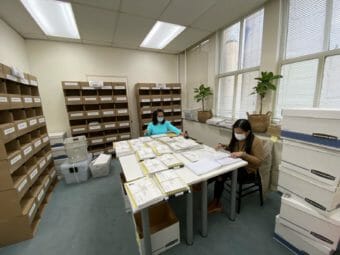
Workers with the Special Ballot Reception and Custody Group receive ballots at the Philippine Consulate General office in San Francisco. (Photo from the Republic of the Philippines, Philippine Consulate General, San Francisco)

There was some confusion about whether the overseas ballots had enough pre-paid postage. His wife works at the post office too — at the counter. She made sure to weigh their ballot envelopes and add sufficient postage. And then she sent them priority mail to the consulate in San Francisco, because Evangelista is not taking any chances.

He’s not too worried, though. His candidate — Ferdinand “Bongbong” Marcos Jr. — is expected to win.

Even if you’re not following Philippines politics closely, that name is probably familiar to you. Bongbong is the son of Ferdinand and Imelda Marcos. Ferdinand ruled the Philippines from the mid-1960s to the mid-1980s, part of that time under martial law.

Evangelista is like so many Filipinos who left the country toward the end of the Marcos presidency when the family was deposed and fled in exile to Hawaii. It was a very tumultuous time in the Philippines.

Evangelista worked for the government under the Marcos presidency but says he left for opportunity. He says life is better in the U.S. because there are jobs.

But life is better in the Philippines, too, he says. It’s cheap. And warm. And besides, it’s home. He hopes that under the leadership of another Marcos, the country will continue to become more like how he remembers it. He plans to move there as soon as he retires.

Rochelle Solanoy also has plans to return to the Philippines when she retires from her state job in Juneau in six and a half years.

“Because when you go home to the Philippines, you feel like a queen,” she said. “You know, your money stretches.”

Solanoy is also a dual citizen. And she’s more than just a supporter of Bongbong Marcos. She’s a fan. On the Friday before the election, she was driving around Juneau after work, picking up her girlfriends for a celebratory dinner at the Gold Digger, a Filipino restaurant in a strip mall.

“We’re celebrating because it’s Annie’s birthday,” she said. “And we’re celebrating because Bongbong’s gonna win.”

She’s excited about Marcos’ promises to keep cleaning up the cities, to keep building infrastructure and to build a new economy. Her dream is of a big reunion in the Philippines — a homecoming for all the overseas workers. The older people will retire on the beautiful beaches. The younger people will finally have jobs there and be reunited with families some of them have never met.

Solanoy wasn’t always a Marcos supporter. She left the Philippines in 1981 when she was still a kid. But she went back to visit in 1986. She was a teenager and she says she got caught up in the People Power Revolution.

“I mean, they portrayed Marcos to be a dictator. Of course, I believed all of that,” she said.

But Solanoy says she has since relearned the political history of her country. She says she’s still learning, through YouTube videos, about what the older Marcos accomplished during his leadership. In these videos, the years of martial law in the Philippines are now remembered as the golden years, and Marcos is remembered as a philanthropist. She thinks she was lied to for 30 years.

“That’s why I was like, ‘oh my God, I was so stupid!’” she said thinking back on her teenage flirtation with the revolution. “A lot of people are thinking that way. So we want Marcos back.”

Like Leo Evangelista, she’s confident that Marcos will win – unless there is election fraud. In 2016, Bongbong Marcos lost his vice presidential bid against Leni Robredo. His supporters believe the vote was rigged, but Marcos’ official protests of the result failed.

Robredo is now also vying for the presidency. Solanoy and her friends say they’re scared of cheating – that somehow Robredo will win again. But they also say they trust the current president, Rodrigo Duterte, to ensure a clean election. After all, his daughter is running for vice president.

“Of course he’s going to protect his daughter,” Solanoy said.

Election day is Monday, May 9. It’s a holiday in the Philippines. When the polls close, it’ll be 3 a.m. in Alaska. Leo Evangelista is planning on staying up late to watch the results if they come in right away. He’s planning to take Monday off.

Rochelle Solanoy is already celebrating a Bongbong Marcos win. She says when it happens, she’s going to go to the Philippines and visit him at Malacañang Palace. She wants to talk to him in person about her plans for herself and all her friends to retire from their state jobs and go back home.


This story is part of KTOO’s participation in the America Amplified initiative to use community engagement to inform and strengthen our journalism. America Amplified is a public media initiative funded by the Corporation for Public Broadcasting.


Filipinos in Alaska

KTOO is amplifying the voices of Filipinos in Alaska. We want to hear from you. What stories would you like to share or learn more about?

Name(Required)

Slow start to cruise season is even slower for Juneau Filipino businesses

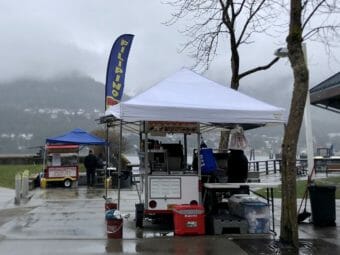
A food stand in Juneau's Marine Park is a collection of tables, grills and coolers under a white tent. A vertical banner says "Filipino BBQ" in blue, yellow and red -- the colors of the Philippines flag.
Carrillo’s and Bernadette’s food stands in Juneau’s Marine Park on April 25, 2022 — the first day of the year with a large cruise ship in port. Both businesses cater to Filipino and Indonesian cruise ship workers. (Photo by Jennifer Pemberton / KTOO)

A megaship called the Norwegian Bliss was the first large cruise ship to come to Juneau this year. It tied up at the dock farthest from downtown, but at Bernadette’s barbecue stand, Dannie Lazaro was grilling a pile of chicken skewers in the hopes that people would start heading his way.

He wasn’t waiting for tourists, though. Most of his business is with the workers on the ship who largely hail from the Philippines or Indonesia and are often hankering for a taste of home.

Last year, COVID-19 restrictions meant that the crew more often than not couldn’t get off the ships in port at all, so that means Bernadette’s and other businesses in town that cater to crewmembers, did practically zero business. Bernadette’s offered delivery. Local longshoremen would pick up the food and take it to the crew stuck on the boats, but that hardly made up for the hundreds or thousands of workers that used to pass by his stand every day before the pandemic.
More than an hour after the ship docked, it was still unclear if the crew would get off the Norwegian Bliss. Lazaro was waiting for all the passengers to get off and then for the crew to board a van that would bring them closer to town.

Lazaro also owns a gift shop on touristy South Franklin Street in Juneau. It’s closer to the ship and people who looked like passengers were starting to trickle in. But no crew. Lazaro’s son Dan was working at the store.

“We have money remittance service, so we rely on them to come down,” he said.

The shop is one of several downtown that offers overseas workers a way to wire money back home. It doesn’t make its money from T-shirts and mugs.

Frontier Gifts on South Franklin Street in Juneau on April 25, the first day of the 2022 cruise season. The store relies on revenue from cruise ship workers wiring money to their home countries. (Photo by Jennifer Pemberton / KTOO)

Eventually, the street started to fill up with tourists. And finally the van that usually shuttles the crew around town pulled up in front of Bernadette’s barbecue stand. But it was empty. The crew wouldn’t be getting off the ship after all. But a local office worker on his lunch break walked up and ordered some chicken skewers.

“How many you want? A thousand?” Lazaro joked.

The slow start to the cruise season was expected. This ship was about half full, but city officials in Juneau have budgeted for a million passengers to come through town this year, knowing that the steady stream of ships will become more and more full as the season progresses.

Each cruise line has its own rules about who gets off the boat and where. Norwegian is notoriously strict. But there are two more ships coming this week and more than a dozen coming every week after that, so Dannie Lazaro will keep the grill hot and keep the chicken skewers coming in the hopes that those hungry crew members will eventually stop by.


This story is part of KTOO’s participation in the America Amplified initiative to use community engagement to inform and strengthen our journalism. America Amplified is a public media initiative funded by the Corporation for Public Broadcasting.


Filipinos in Alaska

KTOO is amplifying the voices of Filipinos in Alaska. We want to hear from you. What stories would you like to share or learn more about?

Name(Required)

How Filipinos in Alaska can vote in the Philippines’ national elections

Workers with the Special Ballot Reception and Custody Group receive ballots at the Philippine Consulate General office in San Francisco. (Photo from the Republic of the Philippines, Philippine Consulate General, San Francisco)

The overseas voting period for the Philippine national elections ends May 9. 

Overseas Filipinos who registered to vote by Oct. 14, 2021 are eligible to vote in this election. If you did not register to vote by that date, you are ineligible to vote in this election.

There are two ways to vote from overseas: by mail and in person at your region’s consulate office. For Filipinos in Alaska, that office is in San Francisco.

If you plan to vote by mail, you should have received your ballot. 

If you are in Alaska and haven’t received your ballot, you can check to see if the consulate general in San Francisco has you listed as one of the voters with incomplete address information. The consulate general’s office also has a list of people whose voting packets were returned to sender.

If your name is on either list, you’re asked to email the consulate’s office so they can send you your voting packet. 

When you complete your ballot, you’re required to write your name on the ballot envelope and sign it. The ballot envelope then needs to be sealed with the paper seal included with your voting packet.

Each voting packet comes with postage stamps, but the consulate has advised voters to add one more USPS stamp before sending completed packets to the consulate. The consulate also said voters can send packets with only the stamps provided, and it would pay for postage due for any packets they receive that don’t have enough stamps.

Ballots must be returned to the Philippine Consulate General’s office in San Francisco by 4 a.m. Pacific Time on May 9. 


This story is part of KTOO’s participation in the America Amplified initiative to use community engagement to inform and strengthen our journalism. America Amplified is a public media initiative funded by the Corporation for Public Broadcasting.


Filipinos in Alaska

Are you voting in the Philippine national elections? We’d like to hear from you. Tell us your story or let us know how we can help.

Name(Required)

Filipinos in Alaska have ‘desire to participate’ in Philippine election, honorary consul says

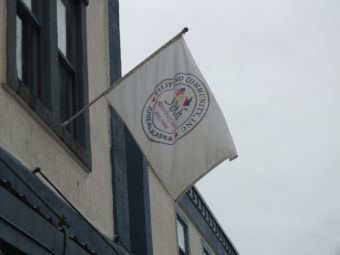
Filipino Community Inc flag
A flag commemorating Juneau’s Filipino Community Inc.’s 50th anniversary hangs outside of its office on South Franklin Street in Juneau in 2013. The Philippine Honorary Consul for Alaska serves Filipino citizens in Juneau and across the state.  (Photo by Casey Kelly/KTOO)

There are nearly 30,000 Filipinos in Alaska — close to the population of Juneau. And a number of them can vote in the upcoming Philippine national election.

Alaska’s honorary consul to the Philippines, Rebecca Carrillo, has helped Filipinos in Alaska register to vote.

Carrillo was sworn in as the Philippine Honorary Consul for Alaska in the fall of 2020.

“My role is an extension of the work that the Philippine consulate general in San Francisco does,” she said.

Since then, she’s helped Filipinos in Alaska navigate the services administered by the consulate in San Francisco. That means helping people complete forms and answering questions about retention and reacquisition of citizenship and renewing or issuing of Philippine passports.

“There’s a lot of angst about the restrictions, the travel protocols, how it impacts there, what documents are required, whether they’re going to need a visa,” Carrillo said.

Rebecca Carrillo, Philippine Honorary Consul for Alaska. (Photo courtesy of Rebecca Carrillo)

She does this all for free. It was supposed to be part-time.

“Since that position has been vacant for a few years before I assumed office, so to speak, and we were in the thick of the pandemic, it has become actually a full-time position,” Carrillo said. “And in some instances, more than that.”

But she said that work is fulfilling, especially in a place like Alaska. 

“Many of the Filipino population are in areas where they have very limited resources,” she said. “Limited access to support, where they can’t just drive someplace to get help or to go to a library where someone can help them navigate the internet and get access to the website, or help them complete a form, or help them with moving forward with certain steps of a process.”

While Carrillo doesn’t have specific numbers on how many Filipinos she has served in this role, she says that when the Consulate General came to Juneau last summer, over 650 people came to receive services.

Citizens who live and work outside of the Philippines are called overseas Filipino workers, or OFWs.

“So there’s me, for example, I’m a U.S. immigrant,” Carrillo said. “And I’m a U.S. citizen and a Filipino citizen as well. So I’m an overseas Filipino citizen. But there are these OFWs, who are in a foreign country with temporary visas to work. And there are millions of them.”

Nearly 200,000 overseas Filipinos in the U.S. are expected to vote and, Carrillo says, overseas voters hold a lot of power in this election.

“They can influence the choice of their family back home, just because they are, you know, they’re breadwinners,” Carrillo said.

This election decides the presidency, as well as a dozen Senate seats, more than 300 lower House seats and nearly 20,000 local positions.  Carrillo says the election is particularly important and people feel motivated to vote.

“We’re emerging from a two-year pandemic,” she said. “People are anxious about going home to the Philippines. People are anxious about how the political landscape is changing. There’s a desire to participate.”

There are nearly 1.8 million OFWs, according to the Philippine Statistics Authority. The overseas voting period begins Sunday and concludes May 9.

Correction: This story has been updated to clarify Rebecca Carrillo’s role and responsibilities as Philippine Honorary Consul for Alaska.


This story is part of KTOO’s participation in the America Amplified initiative to use community engagement to inform and strengthen our journalism. America Amplified is a public media initiative funded by the Corporation for Public Broadcasting.


Filipinos in Alaska

Are you voting in the Philippines’ national elections, or do you have questions about how to vote overseas? We’d like to hear from you. Let us know your story or how we can help.


Name(Required)

Juneau staple J & J Deli and Asian Mart may shut down if owners can’t find a buyer

High school kids in Juneau, Alaska go to J & J Deli and Asian Mart during their lunch hour on April 4, 2022. (Photo by Lyndsey Brollini/KTOO)

A Juneau deli and Asian mart known for its sandwiches may be shutting down this year if the owners don’t find someone to take over the business.

Neil and Alma Doogan bought J & J Deli and Asian Mart from the original owners Jack and Jack in 2010, which is where the name J & J comes from. 

The business opened in 1978. Back then, J & J mostly carried sandwiches and a few snacks. It wasn’t until a few years after the Doogans took over that they started carrying Asian products. The deli is a staple among Juneau high school students.

High school kids line up inside J & J Deli and Asian Mart in Juneau, Alaska for lunch. (Photo by Lyndsey Brollini/KTOO)

During the high school lunch hour on a sunny day in Juneau, J & J was packed. At least 20 students from Juneau Douglas High School: Yadaa.at Kalé came into the small space and lined up to get snacks, Red Bull spritzers and, of course, sandwiches.

Sandra Bouvier is a junior at the high school and has been going to J & J since she was a freshman. Bouvier said that if the deli shuts down, kids might not eat as much.

“Just because it’s, you know, a really close walk from the high school and most high schoolers don’t drive yet so they’d either walk all the way to IGA or you know, not eat,” Bouvier said.  

Bouvier also thinks there really is something different about J & J sandwiches.

“I swear you can make these sandwiches at home, but they taste like 10 times better here, so it’s my favorite place to go for food,” she said.

And she has no idea why they taste so good because it’s still the same white bread and lunch meat you can buy on your own. Alma Doogan, who makes the sandwiches, has a pretty simple answer.

“Because we serve the best, I guess. Fresh every day,” she said.

The main reason the Doogans want to sell is because Alma has been struggling with health issues for the past couple of years, so it’s been hard to keep up with the business. 

Alma Doogan is usually the only one behind the counter. She does get some help during the lunch rush from her husband, son and son’s girlfriend. But that is usually for about an hour, and then she is running the shop by herself again. 

The pandemic also hit the business hard, Neil Doogan said. When COVID-19 first came to Juneau, they were barely making enough to pay the bills. 

Neil Doogan, right, co-owner of J & J Deli and Asian Mart, works during the lunch hour in Juneau, Alaska on April 4, 2022. (Photo by Lyndsey Brollini/KTOO)

“It was a ghost town down here,” Neil Doogan said. “We were open every day. We made a little money not much.”

Pandemic-related supply issues have made it harder to get what they need for the business, especially the Asian products that come from the Philippines and Taiwan. He said that some businesses they’d get products from are shut down for good, so they can’t carry them anymore.

Neil Doogan said he and his wife don’t care so much about whether a potential buyer wants to carry the Asian products or not.

“As long as they keep the sandwiches and stuff. Because that’s what made this place,” Neil Doogan said.

Alma Doogan said it is hard to imagine J & J not being around anymore. 

Alma Doogan, co-owner of J & J Deli and Asian Mart, makes sandwiches during the lunch hour in Juneau, Alaska on April 4, 2022. (Photo by Lyndsey Brollini/KTOO)

She said she has really enjoyed working at J & J and she’s stuck with it because of the customers. Sometimes people will come over just to say hi to her.

“My customer, it’s not just a customer,” Alma Doogan said. “They become my friend and family.”

‘Molly of Denali’ explores Filipino Athabascan identity

A still from Molly of Denali’s “The Fili-Bascan Chefs” episode. (Screenshot from PBS Kids)

A new episode of the kids’ show “Molly of Denali” centers around a character named Vera Malakas, who is Filibascan, a combination of Filipino and Athabascan. Those who worked on the show say that representation of Filipino Alaskans will allow more kids to see themselves and their lives on TV.

In the episode, Vera wants to surprise her mom by making lumpia — a Filipino spring roll — for a festival, so she and Molly have to steal the recipe without her mom noticing.

Vera has been a side character in previous episodes of the show, but show writer Vera Starbard wanted to see more of her. 

For Starbard, who is Lingít and Dena’ina, Filipino culture was a large part of her community growing up in Alaska.

“I really thought lumpia was this Indigenous Alaska Native food,” Starbard said. “And I won’t even say how old I was when I realized it was really not.” 

Starbard said that food is a great opportunity for children to learn about other cultures.

“Food is one of those underestimated pieces of culture, as far as its impact. And that became an important part of the episode as far as ‘here’s how we can share culture. Here’s how we can mix culture and that is understandable to kids,’” she said. “They get it. They get that this food is different and this food is familiar to them and mixing them could be cool and this is what you can learn about a culture from literally tasting it.”

Story continues after form.


Filipinos in Alaska

KTOO is amplifying the voices of Filipinos in Alaska. We want to hear from you. What stories would you like to share or learn more about?

Name(Required)

Starbard invited E.J. David to contribute to this episode. David is a professor of psychology at the University of Alaska Anchorage and researches the psychological consequences of colonialism. He is also a father to four Filipino Athabascan children. And he’s the one who coined the term “Filibascan.”

“Seeing yourself on mainstream TV, and knowing that a lot of people put a lot of work into it, and a lot of people put a lot of resource into it, it legitimizes who you are, it tells you that your identity and your culture and your heritage — that those things are valuable,” David said.

David wanted it to be clear that the show didn’t make it seem like all Filipino culture was the same. Vera Malakas is Kapampangan like David, and celebrating a Kapampangan festival made it so her identity was specific and real. He was excited to give Vera’s character the last name “Malakas,” which means “strong” in the Tagalog language.

Both David and Starbard grew up without representation of themselves on kids’ shows, so this show means preventing that experience for future generations.  

“And so then the opposite message is conveyed when you don’t see yourself on the shows, right? It makes the message that it conveys to you is that who you are, and your identity and your heritage and your culture are not valuable enough,” David said. “They’re not worthy enough to be invested in, right, to put resources in. And so, that’s what I felt growing up.”

Before “Molly of Denali” first aired, Starbard went to the PBS station in Boston, where “Molly of Denali” and other kids’ programs originate. She said that she saw all the other PBS Kids shows like “Curious George,” “Arthur” and “Clifford the Big Red Dog.” In that moment she had the realization.

“Oh, gosh. Molly is going to be a part of this, and there’s no Alaska Native child that’s ever going to not have that experience of seeing themselves on the screen,” she said.

For Alaska’s Filipino population, that also became true this week. “The Fili-Bascan Chefs” episode premieres Thursday on PBS stations and online.

This story is part of KTOO’s participation in the America Amplified initiative to use community engagement to inform and strengthen our journalism. America Amplified is a public media initiative funded by the Corporation for Public Broadcasting.

Site notifications
Update notification options
Subscribe to notifications