The population of endangered Southern Resident Killer Whales in Puget Sound has dropped to around 70 individuals. Many are skeptical that a judge’s ruling to close commercial trolling for king salmon in Southeast Alaska this winter will have any impact on the long-term survival of these animals. (NOAA photo/Holly Fearnbach)
The state of Alaska is asking for a partial stay of a federal court order forcing the closure of commercial salmon trolling for king in Southeast Alaska this summer, pending an appeal.
The motion for a partial stay was filed on Monday in the U.S. District Court of Western Washington, which ruled that the Southeast Alaska king salmon fisheries in both summer and winter were operating in violation of the Endangered Species Act and depriving a small population of killer whales in Puget Sound of a critical component of their diet.
The state immediately filed notice that it intended to appeal to the U.S. 9th Circuit.
The state was joined by the Alaska Trollers Association in asking for the stay, arguing that “if the summer and winter troll fishery seasons are closed, this will have a direct, immediate, and irreparable impact on the economic, cultural, and social fabric of Southeast Alaska.”
The state and the trollers are intervenors in the lawsuit on behalf of the defendant, the National Marine Fisheries Service, which is responsible for ensuring the compliance of Alaska’s fisheries with federal law. The fisheries service hasn’t indicated any intention to appeal the ruling, and instead issued a statement assuring Southeast trollers that the other species they target — coho and chum — were unaffected by the court’s order. Additionally, the agency was “working expeditiously” to resolve the conflict with the Endangered Species Act.
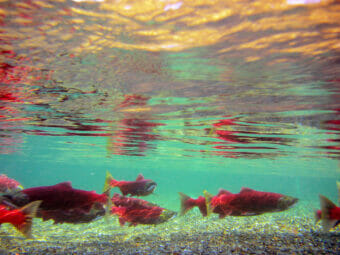
The lawsuit was originally brought by the Wild Fish Conservancy of Duvall, Washington, to protect the population of Southern Resident killer whales, which has just over 70 animals remaining. Expert opinion differs on whether the closure of king salmon trolling in Southeast will have any effect on their long-term survival.
The Alaska Department of Fish & Game has yet to determine how and when the commercial troll fishery would open this summer if the Court refuses to grant the stay.
Alaska is asking for a decision by May 26.
On May 3, all three members of Alaska’s congressional delegation released statements strongly condemning Tuesday’s ruling from the US District Court of Western Washington which — if left unchallenged — will force the closure of the king salmon troll fishery in Southeast Alaska this summer.
Alaska’s senior senator, Lisa Murkowski, wrote “This is a disastrous decision for Southeast Alaska that will only serve to harm those small boat troll fishermen who are trying to provide for their families. This lawsuit should have been dismissed months ago, but now threatens devastating restrictions that will harm hundreds of Alaskans and dozens of coastal communities—all while doing nothing to actually benefit the Puget Sound orca population.”
Alaska Sen. Dan Sullivan called the judge’s ruling “outrageous,” writing ““What’s most remarkable about this case is that the judge and Wild Fish Conservancy totally ignore much more likely causes of the orca decline, like the toxins, pollution, noise disturbance, and vessel traffic that have undoubtedly wreaked havoc in the Puget Sound region.”
Alaska’s lone member of the US House, Rep. Mary Peltola, joined the senators, writing, “If this order is allowed to stand, Southeast Alaska will suffer a devastating loss, putting thousands of jobs at risk in communities that depend on this sustainably-managed fishery.”
In March of this year, the delegation filed an amicus brief with the US District Court, in support of Southeast troll fisherman. Other interveners in the suit are the Alaska Trollers Association, and the State of Alaska. The Alaska Legislature this spring passed a resolution in support of the fishery; the governor has said he’d appeal the case to the US Supreme Court, if necessary.
Thangamma, about 80 years old, gathers seaweed off Pananthoppu beach, Pamban island, Tamil Nadu, India. Seaweed extracts are used in a booming global food industry. An estimated 5,000 women gather seaweed in the shallow reefs around Pamban island, which they sell to local factories. (Anushree Bhatter for NPR)
Early on a warm February morning, a group of ten women, ranging in age from 50 to 60, sit on the sandy shores of Akkal Madam beach on India’s Pamban Island, carefully bandaging their fingers. Wearing colorful blouses and saris, they wind thick strips of cloth over each digit and secure the ends with string. It takes them over 20 minutes.
The bandages, they’ve found, are the best way to protect hands from sharp rocks on the seabed when they go underwater to dive for seaweed, which they sell to a local factory.
“This is how we get ready,” says Bhagavathy. “We’ve tried gloves before, but they always slip away in the strong currents. And injuries are so common when your fingers are exposed.”
Bhagavathy shows the seaweed she collected. The divers hold their breath for 2 to 3 minutes while extracting seaweed from underwater rocks. (Anushree Bhatter for NPR)
Bhagavathy knows what she’s talking about. Now in her mid-60s, she has been collecting seaweed since she was 7.
(Like the other seaweed divers interviewed for this story, she prefers to be referred to by her first name only, as is the custom in these parts).
To keep the rocks from tearing at their feet, the women wear rubber slippers. They strap on goggles since they’ll be underwater with frequent dives each lasting up to 2-3 minutes over a 5-6 hour day. They’re mastered the art of holding their breath during these dives.
Thangamma, about 80 years old, dives in to gather seaweed. (Anushree Bhatter for NPR)
“It’s not for the faint-hearted. That’s why you won’t see any men here,” Bhagavathy jokes. The other women laugh as they wade into the warm waters.
But modern times and modern problems have made it harder to succeed in this old-fashioned occupation. A growing number of marine heat waves are causing a dropoff in the types of seaweed they gather. What’s more, the government now prohibits seaweed extraction in some areas to promote ocean health.
Nonetheless, an estimated 5,000 women from the region persist, determined to continue diving for seaweed.
“It’s our main source of livelihood,” says Munniammal, who’s in her mid-50s. “Our grandmothers and great-grandmothers have accompanied their husbands on fishing expeditions to collect seaweed as far as we can remember. It’s a tradition as much as it is our livelihood.”
Pamban, where the women collected seaweed that February morning, is a teardrop-shaped island known for its rich marine ecosystem. With over 4,000 species of plants and animals, it’s considered by UNESCO to be one of the world’s most bio-diverse hotspots.
The island is positioned between peninsular India and Sri Lanka, connected to the Southern Indian state of Tamil Nadu via a rail and road bridge that stretches over a mile and a half across the waters of the vast Indian Ocean. Eucalyptus, coconut and palm trees abound, and wooden fishing boats bob on turquoise waters as far as the eye can see.
There are no fishing boats on this particular beach, however; Akkal Madam is a deserted strip of baked sands at 8 a.m. when the women arrive after a 3-mile auto taxi ride from their village of Chinnapalam. A wild wind whips through their hair, and the sunlight is blinding.
The women who have gathered to collect seaweed in the shallow reefs tie white gunny sacks around their hips and plunge into the waters. They pluck at sprigs of springy seaweed, freeing them from the sharp rocks they grow on. They surface briefly and with one deft flick of the wrist throw the sprigs into the sacks tied to their waists. With hardly a backward glance they plunge into the waters again. From 8 a.m. until 3 p.m. they are mainly underwater.
Most of them wear shirts or t-shirts over their saris so their wet clothes don’t cling to them; the additional layer adds warmth. The strips of sari fabric thrown over the left shoulder streams behind like brightly colored flags as the divers slice through the waves. The water is cloudy because of frequent bouts of nitrogen and phosphorus, pollution that causes the growth of algae. The currents are strong, even on this nice sunny day.
On the beach on Pamban island, the seaweed gatherers go out only 12 days every month, collecting a week after the new moon and a week before the full moon. This is when the tides are weaker, the waters gentler and more conducive for seaweed gathering. There’s a gap of nine days between cycles to allow the seaweed to regenerate. (Anushree Bhatter for NPR)
In synch with the moon and the sea
Like anyone who depends on the sea for a living, the seaweed divers are exquisitely tuned into their natural surroundings.
On the beach on Pamban island, they set their own rhythm, harvesting seaweed only 12 days every month, their schedule governed by the lunar cycle. They collect a week after the new moon (roughly mid-month) and a week before the full moon (toward the end of the month). This is when the tides are weaker, the waters gentler and more conducive for seaweed gathering. There’s a gap of nine days between cycles to allow the seaweed to regenerate.
Thangamma carries her sack filled with seaweed. On a good day, a seaweed collector can earn about $6 from selling their goods to local factories. (Anushree Bhatter for NPR)
Other seaweed gatherers from Chinna Palam who are younger and more able, have a different working style.
They don’t just gather seaweed by the coast. As their foremothers did, the women collect seaweed further out at sea, off the coast of 21 uninhabited islets scattered like gems between Pamban and Sri Lanka. These islands now make up the Gulf of Mannar Marine National Park. The seaweed haul here is richer, especially around the coral reefs. They make double the income of those who gather seaweed by the coast. Since they must pool their money to hire boats for this expedition, they go out to sea only six times a year and leave the seaweed that grows around Pamban island for older women to harvest.
Small groups set out around 5 a.m., sharing a motorboat.
Their workday begins much before the crack of dawn, says Seeniammal, who is spreading the seaweed she gathered to dry just outside her home. That morning, she woke up at 3 a.m., made herself tea, prepared a meal for her husband and her granddaughter who lives with her and packed some rice for lunch on the boat.
By 5 a.m., she is accompanied by four other women on a motorboat, operated by a fisherman they know well. They each chip in about $1 for the ride. It’s a half-hour journey to the nearest island. Depending on the availability of seaweed, they may venture out to the other islands that are further away. Once they find the best spot, they moor the boat and dive in. The women are in neck deep waters usually until 3 p.m., because the strong currents would disrupt the work after that. Seeniammal gathered about 22 pounds of seaweed from that single trip, she says, almost double what women collect near the coast of Pamban.
A seaweed gatherer removes unwanted particles from the dried seaweed before it is weighed and sold. (Anushree Bhatter for NPR)
They usually make about $6 a day – compared to $3 to $4 for the women who stay on the island’s coast.
No matter where the seaweed is collected, the process of selling it is the same. Once the women return to their village, the seaweed is carefully weighed by representatives of local factories. Much haggling occurs.
Weighing the seaweed in Chinnapalam village, Pamban island, Tamil Nadu. (Anushree Bhatter for NPR)
Risks galore: poison fish, dizziness, human attackers, new laws
Holding on to this traditional way of earning a living poses many risks.
Poisonous fish abound in the coral reefs nearby.
“A few years ago, a poisonous fish sunk its thorns into me,” says Seeniammal. “It hides in the coral reefs, so we can’t ever spot it underwater. The pain is so excruciating, you’ll wish you were dead. I was rushed to the hospital and treated with an injection, but I was weak and disoriented for weeks afterward.”
The stonefish that is suspected to have stung Seeniammal is a well-known venomous reef fish with 13 venomous spikes. Other women chime in that they must constantly watch out for poisonous fish and stinging jellyfish.
There are other dangers. The women dive in small groups so they can look out for each other. Three months ago, a 50-year-old seaweed collector from a nearby village was raped and killed on an isolated beach.
The women also report that they sometimes grow dizzy while diving. If there’s any kind of accident, the seaweed collectors who travel by boat to their harvest spots must all return so the injured person can be treated. That means a loss of income, but, says Bakyam, age 40, it’s part of an unspoken pact: “We constantly watch out for each other.”
Then there are the legislative roadblocks. In 1986, the government established the Gulf of Mannar Marine National Park. Seaweed extraction in the protected waters of the reserve was declared illegal, with a jail term of three years for violators.
S. Mahendran, a Forest Range officer in the nearby town of Mandapam who is familiar with the women seaweed divers, says there’s a reason these restrictions existed.
“The islands are very fragile, eco-sensitive zones,” he says. “There is a buffer area of six to seven meters around each island to protect the coral reefs there. And any footfall on the island itself could pose a risk to its vegetation, particularly its medicinal plants and wild grass.”
The women are allowed to collect seaweed if they don’t breach that buffer zone, he says. But since the seaweed grows so close to the islands, that’s a thin line and not always possible, the women say.
So that restriction doesn’t stop the women, says Pandiammal, who is the head of the local village council. “We tell authorities that it’s our right to do so. We don’t know any other way to live.”
Rocky lives above water too
I interviewed nearly 50 seaweed-gathering women. They had one overriding concern about their lives when they were out of the water: the men in their community. They’re primarily fishermen – and, the women say, many of them are addicted to alcohol.
“Both men and women struggle to make a living. But the men tend to squander away hard-earned money on liquor,” Pandiammal says. “It’s made our lives above water as rocky as the seabed we face all the time.”
So fishing income earned by the men is squandered — putting pressure on the women to dive for more seaweed to make up for a husband’s lost income.
“Alcohol addiction is a huge problem in these parts and one that authorities are constantly battling,” says the forest officer Mahendran. “I truly admire the courage of these women. They must bear the burden of all the expenses after their husbands, who earn a good living, have frittered away their money on drinks.”
Many women say that the addiction grows worse from April 15 to June 15, during the state’s 45-day ban on mechanized boats, used by fishermen, so breeding season is not interrupted. Even the seaweed gatherers stay home so as not to disturb the marine life. The state government gives each family about $60 to compensate for the loss of the men who fish. But a woman’s income is not taken into account because a female labor force is largely invisible in a patriarchal country like India and a cash strapped state government battling a deficit can’t likely afford more, says Mahendran.
Children in Chinnapalam village, home to women seaweed divers. (Anushree Bhatter for NPR)
Changes for the worse — and the better
About 30 years ago, a plan was hatched to help the women.
In the 1990s, the Central Salt and Marine Chemicals Research Institute, a part of India’s Council of Scientific and Industrial Research, had the idea that teaching the women to farm seaweed would be not only less dangerous than collecting but more lucrative.
An agreement was forged with for-profit companies to cultivate a non-native species called Kappaphycus alvarezii, found in similar water in the Philippines.
Hundreds of rafts were set up close to the coast of Pamban island, laden with seaweed.
However, data from underwater photography taken since 2000 and published in the journal Current Science in 2008, revealed that the cultivated species has become invasive, smothering coral reefs in the protected reserve.
An effort to give women a new way to earn income involved cultivating an imported type of seaweed on rafts. But the species has reportedly become invasive, smothering reefs. (Anushree Bhatter for NPR)
An extensive open survey is required to establish whether the species is indeed invasive, says Vaibhav A. Mantri, senior principal scientist at CSIR-Central Salt and Marine Chemicals Research Institute. “There are contrary views on this subject,” he says.
So while the jury is out on seaweed cultivation, the army of seaweed collectors have seen changes for the better. India’s Recognition of Forest Rights Act of 2006, recognizes the rights of indigenous communities to make use of natural resources, and seaweed divers are now being issued ID cards by the state’s Fisheries Department. One of the objectives of this act is to “undo the historical injustice that occurred” to indigenous communities and to “empower them to use resources in the manner that they were traditionally accustomed.”
A seaweed farmer reseeds Kappaphycus alvarezii, a species of seaweed that is cultivated on rafts. (Anushree Bhatter for NPR)
A hundred women seaweed divers from Chinna Palam should receive ID cards later this month – Indian bureaucracy is blamed for the delays. That will enable them to collect seaweed anywhere without concern for the repercussions. All they would need to do to qualify is to prove that they’re members of the community that’s been collecting seaweed for generations. It’s a truce of sorts between the indigenous people who have loved and lived on these islands for four generations — and a government’s efforts to secure the marine reserve, says Mahendran.
“For us, it’s validation that we don’t destroy the islands,” says Pandiammal. “We protect them. If it weren’t for these islands, how could we live?”
Reporting for this story was supported by the Pulitzer Center on Crisis Reporting.
Kamala Thiagarajan is a freelance journalist based in Madurai, Southern India. She reports on global health, science and development, and her work has been published in the New York Times, The British Medical Journal, BBC, The Guardian and other outlets. You can find her on twitter @kamal_t
Copyright 2023 NPR. To see more, visit https://www.npr.org.
Trollers in Sitka. (Photo by Rachel Waldholz/KCAW)
A federal judge in Washington state issued a ruling this week that threatens to shut down trolling for king salmon in Southeast Alaska this summer.
The ruling comes in a lawsuit filed three years ago by a Washington-based conservation group called Wild Fish Conservancy that aims to protect a small population of orcas.
The lawsuit centers ons whether Alaska fishermen should be allowed to harvest king salmon, which are considered essential prey for the Southern Resident killer whales.
KCAW’s Robert Woolsey has been following the lawsuit from Sitka, in the heart of the Southeast salmon troll fishing region, and says whether the king fishery will be closed this summer remains uncertain.
Listen:
The following transcript has been lightly edited for clarity.
Robert Woolsey: If you look at the order, the language of the order says, yes, they’re definitely calling for the end of troll fishing this summer. But both the state and the Alaska Trollers Association, who are intervenors in this lawsuit, filed a notice to appeal to the Ninth Circuit Court. And they’ll probably ask for a stay of the order until the appeal is heard. So it’s possible that fishing might happen this summer. It’s still kind of an open question, though.
Casey Grove: Yeah. And I take it that uncertainty is pretty difficult for fishermen trying to just get ready for the season or to know if they should get ready for the season. I want to talk more about what the impacts might be to the fleet. But first, maybe let’s back up. Where did this lawsuit come from? What does it aim to do?
Robert Woolsey: Well, it all got real back in December of 2022, when another U.S. District Court judge in western Washington named Judge Michelle Peterson issued a report and recommendation that basically went in favor of just about everything the Wild Fish Conservancy was asking for. The Wild Fish Conservancy, in its lawsuit, had argued that the National Marine Fisheries Service had violated sections of the Endangered Species Act and the National Environmental Policy Act in failing to fully account for the impact of the Alaska Chinook fishery on this very seriously threatened population of killer whales in Puget Sound. So that report and recommendation had to be affirmed by another U.S. District Court judge. And that happened this Tuesday, when Judge Richard Jones basically issued a two-page order saying, “This is it. And I’m ordering the National Marine Fisheries Service to fix the flaws. And I’m also vacating this document that’s called an Incidental Take Statement.” And an Incidental Take Statement is essential to open a fishery that might impact an endangered species. And so this Incidental Take Statement that allows Chinook fishing to happen in southeast Alaska in summertime, and in winter, has been vacated.
Casey Grove: So, obviously, this is focused on king salmon off Alaska’s coast. But the orcas also spend a lot of time closer to Seattle, which is a huge city, it continues to grow. There have got to be other environmental factors going on there. So what are people saying about that?
Robert Woolsey: Well, everybody keeps coming back to this, Casey, including our congressional delegation. They all issued statements saying this lawsuit is outrageous, mainly in that it overlooks what probably are the real threats to Southern Resident Killer Whales, which are industrial toxins, population of the Puget Sound area, vessel traffic, all these other sources that probably are creating more harm for these animals than the harvest of what is actually very few fish in Southeast Alaska. I mean, the 2023 troll harvest allocation is only 149,000 kings. We’re not talking millions of fish that are being scooped up in Alaska.
Casey Grove: And I guess whether that sways the judge or the Wild Fish Conservancy, who knows, But I think what’s fair to say is that if that fishery gets shut down, it’s going to have a huge impact on those people, their families. What have you heard from them about that? I mean, what’s the impact going to be on Southeast Alaska in general, if this fishery gets shut down?
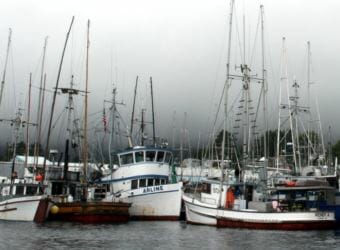
Robert Woolsey: Trollers are kind of the iconic Alaska fishing vessel. The fishery has been going on since territorial days. Trollers have these tall poles that extend out and they just cruise along gracefully over the waves catching fish one at a time. Each king salmon, each coho salmon, every fish that they bring aboard, is caught one at a time. Pound for pound, a troll-caught king salmon is the most valuable fish in Alaska. It’s possible that a king salmon is more valuable to Alaska than a barrel of crude oil. And the fishery is quite lucrative at the dock. It’s worth about $15 million. Statewide there are about 1,800 permits for salmon trolling, both power and hand troll. But only half of those permits might be fishing any given season. And once those fish are sold to the processor, and then the processor sells them and they enter sort of the economy, that $15 million is multiplied many times over. So it’s going to be a huge impact. But I don’t think it’s going to be the end of trolling, mainly because chum salmon has become so valuable in recent years. But it’s a loss to the people who have been doing this fishery or participating in this fishery for multiple generations. And it’s kind of a loss for everyone who feels that Alaska has bent over backwards to try and preserve this stock, and it’s being taken away on basically a technicality.
Federal and state researchers in Kodiak hope work being done in the lab will provide more information about how Bering Sea crab populations handle climate change. (Elyssa Loughlin/Alaska Public Media)
The snow crab population in the Bering Sea off the western coast of Alaska has fluctuated for decades. An increase in young crabs back in 2018 gave way to optimism that fishing would be good for years to come, but the hope was short-lived.
Gabriel Prout and his family own the fishing vessel Silver Spray in Kodiak, Alaska.
He said it was obvious something was wrong the last few years. The Bering Sea fishing grounds are usually covered in sea ice in the winter. But there wasn’t much ice, and they fished further north than usual. Finding snow crabs was still difficult.
“It was just very poor fishing,” said Prout. “We searched for miles and miles and miles and really didn’t see anything.”
The fishing vessel Silver Spray has been tied up at the dock in Kodiak since the Bering Sea snow crab season for this year was canceled. (Elyssa Loughlin/Alaska Public Media)
More than 10 billion Bering Sea snow crabs disappeared in Alaska between the years 2018 and 2022, devastating a commercial fishing industry worth $200 million just last year. The population crash coincided with a marine heat wave that hit the Bering Sea. Now, fishermen and researchers are working to figure out what happened, and they think warmer ocean water could be to blame.
Bycatch, which is the catch of a non-target species, has also drawn criticism from fishermen for its effect on the snow crab fishery. Even with the fishery closed to crabbers, the bycatch limit for the trawl sector is 3.6 million individual snow crabs this season.
But such a large, sudden die-off and the lack of sea ice was a red flag for scientists like Erin Fedewa, a research fishery biologist with the National Oceanic and Atmospheric Administration.
“That was an immediate potential smoking gun when we saw this Arctic species suddenly in decline,” she said.
That’s because sea ice is an important ingredient in the snow crabs’ life cycle. In the winter, it accumulates on the water’s surface. And during the summer, the ice melts, sending cold, dense water sinking to the ocean floor, where it hovers just above freezing at around 35 degrees.
Scientists call it the cold pool, and it’s a sanctuary for young crabs. Warmer temperatures can lead to starvation, and higher rates of disease. At the Kodiak Fisheries Research Center, state and federal researchers are piecing together how all those factors contributed to the crabs’ collapse.
Tanks filled with seawater pumped in from the bay replicate conditions on the seafloor.
“And then we can hold the different portions of the same population in, say, five degrees Celsius, eight degrees Celsius. And we can begin to look at the response of those species once they’re in these warmer temperatures,” said Fedewa.
Researchers study juvenile crab populations at the Kodiak Fisheries Research Center in Kodiak, Alaska (Elyssa Loughlin/Alaska Public Media)
Scientists use the pools to study how different temperature and pH levels affect the crabs’ development — how fast they grow and how quickly they die.
“We know that increases in temperature increase metabolic rates of fish and crab, causing them to need to eat more and more,” said Fedewa.
In a shrinking cold pool, that means more crabs pushed into the smaller space, fighting for less food. Across the hall from the federal lab, Ben Daly, a research coordinator with Alaska’s Department of Fish and Game, is also trying to figure out how a smaller cold pool affects crabs in the Bering Sea.
“That’s part of what we’re doing now is trying to untangle the what happened part. That’s only half of the challenge. The other half of the challenge is what do we do next,” he said.
His team has been tagging crabs in the wild with satellite transponders that will track their movement over time. He’s hoping the tags provide more detailed information about the distribution of crabs across the cold pool.
And in March, a group of state and federal researchers headed out on the Silver Spray to continue studying crab populations outside the lab. Federal scientists complete population assessments in the Bering Sea annually in the summer.
Ahead of the trip, Gabriel Prout said this winter survey is a big step in understanding more about the species overall.
“We’ll be doing 20 days of pot survey and pot pulling, measuring the crab, sexing the crab, and sizing the crab,” he said.
And tagging the crabs with Daly’s satellite transponders.
Prout and his family are grateful for the work. The many fishermen that rely on snow crabs for income are left with more questions than answers right now.
“We’re sitting tight trying to count our pennies and figure out how to make our way forward,” Prout said.
Scientists say it will likely take years before the snow crab population rebuilds. If another marine heatwave hits the Bering Sea, it could be even longer. But they’re hopeful that lessons learned from snow crabs might provide insight into how other marine species handle climate change as the ocean warms.
This story was created in collaboration with NOVA with major funding from the Corporation for Public Broadcasting.
Trollers wait in Ketchikan’s Thomas Basin on Oct. 8, 2022. (Eric Stone/KRBD)
A U.S. district judge in Washington state has affirmed a controversial recommendation that could shut down summer trolling for king salmon in Southeast Alaska this summer.
Judge Richard A. Jones signed the two-page order on Tuesday. It requires the National Marine Fisheries Service to remedy a violation of the Endangered Species Act concerning a threatened population of killer whales in Puget Sound.
The ruling also vacates the “Incidental Take Statement” under which the National Marine Fisheries Service manages the commercial harvest of chinook salmon in Southeast Alaska during the summer.
The Wild Fish Conservancy filed suit against the National Marine Fisheries Service in March of 2020, arguing that the government failed to adequately address the impact of Alaskan king salmon harvests on southern resident killer whales, whose population has dropped to critically low levels.
In a news release, the Alaska Trollers Association — which intervened in the suit on behalf of NMFS — says it will work with the State of Alaska to appeal the ruling to the 9th Circuit Court of Appeals and likely will ask for a stay of the order.
Director Amy Daugherty wrote, “The ATA will continue to fight for the way of life of its members and the communities of Southeast Alaska.”
“Deadliest Catch” F/V Northwestern deckhand Nick Mavar Jr. is medevaced from Dutch Harbor to Anchorage, as seen in a 2021 episode of the show. (Screen capture from Discovery UK YouTube channel)
The owners of a fishing boat featured in “Deadliest Catch” are suing the reality TV show’s producers after one of their deckhands claimed he did not get adequate medical care, resulting in serious complications.
The lawsuit was filed by the F/V Northwestern’s owners Wednesday in U.S. District Court in Alaska. It follows the deckhand’s own lawsuit, filed against the boat owners in Washington court in December.
That deckhand, Nick Mavar Jr., was a longtime cast member on the Discovery Channel show. His attorneys say that during a December 2020 voyage he suffered a rupture in his appendix, which contained a cancerous tumor he wasn’t aware of at the time.
Mavar’s attorneys fault the Northwestern’s owners for failing to have Mavar quickly and competently examined, and for failing to have a medical plan in place for treating crew members during the pandemic.
“The delay in competent and adequate examination, testing, and diagnosis caused (Mavar’s) appendix to rupture resulting in horrendous and chronic infections, surgeries, and cancer treatment that would not have occurred had the appendix been removed prior to rupture,” attorneys wrote.
Mavar is seeking $1 million in damages from F/V Northwestern’s owners.
Washington state records show that the vessel is owned by Hansen Enterprises, Inc. of Washington, which lists three members of the Hansen family – including skipper Sig Hansen – as governors.
In their lawsuit last week, the owners’ attorneys argue that “Deadliest Catch” producers, Original Productions, Inc., and the show’s medical provider, Trifecta Solutions, LLC, should be on the hook to pay any sort of damages to Mavar, as well as the owners’ attorneys’ fees.
According to the owners’ attorneys, Original created COVID protocols for the filming of the show, and the boat’s crew had to comply with them.
“These COVID protocols limited the exposure of the F/V Northwestern crewmembers to people who were not associated with the television show,” the owners’ attorneys wrote.
They claim a resident medic, subcontracted from Trifecta by the producers, examined Mavar for abdominal pain on “multiple occasions.” After a Dutch Harbor medic’s diagnosis of appendicitis, Mavar suffered a massive infection and spent a month in the hospital for cancer treatment and abdominal surgery.
“(Mavar) suffered and may continue to suffer in the future, great amounts of physical pain with resultant physical disability, disfigurement and mental suffering,” attorneys wrote.
A request for comment from Original Productions wasn’t immediately answered Tuesday.
At least part of Mavar’s medical issue aired on “Deadliest Catch.” A YouTube clip posted by Discovery from a 2021 episode of the show shows Mavar complaining of rib pain to the Dutch Harbor medic during a port visit.
“If I push on it I feel pain – I feel pain,” Mavar tells the medic as he lies in his bunk.
That medic tells Hansen that Mavar’s white blood cell count has tripled from normal levels, and he needs to be medevaced to Anchorage.
“You definitely need to go to the clinic, like, right now,” the medic tells Mavar.
Hansen soon agrees and must find a replacement crewman. The clip shows the Northwestern going to sea as Mavar’s LifeMed flight takes off from the local airport, with Hansen sounding the boat’s horn for his departing deckhand.
Close
Update notification options
Subscribe to notifications
Subscribe
Get notifications about news related to the topics you care about. You can unsubscribe anytime.