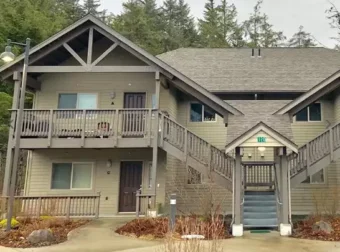
Rows of houses line West Juneau in late May. (Clarise Larson for the Juneau Empire)
The Juneau Assembly unanimously approved more than $3.1 million in loans last week toward two local housing projects.
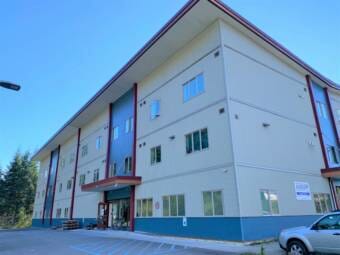
The money comes from the city’s affordable housing fund. The first loan approved was for $900,000 and will go toward building 18 one-bedroom apartments on Cordova Street in West Juneau. The second loan is for $2.2 million and will help build 48 apartments at the Chilkat Vistas subdivision in Lemon Creek.
Mike Heumann, the developer for Chilkat Vistas, said without the city’s loan, he likely would have built condos rather than apartments.
“Apartments don’t pencil out, and that’s why no developers build them in this town. But, with this money, you guys make it possible. It’s the only way it’s going to happen,” he said.
Coogan Alaska, LLC, the developer of the West Juneau project, agreed that the apartments built would rent at or below $1,400 per month, adjusted for inflation annually for the term of the loan.
Heumann agreed to similar terms for 14 of the Chilkat Vista apartments. He also agreed that 31 units would be available to people who make 80% or less than the Juneau Area Median Income, at a monthly rent of about $1,700 or less for an efficiency unit.
As of 2023, people making $68,480 or less would be eligible to rent those apartments.
Neither developer can use the apartments as short-term rentals until their 10-year loans are repaid.
The Assembly recently received public backlash after a project that received a loan from the affordable housing fund announced its units would be condominiums sold at market rate.
Joshua Adams, a local landlord in Juneau, testified at the meeting last week and argued that the two projects needed more guardrails to ensure they remain affordable.
“We are not going to solve the housing crisis by more building of overpriced housing — it’s like building boutique hotels to alleviate homelessness,” he said. “Juneau residents don’t need more housing, they need housing to be more affordable.”
He said the projects the affordable housing fund supports are often geared toward seasonal workers rather than low-income residents who live in Juneau year-round.
For Juneau resident Carissa Armstrong, who has two children, it was a glimmer of hope for more rental options in Alaska’s capital city.
“I make enough money to be able to kind of afford your standard two bedroom in Juneau, but there’s just nothing available,” she said.
By winter, the “apartments for rent” text on the sign was covered up. An email sent to those who signed up for the Ridgeview waitlist said the first 24 units would be available for purchase at market price.
“I was like, ‘Well, that’s out of the question,’” Armstrong said. “I don’t have $150,000 to $200,000 to go buy a flat.”
She would have needed much more than that. On Monday, Ridgeviewannounced online that one-bedroom units would start at $375,000 and two-bedroom units would start at $495,000.
A sign next to the Ridgeview construction site previously said “apartments for rent.” Now, that part of the sign is covered. (Katie Anastas/KTOO)
City leaders defend their decision to approve the loan but say they want to adhere more closely to affordability requirements in the future.
Assembly to discuss future housing fund loan conditions
The City and Borough of Juneau created an Affordable Housing Commission in 2007 to advise city leaders on how to create more affordable housing. The city established the affordable housing fund a few years later with federal and state funds. Early recipients included programs that help Juneauites build accessory dwelling units and make down payments on mobile homes. In 2017 and 2022, Juneau voters approved contributing some sales tax money to the fund.
The city invites developers, nonprofits and tribal governments to apply for grants and loans from the fund annually. The review committee includes city staff and members of the public from the lending and construction fields.
“The primary purpose for establishing the JAHF is to direct resources toward the creation of affordable (0% to 80% area median income (AMI)) and middle-income housing units (80% to 120% AMI) in the City and Borough of Juneau,” the 2022 and 2023 competition guidelines read.
The guidelines say for-profit developers borrowing from the fund must reserve at least 20% of the units they build for tenants earning 80% or less of the area median income for at least ten years or the life of the loan. That means rental rates for those units would be capped at $1,712 for an efficiency unit, $1,834 for a one bedroom and $2,200 for a two bedroom, according to the 2023 guidelines.
But the guidelines also say certain projects may require deviation from those requirements.
The Assembly is now revisiting the terms and conditions they’d like to set for future loans from the fund. City Manager Katie Koester brought a potential list of conditions they could formally adopt to the Assembly Committee of the Whole meeting on Monday night.
Many of them are already in the program’s guidelines, like the minimum number of affordable units. Others are more specific, like requiring units to be rentals or prohibiting short-term rentals for the life of the loan.
“There are pros and cons to adhering to these guidelines, and of course, the Assembly can still do whatever the Assembly wants – obviously within charter and law,” Koester told them.
Koester said this is a chance for the Assembly to more clearly set expectations for themselves, potential applicants and the public. She said they’re considering a fundamental question: “Is the Assembly okay awarding funds through the Affordable Housing Fund if there’s no affordability component?”
Member ‘Wáahlaal Gíidaak Barbara Blake said she supports adopting guidelines for future loans. She said she wants the Assembly to maintain the integrity of the fund’s title and prioritize projects that result in affordable units.
“This is not just money that comes out of nowhere, this is money that comes from our citizens,” she said. “And we have a responsibility to manage that in a way that provides for our community.”
Koester was the city’s public works director, not city manager, when the city agreed to loan Ridgeview’s developer affordable housing funds. In an interview, Koester said the idea to formalize the fund’s guidelines isn’t necessarily a response to that project.
“The Ridgeview ordinance and contract was a different time and a different lending environment,” she said. “I’m not sure if it’s a response, but it’s certainly a way to provide some structural guidelines and process around the fund.”
She said the two latest loan applicants recommended for funding show economic conditions may have changed. Both projects – which are set for public hearing on Feb. 5 – propose a monthly rent of $1,400 for some or all of their units.
Former city manager suggests removing affordability requirement
Ridgeview’s developer, Rooftop Properties, applied for a loan from the affordable housing fund to help build 24 units. The Assembly’s Lands, Housing and Economic Development Committee sent an ordinance appropriating $1.2 million to the full Assembly for approval in November 2022.
That version of the ordinance said five units would be rented to people making at or below 80% of the area median income per household. The Assembly approved the loan, along with grants to AWARE, St. Vincent de Paul and Tlingit Haida Regional Housing Authority, in December 2022.
After the Assembly approves the funding, it’s up to city staff to negotiate the terms and conditions of the lease. In March 2023, former City Manager Rorie Watt suggested they remove the requirement to include five affordable units at Ridgeview.
Watt said the developer wanted 25 years to pay off the loan if it required five affordable housing units.
“That’s only going to get us five units at affordable prices,” Watt said. “That is a long time to tie up $1.2 million for that many units.”
Instead, Watt suggested a shorter term loan for a market rate project.
Former Assembly member Carole Triem said adding any units would help lower the overall cost of housing in Juneau.
“Our aim is on affordability,” she said. “One way we do that is through this directed requirement of having a certain number of units be reserved for a certain level of income. But another way we do that is just adding any housing units to what we currently have.”
‘Wáahlaal Gíidaak opposed removing the affordable housing requirement.
“To me, that is not what the intent of the Affordable Housing Fund is for,” she said. She was the only Assembly member to vote against moving the revised ordinance forward.
The revised ordinance passed at a special Assembly meeting in May without objection. It shortened the loan’s payment term from 25 years to 10 years and set the interest rate at 0% for the first five years and 2% for the remaining five years.
“When a bank is involved, the bank is going to only loan to a developer if they are certain that they are going to get return on their investment,” Watt told the Assembly at the May meeting. “The unfortunate problem we have is high cost of construction and land development makes projects very difficult to finance through conventional banking loans, which is why we have begun the path of low interest loans to help stimulate housing development.”
In an interview, Juneau Planning Manager Scott Ciambor said Rooftop’s loan contract doesn’t require the units to be rented rather than sold.
“The ordinance actually gives the manager the wherewithal to negotiate the final terms of the contract,” he said. “The final terms of the contract are new housing units.”
Rooftop Properties manager Garrett Johnson told the Juneau Planning Commission in December 2022 that they were designing the units to work either as condos or rentals.
“Doing them as condos gives the most flexibility, allowing the units to be lived in as a primary residence or used as a rental,” Johnson wrote in an email to KTOO.
Ridgeview is one of two projects that have received an Affordable Housing Fund loan without affordability requirements. Gastineau Lodges, a 72-unit apartment building approved by the Juneau Planning Commission for downtown in December, got a $700,000 loan to help with predevelopment costs. Ridgeview is expected to start making loan payments in January 2025.
Assembly Member Alicia Hughes-Skandijs chairs the Lands, Housing and Economic Development Committee. In an interview, she said she’s heard from Juneau residents who are upset about Ridgeview’s prices.
“I’ve definitely heard from people who are just like, ‘This is a loan from the affordable housing fund,’” she said. “And then saying, ‘Do you think a two-bedroom condo for half a million dollars is affordable?’ And I don’t.”
But she still thinks loaning Rooftop money from the fund was the right decision.
“I think having something built that otherwise would not be built is good,” she said. “If I gave a grant and those were the prices and it was condos, no, I would not feel that way. But it’s a loan, and there are that many more units in Juneau. So I do see that as the right move.”
Hughes-Skandijs said every affordable housing fund grant or loan helps the city refine the process. As they shape future guidelines, she said, she’d like to see the affordability requirement at the center.
Dave Ringle is executive director of Juneau’s St. Vincent de Paul chapter, which operates the shelter. He said the number of people staying there has increased as temperatures have dropped.
“Our numbers increased dramatically at the start of the new year,” he said. “We went from averaging 42 to averaging 52 people a night starting Jan. 1.”
A van usually drives downtown throughout the night to pick up people and take them to the shelter. But the snow made that impossible at times.
“We’ve had some nights where the van was unable to be unstuck,” he said.
On those nights, Juneau police and CARES sleep off center staff have stepped in to help.
“On nights when it’s been really bad, they’ve been the ones on the lookout,” Ringle said. “They find people who are unsheltered and find the right places for them.”
Some warming shelter guests have continued to walk there despite the weather. Ringle said St. Vincent de Paul will accept donations of reflective vests and tape at their Teal Street office. They’re also accepting blankets and food that’s easy to distribute and prepare, like fruit snacks, granola bars, instant noodles and fresh produce.
Ringle said homeless service providers have been able to connect some people to housing this week, but there aren’t enough affordable options in Juneau to fully meet the demand.
This year’s Point-in-Time count will happen on Tuesday. It’s part of a nationwide effort to count the number of people experiencing homelessness and connect them to services.
The count will take place at Juneau’s shelters, including Family Promise, the Glory Hall and Shéiyi X̱aat Hit Youth Shelter. Teams will also visit camps to meet people and distribute toiletries, clothing and other supplies.
Resurrection Lutheran Church will also host a breakfast on Tuesday morning at 7 as part of the count.
A new Harvard University report finds that housing was unaffordable for a record half of renters in 2022. And a softening rental market might not help those who struggle most. (Matt Rourke/AP)
Over the past two years, Genuine Campbell was shocked at how rent for her two-bedroom apartment in Philadelphia just kept going up — from $1,300 a month to $1,600. She’s a single mom of four, and right as her rent was rising, her hours as a hotel valet were getting cut.
Add in utility costs plus inflation, and every month brought a wrenching decision.
“Do you want to pay the bills and then give half the rent, or do you want to try to do the whole rent and then be back on bills?” she says.
Campbell says the area isn’t even safe enough for her kids to play outside, but the rents are still way out of line with what she can make. “You have to work in, like, maybe a hospital or [as a] police officer … just to keep up with the rent,” she says.
In fact, more such households and many others also now struggle to pay rent, according to a newly released report from the Joint Center for Housing Studies of Harvard University. It finds that in 2022, as rents spiked during the COVID-19 pandemic, a record half of U.S. renters paid more than 30% of their income for rent and utilities. Nearly half of those people were severely cost-burdened, paying more than 50% of their income.
“We actually saw increases across every single income category that we look at, which sort of surprised us,” says Whitney Airgood-Obrycki, a senior research associate with the center and the report’s lead author.
Since 2019, the biggest jump in unaffordability was for households making $30,000 to $74,999 a year. Even among those working full time, a third of all renters were still cost-burdened.
For renters making under $30,000 — who already faced the most severe struggle to afford housing — Airgood-Obrycki “didn’t think it could possibly get that much higher.” But the report found it did nudge up, to an all-time high of 83% who are cost-burdened. She says the amount of money they have left over for all other household expenses has plummeted by nearly half, to just $310 a month.
And she says the compromises people traditionally make to get cheaper rent aren’t guaranteed these days.
“So you might not be living in as good of a neighborhood. You might be commuting farther. You might be sacrificing the quality of your school system,” Airgood-Obrycki says. “And often what we’re seeing is that even when people are attempting to make these trade-offs, they still end up paying too much for housing.”
As the Harvard report notes, U.S. homelessness rates hit a record high last year. The Biden administration and housing experts link that squarely to a severe housing shortage that has helped drive up prices.
“We simply don’t have enough homes that people can afford,” says Jeff Olivet, executive director of the U.S. Interagency Council on Homelessness. “And when you combine rapidly rising rent — that it just costs more per month for people to get into a place and keep a place — you get this vicious game of musical chairs.”
A cooling housing market isn’t likely to help those struggling the most
The double-digit rent hikes of the past few years are finally easing, and rents have even come down in some cities that saw the biggest jumps. A record number of apartments are also under construction, and as they come online, tight vacancy rates will loosen.
Still, prices for many people are still higher than before the pandemic, and the building boom is not likely to change that.
“What we are building is at the high end, because of the increased cost of construction and because we have a lot of demand from higher-income renters,” says Airgood-Obrycki. Most new apartments over the last decade have gone for $1,400 a month or higher, “and that’s not affordable to the majority of renters.”
At the same time, she says the market has lost millions of low-rent units for $600 a month or less. And these trends are continuing a long-term, growing gap in what people can afford. Since 2001, the Harvard report notes, median rents have risen by 21% while the median annual income for renters has risen just 2%.
The upshot is that millions more people qualify for federal housing subsidies. But those have been chronically underfunded, and the amount available has fallen further behind the need.
In Philadelphia, Campbell moved her family out of their unaffordable apartment and in with friends this month. She’s making a bit more working as a driver with Lyft, and also does people’s hair on the side.
Her plan is to stay until she gets her tax refund to help with a fresh start. She has already started looking around for a cheaper place, and hopes to find something for $1,000 or $1,100 a month.
“It’s like you’re dreaming of a fairy tale,” Campbell says. “But I’m going to try to find something that I can handle.”
Copyright 2024 NPR. To see more, visit https://www.npr.org.
The former Bergmann Hotel in downtown Juneau on Jan. 11, 2024. (Clarise Larson/KTOO)
Finding housing in Juneau is hard. Finding housing downtown is nearly impossible. Still, a historic, multi-story building in the heart of downtown has sat empty for years.
The Bergmann Hotel is one of Alaska’s oldest residential buildings — the brainchild of a German immigrant who built it to house local miners. Today, the three-story, 46-room hotel’s windows are boarded up. Green moss covers its tan siding, and the inside is largely gutted.
Shannon Crossley, a local historic preservationist, said when the Bergmann opened in 1913, it was considered one of Juneau’s finest hotels.
“It was the epitome of style and class, and it had all of these attributes that you wanted in a place to forget that you were in the middle of the wilderness,” she said.
This is a photo of the front entrance of the Bergmann Hotel taken in January, 1976. (Ed Shaeffer/ AK Division of Parks)
Now a developer says he wants to breathe new life into the old building. Dave D’Amato, who bought the Bergmann in 2019 with his brother, said he’s not worried about the building’s reputation.
“When it reopens as something new, it will stand on its own at that point, and hopefully, will be a feather in Juneau’s cap,” he said.
D’Amato said he wants to restore the building and turn it into low and middle-income housing. The plan is to renovate it to hold 18 apartments on its top two floors — 16 one-bedroom units and two efficiency units — all while maintaining its historic qualities. He said the building’s ground level will be open for a restaurant to move in.
“We will begin work this year. I would say that that building is going to be functioning in three years,” he said.
The cost of the renovations is expected to be $2.8 million. Last August, D’Amato applied to the city’s affordable housing fund, asking for a $900,000 loan. He had applied the year before, too.
With that funding, he said the project would have begun construction late last year. But the project wasn’t selected.
A plywood board blocks the entrance to the former Bergmann Hotel in downtown Juneau on Jan. 11, 2024. (Clarise Larson/KTOO)
Assembly member Alicia Hughes-Skandijs is the chair of the city’s Lands, Housing and Economic Development committee. She said that each year, the fund gets far more requests than it can fund, meaning some projects don’t get selected right away.
“I was really pleased to see it back on the list, because it tells me that they’re making progress. I would love to see something come to fruition,” she said.
D’Amato says the company has about $500,000 available now to do some preliminary work in February. He says they plan to apply to the city’s fund again next year, and other grant applications are pending.
The former Bergmann Hotel in downtown Juneau on Jan. 11, 2024. (Clarise Larson/KTOO)
Crossley, who is on the city’s Historic Resources Advisory Committee, said preserving Juneau’s architectural history is important not only for Juneau’s history — but also for the state of Alaska.
“We have one of the most intact historic downtown cores in the state of Alaska,” she said. “ When I say that, I mean, a lot of other communities have had rogue waves take them out. Fires have been a big problem.”
The 2023 assessed value of the building and property is about $480,000. D’Amato declined to share how much he purchased it for in 2019.
Editor’s note: This story has been updated to make clearer that Shannon Crossley is not associated with the Bergmann Hotel project.
Erosion has left some houses in Nunapitchuk on their own little hills. The houses provide shade and support for the soil left underneath. (Sunni Bean/KYUK)
A large crack runs down the center of James Berlin Sr.’s faded brick-red home. He’s been the mayor of Nunapitchuk for 16 years, and a pillar of the community. His house needs a new porch and a new foundation.
“The best choice would be to build a new house,” Berlin Sr. said. “But right now it needs to be repaired.”
Some houses in Nunapitchuk sit on their own little hills as the soil erodes around them. Whole neighborhoods have sunk as seeping sewage mixes with the soil of the melting tundra. One long bridge on the southwest of town is blocked off now with a set of wooden planks. All of the houses in the neighborhood it once connected are abandoned.
Not far from the Johnson River, Natalia “Edna” Chase’s two room plywood home is one of the houses in especially urgent need. For the last decade, the ground beneath her house has been giving way.
A stack of lumber blocks access to the part of Nunapitchuk where all of the houses are abandoned. (Sunni Bean/KYUK)
Gaps form between the plywood floor, letting in frigid wind and blowing snow. Each time someone opens the door in the winter, Chase goes behind them and puts paper towels into the gaps with a butterknife. The floor is always moving, sometimes sloping upwards, tripping up her brother, who had a stroke and shuffles, and her partner, who struggles to balance since losing an arm.
“I’ve been trying to move around furniture because this side is sinking faster than before,” Chase said, pointing to the sagging floor under the kitchen. “We usually have rainwater coming in before winter and I have no place to put it, so we’re using buckets to bring the water in. For drinking and all that.”
Water pours in when the snow melts too. When there are sunny days in the spring, Chase stays up all night vacuuming the water gushing in from the corner of her floorboards and putting the water in a row of large buckets. Chase estimates that about 500 gallons of water flood into their home in the spring.
“I usually try to keep furniture up by using two by fours so the air can circulate under,” said Chase. “We have to keep it about 80 degrees every day to keep the floor dry. Sometimes I have five fans going on when it’s really wet outside to keep the floor from getting too moldy.”
Houses and sheds lean as they sink into the melting soil. (Sunni Bean/KYUK)
Every week, despite her chronic back pain, she moves every item and appliance and gets on her knees to clean underneath them. When she hasn’t kept up with constant cleaning, she’s seen mold patches that look like flowering orchids grow to the size of a football.
“This mold, it sticks on clothes, it sticks on the bed, the mattress, everything. That moldy smell,” Chase said. “I have to rewash every clothes. I’ll wash clothes. If I leave them out, they start stinking and I have to wash them again.”
Her partner has developed a chronic respiratory illness and recently her 14-year-old had to get an inhaler.
“It gets very depressing. Most days I can’t shake it off until I, I don’t know, maybe get mad and it will shake off. But we’re trying to deal with it,” said Chase.
Except for school for her son, they rarely leave the house. All of her time is devoted to taking care of the house and family. Chase worries about how her own health issues might mean she won’t be able to keep up with all the work.
“I wouldn’t want them to go through what I have been going through all this time with this house. It’s very debilitating, especially when you’re disabled. To see your partners cough away. And that black mold. I have to get started even though I’m hurting so much.”
A house was knocked down and moved to a nearby plot with firmer soil. (Sunni Bean/KYUK)
The lots next to Chase’s home are empty, filled with abandoned chests of drawers and washers, heavy items that made the homes sink faster. Her neighbors knocked down their houses and moved in with nearby relatives because of the flooding and increasingly unstable ground.
Chase wants to move, too, but there’s nowhere to go. There’s no land in Nunapitchuk that’s good enough to build on anymore. That means a lot of houses are overcrowded. James Berlin Jr. recently moved in with his dad.
“Practically everybody here, practically every family you know have multiple families living in houses now,” Berlin Jr. said. “Living conditions, with our water and sewer system, it’s causing health issues that we normally wouldn’t be seeing.”
Berlin Jr. said that he thinks their house is sinking because the nearby sewage lagoon is seeping out. Many residents point to the toxic chemicals in the multiple sewage lagoons dotting the center of town, soaking into the soil and speeding up the already rapidly-melting permafrost.
When we walked around, Berlin Jr. pointed at the large number of snowmachines gathered by properties for different members of households. Overcrowding was one reason Nunapitchuk was one of the first places in Alaska to see the coronavirus run rampant.
“I’m not saying everybody’s sick, but you know, it’s more common to see people going to the clinic for respiratory issues like colds, head colds, flus, sore throat,” said Berlin Jr.. “You know, all kinds of common flus and stuff that you see, but it’s more so here in Nunap[itchuk] because we have multiple family units living in small spaces.”
(Sunni Bean/KYUK)
It’s not the first time the village has seen widespread disease, but in the past, one of their protections was the spread out nature of their community and their nomadic lifestyle. Nunapitchuk resident Morris Alexie explained.
“When they brought in, they call it the Black Death. If we were all gathered in a village like we’re gathered now, I bet it would wipe out almost all of the community,” Alexie said. “But then since they were in, in tribal, in small tribes separately, that Black Death they called would leave, like, only one remaining family of that tribe.”
Close
Update notification options
Subscribe to notifications
Subscribe
Get notifications about news related to the topics you care about. You can unsubscribe anytime.