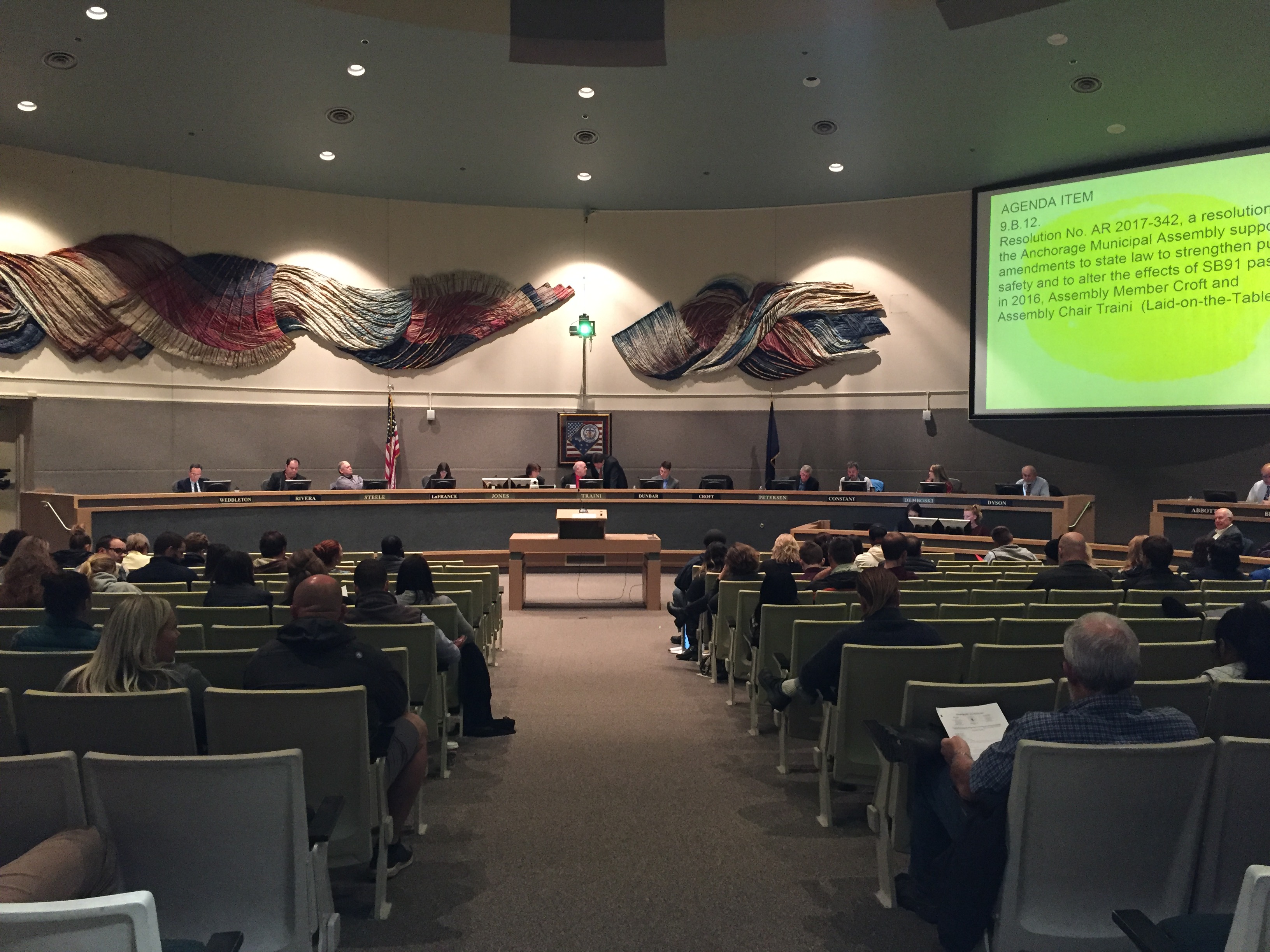
Anchorage Assembly members debate a resolution on SB91, October 10, 2017 (Photo by Zachariah Hughes/Alaska Public Media)
The Anchorage Assembly has shortened the amount of time from when police serve notice that a homeless camp is illegal to when city employees are allowed to dismantle the camp.
The Assembly voted unanimously at its meeting Tuesday night to drop the number of days after the notice is served from 15 to 10.
The camp abatement policy is often cited by frustrated property owners and trail users, who say it takes too long between when an illegal camp is reported and when it is ultimately cleaned up.
Some of those who testified Tuesday to the Assembly see the recent change as a small step that will not make much of a difference.
Allen Williams told Assembly members that tightening the eviction timeline by a few days doesn’t fix problems for either property owners or for people experiencing homelessness.
“When you’re chasing the homeless from campsite to campsite, you’re not really doing anything unless you give them someplace where they can go,” Williams said during public comments.
Assembly members agree the rule-change is hardly a silver bullet.
As the proposal has been modified in recent weeks, language was added pointing to more comprehensive efforts undertaken by city officials to find long-term housing options.
An American Civil Liberties Union spokesperson said the organization is reviewing the new rule before deciding whether to challenge its legality.
In the past, the ACLU and other critics have alleged that banning camping outright on public lands without sufficient housing alternatives amounts to unconstitutionally criminalizing homelessness.
A Coast Guard Air Station Sitka MH-60 Jayhawk helicopter crew searches Gastineau Channel in Juneau on Dec. 6, 2017. Two men remain unaccounted for after their skiff capsized the night before. (Public domain photo by Petty Officer 1st Class Jon-Paul Rios/U.S. Coast Guard)
Search and rescue teams are headed home with two men, who were last seen in Gastineau Channel on Tuesday night, still unaccounted for.
The search for James Cole, 50, and Sheridan “Scott” Stringer, 48, was suspended at about 6 p.m. They went missing after a skiff they were in capsized.
Coast Guard Lt. j.g. Collin McClelland was the officer in charge of the search-and-rescue command center watch floor most of day.
“Unfortunately, even though you throw tons of assets at a situation, sometimes, it doesn’t always go with a happy ending,” McClelland said. “It’s never a happy thing to think about, however, it doesn’t keep us from trying any harder next time.”
Juneau Docks and Harbors, Alaska State Troopers, SEADOGS, Alaska Wildlife Troopers and the Juneau Police Department also participated in the search effort.
McClelland said they covered about 64 nautical square miles centered around Gastineau Channel and the Mendenhall Wetlands and logged 400 to 500 miles of linear travel.
McClelland said he doesn’t make presumptions of death, but did note that the missing men’s next of kin had been notified.
— Jeremy Hsieh, KTOO
Updated | 3:55 p.m. – Overturned skiff had been heading to tug boat anchored in Gastineau Channel
The Coast Guard searches Gastineau Channel on Wednesday, Dec. 6, 2017, for two men who went missing after a boat capsized the night before near Aurora Harbor. (Photo by Tripp J Crouse/KTOO)
The Coast Guard says that James Cole, 50, and Sheridan “Scott” Stringer, 48, were last seen Tuesday night.
“There’s a chance they may have made it back to shore, potentially, and just fallen out of the public eye,” Coast Guard Lt. Nicholas Capuzzi said. “We’re encouraging any members of the public, who may have had interactions with either of these gentlemen.”
The Coast Guard said the skiff loaded with five people — two women and three men — and a dog was headed to the Lumberman, a 107-foot tug anchored near Aurora Harbor.
The Lumberman, which is anchored in navigable waters outside the port’s jurisdiction, has acted as a liveaboard for years, Juneau’s Harbormaster David Borg said.
“There might be several people living out there on the boat – but I’m not certain,” Borg said. “They aren’t required to register with us and they don’t pay to be moored or anchored out there, either. There’s no requirement for them to report that to us.”
It’s unclear whether anyone on the overturned skiff lived on the Lumberman.
City Housing Officer Scott Ciambor said liveaboards have long filled a niche in Juneau’s tight housing market.
“People frequently use them by choice or due to economic conditions,” Ciambor said. “It’s not surprising that a lot of people are living on boats here in Juneau.”
Harbor officials are working to address issues of liveaboards anchored long-term in the channel.
“After the Challenger sank and the huge sum of money it cost to raise that,” Borg said. “We are starting to look at the regulations to address vessels anchoring and/or mooring long-term in our tideland areas and we will be addressing that over our next harbor operations meeting next week.”
The skiff reportedly overturned in rough weather about 9 p.m. Tuesday. Two of the women were able to swim to shore. One of them got in a second boat and tried to rescue their companions.
A Coast Guard life boat was able to find one of the three men.
“The two other males are still unaccounted for,” Juneau Police Sgt. Shawn Phelps said.
The three were treated and released at Bartlett Regional Hospital. The dog is being cared for by animal control.
The Coast Guard spent much of Wednesday searching from boats and a helicopter up and down Gastineau Channel.
— Jacob Resneck, KTOO
Editors’ Note: Scott Ciambor is married to a CoastAlaska employee.
A Coast Guard H-60 helicopter flies over the Douglas Bridge on Wednesday, Dec. 6, 2017, during a search for two men who went missing after a skiff capsized on the night before near Aurora Harbor. (Photo by Tripp J Crouse/KTOO)
A Coast Guard H-60 helicopter flies down Gastineau Channel on Wednesday, Dec. 6, 2017, during the search for two men who went missing after a boat capsized the night before near Aurora Harbor. (Photo by Tripp J Crouse/KTOO)
Updated | 12:05 p.m. Wednesday
Search underway in Gastineau Channel for two missing men
The Coast Guard has identified the two missing men as James Cole, 50, and Sheridan “Scott” Stringer, 48.
“We’re putting that out there because there’s a chance they may have made it back to shore, potentially, and just have fallen out of the public eye,” Coast Guard Lt. j.g. Nicholas Capuzzi said.
“We’re encouraging any members of the public who may have had interactions with either of these gentlemen since 9 p.m. last night to contact the Coast Guard at (907) 463-2980.”
— Matt Miller, KTOO
Original story | 6:26 a.m. Wednesday
Two men are still missing after a skiff took on water and capsized about 9 p.m. Tuesday in Gastineau Channel.
A total of five people, two women and three men, were in the skiff heading out to a tug anchored up near Aurora Harbor, said Coast Guard Sector Juneau Petty Officer Colin Fitzgerald.
Two women that were in the skiff swam to the dock and got in another boat to rescue three men in the water, Juneau Police Sgt. Shawn Phelps said.
One man climbed onto the capsized boat and was picked up by a Coast Guard boat, taken to shore, and treated by Coast Guard medical staff.
“The two females that were in the secondary boat made it to the shore and walked to medical treatment with CCF/R (Capital City Fire/Rescue),” Phelps said.
The rescued man and two women were treated for mild hypothermia at Bartlett Regional Hospital, and were reported in good condition.
A dog that was also in the boat was rescued and is now being cared for by Animal Control.
“The two other males are still unaccounted for,” Phelps said.
Two small rescue boats and an H-60 helicopter still are searching Gastineau Channel today from south of the Douglas Bridge up to the flats area of the Mendenhall wetlands, Fitzgerald said.
Identities of the five people have not been released yet.
(This story will be updated as more details become available.)
The reception desk of the community clinic on the ground floor of the Juneau Housing First building, taken Sept. 19, 2017, shortly before the facility opened to the first tenants. (Photo by David Purdy/KTOO)
Juneau’s Housing First project is fully staffed and functioning nearly three months after its first tenants began moving in.
Housing First provides subsidized housing to 32 of the community’s most vulnerable residents – most of whom had been living on the street.
Unlike conventional shelters, there are no restrictions on alcohol use.
Enrollment in counseling or treatment programs is voluntary.
Monday was a major milestone when the downstairs medical clinic run by Juneau Alliance for Mental Health Inc., or JAMHI, admitted its first patient.
“As of right now the clinic is just going to be offering basic health support services,” Program Director Dacia Davis said Monday. “We have our first tenant over there today getting a basic physical and having some basic questions answered about their health.”
Overall, project has been running well with tenants making themselves at home in the Lemon Creek area complex, she said.
“Obviously there’s going to be bumps in the road, people are adjusting in a new environment and new space,” Davis said. “With that said, there have been very few issues that have come up. We’ve had a lot of communities support. For example, drumming; we’ve had local musicians come by and do a music concert for the tenants. We have a woman who volunteers her time doing art. It’s just trying to find those activities for the tenants to keep people occupied if that’s what they feel like doing.”
Years in the making, the $8.3 million initiative received about a third of its start-up funding from the City and Borough of Juneau as part of a community effort to combat homelessness.
Tenants began arriving in September in phases. The last of the 32 tenants moved in at the end of October.
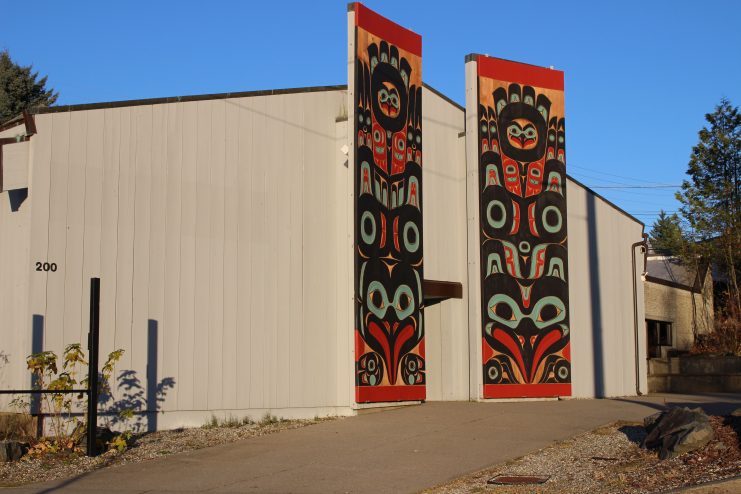
Sitka Tribe of Alaska’s Sheet’ka Kwaan Naa Kahidi building (Photo by KCAW)
The Sitka Tribe of Alaska has landed more than $2 million in federal grant money to aid victims of domestic violence.
The money is being awarded in three separate grants and will create five new positions to support women and children in Sitka.
The first grant puts $600,000 towards facility improvements at Sitkans Against Family Violence, or SAFV, which provides shelter for domestic violence victims.
The money comes the U.S. Department of Housing and Urban Development.
Sitka Tribe works with the Sitkans Against Family Violence frequently, grant administrator Rachel Henderson said. This grant provides direct support for the shelter and the people it serves.
“Sixty-five percent of the people that use the SAFV shelter are Alaska Native. So we thought it was important in that regard to help tribal citizens,” Henderson said. “Also, most of the people that go there have low-to-moderate income, so it’s just helpful to the people in general that SAFV has an expanded or renovated facility.”
The shelter was built in the 1960’s. Sitkans Against Family Violence bought the building in 1995 and made some changes, but no large renovations to the floor plan.
With this money, the organization will expand the facility’s square footage and renovate the existing living space to accommodate more people. Currently, SAFV has space for 24 women and children.
“It’s going to add an area for animals so people who are coming to the shelter can bring their animals with them,” Henderson said. “It’s going to have expand eight bedrooms so they can have four family-size bedrooms. It’s going to improve the bathrooms so that one of the bathrooms is more handicapped accessible.”
Sitka Tribe also received two grants from the US. Department of Justice Office on Violence Against Women.
The first — for just over $899,000 — will be used to fund three positions for the next three years: an advocate for victims’ services at Sitkans Against Family Violence, a transitional housing program manager at Sitka Tribe of Alaska and a domestic violence investigator at the Sitka Police Department.
All three positions will share a common goal of aiding victims of domestic violence and sexual assault.
There was a crucial need to work with Sitka Police and Sitkans Against Family Violence to address the needs of women in the community from multiple angles, said Melanie Boord, Sitka Tribe of Alaska social services director.
“There’s been a desperate need for transitional housing for victims of domestic violence and sexual assault,” Boord said. “There’s definitely a need for a more effective approach to investigating crimes of domestic violence. And also because of the diminished shelter funding, there’s also a need for enhanced victim’s services.”
The second DOJ grant, the Legal Assistance for Victims grant, allocates $599,000 over the next three years to fund two positions.
Naomi Palosaari of Sitka Tribe of Alaska said the money will first pay for a full-time attorney who will work out of Sitka Tribe.
“They will see clients, they will screen them for eligibility, they will represent them in court, they will draw up paperwork,” Palosaari said. “They will be providing all legal services in recovery from domestic violence or assistance with domestic violence issues.”
Sitka Tribe is now advertising for a family law attorney to fill that position. All other grant funded positions took effect on Oct. 1.
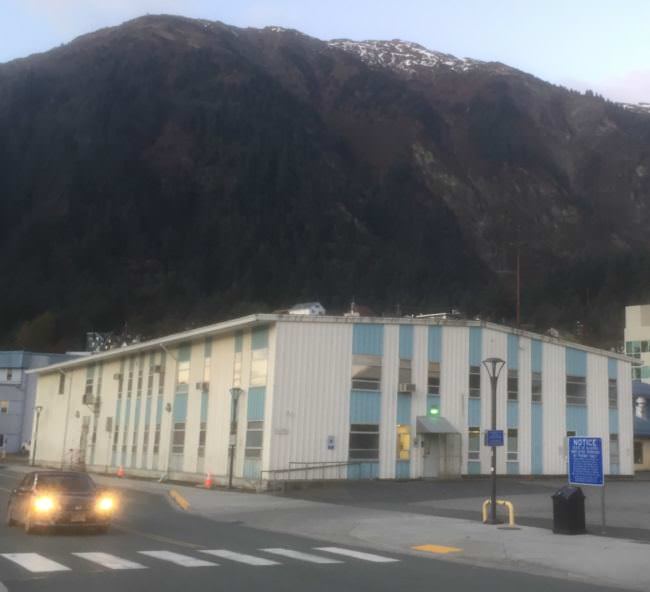
The former Alaska Department of Public Safety Building on Whittier Avenue is owned by the Alaska Mental Health Trust. (Photo by Ed Schoenfeld/CoastAlaska)
Overnight temperatures continue to hover in the teens and 20s, but Juneau’s city-run warming shelter won’t be ready until next month.
The city has selected the blue-and-white former state Department of Public Safety building for the downtown facility.
Housing Officer Scott Ciambor said the city is still negotiating with the Alaska Mental Health Trust Authority, which owns the Whittier Avenue property.
“We’re still working on the final details of the lease, putting the insurance pieces in place,” Ciambor said Tuesday, “working with service providers on the personnel contract so they can provide staffing.”
The original plan was for the warming shelter to open Wednesday.
Ciambor said his office understands that there’s “interest in seeing this come online as fast as possible. So we’re hoping to do so and really think that Dec. 1 is the realistic date.”
The Glory Hole, Juneau’s downtown homeless shelter, has been running at capacity for the past week.
“I have a growing list of people who are suspended for up to a month at a time, and they will literally stand outside my door and ask when the warming center is going to open,” Kyle Hargrave, the shelter’s deputy director, said Tuesday. “Because they’re not allowed to come here and if those individuals are not allowed to come to the Glory Hole, there’s usually no other place to turn.”
The Juneau Assembly approved $75,000 last week for the facility to shelter up to 25 people overnight over the next five months.
It’s budgeted to be open for 100 nights from 11 p.m. to 7 a.m. when temperatures fall below freezing.
Editor’s note: KTOO’s building sits on land leased from the Alaska Mental Health Trust Authority. KTOO has also applied for and received occasional grants for special reporting projects from the authority. Scott Ciambor’s spouse is a CoastAlaska employee.
The Trump administration has appointed a new Northwest regional director for U.S. Department of Housing and Urban Development, or HUD.
Jeffrey McMorris of Issaquah, Wash., began his new job this week.
McMorris has been chief of staff for a King County councilwoman.
He is now the top executive in Region 10, covering Alaska, Washington, Oregon and Idaho.
McMorris is the brother of Republican Rep Cathy McMorris Rodgers of Washington. She was widely reported to be a front-runner for Interior secretary but President Donald Trump picked Ryan Zinke instead.
HUD administers grants to state, local and tribal governments, as well as public housing authorities.
Close
Update notification options
Subscribe to notifications
Subscribe
Get notifications about news related to the topics you care about. You can unsubscribe anytime.