Transportation

Public comment period for proposed Cascade Point Ferry Terminal closes Friday

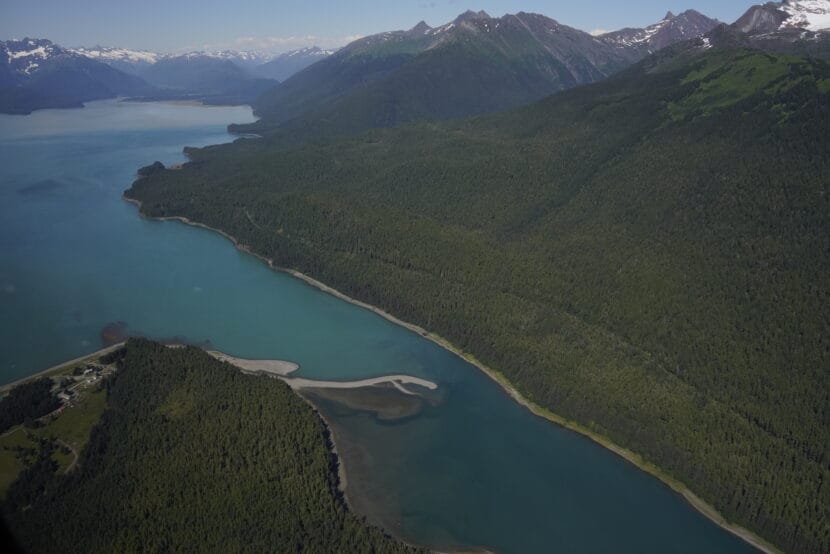
An aerial view of Berners Bay, where the state is proposing to build the Cascade Point Ferry Terminal. (Photo by Alix Soliman/KTOO)

The public comment period for phase 1 of the controversial Cascade Point Ferry Terminal in Juneau closes tomorrow, Jan. 9. 

The state’s proposed ferry terminal would be located about 30 miles north of the Auke Bay ferry terminal, on land owned by Goldbelt Incorporated, an Alaska Native Corporation. The project is slated to cost tens of millions of dollars.

Phase 1 of the project involves site preparation. The Alaska Department of Transportation already approved a $28.5 million contract for phase 1 construction to begin this summer. In December, the state signed a $1.3 million contract with Juneau Hydropower for equipment to electrify the proposed dock. 

The state has been pushing for the new terminal for several years, saying it would benefit travelers by reducing operating costs and travel time between Juneau, Haines and Skagway. 

The project stands to benefit the proposed New Amalga gold mine in Juneau, which would be established near the face of Herbert Glacier. In a press release last month, the Canadian company that proposed the mine, Grande Portage Resources, announced that it is working with Goldbelt to design an ore barge dock alongside Cascade Point.

Leaders in Skagway and Haines oppose the project. Members of the Alaska Marine Highway Operations Board have questioned the motives behind it. Some organizations, like the Southeast Alaska Conservation Council, have called it a bad idea when the money could be spent on improving the ferry system for riders. The Juneau Assembly hasn’t taken a stance on it.

The state’s comment period was initially set to end on Nov. 28 but was extended through Jan. 9. Comments can be submitted via email to gjc@mlfaalaska.com or through DOT’s Cascade Point webpage form.   

The state plans to open another comment period for phase 2 of the project, which will involve construction of the ferry terminal itself. 
Alaska Airlines works to fix issue that left Club 49 members with hefty baggage fees

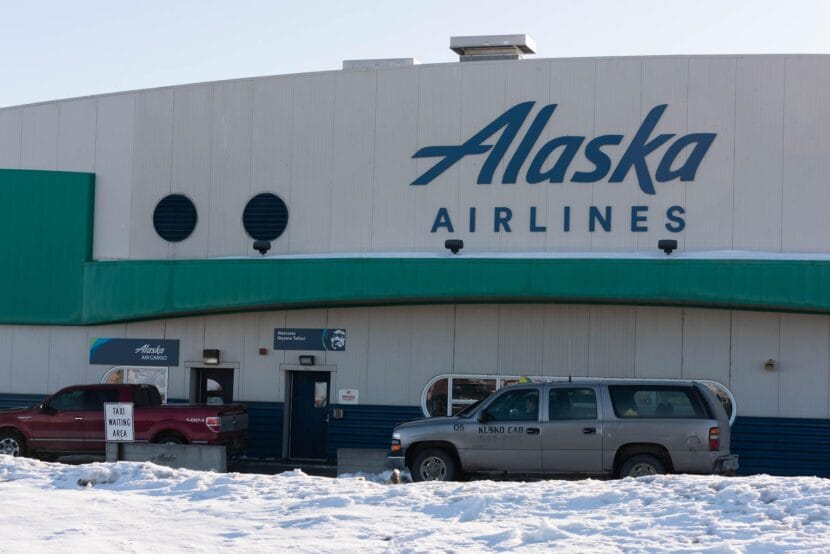
The Alaska Airlines airport terminal in Bethel.
The Alaska Airlines airport terminal in Bethel. (Katie Basile/KYUK)

On Jan. 4, Bethel resident Shane Iverson said that he was shocked when he stepped up to the Alaska Airlines counter at the Anchorage airport to check in for his flight home.

“I had two kids. We each had three items to check in, so nine items. I was sitting there with a ton of boxes and luggage when they told me they were gonna have to charge me for most of it,” Iverson said.

It was a surprising bill that Iverson and some other Alaska Airlines passengers have faced while checking baggage that used to fly for free within the state. The company said that it is working to reverse an issue with its Club 49 program that has affected the baggage benefit.

That benefit is a longtime Alaska Airlines policy of allowing three free checked bags per person on flights within the state. Iverson said that maxing out on luggage is something a lot of Bethel residents do.

“That’s kind of part of the equation of your trip. If you can afford to fly in, at least you’re gonna get a little savings on your supplies that you can bring back, and the variety of things you can find,” Iverson said.

In October 2025, Alaska Airlines announced that it would be limiting the perk to Alaska residents enrolled in its Club 49 loyalty program.

For Iverson, the change seemed inconsequential. He’s a resident, and he’s been a member of the free loyalty program since it launched in 2011. But when he checked in on his phone the night before flying, the app showed that he would be charged hundreds of dollars in baggage fees.

“I was like, it’s probably just a computer snafu, pretty understandable. I’ll just go early because probably other people are going to be dealing with this too,” Iverson said.

Initially, Iverson said that he was told that he would need to re-enroll in Club 49, and that it would take a week or more to process. But after some back and forth, he said that a ticket agent agreed to waive the fees. But he said he’s still not sure what happened.

In an emailed statement on Jan. 5, Alaska Airlines spokesperson Tim Thompson confirmed that some, but not all, Club 49 members have been incorrectly charged bag fees since a new baggage policy went into effect on Jan. 3. Current Club 49 members do not need to re-enroll in the program.

Thompson said that the problem may be resolved as early as Jan. 7. Meanwhile, customers can get bag fees waived at ticket counters by showing they have Club 49 status in the mobile app, or by showing proof of Alaska residency. Club 49 members who were incorrectly charged bag fees should contact customer service for assistance.

Iverson said that he was disappointed to find that other Bethel residents affected by the error also had little idea of what to make of it.

“Who’s ever in charge of communicating really needs to do a better job. Because, you know, in rural Alaska we follow this closely. (It) really affects our lives,” Iverson said.

Meanwhile, Alaska Airlines’ new baggage policy means non-Club 49 members without other special statuses are on the hook for new fees. According to reporting by KNOM, non-members without an Atmos Rewards credit card or elite status now need to pay at least $230 to check three bags within Alaska.

On top of the three free bags, Club 49 membership offers two free checked bags for flights to and from Alaska.

Confirm enrollment in Club 49 online by opening your profile dropdown menu, clicking Account Overview, and navigating to Membership Card. On the mobile app, click the Account tab and scroll down to Atmos Rewards and member card.

Editor’s note: Shane Iverson is KYUK’s former general manager.

Pelican finally gets supplies after going a month without ferries or seaplanes

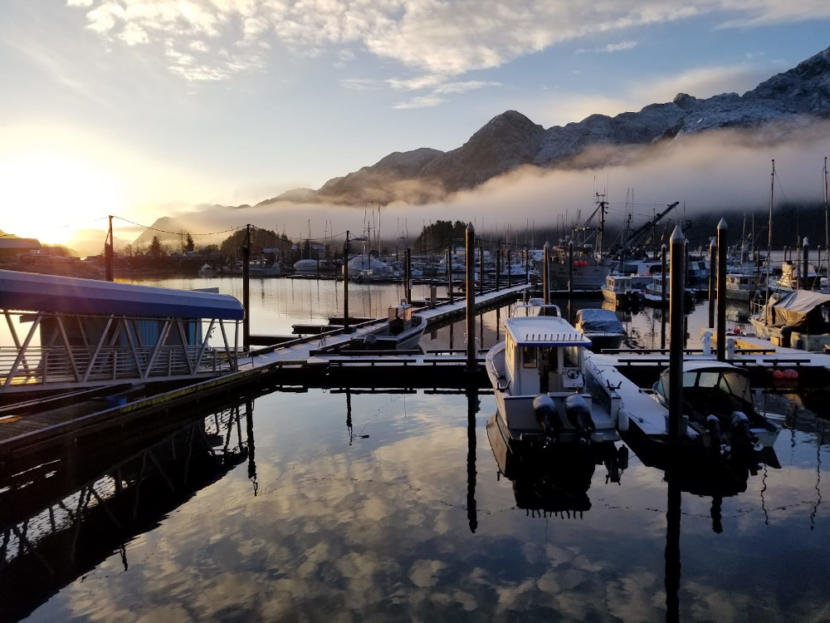
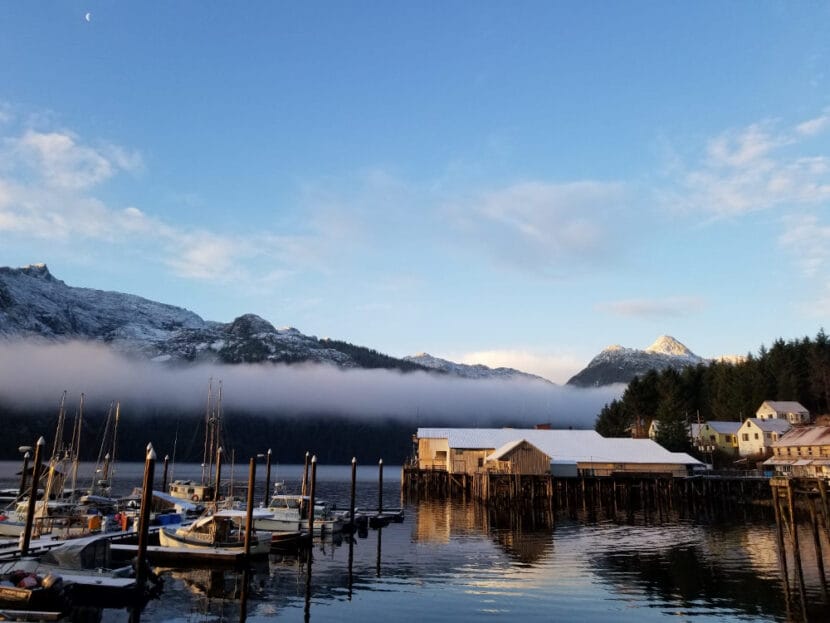
Pelican harbor, pictured here in late 2019. (Photo courtesy of Heather Bauscher)

Boxes of food, mail and late Christmas presents arrived by plane to the small Southeast Alaska fishing town of Pelican on New Year’s Day. The goods came after the isolated town went more than a month without access to outside services. 

From late November till New Year’s Day, the Chichigof Island town of Pelican relied completely on itself. Extreme weather this winter prevented any seaplanes and or ferries from visiting during that period, leaving its roughly 90 residents cut off from the rest of the region and the services many rely on. 

However, that all changed on New Year’s Day last week when Alaska Seaplanes sent five planes loaded with goods. 


View this post on Instagram


A post shared by Alaska Seaplanes (@alaskaseaplanes)

“We have kind of like a shot in our arm, just like to make it,” said Heather Bryant, a Pelican resident and cowner of the Pelican General Store, the town’s only grocery store. 

Bryant said the flights on New Year’s Day were a lifeline.

“But definitely more and more people have been just coming into the store, just because they’re mining their pantries, and I think are running out of stuff,” she said. 

Pelican is off the road system, and relies exclusively on planes and boats visiting from Juneau and other parts of Southeast to bring outside resources and services. But in recent weeks, Southeast Alaska has been pummeled with record-breaking snow and cold temperatures.

An Allen Marine catamaran that was supposed to head from Juneau to Pelican on Tuesday was cancelled due to hazardous conditions. Another flight from Alaska Seaplanes made the trip instead. Bryant said the deliveries — which included milk and eggs, produce and mail — will help them make it by for the time being.

“We’ll be okay for a little bit, and hopefully long enough to make it to the next plane or the next catamaran I hope – I’m just trying to stay positive,” she said. 

In the meantime, Bryant said the town is resilient despite all the cancellations. 

“The one thing I really like about out here is just people are just, they just keep going,” she said. 

Carl Ramseth is the general manager of Alaska Seaplanes. He said the recent weather has prevented many flights from visiting Pelican and other float plane destinations in Southeast Alaska like Angoon, Elfin Cove and Tenakee Springs. But pilots and operators fly when they can, like on New Years Day, when the company typically doesn’t operate.

“As long as we have the minimum temperature that we need to do that with float planes and good visibility, we’ll be operating,” he said. “We’re just kind of at the mercy of Mother Nature at this point.”

Another Allen Marine vessel is slated to arrive at the end of the month.

M/V Lituya back sailing on a limited basis after brief grounding

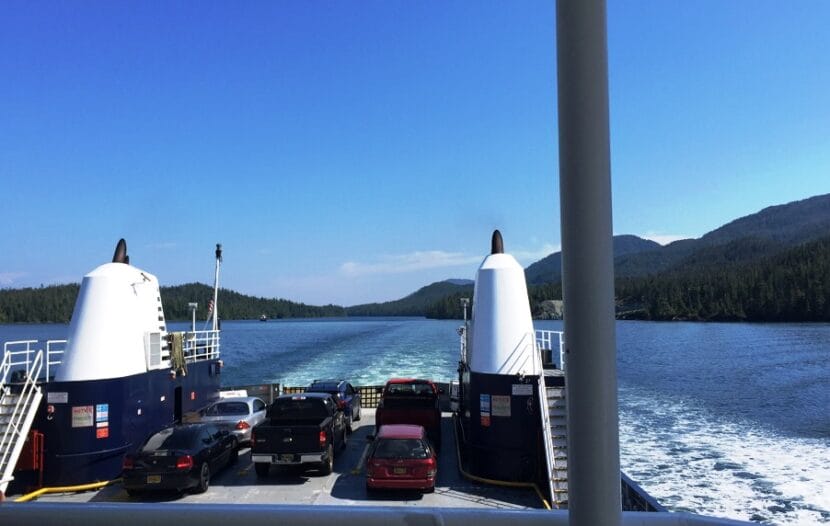
The Alaska Marine Highway System ferry Lituya provides regular service between Metlakatla Indian Community and Ketchikan. (KRBD file photo by Leila Kheiry)

The state ferry Lituya went aground on Tuesday at about 2:50 p.m. near Annette Bay in Southeast Alaska. The small ferry runs a daily shuttle service between Ketchikan and Metlakatla.

The brief grounding happened when the ferry left Annette Bay dock. It lasted less than a minute, according to Shannon McCarthy, a spokesperson with the Alaska Department of Transportation. She says the grounding is “a rare event” in Alaska’s fleet.

But the Lituya was out of service until Friday while inspections were conducted. Officials found damage to the ship’s hull, but not enough to keep it tied up. It is sailing on a limited schedule in daylight hours until it can be dry-docked in early February.

The U.S. Coast Guard led the investigation into the grounding.

Winter weather leaves Pelican without seaplane, ferry access for weeks

Pelican Harbor (2020 Heather Bauscher)

Like many people during the holiday season, Sitkan Gaylen Needham was planning on spending Christmas with her adult children, who planned to fly in from Pelican.

However, due to record snowfall, low visibility and cold temperatures, Pelican has been without seaplane access since Nov. 28, cutting the Southeast community of 91 people off from the rest of the region.

“We lived out there full time in the 70s, and we had hard winters out there then, and the seaplanes landed, and they would often ice up,” said Needham. “I think now they’re just more cautious.”

With transportation to and from Pelican limited to Coast Guard and law enforcement helicopters in medical emergencies, not only was Needham unable to celebrate Christmas with her family, she also has had difficulty bringing the Christmas spirit to them.

“I was thinking of a Christmas package I was getting ready to mail out there, and knowing that the planes weren’t flying if you send it, then it ends up going into (the) Alaska Seaplane office and just sitting there. And in this case, the Christmas cookies would have been moldy, right?,” said Needham. “So we’ve just kind of been waiting to hear that they’ve gotten a plane.”

Ajax Eggleston is Needham’s son who has been living in Pelican off-and-on for about five decades, and says he thinks this is the longest period of time Pelican has gone without plane access.

He says it doesn’t help that Pelican’s December ferry was also canceled due to rough winter conditions in the region. Living in remote Alaska, Eggleston is used to the occasional mail delay, but dealing with decreased ferry capacity at the same time has not made things easy.

“That’s kind of a big part of this, is that we just don’t have reliable ferry service anymore, because we only have (the) LeConte that can tie up to our ferry terminal, and when the LaConte is laid up, we don’t have a big enough ferry to run in foul weather,” said Eggleston.

As a result, Eggleston is still waiting to receive the replacement parts he needs to repair his broken furnace and pipes. As for other residents in Pelican, he knows some who have rescheduled their medical appointments. Others are waiting on Costco orders of fresh produce that are stuck in Juneau.

“Everybody’s kind of hunkered down just watching their vegetables disappear,” said Eggleston. “We’re fine. We’re a subsistence-based community, so we’re not going to starve. But there’s no vegetables and no produce of any kind. So we’re overdue for a mail plane!”

Eggleston says Pelican residents have saved up enough frozen vegetables to get by. There is a Allen Marine catamaran expected to arrive on Jan. 6, as well as a state ferry on Jan. 10. Until then, Eggleston says right now, Pelican residents are in a waiting game for better weather.

State begins permitting process to build Izembek road

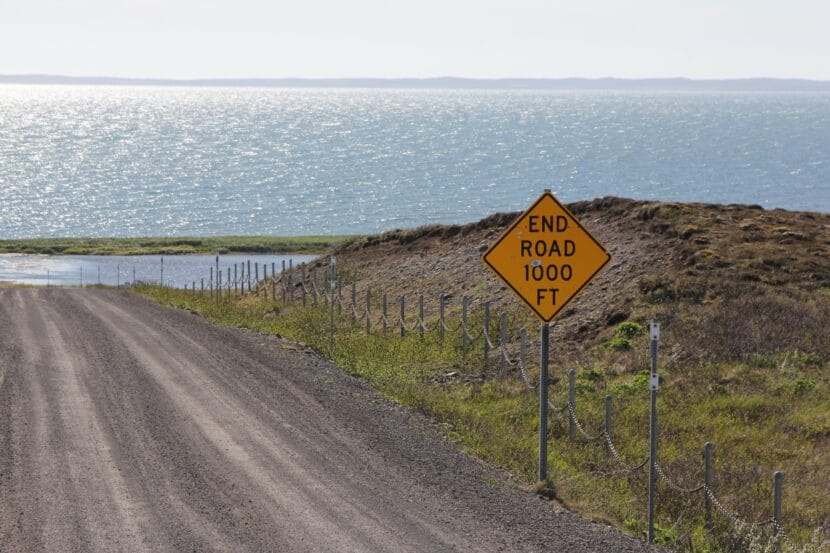
The end of the road leading out of King Cove. June 2024
The end of the road leading out of King Cove. June 2024 (Theo Greenly/KUCB)

A controversial stretch of road connecting two Eastern Aleutian communities is heading toward construction.

The Alaska Department of Transportation has applied for a U.S. Army Corps of Engineers permit to build the road and is taking public comments on the proposed work until Jan. 12.

The 19-mile road would pass through the Izembek National Wildlife Refuge, connecting King Cove residents to nearby Cold Bay. King Cove community leaders say the single-lane, unpaved road could provide life-saving access to Cold Bay’s all-weather airport, but conservation groups have fought the proposal for decades.

In October, federal officials announced a land exchange agreement with the King Cove Corp. to facilitate the road. That wasn’t the first time a swap agreement had been approved, but local leaders said it was the first time the land had actually switched ownership into the hands of the for-profit Native corporation.

The refuge will swap 490 acres of land for the road, in exchange for about 1,700 acres of the corporation’s land. According to the permit, King Cove Corp. also relinquished its selection rights under the Alaska Native Claims Settlement Act to 5,430 acres of land within the Izembek Refuge, which means it gave up its legal ability to select those parcels under ANCSA in return for the agreed land exchange.

Several environmental groups and dozens of Alaska tribes have called for the road to be stopped. They say the refuge shouldn’t be developed because it would threaten wildlife, some of which are precious subsistence resources for communities across the state.

Subsistence is also part of King Cove’s argument in favor of the road. The tribal government says the road would help them access their own subsistence lands, much of which is inaccessible except by boat.

According to the Corps, the road would cross numerous streams, some of which are home to spawning salmon. The project area also covers the habitat of endangered and threatened species, like the Steller’s eider and the short-tailed albatross.

The corps will consult with various organizations, including the U.S. Fish and Wildlife Service, the State Historic Preservation Office and federal tribes before issuing permits. They are also accepting public comments during the application process.

Comments can be submitted via email or sent to the Army Corps field office in Fairbanks. You can find more information on the Army Corp’s website.

Site notifications
Update notification options
Subscribe to notifications