Climate Change

How melting Arctic ice could be fueling extreme wildfires in Alaska

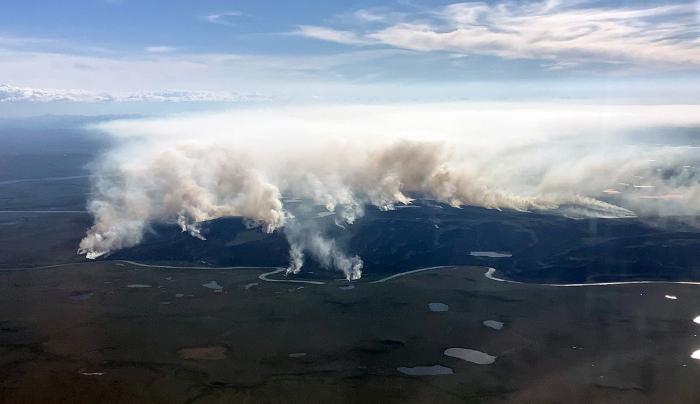
The 2021 Noatak River Fire in the Noatak National Preserve, about 120 miles northeast of Kotzebue. (Photo courtesy of Ryan McPherson, BLM AFS)

Above the Arctic Circle, the community in Kotzebue, Alaska, is watching sea ice disappear as the climate gets hotter. In the Western U.S., firefighters are battling increasingly explosive wildfires driven by hot, dry weather.

Scientists are finding these two extremes could be connected, a sign of how melting ice is causing ripple effects across the planet. You can see images and video from Alaska and California in our visual interactive.

This story is part of the NPR Climate Desk series Beyond the Poles: The far-reaching dangers of melting ice.

This audio story was edited by Neela Banerjee and Sadie Babits. It was produced by Ryan Kellman.

Copyright 2023 NPR. To see more, visit https://www.npr.org.

Transcript :

MICHEL MARTIN, HOST:

All this week, NPR’s Climate Desk has been looking at the far-reaching effects of melting ice. This story is about two places thousands of miles apart but with an unexpected connection. One is the Western U.S., where wildfires have ravaged communities in recent years. The other is the Arctic Ocean, where vast areas of sea ice are disappearing. These extremes of fire and ice have a surprising link, one that scientists say is getting stronger as the climate changes. Lauren Sommer from NPR’s Climate Desk has the story.

LAUREN SOMMER, BYLINE: It’s early July, 30 miles above the Arctic Circle. And in the small coastal village of Kotzebue, Alaska, kids are swimming.

(SOUNDBITE OF WATER SPLASHING, CROSSTALK)

SOMMER: They launch themselves off a seawall into the ocean. It’s getting late, but it doesn’t matter too much. The sun stays up for 24 hours this time of year. Boats are still speeding by on the open water. But just a few decades ago, this would not be swim season because huge pieces of ice would still be floating by. Most of the year, the ocean around Kotzebue is frozen for as far as you can see. For the Alaska Native people here, ice is a way of life.

CYRUS HARRIS: For the Inupiaq people that’s living along the coastal areas, we’re here for a reason, and that particular reason is the resources out in the waters.

SOMMER: Cyrus Harris grew up around Kotzebue. Like many people here, he relies on hunting and fishing, as has been done for generations.

HARRIS: I’d like to say 70% of my diet is from the lands and waters.

SOMMER: Harris runs the elders traditional food program, where hunters donate food to supply the long-term care facility in town.

HARRIS: On this side, I got…

SOMMER: He opens a big walk-in freezer with caribou, fish and seal.

HARRIS: We’re going to be making fresh seal oil this winter with the…

SOMMER: Bearded seals are an important traditional food, and they’re only nearby for a short time, when the sea ice starts breaking up in the spring. But that hunting season has been getting even shorter, he says, because the Arctic is changing undeniably. It’s warming twice as fast as the rest of the planet.

HARRIS: Our colder temperatures throughout the winter are no longer colder temperatures throughout the winter. Earlier spring thaws, it’s obvious. Late fall freeze up, that’s obvious.

SOMMER: To measure that, Harris and other village elders teamed up with scientists from Columbia University and the University of Alaska Fairbanks. They combined traditional Indigenous knowledge with scientific data and found since 2003, the sea ice breaks up three weeks earlier on average.

HARRIS: If these changes continue to go on as they are, it’s going to be a big challenge for the many of us. It’s going to be a big challenge for the younger generation.

SOMMER: And the changes aren’t just affecting people here.

(SOUNDBITE OF WATER SPLASHING)

ALEX WHITING: The thing about the Arctic is that it only works when it’s cold.

SOMMER: Alex Whiting is environmental director for the Native Village of Kotzebue.

WHITING: So that means when it’s not cold, a lot of things start to become disrupted.

SOMMER: We’re walking on the shoreline at the edge of town. There aren’t any roads beyond here. Kotzebue can only be reached by boat, plane and snowmobile when there’s ice. Whiting says what happens in the Arctic matters because it influences the rest of the planet.

WHITING: The Arctic is a major thermal regulator for the planet, right? It’s a air conditioner for the planet. It drives weather systems.

SOMMER: All that cold at the top of the planet shapes the weather, including weather that’s thousands of miles away.

(SOUNDBITE OF ARCHIVED RECORDING)

UNIDENTIFIED REPORTER: Tonight, wildfires are leaving a trail of destruction amid record-breaking heat in the West.

SOMMER: Scientists are finding that Arctic ice seems to be shaping weather that fuels major disasters, like wildfires.

HAILONG WANG: The change in the Arctic could affect anywhere people live.

SOMMER: Hailong Wang is an Earth scientist at the Department of Energy’s Pacific Northwest National Laboratory. He says this is how it works. When the Arctic Ocean is covered in ice, it’s super bright white, so it’s really good at reflecting sunlight. It acts like a shield. But when there’s less sea ice…

WANG: The ocean can absorb and store more heat from the sunlight.

SOMMER: That heats up the water, which warms the air above it. The warm air forms a weather system, one that’s strong enough to push something you hear about a lot in weather reports – the jet stream. The jet stream is what steers weather across the lower 48.

WANG: The shift of this jet stream can have a big impact on weather events.

SOMMER: Like bringing hot, dry air to the Western U.S. Wang’s research shows this connection from less sea ice to more arid heat in the West is likely to become more common as the climate gets hotter. And it would happen in the fall, a time when hot, dry air is especially dangerous. Mark Macias has seen that firsthand in a wildfire three years ago.

MARK MACIAS: Fire of this magnitude, how fast it moves, you can’t get in front of it.

SOMMER: Macias is a fire captain with the St. Helena Fire Department in Northern California. We’re in a rural part of Napa County, with rolling hills and oak woodlands. In late September of 2020, he and his crew were the first ones here after getting a call about a wildfire. They had already been on high alert because of the weather.

MACIAS: It was windy. There was no humidity.

SOMMER: The wildfire was moving fast. The priority became just getting people out.

MACIAS: It’s a bright orange everywhere. You’re constantly getting burned with embers. Yeah, it’s something.

SOMMER: The Glass Fire, as it was called, exploded, jumping hundreds of acres overnight. The dry air sapped the moisture from vegetation, priming it to burn. Macias spent the next 60 hours straight evacuating people. Eventually, more than 1,500 homes and buildings were destroyed. This isn’t the only fire like this Macias has seen. He and his crew have been called to fight them around California.

MACIAS: It just seems like there’s more of them, more and more of them.

SOMMER: It’s taken a big toll, not just on the local communities but on Macias and the firefighters he works with. He gets choked up talking about it.

MACIAS: You try to do a lot, and it feels like you can’t win. I know that was a huge thing that I’ve talked to with other guys. It’s just like when you just feel like you can’t win, and you’re trying, you know? Those are the tough ones.

SOMMER: There are a lot of reasons wildfires explode into something unstoppable. The land may be overgrown with vegetation or the terrain too steep. But hot, dry weather – fire weather, as it’s known – has been the deciding factor in the most destructive wildfires in recent years. Forecasting this weather and knowing when it could be more common would be a big help for Western states, and that may be a matter of understanding its faraway connection to the Arctic Ocean and its blanket of white ice that’s shrinking more and more.

Lauren Sommer, NPR News.

MARTIN: You can find interactive stories from this series online at npr.org/icemelt. Transcript provided by NPR, Copyright NPR.
The big reason why the US is seeking the toughest-ever rules for vehicle emissions

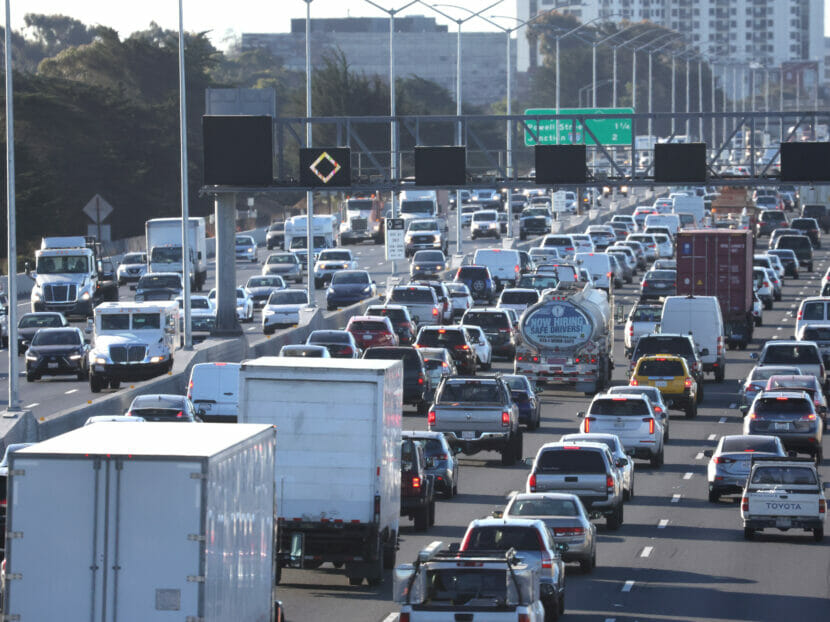
Traffic moves along Interstate 80 in Berkeley, Calif., on Feb. 16, 2022. The Biden administration proposed new tough emission rules so tough it would force auto makers to boost sales of electric cars to meet the requirements. (Justin Sullivan/Getty Images)

The Environmental Protection Agency is proposing its most ambitious new regulations yet for cutting pollution from vehicles.

The overarching goal is not just cleaner cars, but the transformation of the auto industry: The EPA would essentially impose regulatory penalties on companies that do not move quickly enough toward electric cars.

The new standards are so strict that, according to the EPA’s estimates, up to 67% of new vehicles sold in 2032 may have to be electric in order for carmakers to be in compliance.

EPA Administrator Michael Regan says the proposed standards would eliminate 7.3 billion tons of CO2, equivalent to four years worth of the entire U.S. transportation sector, and save lives through reduced air pollution.

He promised the EPA will work closely with labor, the auto industry and green groups to “usher in a new generation” of clean cars.

“We’re going to envision and innovate and achieve this future together,” he said during a call with reporters. “It is well within our grasp. Make no mistake about it.”

Margo Oge, a former EPA official and the chair of the board of the International Council on Clean Transportation, called the regulations “the single most important regulatory initiative by the Biden administration … to really reduce the worst impacts of climate change.”

“The administration is going to make history — if indeed, at the end of the day, they finalize these ambitious standards,” she said in a press conference arranged by the Environmental Defense Fund, an advocacy group.

Before they are finalized, the proposed standards (which include several alternative options) will be open for public comment. They may be revised before they enter into effect. EPA has also proposed new standards for medium-duty and heavy-duty trucks.

Here’s what to know about the proposal.

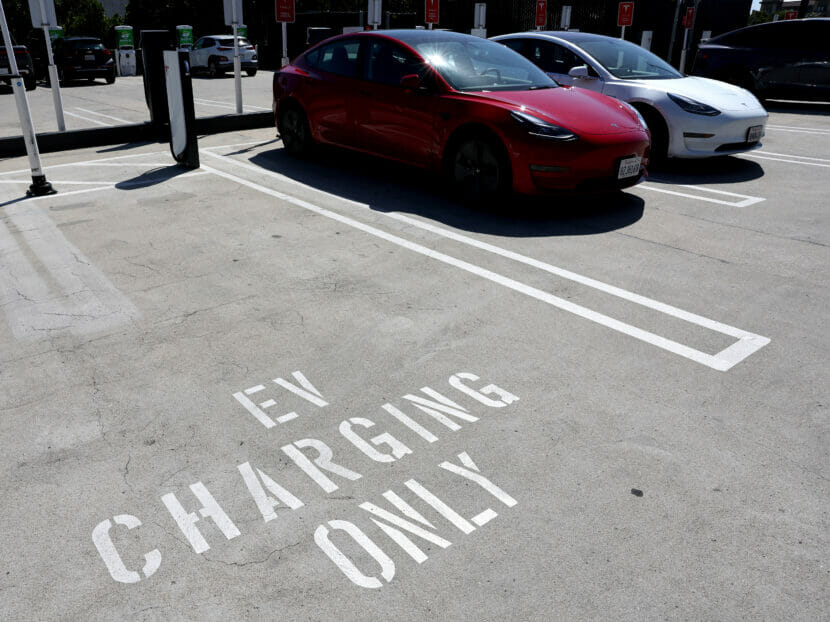
Tesla cars recharge at a Tesla Supercharger station in Pasadena, Calif., on April 14, 2022. The pivot to electric cars depends not only on the automakers ability to produce these cars. It also depends on building the infrastructure needed to support having more electric cars on the roads. (Mario Tama/Getty Images)

What do the standards require?

These proposed standards cover the pollution from vehicle tailpipes — including air pollution that is directly damaging to human health, as well as the greenhouse gases that are fueling catastrophic climate change.

They are separate from the fuel economy standards set by the federal government; new proposals for those rules are expected soon. These are also separate from — and designed differently than — the zero-emission vehicle mandates adopted in California and some other states.

The EPA is not proposing to directly require that 67% of vehicles be zero-emission by 2032.

Instead, it sets a standard for emissions, on average, based on the size and type of vehicle being built. The agency says those new rules are so stringent that it believes companies will need to produce 67% zero-emission vehicles to meet them.

But technically, if automakers came up with another way to meet the rules, they could; the policy is “technology-neutral.”

The new proposed standards would require just 82 grams/mile, on average across a company’s production, by model year 2032. That’s a 56% reduction from the 2026 target.

Exactly one automaker could meet that standard today: Tesla.

Isn’t the auto industry already going electric?

Yes, automakers are already executing a remarkable shift toward electric vehicles, spending hundreds of billions of dollars on new battery plants and production lines.

And the plans companies had already announced were fairly eye-popping.

Ford — which sold 61,575 EVs last year — aims to build 600,000 per year by the end of 2023.

General Motors plans to build a million per year by 2025, an aggressive move from the 39,096 EVs it sold last year.

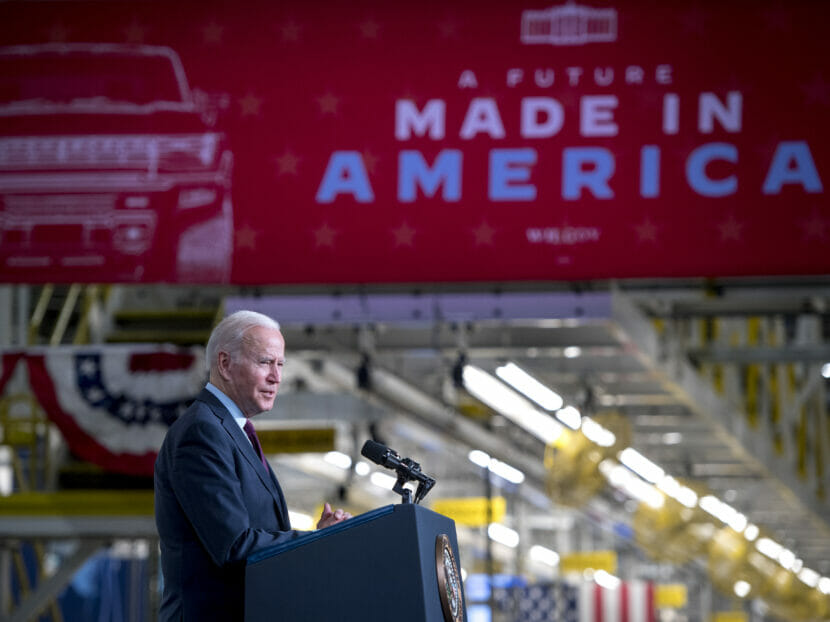
President Biden speaks at the General Motors Factory ZERO electric vehicle assembly plant in Detroit on Nov. 17, 2021. Increasing the adoption of electric cars is a major priority for the Biden administration. (Nic Antaya/Getty Images)

These are all numbers for the North American market, not counting the huge Chinese EV market.

However, companies have different timelines for when they planned to go electric, and many were not publicly planning on being anywhere close to two-thirds electric in the U.S. by 2032.

A number of automakers had balked at President Biden’s previously announced target of having 50% of new cars sold by 2030 be made up of EVs. The EPA proposal is more ambitious — and, unlike that target, it would come with regulatory teeth if it was adopted.

In addition to new rules for cars, trucks and SUVs, the EPA is also proposing standards for medium-duty vehicles, like delivery trucks, and heavy-duty vehicles, like tractor-trailers. If finalized, the EPA predicts these would lead to 50% of buses and 25% of long-haul tractor trailers being electric by 2032.

How will this affect car shoppers?

Some analysts and industry voices are crying foul, saying the EPA is moving unreasonably quickly and would hurt consumers.

The EPA estimates that complying with the proposed rules would add $633 to the cost of making a vehicle in 2027 and about $1,200 per vehicle in 2032.

But drivers would overall save money because EVs are cheaper to operate, the EPA’s analysis found. Car buyers may also benefit from tax credits of up to $7,500.

Overall, the EPA calculates the rules would save the U.S. between $850 billion and $1.6 trillion, including reduced climate change impacts and improvements to health.

Are these rules feasible to implement?

The EPA maintains the rules can be feasibly met, thanks to improving technology and to significant government support for electric vehicles — including loans, grants and tax credits for companies building batteries and electric vehicles, as well as tax credits for consumers buying them.

And it’s certainly true the Biden administration offered many carrots to persuade the auto industry to go electric, in addition to this regulatory stick.

But the auto industry emphasizes that the shift toward electric vehicles requires multiple, simultaneous transformations, including some outside their control.

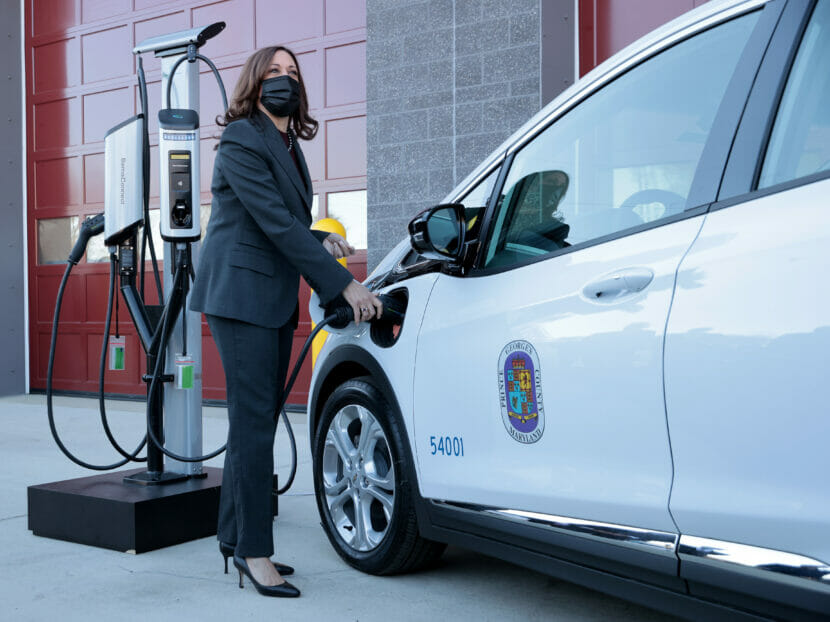
Vice President Kamala Harris plugs an electric vehicle into a charging station in Brandywine, Maryland, on Dec. 13, 2021. The U.S. is spending heavily to build a network of chargers across the country. (Chip Somodevilla/Getty Images)

It’s not currently clear if the world can mine enough minerals or build enough batteries quickly enough to satisfy automakers’ existing production plans, let alone accelerated ones.

Charging infrastructure needs to be built out, as well as the power generation to supply those chargers. Drivers — huge swathes of them, not just a small percentage of enthusiasts or the particularly eco-conscious — would need to embrace a shift away from gas stations and towards chargers.

What’s next?

The proposed regulations will be open for comment, and car makers will likely be very vocal about expressing what they consider they can actually achieve over the next decade.

The proposed rules are also very likely to face a backlash. Republican states, led by Texas, have already sued the EPA over the current version of these vehicle standards, arguing that the body overstepped its authority in crafting those rules with an eye to EV adoption.

And those standards are significantly less ambitious than the rules proposed today.

Notably, the Alliance for Automotive Innovation, the trade group for major automakers, has defended the EPA’s right to set those standards, saying nobody questions the future is electric.

“However this litigation concludes,” the group said in a legal filing, “widespread vehicle electrification is inevitable.”

Copyright 2023 NPR. To see more, visit https://www.npr.org.

Transcript :

MICHEL MARTIN, HOST:

The auto industry is moving towards electric vehicles. The big question is, how fast should it go?

LEILA FADEL, HOST:

Well, the Environmental Protection Agency has chimed in with its answer, which is very fast. The agency just proposed the toughest-ever rules around tailpipe emissions. It’s actually a big push to get the auto industry to focus on electric vehicles. Yesterday, EPA Administrator Michael Regan laid out why.

(SOUNDBITE OF ARCHIVED RECORDING)

MICHAEL REGAN: The stakes could not be higher. We must continue to act with haste and ambition to confront the climate crisis and to leave all our children, like my 9-year-old son Matthew, a healthier and safer world.

MARTIN: As for how the EPA plans to do that, NPR’s Camila Domonoske is here to tell us. Thank goodness. Good morning.

CAMILA DOMONOSKE, BYLINE: Good morning, Michel.

MARTIN: So what exactly is the EPA announcing today?

DOMONOSKE: All right. So these are proposed tailpipe emissions standards. And these tailpipe emissions include both pollution – like smog, right? – stuff that makes people sick – and greenhouse gases. Transportation is the single biggest source of carbon dioxide emissions in the U.S., which is fueling catastrophic climate change. So these are regulations that cover both of these things, and they are about to get, under this proposal, significantly stricter.

MARTIN: So if I have this right, though, Camila, hasn’t the EPA been trying to make cars cleaner for some time now? I’m thinking decades. So what’s different about this?

DOMONOSKE: So the standards are going to take a huge leap in terms of how strict they are. And the way these standards work, it’s not like every single vehicle has to meet the standard, it’s that on average, the whole fleet of cars that a company makes has to meet them. And the new standards are going to be so strict that, hypothetically, a company can meet them however they want. They’re technology neutral standards. That’s what they’re called. But realistically, they’re going to have to make electric vehicles to bring that average down low enough to comply.

Now, I’m going to throw some numbers at you about how many electric vehicles we’re talking. A few years ago, electric vehicles were about 2% of new car sales in the U.S. Right now – 7%. The EPA is looking at 2032 – that’s nine years from now – and they’re envisioning a U.S. where two-thirds of new vehicles are electric.

MARTIN: OK. Wow. So is that even feasible?

DOMONOSKE: At a minimum, it’s really, really hard. It’s not just about making the vehicles, which is its own challenge. It’s having chargers for all of them, electricity to power those chargers. It’s having batteries to put in them. It’s having minerals for those batteries. The challenge here is huge. What the EPA would say is that the government is also providing a lot of support for the transition. There is funding for battery plants and minerals and chargers, right? California and the EU have electric car mandates – slightly different structure, but they have policies that are going to require electric vehicles as well. Lots of companies were going this direction anyway, just not maybe as quickly. So the EPA says if you factor all that in, it is feasible. The auto industry says maybe.

MARTIN: OK. What’s next?

DOMONOSKE: Well, there’s going to be a comment period. These are proposed standards, so expect to hear about feasibility. There will also almost certainly be a political fight – possibly a legal one. The current version of these standards, which is nowhere near as strict, is being challenged in court by red states, led by Texas. One thing that I’ll note as interesting about that – the auto industry has actually chimed in to defend the EPA’s right to set these standards. And they called the shift toward electrification – not necessarily the speed but the overall direction – inevitable.

MARTIN: That is NPR’s Camila Domonoske. Camila, thank you.

DOMONOSKE: Thank you. Transcript provided by NPR, Copyright NPR.
Businesses face more and more pressure from investors to act on climate change

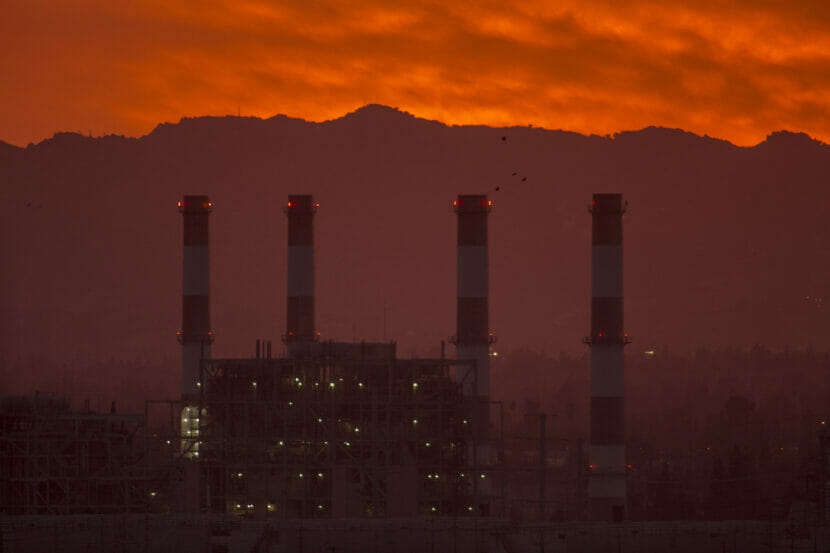
To avoid some of the worst impacts of climate change, greenhouse gas emissions need to be eliminated or offset by midcentury, according to the United Nations. To get there, activist investors say banks and insurance companies need to account for the emissions they contribute to by underwriting and investing in fossil fuel infrastructure like this natural gas plant in California. (David McNew/Getty Images)

Every spring, shareholders in publicly traded companies get to weigh in on how they’re run. It’s a chance for investors to vote on proposals to shape corporate policies for things like executive pay and political spending. But as the Earth heats up, annual shareholder meetings have become a battleground for activist investors who are pressing companies for more aggressive action on climate change.

This year, shareholders filed around 540 proposals as of mid-February asking companies to address environmental, social and corporate governance issues, according to Proxy Preview. Resolutions focused on climate change accounted for about a quarter of this year’s total, with the number increasing by about 12% from the same point in 2022.

Investors want to know how companies are contributing to rising temperatures, and what they’re doing about the problem. They’re calling for executives and corporate boards to set targets for cutting greenhouse gas emissions, and then to report on their progress. And they want to know how businesses plan to keep making money as industries are reshaped by the push to cut emissions.

The message to companies is, “set targets, issue plans, give us clear disclosure,” says Kirsten Snow Spalding, who leads investor initiatives at Ceres, a nonprofit focused on sustainability. “And all of it is about, how are you addressing the risks and moving towards the opportunities?”

Are shareholder proposals working?

Most resolutions are non-binding, but just introducing them has proven to be an effective tool for activist investors. Last year, shareholders withdrew a record 110 proposals that were focused on climate change after they struck deals with companies, according to Ceres. Another 15 climate resolutions that went to a vote at various corporations won majority support from shareholders.

“The trend toward climate action is really on the rise,” Spalding says.

But the pace of corporate change is slower than activists would like — and what climate science shows is needed. Scientists working for the United Nations say the planet is on track for catastrophic warming that will cause more extreme weather. Heat waves, droughts and floods that are fueled by climate change are already inflicting severe economic damage and killing and displacing people around the world.

Some of the worst impacts could be avoided by quickly cutting emissions. Right now, though, emissions aren’t falling. Activists say a lot of companies aren’t doing enough to address the threat, despite pressure from investors.

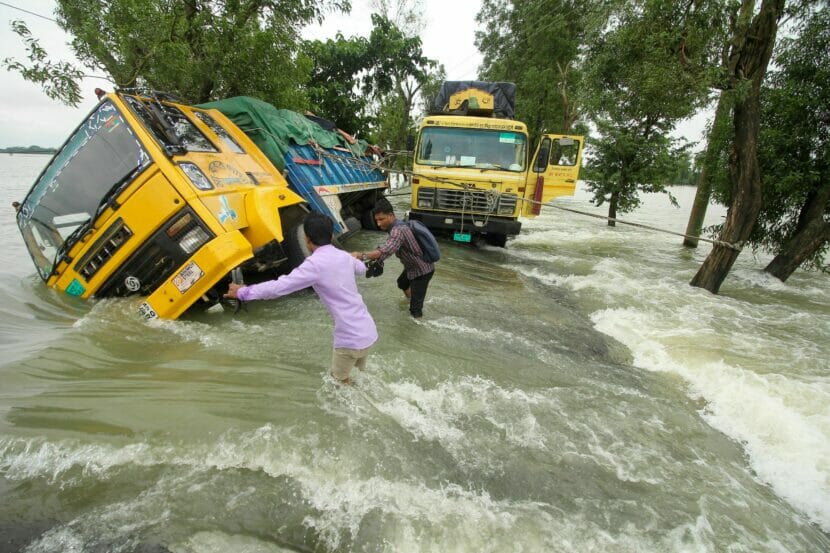
People wade past stranded trucks on a flooded street in Bangladesh. Experts say climate change is increasing the frequency, ferocity and unpredictability of floods. (MAMUN HOSSAIN/AFP via Getty Images)

Activist shareholders focus on emissions that are hard to measure

Chubb Ltd., a big insurance company, is one of the businesses that activist investors are targeting this year.

Chubb is already cutting its own greenhouse gas emissions. But, like other insurers, the company doesn’t directly produce a lot of emissions. However, some of its clients do. So, Chubb says it’s limited its underwriting and investing in coal and oil sands. And the company said in March that it will require clients in the oil and gas industry to cut emissions of methane, a potent greenhouse gas.

But the company’s recent methane initiative was met with a shrug from a leading shareholder advocacy group called As You Sow. It noted that a lot of oil and gas companies already have their own plans to reduce methane emissions.

“I don’t ever like to say this, but it feels a little bit like window dressing — that they are attempting to convince investors that they’re taking action,” says Danielle Fugere, president of As You Sow. “But because they aren’t measuring, they aren’t disclosing, we don’t have a way to measure the effectiveness of those actions.”

As You Sow filed a shareholder proposal last year asking Chubb to publish a report on whether and how it plans to measure and cut greenhouse gas emissions connected to its underwriting, insurance and investing activities. The group wants Chubb to make commitments that align with the Paris Agreement’s goal of limiting global warming to 1.5 degrees Celsius by the end of the century. To do that, all greenhouse gas emissions need to be eliminated or offset by 2050.

A majority of Chubb’s shareholders backed the proposal. But the company said it didn’t know how to “reasonably measure” emissions from the entities it insures. As You Sow and other activists filed a similar proposal this year that’s set for a vote at Chubb’s annual meeting in May.

“Insurers’ activities can contribute to systemic climate risk to the global economy, investor portfolios, and insurers’ profitability,” the activist investors say in the proposal.

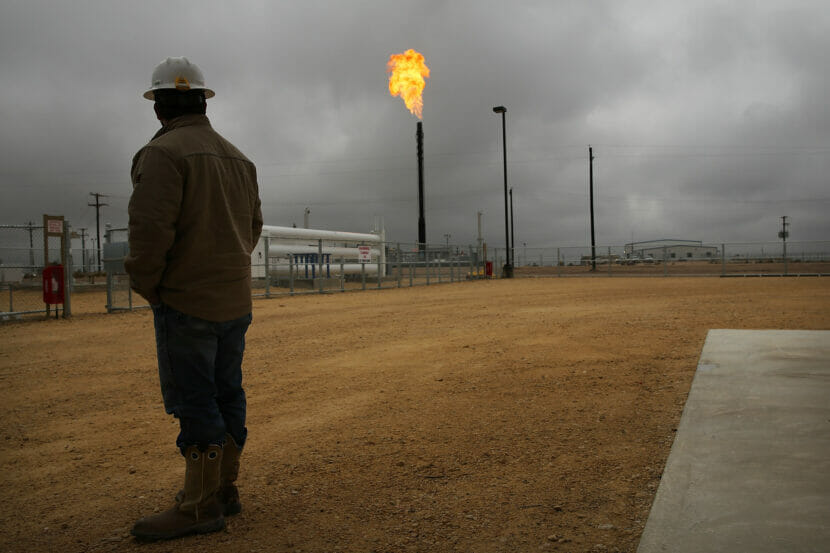
Flared natural gas is burned off in Texas. Chubb recently said it’ll require oil and gas clients to reduce emissions of methane, a greenhouse gas and the main component of natural gas. However, shareholder activists say many oil and gas companies already have plans to cut methane emissions, and that it’s unclear what impact Chubb’s policy will have. (Spencer Platt/Getty Images)

How one company is responding to a shareholder resolution

Chubb is urging investors to vote against the resolution. The company didn’t make anyone available to NPR for an interview. It said in a recent filing to the Securities and Exchange Commission (SEC) that there’s still not a “well-established and widely accepted” way to measure emissions from all its customers.

Methods for measuring these so-called Scope 3 emissions aren’t perfect, but more than 3,300 companies reported theirs anyway in 2021.

“Chubb shares the proponent’s goal of achieving a net zero economy by 2050,” the company said in a recent filing to the SEC, referring to As You Sow. “We disagree that forcing Chubb to set targets related to the emissions produced by its insureds, rather than Chubb’s own emissions, would advance that goal.”

Chubb is planning more investments in “alternative energy and clean tech,” the company said in a climate report last year, and it says its underwriting practices are encouraging companies to move away from using the dirtiest fossil fuels.

It’s unclear if most Chubb shareholders will vote again this year for the company to make a plan to cut emissions from its various business activities.

Mainstream investors want climate proposals tailored to individual companies

While the number of shareholder resolutions focused on climate change has been increasing, support, on average, fell last year for those that went to a vote at annual meetings. Ceres says average support dropped to about 32% from 42% in 2021 amid a global energy crisis and rising inflation.

Paul Washington, who leads The Conference Board ESG Center, a sustainability think tank, says the decline was also driven by concerns that proposals were too prescriptive and might interfere with how companies are run. Investors were also less willing to consider shareholder resolutions when companies had their own climate strategies. He says those same factors are at play this year.

“I think there’s still a strong interest [in] climate from mainstream investors,” says Washington. “But they are taking a more case-by-case approach to what climate strategy makes sense for a particular industry and a particular company.”

Copyright 2023 NPR. To see more, visit https://www.npr.org.

California salmon fishing slated to shut down this year due to low stock

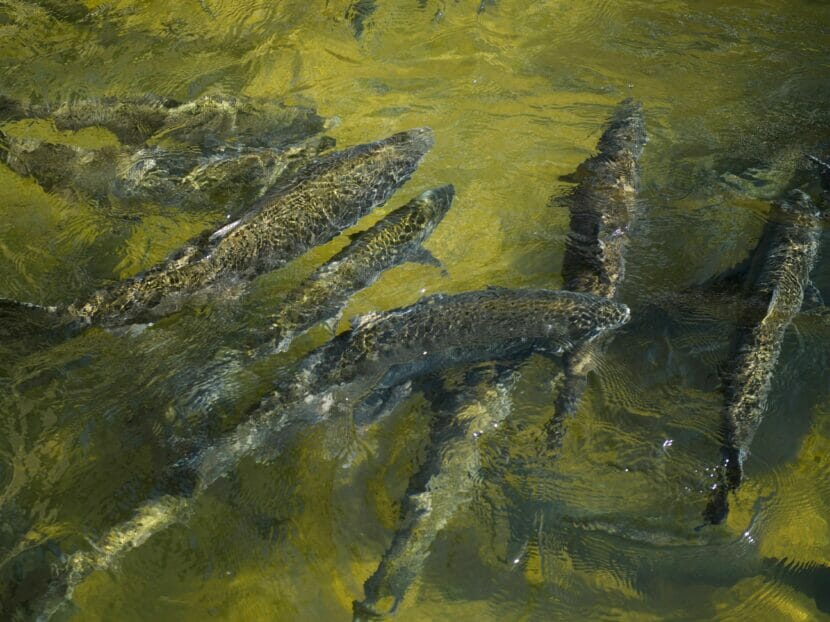
Chinook Salmon swim up a fish ladder at the California Department of Fish and Wildlife Feather River Hatchery just below the Lake Oroville dam during the California drought emergency in 2021. (Patrick T. Fallon/AFP via Getty Images)

Chinook salmon fishing off the California coast will be called off until next spring in anticipation that a near-record-low number of fish will return to the state’s rivers to spawn.

The recommendation was made by the Pacific Fishery Management Council, a federal commission that oversees West Coast fisheries. It will need to be approved by the National Marine Fisheries Service by May 16.

The measure, unseen in 14 years, would temporarily ban both commercial and recreational salmon fishing in the state. Much of the fishing off the coast of neighboring Oregon would also be canceled until 2024.

Chinook salmon are the “largest and most highly prized” of all the salmon in the Pacific ocean, according to the council. But over the years, the species has become increasingly endangered as a result of drought, heat waves and agriculture.

The decision to cancel the salmon fishing season is expected to take a toll on the $1.4 billion fishing industry, which supports 23,000 jobs in the state.

“The economic impact of closing a good portion of the west coast ocean salmon fishery will negatively impact the people that participate in the fishery, and the small businesses in coastal communities that rely on the salmon fishery,” Merrick Burden, the council’s executive director, said in a statement.

2009 was the last time salmon fishing was halted in the region

Salmon depend on clean and cold water, particularly in rivers and streams where they migrate and spawn. But there is less of it as a result of California’s extreme drought. Farming and grazing, which tend to contaminate waterways with sediments and chemicals, have also taken a toll on fish.

Federal researchers predict that fewer than 170,000 adult fall chinook salmon will return to the Sacramento River this year — which is one of the lowest forecasts recorded since 2008. Similarly, fewer than 104,000 are expected to reach the Klamath River — which is the second lowest estimate since such research began in 1997.

The last time that the region shut down its salmon fishing season to help the population recover was in 2009. At the time, about 122,200 adult fall chinook salmon were forecast to return to the Sacramento River.

The Klamath River fall-run chinook salmon were declared overfished in 2018. According to federal researchers, the Sacramento River fall chinook salmon are also approaching an overfished condition.

“This is a decades-long trend, and the past few years of record drought only further stressed our salmon populations,” Charlton H. Bonham, the director of the California Department of Fish and Wildlife, said in a press release about the findings.

At large, about 23 out of the 31 genetically distinct kinds of salmon and trout in California are at risk of going extinct sometime in the next century, according to a 2017 report published by the University of California, Davis, and the conservation group California Trout.

The recent wetter weather in California has been “good news,” fishery scientists described earlier this week. Federal and state agencies are also working on the largest river restoration and dam removal project in the country’s history at the Klamath Basin in California to help recover the salmon population.

Amy Souers Kober, a spokesperson for American Rivers, which monitors dam removals and advocates for river restoration, estimates that more than 300 miles of salmon habitat in the California river and its tributaries would benefit.

Copyright 2023 NPR. To see more, visit https://www.npr.org.

The Bering Sea’s smallest organisms are losing fat, putting larger predators at risk

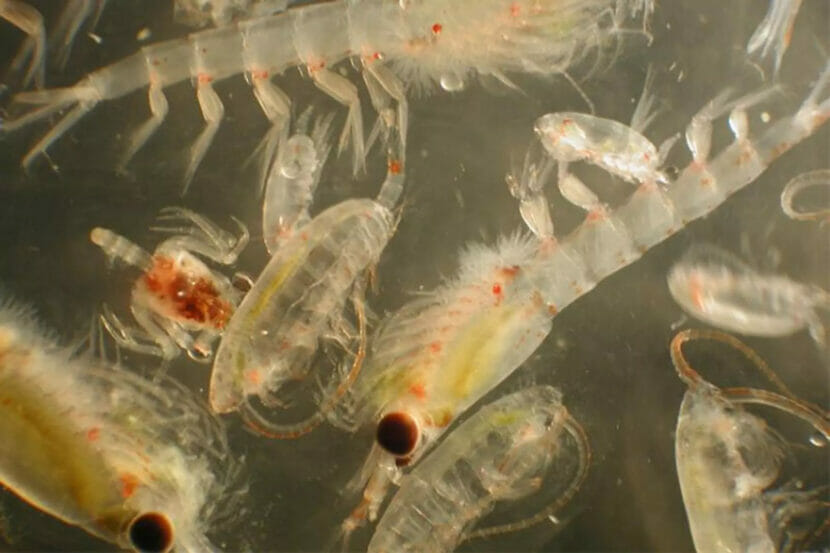
A new study shows zooplankton are getting skinny with lack of sea ice. (NOAA)

Zooplankton are small organisms — like sea snails, jellyfish, and krill — and they’e crucial to the Bering Sea’s ecosystem. But new data from NOAA Fisheries shows that one of the most common zooplankton isn’t as fatty or abundant as it used to be.

Large, high-fat copepods — distantly related to shrimp and crab — are dwindling with the lack of sea ice from global warming. Meanwhile, smaller zooplankton are increasing in both numbers and range.

David Kimmel is a research oceanographer and leader of the nearly two-decade study. He said Arctic fish, seabirds, and marine mammals are struggling to adjust to global warming while consuming less fatty foods.

“They can get skinny — which doesn’t necessarily lead to mortality, but can make them more susceptible,” said Kimmel. “For example, not surviving in the winter if they don’t have enough energy stores to make it through the winter.”

While less fat in the diet doesn’t necessarily lead to extinction, Kimmel said it could lead to smaller population sizes of common Bering Sea organisms, like king crab and harbor seals. It could also create an ecological shift in the sea.

“Organisms that are normally found to the south are moving northwards,” he said. “So communities that you might expect to exist at more southerly latitudes begin to become more prominent at more northerly latitudes.”

The Bering Sea is one of the most sensitive regions to global warming. Kimmel said knowing how the bottom of the food chain changes with warmer temperatures can help predict how ecosystems around the world will be affected by climate change later on.

“The people that live in Alaska at the frontline of this change are really the ones that are experiencing it,” Kimmel said. “And they’re quite removed from a lot of fellow citizens throughout the country that aren’t experiencing it — you know, right up close and personal. And that makes their stories and their experiences much more important to share and talk about.”

Alaska gets $38M federal grant for climate-related housing disaster recovery

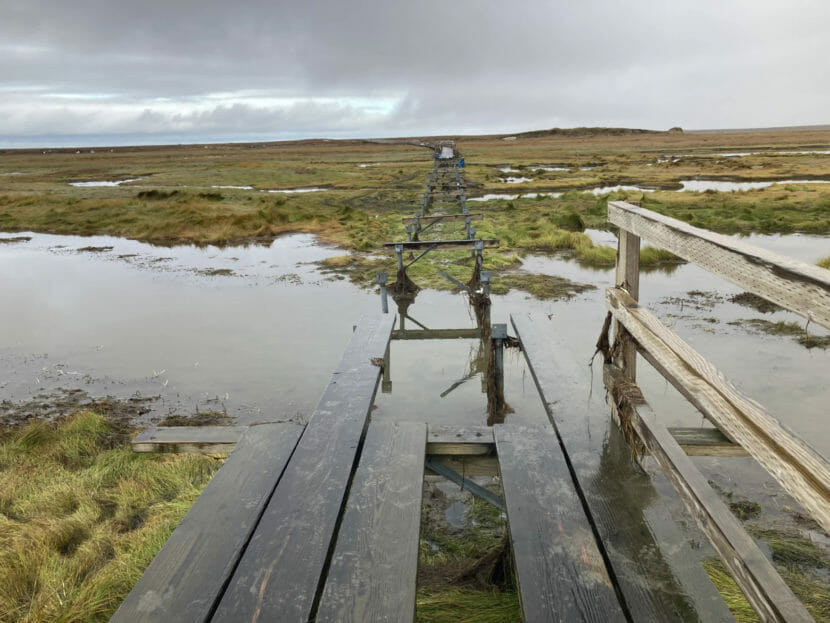
The frame of a boardwalk, with most of its planks gone, extending out into flooded tundra
The boardwalk to high ground in Hooper Bay was wiped away by floodwaters. (Photo by Will McCarthy/KYUK)

The state of Alaska recently received $38 million from the Department of Housing and Urban Development with the aim to ease the burden of climate change.

Margaret Salazar is HUD’s Northwest Regional Administrator. She oversees HUD programs in Alaska, Oregon, Washington, and Idaho. Last week she attended Arctic Encounter, the largest annual arctic policy event in the country, where she made the announcement.

Salazar says the new funding is to help villages get ahead of natural disasters.

“We’re helping folks work upstream with things like technical assistance to start planning ahead for housing development, as opposed to just funding the sticks and bricks part of housing supply,” she said.

The money was made available through the Community Development Block Grant Disaster Recovery Program. These funds are aimed at helping communities better rebound from presidentially declared disasters, but Salazar says the state will be allowed to allocate the new funds for preventative measures.

“Now when the state of Alaska, who’s our grantee, when they get those dollars, they can use some of them for that planning work,” she said. “This is brand-new policy that we’ve rolled out.”

Salazar says she hopes to fund plans before natural disasters happen.

“Village relocation, and rising water levels and soil erosion are forcing folks to make some impossible choices about relocating their homes,” she said. “And one of the exciting opportunities we have right now is the opportunity for HUD to align and join forces with our other federal agency partners.”

Some of the departments she listed include the Environmental Protection Agency, the Department of Energy, and the Department of Transportation.

But climate change isn’t the only issue Alaskans face when it comes to housing. Unlike communities on the road system, folks in bush Alaska can’t commute for work, so housing can be a limiting factor for growth.

Salazar said her trip to Kodiak last week gave her a new perspective on the issues Alaskans face when compared to their rural counterparts in the lower 48.

“What we see and what we heard today in Kodiak was just the lack of being able to expand economic opportunities because of a lack of housing,” she said. “So if we can’t find ways to house our folks, we can’t find ways to expand job opportunities and it becomes a cycle.”

But developing new housing is especially difficult for communities that aren’t directly connected to Anchorage. Rural communities often face high costs for shipping, difficulty accessing building supplies, and even finding workers to do the construction.

To reduce some of the barriers local governments face, Salazar says HUD also approved new grants to help them work out regulations that prevent housing development.

“Whether it’s things like zoning or building codes or permitting process, we can be a partner in terms of federal dollars but we want to make sure that the local folks are doing their work to have a plan ready to have shovel ready dirt so that when we can funding housing development, we can get that done quickly,” she said.

And while she praised local entities like the Kodiak Island and Cook Inlet Housing Authorities, Salazar says there’s still more work to do and looks forward to continuing partnerships with entities around Alaska.

Site notifications
Update notification options
Subscribe to notifications