Climate Change

A large fish that fills freezers in Northwest Alaska could be in danger

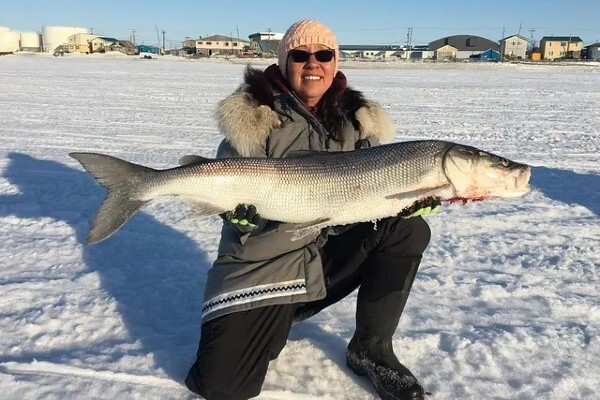
Siikauraq Martha Whiting ice fishing for sheefish. (Katrina Liebich/U.S. Fish and Wildlife Service)

Lance Kramer describes himself as an avid outdoorsman. The 52-year old loves traditional methods of hunting, fishing and trapping. His home is right next to the ice where many Kotzebue residents fish for sheefish. It gives him a bird’s-eye view to gauge when the fish are coming in.

“I get to watch every day, you know, out my window,” Kramer said. “My barometer is binoculars. If they’re pulling them up, then it’s time to go. If they’re not, stay in and drink coffee.”

Kramer is among many people living in Alaska’s Northwest Arctic who depend on sheefish as a staple in their diets. The fish, right now, are abundant. Residents’ freezers are filled with them after another successful season. But scientists warn that it may not always be this way. They say warming waters and permafrost thaw could lead to population declines. It’d be a double-whammy for a region already dealing with recent population declines in another key food source: caribou.

“When you don’t have any caribou in your freezer all year long, you know, sheefish is a huge reprieve,” said Kramer.

‘Sheefishing is a science’

Sheefish, or simply sii, are a whitefish found only in certain waterways in the Northern Hemisphere. In Alaska, they’re found in the Yukon and Kuskokwim drainage areas. In the Northwest Arctic, their spawning grounds are along the upper Kobuk and Selawik rivers. Here, individual sheefish are significantly larger than their counterparts elsewhere in the state. A single fish can measure 3.5 feet and weigh 60 pounds.

One fish is enough to provide several meals to a large family. They’re valued for their taste. The flakey white meat is oily and slightly sweet which makes it versatile in many dishes.

“There’s so many ways to eat them,” Kramer said. “It’s like Forrest Gump. Remember how he talked about the shrimp?”

Kramer, like many people in the region, fishes using a combination of traditional methods with modern equipment. He travels by snowmachine to the ice and, using an auger, drills a 10-inch hole. He looks for a “wedge” in the brackish water, where the fresh and salt waters meet. During winter, the sheefish tend to stay in the relatively warmer freshwater, occasionally venturing into the colder marine water to hunt for their next meal.

“Sheefishing is a science,” he said.

To catch the fish, Kramer uses a jig — a bent handle about a foot long with a line and hook attached. Sheefishing is typically done with a jig or net, not the rod and reel commonly used by many sports fishermen. Kramer uses the Iñupiaq words for his jig. His aulasuan, or handle, is made from wood or walrus ivory. For the ipiataq or fishing line, he uses a more heavy-duty 80-pound test line which attaches to the niksik, or hook. Kramer said he’s addicted to what he calls “the tug” — that initial feeling of hooking a sheefish on the line.

“It’s a direct connection between the energy of that huge incredible sheefish and your hand,” he said. “It’s the energy.”

A threat from thawing permafrost

Although sheefish are abundant now, they could be threatened by warming Arctic temperatures, according to Bill Carter, a fish biologist for the Selawik National Wildlife Refuge, based in Kotzebue. His focus is on the refuge’s aquatic habitat. For eight years, he and a group of Fish and Wildlife colleagues studied a potential threat to sheefish: the permafrost thaw slump.

“It’s basically a big mudslide where a south-facing slope has started to thaw into water, turning what used to be firm ground into mud and concrete — basically wet concrete,” Carter said.

Following a slump, the water becomes cloudy and full of sediment potentially suffocating the eggs of spawning sheefish. Sheefish are long-lived fish. It takes 10 years for the sheefish in the Northwest Arctic to reach sexual maturity which means that the threats to spawning could have longer lasting repercussions.

According to Carter, there have been several slumps in the region. One of the most concerning on Selawik River — about 10 miles upriver from sheefish spawning grounds — was massive.

“[It was] over 500,000 cubic meters, which is basically a 25-story building with a footprint the size of a football field,” said Carter. “That’s what’s come out of it. So it’s really big, over a half a mile across.”

He said there are several more permafrost thaw slumps in the region.

Kramer said he has the same concerns as Carter. He believes that along with warming waters and harmful algal blooms, the permafrost thaw slump will pose a threat to sheefish in the future. Carter and a group of scientists are planning a two-year project this summer to study how the thaw slump has affected sheefish populations.
Completion of Denali Park Road bridge pushed back to 2026

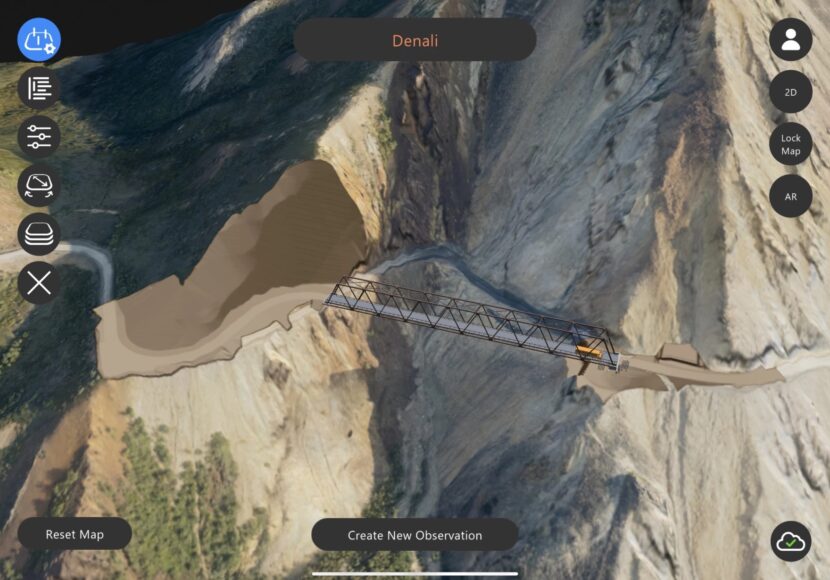
Computer generated image of the bridge to be built over the landslide at mile 45 of the Denali National Park Road. (National Park Service)

The expected completion of a bridge on the Denali Park Road has been pushed back from 2025 to 2026. The 90-mile road into Denali National Park remains closed at about the halfway point, where it crosses a melt-driven landslide that has obliterated the road.

Denali National Park public affairs officer Sharon Stiteler says the new timeline is primarily the result of a geotechnical issue.

“The discovery of more clay than was anticipated on the west side of the project,” she said. “Originally it looked like it was going to be 30,000 cubic yards of clay that was going to be excavated, and now it looks like it’s going to be 80,000 cubic yards, and that’s a significant change.”

The 475-foot bridge — expected to cost $100,000,000 — will span a melting rock glacier in Polychrome Pass that crosses the gravel road at mile 45. The road closed in 2021, after the landslide began moving too fast for maintenance crews to keep up.

“It got to the point of calculating how far they had to go to pick up the gravel, how much it was going to take to get out here to be able to maintain the road and make it safe enough for drivers to go across,” Stiteler said.

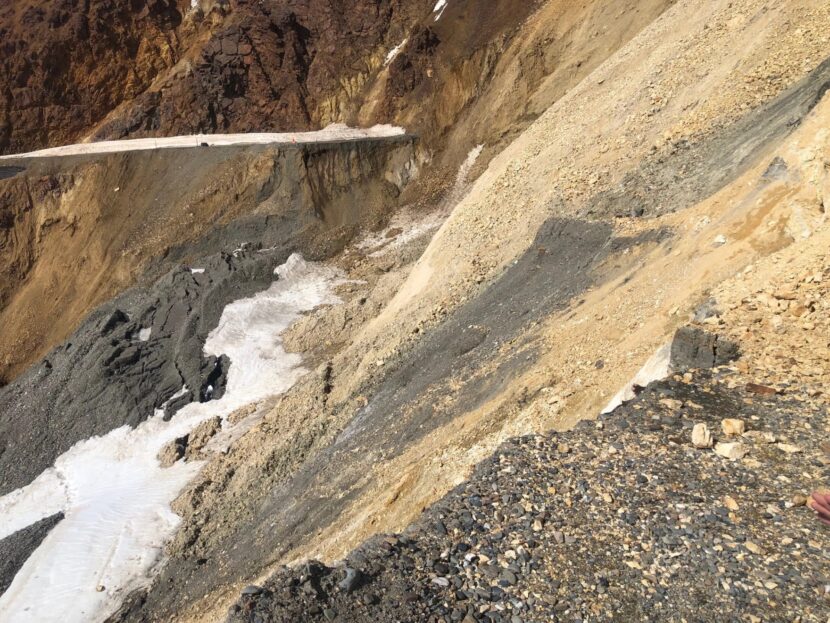
Looking west across the Pretty Rocks landslide on May 5th, 2023 (Dan Bross/KUAC)

Park science and resources team leader Dave Schirokauer underscores the challenging alpine terrain the section of the Park Road traverses, and how it’s changed since the road was built.

“They probably had no idea they were building a road across a rock glacier. It was completely inactive back then and it wasn’t really a problem until 2016, and so 1930 until 2016, it was a great road and just a little bit of climate warming that’s occurred in that era, along with the disturbance of creating a cut through here, really woke up this rock glacier.”

Park engineer and bridge project manager Steve Mandt underscored the scope of the bridge project.

“Just a massive amount of engineering and detail and thought goes into this,” he said.

Mandt says the plan that calls for incrementally building the truss-style bridge across the slide without any underlying support.

“Starting at both the east and the west and then progressively work toward the center, so they will at some point be assembling bridge kind of out in space kind of hanging over the valley below,” he said.

Heat dissipating thermosiphons will protect ice beneath the rock where the bridge’s abutments will be stand on either side of the slide.

Work on the bridge across was supposed to start in May, but that’s been pushed to July. Bridge contractor Granite Construction began mobilizing in the park this spring and is in the process of building a 50-worker camp in a gravel pit at mile 27 of the Park Road.

Alaska is getting into the carbon market. What does that mean for the budget – and the climate?

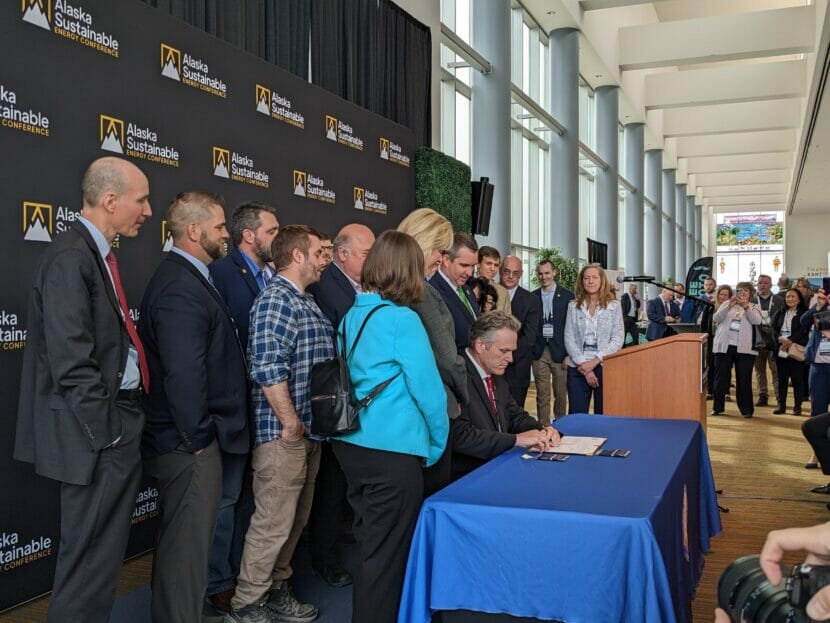
Gov. Mike Dunleavy signs SB 48 into law, opening the door for Alaska to enter the carbon offset market. (Kavitha George/Alaska Public Media)

Can Alaska make money by protecting its state lands? Gov. Mike Dunleavy and state legislators hope so.

Surrounded by lawmakers and staff at the Alaska Sustainable Energy Conference in Anchorage, Dunleavy on Tuesday signed legislation directing the state to explore what he billed as a potential major new revenue source: carbon storage.

“Just like oil, just like gas, just like our timber, this is a commodity that can be monetized now, and Alaska is going to play a big role,” Dunleavy said.

The bill was a major priority for the governor. Ahead of this legislative session, he pitched it as a way to help solve Alaska’s budget crisis, calling it “a new revenue source that could actually rival the revenue we get in some cases from oil.”

The framework is now in place, but questions remain about what a carbon storage industry in Alaska might look like, how much money it would actually bring in and whether there’s any real upside for the climate.

What is carbon storage?

Carbon emissions, caused by everything from burning fossil fuels to wildfires, drive climate change. And as efforts to combat climate change ramp up, there’s a growing market that will pay landowners to keep carbon out of the atmosphere. One way to do that is by protecting ecosystems that naturally hold carbon, like forests or tundra.

Alaska has a lot of forests and tundra and, Dunleavy believes, a lot of ways to store carbon.

“The scale that Alaska has to offer on this is unprecedented,” he said in December.

Dunleavy originally proposed two plans to get Alaska started in the carbon business. One proposal, dubbed the “hole bill” by lawmakers, pushed a plan to store carbon dioxide underground in a process called carbon capture and sequestration. That bill did not pass this session. But last week, hours before the regular session ended, the legislature did pass SB 48, dubbed the “tree bill.”

It authorized the state Department of Natural Resources to establish a legal framework to sell carbon offsets primarily based on protecting Alaska’s state forests.

What is a carbon offset?

The idea behind carbon offsets is fairly straightforward: Most companies have a carbon footprint. They burn fossil fuels to transport goods or employees, or to manufacture their products. And with growing pressure to act on climate change, many companies are looking for ways to cut down on those carbon emissions.

One way to do that is to pay someone else to remove carbon from the atmosphere – in other words, to offset the carbon their operations emit.

The basic idea is this: “Someone else has done something good for the climate, and it can compensate for my ongoing emissions,” said Freya Chay, program manager for the nonprofit Carbon Plan, which analyzes climate solutions.

Chay said the point of a carbon offset is to generate a real benefit to the climate.

“When we’re talking about compensating for the act of burning fossil fuels, we have to be taking carbon back out of the atmosphere and storing it somewhere, effectively, permanently,” she said.

One way to store it is in natural “carbon sinks,” like forests. Trees pull carbon dioxide from the atmosphere and store it, through photosynthesis.

The governor and state lawmakers hope that Alaska can get paid to protect its forests. Some Alaska Native corporations have already had success selling offsets. And as more companies look to shrink their carbon footprint, the demand for carbon offsets is expected to grow.

How would carbon offsets benefit Alaska?

The Department of Natural Resources has identified at least three state forests it believes could generate offsets in the Mat-Su, the Tanana Valley and near Haines.

In an interview, Commissioner John Boyle called it a new way to think about Alaska’s forest land.

“We see it as a way to monetize state resources that are currently not being monetized,” Boyle said.

The plan approved by lawmakers won’t generate anything close to the scale of oil revenue the state brings in —  at least, not yet. (The governor’s estimates included revenue from his other proposal, which didn’t pass this year.)

DNR consultant estimated that selling carbon offsets would generate only about $82 million in the program’s first ten years.

Boyle is more optimistic.“We’re quite confident that it will be a significant revenue generator, but we don’t have the information right now to make a great guess on what that may be,” he said.

One key question is who would buy Alaska’s offsets. Boyle said he’s not aware of any specific companies who have expressed interest yet. But as demand for offsets increases, he believes Alaska can be the supply.

Are there climate benefits?

As the state moves forward with the process, Carbon Plan’s Freya Chay identified one big concern: will Alaska’s plan actually benefit the climate?

Carbon offsets aren’t supposed to be sold out of just any forest. To serve its purpose, the revenue from an offset should enable landowners to save that forest land from some threat, like timber harvest or development, or somehow improve forest management to store more carbon.

Chay said so far, Alaska seems more focused on the revenue potential than the climate benefits.

“I find it very plausible that Alaska could make money with a forest carbon offset program,” Chay said. “The real question for me is what does that program actually achieve? And what are the costs not to Alaska’s budget, but to bigger systems that we care about?”

DNR Commissioner Boyle said the Department is exploring a range of options to store carbon effectively, including more active land management to mitigate wildfire threat or replant trees. DNR also plans to explore ocean-based opportunities for carbon storage like kelp farming, he said.

But all of these ideas are in their infancy. Many of the details governing the proposed carbon market are yet to be worked out.

DNR estimates it will take six months to a year to write the regulations to govern the offset market. The state will need to work with outside auditors to verify potential offsets and then place them on registries.

The offset legislation passed with overwhelming support in both the Alaska Senate and House — even from lawmakers for whom climate is not a priority.

“Whether you believe in climate change or not, this is how the operations are being played around the world,” Rep. Tom McKay, R-Anchorage, chair of the House Resources Committee, told colleagues just before the bill’s final vote last week.

“It’s good that Alaska gets involved, because a lot of other states are doing this, and we’re missing the boat if we don’t get on board,” McKay said.

Sen. Cathy Giessel, R-Anchorage, chair of the Senate Resources Committee, stressed that this legislation is just the first step.

“Not all the questions have been answered about this particular — I’ll call it an industry,” Giessel said in an interview with Alaska Public Media “There’s still a lot of unknowns.”

Juneau tracks progress on greenhouse gas emissions in new report

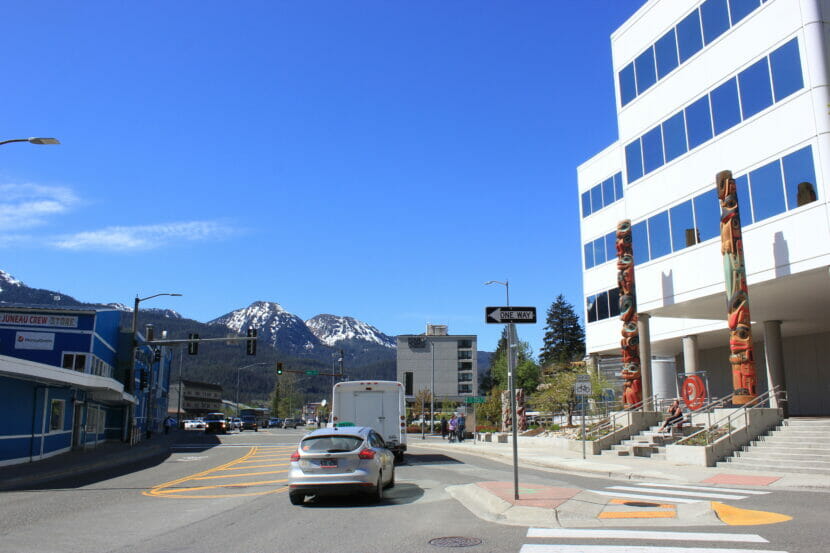
An unusually warm day in Juneau on May 16, 2023. (Katie Anastas/KTOO)

Juneau’s greenhouse gas emissions have dropped by nearly 30% in the last decade, according to a new report. That meets a goal set in 2011 to cut local carbon emissions — but a lot has changed since then. 

Climate experts have since underlined a need for more ambitious emissions reduction targets to avoid catastrophic global warming, and huge sums of federal funding have opened up to help local governments meet those targets. 

Denise Koch, the city’s deputy director of public works, said the report — which analyzes Juneau’s greenhouse gas emissions from 2021 — is essential for planning local climate action. 

“I see it as a foundational document,” Koch said. “Once you know where your emissions are coming from, then you can make decisions.” 

It’s nearly impossible to track progress toward climate goals without data. And Juneau’s data is sparse — the new report is the first time the city has taken stock of energy use and emissions in more than a decade. It shows that the community is using more renewable energy and emitting less greenhouse gas, but it can’t show where those improvements came from. 

Steve Behnke, energy chair for the Juneau Commission on Sustainability, says there is no single action that would cut emissions enough. 

“There really just aren’t any silver bullets,” Behnke said. “You really have to make incremental gains on a whole bunch of different fronts.”

What the report does offer is a better understanding of where those fronts stand now. Juneau’s most emissions-intensive sectors are transportation and buildings, which emit 47% and 25% of local greenhouse gasses respectively. Most of that comes from the use of diesel or heating fuels.

In Juneau, the availability of cheap, renewable hydropower is a readily available, carbon-cutting alternative. 

“That’s a real asset for the community,” Koch said. “So as we move and continue to electrify transportation and buildings, that’s really going to move us towards that net zero future.”

Many major city and community-led climate actions are focused on switching over to renewable energy.

Capital Transit, for instance, has ordered seven new electric buses, which will join the city fleet next summer. That could replace thousands of gallons of diesel fuel with clean electricity. And local non-profits like Alaska Heat Smart and Tlingit and Haida Regional Housing Authority have improved energy efficiency and installed electric heat pumps in thousands of local homes, reducing or eliminating the need for heating oil.

Those actions seem to have moved the needle, but a lot of the decisions about future actions will come down to the Assembly. 

“Our idea is to give them, you know, the big picture of what is going on in the community, what’s been successful, and what the upcoming opportunities are,” Behnke said. “And also to raise this question about the goals.”

In other words, the report could start a conversation about introducing more ambitious local emissions reductions targets, to keep pace with national and international goals. Based on the report, Benke said the Juneau Commission on Sustainability will submit new climate policy recommendations to the Juneau Assembly this summer.

The report could also inform priorities when it comes to federal funding. The Bipartisan Infrastructure Law and the Inflation Reduction Act promise money for a wide variety of climate projects, and understanding where local emissions come from could help to narrow in on what would do the most good. 

“I think that we will make a lot of progress in five years as we aggressively apply for grants,” Koch said. “Hopefully some of that major federal funding will move us towards a lower carbon future.”

The city is already pursuing federal funding to establish a municipal compost facility and to expand electric vehicle charging and fueling infrastructure. 

In the short-term, the inventory establishes a baseline of local climate data, with significant caveats. The COVID-19 pandemic likely affected how much energy Juneau used and where — emissions in schools and other buildings likely went up due to new ventilation demands, and transportation emissions may have been lower as tourists and many workers stayed home.

New, annual reports should give a clearer picture in the coming years, but for now, Koch is cautiously optimistic. 

“It’s good news, Juneau is doing well,” she said. “Reducing emissions is something that is a community value. And we’re moving in the right direction.”

More than half of the world’s largest lakes are shrinking. Here’s why that matters

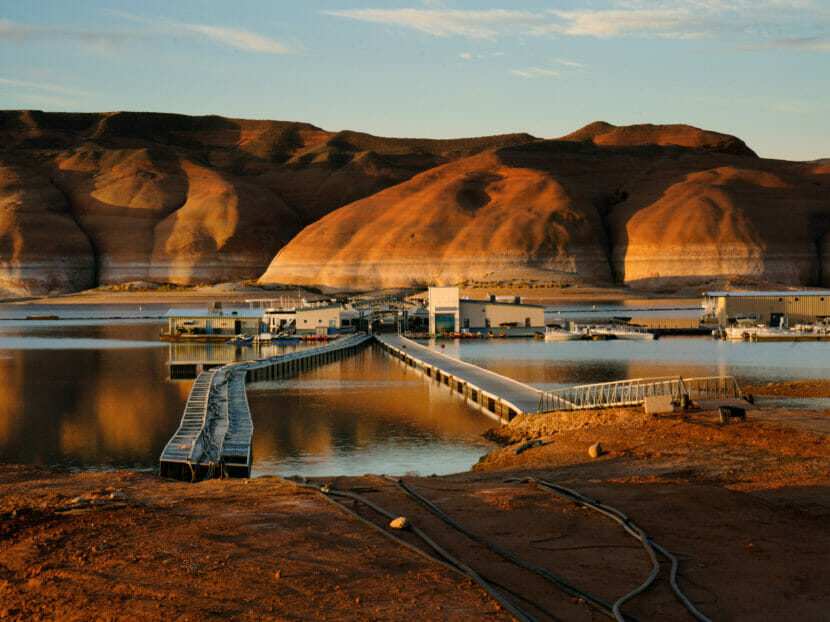
Water levels at Lake Powell, the nation’s second-largest reservoir, remain critically low because of a climate-change driven megadrought and overuse of the Colorado River’s water. (Claire Harbage/NPR)

Human activities have caused more than half of the world’s largest lakes to shrink dramatically over the last 30 years, according to a new study published in the journal Science. The implications pose risks to human health, economies and the natural world.

Combined, researchers found, the global decline in water storage equivalent to 17 Lake Meads — the largest reservoir in the U.S.

People overusing water for agriculture and development, and human-caused climate change are the primary drivers of the decline, particularly in natural lakes, said Fangfang Yao, the study’s lead author. In reservoirs, dirt and sand piled up behind dams also played a major role in declining water levels.

The findings were staggering, the authors said.

“Roughly one-quarter of the world’s population lives in a basin with a drying lake,” Yao said. “So the potential impact could be significant.”

The study looked at nearly 2,000 of the planet’s largest lakes and reservoirs using three decades of satellite observations and climate models to measure how bodies of water have shrunk or grown over time, and to parse out what influenced the change. For example, did a lake shrink because of increased evaporation with hotter temperatures, or because it was diverted for agriculture?

The findings revealed “significant declines,” the research paper said, across 53% of the lakes and reservoirs surveyed by the team from the University of Colorado Boulder’s Cooperative Institute for Research in Environmental Sciences.

At least half of the decline in natural lakes was driven by human-caused climate change and overconsumption. That’s a finding, Yao said, that should help water managers better manage and protect threatened lakes around the world.

“If you know a lake is falling and that loss was attributable to human activities, can we put more of an emphasis on conservation and improving water efficiency?” Yao said.

A climate change-driven megadrought and an ever-growing human thirst have continued to drain the two largest reservoirs in the U.S. — Lake Powell and Lake Mead, which the Colorado River feeds. Lake Chad, one of Africa’s largest freshwater lakes which supplies nearly 40 million people with water, has shrunk by an estimated 90% since the 1960s.

The United Nations regards access to safe drinking water as a universal human right. But its own figures show roughly 2 billion people around the world do not have access to it and roughly half the world’s population experiences severe water scarcity at least once a year.

“Uncertainties are increasing,” said Richard Connor, the editor-in-chief of a U.N. water report published earlier this year at a press conference in late March, where world leaders met to try and find better strategies for managing the planet’s rare freshwater. “If we don’t address it, there will definitely be a global crisis.”

Copyright 2023 NPR. To see more, visit https://www.npr.org.

Almost 2 dozen human-caused fires mark the start of Alaska wildfire season

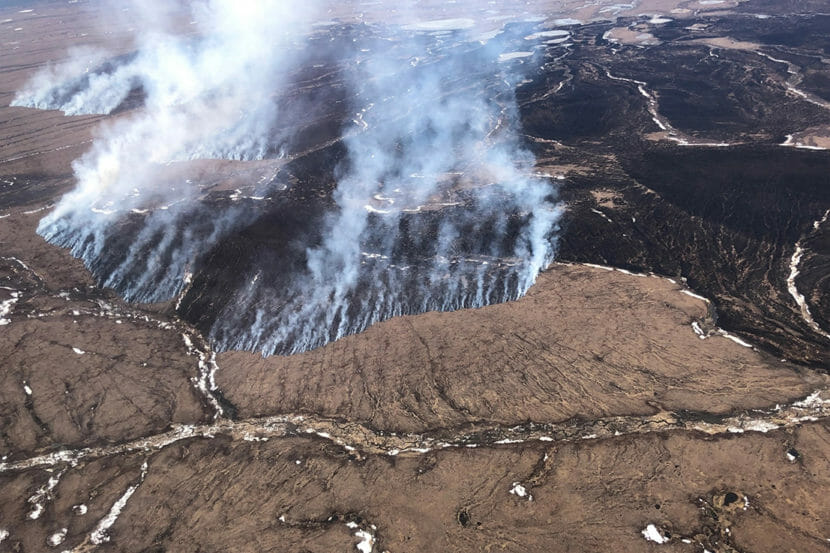
An aerial photo of a large fire burning in brown tundra
The Kwethluk Fire on April 22, 2022, when it was estimated at 9,693 acres. (Alaska Division of Forestry photo)

Alaska’s fire season is in full swing. As of Wednesday afternoon, there have been 25 fires so far this year — 11 of those were discovered this week.

All but two of these early season fires were started by human activity, according to Beth Ipsen, spokesperson for the Bureau of Land Management Alaska Fire Service. So far only about 20 acres has burned.

“There was a fire that escaped from a burn barrel, there was one on a shooting range on Chena Hot Springs Road. And then a couple others like campfires,” Ipsen said on Talk of Alaska Tuesday morning.

Dead grasses and plant debris exposed by melting snow are prime fire start material. Fire managers are encouraging Alaskans to be careful with possible ignition sources, such as chainsaws or ATVs, and to ready homes for fire season by moving firewood stacks away from buildings and clearing brush away from properties.

While this year’s heavy snowpack and cold spring pushed back the start to fire season in many parts of the state, climate change is generally causing an earlier snowmelt, said climatologist Rick Thoman.

“We’ve lengthened the wildfire season. Just last year, we had the Kwethluk fire that burned over 10,000 acres in April, in the very early start to the fire season in Southwest Alaska,” he said.

Thoman also noted that with climate warming, lightning is becoming more frequent in some areas, including Southwest Alaska. Data shows that humans typically cause more fires in Alaska than lightning, but lightning-caused fires account for the vast majority of acres burned.

Site notifications
Update notification options
Subscribe to notifications