Alaska Native Government & Policy

Murkowski strays from party lines in bid to restore Voting Rights Act

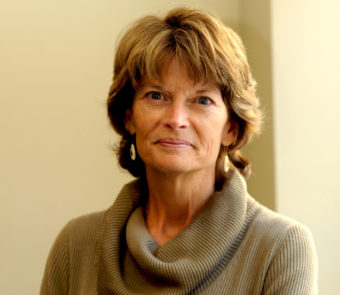
Sen. Lisa Murkowski. (Photo courtesy of Sen. Murkowski's office.)
Sen. Lisa Murkowski. (Photo courtesy of Sen. Murkowski’s office.)

The settlement of an Alaska Native voting lawsuit comes on the same day as news that Sen. Lisa Murkowski has co-sponsored a bill to revive the Voting Rights Act. Sen. Murkowski is the first Republican to join more than 30 Democratic co-sponsors on an issue that has divided the two parties.

Lt. Gov. Byron Mallott told reporters he thanks Murkowski for supporting the Voting Rights Advancement Act, pending in the U.S. Senate. Native American Rights Fund attorney Natalie Landreth thanked her, too.

“I think it’s a lot of work … in the Native community to share information with her, and it’s a recognition on her part that access to the polls shouldn’t be a partisan issue and it’s unfortunate that in recent years it turned into one,” Landreth said.

Democrats in Congress have been clamoring to restore the Voting Rights Act since 2013. That’s when the U.S. Supreme Court struck down part of the 1965 Act. The law required several states to pre-clear any changes in voting procedures with the federal government, due to their history of ballot box discrimination. Alaska was one of those states. But the Supreme Court said the formula that decided which states had to pre-clear reached too far back in history, so since 2013, a chunk of the Voting Rights Act no longer applied. The bill Murkowski is co-sponsoring sets up a new formula, based on the past 25 years.

Landreth says under the new formula, Alaska would no longer be under a blanket pre-clearance requirement. But any state would have to get federal approval to change specific things about how voters access the polls. Landreth says the bill has a list of those triggers, and they’re similar to key features of the settlement in the Native voting rights case.

“When certain practices occur, no matter where they occur, they have to be pre-cleared, and that’s the removal of the only polling place or removal of language materials,” she said.

Murkowski won re-election in a write-in in 2010, thanks in large part to the Native vote. The senator is up for re-election again next year. Landreth, though, says Murkowski isn’t just acting out of self-interest.

“I don’t think so. I mean, I think that there are numerous senators with sizable Native populations and they haven’t jumped on in support of this,” she said.

It’s unclear whether any other Senate Republicans will join Murkowski in supporting a restoration of the Voting Rights Act. Many see it as a law that gives too much power to the federal government. Senate Majority Leader Mitch McConnell says it’s a relic of times gone by.

“Obviously it’s an important bill that passed back in the ‘60s, at a time when we had a very different America than we have today,” McConnell said in 2013. He said much the same last month, on the 50th anniversary of the original Voting Rights Act.

Arctic leaders outline local priorities in letter to President Obama

Arctic waters seen from the U.S. Coast Guard Cutter Healy. (Photo courtesy of the NASA Goddard Center)

A celebration took place in Kotzebue as final preparations are made for President Obama’s visit Wednessday. And with the spotlight on the Northwest Arctic hub — for the first visit by an American president above the Arctic Circle — local leaders have drafted a letter outlining their vision for the Arctic’s future.

Putting to rest clean-up efforts and last-minute preparations, Kotzebue residents gathered at the community school for a potluck Tuesday night — sharing food, song, and culture with the dozens of visitors from the president’s advance team and relatives who came to see the historic visit firsthand.

A round of Native Youth Olympics games and music from the Midnight Sun Drummers and Dancers were the backdrop as locals gathered to talk about what they hope the president takes away from his trip. For elder Enoch “Attamuk” Shiedt, it’s changes in the land he’s seen first hand.

Shiedt has worked for years as a subsistence coordinator. He recalls his grandpa telling him when he was just nine years old that the warming trend will eventually hurt his people.

“And now it’s here,” Shiedt said. “It’s not only global warming — it’s the erosion that’s the worst thing up this way. We’re losing some of our villages.”

Linda Hadley — originally from Deering but now teaching kindergarten in Kotzebue — sees it more as a historical moment.

“I believe it’s a momentous occasion,” she said. “It allows the president to see what a community the size of ours in the Arctic is about.” She said that having someone of his caliber come and visit “provides our community a voice in the national conversation.”

But outside the school halls and across town, the region’s part of that conversation was taking shape in the form of a letter to the president, outlining local priorities from climate change to energy.

Northwest Arctic Borough Mayor Reggie Joule was the first signature on the letter that includes tribes, Alaska Native corporations, local governments, health care providers, and more. On climate change, the letter points squarely to Kivalina — the community of about 400 on a barrier island along the Chukchi Sea coast.

“There are immediate needs for sure,” said Joule about the situation in Kivalina. “The community does need to get to safety. But more than that, the community needs to relocate.” Joule says this is not a time to be shy. “It’s a time for education — for Alaskans and for the people of the United States.”

Bearing the brunt of a changing climate, the shorefast ice that once protected the community from turbulent weather now forms later in the year, leaving the area open to storms, flooding, and erosion. In just ten years, the U.S. Army Corps of Engineers says the village will be uninhabitable.

While details are still few, the White House has announced a plan to put the Denali Commission — an independent federal agency working in Alaska since 1998 — in charge of a new mitigation and relocation effort for communities across Alaska. It’s a partnership Tim Schuerch with Manilaq said is a good fit.

Schuerch said the Denali Commission has been a great partner in developing most of the village clinics in the region.

“We do have a lot of confidence in the efficiency and effectiveness what it comes to the Denali Commission, in terms of assisting us with our infrastructure needs, including those that are needed to respond to climate change,” he said.

The letter covers a lot of ground — outlining the need to develop a deep-draft port above the Arctic Circle and advocating sharing federal revenue from offshore oil drilling with local residents. In many ways, it’s an academic breakdown of what northwest Alaska leaders say they’ll need for the future.

But Wayne Westlake, the president and CEO of NANA Regional Corporation, said it’ll take more than just a letter for Kotzebue’s voice to be heard. Westlake said he hopes the president gets the “feeling” of the region.

“There’s something here that is important not only to our country but to the health of the people of the region,” he said. “And that’s what I’m hoping for — that he’ll get that feeling that you can’t describe. He’ll tell his grandkids about it.”

President Obama begins his last day in Alaska with a morning in Dillingham. He’ll land in Kotzebue around 5 p.m. and should be flying back to Anchorage — and eventually Washington, D.C. — by 9 p.m.

Transcript: Obama’s remarks to Alaska Native leaders

Dena’ina Civic and Convention Center
Anchorage, Alaska

4:22 P.M. AKDT

THE PRESIDENT:  Well, I am thrilled to be in Alaska.  And I look forward to spending the next few days with everyday Alaskans to tell me what’s going on in their lives and what’s going on in this remarkable state.

I want to thank our Governor, Governor Walker, Lieutenant Governor Byron Mallott, as well as Senator Lisa Murkowski, and Secretary Sally Jewell of the Department of Interior for joining us.

But the main purpose of this meeting was to give me an opportunity to interact and listen to some Alaska Native tribal leaders.  A number of them I’ve met with before during the Tribal Summits that we’ve had in Washington.  But this gave me a chance to focus more intensely on specifically what’s happening in Alaska.  And they don’t just represent a large portion of Alaska’s population; these are communities that have been around for 10,000 years or so.  So it’s worth paying attention to them because they know a little bit from all that history.

Street-level view of the Dena'ina Civic and Convention Center. (Creative Commons photo by Paxson Woelber)
Street-level view of the Dena’ina Civic and Convention Center. (Creative Commons photo by Paxson Woelber)

Since I took office, I’ve been committed to sustaining a government-to-government relationship between the United States and our tribal nations.  We host tribal leaders in Washington every year.  I’ve visited Indian Country at the Standing Rock Reservation and the Choctaw Nation.  This week, we’re going to be visiting two more tribal communities here in Alaska — in Dillingham and Kotzebue.

And in fact, by the end of my time in office, I’ll have visited more communities — more tribal communities than any previous sitting President, which I feel pretty good about — in case anybody is keeping track.

One of the things that we’ve been focused on is how can we work together and improve communication, consultation, collaboration and participation in dealing with the issues that face Native communities.  And we’ve made progress so far in providing support for tribal youth, expanding access to health care, improving disaster assistance, making sure that we’re addressing squarely the profound issues around violence against Native women.

We’ve also made a couple of news announcements today.  Obviously the big one was returning the most magnificent peak in our nation to its original name — Mount Denali — something that the people of Alaska had been working on and petitioning consistently since 1970.  And I’m glad that we were able to respond to that.

My administration also is taking new action to make sure that Alaska Natives have direct input into the management of Chinook salmon stocks, something that has been of great concern here.

But one of the biggest things I heard during this discussion was the need for us to work more intensively and more collaboratively with communities, particularly in rural areas, that are burdened by crippling energy costs, that are obviously continually concerned about hunting and fishing rights and their ability to sustain their way of life in the face of profound climate change that’s taking place — taking place, in fact, faster — twice as fast here in Alaska as it is in the Lower 48.

And so, in addition to initiatives around renewable energy and how we can be more creative in helping local communities deal with high energy costs and bringing them down, housing construction that’s more energy efficient that can save people money, we’re also going to be paying a lot of attention to how we can work together and tap into the wisdom and knowledge of tribal communities in managing and conserving land in the face of what is a profound global challenge.

Many of the issues that were raised here — everything from voting rights to land trusts — are issues that my agencies will be following up with on an ongoing basis.  And we’ve already had a lot of visits from various Cabinet Secretaries and Deputy Secretaries, working with the people around this table.  That’s going to continue for as long as I remain President.  And hopefully we will have set a new pattern and a new set of relationships that will extend well beyond my own presidency, because when it comes to the First Americans, how we interact with these communities says a lot about who we are as a country. And I think the people of Alaska understand that as well as anybody.

So, again, I want to thank all the leadership here for everything that they’ve done in working with us.  I want to thank you for all the great ideas that you offered.  And I want to thank the Governor, Lieutenant Governor, and the Senator for their participation as well.  They obviously feel very deeply about these issues in their home state as well.

All right.  Thank you very much, everybody.  Thank you, pool.

END
4:28 P.M. AKDT

Yup’ik educator appointed to National Advisory Council on Indian Education

Doreen Brown. (Photo courtesy Anchorage School District)

An Alaska educator has been appointed to the National Advisory Council on Indian Education, the White House announced Wednesday.

Doreen Brown of Anchorage will serve on the council, which was established under the Indian Education Act of 1972. The council is tasked with advising the Secretary of Education and Congress on the administration and funding of Alaska Native and American Indian education programs.

Brown is the executive director of the Title VII Indian Education program at the Anchorage School District. She began her teaching career in Aniak in 1989. She went on to teach in Anchorage classrooms and eventually transitioned into the Indian Education program.

Alaska has the third lowest graduation rate in the country for Alaska Native and American Indian students — about 51 percent in the 2010-11 school year.

Indigenous council focused on the Arctic prepares for the future

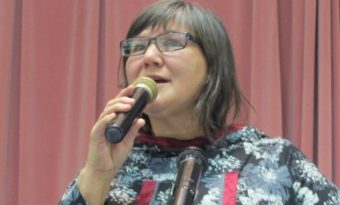
Okalik Eegeesiak of Nunavut is chair of the Inuit Circumpolar Council. (Photo by Ben Matheson / KYUK)

Alaska and the future of Arctic policy are seeing increased international attention as the U.S. holds the chairmanship for the Arctic Council and foreign ministers prepare to meet in Anchorage later this month — joined by President Obama, who’s planning a visit to Kotzebue and Dillingham.

Bethel had international leaders on hand last week as the Inuit Circumpolar Council Executive Council met to plan their next few years of work. Jim Stotts of Barrow is President of ICC-Alaska. He says the indigenous perspective needs to be heard at the high level meetings.

“I don’t think anything can really happen in the Arctic without the involvement of the Inuit, the people who are living particularly along the coast, on the Arctic coast of North America,” said Stotts. “We’re the ones who have lived here the longest, who know the most about it. If we’re not included in discussions about the Arctic, they’re incomplete discussions as far as I’m concerned.”

The ICC represents indigenous people from Arctic nations. They consult with the United Nations and are a permanent participant on the Arctic Council.

ICC’s goals aim well beyond the president’s visit, with summits on economic development, wildlife management and education planned over the next few years. Officials say they want to strengthen the ICC’s role within the international sphere.

Chair Okalik Eegeesiak from Nunavut, Canada says another priority that doesn’t see as much publicity is mental health in the Arctic. While there are many efforts going to suicide prevention, she says it’s not enough.

“There is no work about post-suicide, and the families that are left behind … so we want to build those resources up at the community level,” said Eegeesiak.

Vice Chair Hjalmar Dahl is ICC president for Greenland. He emphasized that indigenous leaders need to reach out to all generations across the north and connect them with those that have common goals and interests.

“We are not isolated. We are part of the global community,” Dahl said. “It’s important for us also to get the youth to gain the knowledge of our work in that area.”


Walker administration continues tribal land trust lawsuit

Gov. Bill Walker discusses a tax credit veto with the press, July 1, 2015. (Photo by Jeremy Hsieh/KTOO)
Gov. Bill Walker talks with the press, July 1, 2015. (Photo by Jeremy Hsieh/KTOO)

Gov. Bill Walker is continuing the state’s appeal of a case that clears a path for Alaska tribes to put land into trust. Lawyers for the state filed an opening brief late Monday to appeal a ruling that overturns the so-called “Alaska exemption.”

Trust status would reshape tribal sovereignty expanding Indian Country in Alaska. Tribes would enjoy broad jurisdictional power in a status likened to reservations. It also limits the power of the state. Under new rules developed by the Department of the Interior, tribes could put lands they own into trust, including land they’ve purchased or lands transferred to tribes by Native Corporations.

Walker has faced pressure from tribes to drop the lawsuit he inherited from the Parnell administration. He delayed action for seven months, but recently fly around the state to meet face to face with tribal leaders in the five communities involved in the suit: Akiachak, Tuluksak, Chalkyitsik, Barrow and Haines.

The state argues that the Alaska Native Claims Settlement Act specifically prohibits the creation of trust land in Alaska and that the court incorrectly interpreted earlier laws in the 2013 ruling.

After a court ruled in favor of the plaintiffs two years ago, the Department of the Interior announced new rules in 2014 to allow tribes to put land into trust. Alaska Native leaders say that change, after years of litigation, brings them one step closer to self-determination. The state currently has one reservation for the Metlakatla tribe.

While Attorney General Craig Richards stated in a press release that the state’s position continues to develop with tribes, “a change of that magnitude requires thorough and deliberative dialogue that can’t occur in just a matter of months.”

Lawyers for the tribes are due to respond by Sept. 23 in the D.C. Circuit Court of Appeals.

Site notifications
Update notification options
Subscribe to notifications