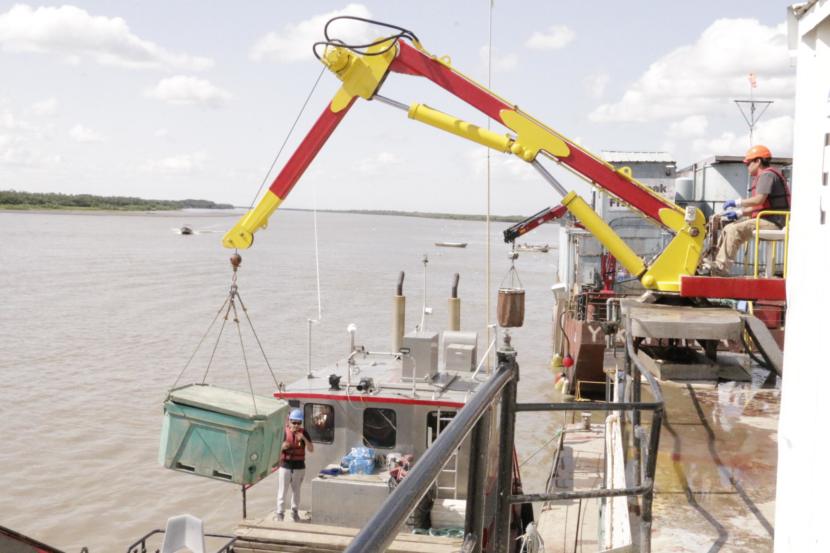
A crane unloads totes of salmon from a tender at Kwik’Pak Fisheries in Emmonak, Alaska on July 15, 2019. (Anna Rose MacArthur/KYUK)
The Dunleavy administration has directed the Alaska Department of Fish and Game to coordinate salmon deliveries to Yukon River communities.
Kwik’Pak Fisheries General Manager Jack Schultheis said 8,000 pounds of salmon arrived at the Emmonak processing plant last week, and the company is preparing to distribute the fish to lower Yukon River communities.
On July 22, the state did finally open subsistence fishing for other salmon species, including pink, red and coho, for the first time this season.
To help get food in fish racks and freezers, the Dunleavy administration is helping to coordinate deliveries of salmon donations from Alaska-based processors to Yukon River communities. It is working with nonprofits, including SeaShare, and shippers to make it happen.
Dunleavy spokesman Jeff Turner said the administration has allocated $75,000 to purchase king and chum salmon from Alaska processors to add to what’s being donated to communities and is asking the Tanana Chiefs Conference to match those funds.
The Tanana Chiefs Conference is helping distribute the fish to communities along the middle Yukon River near Fairbanks. On the lower Yukon River, the Association of Village Council Presidents and Kwik’Pak are helping share fish into the community.
The exact amount of salmon that will be sent to Yukon River communities has not been confirmed.
“We are still collecting quotes from seafood processors,” Turner said. “The governor’s goal is to maximize the amount of fish that can be donated.”
The Alaska Supreme Court has upheld the conviction of a Metlakatla fisherman who was fined for fishing without the proper permits. The case is part of a long-running dispute over tribal sovereignty.
In 2014, U.S. Coast Guard officers reported a Metlakatla tribal member fishing in a closed area without a state commercial fishing permit. When they boarded the boat they found a few dozen coho salmon, which the skipper reportedly said he intended to sell. Metlakatla resident John Scudero Jr. was cited for three commercial fishing violations and fined $20,000 after a one-day trial the following year.
He appealed the case. Metlakatla’s elected tribal government has long objected to state fishing regulations, arguing that its status as the state’s only Indian reservation gives it federally guaranteed rights. The tribe filed a brief in support, arguing enrolled tribal citizens fishing outside the reservation’s boundaries were not under the state’s jurisdiction
The argument goes like this: Attorneys argue the 1891 law creating the reserve intended to create a self-sustaining community. And an essential part of the community’s ability to sustain itself is through fishing — both within a 3,000-foot exclusive zone around the reserve and outside of that boundary. And since federal law trumps state law, Scudero’s attorneys argued Alaska’s fishing regulations infringed upon the tribe’s sovereign rights set out by Congress.
But the Alaska Supreme Court disagreed in a 4-0 decision. Writing for the court, Justice Peter Maassen declined to rule on whether Metlakatla tribal members held a federally guaranteed right to fish outside the 3,000-foot boundary. But Maasen cited a raft of U.S. Supreme Court cases that held tribes’ off-reservation hunting and fishing rights were subject to state regulations aimed at conserving fish and wildlife populations. Three other Supreme Court justices joined Maasen’s opinion. The remaining justice, Dario Borghesan, did not participate in the case.
It’s not the first time Metlakatla Indian Community has asked a judge to rule on the question of off-reservation fishing rights. The tribe sued Gov. Mike Dunleavy’s administration in federal court last year on similar grounds. A federal district judge dismissed the case; it’s now pending in the Ninth Circuit Court of Appeals.
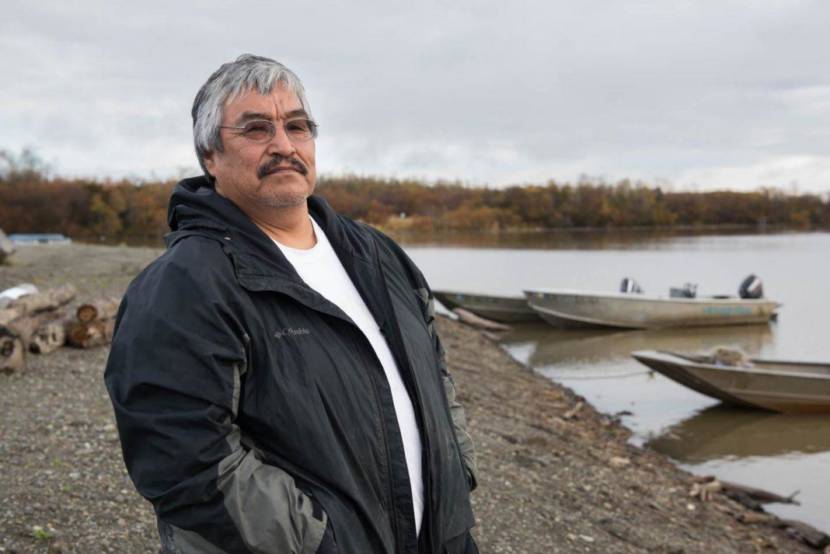
Mike Williams, Sr., Tribal Chief of Akiak Native Community, pictured here in 2016. Akiak is set to become the first Y-K Delta community with high-speed, broadband internet. (Katie Basile/KYUK)
The Yukon-Kuskokwim Delta is the second largest region in the United States without access to broadband internet, but not for much longer. One tribe plans to beam down the region’s first broadband speeds from space.
The current state of internet access in the Y-K Delta is abysmal. Three hundred dollars a month buys you 10 Mbps download speeds, which is 100 times slower than what’s offered in many U.S. cities. Families regularly pay hundreds of dollars on top of that in overage fees because data is capped at 100 gigabytes per month.
GCI, the internet service provider for the region, said that’s because the network of microwave relay towers that serves western Alaska has limited capacity and cost hundreds of millions of dollars to build.
So the Akiak Native Community decided to ditch the slow, expensive towers. Using newly launched satellites, coronavirus relief funding, and a little help from the FCC, Akiak plans to install broadband internet by November 2021.
Tribal Chief Mike Williams Sr. is excited for all the ways that broadband could change life in Akiak.
“It’s going to improve the quality of life in all areas: health care, education, economic development and other services. But we’re so excited about catching up to the digital world that we’ve been left behind so, so long,” Williams Sr. said.
Akiak created a company called Akiak Technology to deliver broadband to the village. CEO Kevin Hamer said that the solution they came up with will more than double internet speeds to at least 25 Mbps download speeds, have a higher data cap of at least 150 gigabytes per month, and cost less than the current option.
“We’re looking at hopefully half of that cost,” Hamer said.
Low earth orbit, or LEO, satellites will beam internet service into Akiak. The satellites are launched by OneWeb. Just last month, OneWeb announced that it launched enough satellites to provide service to all of Alaska. The company said that it will begin service in Alaska this fall. SpaceX’s Starlink is also launching LEO satellites to provide internet access but is further behind serving Alaska than OneWeb.
Satellites will beam internet signals into a central tower in Akiak, which will then be rebroadcast to each home in the village using a special radio frequency called 2.5 GHz spectrum. Hamer said that 2.5 GHz spectrum allows signals to travel far distances through obstacles like trees or buildings. The FCC offered the frequency, normally reserved for educational purposes, to rural tribes in 2020 to try to close the nation’s digital divide.
Hamer said that Akiak will be the first tribe in the region to use this broadband solution, but it doesn’t want to be the last.
“We’ve come up with the most feasible broadband option, not just for Akiak, but it’s reusable for all the other tribes,” Hamer said.
Akiak partnered with four other Y-K Delta tribes: ONC, Kwethluk, Tuluksak, and Akiachak to create the Y-K Delta Tribal Broadband Consortium. Hamer said that the consortium will help any tribe that joins set up the same system in their community.
About half the tribes in the Y-K Delta have joined a separate, state-wide consortium with the same goal and strategy. This group, Alaska Tribal Broadband, is also using OneWeb’s satellites to help deliver broadband to rural Alaska tribal communities.
Alaska Tribal Broadband CEO Craig Fleener said that those communities will build their infrastructure out next year. Fleener said that Akiak is the first and only tribe he knows about that plans to install broadband this year.
“It’s really a good opportunity for the rest of the tribes around the state to see how this employment is going to work,” Fleener said.
The reason why Akiak will be first to achieve broadband internet speeds is because the tribe paid for the project using American Rescue Plan Act funding.
Other tribes in the Y-K Delta are applying for a federal grant available for rural tribes to expand broadband access. The National Telecommunications and Information Administration has nearly $1 billion available for this purpose. The deadline to apply is September 1.
Akiak Technology’s Hamer said that even if not everyone in the Y-K Delta uses the satellite internet option, he expects everyone to benefit from it.
“It’s either going to make the competition lower the prices, or offer better services, or both,” Hamer said.
GCI, the existing service provider in the region, seems to be doing just that. It announced this month that it is investing millions of dollars into satellite internet. GCI also recently said that it is planning to connect Bethel to fiber optic internet, which would be an upgrade even from LEO satellites.
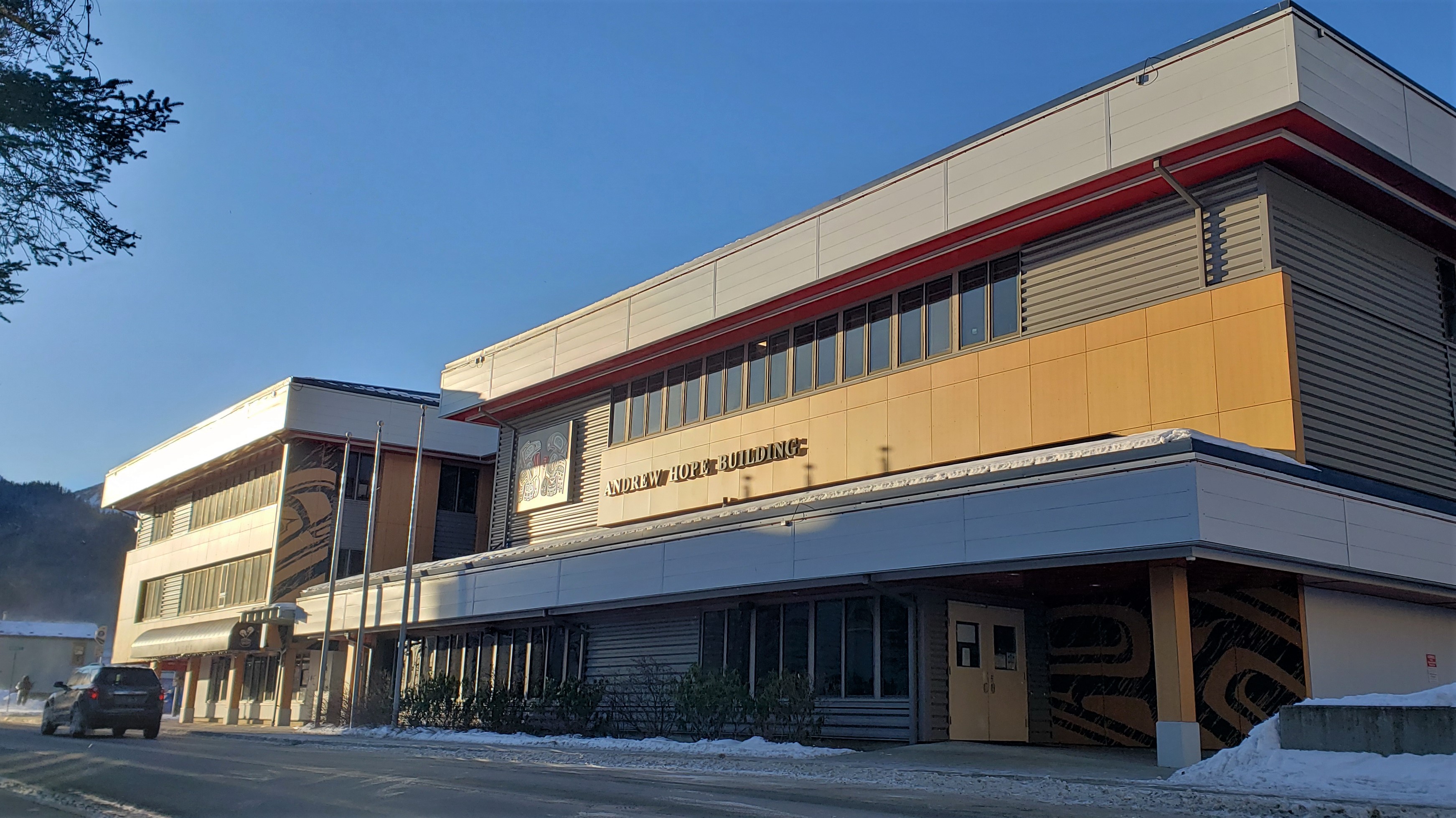
The Andrew Hope Building, pictured here on Feb. 10, 2021, houses the headquarters of the Central Council of Tlingit and Haida Indian Tribes of Alaska. In July 2021, leadership of the council decided to require the COVID-19 vaccine for employees. (Photo by Jeremy Hsieh/KTOO)
Southeast Alaska’s largest tribal organization will be requiring its employees to be vaccinated against COVID-19.
Leadership at the Central Council of Tlingit & Haida Indian Tribes of Alaska met Friday and decided to require the vaccine. There will be an exemption process, though it hasn’t been explicitly laid out.
The executive council will also require delegates who attend the September tribal assembly in-person meeting to be vaccinated as well.
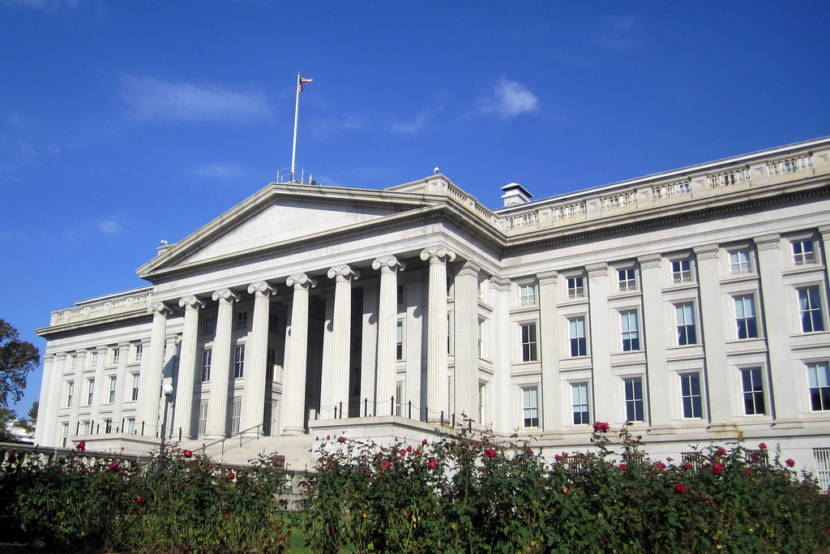
The U.S Department of Treasury has changed its rules on how American Rescue Plan Act Funds will be distributed to tribes. The changes open up a lot more funding for smaller tribes in Alaska and the Lower 48.
When the federal government released its first ruling on how American Rescue Plan Act Funds would be distributed, each federally recognized tribe was slated to receive a minimum of $1 million plus more money based on an algorithm of how many employees they had and their tribal enrollment numbers.
But there was a catch.
Tribes had to have a minimum of 10 employees to be eligible for the $1 million base amount. This disqualified many Alaska Native tribes from receiving that money because many Alaska Native tribes don’t have 10 employees. That’s because many tribes compact with nonprofits like the Y-K Delta’s Association of Village Council Presidents. By compacting, the tribes outsource much of their office work to an organization like AVCP. In turn, AVCP provides administrative support and social services to participating tribes.
The Alaska Federation of Natives didn’t want these tribes to miss out on funding. AFN argued to the Department of Treasury that all compacting tribes should be eligible for the $1 million baseline amount. The Department of Treasury agreed. It sided with AFN and changed its funding qualifications.
Now all federally recognized Alaska Native tribes are eligible to receive the $1 million in funding.
“Why this information is so important and so groundbreaking is because for the first time in history, the Department of Treasury has reversed itself after it has already issued a funding allocation for tribes,” said Nicole Borromeo, the general counsel and the executive vice president of the Alaska Federation of Natives.
Borromeo said that she expects the updated ruling to be reflected in the final rule document, which is set to be released on July 31. Because of this new ruling, and because many Alaska Native tribes have struggled with applying for their funding online, the funding deadline application has been extended once more. The new deadline is set for this Friday, July 16.
On June 28, the Alaska Department of Natural Resources granted 12 water rights permits to the proposed Donlin gold mine. The road to these permits has been paved with complaints from six Yukon-Kuskokwim Delta tribes, who say the mine’s completion would negatively impact their subsistence lifestyle.
The permits the state granted this month are wide ranging in purpose. Bundled together, they’ll let Donlin pump ground, river and creek water.
“It will basically take a lot of this water out of Crooked Creek, and it needs those state water rights permits to do so,” said Maile Tavepholjalern, a senior attorney with Earthjustice.
Earthjustice is the environmental law firm representing the six Y-K Delta tribes in their legal battles against the proposed mine. The tribes are the Orutsararmiut Native Council, the Chuloonawick Native Community, the Native Village of Eek, Tuluksak Native Council, Kwethluk IRA and the Kasigluk Traditional Council.
The water Donlin pumps out will be used for a range of mining operations, like providing running water to staff restrooms and kitchens and drying out the ground for mine digging. Attorney Tavepholjalern likens the process to digging in a sandbox.
“It’s very difficult to dig a deep hole if the sand is wet, but it’s a lot easier if it’s dry. So that’s what Donlin has to do: it has to pump up water in order to go deep,” Tavepholjalern said.
The Alaska Department of Natural Resources first announced its intent to grant the permits back in December and opened up a 15-day public comment period. ONC opposed the comment period on the grounds that it was too short, and eventually DNR did too.
“They recognized that there was some deficiency, and then they opened the second comment period,” Tavepholjalern said.
By the time the second 15-day comment period opened, Tavepholjalern’s firm was representing not only ONC, but five other Y-K tribes who are speaking out against the mine. The tribes opposed the water rights permits, saying that removing that much water from the area could hurt the region’s water supply and ecosystem.
“The tribes have worries about contamination, destruction of salmon habitat, and concerns about clean water being then turned into mine process water,” Tavepholjalern said.
Other tribal concerns come from a lack of consultation.
“Those concerns just under underscore the significance and the importance of tribal consultation, something that was completely lacking here, and that tribes have repeatedly requested and the state has denied,” Tavepholjalern said.
DNR wrote in its decision that the lack of consultation is not against the law in its eyes. It also said that it believes the public comment process was sufficient for tribes to express their viewpoints.
DNR also wrote in its decision that it believed water quality and fish habitat would not be damaged. DNR wrote that it based this viewpoint in part on the issuance of a separate state water quality certificate that the Alaska Department of Environmental Conservation commissioner approved last month. ONC has filed an appeal against that decision in the state superior court, and plans to take it all the way to the Alaska Supreme Court if need be.
DNR has given the tribes a 20-day appeal period for the dozen water rights permits. Since Earthjustice received the letter on July 2, the appeal period will expire on July 22. At this time, the tribes have not said if they plan to appeal or not.
For its part, Donlin Gold said that it applauds the Alaska Department of Natural Resources for the “thorough review process” and the decision to grant the permits.
Close
Update notification options
Subscribe to notifications
Subscribe
Get notifications about news related to the topics you care about. You can unsubscribe anytime.