Alaska Native Government & Policy

Juneau Assembly changes land acknowledgment wording after local Indigenous group disputes accuracy

Marine Park, downtown Juneau, City Hall 2021 06 01
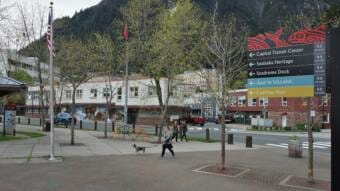
Pedestrians walk through Marine Park in downtown Juneau on June 1, 2021. The wayfinding signage, installed in 2020, incorporates Tlingit place names and voices through audio narratives. (Photo by Jeremy Hsieh/KTOO)

The Juneau Assembly started to include a land acknowledgment as part of its regular meetings in February and made it an official part of meetings in May.

But then it got a letter from a group called the Áak’w Kwáan Coalition Council asking the city to stop acknowledging another clan, the T’aaḵu Kwáan, at the beginning of its assembly meetings.

Wayne Klusaa Áak’w Smallwood represents the Áak’w Kwáan Coalition Council. He says T’aaḵu Kwáan aren’t Native to the Juneau area and that they came from up the Taku River, in what is now Canada, to Juneau during the Gold Rush era.

“It’s just, CBJ shouldn’t be acknowledging anybody on our territory period, unless they acknowledge it correctly, which is Áak’w Kwáan,” he said.

Assembly member Christine Woll says the assembly made room for changes when it made the acknowledgment part of its regular meetings.

“We did receive a letter from the coalition, but we also received several other letters from others over the last few months, and so we’ve been evolving it as we go,” she said.

She says the assembly changed the language to mention the more inclusive “Tlingit people” instead of specific clans to make sure it’s honoring the intent of being respectful to the people who are Native to this land.

But for Smallwood, the change doesn’t go far enough.

“So I understand when it says you’re just going to acknowledge the Tlingit country, but there’s no tribe called the Tlingit tribe,” he said. “‘Tlingit’ the word itself means human.”

He also says it doesn’t resolve the issue of a totem pole at Savikko Park in Douglas, which also acknowledges the T’aaḵu Kwáan. The coalition sent a separate letter to the city about the totem pole.

Ben Ooskan Coronell who speaks for the T’aaḵu Kwáan says his clan is also a part of the Juneau’s past.

“What we’re missing out on is history,” he said. “When you deny it — our ancestors, our history — you’re denying that we exist.”

He says he’s not interested in disputes but wants to meet with the Áak’w Kwáan and the city about the land acknowledgment and the totem pole.

“I’m more interested in, what can we do to help develop this community,” he said. “And we’d be willing to compromise and meet with them to see what can we discuss.”

President Richard Chalyee Éesh Peterson of the Central Council Tlingit and Haida Indian Tribes of Alaska said in a statement that the council is glad the city is starting the long-overdue practice of a formal land acknowledgment.

But he says the council is not taking sides on the issue between Áak’w Kwáan and T’aaḵu Kwáan because it does not “involve [itself] in clan business.”

Editor’s note: This story has been updated to correct a typo.

Soaring lumber prices worsen housing shortage in Y-K Delta

A roof truss is placed on a home in Mertarvik, Alaska on July 14, 2020. (Katie Basile/KYUK)

Lumber prices have been soaring across the country as demand for wood during the pandemic outstripped supply. In the Yukon-Kuskokwim Delta, those high prices have been slowing down construction of new homes, exacerbating a severe shortage of housing in the region.

According to the Alaska Housing Finance Corporation, about 40% of the homes in the Yukon-Kuskokwim Delta are overcrowded, 12 times more than the national average. The demand for new homes in the region is estimated to be well over 1,000 units.

Efforts to address that shortage, which were already insufficient, have slowed even more due to lumber price increases. Association of Village Council Presidents Regional Housing Authority CEO Mark Charlie said that the organization usually receives enough federal funding to build 15 to 20 homes in the region annually. But, he said, that was before lumber costs to build a home shot up almost 40% in the past year.

“We get the same amount of funding from the federal government, and if the price of material for lumber and stuff go up, then that just means we build, you know, less homes,” Charlie said.

Orutsararmiut Native Council is facing the same problem, as the tribe builds a new subdivision to address Bethel’s housing shortage. ONC Housing Director Calvin Cockroft said that building costs are 80% higher than in previous years for materials, including not only lumber but other commodities like sheet metal. Additionally, Cockroft said that his suppliers are advising him to put in orders sooner rather than later.

“What the supplier did say was that, you know, if we don’t get the order really soon, that the prices are going to go up again,” Cockroft said.

Luckily, both organizations are able to offset some of these increased costs with federal CARES Act and American Rescue Plan Act funding.

Cockroft said that ONC plans to continue construction of the new subdivision as scheduled, despite the increased costs. ONC will start building four homes this summer in the new Bethel subdivision, and they expect to complete them early next summer.

In the case of the AVCP housing authority, federal stimulus funding allowed the regional housing authority to build even more houses than it normally would.

“Because we got extra money, the CARES Act funding that we got, we’re adding units to villages that are facing imminent danger of losing their homes due to environmental threats like erosions or sinkholes,” Charlie said.

Charlie said that CARES Act funding would allow AVCP Housing to start building six extra homes this year in Newtok and one or two in Akiak, Kotlik, and Chefornak. All four of those communities are facing environmental threats worsened by climate change.

But the lumber price hikes are hammering private businesses that didn’t receive funding from the CARES Act or ARPA. Brian Glasheen is the co-owner of AMW Construction, which builds and manages rental properties in Bethel. He said that lumber price increases dramatically changed his company’s plans.

“We had a very aggressive schedule for this summer. We picked up a couple new pieces of property and wanted to build a few more rentals. However, because of the lumber prices, we have decided not to,” Glasheen said.

Another part of Glasheen’s business is building new houses. Glasheen said that some customers have had to back out due to material costs, and that has left his company with little work to do.

“We likely will have to lay off some of our crew, for sure, in the wintertime, as we may not have enough work to keep everyone busy throughout the winter,” Glasheen said.

Glasheen said that AMW is getting creative, taking on construction projects outside Bethel, something they don’t normally do.

Most of the lumber sold in the Yukon-Kuskokwim Delta is imported. But there is also lumber produced and sold within the area. Prices for locally produced lumber are not increasing due to national market trends, but they are still rising for another reason.

Mark Leary, operations director for the Native Village of Napaimute, oversees a 400-acre timber lot and sawmill operation a few miles downstream of Kalskag that produces lumber for homes and cabins in the Y-K Delta.

“For our little operation, it’s all those wildfires thousands of miles away from us,” Leary said.

Leary said that because of record-setting wildfires in California and other parts of the United States in 2020, insurance agencies have been reluctant to offer wildfire insurance to lumber companies.

“We just recently found one and, of course, it’s quadruple what we usually pay,” Leary said.

He said that those higher insurance costs will have to be passed on to buyers.

In a region that is geographically isolated from the rest of the country, soaring lumber prices are a reminder that what is happening elsewhere in the country ends up affecting the Yukon-Kuskokwim Delta.

‘We need to be doing this work’: Tlingit and Haida takes on mental health and wellness with new division

Tlingit and Haida President Chalyee Éesh Richard Peterson in his office. (Claire Stremple/KTOO)

The Central Council of the Tlingit and Haida Indian Tribes already offers some social services, but it’s ready to expand. It launched the new Community and Behavioral Services Division this spring. The move marks a shift towards stronger tribal support for wellness.

Tlingit and Haida President Chalyee Éesh Richard Peterson says COVID-19 was the catalyst to creating a wellness division that’s been urged by the tribal delegation — that’s the legislative branch of the government — for years.

He said there’s been hesitancy to step into the wellness role because Southeast Regional Health Consortium and other medical providers already offer those services. But he says the demand is so great, that everyone needs to work together.

“For me, I’m not so worried about stepping on toes, step away, step on mine — we’ll figure it out. What we need to do is we need to jump in. We need to be doing this work,” he said.

Peterson says generational trauma — from colonization, residential schools and forced assimilation — underlies mental health and addiction challenges.

“That scar, that hurt, that trauma is passed down, you know, and you don’t even understand necessarily why. But it surfaces, and we want to take a more direct approach to working and providing the service to our citizens so that we can be the hand up, you know, we can be there,” Peterson said.

The new division will offer programs aimed at prevention, treatment and recovery, as well as providing regular mental health care to tribal citizens. The goal is to create a system of “wraparound services.”

Dr. Tina Woods (Photo courtesy of Central Council of Tlingit & Haida Indian Tribes of Alaska)

The tribe hired Dr. Tina Woods to lead the new division. She is a licensed clinical psychologist originally from St. Paul Island. She supported the administration with self care and mental wellness courses during the pandemic.

“I am a trained Western psychologist. However, I’ve also been trained by Alaska Native elders throughout the state. And to me, there’s nothing more powerful than blending two worlds together to provide the highest quality of services to our tribal citizens,” Woods said.

Woods earned her master’s degree and Ph.D. from the University of Alaska Anchorage and Fairbanks. The bulk of Woods’ career has been in the Alaska tribal health system, in both clinical practice and administration. Her studies and her work have a rural and Indigenous emphasis. She will lead the tribe’s existing programs but also expand the kind of care tribal members have been getting.

Woods says one of her main goals is to break down stigma around mental health issues and drug use so that people will seek help. And she says that while the pandemic caused a surge in cases of anxiety, depression and stress, it’s that same surge that has helped normalize the issues.

“As we all experienced this shared trauma of dealing with high stress of the unknown, unpredictable times, we can share that together and understand what anxiety really is. Grief is huge right now,” she said. “The pandemic has created a lot of grief in many ways. It has taken away our norm.”

Peterson says Dr. Woods’ clinical credentials speak for themselves, and he knows her focus on culture as a healer will keep the tribe moving in the right direction.


We updated to this story to include the name of the new division.

Tlingit & Haida tribal officials fumed as Juneau Assembly developed fireworks restrictions challenging sovereignty

Smoke Signals fireworks
The Central Council of Tlingit & Haida Indian Tribes of Alaska opened Juneau’s only licensed fireworks retail shop on this land on Douglas Island in 2020. The tribe leases the land, pictured here on June 3, 2021, from the heirs of a Native allotment grantee. (Photo by Jeremy Hsieh/KTOO)

For months, officials with the Central Council of Tlingit & Haida Indian Tribes of Alaska followed along as the Juneau Assembly developed new restrictions on the use and sale of fireworks. The tribe started Juneau’s only licensed fireworks retail shop last year.

Parts of the proposed policies butted up against the tribe’s sovereignty, and nearly drove it to take the city to court.

At times, Tlingit & Haida tribal officials were outraged — not over limits on the use of loud fireworks that the tribe sell, but because some city officials brushed aside the tribe’s assertion of its sovereignty on the land where it runs its fireworks shop.

For example, during an April Assembly committee meeting, Assembly member Greg Smith asked, “If the tribe was building a building or housing on tribal land, would they still need to get permits from Community Development and building permits and those types of things?”

Assembly member Loren Jones responded: “Mr. Smith, I think the answer is no, they would not. But I don’t know of any tribal lands, federally recognized tribal lands, within the borough.”

Tlingit & Haida President Richard Peterson said it felt like a personal attack on the tribe.

“It’s about the most irresponsible and incorrect statement I’ve heard. It’s offensive,” he said during a Tlingit & Haida executive council meeting on May 21. “We’re selling fireworks on a Indian allotment. That is restricted land, that is Indian land,” he said.

There’s a lot to unpack in these statements.

“Indian land” isn’t a well-defined term, though the tribe said Peterson was referring to a federal code that categorically defines Indian allotments as part of “Indian country.” That definition applies to a chapter on criminal codes and procedures.

In Alaska, there’s more than a century of federal laws and court cases that further define “Indian allotment” and “Indian country,” plus the rights and responsibilities attached to them. Indian allotments and Indian country are separate distinctions in case law and codes that often overlap, though tribal sovereignty is clearest in Indian country.

Assembly member Jones, with the city attorney’s agreement, was essentially saying there is no Indian country in Juneau. Peterson said this particular land on Douglas Island is both an Indian allotment and Indian country, so the tribe is sovereign there.

There’s another legal wrinkle: Tlingit & Haida doesn’t own the land. Public records show the tribe leases it from the heirs of a man who owned it by way of an Indian allotment, also known in Alaska as a Native allotment.

Over the years, the federal government granted thousands of land allotments to Alaska Native individuals as one way to try to make up for injustices. Native allotments can’t be taxed or easily transferred or sold. They’re supposed to stay with the original grantee and their heirs.

There were at least two elements of the Assembly’s fireworks legislation that challenged the tribe’s sovereignty. One would have required the tribe to get a permit from the city to continue selling fireworks in Juneau. The Assembly sidestepped that issue by exempting federally recognized tribes. But just barely — the Assembly adopted the exemption in a 5-4 vote.

The other issue was over the city’s sales tax.

During a meeting, Assembly member Michelle Hale asked, “Does the City and Borough of Juneau have the authority to assess sales tax on … a business that is occurring on a Native allotment?”

City Attorney Robert Palmer said it was a really tough question, and didn’t have a definitive answer. But he has said the rights the lease affords the tribe may not be clear cut.

City codes usually exempt the sales of nonprofits and tribes from sales tax. But Juneau Assembly member Loren Jones pushed to have the tax apply to fireworks.

“We all are gonna be impacted by every firework they sell,” Jones said. “It’s going to impact every place in this community. And we should collect some revenue for the response to that impact.”

President Peterson bristled at the suggestion that the tribe doesn’t contribute enough to the community.

“I’m pissed off,” he said. “And they got what they wanted, cause now I’m putting on my war paint. You want to be good neighbors and good partners? You don’t come out at us with racist, ignorant statements, like, you want to now tax an Indian allotment. Which you can’t, so good luck on that, we’ll see you in court, that’s how I feel about it.”

He said the tribe has won a series of court cases asserting tribal rights.

As for the tribe’s contributions to Juneau, he said the tribe is responsible for more than 300 jobs and brought more than $44 million into the local economy last year. And Peterson said the tribe provides essential services that the city government otherwise would have to.

The Assembly had its final vote on the sales tax question on May 24. Jones was resolute.

“If it has to be litigated, then I think it has to be litigated,” Jones said.

This time, Jones was the only Assembly member who voted to lean into the conflict. Tlingit & Haida’s fireworks sales won’t be taxed.

The Juneau Assembly did adopt new restrictions on the use of fireworks that will take effect ahead of Fourth of July celebrations.

Tlingit & Haida plans to reopen Smoke Signals Fireworks in mid-June.

Juneau Assembly formalizes land acknowledgments and improves meeting access

A pedestrian walks past Juneau City Hall on June 1, 2021. The Juneau Assembly recently incorporated indigenous land acknowledgements into their meeting procedures. (Jeremy Hsieh/KTOO)

The Juneau Assembly got together in-person, mostly, for its regular meeting last week for the first time in over a year. One member was still participating through Zoom — but not because of the pandemic. She was out-of-town on city business.

During the meeting, the Assembly adopted new rules that institutionalized how that member was participating, among other pandemic meeting practices. Now Assembly members and the public can keep watching and participating in meetings remotely after the pandemic is over. 

The new rules also include Indigenous land acknowledgments. 

At the beginning of some Juneau Assembly meetings, right after the Pledge of Allegiance, you may have heard something like what Assembly member Christine Woll read on May 24: 

“We want to take this opportunity to acknowledge the City and Borough of Juneau is on Tlingit land. And to honor the A’akw Kwáan and T’aaḵu Kwáan, the Indigenous people of this land. For more than 10,000 years, Alaska Native people have been and continue to be integral to the well-being of our community. We are grateful to be part of this community, and to honor the culture, tradition and resilience of the Tlingit people. Gunalchéesh.”

Assembly members started making land acknowledgments at their regular meetings a few months ago, about the same time they were participating in dialogues on racial equity with the First Alaskans Institute.

The Assembly’s land acknowledgments haven’t been consistent, but now that it’s in the rules of procedure, they are supposed to be.

Rhonda Butler is the Camp 2 president of the cultural and civic group Alaska Native Sisterhood in Juneau. She’s of Haida descent, Raven Double Fin Killer Whale of the Yak Laanas clan, and the grandchild of a Tlingit L’uknax.ádi Raven Coho.

“It makes me feel good inside that recognition is being given appropriately and respectfully to the people that resided here prior to Western civilization coming in and changing things for us,” Butler said. “So that’s very nice, a very nice respectful touch from the city of Juneau.” 

Butler said land acknowledgments are becoming more common in the community, which she sees as a sign of better awareness of Alaska Native cultures. 

The package of rule changes were originally about updating options to access city meetings. In committee last month, Assembly member Alicia Hughes-Skandijs asked for the land acknowledgment piece to be added. 

The committee voted yes, 6-3. Assembly members Loren Jones, Michelle Hale and Mayor Beth Weldon voted no. 

Weldon and Hale said they wanted to spend more time fine-tuning the wording, among other things. 

Jones didn’t have much to say before his vote. 

“I will be voting no. I don’t think we need to do the land acknowledgments,” he said. 

Reached later, he declined to discuss his vote. He said it was too controversial. 

The Assembly later passed the entire package of rule changes unanimously. 

The other changes improve meeting access for members participating and the public, even after in-person meetings resume. 

“After going through all our meetings on Zoom, we realized that Zoom was probably going to be a component of our meetings from here on out,” Mayor Weldon said. 

References in the old rules to allow for limited telephone participation have been swapped out for remote participation. 

“It allows our members who are not present a better way for them to come in, rather than the teleconference, which was very difficult to call in and be an active part of the meeting. And it also allows some of our public another option to testify,” she said. 

Also, Assembly meetings now generally must be broadcast live. That applies to full Assembly meetings, Assembly committees and some other local, public bodies, like the Planning Commission and Eaglecrest Ski Area Board. 

As the pandemic escalated last year, the Assembly temporarily suspended requirements for meeting in person and began webcasting video of meetings over Zoom and sometimes Facebook Live

Weldon highlighted one more benefit that comes with broadcasting the meetings: closed captioning. 

City Clerk Beth McEwen said before the pandemic, she would sometimes hire sign language interpreters to work meetings live, when requested. But that didn’t work very well over Zoom. So now McEwen hires captioners to accommodate people with hearing impairments. 

State upholds controversial permit for Donlin gold mine

Donlin runway and camp site in summer 2014.
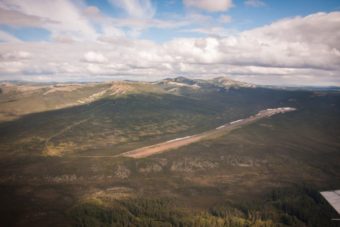
The site of the proposed Donlin Mine, 145 miles northeast of Bethel. (Dean Swope/KYUK)

On May 27, the commissioner for the Alaska Department of Environmental Conservation chose to uphold a key state water quality certificate for the proposed Donlin Gold mine. The decision comes after an administrative law judge recommended that the DEC should not uphold the certificate in April.

In August 2018, the DEC issued a “certificate of reasonable assurance” to Donlin Gold that said that the state can count on the company’s operations to comply with water quality standards. The Army Corps of Engineers required the certificate before it issued its federal one. The Orutsararmiut Native Council challenged the certificate and passed a resolution opposing the mine. The tribe is based in Bethel, the largest community downriver from the proposed mine.

ONC tribal citizen Gloria Simeon said that DEC’s latest decision risks the health of people in the region and did not take into account the opposition from many of the tribes in the Yukon-Kuskokwim Delta.

“We have our work cut out for us,” said Simeon.

In April, Administrative Law Judge Kent Sullivan ruled that Donlin Gold’s mining operations would not guarantee a “reasonable assurance” that the mine would meet and maintain state environmental and water quality standards — specifically for mercury levels, water temperature and salmon habitat.

Sullivan said that the agency and Donlin Gold did not properly calculate the risk of mercury levels in the water. Donlin Gold is planning to build the mine in a mercury belt, where levels already exceed the state standards. Sullivan said that Donlin Gold and the agency were “tak[ing] the misguided approach resorting to sleight of hand” when they used a different calculation to justify the certificate.

Disturbing salmon habitat in Crooked Creek, a Kuskokwim River tributary near the mining operation, is another issue that the tribe is concerned with. Sullivan said that “salmon and salmon habitat in a large segment of Crooked Creek will be significantly and detrimentally impacted by the project.”

Sullivan’s recommendation to not uphold the state certificate potentially jeopardized the Corps’ federal permit, one of the major ones that Donlin Gold needs to operate. DEC Commissioner Jason Brune had the final say over whether to accept the recommendation. He chose to reject it.

In his decision, Brune said the analyses performed by federal and state agencies throughout the permitting process showed that the mining operations would meet state and federal environmental and water quality standards.

Donlin Gold applauded the decision. Donlin Gold spokesperson Kristina Woolston said, “Simply put, we will not operate the project without demonstrated compliance with the state’s water quality standards.”

Calista Corporation, which owns the mineral rights to the mine, also agreed with Brune’s decision.

Thirteen tribes in the Yukon-Kuskokwim Delta have passed resolutions opposing the mining project. During the 2019 convention of the Association of Village Council Presidents, 35 tribes voted to pass a resolution opposing Donlin Gold, citing possible environmental impacts to the Kuskokwim River.

Site notifications
Update notification options
Subscribe to notifications