Aging

Dunleavy eliminates funding for low-income Senior Benefits Payment Program

Alaska’s low-income seniors stand to lose cash assistance from the state. That’s following Gov. Mike Dunleavy’s line item veto eliminating about $20.8 million for the Senior Benefits Payment Program.

In the southeast town of Wrangell, 68-year-old Lansing Hayes has lunch most days at the local senior center. He receives $175 a month from the Senior Benefits Payment Program. The check supplements his most basic needs.

“So I get to have health insurance and food which makes me pretty happy,” Hayes says.

Otherwise, he pays his bills with less than $1,300 a month in social security.

More than a third of seniors on the program live in Anchorage. But U.S. census data suggests the communities most affected per capita are in towns like Wrangell in rural Alaska.

But following Dunleavy’s veto, Hayes will soon be among more than 11,000 elderly Alaskans to lose this assistance. The program is income-based, paying between $75 to $250 a month.

It’s a terrible blow to low-income seniors across the state,” Erin Walker-Tolles says. She is the executive director of Catholic Community Service, which runs the senior centers in Wrangell and 10 other communities across Southeast.

During legislative session I have seniors from many communities come up to me and talk to me about how they are going to reduce the amount of food they buy or choose between food and medication if Senior Benefits goes away,” Walker-Tolles says.

She says seniors will feel the effects of cuts throughout the budget. Even though seniors rely on federal Medicare for health insurance, those with severe disabilities access additional services through the state’s Medicaid waiver program. Those include free meals and rides at these senior centers.

And any cuts passed down to municipalities, such as school bond debt reimbursement, are of concern, since local governments provide 25% of these senior centers funding.

Back at Wrangell’s senior center, I ask Hayes what he would say to the governor about these cuts.

“I don’t think his political stance on trying to shut down all these programs was honest,” he says.

Hayes thinks the state should raise more revenue from oil production.

But he says he’s optimistic he’ll make ends meet with $2,100 less a year.

“Yeah, I always get by,” he says.

It’s unclear when monthly payments will cease. Calls to the state’s Department of Health and Social Services weren’t immediately returned Friday afternoon.

It would take three quarters of the Legislature to override the governor’s veto.

Federal audit finds gaps in Alaska ‘critical incident’ reporting

A row of beds in a hospital.
A row of beds in a hospital. (Creative Commons photo)

After a recent review from a federal watchdog agency found Alaska health care providers failed to correctly report and monitor critical incidents involving people with developmental disabilities, state health officials are making changes in an attempt to close the gaps.

“We actually feel like this report from the (Office of Inspector General) is really an opportunity or catalyst for us to really make our providers aware that they must report all critical incidents to the state,” said Deb Etheridge, acting director of the state’s Senior and Disabilities Services.

“Critical incidents” are events in which Medicaid beneficiaries are injured and require medical attention; situations involving medication errors; or instances where patients are restricted or restrained. They can include everything from broken bones and bruises to instances of sexual abuse.

The review from the U.S. Department of Health and Human Services’ Office of Inspector General covered more than a year of field work and 59,000 medical claims. Auditors selected 303 claims for review and found more than two-thirds of them were not correctly reported as critical incidents, according to the OIG.

Medicaid rules require providers report critical incidents to the state, said Stacy DeWeber, a senior auditor with the OIG.

“The state agency cannot investigate and take appropriate actions to protect the health and welfare of Medicaid beneficiaries with developmental disabilities when community-based providers do not report critical incidents,” she said.

The term “community-based providers” can refer to anything from group homes to family members responsible for a Medicaid beneficiary’s care, according to the OIG. Alaska’s Senior and Disabilities Services currently has more than 700 credentialed providers offering two dozen types of services, from meals to transportation to specialized employment, according to the state agency.

Etheridge said providers may not always know when a “critical incident” has occurred, and if a provider doesn’t know something happened, they’re not required to report it. Since it can be impossible to verify, Etheridge said, the state doesn’t fully concur with federal auditors’ findings.

Still, she said, the state is taking action, making it easier to file reports and access training resources, and adding new internal staff training and reporting processes, including cross-checking Medicaid claims data and investigating events that might not have been reported.

Hopefully, Etheridge said, the new systems can help keep cases from falling through the cracks.

New Anchorage senior living homes see growing demand

Construction workers at Baxter Senior Living, an Anchorage assisted living home scheduled to open in early Fall 2019. (Photo by Kirsten Swann/Alaska Public Media)

As Alaska’s senior population booms, leading to the construction of hundreds of new assisted living home rooms, developers report surging demand — from seniors in state and Outside.

“It’s definitely a growing market,” said Anchorage developer JR Wilcox.

Wilcox is president of Baxter Senior Living, a new assisted living home in the final stages of construction at the corner of Tudor Road and Baxter Road. It represents a major transition: The 5.7-acre lot was once a trailer park, and Wilcox once worked for an oil company, he said.

The multimillion-dollar assisted living development started coming together several years ago after market research revealed that — when it comes to senior housing — Anchorage didn’t have nearly enough. Meanwhile, demographers expect Alaska’s senior population to more than double between 2010-2035.

“I said, ‘Well, let’s go figure out how to build senior housing then,’” Wilcox said.

Baxter Senior Living is now preparing to open its doors later this summer. Wilcox said applicants include Alaskans hoping to remain in Alaska as they age, and Alaskan retirees in the Lower 48 looking for ways to come home again.

Historically, that hasn’t always been possible. Alaska has a limited supply of assisted living and other care options. For every assisted living bed in Anchorage, there are about 26 seniors, according to a 2018 report by Agnew::Beck Consulting. In Juneau, there are about 84 seniors for every assisted living bed. Around the state, independent living units are in similarly short supply.

Baxter Senior Living, offering multiple levels of care and sweeping views of the Chugach Mountains, is now one of at least three new assisted living homes currently taking shape in Anchorage alone. On the south side of town, Native corporation Cook Inlet Regional Inc. is in the planning stages of a new 107-unit senior living facility, according to municipal records and a company spokesman. Five miles up the road, another new assisted living home is in the final stages of construction.

Aspen Creek Senior Living is preparing to welcome its first residents in August, according to Executive Director Kemish Hendershot.

While Aspen Creek’s parent company, Spring Creek Enterprise, has operated assisted living facilities in the Lower 48 for decades, Hendershot said, the new facility in South Anchorage is its first development in Alaska’s largest city. He said it was built in response to Alaska’s growing need. Featuring spacious community rooms, the home aims to emphasize the value of elders in the community, providing space for families to be together and stay together, he said.

So far, he said, the 92-bed facility has drawn strong interest from both Alaskans and residents in the Lower 48.

“They have family that live here in Anchorage, and they’re in need of help, and they want to come be close to family,” Hendershot said.

Across town, administrators at Baxter Senior Living report the same out-of-state interest. Wilcox, a lifelong Alaskan, said he’s seen it firsthand — people come north to be with family, and even retirees who’ve moved south look for ways to come home again.

“You want to go back to where your family is and where you understand the place and like the place. I’ve seen that happen with my grandparents,” he said. “There’s sort of a boomerang effect that’s been widely observed in the Frost Belt, and I think we’re getting some of that here.”

Alaska Pioneer Homes residents fight proposed rate increases

Sitka Pioneer Home resident Nancy Ricketts meets for coffee with friends in a local cafe. At 94, Ricketts says she carefully budgeted in order to live in the Pioneer Home — including selling her house. She testified that increased financial stress on residents will jeopardize their health, and ultimately cost the state more. “The state will have to pay to keep us here, or throw us out on the street,” she said. “A loss of independence is the most horrible thing I can think of.”
Sitka Pioneer Home resident Nancy Ricketts meets for coffee with friends in a local cafe. At 94, Ricketts says she carefully budgeted in order to live in the Pioneer Home — including selling her house. She testified that increased financial stress on residents will jeopardize their health, and ultimately cost the state more. “The state will have to pay to keep us here, or throw us out on the street,” she said. “A loss of independence is the most horrible thing I can think of.” (Photo by Robert Woolsey/KCAW)

A proposal to more than double the monthly costs for most residents in Alaska Pioneer Homes met with stiff opposition during recent public testimony on the issue.

Family members — and residents themselves — warned the Division of Alaska Pioneer Homes that rate increases could likely backfire. And rather than balancing the budget of Alaska’s subsidized senior care, it could instead send many elder Alaskans out of state.

On paper it sounds really simple. The state director of the Alaska Pioneer Homes, Clinton Lasley, explained the rationale behind the increased rates.

“The rates being proposed in regulation are reflective of the division charging what it costs to provide services,” Lasley said. “Currently, the state has been paying those rates to provide services, but we have not been charging them to the general public.”

In a letter sent to all Pioneer Home residents on Feb. 25, Lasley explained that the state subsidizes their care at a cost of more than $30 million a year.

Current and proposed monthly rates at Alaska Pioneer Homes.

But the state’s Pioneer Homes — although subsidized — aren’t free. Currently there are three levels of care, ranging in cost from around $2,600 a month to almost $7,000 a month, from residents who can live independently to those who need 24-hour nursing services.

Broadly speaking, the proposal from Gov. Mike Dunleavy’s administration would push rates up by 40% to over 120%, topping out at $15,000 a month for residents with so-called “complex behaviors” like dementia.

During a public hearing held on May 28, simultaneously in all six of the state’s Pioneer Homes, there was significant backlash.

Resident Carol Scott has lived in Alaska for 59 years — the last four in constant worry about meeting her rent at the Anchorage Pioneer Home.

“And then this year, the governor’s proposed budget knocked our twice-mended socks off,” Scott said. “We already were wearing clothes from when we retired 10 to 15 years ago, and our allowance is only $200 a month.”

Scott is referring to a payment assistance strategy used by the Pioneer Homes to ensure residents that their bills are paid as much as possible through personal income — with at least $200 left over each month. She went on to call the proposed rate structure preposterous and unaffordable for Alaskans.

Ninety-four-year-old Nancy Ricketts, a resident in the Sitka Pioneer Home, testified that the proposed rate structure undermined her plans to remain self-sufficient.

“I sold my house to be able to afford the rates as much as possible here at the Pioneer Home,” Ricketts explained. “I planned carefully so that I could remain in control of expenses. I remain in the best health possible to maintain these goals for the rest of my life.”

Ricketts said that the added stress of paying higher bills would likely force her health — and that of many of her neighbors — into decline.

Aves Thompson, whose wife is in the memory care unit of the Anchorage Pioneer Home, said he paid 100% of her bill out-of-pocket. The proposed rate increase, in his family’s case, could end up costing the state more.

“The cost increase will drive my wife out of the Pioneer Home,” Thompson said. “This means that this private payer will no longer be paying the entire amount of the fee. The replacement will, more than likely, receive state or federal subsidy to pay the bill, as they will be about the only ones who can afford to be in the Pioneer Home.”

"The Prospector" statue stands in front of the Sitka Pioneers Home entrance, which was under repair Sept. 20, 2016. The homes reduced admissions as budgets were cut. (Photo by Ed Schoenfeld/CoastAlaska News)
“The Prospector” statue stands in front of the Sitka Pioneer Home entrance, which was under repair, Sept. 20, 2016. (Photo by Ed Schoenfeld/CoastAlaska)

The Division of Alaska Pioneer Homes took testimony from its facilities in Anchorage, Fairbanks, Palmer, Juneau, Ketchikan, Sitka and from people calling in over the phone. Much of the testimony focused on the ramifications of the dramatic increases, but some focused on the timeline.

Lauren Wilde’s mother is a “Level III” resident of the Sitka Pioneer Home who pays $6,800 per month for care. Under the administration’s proposal, her mother would be at “Level V” care and pay $15,000 a month — according to Wilde, that’s more than the combined income of her parents when they were working.

Wilde understands that costs are going to rise, but these changes were coming too fast.

“People need time to figure out how they’re going to adapt to increasing costs,” Wilde argued. “Instead of increasing incrementally over time, you’ve put forward a plan to more than double the costs for my mom within about four month’s time. You’re not giving us enough time to figure out how to cope with these changes. And obviously these are not small changes. We’re talking about $160,000 a year.”

Wilde’s mother, along with Thompson’s wife, are in the majority in Alaska Pioneer Homes, where 56% of residents are currently in “Level III” care.

The Alaska Legislature has also weighed in on the timing of increases. On May 28 — the same day as the public hearing — 19 members of the House of Representatives sent a letter to Clinton Lasley and his boss, Commissioner Adam Crum of the state’s Department of Health and Social Services, urging the department to use House Bill 96 as a guideline for setting rates in the Pioneer Homes.

HB 96 allows for a one-time reset of the basic rate structure in the Pioneer Homes, and then “reasonable and regular rate increases” keyed to the Social Security cost-of-living benchmark.

HB 96 passed overwhelmingly in the House by a 35-4 vote on May 10. The bill is now parked in the Senate Health and Social Services Committee.

The Department of Health and Social Services is taking public comment on the proposed changes to the Pioneer Home rates through June 28. After that, the department could implement the new regulations at any time.

Haines athletes go for gold at National Senior Games

The Alaska track and field competitors at the Alaska Senior Games in 2018.
The Alaska track and field competitors at the Alaska Senior Games in 2018. (Photo courtesy Nancy Nash)

The golden years are no time to slow down — they’re a time to bring home gold medals.

That’s why competitors in Haines are gearing up for the National Senior Games.

On a brilliant day on the track, most of the snow was gone on Mount Ripinsky. Connie Ward, 59, was glowing with exertion in the evening light. Launching a discus through the air, Ward set a new personal best.

“Seventy-two feet, 3 inches!” yelled Nancy Nash, her training partner, waving the measuring tape.

“Wait, I gotta write that down,” Ward said. “At my age I forget a lot!”

Nash is 10 years Ward’s senior. She rolled up the huge tape measure she used to log the throws. Some high schoolers had already left the track for the night, but Ward and Nash had javelins to hurl — and then a couple more rounds of shot put practice.

“I said to my son who called me for Mother’s Day, ‘I think there’s not that many women sprinting at my age,’” Nash laughed. “And he goes, ‘Mom, I think there’s even fewer doing shot put at your age!’”

The Senior Games — also known as the Senior Olympics — is the largest multi-sport event in the world for seniors. These competitors are flipping the script on popular conceptions of what an athlete can be.

Del Moon is a spokesperson for the National Senior Games Association in Florida.

“When you see whole families wearing shirts that say, ‘Go grandma,’ that’s the kind of thing we want to put in front of people, to say, ‘You’ve gotta rethink what you thought aging was, because you’re shortchanging yourself,’” he said.

Moon said American society is hard-wired to pass on ageist stereotypes that seniors can’t be competitive athletes. But these games prove that’s not true.

“The body was made to keep going, all you have to do is take care of it,” he said. “If you are 32 and you think life ends at 50, you are completely brainwashed!”

The community of Haines has an aging population: 20% are over 65. That gives this Southeast borough the highest percentage of seniors in Alaska and older than average nationwide.

Nash has broken barriers in track and field before.

That’s because she attended high school before Title IX — the landmark provision in a 1972 law that forced public schools to offer equal sporting opportunities for boys and girls. There were no sports teams for girls at her high school.

But Nash competed anyway, in a small, girls-only league that formed independently of her high school in Michigan.

“This was in ’65, I think, that I learned to shot put and sprint, and that’s what I’m doing (at the National Senior Games),” Nash said. “And it came right back to me! And I was pretty sure I could sprint at my age.”

Ward went to school post-Title IX. She still holds records there. Lately she has extra motivation.

“I like it because it shows to my kids your mom still has it,” she said with a smile.

The games run June 14-25. These boomers hope to have precious metal souvenirs when they return from sunny Albuquerque, New Mexico.

Alaska Department of Health and Social Services suspends thousands of senior benefits payments

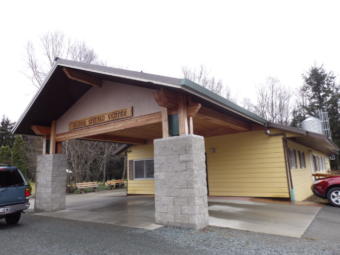
Haines Senior Center.
Haines Senior Center. (Photo by Emily Files/KHNS)

The Alaska Department of Health and Social Services has suspended payments for some recipients of the state’s Senior Benefits Program due to a lack of funding.

The program provides a monthly check for seniors with moderate to low incomes. As of December 2017, over 11,000 seniors statewide were receiving this benefit.

According to Division of Public Assistance Director Shawnda O’Brien, the Senior Benefits Program is divided into three payment tiers based on beneficiaries’ income.

“The lowest payment tier, which is paid out to the recipients with the higher income brackets, is the payment tier that gets reduced when funding isn’t sufficient to fully fund the program,” O’Brien said.

Recipients in the highest income bracket are eligible to receive $76 per month, but they won’t be receiving those payments for May and June.

O’Brien said that DHSS is around $800,000 short. She attributes this to changes in the number of seniors in the higher payment tiers.

“There’s been a little bit of a shift between the people who are eligible at the highest payment category versus the ones that are at the lowest payment category,” O’Brien said. “We’ve also had payments being made retroactively to recipients who applied for the program whose eligibility hadn’t been determined timely. Some of those types of things have also contributed to the amount of funding being diminished more quickly.”

The future of the Senior Benefits Program is uncertain.

Gov. Mike Dunleavy’s proposed budget for 2020 would eliminate the program altogether. However, the budget passed Thursday by the Alaska House of Representatives would retain funding for it.

Site notifications
Update notification options
Subscribe to notifications