Alcohol & Substance Abuse

Ketchikan will join a national $26B opioid settlement, but officials say the money won’t go far

""
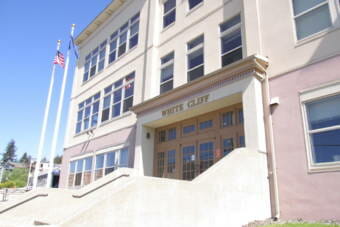
Ketchikan’s borough offices are in the White Cliff Building, seen here on a sunny day in 2020. (Maria Dudzak/KRBD)

Ketchikan’s borough will seek cash from a national settlement over the opioid epidemic. For now, it’s unclear how much the borough could receive from the settlements, but local officials say it likely won’t be enough for Ketchikan to fund treatment centers or other programs aimed at curbing the use of addictive drugs.

Alaska is one of all but eight states to join the settlement agreement with drugmaker Johnson & Johnson and three drug distributors: AmerisourceBergen, McKesson and Cardinal Health. The companies have offered $26 billion to settle some 3,000 lawsuits from states and local governments alleging the companies oversupplied opioid drugs, leading to an explosion in overdose deaths.

Now, municipalities across the country have until Jan. 2 to join the settlement. Borough Attorney Glenn Brown told Ketchikan’s Borough Assembly on Monday that a lot was up in the air — some $10.6 billion of that settlement will only be paid if enough localities sign on — but he said Alaska was likely to receive nearly $60 million over 18 years. Brown estimates about $8.7 million would go to nine local governments eligible to join the settlement, including Anchorage, Juneau, Fairbanks’ city and borough, Kodiak, the Mat-Su Borough, Wasilla, the Kenai Peninsula Borough and the Ketchikan Gateway Borough.

“Long story short, for the borough right now, at the 15% going to municipalities and a rough distribution within the state based on population, it’s not a giant amount of money. It’s really somewhere in the neighborhood of $10,000 to $11,000 a year,” Brown said.

Brown said the percentages aren’t set in stone — negotiations with the state could raise the share for municipalities to as much as half of the total.

“It’s crude math — I’m taking payments over varying terms — but it would average then somewhere in the neighborhood of $36,000 a year, far short of what we would ever need here to be able to produce a facility, to run a facility, let alone staff it,” Brown said.

He said five rural municipalities, including Ketchikan’s borough, were in early talks about pooling their shares of the settlement to provide a single facility.

At least 70% of the total amount sent to the state must be spent directly on the opioid crisis. Brown said state officials had also floated the possibility of holding some of the funds in an endowment, similar to the Permanent Fund or the Alaska Mental Health Trust, to ensure that funding for addiction treatment doesn’t run out at the end of the 18-year settlement term.

Ketchikan Borough Assembly members voted unanimously to approve joining the settlement. Assembly Member Jeremy Bynum applauded the move.

“Although this isn’t a large sum of money, I think it is a recognition of a step in the right direction. It also gives us an opportunity to have these conversations about what our needs really are,” Bynum said.

Any municipality that joins the settlement forfeits its right to sue Johnson & Johnson and the three distributors over the opioid crisis. But Brown says future payouts from other manufacturers and retailers might be on the horizon. Payments could begin as early as April 2022.

Disclosure: Borough Attorney Glenn Brown is a member of KRBD’s nonprofit board of directors, which does not direct news coverage.

Drug overdose deaths in the U.S. have topped 100,000 for the first time

A bag of assorted pills and prescription drugs dropped off for disposal is displayed during the Drug Enforcement Administration’s 20th National Prescription Drug Take Back Day earlier this year in Los Angeles. According to the Centers for Disease Control and Prevention, more than 100,000 people died of a drug overdose from April 2020 to April 2021. (Patrick T. Fallon/AFP via Getty Images)

More than 100,000 people died over a 12-month period from fatal drug overdoses for the first time in U.S. history, according to new data from the Centers for Disease Control & Prevention.

“To all those families who have mourned a loved one and to all those people who are facing addiction or are in recovery: you are in our hearts,” said President Joe Biden in a statement issued by the White House. “Together, we will turn the tide on this epidemic.”

“This tragic milestone represents an increase of 28.5%” over the same period just a year earlier, said Dr. Deb Houry with the CDC in a call with reporters Wednesday.

Dr. Rahul Gupta, who heads the White House Office of National Drug Control Policy, called the surge in drug fatalities “unacceptable.”

“An overdose is a cry for help,” Gupta said during the press conference. “For far too many people that cry goes unanswered. This requires a whole lot of government response and evidence-based strategies.”

Experts blame the continuing surge on the spread of more dangerous street drugs and on disruptions to drug treatment programs caused by the pandemic.

“[Overdoses] are driven both by fentanyl and also by methamphetamines,” said Dr. Nora Volkov, who heads the National Institute On Drug Abuse, part of the National Institutes of Health.

She predicted the surge of fatalities would continue because of the spread of more dangerous street drugs.

“They are among the most addictive drugs that we know of and the most lethal,” Volkov said.

In recent years, Mexican drug cartels have pivoted to manufacturing and distributing fentanyl and methamphetamines, which are cheaper to produce and can be shipped in small quantities that are difficult to detect.

Anne Milgram, head of the Drug Enforcement Administration, acknowledged Wednesday that efforts to slow trafficking of these drugs haven’t worked.

“This year alone DEA has seized enough fentanyl to provide every member of the U.S. population with a lethal dose,” Milgram said. “We are still seizing more fentanyl each and every day.”

The Biden administration is calling on Congress to approve more than $10 billion in funding for drug treatment and interdiction programs. The White House also asked states to relax rules that complicate access to Naloxone, a medication that can reverse overdoses caused by fentanyl and other opioids.

But the Biden administration has sent mixed signals on how committed it is to following science-based “harm reduction” strategies proven to help keep people with addiction alive.

In an interview last month with NPR, Health and Human Services Secretary Xavier Becerra initially signaled that the federal government would drop opposition to safe drug injection and consumption sites.

“We’re not going to say ‘but you can’t do these other type of supervised consumption programs that you think work or that evidence shows work,'” Becerra said.

But HHS officials quickly walked back that statement and say the question of whether people with substance use disorder should be allowed to use drugs under medical supervision will be decided by the courts.

The DEA has also drawn fire in recent weeks for taking a tough stance with pharmacies that distribute buprenorphine, another medication with a strong track record of helping people with addiction avoid relapse and overdose.

Copyright 2021 NPR. To see more, visit https://www.npr.org.

The Ketchikan City Council is looking for ideas to address the community’s rise in overdoses

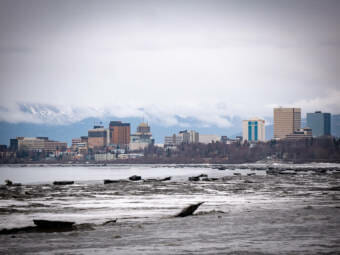
A view of downtown Ketchikan, seen from the cruise ship Veendam. (Leila Kheiry/KRBD)

What should Ketchikan do to address a rise in opioid overdoses?

It’s a big question with no easy answers, Ketchikan mayor-elect Dave Kiffer said at an Oct. 7 council meeting.

“I think this whole process is going to be a large dragon, and we’re going to grab the tail of it. We’re going to see how badly it burns us or not. But it’s — it should be interesting,” Kiffer said.

The council plans to discuss possible solutions at a special meeting scheduled for this Thursday.

Kiffer says it’s an early step in tackling the problem.

“We’re going to focus on, at least initially, on the opiate overdose situation,” he said. “Get as many of the different groups in town in the same room (and) at least start talking to each other. Because I think what we’ve had a lot of, unfortunately, is different groups siloing. And even with the city, we don’t know what’s being done.”

The meeting comes after public advocacy by resident Dave Timmerman. He’s repeatedly pressed Ketchikan’s city and borough governments to do more to address a growing drug problem in Ketchikan.

“People are dying,” Timmerman said at the council’s Aug. 19 meeting.

Timmerman, a former port operations director, told the council he had seen the area’s growing drug problem take its toll on his former staff.

“I’ve kept in contact with all those kids, all of them, they get a hold of me. We’ve lost at least three of them to suicide since then. We’ve lost some to overdoses since then. We lost one to overdose just a few weeks ago or a month ago,” he said.

Ketchikan’s fire department says overdose calls more than quadrupled in the first seven months of this year compared to the same time last year.
City Council Member Mark Flora says drug addiction is tied to other problems in Ketchikan — notably, homelessness.

“I think the homelessness issue and the addiction and dependency issues are joined at the hip,” he said at last week’s council meeting. “I don’t think they’re separable.”

Drug addiction was among the top four causes of homelessness in Ketchikan in last year’s survey by Ketchikan-based domestic violence advocacy group Women in Safe Homes. Other top factors include job loss, eviction and domestic violence.

Flora says it’s unlikely that any cheap, quick fixes will solve the problem.

“Part of the solution is going to be funding. And we’re going to need to be engaged with the community on what it is they also want to see,” he said.

But City Council Member Janalee Gage says she’s optimistic.

“This is going to be a big undertaking. However, I think that with all the individuals in the room, who bring a lot to the table, and the organizations that we have in this community, we can do it. It’s just going to be — It may be many nights of tearing your hair out,” she said.

Kiffer says it’s a problem that’s lasted decades. But he says he’s glad to see the process getting underway.

“My point at this point is starting somewhere,” he said.

The meeting starts at 6 p.m. Thursday in the Ted Ferry Civic Center. The council will hear from groups working on drug addiction and members of the public before starting their own conversation about the best way forward.

The meeting will be broadcast on local cable channels and livestreamed at the city’s website.

Over the last 4 years, 74 people living outside in Anchorage have died, many of hypothermia

A view of downtown Anchorage
Downtown Anchorage, as seen from the Tony Knowles Coastal Trail in April, 2020. (Abbey Collins/Alaska Public Media)

More than 70 people experiencing homelessness have died outside in Anchorage in the last four years.

That’s according to reporting by the Anchorage Daily News, which found that the majority of outdoor deaths were from hypothermia, complications of chronic alcoholism or drug overdoses.

ADN reporter Michelle Theriault Boots says the deaths have gone mostly unnoticed by Anchorage residents in recent years.
Listen here:

The following transcript has been lightly edited for clarity.

Michelle Theriault Boots: We knew that outdoor deaths were happening. My colleague Paula Dobbyn had done some reporting on that, just about how quietly they continue to happen, year in and year out, without really the public knowing much about them. But what we hadn’t known — and also policymakers and the nonprofit world, service providers, hadn’t known — is exactly what people were dying of.

Casey Grove: Some of us will remember in the past, an outdoor death like this would trigger like a press release from the police department. And that’s no longer the case, right?

Michelle Theriault Boots: Right. You know, back in 2009, 2010, there was a really highly-publicized series of outdoor deaths — that was kind of a turning point for the community. They received high levels of media coverage. There were, you know, community meetings about them, even some action — changes in how cold weather shelter was provided, because people were learning about and hearing about homeless people dying outside on the streets. And Anchorage found that intolerable. And then no one seems to really quite know why, but the practice of publicly reporting those outdoor deaths just kind of fell away. And so it’s been a very unknown, under-known phenomenon.

Casey Grove: There were a few different steps that you had to go through to kind of get this information. Could you describe that?

Michelle Theriault Boots: So what I had from the combinations of our efforts was a list of 74 names from 2017 until now, and I had a short narrative of each death — where the person was found, whether anything suspicious was found, any other, you know, major details, and the person’s name and age.

And the real question I had was, “Well, what are these folks dying from? And could these deaths have been prevented?”

And then I was, by chance, having a conversation with our Alaska State Medical Examiner, Dr. Gary Zientek, about something completely different. And he said, “Well, you know, how many names do you have?” And I said, “Well, 74.” And he said, “If you send me those names, that’s a large enough number that I can send you back an aggregate of the causes of death without identifying specific people.”

So after a couple days, he got back to me with that data. And for the first time in a while we had a much clearer picture of what the causes of death are for unhoused people who die on the street.

Casey Grove: Yeah, so let’s talk about that. I’m looking at the graphic that Kevin Powell put together at the Anchorage Daily News, and there’s, you know, certainly drug overdoses and complications involving alcoholism close to the top of the list, but the most deaths were caused by hypothermia, just being outside in the cold, right?

Michelle Theriault Boots: Yeah, And I think that’s both a shocking and not surprising number. I mean, I think it’s tragic and shocking. And though, you know, we do live in a sub-Arctic climate where we all know that the harsh winter is a major danger, I think what’s so surprising about that is there is a perception among some people that we have systems in place to keep this from happening. And I think that people are shocked by that number — that 17 people have died of the cold on the streets of Anchorage in the last five years, because I think we’d like to think we’re better than that, as a community, that we have somehow solved that or put systems in place to keep that from happening. And what this shows is that: No, we haven’t solved that, people are still dying of hypothermia on the streets of Anchorage every year.

Casey Grove: So with the social services folks that work with people experiencing homelessness, what did they say about this, other than it’s tragic that folks would die of hypothermia out in the cold? Do they say that this is useful? That they might have practical applications for using this information?

Michelle Theriault Boots: The feedback I’ve heard is that policymakers are really glad to know this. But I think it also just points to a much more complex problem, right? So hypothermia deaths, the medical examiner said alcohol contributes to almost all of those. We also have complications of chronic alcoholism, drug overdoses, acute alcohol intoxication as the top four causes of death, which really points to a need to address addiction and substance misuse as an urgent priority, it seems like.

Casey Grove: On a personal level, what’s it like to read these narratives of each of these people’s deaths?

Michelle Theriault Boots: It’s really heartbreaking. And I think one element is just how familiar and public the places that people have died are. I drive down one section of Minnesota Drive three or four times a week, and right there, a woman about my age died right there on the sidewalk this year, and it’s just, I think knowing more about these deaths, you have to see the city in a different way.

Alaska overdoses and deaths rise as global pandemic overshadows state opioid epidemic

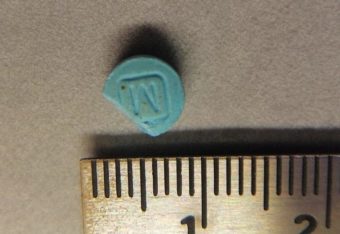
The counterfeit oxycodone tablet actually contained fentanyl. (Courtesy of Alaska Dept. of Health and Social Services.)

Drug overdoses in Alaska have continued to increase in recent years, overshadowed by the coronavirus pandemic.

So far this year, the state’s emergency departments have seen about 480 opioid overdoses, compared to 660 in 2020 and roughly 480 for all of 2019, according to data from the Alaska Department of Health and Social Services.

Last year, Alaska had 146 opioid overdose deaths, the most ever reported. This year’s numbers are not yet out because of delays in getting information from death certificates, due to a cyberattack on the state health department.

The state declared opioid abuse a public health emergency in 2017.

The recent increases in overdoses and deaths came as a surprise because the numbers had declined briefly in 2018, said Elana Habib, a state opioid misuse and addiction prevention specialist.

“I think there was a lot of optimism,” Habib said. “And now with this increase in 2019 and an even bigger increase in 2020, it’s a little alarming.”

Over the same time period, fentanyl overdose deaths tripled, Habib said. In some cases, people don’t know the powerful opioid is in the drugs they’re using, she said.

Along with distributing overdose-reversing Naloxone and training people on how to use it, the state is also offering free fentanyl test strips to users, Habib said.

Still, public health personnel and resources have been more focused on COVID-19 recently, she said.

“And that’s going to take away from any other thing that’s happening, because it does take precedence, because of the significant mortality and morbidity from COVID,” she said. “But, unfortunately, I think we need to look at how they’re all interrelated and address them simultaneously.”

For example, Habib pointed to research on the national level that shows those diagnosed with opioid use disorder are 10 times more likely to get COVID-19. That’s likely due to less access to information and health care, among other disparities, she said.

Meanwhile, Tuesday was International Overdose Awareness Day.

“Everyone plays a role and fighting overdose,” Habib said. “Deaths from overdoses are 100% preventable.”

Fairbanks therapeutic courts focus on addiction treatment, not criminal punishment

Raul Calvillo (far right) shows news reporters around the Rabinowitz Courthouse. (Robyne/KUAC)

Inside Alaska’s court system there are therapeutic courts for handling crimes where alcohol and drugs play a significant part. Fairbanks’ DUI and drug courts started in 2007 with the idea that people could change their behavior toward alcohol and drugs and not repeat their crimes. The idea has been working.

Superior Court Judge Brent Bennett oversees a caseload of about 30 people in two therapeutic courts in Fairbanks where people convicted of drug and alcohol-related crimes work on overcoming addiction in an 18-month long program instead of going to jail.

“A big part of why I’m interested in working with the therapeutic courts is, we’ve tried this system of criminal justice, and people just keep coming back,” he said.

The recidivism rate for people convicted of drug and alcohol crimes and sent to jail is normally about 50%. The model for the Fairbanks Wellness Court focuses on addiction treatment rather than criminal punishment.

“This is an opportunity to try something different that helps folks rehabilitate, in a way that they are not going to recidivate, which benefits them, benefits their families, but also benefits the community,” Bennett said.

Bennet works with Amy Bollaert, a project coordinator for Fairbanks’ wellness courts. She says that since the DUI court and the drug court launched in Fairbanks, 156 people have graduated from the program. Very few have committed crimes again.

“Just solely based on Fairbanks, our recidivism usually averages between 5% to 7%,” she said.

Over a year to 18 months, the program requires participants to confront their substance abuse. They must provide random urine analysis, get jobs and proceed through drug and alcohol counseling. The Fairbanks therapeutic courts contract with Pacific Rim Counseling for intensive outpatient treatment.

But, as Bollaert says, some people need more than that, and there is regularly a shortage of inpatient treatment available in Fairbanks, and it is hard to get in to most treatment programs — inpatient or outpatient.

“The waitlist. That’s another barrier that we have,” she said.

Bennet says the therapeutic court is working on wraparound services with The Bridge, a local reentry program, and it is easy to find support among peers.

​“We also have an incredible amount of recovery meetings that are available. A broad gamut of recovery meetings, that aren’t necessarily religious-based. And those are available online at this point as well,” Bennett said.

Alaska has fourteen therapeutic courts statewide. Eight are for cases in which there is a clear link between crimes committed and addiction, three work primarily with defendants with mental health issues, two work with families in cases involving children and Anchorage has a veterans court.

Fairbanks, too, is working on launching a veterans court that could cater to the special mental health needs of the area’s huge veterans population. And the state is looking to collaborate with Tanana Chiefs Conference to set up a healing court.

But those projects are still in the planning stages. Bennett says in addition to preventing repeat crime, the program is life-changing.

“By and large everyone who’s finishing this program, can tell you at the end, ‘I’m doing this for me now, ‘I’m doing this because it feels good to be sober, it feels good to be somebody that can be relied upon, it feels good to be responsible,’” Bennett said.

Site notifications
Update notification options
Subscribe to notifications