Alcohol & Substance Abuse

A pandemic rule change could make it easier to get treatment for opioid addiction in Alaska

Medical assistant Sarah Martin sits at the reception desk of Ideal Option, a medication assisted addiction treatment clinic in Juneau. (Photo by Kavitha George/KTOO)

Alaska doctors have temporary permission from the state to use telehealth to prescribe a controlled, but life-saving drug used to treat opioid addiction. State officials say they’d like to make the change permanent.

Once a patient says they’re ready for treatment, physicians like Dr. Janice Sheufelt want to get them the medication that prevents withdrawal symptoms as soon as possible.

“Honestly, even a few days makes a difference because of how many people are dying from opioid overdoses in our state,” she said.

She got to sidestep a significant barrier to care for people with opioid addictions during the pandemic — the clinic visit. That is, until February when the state’s emergency order lapsed and the state tightened restrictions on telehealth.

That meant she and her patients had to schedule an in-person appointment with another doctor to prescribe the drug, buprenorphine. It’s also called by its brand name, Suboxone. An extra step, and extra time, when withdrawal symptoms can manifest within hours.

“Every patient I speak to, they tell me about their friends or family members who have died. So I really think time is of the essence, and even a few days can make a difference. I’ve had people overdose and die who were waiting to get into treatment,” said Dr. Sheufelt.

Last week, the state’s medical board approved an emergency order from the state health department to reinstate buprenorphine prescriptions by telehealth for 120 days. But there was a four-month period where providers had to set up in-person appointments to get prescriptions.

In that time, Dr. Sheufelt says more than 200 patients asked to start medicated treatment at her clinic alone.

The lapse came at a critical time: hospital visits for overdoses involving heroin have increased dramatically in the state since March. Overdose visits from March to May this year are more than double last year’s visits over the same period of time.

Officials from the state’s medical board declined recorded interviews but wrote in a statement that the board will work to make the change permanent and allow Alaska doctors to prescribe and renew prescriptions for buprenorphine without an in-person appointment.

“Medication is a key part of helping people who have opioid use disorder in stopping,” said Jeannie Monk, a senior Vice President at the Alaska State Hospital and Nursing Home Association, or ASHNAH.

She testified before the medical board on behalf of Alaska physicians who said the change is necessary to help their patients. She said the COVID-19 pandemic illuminated a real need.

“Because people couldn’t go in to see doctors and people in rural areas couldn’t travel, giving them access to really life-saving medication by telehealth has been essential,” she said.

Buprenorphine typically requires an in-person visit for a prescription because it is categorized as a controlled substance. It works to block withdrawal symptoms but doesn’t get users high like heroin or fentanyl do.

“It took quite a while to kind of get the State Medical Board to kind of understand the situation and take action,” Monk said.

Even though current state and federal law do not allow that type of drug to be prescribed without an in-person visit, the state’s medical board is working to keep the exemption in place. It cites high rates of opioid overuse, overdose and death in the state as reasons it will work towards the permanent change.

Wasilla doctor pleads guilty to drug charge after illegal opioid prescriptions contributed to deaths

Bottles of opioid pills, drugs
Opioids (Creative Commons photo by K-State Research and Extension)

A Wasilla doctor has admitted to illegally prescribing thousands of opioid pills to patients, which federal prosecutors say contributed to five deaths.

David Chisholm, 64, pleaded guilty in federal court June 3 to one count of unlawful distribution of a controlled substance.

Chisholm admitted to prescribing patients various narcotic painkillers and opioids — including oxycodone, morphine and fentanyl — without a legitimate purpose, and according to prosecutors, often without a medical exam.

According to the plea agreement, Chisholm dispensed the drugs outside of the course of his medical practice, a family health and pain management clinic in Wasilla called Camelot Family Health. Prosecutors said in a written statement that an extensive undercover investigation led to the charges against Chisholm filed in April.

Chisholm’s illegal prescriptions “significantly contributed” to the accidental deaths of five patients, who are listed in the document only by their initials, according to the plea agreement.

Chisholm will have to surrender his medical license, and a judge is set to sentence him and consider approval of the agreement at a hearing scheduled for September.

Prosecutors say Chisholm could get up to 20 years in prison and a $1 million fine.

Chisholm’s attorney, Nick Oberheiden, wrote in an email, that Chisholm had served generations of patients during his career “to their fullest satisfaction and as a true patient advocate.”

“(He) made wrong and regrettable decisions when administering controlled substances medications to certain patients,” the attorney wrote. “He takes full responsibility for these mistakes.”

State updates guidance for treating opioid use disorders

Medical assistant Sarah Martin sits at the reception desk of Ideal Option, a medication assisted addiction treatment clinic in Juneau. (Photo by Kavitha George/KTOO)

Just two years ago, the state released its first MAT Guide — a comprehensive set of recommendations for healthcare providers treating opioid use disorder.

But a lot has changed since then, down to the name of the treatment. Back then, MAT stood for “Medication Assisted Treatment.” Now, it’s “Medications for Addiction Treatment.”

The Alaska Department of Health and Social Services released the new guide this week. One of its authors is Dr. Sarah Spencer. She works at the Ninilchik Traditional Council’s community clinic and is board-certified in family and addiction medicine.

“We’re learning new things all the time about how to improve care for patients,” she said.

Spencer says the name change came about because researchers now understand medications like suboxone aren’t just supplements to other kinds of treatments when it comes to addressing opioid use. They work really well on their own.

“The medications alone, even without psycho-social supports, can give significant benefits. So that was a big change in the recommendations,” Spencer said.

Another update is that now there is no time limit on treatment. Spencer said research has found there isn’t a benefit to stopping medication early.
There are recommendations for addressing other substance use disorders in this guide, too. Spencer said 80% of the time, she’s treating opioid addiction. But she sees a lot of overlap with alcohol and stimulant use disorders, as well.

Heather Phelps, a mental health clinician with the state, was another co-author of the guide.

“We wanted to incorporate a section about working in a pandemic situation,” she said. “We really wanted to make sure we had more Alaska resources and include some of the people that we knew were working with medications for addiction treatment in other areas. So, MAT in rural Alaska, and working with the Department of Corrections and the therapeutic drug court.”

There are about 500 providers that can provide MAT treatment in Alaska. They’re certified through the Drug Addiction Treatment Act of 2000 waiver, or DATA waiver.

That number has grown by 100 from the time of the last MAT guide.

“But just because we have an increase doesn’t mean that all the DATA waiver prescribers are actually practicing,” Phelps said. “And so we’re really trying to reach out to them.”

She said there’s still stigma around MAT treatment.

“There’s a lot of myths around it. We know that there are many different pathways to achieve recovery,” she said. “We have research upon research that shows that patients that take MAT treatment actually do better in long-term recovery.”

Spencer said it’s important to keep providers up to date on that research.

As a specialist, she keeps up with the changing guidelines and recommendations for treating opioid use disorder. But she realizes not every doctor can.

“The typical primary care provider isn’t able to follow all those changes in the guidelines on an ongoing basis, and they may miss some of the updates to that,” Phelps said. “So by updating these general guidelines, it allows them to have a place to go where they can see where all the guidelines are.”

The updated MAT Guide is available on the Department of Health and Social Services website, but the website has been down this week due to a malware attack.

Phelps said the Alaska Native Tribal Health Consortium is developing its own MAT guide for rural Alaska, which will come out later this year.

Juneau Assembly committee OKs budgets for another year of proactive medical services team, child care subsidies

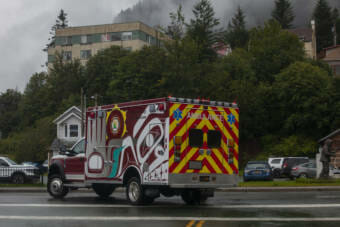
A newly refurbished ambulance decorated with art from Tlingit artists Mary Goddard and Crystal Worl drives through downtown on August 28, 2020 in Juneau, Alaska. (Photo by Rashah McChesney/KTOO)
A newly refurbished ambulance decorated with art from Tlingit artists Mary Goddard and Crystal Worl drives through downtown Juneau on August 28, 2020. (Photo by Rashah McChesney/KTOO)

The Juneau Assembly has given its first round of approval for budgets to keep a proactive medical service going for another year and to subsidize child care businesses.

Capital City Fire/Rescue runs the medical service called CARES. It’s short for Community Assistance Response and Emergency Services. It started two years ago when CCFR took over a sleep-off service for intoxicated people that Bartlett Regional Hospital had run.

In response to COVID-19 last year, they started providing more general care and follow-up care in the field to reduce emergency room visits for non-emergency issues.

CCFR Chief Rich Etheridge told the Assembly it’s one of the most exciting programs he’s seen after almost 30 years in fire service.
“This is the first opportunity where we’re able to get proactive and head off problems for not just our agency, but other agencies and community members,” Etheridge said. “And get people the best level of care, and find out the root cause of why they’re needing these emergency services.”

This type of service is sometimes called a community health program or community paramedicine.

Etheridge said these teams often help manage psychiatric issues in the field. For example, he said one paramedic actively seeks out a particular person to administer medication to.

“So that they aren’t having to fight with the police department when the 911 call comes in, and we don’t have to transport them, and then they have to spend time at the hospital,” he said.

In general, Etheridge said of the team members, “They’re really good at de-escalating very agitated people that we meet on the streets and wake up. Overall, they’re kind of that stopgap that fills in holes in the EMS and the mental health system here in town.”

Assembly member Maria Gladziszewski said the approach is great and fits in with bigger conversations around policing.

Etheridge said they have also helped families with end-of-life care before they can get hospice care. That’s meant helping manage pain, or teaching families how to clear their loved one’s airways.

The Assembly Finance Committee approved $496,600 for the program, to be paid for with $321,600 from the general fund and $175,000 from alcohol taxes.

The committee also approved $625,000 for child care programs. Some of that is for training programs for child care workers. Most of it is for subsidies to child care providers, intended to make the economics of running a child care business in Juneau more feasible.

Joy Lyon is the executive director of the Southeast Alaska Association for the Education of Young Children. She shared some highlights that the funding made possible over the last year.

“We only lost one child care who never reopened this past year,” she said. “But other than that they all opened, and actually, three new child care programs opened during this pandemic. So, I think that is pretty remarkable.”

The Assembly’s decisions on these programs are not final. The Assembly plans to hold a public hearing and adopt the city’s overall spending plan and property tax rates for the upcoming fiscal year at its regular meeting on June 14.

Half-pound of heroin, hundreds of pills seized at Ketchikan airport

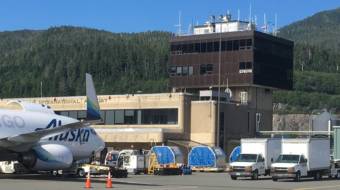
Ketchikan Airport. (Photo courtesy of KRBD)

Alaska State Troopers reported Tuesday that authorities had seized a half pound of heroin and more than 200 pills during a Friday bust at Ketchikan International Airport.

Authorities arrested a 27-year-old woman from Prince of Wales Island who allegedly brought the drugs in on an Alaska Airlines flight from Seattle.

In a sworn statement filed in court, State Trooper Larry Duran said officers were waiting for Annette Arlene Dilts of Hydaburg and served a search warrant. She reportedly had concealed 250 grams of black tar heroin and more than 200 pills.

The pills were marked as oxycodone, but police suspect they are fentanyl. Fentanyl is a much more powerful and cheaply produced opiate drug. The pills have been sent to the Alaska state crime lab to be identified.

A spokesperson for the Alaska Department of Public Safety says the investigation is ongoing. He says authorities are investigating whether Dilts had accomplices.

The investigation was supported by a broader multi-agency task force known as Southeast Alaska Cities Against Drugs.

Juneau Police Lt. Krag Campbell is a member of the task force. He says law enforcement typically tries to flip lower-level drug traffickers to reveal larger organizations.

“And you can use the, you know, fear of going to jail for criminal charges, to turn people to provide you information. So when people provide information, then you can learn like, hey, who’s next up on this chain? How does the organization work? That’s where really where a lot of your information comes from,” Campbell said in a phone interview Wednesday.

He wasn’t involved with the Ketchikan airport bust. But he says that in the last few years, police are seeing fewer prescription opioids as doctors prescribe less of them.

“So you had kind of all those people that were on those prescription medications abusing them, then they just switched to heroin, and that’s why we’ve seen this huge spike of heroin use. And fentanyl — fentanyl is fairly new. It’s a very potent and very dangerous drug even in small doses. But we see it often used to imitate medications,” Campbell said.

Dilts faces two felony drug charges. Ketchikan’s public defender agency declined to comment on Dilts’ case. She’s in custody in Ketchikan as of Tuesday afternoon on $60,000 bail.

Feds arrest 2 after seizing Fentanyl headed to Utqiagvik

“M30” Fentanyl pills similar to the batch recovered by authorities in Anchorage. (Photo courtesy of Drug Enforcement Agency)

Two Utqiagvik residents are in custody after officials say they intercepted fentanyl the two intended to sell.

According to a charging document, federal postal inspectors in Anchorage flagged a package sent from Arizona to 30-year-old Roberta Sielak of Utqiagvik. Inspectors opened the package and found 2.4 ounces of blue “M30” pills that contained fentanyl, the charges say. The pills were hidden in a vacuum-sealed bag and placed inside the motor housing of an Oster blender, which was in its original packaging, according to the charges.

Inspectors removed the pills and placed a tracking device in the package and sent it on to Utqiagvik, along with several federal and state agents, the charges say.

Officials say Sielak picked up the package from the Utqiagvik post office on Friday and brought it to 41-year-old Bryon McFadden. McFadden opened the package and, upon hearing the tracking device go off, fled his residence. North Slope police apprehended McFadden and questioned him. He stated he expected the package to contain marijuana, the charges say.

Officials searched McFadden’s home and found multiple Oster fan boxes, a white powder believed to be cocaine and an AR-15 style rifle.

Both Sielak and McFadden were in custody Tuesday and charged with a federal count of attempted possession of Fentanyl with intent to distribute.

Site notifications
Update notification options
Subscribe to notifications