Alcohol & Substance Abuse

Juneau reentry program is helping justice-involved people get housing

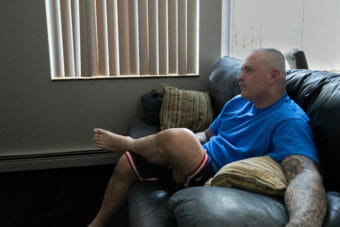
Angel Muñoz sits in his apartment in Juneau, Alaska on April 28, 2022. He was able to secure the apartment through a reentry program run by JAMHI Health & Wellness. (Photo by Lyndsey Brollini/KTOO)

A Juneau mental health organization is helping people formerly involved in the justice system get housing, and the program is working.

Nathan Block is a reentry case manager with JAMHI Health & Wellness. He works with people before they are released from incarceration to develop a plan once they are out so they can reenter society successfully.

One of the big challenges is housing. People don’t want to rent to them because of their background.

One way to increase housing for justice-involved people is to create housing specifically for them. And there are currently some places in Juneau that do that.

But Block said that also has its problems sometimes. Some former inmates have a stigma with those houses and don’t want to stay in a place where they think people aren’t trying to work on themselves.

When it comes to employment, there are fidelity bonds available — those lower the risks and financial burden on employers. Block would like to see a similar program for housing too.

“So then landlords who in the past haven’t wanted to be a part of the voucher programs will see that they’re insured,” Block said. “So that if there ever is a situation, they don’t have to spend a lot of their own personal money updating the facility or the apartment, etcetera for the next person.”

When people are released, Block said that sometimes a person will have a big family in town who they can rely on, but that’s not common. Sometimes they are put up in hotels, which he said doesn’t really solve anything.

And they can’t just look on Facebook or Craigslist for a place; it’s next to impossible for them to find housing that way.

Block said that solving the housing problem for justice-involved people is going to require effort not just from those people, but from the community too.

“Most people who are involved in the justice system don’t just wake up in the morning and say, ‘Oh, what crimes can I commit today?’” Block said. “It’s a result of untreated trauma. It’s a result of a history of colonialism. And it’s also really a result of a community who doesn’t want to help them.”

Block has personal experience with incarceration, mental health and substance use. But he went through a program that helps people in his situation go to college, and it changed his life.

He got his bachelor’s and master’s, and now he’s helping other justice-involved people better their own lives, like Angel Muñoz.

After doing 7 1/2 years at Lemon Creek Correctional Center in Juneau, Muñoz was living in a situation he didn’t want to be in. He heard about the reentry program when he was going to see his parole officer and decided to check it out.

At first, progress felt slow, like nothing was happening.

“But you gotta want to help yourself before they can help you, you know what I mean?” Muñoz said. “So they’re not going to do all the work for you, they want you to do some of the work.”

And he did the work; going to counseling, AA and working two jobs.

And then they secured him a spot at the Breakwater Inn. But the funding for it ran out, and Muñoz started panicking.

“I didn’t know what to do. I felt like I was hopeless. I didn’t have control of my life,” Muñoz said. “And I go, ‘What?’ I’m doing this just to get to back where I was starting? I go, ‘No.’”

Eventually, he got housing at St. Vincent de Paul. The reentry program paid for a few months there so he could save his paychecks up for a deposit on an apartment. And now he has an apartment he’s been in for about four months now.

He did the work to make life better for his son, so he could start fresh and have a place for him.

“Because I do love him, and I need to show him I love him by doing all this,” Muñoz said. “Because, you know, if I tell him I love him, and I’m going back to jail, that’s not showing him I love him. That’s telling him I really don’t care, you know.”

Muñoz said that people who were in his position should all go through the reentry program. He said it isn’t easy, but if they put the work in and do everything honestly, something will work out.

He said he’s grateful for all the people who helped him get where he is today and didn’t give up on him – people who saw him as a person who deserved a second chance.

Juneau fire department is distributing opioid overdose rescue kits

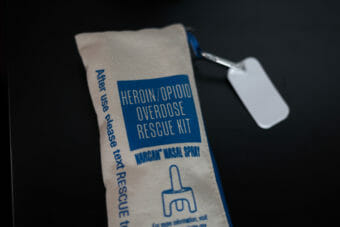
An overdose rescue kit that Capital City Fire and Rescue distributes to people when they get a 911 call for an overdose in Juneau, Alaska on April 15, 2022. (Photo by Lyndsey Brollini/KTOO)

Juneau’s fire department is getting more opioid overdose rescue kits out to people who need them in the community. 

Emergency responders carry overdose kits when they respond to 911 calls. They can give them to people ahead of potential overdose situations or they can replace a kit that’s already been used. 

In each kit are two doses of Narcan, which is a nasal spray that stops someone from overdosing on opioids. There’s also a fentanyl testing strip so people can test their own opioids for contamination and a safe bag to dispose of pills in the kit.

A statewide initiative called Project Hope is getting the overdose rescue kits out to people throughout the state. Andrew Pantiskas, an emergency medical services officer for Capital City Fire and Rescue, said the program is getting Narcan out to more people who need it. 

Capital City Fire and Rescue EMS Officer Andrew Pantiskas at the fire station in downtown Juneau, Alaska on April 15, 2022. Pantiskas runs a program that distributes overdose rescue kits to people in Juneau who call 911 for an overdose. (Photo by Lyndsey Brollini/KTOO)

“Because a lot of the time we show up and someone’s overdosed on opiates, and we administer Narcan or they administer Narcan, a lot of those people don’t actually go to the hospital,” Pantiskas said. “They just stay home, or they go about their day. And we never know about it.”

Sometimes responders get there too late when someone is experiencing an overdose. But if they have an overdose kit, it gives emergency responders more time to get there and prevents people from going into cardiac arrest. 

Pantiskas said there shouldn’t be a stigma around having Narcan around and that having Narcan is about being safe and prepared. 

“Everyone’s in a different place in their life and everybody is on a different path,” Pantiskas said. “And you know, just because they might have Narcan or need Narcan doesn’t mean that they’re abusing anything.”

The fire department doesn’t usually distribute the kits outside of the 911 calls and the program wasn’t meant to give out a lot of first-time kits. 

Some places in Juneau to get a kit for the first time include Bartlett Regional Hospital and Southeast Alaska Regional Health Consortium. 

Juneau clinic offers new option for treating opioid use disorder

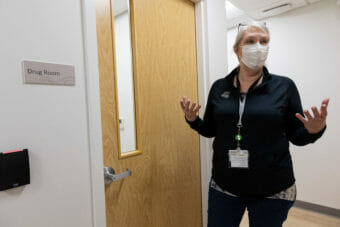
Claudette Thor gives a tour of the new opioid treatment clinic in Southeast Alaska Regional Health Consortium’s Front Street Clinic in Juneau, Alaska on April 1, 2022. (Photo by Lyndsey Brollini/KTOO)

Southeast Alaska Regional Health Consortium has a new opioid treatment clinic in Juneau. 

The clinic opened on Feb. 28, and so far it’s working for people. Claudette Thor manages the Healthcare for the Homeless clinic for SEARHC, and she said it’s getting people in the program to bring others in. 

“We have a patient here that’s brought in six people that he previously associated with or used with, and it works when nothing else has worked,” Thor said. 

It’s a federally approved program to treat opioid use disorders using a medication called methadone. It’s prescribed to people who can’t get stabilized on other medications. 

Thor said they have about 40 people in the program right now, and it’s a lot more than she was anticipating. 

Dr. Corey Cox has been working with opioid use disorder patients at SEARHC for a while, and he thought he had seen most people in Juneau with a substance use disorder. 

“And the people that have come here, some haven’t been touched by the medical system in a decade, they’ve been so pushed off to the corners of medicine,” Cox said.

The waiting area in a new opioid treatment clinic in Southeast Alaska Regional Health Consortium’s Front Street clinic in Juneau, Alaska on April 1, 2022. (Photo by Lyndsey Brollini/KTOO)

People seeking treatment for the first time can call the clinic or walk in. But to be eligible, they need to be diagnosed with moderate-to-severe opioid use disorder during an initial screening.

That doesn’t mean people with a less severe form of the disorder can’t get treatment. If they don’t qualify for the program, then they are referred to other treatments at SEARHC. And people won’t be turned away because they don’t have the ability to pay.

Cox said they take a disease model approach to opioid use disorder at SEARHC. He said that people with this disorder have a fundamentally different brain than people who haven’t used opiates. 

Claudette Thor and Corey Cox sit in a conference room in Southeast Alaska Regional Health Consortium’s new opioid treatment clinic in downtown Juneau, Alaska on April 1, 2022. (Photo by Lyndsey Brollini/KTOO)

“Like, I could maybe take an opiate today and never use it again, because my brain isn’t changed in that way,” Cox said. “And we know that people who’ve experienced traumas, whether they be personal traumas, historical traumas, they’re at an even higher risk of that kind of brain remodeling that happens.”

People with the disorder need to have their opioid receptors activated to function at a basic level. And that’s what the medications do. 

But some of the less potent medications like buprenorphine don’t work for everyone. Cox said when people are taking more drugs, or stronger drugs, even the maximum dose of buprenorphine isn’t working when people try to stop using. People can still have withdrawal symptoms and be really sick. 

That’s why this new program uses methadone, but it is a highly regulated drug and has to be prescribed in a controlled setting with a lot of monitoring. In the beginning, people have to go in six to seven days a week.

Cox said that it is really hard for people to break the habit of using opioids. People are creatures of habit, and habits can be hard to break.

“And they’re particularly hard when you’re fighting with, you know, withdrawal symptoms,” Cox said. “You’re fighting stigma, and you’re fighting changes that have been made to your brain that you didn’t have any control over.”

Thor and Cox said this program is one way SEARHC is preparing for the future because the opioid use crisis is not over. 

Last year, 245 people died from overdoses in Alaska. That’s more than 100 people more than the average from the past five years. Cox said that isn’t all from opioids, but opioids like fentanyl are contributing to that high number. 

He said where he is from, in Appalachia, people are taking more fentanyl, and that will happen in Southeast Alaska eventually. 

“And it’s going to make it harder for people to be in substance use treatments, and we’re going to see more overdoses,” Cox said. 

Some things SEARHC is doing to prepare are providing places to dispose of needles, giving Narcan to anyone who wants it, educating people about safe injections and starting to destigmatize the disease of addiction.

Southeast Alaska Regional Health Consortium’s Front Street Clinic in downtown Juneau, Alaska on April 1, 2022. (Photo by Lyndsey Brollini/KTOO)

Being in a smaller community, stigma can hold people back from seeking treatment. Thor said part of destigmatizing addiction is stepping back and recognizing that everyone is a human being and that everyone deserves care. 

“Most of these people didn’t ask for this, a lot of them,” Thor said. “They started out on pain medications for a very real pain.”

Cox said over 90% of people that come in for the program say they were prescribed pain medications when they were young — whether it was a broken leg or a wisdom teeth surgery. 

“It was this whole push of opiates and pain on our society,” Cox said. “And we’re just now reaping all of the ill effects from that. And it’s on all of us to fix.”

Cox said that it could happen to anyone, and that gives him a lot of compassion for people suffering from the disorder.

Tlingit and Haida launches online tool for addiction treatment and education

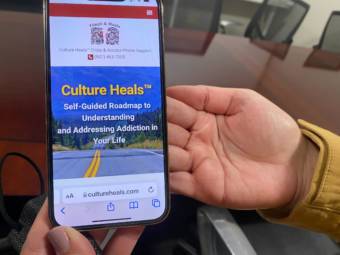
Dr. Tina Woods opens the Culture Heals website on her cell phone. April 13, 2022. (Photo by Claire Stremple/KTOO)

Tribal citizens in Southeast Alaska who are experiencing addiction have access to a new, free online treatment. It’s called Culture Heals and it’s offered by the new mental health program at the Central Council of Tlingit  and Haida Indian Tribes of Alaska.
Dr. Tina Woods leads the Council’s Community and Behavioral Health Services team. She says the goal is to remove barriers for people seeking information or care.

“Half the battle with behavioral health is being able to choose the right words to describe how you feel, to describe what you need,” she said. “Culture Heals Addiction is a platform that will allow people with resources all in one place to learn about something that they might be struggling with.”

She says the Culture Heals tool addresses issues that underlie addiction like generational or childhood trauma.

William Andrews joined Dr. Woods’ team last year and will lead men’s healing groups. He says he got involved after therapy with the tribe helped him through the pandemic. He says that was the only therapy he could access because other local resources were unavailable.

“I think this is one of the most important things that we’re doing, as far as taking leadership in our community, is to help meet unmet needs that not just our citizens, but our community, has,” he said.

Culture Heals is available online and is mobile-friendly. It has links to information, culturally relevant videos and an emergency hotline.

Juneau community mourns missing and murdered Indigenous people: ‘One of our strengths is our voices’

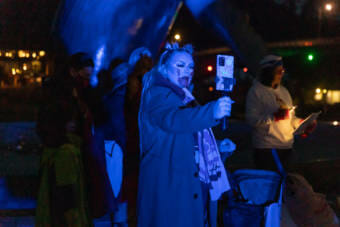
Attendees of a vigil honoring missing and murdered Indigenous persons light lanterns at Overstreet Park on Feb. 14, 2022, in Juneau (Photo by Lyndsey Brollini/KTOO)

Valentine’s Day this year marked three years since Tracy Day went missing.  

Day, who is Lingít, is one of several Alaska Native Juneau residents who disappeared and haven’t been found. About 30 people gathered on Monday night to share their stories and sing to their missing loved ones. 

A row of seven portraits sat propped up near the whale statue in Overstreet Park in Juneau. All were of Alaska Native people who went missing in Juneau or nearby communities. Most have not yet been found or were found dead. 

One of the missing people is Tracy Day.

Tracy Day has been missing since Feb. 14, 2019. (Photo courtesy of Juneau Police Department)

Mike Kanaagoot’ Kinville stood looking at the portraits, then turned to share his story about Day. His family and Day’s family have been close for generations, so he has a lot of them. Like, when Day was 14-years-old, and she ran away from home in Juneau and beelined for his house in Ketchikan.

“She had known that I was a drinker at one time and she came looking to drink with me,” Kinville said. “And I had gotten sober since then, so I was in a position to take her in and started doing foster care for her.”

Kinville said she stayed with the family for nearly three years. He said she had a lot of charisma — that she was joyful and mischievous at the same time — and that she was “kind of a smart aleck.” 

Kinville’s family ended up taking care of Day’s daughters, too. The older one, when Day went away to nursing school; the younger one, after Day went missing. 

“Our families are tied together really close,” Kinville said. My mom and dad took in Tracy’s mom when she was a teenager, too. That’s pretty Lingít too, the generational ties back and forth together,” he said.

Before Day disappeared, Kinville says she had her ups and downs. She struggled with substance use and her mental health. It’s the kind of thing a lot of families experience but don’t usually talk about. 

“You learn to guard your heart to a certain extent with situations as much as you can, but you still get bruised,” he said. “And, in this case, heartbroken. It’s just, the heartbreak can’t heal because we don’t know what happened to her.”

Kinville said that what makes it even harder is that before she disappeared, Day seemed like she was getting some stability in her life. 

“We were hopeful,” he said.

As he looked down the row of photos of Juneau’s missing again and talked about each of the families they left behind, he got choked up. 

“You know, I said heartbroken, but what it feels like is an ache in my soul,” Kinville said. “It’s just so deep, you know, deeper than my bones. This sense of this unresolved pain that goes on and on. It’s really difficult. My heart goes out to the families of these missing people. I imagine I have their sympathy as well. The other part about it that’s difficult is, you know, life goes on for everybody else, and things go back to normal, and that part of us is still missing.”

Jamiann S’eiltin Hasselquist drums at a vigil for Tracy Day and other missing and murdered Indigenous persons at Overstreet Park in Juneau. Hasselquist is part of the Strong Women singing group. (Photo by Lyndsey Brollini/KTOO)

Kinville said he’s hoping the vigil will help people understand what it’s like to love someone and not know what happened to them. It’s a wound that won’t close. 

“It’s important for a community to come together and not give up on the people who are missing and not marginalize these people. What’s common here is race and income bracket, you know. That’s not the society that I want to live in, and I think we can do better than this,” he said.

It’s a common criticism among families in Juneau who’s Alaska Native relatives have gone missing that they just don’t get the attention from the community or law enforcement that other people do. 

The Strong Women group sings at a vigil to honor missing and murdered Indigenous persons in Juneau, Alaska. (Photo by Lyndsey Brollini/KTOO)

Several women sang throughout the night for those who have missing and murdered Indigenous relatives.  They’re called Strong Women, and Rhonda Butler is one of them. Butler is the President of the Alaska Native Sisterhood Camp 2 in Juneau. She said she and the women who joined her sing to bring strength to families who are struggling from these losses. 

“One of our strengths is our voices, and if we don’t use our voices, no one will hear. So we’re here to share a couple songs with everyone here in honoring Tracy Day and all the other missing and murdered Indigenous peoples,” she said.

Candles lit in honor of Tracy Day and other missing and murdered Indigenous persons at a vigil at Overstreet Park in Juneau. (Photo by Lyndsey Brollini/KTOO)

The temperature dropped as the sun went down, but people stuck it out. They lit candles and sheltered the flames from the wind. Then they started lighting flying lanterns. 

Toward the end of the evening, as the snow started to fall more heavily, one woman said she wanted to sing a hymn for Tracy Day. Day’s twin sister Angela jumped up and ran over to join in. 

They huddled together, rocking and shivering as they sang “How Great Thou Art,” as the flickering light from sky lanterns faded off into the distance over Gastineau Channel.

Former ‘Deadliest Catch’ captain admits to dealing heroin, court documents say

A fishing boat, the Saga, moored alongside others in Dutch Harbor
Elliott Neese appeared in five seasons of “Deadliest Catch” as captain of the F/V Ramblin’ Rose and F/V Saga, which he was listed as owning at the time. Neese left the show during shooting for Season 11 in 2014 and later said he had gone to a rehab clinic. (Maggie Nelson/KUCB)

An Alaska crab boat captain formerly on the reality TV show “Deadliest Catch” has admitted to dealing heroin on the Kenai Peninsula.

Elliott Neese, 39, has agreed to plead guilty to one count of possession of a controlled substance with intent to distribute. That’s according to a plea agreement Neese signed and filed in federal court Monday, shortly after prosecutors charged him.

And while the case just came to light this week, the charges stem from federal and state investigators searching Neese’s home in December of 2019. The plea agreement doesn’t say where Neese lived.

According to the plea agreement, investigators found Neese in possession of a little less than six ounces of heroin, a small amount of methamphetamine, digital scales, a money-counting machine and more than $80,000 cash.

“After the search, Neese admitted to investigators in an interview that he is engaged in a large narcotics trafficking operation on the Kenai Peninsula and that he distributes primarily heroin throughout the area,” the plea agreement says.

Some details of Neese’s agreement with prosecutors remain under seal. At his sentencing, which is currently not scheduled, Neese faces between five and 40 years in prison.

Neese appeared in five seasons of “Deadliest Catch” as captain of the F/V Ramblin’ Rose and F/V Saga, which he was listed as owning at the time. Neese left the show during shooting for Season 11 in 2014 and later said he had gone to a rehab clinic. State records show that was the last year he held a crab-fishing permit.

Neese’s attorney declined to comment on the case, as did federal prosecutors.

Site notifications
Update notification options
Subscribe to notifications