Food

Can Big Food Win Friends By Revealing Its Secrets?

A man scans a voucher code in with his smartphone. Some food companies use labels like this to provide details about ingredients and manufacturing processes to consumers. iStockphoto
A man scans a voucher code in with his smartphone. Some food companies use labels like this to provide details about ingredients and manufacturing processes to consumers.
iStockphoto

The special holiday version of Hershey’s Kisses, now on sale nationwide, is an icon of the food industry’s past, and perhaps also a harbinger of its future.

Back when Milton Hershey started making this product, more than a century ago, it was a simpler time. He ran the factory and the sales campaigns — although, for decades, he refused to advertise.

Today, The Hershey Company is a giant enterprise with factories around the globe. It owns food companies in China, Brazil and India.

That’s typical for the food industry, of course. Lots of food companies are huge. And with vastly increased scale comes growing skepticism about what those companies are up to.

Amanda Hitt may be an extreme case. She’s director of the Food Integrity Campaign for an activist organization called the Government Accountability Project, which tries to expose the food industry’s darkest secrets: dangerous slaughterhouses, contaminated meat and exploited workers. “This industry is almost always wrong, and always doing something messed up,” she says. “So yeah, when I look at anything they do, there’s a certain level of skepticism.”

Charlie Arnot, who has studied consumer attitudes as a consultant to big food companies, says consumers have lots of questions: How is this food made? Is it good for me? And they tend not to trust answers from big companies.

“There is a significant bias against Big Food,” says Arnot, who is also CEO of the nonprofit Center for Food Integrity in Kansas City. “In fact, the larger the company, the more likely it is that people will believe that it will put profit ahead of the public interest.”

Companies can’t change that with marketing campaigns, he says. The one thing that they can do — and the only thing that works, according to Arnot’s research — is open up, and reveal details of their operations.

Which brings us back to those Hershey’s Kisses.

Deb Arcoleo, who carries the freshly minted title of director of Product Transparency for The Hershey Company, has brought a bag of them along to our meeting, because there’s something new on that package. Printed on the bag, so small that you’d easily miss it, is a little square QR code. These are the codes that you now see in lots of places, like airline boarding passes.

Arcoleo takes my smartphone, aims it at the code, and I hear a beep. Suddenly, the screen of my phone is filled with information about these Hershey’s Kisses: nutrition facts, allergens in this product and details about all the ingredients. Lecithin, for instance.

“Let’s say I don’t really know what lecithin is,” says Arcoleo. “I can click on ‘lecithin,’ and I will get a definition.”

Tap another tab, and we see a note about whether this product contains ingredients from genetically modified organisms, or GMOs.

There’s a place where Hershey’s could list certifications, such as whether an independent organization such as the Rainforest Alliance had certified that a particular ingredient had been produced in a way that protects the environment. “What’s not allowed is marketing spin and fluff kinds of claims, like, ‘America’s favorite popcorn,’ ” says Arcoleo.

Hershey’s created this system, called SmartLabel, but other companies are now adopting it, too. Very soon, Arcoleo says, there will be tens of thousands of products on supermarket shelves with SmartLabel codes.

“I really, really hope that we can make this as easy as possible for lots of companies to follow our lead. I think this is a game-changer for the consumer packaged goods industry,” she says.

I took the Hershey’s Kisses back to our skeptic, Amanda Hitt from the Food Integrity Campaign, and demonstrated SmartLabel for her. Her reaction was guardedly positive. “Anything that informs consumers is a good thing, and gets us closer to a certain level of transparency,” she said. But SmartLabel only shows us part of the picture, she says; it’s highly unlikely that companies will voluntarily reveal the most unappetizing aspects of their business.

Charlie Arnot, the food industry consultant, thinks that some companies may, in fact, be willing to do this. Consumers are forcing them to do it.

“Consumers are interested in the good, the bad and the ugly,” he says. They are saying, “Give me the information, treat me like an adult, and allow me to make an informed choice.”

Arnot is telling big food companies that “transparency builds trust,” and advising them to post on their websites documents that may contain bad news, such as outside audits of their food safety procedures.

When companies do this, it can force executives to ask difficult questions, Arnot says: “Is that information that we’re comfortable sharing with the public? And if not, do we change?”

There are risks to this, he says. But the risks of not doing it may be even greater.

Copyright 2015 NPR. To see more, visit http://www.npr.org/.
Read Original Article – December 25, 2015 3:13 PM ET


Can you get Chinese food on Christmas in Juneau?

(Photo by Steven Depolo/Flickr Creative Commons)
(Creative Commons photo by Steven Depolo)

Editor’s note: For the holidays, we’ve republished this story that originally aired in 2009, followed by updates at the end. 

If you’re not into Christmas, what’s there do to on Christmas Day in Juneau?

A common tradition for Americans who don’t observe Christmas – Jews and secular Chinese especially — is to patronize the two businesses that are invariably open on Dec. 25: Chinese restaurants and movie theaters.

Well, almost invariably. Here’s how my call with with Twin Lakes Cafe went:

Cafe: Thank you for calling Twin Lake …
Jeremy: Hi, are you guys open on Christmas Day?
Cafe: Uh, no.
Jeremy: OK.
Cafe: (laughs) Sorry.

Twin Lakes Cafe and all the other Chinese, Japanese and Thai restaurants in Juneau will be closed Christmas day along with most everything else, though the Goldtown Nickelodeon and the Gross-Alaska Theatres will be open. That means musician Brandon Walker would only be able to fulfill half of the chorus of his YouTube hit, “Chinese Food on Christmas.”

Members of Congregation Sukkat Shalom, Southeast’s only synagogue, will volunteer as cooks and servers at the Glory Hole’s Christmas dinner, as they have for many years running, says organizer Bev Ingram.

“That is a tradition for our Jewish community here, yes, yes,” Ingram said.

This year, Ingram expects to serve a sit-down style dinner to about 100 people. The food is donated by local markets. And Chinese food is not on the menu.

Checking in for 2015

That was 2009. We checked around again this year and things have changed. This year in Juneau, you can in fact get Chinese food and see a movie on Christmas Day. The Dragon Inn in Lemon Creek will be open from 4 to 9 p.m. Gross Alaska Theatres will be open, though the Gold Town Nickelodeon won’t.

Bev Ingram and the congregation of Sukkat Shalom have continued their tradition of volunteering at The Glory Hole Shelter and Soup  Kitchen.

There is one sad update. The Twin Lakes Cafe closed in May after the one of the co-owners was diagnosed with a serious illness. A family member says she’s doing well.

Was That Steak Raised In The USA? Soon, It’ll Be Hard To Know

Country-of-origin labels — like this one, on a package of steak at a grocery store in Lincoln, Neb. — tell consumers where their meat comes from. Grant Gerlock/NET News
Country-of-origin labels — like this one, on a package of steak at a grocery store in Lincoln, Neb. — tell consumers where their meat comes from.
Grant Gerlock/NET News

An attachment to the last-minute spending proposal going before Congress this week would end a six-year trade dispute between the U.S. and Canada. If it’s passed, as seems likely, the omnibus budget bill would repeal a law called COOL that requires “country-of-origin labels” on meat.

The labels are all over the meat aisle of grocery stores in the U.S. on packages of uncooked beef, pork and poultry. They declare where animals were born, raised and slaughtered.

Country-of-origin labels are seen by many in the beef industry, in particular, as a way to promote American beef the way car companies or appliance manufacturers might market themselves as “Made in the USA.”

And there is more foreign competition in the beef industry. That’s something Mike Briggs has certainly noticed. He runs a feedlot near the small town of Seward, Neb. Some 20,000 calves come through his pens each year to suck up corn and pack on pounds.

Normally, Briggs would say his competition comes from feedlots in Kansas or Texas. But these days, he says, meat packers import lean beef from Brazil and Canada to mix with fat trimmings from the U.S.

“More meat into the country is more meat into the country, and that’s that much less [meat] they buy from us,” Briggs said.

Canadian and Mexican cattle producers benefit from the blurring borders of the beef industry, but they say COOL makes it more difficult to sell meat in America. Konstantinos Giannakas, an agricultural economist at the University of Nebraska, says that’s why Canada went to the World Trade Organization to argue that the origin labels are discriminatory.

“Does it discriminate? Yes,” said Giannakas, who has studied how consumers respond to food labels. “But we discriminate because we choose a quality that fits our interests, and I cannot see how this is unethical or unfair or illegal.”

Mike Briggs operates a feedlot near Seward, Neb., that feeds around 20,000 cattle each year. He likes the idea of country-of-origin labels but doesn't think they pay off, because packing companies aren't able to earn back the cost of labeling. Grant Gerlock/NET News
Mike Briggs operates a feedlot near Seward, Neb., that feeds around 20,000 cattle each year. He likes the idea of country-of-origin labels but doesn’t think they pay off, because packing companies aren’t able to earn back the cost of labeling.
Grant Gerlock/NET News

The WTO disagreed, and last week it said Canada and Mexico can charge American businesses $1 billion in tariffs.

Many in Congress say they’re tired of fighting with America’s top trading partner. Sen. Pat Robert, R-Kan., lobbied to repeal COOL on the Senate floor in July after the U.S. lost its final appeal at the WTO.

“It doesn’t matter if you support COOL or if you oppose COOL,” Roberts said. “You cannot ignore the fact that retaliation is imminent and that we must avoid it.”

Retaliation is not just aimed at beef. Canada could levy tariffs against a laundry list of products — including furniture, wine and frozen orange juice. Those industries won’t stand up for beef, and that puts more pressure on Congress.

Doing away with the labels doesn’t mean imported meat will be any less safe. All meat coming into the country is subject to inspection by the USDA. But food advocacy groups argue that knowing the country of origin is like seeing a list of ingredients or nutrition facts. They say the repeal of COOL makes it harder for consumers to make informed decisions.

Some cattle from Canada and Mexico are fed in the United States. Feedlots keep them separate to make sure label information is accurate. Grant Gerlock/NET News
Some cattle from Canada and Mexico are fed in the United States. Feedlots keep them separate to make sure label information is accurate.
Grant Gerlock/NET News

“The COOL rider demonstrates that these international trade deals can and do overturn U.S. laws and should prompt Congress to reconsider any support for the pending Trans-Pacific Partnership,” Wenonah Hauter, executive director of Food and Water Watch, said in a statement.

The reaction in the beef industry is divided. Cattlemen like Jim Dinklage of Nebraska want to keep the labeling. He says without it, global meat companies like Brazil-based JBS find it easier to cut American ranchers out of the loop.

“They’re importing meat from Brazil, and they’re going to ship it out of Brazil and bring it into this country,” Dinklage said. “(Beef) would go the same way as the textile industry.”

But Mike Briggs, who runs that big feedlot, doesn’t think labels are actually helping. Packers spend millions to keep animals separate for labeling, but he says not enough shoppers are buying meat based on labeling to make it pay.

“And if [the packer is] not going to get paid for it, we’re not going to get paid for it. And all that financial pressure always slides down and ends up in the feedyard’s lap or the rancher’s lap,” Briggs says.

Some Senate Democrats are now pushing for voluntary country-of-origin labels. But America’s neighbors say they will only stop the tariffs if labels on meat are repealed.

Copyright 2015 Nebraska Public Radio Network. To see more, visit Nebraska Public Radio Network.
Read Original Article – December 17, 2015 4:38 PM ET


38K Alaska households turn to food stamps during tight times

Tracy Peterson and her daughter apply for SNAP benefits during an event at the Sullivan Arena. (Photo by Anne Hillman/KSKA)

According to a new White House report, 38,000 Alaska households receive benefits from the Supplemental Nutrition Assistance Program. Two-thirds of those households have children. Half of them are in deep poverty.

Despite some issues, many people say the program is working as it should.

Tracy Peters didn’t expect to be sitting in the Sullivan Arena waiting to pick up donated food and presents for Christmas. She was working as a personal caregiver, but a month ago her hours were cut and some of her clients passed away. Then her husband lost his job as a lineman.

“(He) got laid off because of the weather,” she said. “We weren’t prepared for that because he was told he’d have winter work (and) then they laid him off.”

Peters is applying for jobs, but in the meantime, she’s also applying for SNAP. She said she’s trying to keep her family healthy.

“So many people eat a bunch of junk food because they can’t afford the healthy stuff,” she said. “That’s another reason I’m trying to apply because we’re eating a bunch of fattening foods. I’m hoping this can help us with the healthy choices instead.”

Peters has a copy of the 24-page application in her lap. It asks for detailed information about income, assets and medical history for everyone in the household.

“This is actually a lot more steps that I thought it was — a little bit more difficult than I thought,” Peters said.

Applicants have to submit a lot of paperwork — pay stubs, tax forms and rental agreements.

“I know. It’s 2016 almost and we’re paper,” says Tammie Walker, Chief of Field Operations for the state’s Department of Public Assistance, which administers the federally funded program.

Walker said she knows some people think the process is cumbersome. Though many people apply and get benefits within a month or two and don’t mind the process at all, others have stories about waiting for hours at offices or never getting called back about their applications. Walker said part of the problem is relying on physical files of paperwork that are spread out to offices around the state.

“The paper is killing us,” she said. “And our commissioner knows it. They are very aware because they see the frustration from staff and from clients.”

Walker said the department is trying to streamline the application and eventually go digital, like the Medicaid application, but it takes time. Relative to Medicaid’s backlog, the food stamps program is doing very well.

According to the Food Bank of Alaska, about 27 percent of people who qualify for the program don’t apply. Some say it’s not worth the effort if they only get about $18 per month. Benefits range widely. Others don’t know that owning a house or a snow machine that’s used for daily transportation doesn’t disqualify you.

Many of the people who apply, like Brandy Straight, say SNAP has been a lifeline. She lost her job and took over the care of her disabled brother and her four children. The household of seven is living on her fiance’s $12 per hour job. Straight said before getting benefits, they had to choose between rent and food.

“I do feel it could help better if they look more at the medical needs that people have. Because people with diabetes, you have to go to more particular foods,” Straight said. “My brother has brain damage and has seizures, so there are special diets, but I can’t really get the diets he needs because then it’s more expensive. So you have to be very careful to pick what you pick.”

But she says she’s grateful for all that she gets.

David Patterson, his girlfriend and their baby were homeless before they starting receiving SNAP and other benefits. He said the program helped him put aside enough money to find a place to rent instead of couch surfing.

“We actually got established in our own place and were able to keep food on the table. All around, it was amazing,” Patterson said.

Like 57 percent of the adults who receive SNAP benefits, Patterson is working. He said he’s a commercial fisherman and tries to get other jobs in the off-season, but he uses SNAP when he needs it to make sure he can keep a roof over his and his child’s head.

Governor opens doors for annual holiday open house

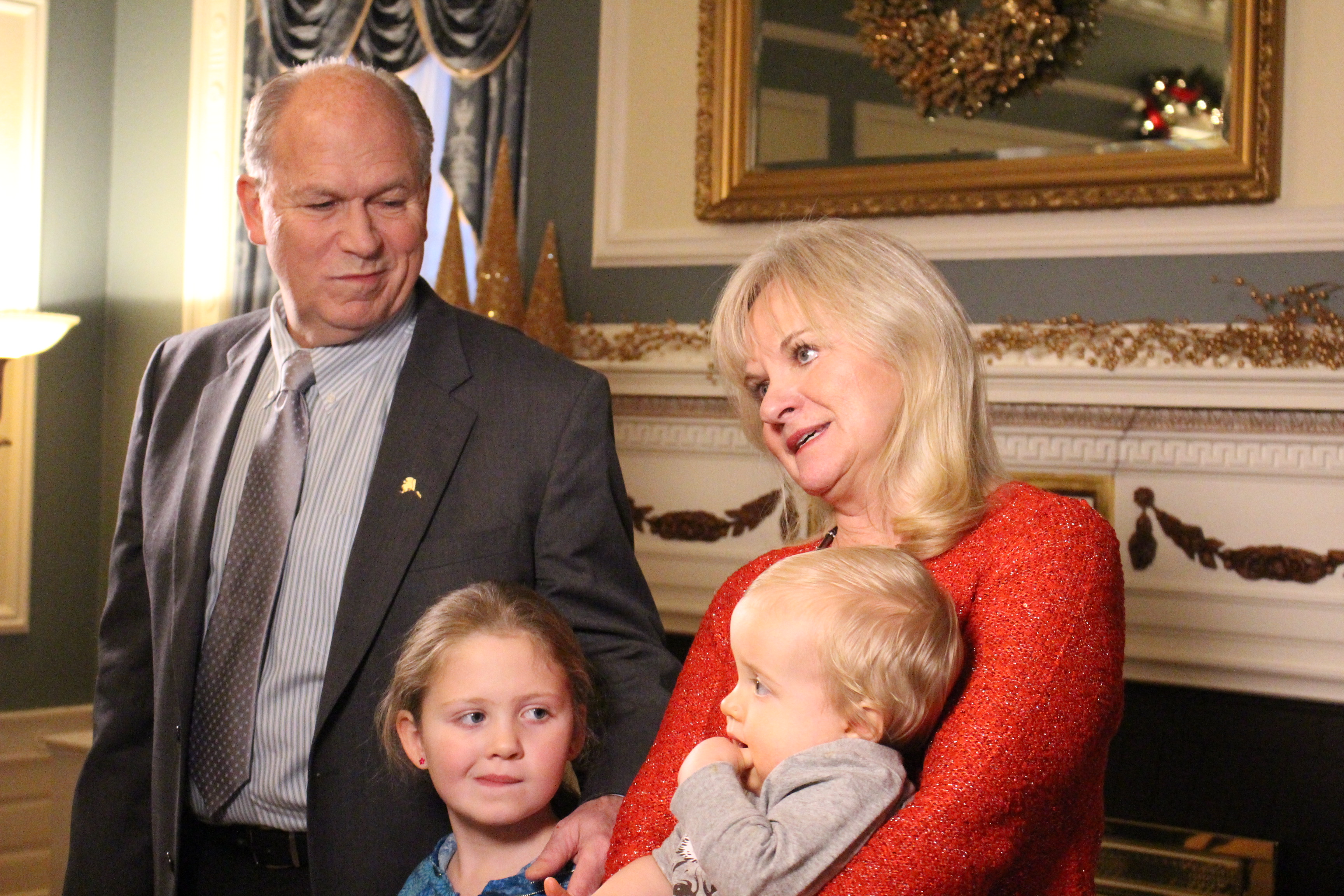
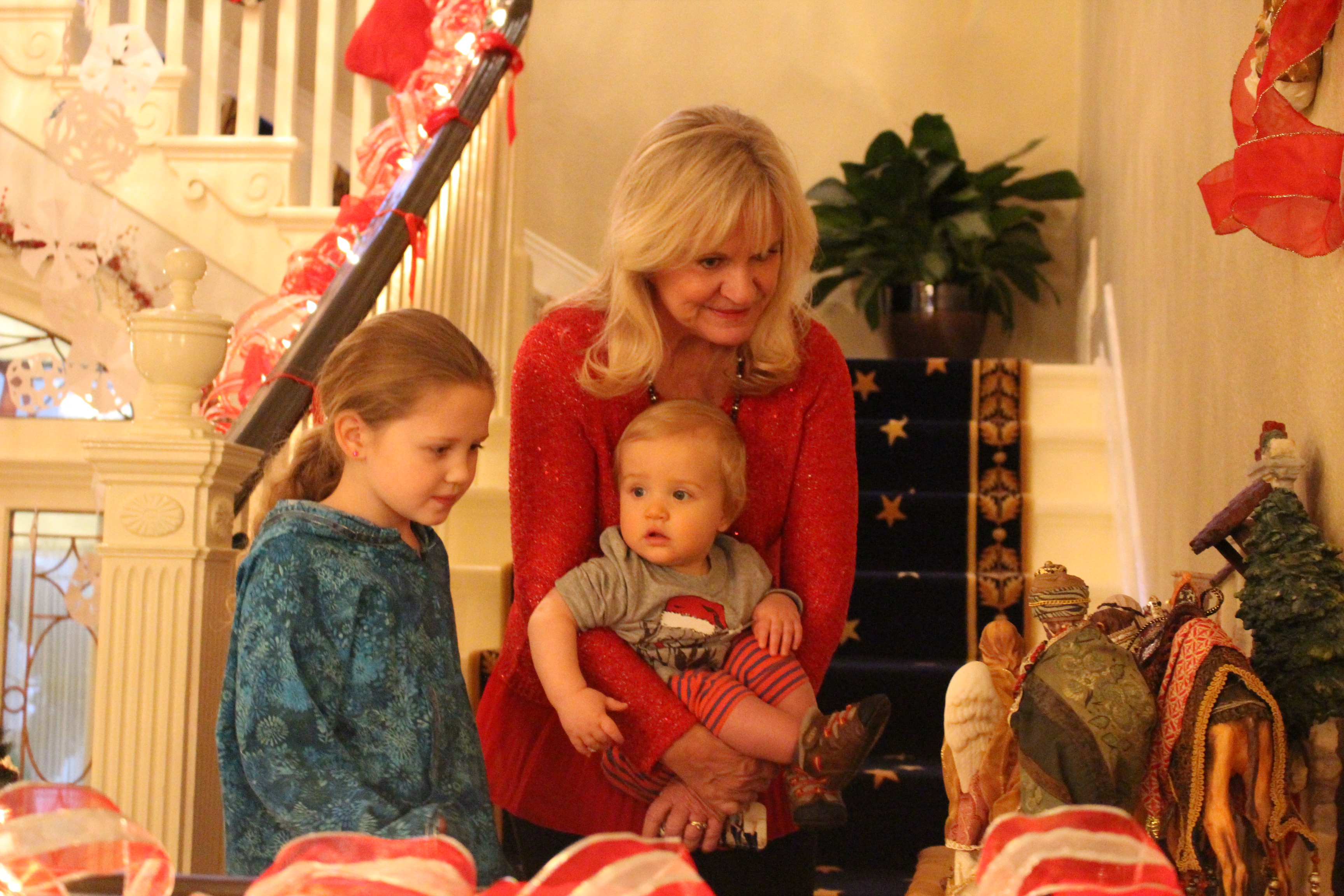
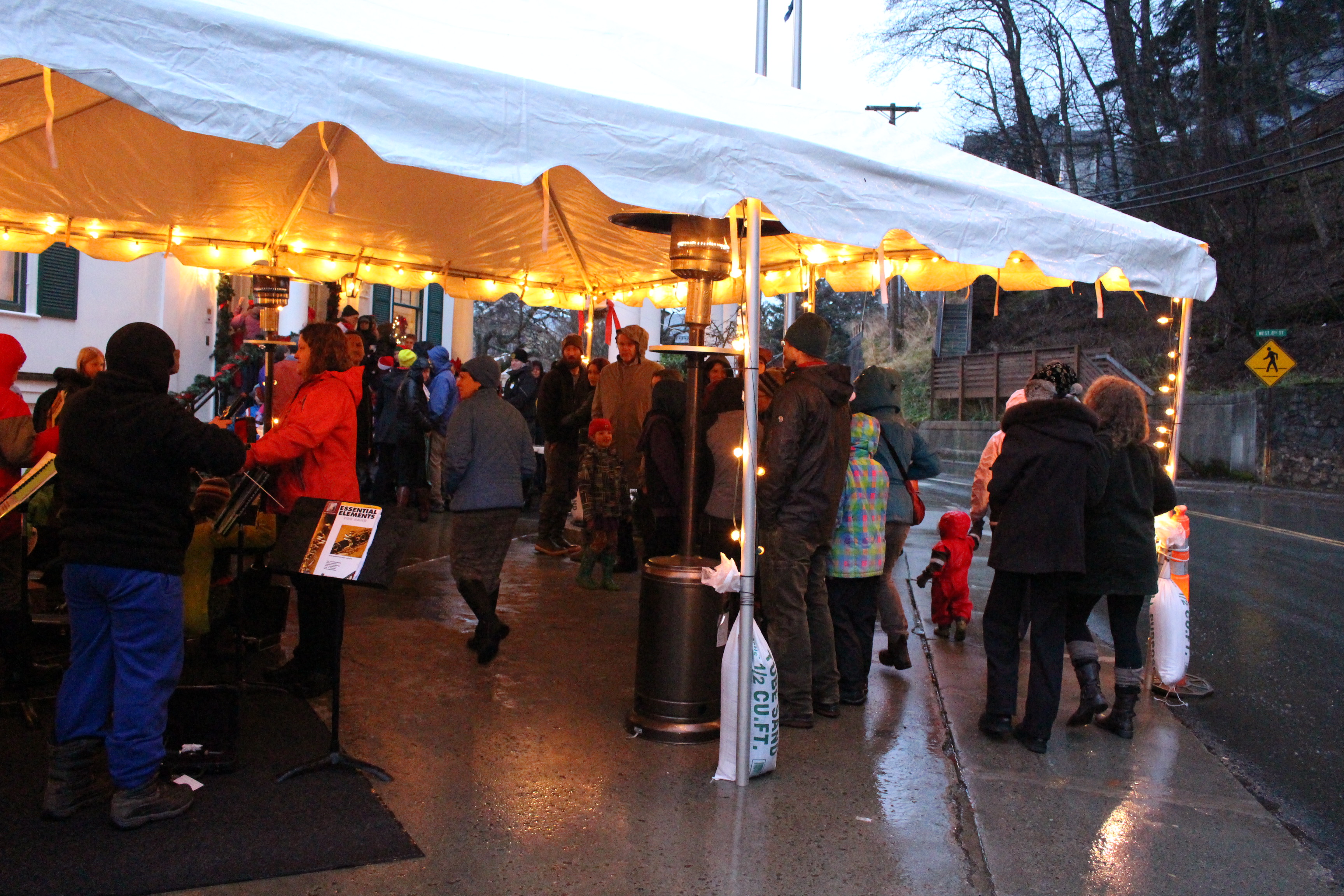
Gov. Bill Walker and first lady Donna Walker welcomed the people of Juneau into their home Tuesday for the 2015 governor’s holiday open house. It’s an annual tradition that’s been going on for over a hundred years.

At a press conference at the mansion, the governor estimated that he would shake over 3,000 hands. Walker said he was excited about Alaska’s future, although he knows the state is in a period of “challenging fiscal times.”

“But we’ve never defined ourselves by how much money we’ve had. We’re a state made of Alaskans made up of all walks of life. Doing what we need to do to get the job done,” he said.

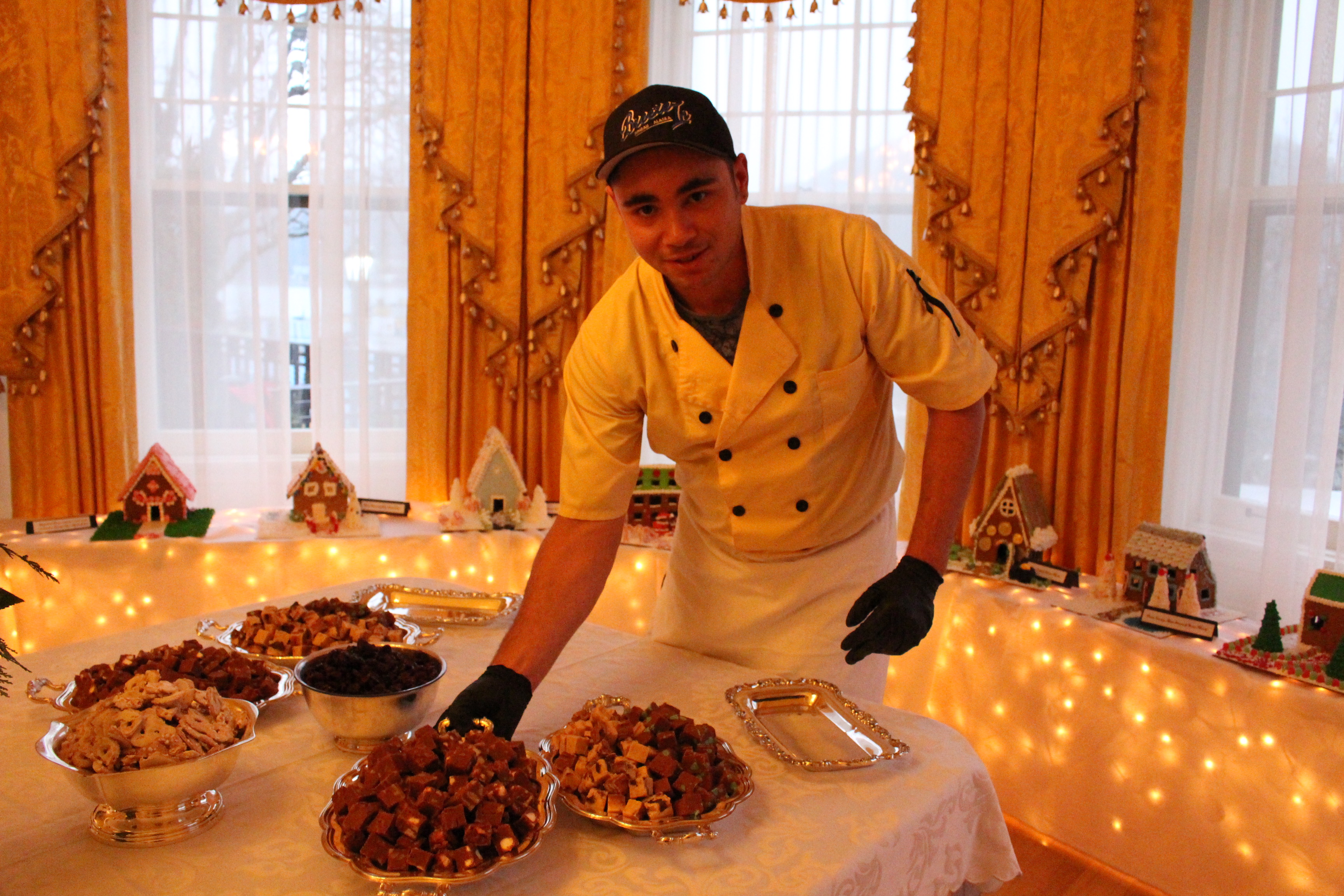
First Lady Donna Walker said they were trying to do more with less this year and the cookie budget, like the state budget was down. Still, 25,000 cookies were baked for guests to enjoy. The party even included a first—the option of gluten-free cookies.

Karla Hart was waiting in line wearing a sticker that says ‘get extra tough on B.C. mines.’ She said a group of people were planning on wearing the stickers to show their opposition. Hart said she thinks Walker has been a great supporter, but there were a lot of issues competing for his attention.

“So to  my mind, it’s an opportunity to reinforce what he’s already started doing and say this is really important and we need you to keep doing it even while you’re dealing with budget issues,” she said.

The governor is rolling out the 2017 fiscal plan for the state on Wednesday.

‘Food For Fines’: In Some Cities, Parking Tickets Drive Holiday Giving

Donated canned food
Donated canned food. (Creative Commons photo by Darius Norvilas)

Parking fines aren’t usually the stuff of holiday cheer. But a few cities around the country are turning them into an opportunity to promote giving, letting drivers cover part or all of their fines with food donations.

Lexington, Ky., first adopted the program, called Food for Fines, during the 2014 holiday season. There, 10 cans will knock $15 off a person’s parking ticket. Last year, the program took in more than 6,000 cans of donated food that went to a local food bank, and it’s on track to beat that haul this season, according Gary Means, the executive director of the Lexington Parking Authority.

Means says his city got the idea from programs at universities that let people pay for parking fees with food donations. Means says he’s also heard of a donation program in Boston that let people donate toys during the holiday season to cover tickets.

“It’s pretty rare,” Means says. “As most people know, there’s a lot of red tape with governmental entities. So to be able to take so-called donations as a payment is kind of a challenge.”

It’s a challenge other municipalities are also taking on.

From late September through the end of this November, Albany, N.Y., offered an amnesty program — waiving parking ticket late fees and strongly encouraging food donations. Albany Treasurer Darius Shahinfar says the city took in a ton-and-a-half of food — enough for 5,000 meals. But to do that, Shahinfar says the city had to navigate some legal issues.

“It could be considered an unconstitutional gift that you’re basically waiving late fees for someone who brings in a parking ticket, but gives a can of food. And there’s an argument for that under New York State constitutional law,” Shahinfar says.

Shahinfar says the city worked around that by waiving late fees for everyone, regardless of whether they donated food. And he says that helped with other questions, like how to ensure someone paying online had actually donated.

In the end, he says the city of Albany took in more money than it otherwise would have by attracting people who likely wouldn’t have paid their tickets without the amnesty for late fees — which can be substantial. In Albany, N.Y., for example, the standard fine for an expired meter is $25. The state tacks on a $15 surcharge. If a person is late paying, they’d get charged another $25, for a total of $65. Albany’s Food for Fines program took that $25 late fee off a person’s ticket. Shahinfar says that was a big enough savings to get some people to pay.

More importantly, Shahinfar says, the initiative turned what could be a negative— getting a parking ticket, into a positive: helping others.

In Tallahassee, Fla., City Commissioner Scott Maddox says that’s what made him want to implement the Food for Fines program that launched on Nov. 30.

“We’re hoping that by giving a little bit through this process, it will spur people to give throughout the holiday season and hopefully throughout the year,” Maddox says.

In Tallahassee, drivers can pay off their parking tickets — up to $50 — by donating food. They’ll get a $1 credit for each food item they donate. The food collected will go to Second Harvest of the Big Bend, an area food bank where Interim Executive Director Jim Croteau says the demand is high.

Croteau says ideally, drivers will donate quality food – by which he means something donors would want to serve to their own guests. And he says protein sources like tuna and peanut butter are needed at most food banks.

Typically, food banks can feed more hungry people through monetary donations. Croteau says 10 pounds of donated food provides eight meals, while $10 of donated cash could help pay for 40 meals. But Croteau says donation drives like the Food for Fines program have another benefit: They get people in the spirit of giving.

“There’s a little bit of symbolism with bringing in 15 food items to pay your fine that I think goes a long way,” Croteau says.

Copyright 2015 NPR. To see more, visit http://www.npr.org/.
Read Original Article – December 5, 2015 7:03 AM ET
‘Food For Fines’: In Some Cities, Parking Tickets Drive Holiday Giving
Site notifications
Update notification options
Subscribe to notifications