Food

McGivney’s Sports Bar coming to downtown


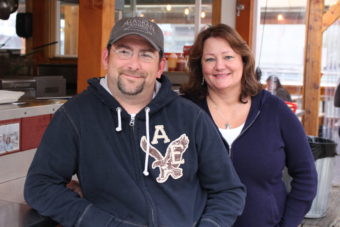
David McGivney and Tracy LaBarge sit outside their other establishment, Tracy's King Crab Shack. (Photo by Elizabeth Jenkins/KTOO)
David McGivney and Tracy LaBarge sit outside their establishment Tracy’s King Crab Shack. (Photo by Elizabeth Jenkins/KTOO)

One of  Juneau’s restaurant empires is continuing to expand, now with another downtown location, a Lemon Creek seafood processor and even a possible foray into marijuana.
When the Goldbelt Hotel was sold, the new owners didn’t want to take over the restaurant. So they approached seasoned restaurateurs Tracy LaBarge and David McGivney.

The interior of Coho’s Bar and Grill has been completely gutted, and along with the changes, a fresh identity: McGivney’s.

“It’s the name nobody can pronounce,” Tracy LaBarge says with a laugh. “It’s Dave’s last name.”

If it sounds familiar, it’s because there’s already a McGivney’s in the valley. That location will remain open and the downtown branch will boast more of what those customers love: sports memorabilia and TVs to watch the game.

“The good part for the downtown location is its bigger space,” said Dave McGivney. “One of the things we tend to hear continuously since we opened the valley location is there’s just not enough room, space-wise. So it’s actually triple the size.”

Back when Floyd Mayweather boxed Manny Pacquiao in the fight of the century, the valley McGivney’s screened the match for 50 bucks a head and sold out. With a bigger location, the pub can host more events and it might fill a gap. Major League Soccer used to be shown at Silverbow but the bakery recently sold and it’s unclear if it’ll continue with the tradition. McGivney’s, however, has plans to screen the sport.

“I played soccer for 10 years when I was younger,”McGivney said. “Our slogan is ‘Every game. Every day.’ And I try to hold true to that and if anybody ever comes in our location, McGivney’s Sports Bar and Grill, that game will be on.”

The business partners say the food will feature an embellished McGivney’s menu with staples, like poutine and short ribs.

“Shepherd’s pie is going to be there. Some of the old traditions. Burgers. Our gyros. But there will be more.” he said.

The downtown McGivney's will be triple the size. (Photo by Elizabeth Jenkins/KTOO)
The downtown McGivney’s will be triple the size of the valley location. (Photo by Elizabeth Jenkins/KTOO)

They’re tight-lipped about what else they’ll be serving. The menu is being finalized and they might have increased ingredient options.

The pair recently purchased a fish processor, Horst Seafood. Plans are in the works to supply their other restaurant, Salt, with hard-to-find items.

“We will look into more exotic seafood, like sea cucumbers, geoduck and herring roe,” he said. “Different things that our chef Lionel likes to experiment with. Plus, we have some other products we want to try.”

Between their string of restaurants, McGivney and LaBarge will employ about 160 people. They credit their success to taking calculated risks, a skill they’re interested in adapting for another growing industry in Alaska: marijuana.

“You know at the end of the day, business is business. In regards to what product you’re selling, it doesn’t really matter,” he said.

For now, that product is a sports pub.

LaBarge and McGivney acknowledge other Juneau restaurant owners are doing the same: opening multiple locations and building their own empires.

“I mean, there’s always a friendly competition, I think, but that’s never been what we’re about,” LaBarge said. “I think there’s room for everyone. I think there’s a lot in this community to offer and I’d like to see more businesses come out. Not just restaurants but other types of business because I think it brings more people out in the end.”

McGivney’s Sports Bar and Grill is expected to open in the Goldbelt Hotel sometime in November.

Kids Who Are Time-Crunched At School Lunch Toss More And Eat Less

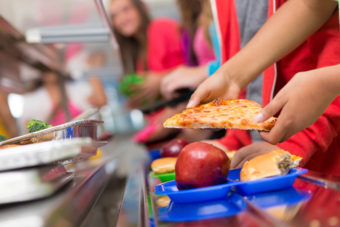
Longer lines in the cafeteria and shorter lunch periods mean many public school students get just 15 minutes to eat. Yet researchers say when kids get less than 20 minutes for lunch, they eat less of everything on their tray. iStockphoto
Longer lines in the cafeteria and shorter lunch periods mean many public school students get just 15 minutes to eat. Yet researchers say when kids get less than 20 minutes for lunch, they eat less of everything on their tray.
iStockphoto

Most of the kids in the U.S. don’t get much time to eat lunch. And by the time those kids wait in line and settle down to eat, many of them feel rushed.

And a recent study suggests that this time crunch may be undermining good nutrition at school.

Eric Rimm, a professor of epidemiology and nutrition at the Harvard School of Public Health, and a group of colleagues observed about 1,000 students, grades 3 to 8, at lunch time in a low-income urban school district in Massachusetts.

The researchers took note of what students put on their trays. And they also tracked what was left on their trays at the end of lunch period.

“Kids who had less than 20 minutes to eat were consuming, across the board, less of everything,” Rimm told us.

As they report in the Journal of the Academy of Nutrition and Dietetics, the researchers saw these students eating 13 percent less of their main entree and 12 percent less of their vegetables. They drank 10 percent less milk, too, compared with students who had 25 minutes or more to eat. They also found more food waste among kids who had less time to eat.

“Many children, especially those from low-income families, rely on school meals for up to half their daily energy intake, so it is essential that we give students a sufficient amount of time to eat their lunches,” Juliana Cohen, Rimm’s colleague at Harvard and the study’s lead author, said in a statement.

And, Rimm adds, giving kids enough time to eat is also important for building healthy eating habits.

“Kids learn a lot at school. They should [also] learn how to eat slowly and enjoy their food,” Rimm says.

Yet in many public schools across America, the school lunch hour has shrunk to just 15 minutes.

In a poll conducted in 2013 by NPR, the Robert Wood Johnson Foundation and the Harvard School of Public Health, 20 percent of parents of students from kindergarten through fifth grade told us that their child gets 15 minutes or less to eat. And even in schools that officially have longer lunch periods, the actual time kids get to spend at the table can be far shorter.

One issue driving abbreviated lunch periods: the increased pressure to boost time in the classroom – and standardized test scores. As Julia Bauscher, then-president of the national School Nutrition Association, told us in 2013, the lunch period is often the first place administrators look for extra instruction time.

And there’s another factor that may be adding to longer lines and less table time: As we’ve reported, the number of school children receiving free meals under the National School Lunch program has increased in recent years, according to a report last year from the Government Accountability Office. When we spoke to her in 2013, Bauscher also cited this increased participation as one factor behind longer lunch lines. She oversees nutrition services for Jefferson County Public Schools in Kentucky, where 70 percent of students participate in meals programs.

Some Salt readers have told us in comments that longer lines may be behind another trend in the school cafeteria: fewer students are buying lunch. As we recently reported, the number of students who pay full price for school meals declined by 1.6 million, or about 5 percent, in recent years. After we posted that story on Facebook, many of our followers told us that long lines and short meal times were a significant factor in why their children were now brown-bagging it.

Brenna Zesiger D’Ambrosio is a Chicago writer and mom with two children in the city’s public elementary schools.

She says in her kids’ schools, many students opt out of buying school lunch due to time constraints. “They have 15 minutes max for lunch and the line for school lunch takes half of that,” she told us via Facebook. “My elementary students cannot eat fast enough and end up hungry (and distracted) later in the day if they choose the school option.”

So for her child who is a particularly slow eater, D’Ambrosio says she always packs a lunch from home.

Copyright 2015 NPR. To see more, visit http://www.npr.org/.
Read Original Article – Published SEPTEMBER 24, 2015 3:55 PM ET

Students across the country to get canned Bristol Bay sockeye for lunch

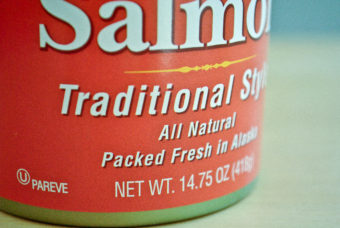
Thousands of cans of Bristol Bay sockeye will make their way to school lunches and other federal food programs around the country this winter as part of a USDA bailout.

Icicle Seafoods and Peter Pan will fill warehouses around the country with half-pound cans of salmon as part of the USDA’s effort to address the glut of sockeye on the market.

Trident and Ocean Beauty also submitted bids to the United States Department of Agriculture, but didn’t offer the low price necessary to get the contracts.

This comes as good news for the sockeye market which had a surplus of fish after two summers of large harvests, says Gunnar Knapp, an economist with the University of Alaska Anchorage.

“If the USDA comes and says we’ll buy some of that salmon … why that takes some of that production out of the regular market, channels that it would go to, and it can make a very significant difference in helping processors to get a higher price,” Knapp said.

The USDA announced this summer that it would purchase up to $30 million worth of canned sockeye through its Emergency Food Assistance Program to address the glut of sockeye already on the market. Funding for the purchase came from import tariffs.

The salmon will be delivered to warehouses around the country over the next five months. It’ll be a while before Alaska knows how many cans are coming back to the state. Here’s Food Bank of Alaska Executive Director Michael Miller.

“When the USDA buys a commodity from any state, it is fair-shared out to all of the states based on level of need, level of poverty, and other commodities that they have in their system, so it’s very possible that we’ll see some, but it’s unlikely that we’ll see the majority of it,” Miller said.

Syrian Civil War Prompts First Withdrawal From Doomsday Seed Vault In The Arctic

The Svalbard Global Seed Vault was opened on Feb. 26, 2008. Carved into the Arctic permafrost and filled with samples of the world's most important seeds, it's a Noah's Ark of food crops to be used in the event of a global catastrophe. AFP/Getty Images
The Svalbard Global Seed Vault was opened on Feb. 26, 2008. Carved into the Arctic permafrost and filled with samples of the world’s most important seeds, it’s a Noah’s Ark of food crops to be used in the event of a global catastrophe.
AFP/Getty Images

A tall rectangular building juts out of a mountainside on a Norwegian island just 800 miles from the North Pole. Narrow and sharply edged, the facility cuts an intimidating figure against the barren Arctic background. But the gray building holds the key to the earth’s biodiversity.

The Svalbard Global Seed Vault, built in 2008, stores more than 850,000 seed samples from nations all over the world. Extending nearly 500 feet into the mountain, it’s intended to safeguard the planet’s food supply and biodiversity in the event a doomsday catastrophe like nuclear war or crippling disease wipes out varieties of plants. Crop Trust, the company that runs the seed vault, says on its website that the vault is “the final backup”:

“The purpose of the Vault is to store duplicates (backups) of seed samples from the world’s crop collections. It will secure, for centuries, millions of seeds representing every important crop variety available in the world today. It is the final back up.”

But now, less than 10 years after the opening, officials are preparing to withdraw seeds for the first time. What apocalyptic event prompted the removal of some of humanity’s food backups?

The Syrian civil war.

“We did not expect a retrieval this early,” Crop Trust spokesman Brian Lainoff told NPR. “But [we] knew in 2008 that Syria was in for an interesting couple of years. This is why we urged them to deposit so early on.”

More than 250,000 people have been killed in the ongoing Syrian civil war and millions of others have been forced from their homes. But the human toll isn’t the only cost of the violence.

Reuters reports that the seeds requested by researchers include “samples of wheat, barley and grasses suited to dry regions” to replace “seeds in a gene bank near the Syrian city of Aleppo that has been damaged by the war.”

“Grethe Evjen, an expert at the Norwegian Agriculture Ministry, said the seeds had been requested by the International Center for Agricultural Research in Dry Areas (ICARDA). ICARDA moved its headquarters to Beirut from Aleppo in 2012 because of the war.

“ICARDA wants almost 130 boxes out of 325 it had deposited in the vault, containing a total of 116,000 samples, she told Reuters. They will be sent once paperwork is completed, she said.”

According to Crop Trust, there are some 1,700 seed banks in the world, but many of them are vulnerable to natural disasters, war and even mundane hazards like insufficient funding or a broken freezer.

The Svalbard vault, however, is protected by its remote and very chilly location. The company says being inside a mountain increases security, while the permafrost offers a “fail-safe” seed conservation method.

Copyright 2015 NPR. To see more, visit http://www.npr.org/.
Read Original Article – Published SEPTEMBER 23, 2015 5:11 PM ET

Keeping Loved Ones’ Holiday Recipes Alive, Long After They’ve Left The Table

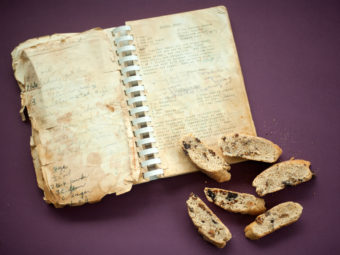
After his mother-in-law's death, NPR's Marc Silver found her go-to cookbook, filled with her copious annotations to recipes. He used it to piece together her take on mandelbread, a Jewish version of biscotti, and other holiday favorites. Akash Ghai/NPR
After his mother-in-law’s death, NPR’s Marc Silver found her go-to cookbook, filled with her copious annotations to recipes. He used it to piece together her take on mandelbread, a Jewish version of biscotti, and other holiday favorites.
Akash Ghai/NPR

We’re welcoming an unseen guest to our Jewish holiday celebrations this fall: My mother-in-law, Jan Dale, who died in 2005.

Since her passing, I’ve tried to keep Jan a presence at our festive meals with my attempts to bake some of her favorite recipes. For instance, to mark the start of Yom Kippur Tuesday night, I’ve made a batch of Jan’s crumbly, cinnamon-scented mandelbread — that’s Yiddish for “almond bread,” a twice-baked cookie that’s the Jewish version of biscotti.

But getting here has taken a bit of detective work.

While she was alive, our family relished Jan’s holiday baking: her poppy seed cookies (a perfect blend of crisp and chewy), her moist honey cake. But I never thought to ask for her recipes. So when we said goodbye to Jan, it seemed we’d also have to say goodbye to her take on these treats.

A few days after Jan died, we went through her possessions and found her go-to cookbook, stained and dog-eared: Our Favorites … with Cocktails and Coffee. The spiral-bound book contains recipes from women in her chapter of Hadassah, a Jewish women’s volunteer group. It appears to have been printed in 1980, but it’s redolent of the 1950s, when Jan and many of her Hadassah comrades would have been raising families and cooking dinner every night.

I felt as if I’d found the Holy Grail.

As I read the cookbook, I could see that Jan was not just a follow-the-recipe baker. The book is filled with notes in her Palmer-perfect handwriting, as well as alternative versions of recipes on slips of paper. But which version did she prefer?

The author's mother-in-law, Jan Dale, pictured with her granddaughter Maya in the late '80s. (Maya got married this year and baked all her wedding cakes herself.) Courtesy of Marc Silver
The author’s mother-in-law, Jan Dale, pictured with her granddaughter Maya in the late ’80s. (Maya got married this year and baked all her wedding cakes herself.)
Courtesy of Marc Silver

That was just one of the questions I had. “Why did you change the oil quantity from one cup to half a cup in the mandelbread?” I wondered. (Probably she’d answer, “Who needs all that oil?”) Why did you write “wash and drain” on the poppy seed recipe, then cross the words out? And then there were the missing elements — like a pan size for the honey cake. She most likely had a cake pan she’d always use, but that sure didn’t help me.

Through trial and error, and by consulting with other cooks, I solved some of the mysteries. For example, Jan called for “one tablespoon of baking powder” for the mandelbread. When I took a batch to my mother, she took one bite and said, “Too metallic — how much baking powder did you use?” With her guidance, I reduced the amount to two teaspoons (although I’ll never know why Jan called for the larger amount).

Rose Levy Beranbaum, author of The Cake Bible and a baking blogger, helped solve the “wash and drain” instruction for poppy seeds. Apparently, folks used to think that washing poppy seeds would remove the bitterness associated with them. But in fact, poppy seeds quickly turn rancid once they’re opened, and washing won’t help.

The solution, says Beranbaum, is to store poppy seeds in the freezer for freshness. That would have appealed to Jan. I figure someone told her about washing seeds, she wrote the instruction down, then thought, “Who needs that extra step?” (she was a big believer in less is more) and crossed it out.

I love piecing back together Jan’s recipes. I feel as if I’m having a conversation with my mother-in-law about something both of us love — cooking.

As for the desserts I make during the holiday season, they definitely bring Jan back to join us. When my wife tasted the mandelbread last night, tears came to her eyes: “It’s my mother’s recipe,” she said wistfully.

But I can’t compete with Jan’s prowess. When I’ve asked my kids to judge my mandelbread attempts over the years, they’ve declared, “They taste just like Nana’s, only not quite as good.”

I guess there are some ingredients only a grandmother can bring into the mix.

Marc Silver is the senior editor and host of NPR’s Goats and Soda blog. A version of this essay was published in 2006.


Jan’s Mandelbread

“You’ll learn how your mother-in-law came up with the recipe she liked if you try the different versions,” advised cookbook author Pam Anderson. So I did. And I learned. The version that called for one-third of a cup of orange juice made the dough a little too crumbly. But the following recipe is pretty darn close to Jan’s excellent mandelbread (or “mandel,” as she called it).

Jan did not include the instruction to bake the cookies a second time after slicing the loaf. I’m sure she would say, “Too much trouble.” The result is a softer cookie that my kids like a lot. But I prefer a slightly crisper cookie, so I do a second bake, either at 250 degrees or 325 degrees for 20 minutes (flipping the slices over after 10 minutes.)

The temperature depends on how toasty you’d like the final cookie to be. One final note: Jan sometimes used maraschino cherries in the recipe. I decided to substitute dried cherries, and while they didn’t add much color to the final product, they do provide a nice burst of chewy cherry flavor.

Makes about 4 dozen cookies

3 eggs

1/2 cup oil

1/2 to 1 cup sugar (depending on how much of a sweet tooth you have)

1 teaspoon vanilla extract

2 tablespoons orange or lemon juice

3 cups flour

2 teaspoons baking powder

1 cup sliced almonds or chopped nuts (I used walnuts, which is what Jan used to do)

1 cup dried fruit (optional)

1 cup chocolate chips (optional)

Cinnamon-sugar

Preheat oven to 350 degrees.

By hand or mixer, beat the eggs, oil and sugar into a yellow, creamy-looking mixture.

Whisk in vanilla and juice.

Combine dry ingredients and mix in by hand. (Note: I substitute 1 1/2 cups of King Arthur’s mild-tasting white wheat flour for regular flour — it adds fiber but doesn’t alter the taste.) The dough should be firm and a little stiff, with the consistency of Play-Doh. If dough is too moist to handle, add up to 1/2 cup more flour.

Knead in almonds and dried fruit (golden raisins or cherries get my vote) and/or chocolate chips.

Knead into a ball. Slice the ball into four wedges.

Roll each wedge into a rope about 12-14 inches long, 1 inch in diameter.

Prepare two baking sheets with foil. Spray foil with oil.

Place two ropes on each sheet, about 4 inches apart. Sprinkle each rope of dough with cinnamon-sugar mixture.

Bake for half an hour. Remove and let cool.

Reduce oven heat to 325 degrees or 250 degrees, depending on your crispness preference.

When the loaves are cool, slice on a diagonal. You’ll get about a dozen slices per loaf.

Lay the slices flat on the foil of the baking pan. Sprinkle again with cinnamon-sugar.

Return to oven for the second baking of 20 minutes. (Flip slices after 10 minutes.) Or, if like my mother-in-law, you don’t want to bother, just dig in. They’re delicious.

Jan would store her mandelbread slices in a tin, on sheets of aluminum foil. That’s how she brought them to our house when she’d visit.

Copyright 2015 NPR. To see more, visit http://www.npr.org/.
Read Original Article – Published SEPTEMBER 22, 2015 2:28 PM ET

Peanut Exec Gets 28 Years In Prison For Deadly Salmonella Outbreak

Peanut Corporation of America's then-president Stewart Parnell arrives at federal court in 2009. Parnell was sentenced Monday to 28 years in prison for his role in a deadly salmonella outbreak from tainted peanut butter products. Don Petersen/AP
Peanut Corporation of America’s then-president Stewart Parnell arrives at federal court in 2009. Parnell was sentenced Monday to 28 years in prison for his role in a deadly salmonella outbreak from tainted peanut butter products.
Don Petersen/AP

A former corporate CEO has been sentenced to 28 years in prison for selling food that made people sick. Two other executives face jail time as well. These jail terms are by far the harshest sentences the U.S. authorities have handed down in connection with an outbreak of foodborne illness.

The outbreak, in this case, happened seven years ago. More than 700 cases of salmonella poisoning were linked to contaminated peanut products. Nine people died.

Investigators traced the contaminated food to a factory in Georgia operated by the Peanut Corporation of America.

The outbreak, by itself, was not unprecedented. There have been bigger, and deadlier, outbreaks of foodborne illness.

But the emails that investigators found at the Peanut Corporation of America set this case apart. Some of the emails came from the company’s CEO, Stewart Parnell.

“Stewart Parnell absolutely knew that they were shipping salmonella-tainted peanut butter. They knew it, and they covered it up,” says Bill Marler, a food safety lawyer who represented some of the victims.

Before and during the outbreak, company executives assured customers that their products were free of salmonella when no tests had been carried out.

And when tests did turn up salmonella, company executives sometimes just retested that batch, and when it came up clean, they sold it.

In one memorable e-mail exchange, when Parnell was told that a shipment was delayed because results of salmonella tests weren’t yet available, he wrote back, “Just ship it.”

Last year, Parnell and two other people involved PCA’s peanut business were convicted of criminal charges that included fraud, obstruction of justice, and selling adulterated food.

These were almost unprecedented charges in the food industry, and Marler says that executives in other companies are paying close attention. “The arrest of Stewart Parnell, his conviction on these felony counts, and his sentence have put a very big chill in the boardrooms of corporate America,” he says.

The Peanut Corporation of America is no longer in business.

At the sentencing hearing for Parnell and his colleagues, relatives of some of the victims confronted Parnell with stories of their suffering. Parnell, for his part, asked for forgiveness and mercy, and said that he never intended to harm anyone. His daughter said that he sometimes brought his company’s peanut butter home for his family to eat.

Along with Parnell’s 28-year sentence, his brother Michael Parnell was sentenced to 20 years in prison, and another former executive was sentenced to five years.

All of these sentences are the harshest ever imposed in connection with an outbreak of foodborne illness.

In some other recent cases, companies sold contaminated eggs and cantaloupes that also were linked to multiple deaths. Executives in those companies were sentenced to probation and a few months in prison.

Stewart Parnell’s lawyers have indicated that they will file an appeal.

Copyright 2015 NPR. To see more, visit http://www.npr.org/.
Read Original Article – Published SEPTEMBER 21, 2015 9:11 PM ET
Site notifications
Update notification options
Subscribe to notifications