History

After 30 years, Raven Shark pole back in Sitka

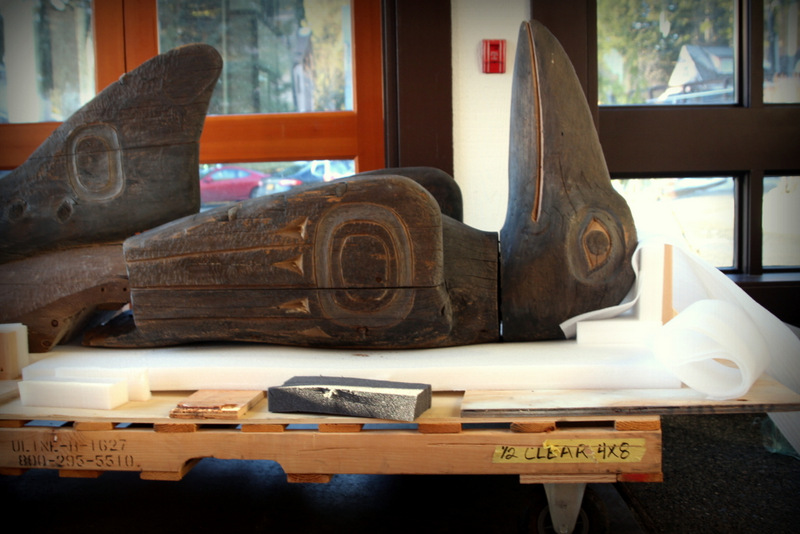
The top of the Raven Shark totem pole lies in Totem Hall at Sitka National Historical Park. (Photo by Emily Russell/KCAW)

The totem pole is an icon of the Pacific Northwest. The carved art form showcases clan stories and family crests in museums around the world.

After more than 30 years in the Anchorage Museum, a century-old pole from Southeast has made it back to Sitka, where curators are prepping a permanent home.

It’s a little echoey inside Totem Hall at Sitka National Historical Park, because the ceilings are about 30 feet high.

Sun is streaming through the windows today, but it’s pretty cold in there.

“The environment in here really mirrors the outside environment,” said Kelsey Lutz, Sitka National Historical Park’s museum curator. “We do not have any heat or humidification going on in this part of the facility.”

Lutz oversees the park’s collection of more than 30 totem poles.

Most of them are outside along the park’s trail system. The oldest ones, though, are stored inside Totem Hall.

“They are used to being outside in that wet, cool environment, so this is really perfect for the wood,” Lutz said.

Poles tower over us, so tall you have to crane your neck to see the tops of them. There is one, though, that you actually have to look down to see. Lutz invites me back to take a look.

“Feel free to come back here,” Lutz said.

A couple of bright orange traffic cones work as dividers between the pole and museum patrons. Behind them lies a totem pole separated into two sections.

“The Raven Shark that has come back is the original pole,” said Angie Richman, who is the chief of Interpretation at the park.

The Raven Shark pole at our feet was carved in Klawock over 100 years ago. Richman said it was donated to Alaska’s governor at the time.

“A year after it was donated it went to St. Louis for the 1904 Louisiana Purchase Exposition, also known as the World’s Fair,” Richman said.

It also was shown at the World’s Fair in Oregon in 1905, brought back to Sitka for a few decades and then went back out on the road for the New York World’s Fair in 1964.

“In 1978, due to the deterioration, that’s when it was taken off the trail and moved inside,” Richman said.

And it’s been inside ever since, most recently in the atrium of the Anchorage Museum, where the pole stood on display for 30 years.

Around the time the original was moved inside, a replica of the Raven Shark pole was carved and folded into the forest along Totem Trail.

The trail loops around the coastline and sometimes there’s a break in the trees, where the Raven Shark replica pole stands.

You can see out on the ocean and it’s just spectacular.

Wet snow is falling and forming puddles on the trail today.

“My first opportunity to work with a knife on a piece of wood was in the third grade — 8 years old,” said Tommy Joseph, a Tlingit wood carver originally from Ketchikan.

Since then, Joseph said he’s carved 40 or so full-size totem poles – he stopped counting after 30.

“Totem poles, well they’re a visual tool for telling a story — somebody’s story — about who they are, where they’re from, what they’re all about,” Joseph said. “Some are grave markers or mortuary memorial poles.”

Others are commemorative, like the centennial pole Joseph carved for Sitka National Historical Park’s 100th anniversary. But as Joseph says, they all tell stories. The Raven Shark’s is one of two Tlingit clans–the Raven and Shark clans.

Since its carving over a century ago, the pole has told that story to onlookers around the country, but Lutz says this will be it’s final home.

It could be a few months before the pole stands upright in Totem Hall. Until then, Lutz said, they’ll focus on the pole’s presentation.

“Well hopefully we’ll upgrade the traffic cones to something more museum-appropriate,” Lutz said.
Ketchikan museum plans on track, despite director’s resignation

Ketchikan Museums is again without a department director. Lee Gray resigned last week, effective immediately, after about three months on the job.

Anita Maxwell, the department’s senior curator of programs, is back as the interim director.

She said that, despite the personnel setback, the Museum Department’s renovation project at the Centennial Building is progressing and remains on track for an official opening reception April 28.

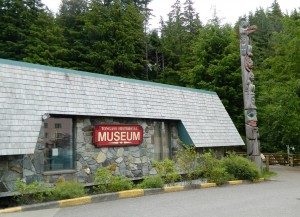
Ketchikan City Council will vote on hiring Dawson Construction as the contractor for renovating Centennial Building, which houses the Tongass Historical Museum. (KRBD file photo)
Plans are on track to renovate the Centennial Building, which houses the Tongass Historical Museum, despite the museum director resigning last week after about three months on the job. (KRBD file photo)

While a permanent exhibit still is a ways away, that reception will celebrate the renovation and the opening of a new temporary exhibit.

“Our very first exhibition in that space is going to be ‘Upholding Balance,'” she said. “This is really going to be an extraordinary exhibition about Northwest Coast design and how Ketchikan has influenced that evolution over time — looking at modern Northwest Coast design from 1900 to present day.”

Maxwell said the exhibit will include older pieces from the museum’s collection and modern pieces chosen for the show by the artists themselves.

She said the show will be about more than just the artwork.

“Really telling that story of how Native art and Native culture was repressed, but always there under the surface,” she said.

Maxwell said the show also will highlight the contribution of the city’s Totem Heritage Center, which has provided classes on Northwest Coast art and culture, taught by Alaska Native artists, for the past four decades.

The center also preserves and displays historic pieces of Northwest Coast art.

Upholding Balance will be on display through March of 2018, which is much longer than most temporary exhibits at the Tongass Historical Museum, Maxwell said.

“We really just need to buy ourselves a little breathing room because we really want the permanent exhibition to be extraordinary,” she said.

Museum staff members have been talking with the community, including public meetings and individual interviews, to help plan that permanent exhibit, which is due to open next spring.

“Now it’s the fun part of moving back in and turning that blank canvas really into something that Ketchikan is proud of, and that when people come in they’re like, ‘Yeah, I see myself in this. I see my history. I see my future in this exhibition space,’” she said. “So, we’re really excited about it.”

Maxwell said the search for a new museums department director will restart sometime after the Centennial Building’s renovation work is complete.

Railway demolition unearths new discoveries from World War II

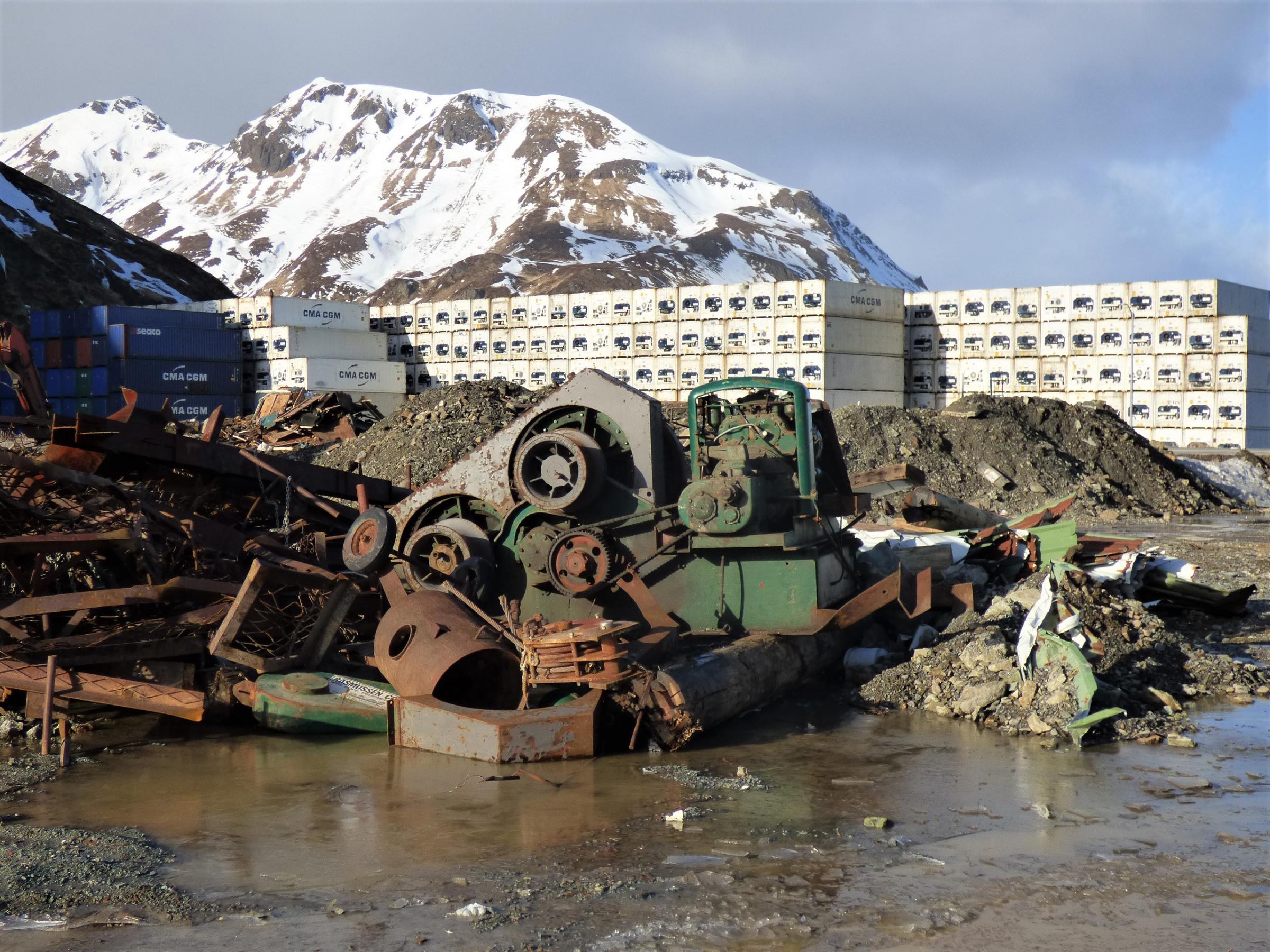
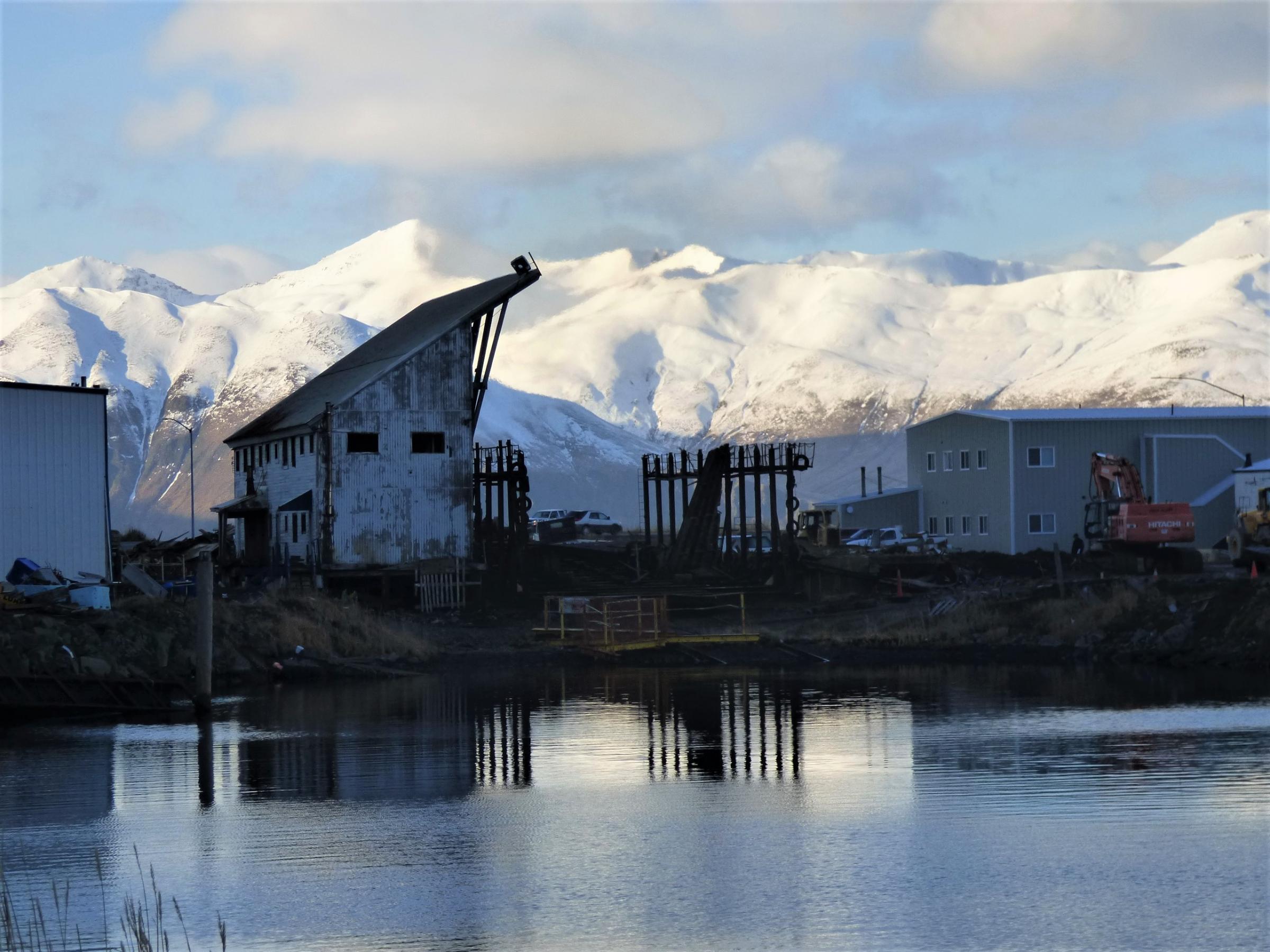
Unalaska’s marine railway stands half-demolished in December. The World War II structure has since been leveled, about 75 years after it was built. (Photo by Laura Kraegel/KUCB)

About 75 years ago, the U.S. Navy built a marine railway in Unalaska, which was basically an underwater railroad that helped the military haul boats out of the Bering Sea during World War II.

Since then, the railway has slowly gone to seed and recently, it was demolished for good.

Next to Unalaska’s small boat harbor, in the shadow of Bunker Hill, construction crews are tearing down a piece of history.

“They’re loading up the steel carriage that they used to pull the boats up in,” said Joe Sacramento, the property manager for Pacific Stevedoring. The shipping company took over the railway site a year and a half ago.

Sacramento is standing next to a giant mechanical carriage that was the crux of this whole operation, back in 1942.

Long before it was demolished, the Navy used this carriage to reel boats out of the Bering Sea. (Photo by Laura Kraegel/KUCB)

“The bottom of the carriage sat on these rails,” he said. “They’d block it up with wooden blocks to pull it straight up and out.”

If you’re not a mariner, then the procedure may be hard to picture, but it went something like this:

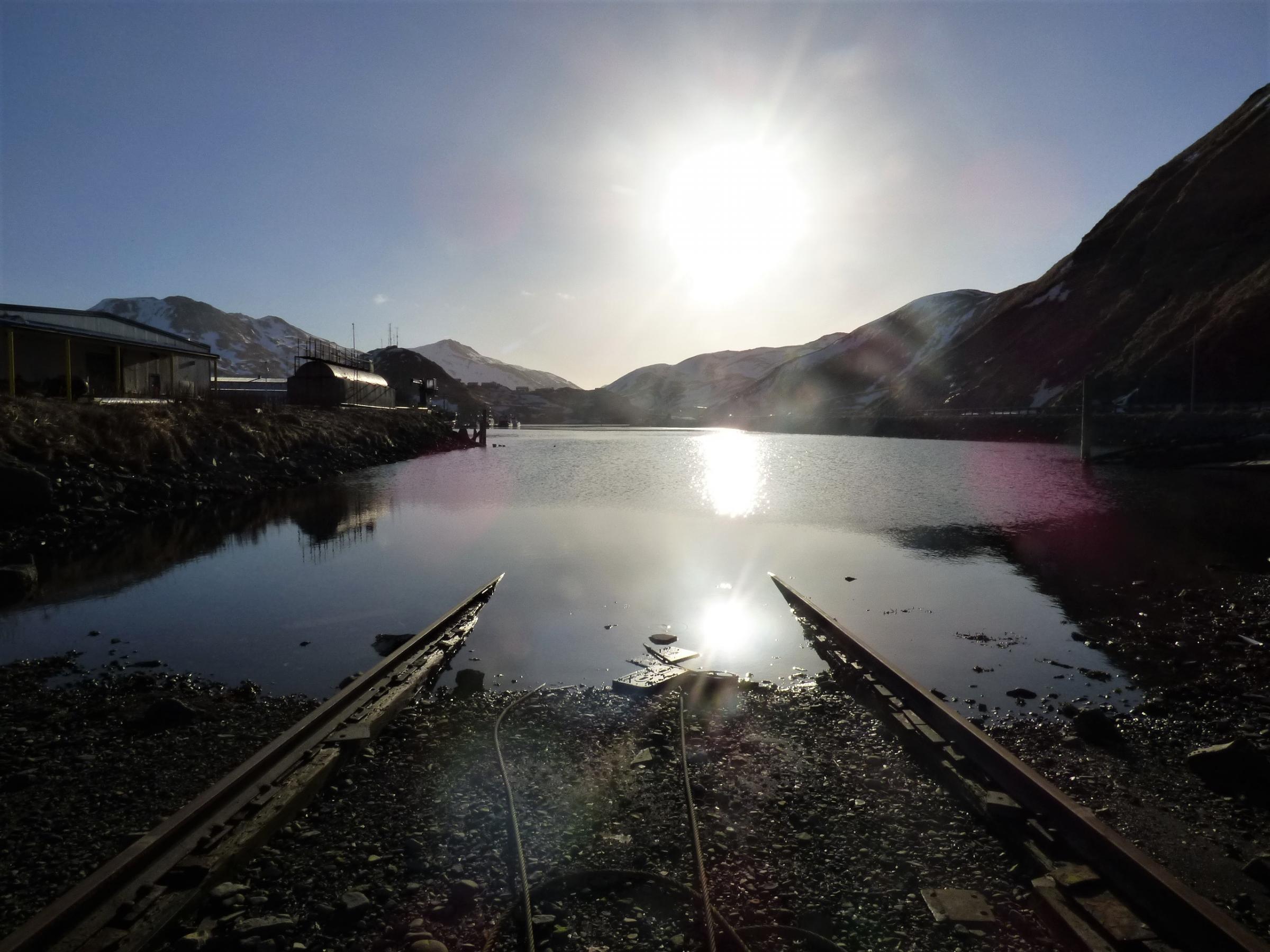
Navy men would drive a boat into the harbor — where ghostly train tracks still emerge from the water, continue up the bank, and run straight through an open space in the hollowed-out railway building.

They’d pull up on the train tracks and fit blocks around the boat’s hull. That way, it wouldn’t tip as they used the carriage to reel it out of the water and into the workshop area, where welders and carpenters were waiting.

“They could take a boat as big as a minesweeper,” Jeff Dickrell said. “That’s a wooden-hulled boat less than 100 feet long.”

Dickrell is a local historian who has spent his career studying the Aleutians Islands and their role in WWII.

When the Japanese bombed Dutch Harbor in June of 1942, he said the island’s military base was still pretty small.

More than 50 people died during the two-day attack, and it became clear the Aleutians were vulnerable.

The military got to work. Navy construction battalions expanded the base.

The battalion members were called Seabees, and they built the marine railway.

Small boats were hauled out of the water on these train tracks. Wooden blocks were fitted around the hulls to ensure boats didn’t tip. (Photo by Laura Kraegel/KUCB)

“They did it because there was no place to pull a boat out of the water between here and Seattle,” Dickrell said.

The structure was finished a year after the attack, but it never got to play a heroic role.

The war had become air battle, and the railway was only equipped to repair small boats, which were already struggling to navigate the region’s rough waters.

“You don’t operate with small boats in the Aleutians,” Dickrell said. “They tried to bring up YP boats — or yippee boats — for in-shore patrolling and close-to-shore work. The boats got so kicked around by the weather that they couldn’t really use them.”

Meanwhile, the war moved west to Attu and Kiska, where U.S forces fought the Japanese invasion.

The marine railway wasn’t used much, but it lived on — even after the war ended in American victory.

The space was actually used into the early 2000s, when welders used the train tracks to haul out crab boats.

Like all of the surviving WWII buildings on the island, Dickrell said that longevity comes down to good old-fashioned construction.

No power tools. Everything cut and pounded by hand.

“The buildings were designed to last five years for the war,” he said. “They did such high-quality construction methods and used such high-quality materials that here’s a building that’s lasted 75 years. That’s pretty cool.”

He said it was a comfort too — once the railway was condemned.

“You can take some solace in a building that was supposed to last five years lasted 75,” Dickrell said. “It’s like the Russian Orthodox cross. You don’t put the person’s name on it, so that when people stop remembering who it was, you let it fall to disrepair and that’s fine.”

With the demolition now done, Pacific Stevedoring is deciding how to use the railway space for the present day.

It could become storage or employee housing, Sacramento said.

Either way, it’s hardly the end of WWII’s legacy in Unalaska.

Just across the property, Sacramento’s crew is renovating another WWII building that’s held up a bit better, and they’ve discovered a memento from 75 years ago, hiding behind mold and dusty drywall.

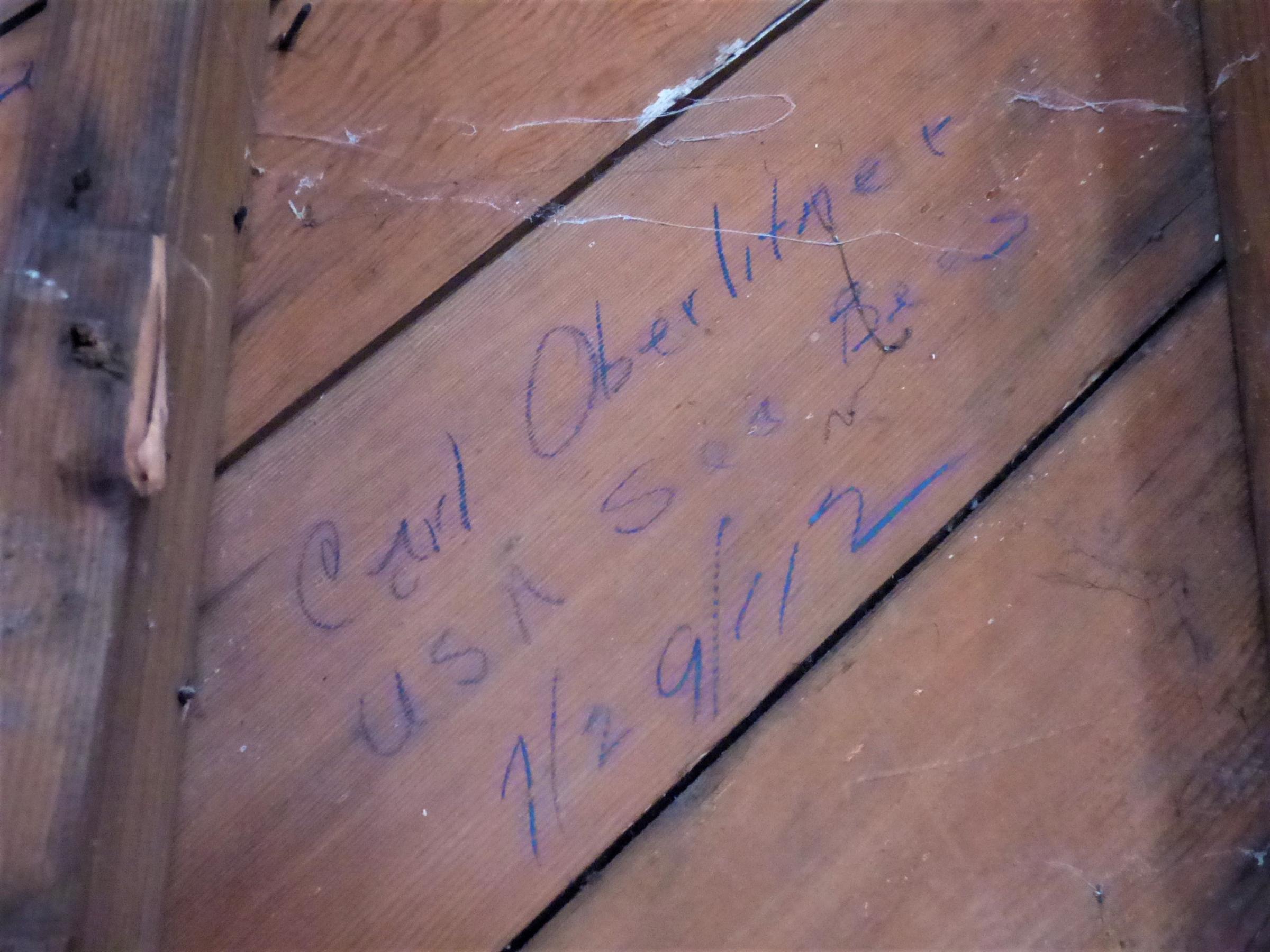
“We wanted to start fresh, so we gutted the whole inside,” Sacramento said. “One of my guys came to me and said he found some writing on the wall, so I went over to see it. Two U.S. Navy Seabees had signed and dated it — 7/29/42.”

In another World War II building nearby, construction crews found this signature – “Carl Oberlitner, USA Seabee, 7/29/42” – behind mold and drywall. (Photo by Laura Kraegel/KUCB)

Written with a deep blue grease pencil, the two names stand out against the wood.

“Carl Oberlitner,” Sacramento reads. “And then that one I didn’t look up. W.B. Morphu? I’m not sure.”

While he works on deciphering the second signature, Pacific Stevedoring has already begun reaching out to the family of Carl Oberlitner.

The Navy man died in 2014, but Sacramento says he hopes to send Oberlitner’s signature to his daughters.

That way, this piece of history can live on.

Senate approves bill to recognize black soldiers’ efforts in building Alaska Highway

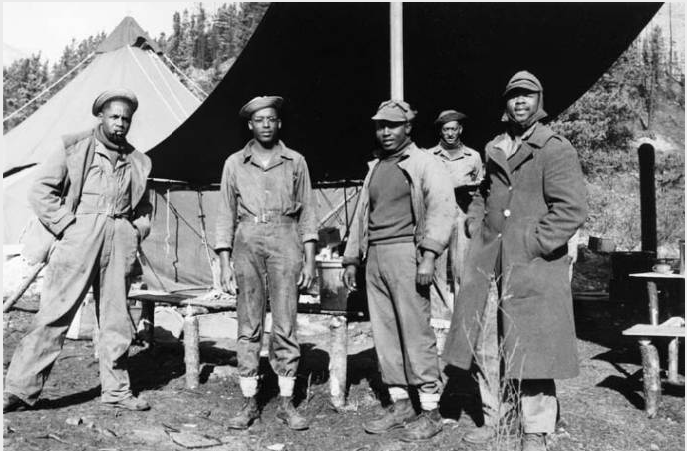
Historian Lael Morgan said the 10,000 U.S. soldiers who built the Alaska Highway included about 3,500 African-American troops, who mainly worked from Alaska southward into Canada. (Photo by U.S. Army/University of Alaska archives)

The state Senate today unanimously approved a bill that would make October 25 African American Soldiers’ Contribution to Building the Alaska Highway Day.

The bill now moves to the Alaska House of Representatives.

The bill, introduced by Wasilla Republican David Wilson, was created in conjunction with the 75th anniversary of the construction of the highway.

Wilson said that he feels little recognition has been given to the African-American soldiers who helped to build the highway with the Army Corps of Engineers.

About a third of the soldiers who built the highway were African-American.

In a time of segregation and overt racism, Wilson called the Highway project “one of the first bridges to civil rights.”

Islands of the Four Mountains’ artifacts exhibited for the first time

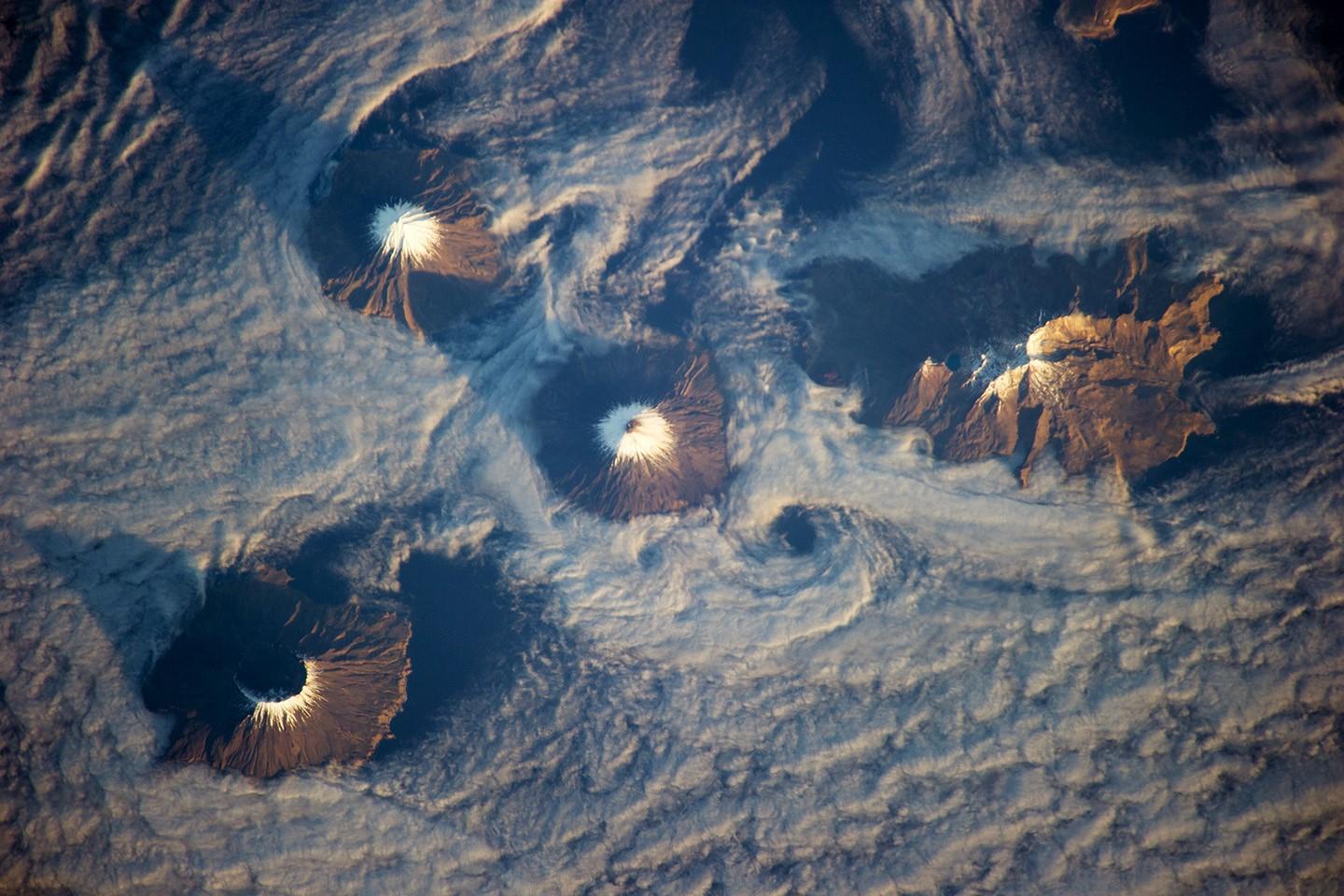
An aerial view of the Islands of the Four Mountains in the central Aleutians. (Photo by NASA Earth Observatory)

Not many people make it to the Islands of the Four Mountains.

But with a new exhibit at the Museum of the Aleutians, Unalaskans can now explore one of the chain’s most isolated areas.

“It’s a group of islands to the west of us,” said museum Director Virginia Hatfield. “Between the Andreanof Islands, which include Adak, and the Fox Islands, which include Unalaska and Umnak, there’s a little group of islands and they’re very volcanic.”

Hatfield was one of the archaeologists who boated out to the islands three years ago for their first in-depth excavation.

During the dig, her team uncovered the sites of five former villages. The oldest were occupied 4,000 years ago, while the most recent settlement was only abandoned in 1763.

“It was the last occupied site in the Islands of the Four Mountains, during the time we call the Aleut Revolt,” said Hatfield. “The Russians killed a lot of Unangax and relocated whoever survived to Umnak. We found evidence — a metal knife, a glass bead and a musket ball — that tells us the Russians were there at that time.”

There’s no evidence that anyone has lived on the islands since that conflict, but Hatfield said the dig produced hundreds of artifacts that point toward a rich prehistoric culture.

The exhibit showcases technology the Unangax used prior to the Russian occupation — from 1,000-year-old ulus, fashioned from stone, to elegant bone tools, carved from marine mammal skeletons.

“We have a handful of fishing tools, but we also have some needles,” Hatfield said. “We have some root diggers, some bird darts, and a throwing board pin, which is something they used to throw spears.”

The exhibit marks the first time that artifacts from the Islands of the Four Mountains have been displayed to the public.

Hatfield said scientists are still studying the collection, including the flat griddle stones that were used as prehistoric frying pans.

“We have a researcher who’s currently looking at the fat deposits on these griddle stones,” she said. “We expect to find otter, seal and bird fats. We’ll also see fish and maybe even bivalves, like mussels.”

The exhibit will stay open in Unalaska for another month, before it moves to its permanent home at the Aleut Corporation in Anchorage.

After that, Hatfield said the museum will host a community art show and a traveling exhibit called “Living Alaska,” dedicated to contemporary art from around the state.

How has the consolidation of Juneau and Douglas affected the two communities?

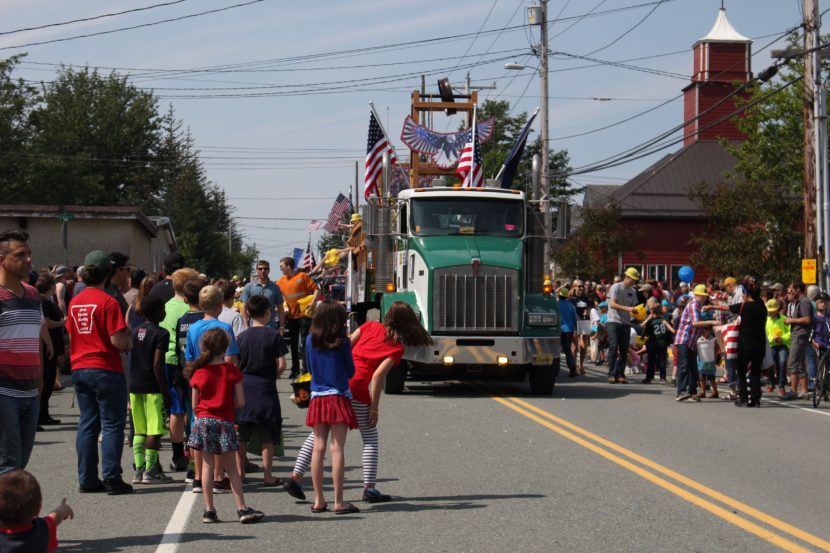
The Douglas Fourth of July parade. (Photo by Elizabeth Jenkins/KTOO)
The Douglas Fourth of July parade in 2015. Douglas still holds separate Independence Day festivities from Juneau; residents have a lot of pride in their identity, but that all came into question during a 1970 controversial vote, in which Juneau voted to consolidate its smaller neighbor. (Photo by Elizabeth Jenkins/KTOO)

For 70 years, Juneau and Douglas were separate cities.

That came to end in 1970 following a controversial vote in which Juneau overwhelmingly voted to consolidate with its smaller neighbor.

Curious Juneau recently received a note from Miles Brookes. He’s lived in Alaska for 10 years and Juneau for four and works as a research analyst for the Alaska Department of Transportation.


Welcome to Curious Juneau, starring you and your questions. Every episode we’ll help you find an answer to your question. This episode we look into the consolidation vote affecting Juneau and Douglas. You can listen to the full podcast here:

He writes: “How has borough consolidation vote of 1969 shaped our current community? Would people that voted for it then vote differently now?”

For some insight we put the question to Rich Poor, 71.

Poor was born in Juneau’s hospital and raised in the city of Douglas. He served on the Juneau Assembly from 1981 to 1988.

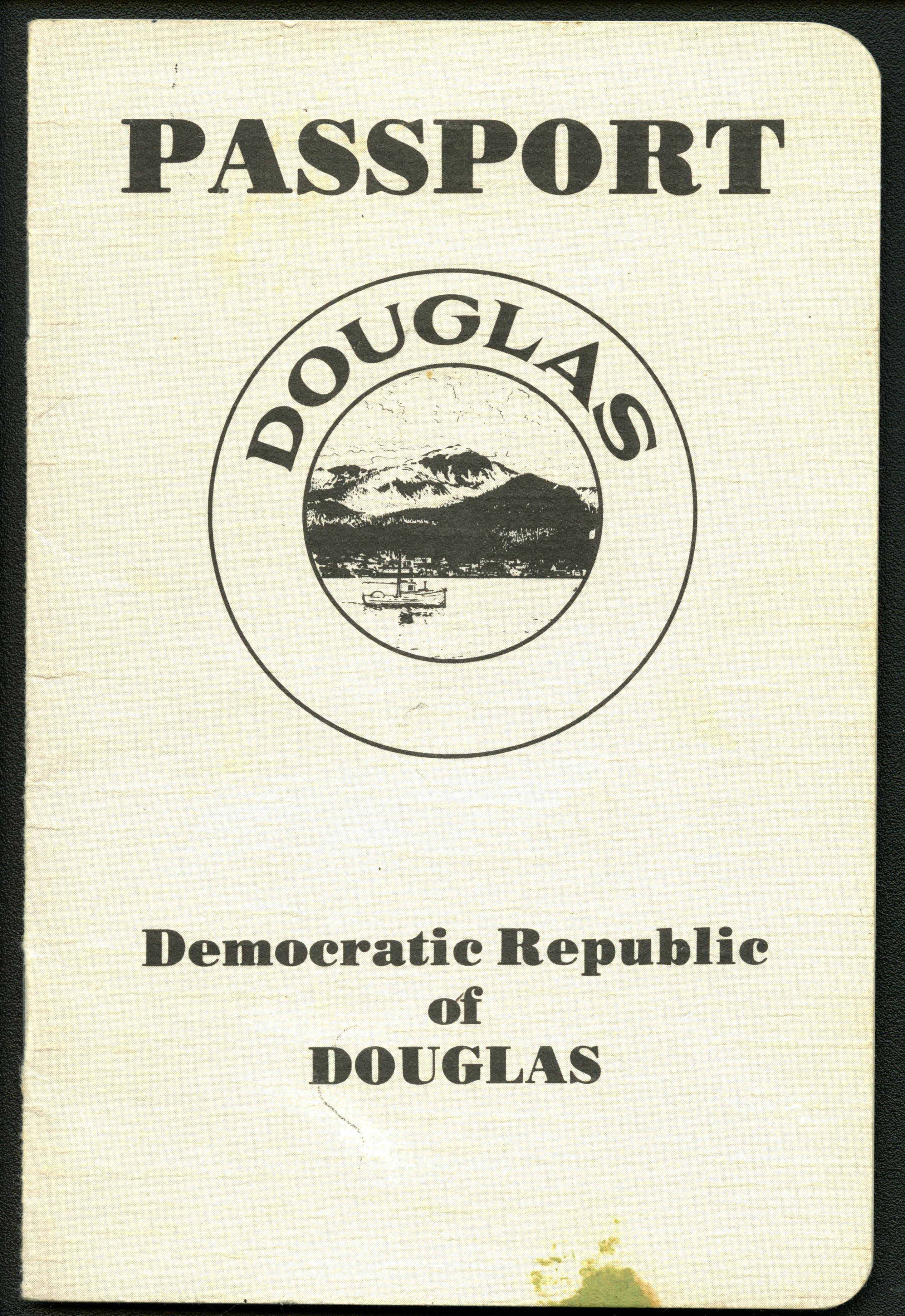
“I know you don’t need a passport to go over the Douglas Bridge, now, so that’s a step in the right direction,” Poor replied in reference to a notorious 1981 prank by the Douglas Lions Club that stopped travelers on the bridge and sold Democratic Republic of Douglas passports to raise money.

In 1981, the Douglas Lions Club created these gag passports for the Democratic Republic of Douglas to give away as gifts during a fundraiser.
In 1981, the Douglas Lions Club created these gag passports for the Democratic Republic of Douglas to give as gifts during a fundraiser. (Courtesy Juneau-Douglas City Museum)

“It definitely stepped on some fingers and hands and whatever. You’re losing your community identity when you’re talking about merging two very competitive towns. But just looking at the overall picture it was probably the best thing for Juneau at the time, and Douglas, because it combined a lot of the forces like, the, you didn’t have two mayors to deal with, you didn’t have two city councils to deal with.

asked how it all come about in the late 1960s. How did one city effectively swallow up another whole?

“Basically you had a vote, and what they did at the time is they combined Juneau and Douglas as one vote instead of allowing Douglas to decide on its own whether it wanted to be part of the one local government,” Poor explained. “They voted it down 4 to 1. We were overwhelmed, so to speak, in Douglas.”

That’s some democracy. 

“So more of an annexation than anything else? Or hostile takeover?”  Brookes asked. “You’d mentioned we don’t need a passport to cross the bridge anymore, to go to the pub or to go to the ice arena to play hockey. Were there armed vigilantes that put a toll up across the bridge after the vote or before the vote?”

“No, I believe it did go to a legal question of whether they could legally do it,” Poor recalled, “but then the courts fell down on the side of unification.

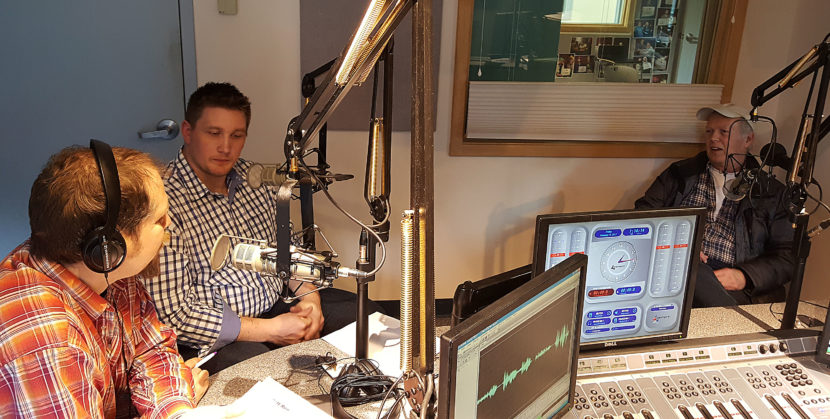
KTOO reporter Jacob Resneck, left, talks with Miles Brookes and Rich Poor on Friday, Feb. 17, 2017, about the Juneau-Douglas consolidation vote for Curious Juneau. (Photo by Tripp J Crouse/KTOO)

Did this help answer this Curious Juneau question?

Brookes said it did.

“I have a better understanding of how Douglas came to be, how Juneau has come to be and I look forward to both communities growing together in my future here in Juneau,” Brookes said. “Hopefully, it’s long and prosperous. Thank you guys for the opportunity.”

And what does Rich Poor think of all this?

“I’m glad you’re doing what you’re doing, because a lot of this stuff gets lost,” he said, “and you tend to lose these local people that lived through it.

Site notifications
Update notification options
Subscribe to notifications