History

Boosters of Juneau’s city museum dig in over proposed cuts

Facing a nearly $2 million revenue shortfall, the City and Borough of Juneau will have to make some difficult decisions.

The Juneau-Douglas City Museum is included on a list of proposed cuts, but what would happen to the tens of thousands of items in its collection?
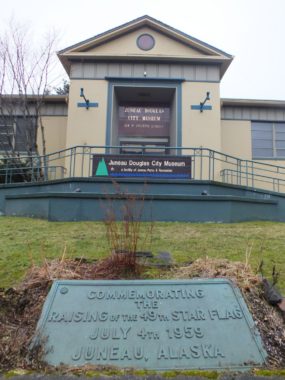
The Juneau-Douglas City Museum. (Photo by Casey Kelly/KTOO)

The city museum has about 85,000 items in its collection. Here’s one that’s special to Joel Probst, chairman of the Friends of the Juneau-Douglas City Museum.

“I’m not gonna lie, it might not be appropriate, but the the Eagle Brewing Company bottle that’s in here with the original Eagle Brewing Co. logo,” Probst said, gesturing to the 111-year-old exhibit. “This blue label logo it’s one of my favorites. I think it’s pretty neat for something that’s truly Juneau, Alaska, from that time period.”

It is truly Juneau; the beer bottle and its ornate label are from the beginning of the 1900s when beer was brewed for the saloons serving thirsty miners.

Cranking the cam of the museum’s miniature stamp mill replica, the sound of metal on metal echoes throughout the museum. The kids love this one.

“That sound here in Juneau that would have been going on for many, many years constantly,” Probst said over the din.

The camshaft is a replica of the hundreds of heavy steel stamps that crushed the ore from the mines — a sound that once echoed across the Gastineau Channel 24 hours a day, seven days a week.

“It was one of those things that you were so used to that rhythm. It reverberated through everything,” Probst said.
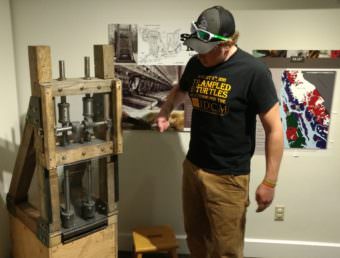
Joel Probst, chairman of the Friends of of the Juneau-Douglas City Museum, demonstrates a replica stamp mill on April 26, 2017. (Photo by Jacob Resneck/KTOO)

The city museum costs about $300,000 annually to operate. A report from the city manager’s office noted that closing the museum would save more than quarter-million dollars in the first year.

The museum received low ranks in a budget survey about 90 people completed to identify possible cuts.

“There will certainly be pushback on the list of possible reductions,” City Manager Rorie Watt said earlier this month, “but what we’ve given the Assembly is choice.”

But what’s not spelled out in any detail is what would become of the museum’s collection much of which came from the community.

“It’s very touching to see a family who has gone through the loss of a family member — a patriarch, matriarch in Juneau — bring us something that’s very precious,” Museum Director Jane Lindsey said. “We take that very seriously.”

It’s not the only museum in town: there’s the Alaska State Museum in downtown Juneau. Might it have interest in the collection? Could it take it over if the city zeroed out funding?

“The short answer to that is no — we don’t, we wouldn’t,” said Scott Carrlee, the state museum’s curator. The state museum is operating with a skeleton crew having already lost 30 percent of its staff. “Right now with the financial situation that the state finds itself in, we just don’t have the resources or the capacity to take over a collection of that size.”

Cuts will have to happen or taxes will rise. Even those who love the museum understand that.

“Services are going to be affected whether it’s the museum or something else,” Probst said. “We’re not the only thing that’s on the table right now — it’s citywide services.”

Deep cuts, dig deeper into savings, raise taxes and fees, or a combination thereof, are the stark choices the Juneau Assembly is grappling between now and June 5.

Until then the city is accepting public comment as it weighs its priorities.

Why aren’t there strip clubs in Juneau?

One Juneau visitor's Super Bowl tradition prompted him to wonder why Juneau doesn't have any strip clubs? Photo of eXXXotica Miami 2010 on May 15, at the Miami Beach Convention Center. (Creative Commons photo by brh_Images)
One Juneau visitor’s Super Bowl tradition prompted him to wonder why Juneau doesn’t have any strip clubs? Photo of eXXXotica Miami 2010 on May 15, at the Miami Beach Convention Center. (Creative Commons photo by brh_Images/Flickr)

Ashwin Kiran was visiting Juneau in February when he noticed something was missing from the local entertainment scene.

A few weeks later, we brought him into the studio to chat.

“Why are there no strip clubs in Juneau?” he wondered aloud. 


Curious Juneau stars you and your questions. Every episode we help you find an answer. Catch up on past episodes, or ask your own question on the Curious Juneau page.

You can listen to the full podcast here:

His question came to him on the eve of Super Bowl Sunday.

“One of my traditions was my buddies and I, at least in Indianapolis, went and watched the Super Bowl at strip clubs,” he explained. “Only because it was the only place we could actually sit down and focus on the game where there wouldn’t be any other people.”

“Were the strippers stripping while the game was going on?” I asked. I couldn’t resist.

“Most of the time they came over and watched with us because we were the only ones there,” he said. “It wasn’t like we were paying for dances and watching the Super Bowl at the same time.”

Full disclosure: Ashwin and I know each other.

We’ve actually been dating for two years, and I played a supporting role in his Curious Juneau question. Back in February, when we were figuring out where to watch the Super Bowl in Juneau, and I joked that we could watch it in a strip club as an “homage” to Ashwin’s days as a single man.

But, we couldn’t find a strip club!

We took some time to speculate, drum up leads, and, of course, do a Google search.

Nothing. At least, nothing that would give us a straight answer. So, we started with a theory of mine.

“I think there could be something in statute that prohibits strip clubs,” I said. 

I called the state Department of Labor and asked them to explain any and all regulations around strip clubs in Alaska.

Turns out, there aren’t any. They said it’s a local issue.

So I marched over to city hall to get the real story. They sent me to the clerk’s office, which sent me to the permitting office.

That’s where I met Allison Eddins, who works at the Juneau Planning Department. She didn’t have an immediate answer but said she would get back to me.

A few days later, she left me a voicemail.

“Legally the city is not allowed to restrict strip clubs. We can dictate where they go, but the city can’t say no adult entertainment,” she explained. “Um, and it turns out that Juneau does have a sometimes-strip club, which is at The Viking bar downtown.”

A sometimes-strip club? I had to investigate.

I went to The Viking on a Saturday about 11:30 at night. The place hadn’t transformed into a full-blown strip club, but rather a club with some strippers.

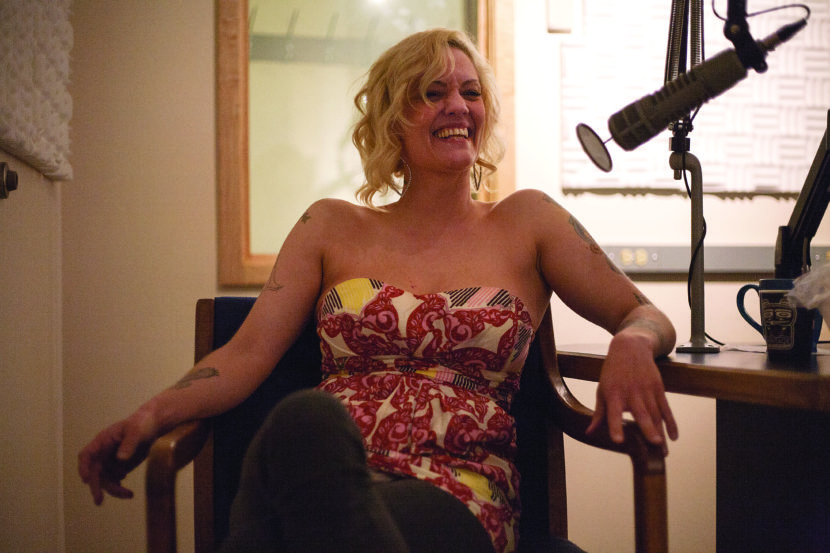
One of those strippers was Rachael Byrd, who goes by “Lucy” when she’s on stage. She runs a company that brings strip shows to The Viking and a few other bars in town.

Rachael Byrd runs Byrdcage Promotions, a company that brings strip shows to bars in Juneau. She’s also a dancer herself. (Photo by Tripp J Crouse/KTOO)

I asked her how often she does this.

“You know I think it’s roughly once every few months or so,” she said. “A few times they’ve come down from Anchorage and other places they’ve come from is Texas, and California, Colorado, and also Florida.”

Rachael is quite a history buff. In fact, her interest in adult entertainment stems in part from reading about the history of sex work in Alaska — everything from burlesque to prostitution.

“I spent like the last day and a half doing archival searches on interesting historical factors that probably gave Juneau its leaning,” she told me as we sat down for an interview. 

Rachael Byrd says a negative reception to stripping and strip clubs likely shaped Juneau’s attitudes toward that form of entertainment. (Photo by Tripp J Crouse/KTOO)

She unzipped her bag and pulled out a piece of paper that had been scribbled on. It was a list of historical events she wanted to discuss. We got right to it.

“There’s temperance, of course,” she said. 

Temperance and the criminalization of prostitution were part of the early progressive movement, a widespread effort to reform society that lasted from the 1890s to the 1920s in most parts of the country. But prostitution didn’t go down without a fight in Juneau.

“There’s that red-light district in the 1955-1956 era where something happened in downtown Juneau where that was closed off.”

While other states outlawed prostitution in the early 1900s, it remained legal in Alaska until the mid-’50s. The U.S. government ordered it to stop in 1954.

The string of brothels on South Franklin Street, known as “The Line,” closed down. But the industry continued for two years until a scandal erupted.

Public officials had been quietly condoning the industry due to the immense political power of saloon and brothel owners.

Now, neither Rachael nor I am a historian, and stripping is not the same as prostitution, but we agreed that this not-so-distant history has probably shaped Juneau’s attitudes toward strip clubs to some degree.

“It’s possible that they slowed the growth of it … is what I would say best fits,” she said.

I asked her, “If you had to give an explanation, would you have one for why you think there aren’t any strip clubs right now in Juneau?”

“I think it’s a possibility that business owners are scared to have that association because it seems like there’s some possibility they could have negative reception,” she said. 

This was something I heard from others as well.

I spoke with the owner of the Viking, as well as a few other bar owners downtown.

None wanted to go on the record, but they all alluded to the same thing: they thought that doing it out in the open would draw criticism and possibly damage their reputations.

They also said the social backlash could result in regulations. The industry enjoys some of the most lenient rules in the country.

But, it wasn’t just them. Almost every person I spoke with for this story hinted at the social consequences in one way or another.

So it’s possible that the brand of progressivism that led to Juneau’s reform is still alive and well today. But, apparently, so is the spirit of Juneau’s red light district.

1917 Treadwell Mine cave-in remembered a century later

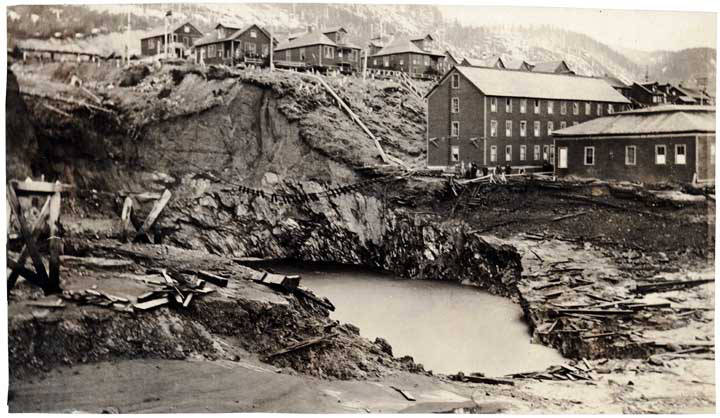
In this photo taken April 22, 1917, shows a massive sinkhole that opened up as the Treadwell Mines collapsed and filled with seawater.
This photo taken April 22, 1917, shows a massive sinkhole that opened up as the Treadwell Mines collapsed and filled with seawater. (Photo courtesy Alaska State Library, from the Harry F. Snyder Photograph Collection)

This weekend will be the centenary of a massive cave-in that flooded much of the Treadwell Mine complex.

At its peak the mines on Douglas Island were among the largest gold mining operations in the world and helped shape the development of Douglas and Juneau.

What today is a wooded walk on the outskirts of Douglas was once the site of a massive gold mining operation that drew laborers from around the world.

“This was a hoppin’ place in 1898,” said Paulette Simpson, chairwoman of the Treadwell Historic Preservation and Restoration Society.

From 1882 until the last mine closed 40 years later, Treadwell was a community in its own right. There were four mines here. They worked around the clock only pausing twice a year — on Christmas Day and the Fourth of July.

There were of course other gold mines in Alaska, but this one had an advantage.

“They had two things you needed,” she said. “They had energy with all the hydro power and they had transportation because it was right on the Gastineau Channel. So all of the supplies, equipment, people could easily access the site.”

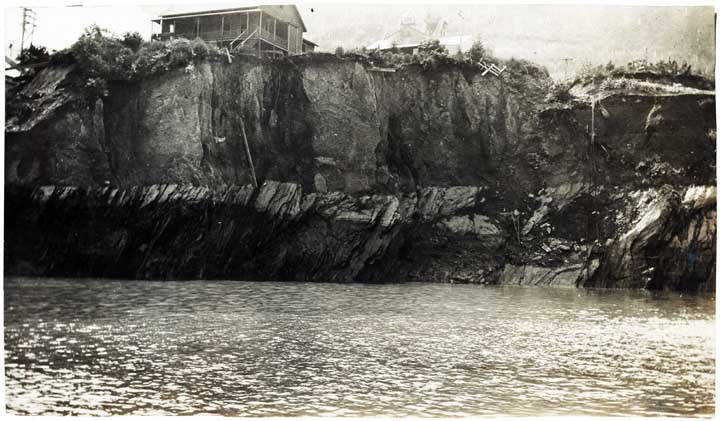
Water flooded three of the mines as can be seen in this historic photograph dating from 1917 in the aftermath of the cave in.
Water flooded three of the mines as can be seen in this historic photograph dating from 1917 in the aftermath of the cave in. (Photo courtesy Alaska State Library, from the Harry F. Snyder Photograph Collection)

At its peak, shares in the mines were traded on the London and Paris stock exchanges.

“It was the biggest gold mine in the world at its time,” said Treadwell Society volunteer Wayne Jensen. “It produced that much and it was a big economic driver in world industry.”

But its fortunes would turn quickly, for a combination of reasons. The underground stone support columns had been eroding away from salty channel water. And a natural fault line parallels the Gastineau Channel that acted as a conduit for seawater.

An extremely high tide on the evening of April 21, 1917, was the tipping point.

“A few things happened it was kind of a perfect storm,” Jensen said. “The water started coming into the fault line and once it started, it eroded it and filled up all of the tunnels.”

The alarms sounded at 11:15 p.m. with an order to evacuate.

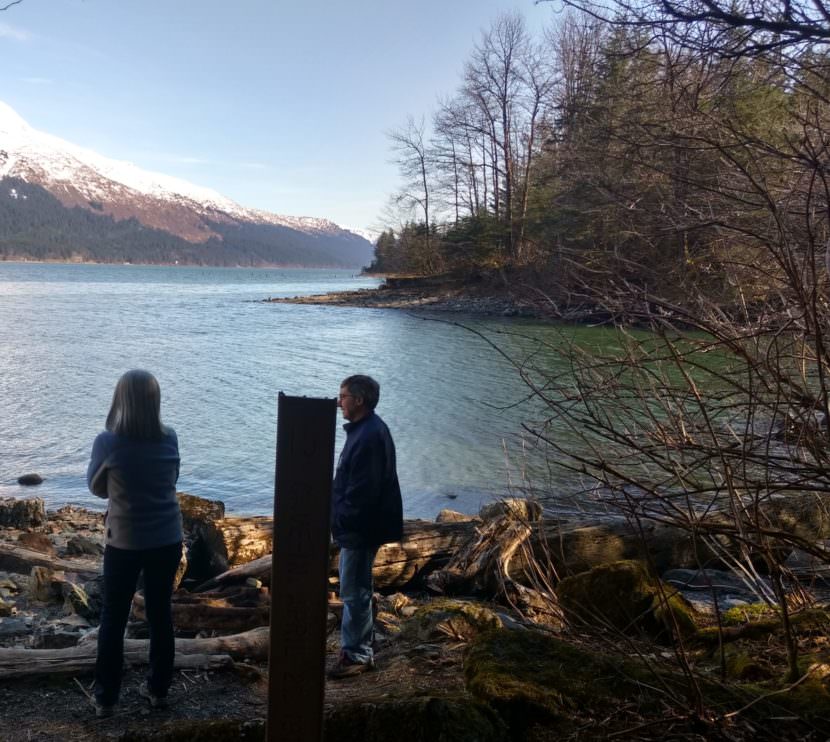
Paulette Simpson and Wayne Jensen of the Treadwell Historical Preservation & Restoration Society stand behind a marker on April 11, 2017, that shows where the 1917 cave-in began. (Photo by Jacob Resneck/KTOO)

“It could have been a real human catastrophe,” Jensen said. “If there would have been thousands of people in the mine at the time and they wouldn’t have had an opportunity to get out.”

It took about two hours for the 350 workers below to get to safety. It was only good fortune that there weren’t more.

“The mine was essentially empty, compared to what it would be on a normal day, and the people were able to get out,” Jensen said. “The unfortunate thing was that the horses and mules that were down in the mine that were used to move ore cars — they were all lost.”

Eyewitness accounts at the time describe a 200-foot geyser of saltwater shooting up from the main mine shaft as the tunnels collapsed. Three of the mines were lost forever — putting nearly a 1,000 men out of work. The fourth mine would close five years later.

The loss of the Treadwell complex was a blow to Douglas’ economy. But the community’s persevered.

“Douglas obviously survived,” Simpson said. “It’s been around, it has a great sense of community, it doesn’t seem to be going anywhere — which is a good thing.”

The cave-in a century ago was a calamity. But 100 years later it serves as a reminder of the town’s rich gold mining heritage that’s a source of community pride.

To commemorate the 100th anniversary of the cave-in, the community has organized Douglas Days with a series of events starting with a Miners Ball on Saturday, April 22, and leading up to the community’s Fourth of July activities on Sandy Beach. Details are on the Treadwell Society’s website.

Unalaskans suspect Coast Guard crew of tagging WWII bunker

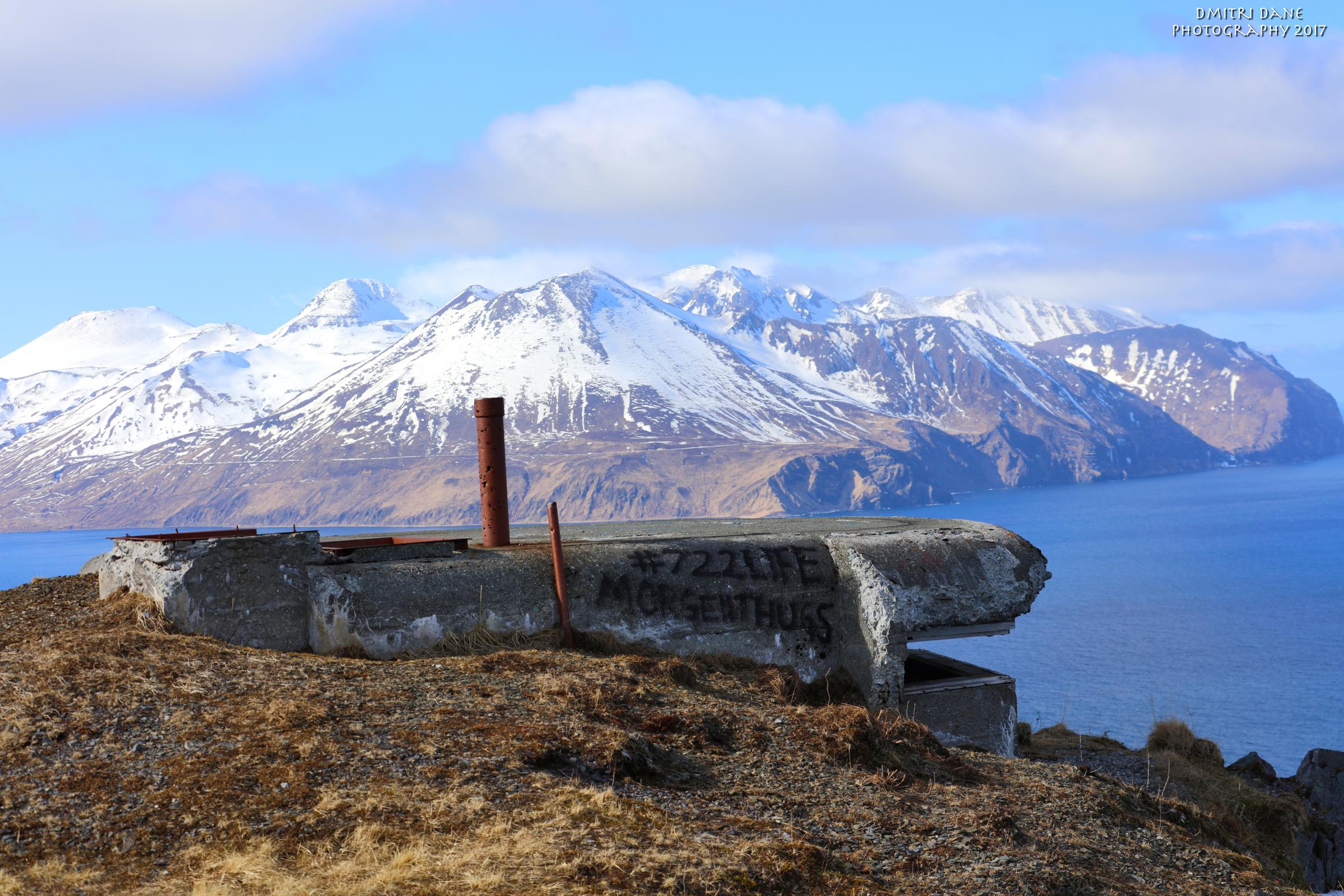
Dmitri Dane of Unalaska photographed the graffitied bunker in March. U.S. Coast Guard officials say they can't confirm whether crew members of the cutter Morgenthau are responsible. (Photo courtesy Dmitri Dane/Aleutian Islands Photography)
Dmitri Dane of Unalaska photographed the graffitied bunker in March. U.S. Coast Guard officials say they can’t confirm whether crew members of the cutter Morgenthau are responsible. (Photo courtesy Dmitri Dane/Aleutian Islands Photography)

#722LIFE. MORGENTHUGS.

That statement has been splashed across the side of a World War II bunker in Unalaska, leaving some residents outraged on social media.

On a rare sunny day in March, Dmitri Dane hiked up the back side of Mount Ballyhoo, where military structures from World War II still look out over the Bering Sea.

“It’s amazing,” said Dane. “You can see the mountain range, you can see Hog Island, and the bunkers are on the very edge of the cliff.”

As a landscape photographer, Dane said it’s one of the best views in Unalaska. But as he walked out to the bunker on the farthest bluff, he came across something not so beautiful.

“I was very surprised to see the bunker at the very end had a lot of graffiti on there,” he said.

Tagging isn’t unusual on the island, even for historic structures like bunkers and barracks. But these big black letters were spray-painted on the outside of the bunker — not hidden inside like most graffiti.

Dane snapped a photo of the tag, posted it on Facebook, and watched as the comments poured in.

“I got a lot of angry people,” he said. “Not at me, but a lot of them were angry toward the supposed people who wrote it on there.”

No one’s really sure who tagged the bunker, but the graffiti provides some clues.

“It felt like a punch in the gut when you see it has a U.S. Coast Guard tag on it,” said Carlin Enlow, director of the Unalaska Convention and Visitors Bureau.

She saw the photo online and drew the same conclusion as a lot of commenters — that the bunker was defaced by crew members of the Coast Guard Cutter Morgenthau, designated number 722.

For years, the cutter has stopped in Unalaska on patrol in the Bering Sea, protecting marine resources and helping with search and rescue.

For Enlow, that mission makes the tag even harder to stomach.

“It’s a group of people who are supposed to serve and protect us,” she said. “All these questions come to mind. Obviously, why? Why would you do that?”

The Morgenthau’s commanding officer looked into the matter after KUCB requested comment.

The extent of the Coast Guard’s investigation is unclear, but officials say there’s “no information available” to confirm if crew members are responsible.

In the past, the landowning company has given Coast Guard crews permission to paint the names and numbers of their vessels on blast shields decorating the side of Mount Ballyhoo, where the military stashed munitions during the war.

Ounalashka Corporation CEO Chris Salts said the native corporation has always had a good relationship with the Coast Guard, and he’s not up in arms over this new piece of graffiti. But he said the corporation will pay to have the bunker cleaned this summer to preserve the area’s historical integrity.

Meanwhile, the Coast Guard announced Monday that the Morgenthau is being decommissioned after nearly 50 years of service.

The State Department is taking control of the cutter and may grant it to a friendly foreign government under the Foreign Assistance Act.

Officials say other vessels will take over the Morgenthau’s mission in the Bering Sea.

Juneau city manager proposes shuttering history museum

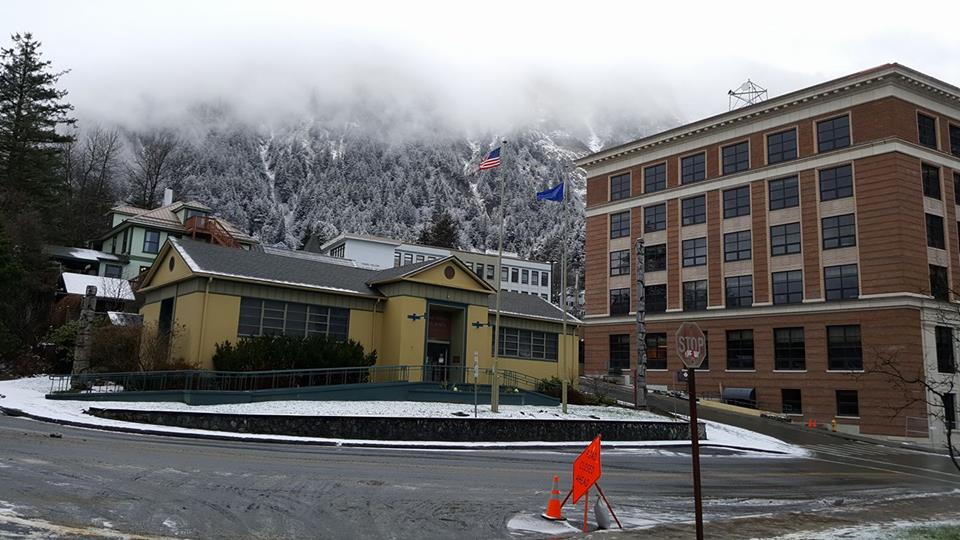
Fresh snow covers the ground surrounding the Juneau Douglas City Museum in Juneau on November 25, 2016, Alaska. (Photo courtesy Tripp J Crouse)
Fresh snow covers the ground surrounding the Juneau-Douglas City Museum in Juneau on November 25, 2016. The museum could be one public facility on the chopping block for City and Borough of Juneau. (Photo courtesy Tripp J Crouse)

Cost-cutting by the City and Borough of Juneau could mean closing several public facilities.

On the chopping block are the Juneau-Douglas City Museum, Mt. Jumbo Gym in Douglas and Eagle Valley Center. The cuts and efficiencies were presented Wednesday to the Juneau Assembly’s finance committee by City Manager Rorie Watt.

“We have a $1.9 million deficit between our revenues and projected expenditures,” Watt said. “We’ve suggested to the Assembly that we use $1.4 million on our fund balance savings and half a million in reductions.”

Closing the museum located next to the state capitol would save $228,000 in the first fiscal year. A projected annual savings would increase to about $375,000.

City Library Director Robert Barr whose office oversees the museum, said he hopes the Juneau Assembly will spare the museum.

“We believe that everything that we do provides value and is worthwhile to the community at large,” Barr said Thursday. “We of course recognize that it’s a tightening budget time and decisions will have to get made somewhere but we’d prefer it not be elimination of the museum.”

It’s still early in the budgeting process and the city manager’s proposed cuts are not a done deal.

The choice of the city museum stems from its low ranking in budgeting focus groups attended by about 90 volunteers.

Watt said it will ultimately be up to elected Assembly members to address the $1.9 million deficit.

“They could decide to use more or less savings,” he said. “They could decide to raise revenue and they could increase the cuts — it’s all on the table.”

The finance committee will continue to meet weekly through mid-May and is accepting public comment.

The city is scheduled to adopt next year’s budget in June.

Tlingit and Haida students in Arkansas help archive Jeanie Greene videos

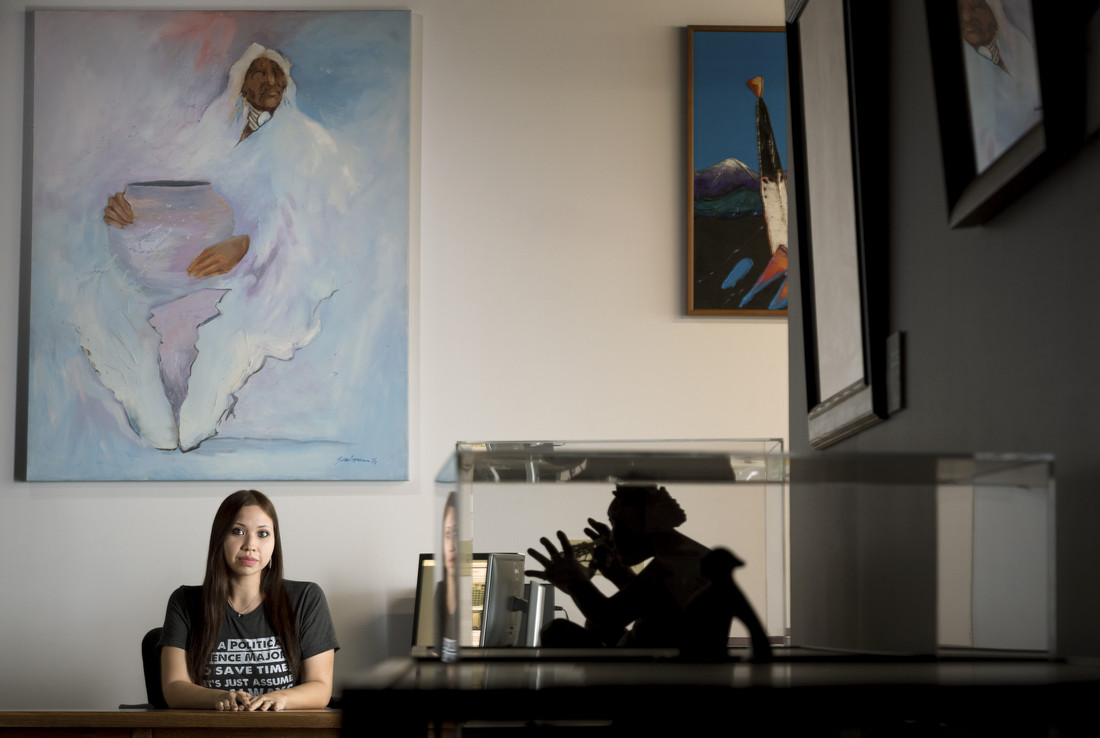
Heidi Davis, an undergraduate at University of Arkansas Little Rock, works Feb. 27, 2017, on digitizing photos of the Jeanie Greene collection on Alaska Natives at the Sequoyah National Research Center. Davis is Tlingit and Haida, and grew up in Southeast Alaska. (Photo courtesy of Erin Fehr)

It’s probably not the first place you’d imagine preserving Alaska Native history, but the Sequoyah National Research Center is doing just that.

A team of archivists with ties to the state are cataloging over a thousand video tapes that showcase Alaska Native life.

In Little Rock, Arkansas, on the corner of Archer and University avenues, sits one of the largest Native American archives in the world.

“Obviously people are thinking, ‘Why in the world is this collection of Alaska Native films and archives in Arkansas?’”

Erin Fehr is the archivist at Sequoyah National Research Center, which focuses on preserving contemporary material.

“As you can see we do have Alaska Natives in Arkansas, although we are small and few in number,” Fehr said.

Fehr grew up in Arkansas, but her grandmother is Yup’ik from Hooper Bay and for the past few years Fehr’s work has focused on her Alaska Native roots.

In 2014 the center received a $24,000 grant to digitize more than 1,200 films by the Inupiaq television producer Jeanie Greene.

Greene has a number of series under her belt like “This Generation” and “Northern Lives,” but she’s most known for Heartbeat Alaska.

One episode is like an hour-long Christmas card. People wish their families Merry Christmas from Sitka over to Seward and all the way out to the village of Tuluksak on the Kuskokwim River, where a woman sings “O Christmas Tree” in Yup’ik.

These videos are snapshots of Native life in Alaska.

They’re sometimes rough and often unrehearsed, but it’s real life, something a lot of people can relate to.

“Heartbeat Alaska– as many Alaskans are familiar with– I grew up watching.” said Heidi Davis is another of Arkansas’s Alaska Natives.

She’s Tlingit and Haida and grew up in Southeast.

“Mostly Kake and then my mom moved us back and forth between Juneau and Sitka– and I lived there for 22 years until my husband and I moved out.”

Her husband was working aboard the Coast Guard Cutter Maple when they met in Sitka.

Now the two are working toward undergraduate degrees from the University of Arkansas at Little Rock, where Davis has also been interning at Sequoyah National Research Center this semester.

She’s cataloging the Jeanie Greene videos.

“Because I was so excited about it, they started out with a lot of the Kake videos and a lot of the Sitka videos,” Davis said. “A lot of the names are really familiar – Tommy Joseph was in one of the videos I was watching a couple weeks back.”

Joseph is a Tlingit wood carver known for his totem poles. So, Davis tags that video with Joseph’s name and any other keywords.

The goal is to make the videos available on the Sequoyah National Research Center’s website.

With the help from the center’s other intern, Stephanie Rabaduex, who also has Tlingit and Haida roots, the two should finish cataloging this summer.

They’re getting college credit for their work and Davis has plans to go on to law school after she graduates next year.

Growing up in Kake, she said she never could have imagined her life today.

“Me being a Tlingit and Haida from Southeast Alaska,” Davis said. “I’ve come so far in Arkansas and working on something that ties me to my roots. I think it’s pretty amazing.”

She hopes to move back to Sitka with her family someday, but for now, her work is what’s keeping her connected to Alaska.

Site notifications
Update notification options
Subscribe to notifications