Military

As Arctic ice melts, will the Navy return to Adak?

An LCAC, a hovercraft the Navy uses to transport material from ship to shore, lands on the beach at Kuluk Bay on Adak as part of military exercises. (Photo by Zachariah Hughes/Alaska Public Media)

Amid the wind, waves and rain, a strange ship roared through Kuluk Bay toward the shores of Adak. It looked out of place, speeding past misty green mountains of the western Aleutian Islands, a cross between a speedboat and an industrial fishing barge. With alarming speed, it lurched from the shore onto the beach, kicking up dark swirls of sand and sea-spray. Its cargo trickled down off a ramp: Humvees, U.S. Marines, a compact green bulldozer. Everything you would need in an invasion.

For the first time in more than 30 years, the Navy and Marine Corps are holding large-scale exercises in the Aleutians designed to test their capabilities in a cold-climate environment. It’s been more than two decades since the Pentagon shuttered a large naval airbase on the island that once housed 6,000 service members and their families. Now, with Arctic sea-ice melting, shipping traffic increasing, and shifting defense priorities, the military is weighing whether it wants to return to Alaska’s Bering Sea.

Houses built for military families on the north side of Adak before the Base Realignment and Closures Act in 1995 led the Defense Department to shutter operations on the island by 1997. (Photo by Zachariah Hughes/Alaska Public Media)

One of the biggest boosters for that idea is Aleut Corporation, an Alaska Native regional corporation that owns much of Adak’s land. The corporation sees in the military a potential anchor tenant on an island that could transform into a hub for trans-polar shipping in the coming decades. But on a rainy morning this September, Rear Admiral Cedric Pringle’s concerns were more immediate: Would the weather let up enough for the training to even happen?

“You can’t simulate this,” Pringle said from the beach as he was hit with wind strong enough to make his eyes water. The day before, powerful gales and a low cloud ceiling led military leaders to postpone their plan to have Marine battalions storm the beach as attack helicopters helped seize a nearby airfield. Though the conditions are normal for the western Aleutians, it was enough to scramble a planned visit by Navy Secretary Richard V. Spencer.

Rear Admiral Cedric Pringle, right, greets Aleut Corporation CEO Thomas Mack, left, and the company’s military liaison Paul Fuhs upon landing in Adak. (Photo by Zachariah Hughes/Alaska Public Media)

Pringle is in charge of 15,000 seamen and marines, many of whom were seeing Alaska for the first time as part of the Arctic Expeditionary Capabilities Exercise.

“From a Navy-Marine stand point, we looked at this exercise as an opportunity to conduct training in a very, very challenging environment,” Pringle said. They also worked with the Coast Guard, which has a more consistent presence in Alaska and was helping train infantry Marines in search and rescue operations.

A Coast Guard helicopter on-site to help train Marines in search and rescue operations as part of the military exercises on Adak. (Photo by Zachariah Hughes/Alaska Public Media)

More broadly, the exercise was a chance for the military to assess whether moving large numbers of troops and supplies from a warship out in the ocean onto shore would work in an environment much farther north than the Navy is accustomed to.

“That’s exactly what we’d do with a combat situation,” Pringle said. “That’s exactly what we would do in a humanitarian situation, as well.”

As part of the same exercise, a concurrent operation in Seward tested a bulk liquid transfer from ship to shore, the sort of technique that would allow you to transfer fuel to a devastated port.

A few hours after Pringle departed, the LCACs landed on Adak’s shores. “Landing Craft, Air Cushion” vehicles are airboats powered by massive industrial fans that float above the waves on an inflatable cushion the size of a basketball court. They are loud and fast, designed to ferry equipment from warships after infantry troops establish beachheads.

A “Landing Craft, Air Cushion” vessel traveled around 13 nautical miles from a warship off the coast, carrying trucks, troops, and a bulldozer. (Photo by Zachariah Hughes/Alaska Public Media)

A delegation from the Aleut Corporation watched the LCACs from the shore.

“The Aleut Corporation is very pleased that the military is here,” said CEO Thomas Mack. “And we look forward to a continued relationship.”

Aleut is hoping that the Navy will re-establish some kind of permanent presence on the island, whether that’s basing personnel here or regularly conducting trainings. The company sees Adak as offering the military a strategic location.

“With the opening of the Arctic, with the different things that are going on geopolitically in the world, Adak is in a place that the U.S. needs to utilize. And we want to be a part of that,” Mack said.

What makes Adak different from other Alaska communities lobbying for military assets — and the federal dollars they bring — is that almost every building on the island once belonged to the Defense Department. Adak was a staging point for the American military’s Aleutian campaign. During the Cold War, the Navy maintained an anti-submarine base on the island, with thousands of people living in pre-fabricated houses and blocky barracks. In the 90s, the federal government closed its base on Adak. Under a transfer agreement, the Aleut Corporation purchased most of the military’s land and facilities (the southern part of the island is a National Wildlife Refuge).

The most modern pre-fabricated houses built by the military before it ended major basing operations on Adak. Some of the buildings are in good shape, while others are totally collapsed from exposure to the harsh environment. (Photo by Zachariah Hughes/Alaska Public Media)

Now, a small permanent civilian population, between 100 and 300 depending on the time of year, lives on the island, many of whom work at a fish processing plant. But the remnants of a much larger, semi-abandoned community remain all around. From a ridge line above the beach you can stare out at suburban-style cul-de-sacs filled mostly with vacant houses, many of which are partially destroyed from the scouring winds. Roads crisscross the rolling mountains. Up in the hills are crumbling concrete barracks and rusting power stations. There’s an old McDonald’s boarded up not far from a daycare building that now houses a small grocery store.

This large imprint is a problem for Adak’s viability as a town. Paul Fuhs is the military liaison for the Aleut Corporation, and he said that if Navy came back, it would go a long ways toward reviving the town.

Many of the houses built by the military have been destroyed by wind and storms that batter Adak. (Photo by Zachariah Hughes/Alaska Public Media)

“They would be an anchor tenant,” Fuhs said. “One of the challenges for the community here is that the base was so big before that all the utilities are on too large a scale to operate.”

If the military returned, it would convert what are liabilities for the local government and Aleut Corporation into opportunities for national defense, according to Fuhs. Dilapidated barracks in the hills could be used for urban warfare training, for example, instead of sitting empty and unused. The sub-Arctic environment, which threw the exercise’s timelines into disarray, is another selling point.

”When you’re in a war you don’t get to pick your weather,” Fuhs said. “They like it, it’s a challenge. They want to challenge their troops.”

Though scheduling and planned visits from higher-ups were scrambled by conditions, according to Lieutenant Rochelle Rieger, spokesperson for the Navy’s 3rd Fleet, troops successfully practiced seizing an airfield and conducting a mock air-raid on Adak.

Weather is hardly the only barrier for increased activity. Adak is 444 miles from the nearest population hub, Unalaska, and over 1,200 miles from Anchorage. But with melting Arctic sea ice, the Aleut Corporation envisions a possible cargo shipping hub on Adak that could serve vessels transiting the Northern Sea and Trans-Polar routes. If they can get the military committed to increasing its presence, that might bring compounding benefits from rising commercial interest in the island.

Capt. John Barnett speaking with George Pollock, president of Aleut Enterprise, speaking aboard the USS Somerset, which took part in the military’s exercises. (Photo by Zachariah Hughes/Alaska Public Media)

“We’ve done everything that we can to show them that they’d be welcome here and that we’re ready to facilitate anything that they want to do,” Fuhs said.

Asked whether the Navy has plans to re-establish a permanent presence on Adak, Rieger said, “Potential basing in Alaska is something the Navy is looking at, but the specifics are pre-decisional at this point.”

In the meantime, the military and policy-makers have to figure out where Alaska fits in the country’s approach to national defense and a warming planet.

Alaska US senators split on diverting military spending to border wall

Sen. Lisa Murkowski was one of 11 Republicans who voted Wednesday to stop President Donald Trump from redirecting military funds to build a border wall.

U.S Sen. Dan Sullivan talks with reporters during a press availability Feb. 24, 2017, following his annual address to the Alaska Legislature. (Photo by Skip Gray/360 North)
U.S Sen. Dan Sullivan, R-Alaska, talks with reporters during a press availability Feb. 24, 2017, following his annual address to the Alaska Legislature. (Photo by Skip Gray/360 North)

Sen. Dan Sullivan voted with the majority of Republicans against the resolution.

Alaska has four projects worth $102 million that would be delayed in favor of the wall. The projects include an upgrade to a weapons range and power plant repairs at Eielson Air Force Base, as well as an expansion of a missile field at Fort Greely.

Sullivan is normally a big proponent of increasing military assets in Alaska, but he said earlier this month that shifting the money to the southern border is in the national interest.

U.S. Sen. Lisa Murkowski, R-Alaska, talks with Alaska Capitol reporters during a press availability following her annual address to the Alaska Legislature on Feb. 22, 2018. (Photo by Skip Gray/360 North)

Murkowski, in a statement, said she shares the president’s “very legitimate concerns over border security” but voted to uphold the separation of powers.

The Constitution gives Congress the power to appropriate funds, and Murkowski points out that Congress decided to spend the money on military construction priorities.

The resolution passed the Senate 54-41. The House of Representatives followed suit, passing the bill on Friday by a 236-174 vote. Alaska’s at-large Rep. Don Young voted against the measure.

Trump is expected to veto, as he did when Congress sent him a similar measure in March.

US military exercises come with indications of a growing Navy presence in Alaska

U.S. Navy personnel stand on the flight deck of the USS Comstock, docked in Kodiak, Sept. 10, 2019.
U.S. Navy personnel stand on the flight deck of the USS Comstock, docked in Kodiak, Sept. 10, 2019. (Photo by Kavitha George/KMXT)

The USS Comstock docked in Kodiak on Tuesday, en route to participate in a joint forces military training exercise spread across the Gulf of Alaska and the Aleutians. The visit comes as U.S. Navy officials indicate the possibility of an increased naval presence in Alaska, and what that might mean for the future.

Kodiak’s Pier 2 is used to hosting cruise ships and large crab boats this time of year. So a 600-foot Navy warship was a little out of place on Tuesday.

The USS Comstock, home-ported in San Diego, arrived in Kodiak around noon. For many aboard, including the ship’s captain, Cmdr. Kevin Culver, it was their first time in Alaska. Culver’s crew is making its way north for training, along with several other detachments of the Navy and the Marine Corps.

“We’re one of the first ones here,” Culver said on a tour of the sixth-floor steering room. “So you know, what a better place to stop than Kodiak and wait for everybody else to catch up to us.”

Across Southcentral Alaska and the Aleutians, some 3,000 service members are participating in the joint forces Arctic Expeditionary Capabilities Exercise this month. The exercises range from disaster relief logistics to tactical response drills.

Training in Alaska is a routine activity for naval forces. Northern Edge back in May was a massive joint forces exercise that happens every two years, not to mention the Navy SEALs’ cold weather training facility that operates on Kodiak’s Spruce Cape.

But Alaska might be seeing more of the Navy soon. As sea ice recedes and Arctic waters open up, protecting American interests in the far north is becoming more of a priority.

You might remember back in 2007 when Russian submersibles descended two miles below the North Pole ice cap to plant a flag on the ocean floor. It was more a publicity stunt than a true “claim” to the seabed, but that growing competition for Arctic resources, as well as control of increasingly navigable waterways, is what the Navy wants to get ahead of.

“All the trading nations of the world are going to seek to take that shortcut to the markets,” Rear Adm. Scott Gray told KMXT in an interview May. “So we’ll see an increase in shipping and transportation up here. And so our presence up here is just a continuation to ensure that we protect the sea lanes for trade for all nations and that we are trained and ready to operate in the difficult environment that is the north.”

For that reason, the Navy has begun looking at establishing a more permanent foothold in Alaska, according to Gray as well as Navy representatives in Kodiak this week.

Senior Chief Petty Officer Brandon Raile stands on Kodiak’s Pier 2 outside the USS Comstock, Sept. 10, 2019.
Senior Chief Petty Officer Brandon Raile stands on Kodiak’s Pier 2 outside the USS Comstock, Sept. 10, 2019. (Photo by Kavitha George/KMXT)

“What’s happening is the Navy is looking at its options,” Senior Chief Petty Officer Brandon Raile from Alaskan Command Public Affairs said in an interview on the Pier 2 dock on Tuesday. “We formerly had two installations here in Alaska: Adak and Kodiak. Obviously, we gave Kodiak to the Coast Guard. Adak was turned back over to the Aleut Corporation. So right now we have no basing options here. So in order to be proactive, of course we are looking into what the options are.”

One option might be a strategic port involving the Navy, Coast Guard and Department of Commerce, set up along the Bering Sea, according to a U.S. Naval Institute interview with Navy Secretary Richard V. Spencer in January.

As far as the Navy coming back to Kodiak, Raile said it’s not an impossibility, though there isn’t a clear timeline in place.

“Nothing is off the table at this point,” he said. “We are in the early stages of looking at everything.”

The USS Comstock will be in Kodiak through the weekend. The Arctic Expeditionary Capabilities Exercise wraps up at the end of the month.

More than 2,000 Fort Wainwright soldiers to deploy to Iraq

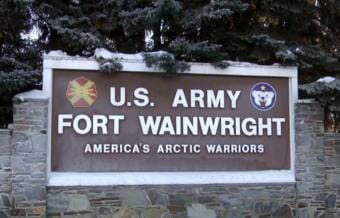
Soldiers with Fort Wainwright-based 1st Stryker Brigade Combat Team board an aircraft at Fairbanks International Airport last week en route to a nine-month deployment to Iraq. (Photo courtesy Fort Wainwright)

More than 2,000 Stryker Brigade Combat Team soldiers from Fort Wainwright are en route to Iraq — or soon will be — for a nine-month deployment.

The deployment officially began a little over two weeks ago, with a sendoff ceremony on Fort Wainwright. By the end of this month, more than half of the brigade assigned to Wainwright will be in Iraq.

U.S. Army soldiers wait to depart from Fort Wainwright.
U.S. Army personnel wait to depart from Fairbanks, Sept. 2, 2019. (Photo courtesy Fort Wainwright)

“The deployments are ongoing right now, so … we’re well over halfway pushing soldiers out,” said Lt. Col. Drew Lynch.

Lynch is helping coordinate the movement of the seven Stryker battalions, which include cavalry, infantry, field artillery and engineer units. He said the soldiers fly out of Fairbanks on Army-contracted commercial airliners, but most of their gear is transported separately — initially via the Alaska Railroad to the Port of Alaska in Anchorage.

Lynch said the Stryker soldiers are part of a joint task force that will mainly be helping train Iraqi troops, law enforcement officers and others who maintain security in the Middle Eastern nation. But he said that doesn’t mean this deployment won’t be dangerous.

“Any deployment, especially to a Centcom region, has inherent dangers and inherent risk,” Lynch said. “But we’ve found through time that unless we do this by, with and through our partner nations, then there’s always the risk that they don’t grow the capacity, and that we end up going back in the future.”

The Stryker Brigade’s deployment to Iraq is in support of the Pentagon’s Operation Inherent Resolve.

Patient medevaced from Admiralty Island after explosion

A Coast Guard Air Station Sitka MH-60 Jayhawk helicopter aircrew medevacs a 17-year-old male from Wrangell to Sitka, Alaska, July 17, 2018. The man was transported to awaiting emergency medical services personnel for further care.
A Coast Guard Air Station Sitka MH-60 Jayhawk helicopter, July 17, 2018. (Public domain courtesy photo by Stephen Prysunka)

The U.S. Coast Guard medevaced a patient from Admiralty Island Saturday after he reportedly sustained critical injuries in an explosion.

In a tweet, the Coast Guard says a 60-year-old man lost the fingers on his left hand in the explosion in the Hawk Inlet area.

Hecla Greens Creek Mine spokesperson Mike Satre wrote in an email that the crew of a nearby commercial fishing tender provided first aid and transported the victim to Greens Creek Mine, where he was stabilized by the mine’s medical staff.

According to Satre, the injured man does not work at the mine but owns a floathouse in the northern part of Hawk Inlet nearby.

A Coast Guard crew from Air Station Sitka transported the victim to Juneau for further medical treatment.

Bartlett Regional Hospital declined to comment on the victim’s status.

Editor’s note: The headline for this story has been revised to avoid confusion about the precise location of the explosion.

Alaska losing $102M in military construction for border wall

One of the 40 interceptor missiles at Fort Greely is lowered into its silo. An expansion project at the missile-defense base eventually will increase the number of interceptors at Greely to 60. Four more interceptors are based at Vandenberg Air Force Base, Calif. (Photo courtesy of Missile Defense Agency)
One of the 40 interceptor missiles at Fort Greely is lowered into its silo. An expansion project at the missile-defense base eventually will increase the number of interceptors at Greely to 60. Four more interceptors are based at Vandenberg Air Force Base, California. (Photo courtesy of Missile Defense Agency)

The Defense Department has finalized a list of military projects it will defer, using the funds instead to pay for construction of President Donald Trump’s proposed border wall. Of the 127 projects at both domestic and foreign military installations, four are in Alaska.

The move comes after Trump declared a national emergency along the southern border in February, saying his executive powers allowed him to shift the funds. Congressional Democrats tried to block the effort in court, but lost.

Now, $3.6 billion dollars from military construction projects will go to building or repairing 11 sections of wall along the border.

“These projects will deter illegal entry, increase the vanishing time of those illegally crossing the border, and channel migrants to ports of entry,” wrote Defense Secretary Mark Esper in a Sept. 3 memo.

In Alaska, the deferred projects include an upgrade to a weapons training range and repairs to two power plant boilers at Eielson Air Force Base, as well as an expansion of a missile field at Fort Greely. In total, the deferred construction projects were worth $102 million, though according to Sen. Dan Sullivan’s office, none of that money had yet been awarded to contractors. Though hundreds of millions of federal dollars are unaffected by the move, it is still a significant portion of the military construction money Alaska receives in a given year. In fiscal year 2017, Alaska received $561 million for defense projects.

In a statement Wednesday, Sullivan said deferring military projects in Alaska to pay for border wall construction is in the national interest, and does not alter the state’s position in overall defense strategy.

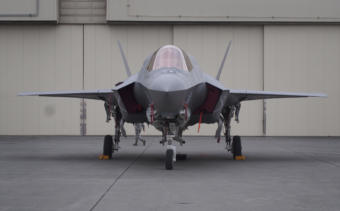
“The Deputy Secretary of Defense reconfirmed this with me, emphasizing that the Pentagon’s reprogramming announcement will not affect the scheduled deployment of F-35s or the build out of America’s missile defense system in Alaska,” Sullivan said.

He blamed congressional Democrats for causing the president to take funds from military projects.

“While I do not agree with the decision to defer any military construction in Alaska, it should be noted that the Democrats’ obstruction to fund much needed border security has forced the Trump administration to undertake these measures,” Sullivan said.

Earlier this year, Democrats and Republicans agreed to a spending bill that set aside $1.4 billion for barriers along the border, significantly lower than the $5.7 billion sought by the president.

In February, Sullivan told reporters in Alaska he viewed Trump’s move to declare a national emergency to shift defense dollars as “probably legal,” but added, “I would have concerns, particularly if it’s coming out of Alaska military construction.”

Congressman Don Young took much the same position.

“Congressional leadership had the opportunity to find a bipartisan solution to fund border security that would have avoided the deferment of these (military construction) projects,” Young said in a statement Wednesday.

About half the funds coming out of military projects are at installations overseas, including U.S. bases in Germany, Korea, Japan and others.

Sen. Lisa Murkowski’s office did not respond to an email seeking comment on the Defense Department’s announcement. However, in the past she has expressed skepticism about Trump’s maneuver to pay for border wall construction, questioning the legality. In January she said, “I have very serious concerns about why we would be seeking to take funding from those accounts that we have already identified as enhancing our national security.”

Site notifications
Update notification options
Subscribe to notifications