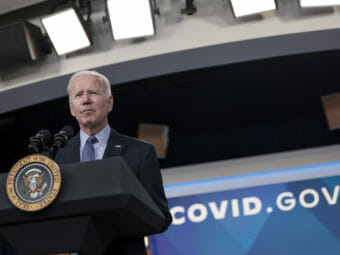
President Biden is seen delivering remarks on COVID-19 on March 30. On Tuesday, the White House will announce a new push to get more doses of the COVID antiviral medication Paxlovid to more Americans. (Photo by Anna Moneymaker/Getty Images)
There is a new push from the White House to get Paxlovid, a drug which reduces the risk of COVID hospitalization by 90%, into the hands of more Americans.
The rollout of the medication has been slow since it was authorized for use in December, failing to reach many Americans eligible for treatment.
“It’s pretty clear from the uptake of Paxlovid, and the rate of hospitalizations and deaths over the months that Paxlovid has been available, that there are still some folks who could have benefitted from these medications,” a senior administration official acknowledged on a call with reporters on Monday ahead of Tuesday’s announcement.
“We can save more lives by getting this medication to more people,” the official said.
The drug is authorized for use in patients 12 years of age and older who test positive for COVID and are at a high risk for developing a severe case. Because of the many possible risk factors for a severe case, including diabetes and obesity, tens of millions of Americans could be eligible to receive the drug if they receive a positive test.
The antiviral pills are a central component of President Biden’s strategy for helping Americans live with the pandemic, first detailed by the White House nearly two months ago. The government purchased 20 million doses of the drug from Pfizer and worked with the company to accelerate delivery of the pills.
Many pharmacies have not yet been able to stock the drug and some physicians have been hesitant to prescribe it over concerns about depleting the supply — which the White House now describes as “ample.”
The new campaign aims to double the number of places the pills are available in the coming weeks by allowing tens of thousands of pharmacy locations to order the treatment directly from the federal government.
There is also a plan to educate providers and the public about the drug and expand the administration’s “Test-to-Treat” program.
Dr. Ashish Jha, the White House COVID coordinator, told NPR on Monday that despite a considerable federal stockpile, there have been problems getting the drugs off the shelves and into the hands of patients.
“We’ve got to turn those pills into prescriptions and into things that patients can get so they can get better,” Jha said.
Dr. Jerome Adams, who served as surgeon general during the Trump administration, worries that many people who are particularly vulnerable to COVID because of poor health or a lack of access to quality medical care, including many people of color and those living in rural areas, aren’t even aware that Paxlovid could be an option for them.
“The people who know about it are the people who know how to advocate for themselves, so we are seeing inequities actually expand,” Adams said in an interview in advance of the administration’s announcement. “One thing we need to do is have a massive patient education campaign.”
Now, the White House is set to begin that education push. But after limited success convincing the public to get vaccinated and boosted against the virus, it remains to be seen how effective the administration’s latest efforts will be.
Copyright 2022 NPR. To see more, visit https://www.npr.org.
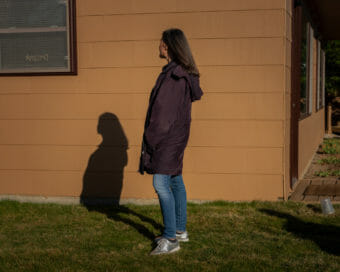
Laurie’s mother, Stephanie, 75, died of COVID-19 in December. “I don’t believe she was supposed to die,” Laurie says. “I blame the misinformation.” Stephanie had been wrapped up in a world of conspiracy theories online, which led her to refuse treatments for COVID. (Photo by Meredith Rizzo/NPR)
One thing everyone agrees on is that Stephanie didn’t have to die. Even months after it happened, her family is struggling to figure out why.
“There is no perfect puzzle piece,” says Stephanie’s daughter Laurie. “I literally go through this all the time.”
Stephanie was 75 when she succumbed to COVID-19 this past December. But Laurie says it wasn’t just COVID that killed her mother. In the years leading up to her death, Stephanie had become embroiled in conspiracy theories. Her belief in those far-out ideas caused her to avoid vaccination and led her to delay and even refuse some of the most effective treatments after she got sick.
“I don’t believe she was supposed to die,” Laurie says. “I blame the misinformation.”
As America approaches a million deaths from COVID-19, many thousands of families have been left wondering whether available treatments and vaccines could have saved their loved ones. According to the Kaiser Family Foundation, more than 230,000 deaths could have been avoided if individuals had gotten vaccinated.
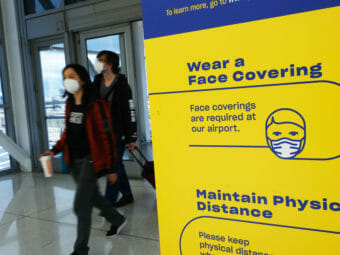
Not everyone who refuses a vaccine believes in elaborate conspiracy theories, but many likely do. Anti-vaccine advocates have leveraged the pandemic to sow mistrust and fear about the vaccines. Local papers across the country are dotted with stories of those who refused vaccination, only to find themselves fighting for their very lives against the disease.
Stephanie’s family wanted to share what happened to her in the hope their story can help others. NPR agreed to use only family members’ first names to allow them their privacy as they continue to grieve.
“I know we’re not alone,” says Laurie. “I know this is happening all over the place.”
From vaccine supporter to skeptic
Stephanie was a native of the Bronx, and for almost 55 years she was married to a man named Arnold. They met shortly after he returned from the war in Vietnam. Her family’s dry cleaning shop was just a few blocks from his parents’ house.
Parking in the Bronx was always tricky, Arnold quips. “So I said, ‘You know, this isn’t bad — she’s very attractive, she’s pleasant to be with — maybe I’ll start dating her and I won’t lose my parking spot.”
Arnold and Stephanie met in the Bronx in the late 1960s. Arnold had just returned from military service in Vietnam. One month later, they were engaged. (Photo by Meredith Rizzo/NPR)
They got engaged after just one month. After a few years of marriage, they moved to Long Island and bought a fixer-upper home. They had two daughters, Laurie and Vikki, who Stephanie stayed home to raise. Vikki remembers Stephanie had an unwavering belief in her children’s ability to achieve whatever they wanted.
“She just believed we could do anything, and I think that’s really powerful as a parent,” she recalls.
When the daughters reached high school, Stephanie began to get into astrology and tarot. She did readings to advise people about things like houses, kids and jobs. It was quirky, but Laurie says that Stephanie brought a lot of positivity and optimism to her sessions.
“Everybody loved it, because everybody is always trying to figure out their lives. There’s always the struggles,” she says. “She spread hope with people.”
For all her star charts and spiritual ideas, Stephanie was practical when it came to her health. She went for regular checkups, and she was a big believer in vaccines. “She made sure I took the flu shots, we took the shingles shot, we took the pneumonia shot,” Arnold recalls. “I mean, I was like a pincushion.”
The family lived for many happy years this way. The daughters grew and started families of their own. Arnold retired from a job working for the gas company.
Then, just before the pandemic began, there was a change in Stephanie. Nobody can exactly pinpoint when it happened. Part of it was physical. Throughout her life, she had played tennis. But it had taken a toll on her knees. She was finding it hard to walk and had to have a stair lift installed in her house.
Stephanie and Arnold raised their two daughters, Vikki and Laurie, in Long Island. The daughters grew up and started families of their own. Life was good, the family says. (Photo by Meredith Rizzo/NPR)
The loss of tennis from her life also had a psychological impact, says Vikki. “It was her everything. It’s where she felt really valued and strong and important.”
Perhaps partially because she was isolated and feeling down, Stephanie got into watching strange videos and sending them to the rest of the family. Vikki says it was Laurie who was really the first to notice.
“She called me up one day and was like, ‘All right, have you been watching these videos that Mom is sending us?'”
The videos covered a wide range of far-fetched conspiracy theories: JFK Jr. is still alive; reptilian aliens control the government. Arnold says he wouldn’t even look at them: “Watching them, to my way of thinking, would have reinforced that they were valid. Even if I’d argued against them, she wouldn’t have accepted my argument.”
Stephanie’s fringe ideas were troubling, but the family still hung out. Laurie says sometimes they fought over her beliefs, but often they kept the conversation on things like the grandkids.
Then came the pandemic, and everything changed. Stephanie’s videos told her COVID was a hoax. But Laurie and Vikki took it seriously. They were worried about giving their parents the virus. So they stayed away, trying to keep them safe.
“We just stopped seeing each other as a family,” Laurie says. “We didn’t do Thanksgiving that first year.”
While the family stayed away, others did not. Through her astrology, Stephanie had formed a spiritual group that met weekly at her house. And like Stephanie, other members of that group didn’t believe the virus was real.
The more time they spent together, the more Stephanie became invested in her beliefs. Arnold says it was “tribal”: “Staying in the same clique, reinforcing each other, and not getting outside opinions.”
“A couple of times I tried to speak to her on an analytical basis,” Arnold says. “But I could see she was getting defensive, and I didn’t want to alienate myself from her.” (Photo by Meredith Rizzo/NPR)
When the COVID vaccines came along, Stephanie absolutely refused to get one because she falsely thought the shots contained tiny microchips. Moreover, she began avoiding her daughters, who had gotten vaccinated, because she believed false information that the vaccines were being used to somehow spread COVID.
Arnold didn’t get vaccinated, to try and keep the peace.
Good vs. evil
The family felt stuck. They didn’t know how to shake Stephanie out of her beliefs. And they are hardly alone. Diane Benscoter runs a nonprofit called Antidote, which seeks to help families whose loved ones have been taken over by cults and conspiratorial thinking. She says she’s inundated with emails from families facing the same struggles.
“My inbox,” she says. “It’s horrible.”
Much of the public conversation around misinformation focuses on fact-checking and flagging false posts online. But these methods don’t provide much help for people like Stephanie, says Sander van der Linden, a professor of social psychology at the University of Cambridge in the U.K.
“Most people who are really into disinformation and conspiracy theories don’t believe in a single conspiracy theory,” he says. Rather, they’re drawn into a self-reinforcing conspiratorial worldview in which conspiracies build on one another. While the theories can seem disparate, they often have unifying themes: They feed distrust in sources of authority; they claim insider knowledge that makes the believer feel valuable; and frequently, that knowledge includes a secret plan to defeat the forces of evil.
Van der Linden says there are three major reasons why people are drawn into this world in the first place: fear and anxiety about the future, a desire to have a simple explanation for complex or seemingly random events, and the social support that communities around conspiracy theories can provide.
Stephanie got into astrology as a hobby when Vikki and Laurie were in high school. Over the years, her interest turned more professional — she gave tarot readings to hundreds of clients who turned to her for insight on houses, jobs and kids. (Photo by Meredith Rizzo/NPR)
While it’s impossible to say exactly what drove Stephanie, her daughters identify several things that seem to roughly correspond to those broad categories of motivations. First, they say Stephanie suffered from a lot of anxiety throughout her life. With her tennis days behind her, much of her self-esteem now lay with her astrology work and her spiritual group. And that group was clearly playing the role of echo chamber, reinforcing her ideas and beliefs.
Benscoter thinks the pandemic has also pushed many people further into the shadows of conspiracies. “The pandemic increases fear, and fear is a really hard emotion. And isolation is a really hard place to be,” she says.
Benscoter herself is a former cult member. She says the conspiracy narratives provide reassurance. Even if the facts seem crazy, they can provide emotional stability. Speaking of her own past, she says these tales gave clarity because they turned complex problems into simple questions of good versus evil.
“It feels so good; I never felt so secure. I mean I knew what was right and wrong. There was no question,” she says.
Stephanie’s interest in star charts, numerology, tarot and singing bowls (right) were quirky but her sessions gave people a lot of hope and positivity, Laurie says. (Photo by Meredith Rizzo/NPR)
Because those motivations are all about psychological needs, arguing the facts around individual conspiracies will do little to shake people out of their beliefs. Moreover, “when you try to pull on one, the whole thing collapses for people,” van der Linden says. “So the resistance becomes much stronger.”
Efforts to dissuade Stephanie from her beliefs were frequently met with outbursts of rage, her family says. “She was angry that we weren’t listening to her and believing what she believed,” Vikki says. “A couple of times I tried to speak to her on an analytical basis,” Arnold says. “But I could see she was getting defensive, and I didn’t want to alienate myself from her.”
Both Benscoter and van der Linden say there is no surefire way to get someone from abandoning conspiratorial thinking. They also say one of the best strategies is to try and get a person to question the messenger, not the message. “People, especially these kinds of people, don’t want to feel like they’re being manipulated,” van der Linden says. He says it’s good to ask questions like: “Do you think it’s possible that other people are profiting off you?”
It was a strategy Stephanie’s family said they tried a few times. But even then, van der Linden says, these interventions take time. People can’t change their thinking instantly, and often will backslide as they talk again to their fellow conspiracy theorists.
“It’s an extensive process,” he says.
Out of time
Unfortunately for Stephanie, she did not have time. In November of 2021, just before Thanksgiving, Arnold and Stephanie met two other couples for dinner at a popular local restaurant.
“Afterwards, she started developing symptoms,” Arnold says.
But she refused to get tested. Instead, she ordered drugs online from a natural healer in Florida. Two of the drugs, ivermectin and hydroxychloroquine, are ineffective against COVID, but many conspiracy theorists believe they work. Stephanie waited for the pills to come.
“She was waiting for the pills and I said, ‘Why wait? You could go to the doctor right now. You have amazing health insurance. You don’t have to wait,'” Laurie says.
All the while, she was getting sicker and sicker. The daughters got her a device to check her blood-oxygen level: It was at just 77%.
Vikki called a friend who was a nurse: “She said, ’77?! You need to get your mom to the hospital. She could die!’ And I said, ‘Really?'”
Stephanie still didn’t want to go, but after hearing she could die, she eventually gave in. Arnold drove her to the hospital.
The pills Stephanie received in the mail were labeled as ivermectin and hydroxychloroquine. They appeared to come from manufacturers in India. (Photo by Meredith Rizzo/NPR)
Even after she was admitted, she turned down some effective treatments for COVID. One drug, called remdesivir, has been proven to reduce the severity of COVID, but Stephanie believed conspiracy theories claiming the drug was actually being used to kill COVID patients. Stephanie also refused another treatment shown to be very effective for patients with COVID-19: monoclonal antibodies. Laurie remembers how one doctor responded when he learned that Stephanie had refused the drugs:
“He was like, ‘Why didn’t you take any of the treatments Stephanie?’ She found every little piece of energy in her and yelled back at him, ‘BECAUSE IT’LL KILL ME!'”
Meanwhile, Arnold had developed symptoms and was getting sicker and weaker. He eventually asked his daughters for help.
Vikki drove him to get monoclonal antibodies. He worsened overnight, and the next day, he was admitted to the same hospital that Stephanie was staying in. Unlike his wife, Arnold accepted every treatment he was offered.
“He said yes to everything. He said yes to every treatment they were willing to give him,” says Vikki. “My Mom said no.”
He was discharged after just five days.
“I felt hopeful, because I told her I was going home. I told her, ‘I’ll be waiting for you.’ And then, everything started deteriorating,” Arnold recalls.
“She was fighting a fight without any defenses,” says Perihan El Shanawany, a doctor with Northwell Health, who was part of the team that cared for Stephanie. As Stephanie grew sicker, she started developing blood clots on her lungs. El Shanawany knew that as things progressed, Stephanie would only suffer more.
“Patients at that point feel like they’re suffocating, they’re drowning,” El Shanawany says. “It’s a horrible way to die.”
The only option Stephanie had left was to go on a ventilator. So Dr. El Shanawany sat down with her and asked her what she wanted.
“She did say that she’s had enough. That’s her words, ‘I’ve had enough. This is not a life. I can’t live like this anymore’,” El Shanawany says.
During a video call, Laurie heard her mother’s wishes. She had been urging Stephanie to fight because she felt it wasn’t her time. But hearing those words, “I can’t live like this anymore,” something changed. For years they had been battling over the lies and conspiracies. Laurie knew it was time to make peace with the mother she loved.
And that meant helping Stephanie to die comfortably. “My whole mission after hearing that was to help her get her wishes,” she says.
Laurie stayed by her mother’s side, reading text messages from friends and relatives who wanted to say goodbye. At one point, seeing she was suffering, Laurie played her some music written by a family member: “She gave me a thumbs up,” Laurie recalls. “She was there.”
“We all said goodbye and told her she was the best,” Laurie says.
Stephanie died the next day. It was Dec. 28, a few days after Christmas.
At the funeral, Arnold heard from scores of people whom Stephanie had helped over the years, through her astrology, and just her advice and friendship.
“They all said, ‘She changed my life,’ ” he says tearfully.
Laurie says she’s “a lot less angry” now. But she still thinks about those who continue to make the kinds of videos her mother watched. In the months since Stephanie’s death, she’s moved closer to her father and sister. (Photo by Meredith Rizzo/NPR)
In the months since Stephanie died, the family has begun the long road to healing. Arnold has received the COVID vaccine. And Laurie recently bought a home closer to her father and sister. “We’ll be able to be in each other’s lives more,” she says.
She also says she’s slowly making her peace with Stephanie’s death.
“I’m a lot less angry,” she says.
But she still thinks about the people who make the paranoia-laced videos that her mother consumed day after day. She understands that something inside her mother drew her to those voices, but Laurie still sees Stephanie mainly as a victim of the grifters and attention-seekers who generate many hours of falsehoods every day to grab money, likes and shares.
“Whoever is creating all this content, is on some level waging a war — here in America — inside of every family,” she says. “I think people need to wake up to that.”
Copyright 2022 NPR. To see more, visit https://www.npr.org.
People enter wearing masks at John F. Kennedy Airport on April 19 in New York City. On Monday, a federal judge in Florida struck down the mask mandate for airports and other methods of public transportation as a new COVID variant is on the rise across parts of the United States. (Photo by Spencer Platt/Getty Images)
Travelers who were once banned by major U.S. airlines for violating the federal mask mandate may soon be allowed to fly again.

Four major U.S. airlines — Delta, United, American and Alaska Airlines — have announced they’re now allowing some passengers who were once banned from flying on their planes due to mask violations to travel onboard.
This move comes after a federal judge in Florida on Monday ruled against the Biden administration’s mandatory mask mandate for passengers on planes and other forms of public transportation, airlines soon began lifting their mask policies for travelers.
The cases will be determined on a case-by-case basis, depending on the company.
Here’s a rundown on where the airlines stand:
Alaska Airlines
Travelers who were banned for mask non-compliance will be allowed to purchase tickets and fly with the airline, a company spokesperson told NPR.
However, the airline emphasized that some guests whose behavior was “particularly egregious” will remain banned from flying or purchasing tickets.
Over the past two years, the company reported that more than 1,700 guests were banned for failing to comply with the federal mask policy.
American Airlines
American said passengers who were added to the company’s no-fly list as a result of the mask non-compliance will be allowed to fly with American “at some point in time.”
“In cases where an incident may have started with face mask non-compliance and escalated into anything involving something more serious, certainly assault or an assault on one of our team members or customers, those passengers are going to remain on our permanent internal refuse list and will never be allowed to travel with us again,” said Nate Gatten, the airline’s Chief Corporate and Government Affairs Officer during a weekly earnings call.
Delta Air Lines
Delta announced Wednesday it would reinstate flight privileges for travelers who were banned for violating the mask mandate.
“With masks now optional, Delta will restore flight privileges for customers on the mask non-compliance no-fly list only after each case is reviewed and each customer demonstrates an understanding of their expected behavior when flying with us,” a company spokesperson said in a statement to NPR.
The Atlanta-based airline says that any further disregard for the new policies in place will result in placement on its permanent no-fly list.
“Customers who demonstrated ‘egregious behavior’ and are already on the permanent no-fly list remain barred from flying with Delta,” the company said.
Southwest Airlines
Southwest did not go into detail about how many people it banned for mask non-compliance, citing “security protocols.”
However, the airline indicated that the travelers on the list were barred for disruptive behavior — and their status has not changed as of Thursday.
United Airlines
On a case-by-case basis, United said it will allow some customers who were previously banned for failing to comply with the mask mandate to fly with United again — after establishing their commitment to follow the instructions of its crews and staff onboard.
The Federal Aviation Administration announced Wednesday that its “zero-tolerance” policy against unruly passengers will now be permanent.
“Behaving dangerously on a plane will cost you; that’s a promise,” said Acting FAA Administrator Billy Nolen in a news release. “Unsafe behavior simply does not fly and keeping our zero-tolerance policy will help us continue making progress to prevent and punish this behavior.”
Copyright 2022 NPR. To see more, visit https://www.npr.org.
A U.S. Postal Service worker loads up a truck at the Federal Building in Juneau on April 21, 2022. The Postal Service and other private couriers suspended service to Russia after it invaded Ukraine. (Photo by Jeremy Hsieh/KTOO)
Juneau’s elected officials have an anti-war message for Vladivostok, their sister city in Russia. But figuring out how to actually deliver the message is its own challenge.
On the Juneau Assembly’s direction, Mayor Beth Weldon wrote a letter addressed to the mayor of Vladivostok that says, “the criminal acts of the Russian President and Russian armed forces are wrong and should be condemned.” It also voices support for Ukraine and a hope that the two cities can eventually restore a cooperative relationship.
The city tried to send the letter on Monday through the U.S. Postal Service. But a Postal Service spokesperson said mail addressed to Russia will be returned to the sender.
The Postal Service and private couriers FedEx, UPS, and DHL all suspended service to Russia after it invaded Ukraine.

Mayor Weldon said she’ll try to resend it by email, if she can find an email address. She plans to ask Sister Cities International, the nonprofit that facilitates sister city relationships, for help.
This is the first in a two-part series on the special education teacher shortage. You can read part two here.
At the beginning of the school year, when Becky Ashcraft attended an open house at her 12-year-old daughter’s school, she was surprised to find there was no teacher in her daughter’s classroom – just a teacher’s aid.
“They’re like, ‘Oh, well, she doesn’t have a teacher right now. But, you know, hopefully, we’ll get one soon,'” Ashcraft recalls.
Ashcraft’s daughter attends a public school in northwest Indiana that exclusively serves students with disabilities. She is on the autism spectrum and doesn’t speak. Without an assigned teacher, it was difficult for Ashcraft to know what her daughter did everyday.
“I wonder what actually kind of education she was receiving,” Ashcraft says.
Ashcraft’s daughter spent the entire fall semester without an assigned teacher. One other parent at the school told NPR they were in the same position. Ashcraft says the principal told her they were trying to hire someone, but it was difficult to find qualified candidates.
The school would not confirm to NPR that Ashcraft’s daughter had no teacher, but a spokesperson did say the school has used substitutes to provide special education services amid the shortage of qualified educators.
The federal Individuals with Disabilities Education Act guarantees students with disabilities access to fully licensed special educators. But as Ashcraft learned, those teachers can be hard to find. In 2019, 44 states reported special education teacher shortages to the federal government. This school year, that number jumped to 48.
When schools can’t find qualified teachers, federal law allows them to hire people who aren’t fully qualified so long as they’re actively pursuing their special education certification. Indiana, California, Virginia and Maryland are among the states that offer provisional licenses to help staff special education classrooms.
It’s a practice that concerns some special education experts. They worry placing people who aren’t fully trained for the job in charge of classrooms could harm some of the most vulnerable students.
But given the lack of qualified special education teachers, Ashcraft says she wouldn’t mind if her daughter’s teacher wasn’t fully trained yet.
“Let them work towards that [license], that’s wonderful,” she says. “But, you know, I guess at this point, you know, we’re happy to take anybody.”
The case against provisional special education licenses
Jacqueline Rodriguez, with the American Association of Colleges for Teacher Education, is alarmed at the number of provisional licenses issued to unqualified special education teachers in recent years — even if those teachers are actively working toward full licensure.
“The band aid has been, let’s put somebody who’s breathing in front of kids, and hope that everybody survives,” she says. Her organization focuses on teacher preparation, and has partnered with higher education institutions to improve recruitment of special educators.
She worries placing untrained people at the helm of a classroom, and in charge of Individualized Education Programs, is harmful for students.
“This to me is like telling somebody there’s a dearth of doctors in neurosurgery, so we would love for you to transition into the field by giving you the opportunity to operate on people while you’re taking coursework at night,” Rodriguez says.
She admits it’s a provocative analogy, but says teaching is a profession that requires intensive coursework, evaluation and practice. “And unless you can demonstrate competency, you have no business being a teacher.”
One district is building a special education teacher pipeline
Shaleta West had zero teaching experience when she was hired as a special educator by Elkhart Community Schools, a district in northern Indiana.
She says her first couple weeks in the classroom were overwhelming.
“It was very scary because, you know, I know kids, yes. But when you’re trying to teach kids it’s a whole other ball game. You can’t just play around with them and talk to them and chit chat. You have to teach.”
Her district is helping her work toward her certification at nearby Indiana University South Bend. Elkhart Community Schools pays West’s tuition and, in exchange, West has agreed to work for the district for five years.
The district also provides West with a mentor — a seasoned special educator who answers questions, offers tips and looks over the complicated paperwork that’s legally required for students with disabilities.
West says she would have been lost without the mentorship and the university classes.
“To be honest, I don’t even know if I would have stayed,” she explains.
“I knew nothing. I came in without any prior knowledge to what I needed to do on a daily basis.”
Administrator Lindsey Brander oversees the Elkhart schools program that supports West. She says the program has produced about 30 fully qualified special educators over the past four years. This year, it’s serving about 10 special educators, all on provisional licenses.
“We are able to recruit our own teachers and train them specifically for our students. So the system is working,” Brander explains. The challenge, she says, is that it’s become increasingly difficult for the district to find people to participate in the program.
And even with a new teacher pipeline in place, the district still has 24 special education vacancies.
Brander would prefer if all the district’s special education teachers were fully qualified the first day they set foot in a classroom.
“But that’s not reality. That’s not going to happen. Until we fix some of the structural challenges that we have in education, this is how business is done now. This is life in education,” she says.
How high teacher turnover impacts students
The structural issues contributing to the special educator shortage include heavy workloads and relatively low pay. At Elkhart schools, for example, new special education teachers with bachelor’s degrees receive a minimum salary of $41,000, according to district officials.
Desiree Carver-Thomas, a researcher with the Learning Policy Institute, says low compensation and long workdays can lead to high turnover, especially in schools that serve students of color and children from low-income households. And when special education teachers leave the profession, the cycle continues.
“Because when turnover rates are so high, schools and districts they’re just trying to fill those positions with whomever they can find, often teachers who are not fully prepared,” Carver-Thomas says.
Hiring unprepared teachers can also contribute to high turnover rates, according to Carver-Thomas’ research. And it can impact student outcomes.
As NPR has reported, Black students and students with disabilities are disciplined and referred to law enforcement at higher rates than students without disabilities. Black students with disabilities are especially vulnerable; federal data shows they have the highest risk for suspension among all students with disabilities.
“That may be more common when teachers don’t have the tools and the experience and the training to respond appropriately,” Carver-Thomas says.
Schools and families have to make do
The solution to the special educator shortage isn’t simple. Carver-Thomas says it will require schools, colleges and governments to work together to boost teacher salaries and improve recruitment, preparation, working conditions and on-the-job support.
In the meantime, schools and families will have to make do.
In January, Becky Ashcraft learned her northwest Indiana school had found a teacher for her daughter’s classroom.
She says she’s grateful to finally have a fully licensed teacher to tell her about her daughter’s school day. And she wishes the special educators that families like hers rely on were valued more.
“We’ve got to be thankful for the people that do this work,” she says.
Nicole Cohen edited this story for broadcast and for the web.
Copyright 2022 NPR. To see more, visit https://www.npr.org.
Airline passengers, some not wearing face masks following the end of the federal mask mandate, sit during a American Airlines flight operated by SkyWest Airlines from Los Angeles International Airport to Denver, on Tuesday. (Photo by Patrick T. Fallon/AFP via Getty Images)
When U.S. District Judge Kathryn Kimball Mizelle tossed out the federal government’s transportation mask mandate on Monday, she relied in part on her interpretation of the term “sanitation.”
The 10-letter word can be found in the Public Health Service Act, a sprawling 1944 law that gave the federal government certain powers to respond to public health emergencies.
The Biden administration relied on a piece of the Public Health Service Act to defend its COVID-19 mask mandate on airplanes and other forms of mass transit.
Specifically, the law says that if the government is trying to prevent the spread of communicable diseases, it can “provide for such inspection, fumigation, disinfection, sanitation, pest extermination, destruction of animals or articles found to be so infected or contaminated as to be sources of dangerous infection to human beings, and other measures, as in his judgment may be necessary.”
The administration argued that masks qualified as “sanitation” under the law, but Mizelle disagreed, opting for a much narrower definition of the term that would exclude measures like face coverings. Legal experts say her interpretation missed the mark.
“If one of my students turned in this opinion as their final exam, I don’t know if I would agree that they had gotten the analysis correct,” said Erin Fuse Brown, a law professor at Georgia State University.
“It reads like someone who had decided the case and then tried to dress it up as legal reasoning without actually doing the legal reasoning,” she added.
What counts as ‘sanitation’?
In her opinion, Mizelle says that a common way judges decide the meaning of words in laws is to look up dictionary definitions that were contemporaneous with the passage of the law. In this instance, that’s 1944.
Mizelle says “sanitation” could have been taken to mean either actively cleaning something or measures to keep something clean, but ultimately settles on the former definition.
“Wearing a mask cleans nothing. At most, it traps virus droplets,” Mizelle wrote. “But it neither ‘sanitizes’ the person wearing the mask nor ‘sanitizes’ the conveyances.”
Mizelle says her reading is bolstered by the fact that other words listed alongside “sanitation” in the 1944 law — such as “fumigation” or “pest extermination” — refer specifically to cleaning something or trying to wipe out a disease.
But Fuse Brown says that while this understanding of “sanitation” may be true for lay people, it’s not how the term is used in the public health field or understood by the U.S. Centers for Disease Control and Prevention, which issued the mandate.
“Sanitation was just the old way in public health parlance of taking traditional public health steps to prevent the spread of disease,” she said.
Fuse Brown points to the widespread mask-wearing during the 1918 influenza outbreak, which came roughly two and a half decades before the passage of the Public Health Service Act.
She suggested the opinion will make it harder for the Biden administration to control the spread of COVID-19.
“The reasoning is poor, but it also has really drastic and dire consequences for public health, which is the part that makes it not just a joke, but it actually makes it really frightening,” she said.
The opinion could have lasting effects on the CDC’s authority
Mizelle’s opinion also restricts the CDC’s ability to respond to public health emergencies in ways it deems appropriate, and if the opinion is upheld by a federal appeals court or the U.S. Supreme Court, legal experts warn it could hobble the government’s ability to control future outbreaks.
“If this particular type of opinion took on greater precedential value as it rises up through the court system, if that happens, it’s big trouble for CDC down the road,” said James Hodge, a law professor at Arizona State University.
Mizelle substituted her own definition of “sanitation,” Hodge said, brushing aside a legal norm known as “agency deference” that compels judges to yield to the interpretation of federal agencies when a law’s language is unclear.
Mizelle also criticized the agency for not following standard rulemaking procedures before instituting the mandate. Hodge said she misunderstood how the federal government operates during a national public health emergency.
“This is really a serious deviation from not just what we’re trying to do to protect the public’s health, but a misstatement of federal authority in emergencies to a great degree,” Hodge said.
Fuse Brown agreed, suggesting the opinion amounted to a “breathtaking amount of political judicial activism” that “should chill us all.”
“Even if we’re skeptical about agencies or even about Congress’s ability to make good judgments in this … time, we certainly do not want these decisions to be in the hands of a single unelected judge,” she said.
NPR’s Pien Huang contributed reporting to this story.
Copyright 2022 NPR. To see more, visit https://www.npr.org.
Close
Update notification options
Subscribe to notifications
Subscribe
Get notifications about news related to the topics you care about. You can unsubscribe anytime.