Nation & World

As Filipinos head to the polls, some voters in Alaska bet on a political dynasty

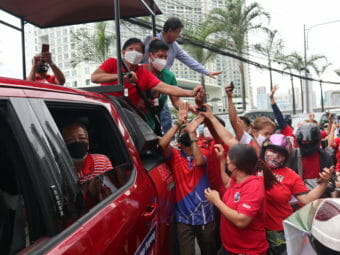
Bongbong Marcos’ 2022 presidential campaign in Makati, Philippines. (Creative Commons photo via Patrickroque01)

Hundreds of voters in the Philippine national elections will be waiting for the results in Alaska. And some hope the outcome makes way for a return to the past.
Leo Evangelista got two mailed ballots recently. This week he voted in Alaska’s special primary for the state’s sole seat in Congress. Last week, he voted for the president of the Philippines.

Evangelista is a dual citizen. He’s lived in Anchorage since the early 1990s and has worked as a mail carrier for more than 25 years.

“My family always said, ‘You want to be a nurse or you want to be a mailman?’” he said with a laugh.

He loves his life in Alaska, but he has siblings back in the Philippines and owns a home there still. He’s stayed really involved in politics, and he takes voting seriously.

Workers with the Special Ballot Reception and Custody Group receive ballots at the Philippine Consulate General office in San Francisco. (Photo from the Republic of the Philippines, Philippine Consulate General, San Francisco)

There was some confusion about whether the overseas ballots had enough pre-paid postage. His wife works at the post office too — at the counter. She made sure to weigh their ballot envelopes and add sufficient postage. And then she sent them priority mail to the consulate in San Francisco, because Evangelista is not taking any chances.

He’s not too worried, though. His candidate — Ferdinand “Bongbong” Marcos Jr. — is expected to win.

Even if you’re not following Philippines politics closely, that name is probably familiar to you. Bongbong is the son of Ferdinand and Imelda Marcos. Ferdinand ruled the Philippines from the mid-1960s to the mid-1980s, part of that time under martial law.

Evangelista is like so many Filipinos who left the country toward the end of the Marcos presidency when the family was deposed and fled in exile to Hawaii. It was a very tumultuous time in the Philippines.

Evangelista worked for the government under the Marcos presidency but says he left for opportunity. He says life is better in the U.S. because there are jobs.

But life is better in the Philippines, too, he says. It’s cheap. And warm. And besides, it’s home. He hopes that under the leadership of another Marcos, the country will continue to become more like how he remembers it. He plans to move there as soon as he retires.

Rochelle Solanoy also has plans to return to the Philippines when she retires from her state job in Juneau in six and a half years.

“Because when you go home to the Philippines, you feel like a queen,” she said. “You know, your money stretches.”

Solanoy is also a dual citizen. And she’s more than just a supporter of Bongbong Marcos. She’s a fan. On the Friday before the election, she was driving around Juneau after work, picking up her girlfriends for a celebratory dinner at the Gold Digger, a Filipino restaurant in a strip mall.

“We’re celebrating because it’s Annie’s birthday,” she said. “And we’re celebrating because Bongbong’s gonna win.”

She’s excited about Marcos’ promises to keep cleaning up the cities, to keep building infrastructure and to build a new economy. Her dream is of a big reunion in the Philippines — a homecoming for all the overseas workers. The older people will retire on the beautiful beaches. The younger people will finally have jobs there and be reunited with families some of them have never met.

Solanoy wasn’t always a Marcos supporter. She left the Philippines in 1981 when she was still a kid. But she went back to visit in 1986. She was a teenager and she says she got caught up in the People Power Revolution.

“I mean, they portrayed Marcos to be a dictator. Of course, I believed all of that,” she said.

But Solanoy says she has since relearned the political history of her country. She says she’s still learning, through YouTube videos, about what the older Marcos accomplished during his leadership. In these videos, the years of martial law in the Philippines are now remembered as the golden years, and Marcos is remembered as a philanthropist. She thinks she was lied to for 30 years.

“That’s why I was like, ‘oh my God, I was so stupid!’” she said thinking back on her teenage flirtation with the revolution. “A lot of people are thinking that way. So we want Marcos back.”

Like Leo Evangelista, she’s confident that Marcos will win – unless there is election fraud. In 2016, Bongbong Marcos lost his vice presidential bid against Leni Robredo. His supporters believe the vote was rigged, but Marcos’ official protests of the result failed.

Robredo is now also vying for the presidency. Solanoy and her friends say they’re scared of cheating – that somehow Robredo will win again. But they also say they trust the current president, Rodrigo Duterte, to ensure a clean election. After all, his daughter is running for vice president.

“Of course he’s going to protect his daughter,” Solanoy said.

Election day is Monday, May 9. It’s a holiday in the Philippines. When the polls close, it’ll be 3 a.m. in Alaska. Leo Evangelista is planning on staying up late to watch the results if they come in right away. He’s planning to take Monday off.

Rochelle Solanoy is already celebrating a Bongbong Marcos win. She says when it happens, she’s going to go to the Philippines and visit him at Malacañang Palace. She wants to talk to him in person about her plans for herself and all her friends to retire from their state jobs and go back home.


This story is part of KTOO’s participation in the America Amplified initiative to use community engagement to inform and strengthen our journalism. America Amplified is a public media initiative funded by the Corporation for Public Broadcasting.


Filipinos in Alaska

KTOO is amplifying the voices of Filipinos in Alaska. We want to hear from you. What stories would you like to share or learn more about?

Name(Required)

Climate scientists say South Asia’s heat wave (120F!) is a sign of what’s to come

People lie on the ground in the shade of a large tree
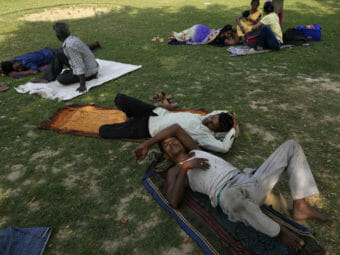
People rest in the shade of a tree on a hot summer afternoon in Lucknow in the central Indian state of Uttar Pradesh, on Thursday. Severe heat wave conditions are sweeping north and western parts of India. (Photo by Rajesh Kumar Singh/AP)

MUMBAI, India — Summer has arrived in South Asia WAY too early.

A punishing heat wave has pushed temperatures past 120F (50C) in some areas. Some schools have closed early for the summer. Dozens of people have died of heatstroke.

The region is already hard-hit by climate change. Extreme heat is common in May. But not in April and March, both of which were the hottest across much of India for more than a century.

“It’s smoldering hot! It’s also humid, which is making it very difficult,” Chrisell Rebello, 37, told NPR in line outside a Mumbai ice cream parlor at 11 p.m. “We need a lot of cold drinks, air conditioning – and multiple baths a day.”

Only a fraction of Indians — mostly, the wealthy — have air conditioning. Instead people soak rags in water and hang them in doors and windows.

Still, electric fans and AC have pushed India’s electricity demand to a record high.

The problem is that 70% of India’s electricity comes from coal. So the government is converting passenger trains to cargo service, to rush coal supplies to beleaguered power plants, and also importing more coal from abroad.

And rolling blackouts are hurting industrial output.

In the short term, experts say India has no choice but to burn coal to keep fans and ACs on. But in the long term, it must transition to renewables, to avoid a vicious circle of warming, says Ulka Kelkar, a Bengaluru-based economist and climate change expert with the World Resources Institute.

“[With] heat plus humidity, at some stage [it] becomes almost impossible for the human body’s organs to function normally,” Kelkar explains. “Basically the body just cannot cool itself, and a large fraction of our population in India still works outside in the fields, on building construction, in factories which are not cooled.”

More than a billion people are at risk of heat-related illness across South Asia. Hospitals are preparing special wards.

This heat wave has also hit at a critical time for the region’s wheat harvest. In the Indian state of Punjab — the country’s breadbasket — farmers complain of reduced crop yields, and lower profits.

“Due to intense heat, the grain we’re harvesting is shriveled,” a Punjabi farmer named Major Singh told local TV.

This is exactly when India was hoping to boost wheat exports to help make up for a shortfall in global grain supplies, from the war in Ukraine.

Suruchi Bhadwal, director of earth science and climate change at The Energy and Resources Institute (TERI), says the disappointing wheat harvest may be an omen of what’s to come, if countries don’t do everything within their power to cut carbon emissions and limit warming to below 2-degrees Celsius, in line with United Nations recommendations.

“India is already giving us a warning bell,” Bhadwal says. “And each country needs to realize that the warning signs will not be given to us forever.”

Copyright 2022 NPR. To see more, visit https://www.npr.org.

A new Iron Curtain is eroding Norway’s hard-won ties with Russia on Arctic issues

A Coast Guard cutter with snowy mountains in the background
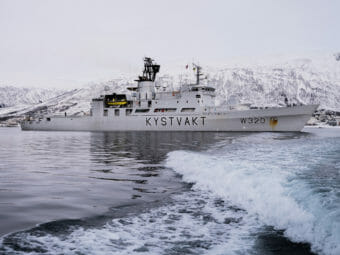
Norwegian coast guard cutters are used for rescue, fishery inspection, research purposes and general patrols in Norwegian waters. (Photo by Nora Lorek for NPR)

Capt. Pal Bratbak has patrolled the Barents Sea for decades. His Norwegian coast guard search-and-rescue cutter mostly chases after distress calls from fishermen. The fishermen are chasing the cod — and the cod sometimes lead them astray.

“The codfish, they don’t see the border, so we help every boat in our area,” he says, and that means as many Russian boats as Norwegian. A treaty allows both nations to catch a quota, and that management of the Barents Sea Arctic cod fleet is considered a success worldwide, both economically and environmentally.

“That’s important for Norway and the European Union and NATO and the whole world. And it’s important for the Russians,” he says.

Cooperation like that has been a given on the Russian-Norwegian frontier for decades, if not centuries. The Norwegians call it “high north, low tension.”

Since Russia’s invasion of Ukraine, though, that tension isn’t so low, and Bratbak is worried. The coast guard also enforces the fishing laws in the Barents Sea.

Years ago, in a rare case, a Russian trawler fled from a coast guard ship, into Russian waters — with Norwegian inspectors on board. Back then, Russian authorities promptly arrested the captain and returned the inspectors. Bratbak hopes the same cooperation would happen today, but his confidence is a bit shaken by recent events.

“In these days, Russia can use other methods to negotiate. Like in the Ukraine conflict, they are willing to use power (more) than talking,” he says.

Critical climate work is on hold

As a founding member of NATO, Norway’s government has joined the rest of Europe in isolating Russia. But as a country bordering Russia, it’s feeling the effects more immediately than some others — in everything from Arctic climate action and nuclear waste control to cross-border trade and regional sports leagues.

The protection of the pristine waters of the Arctic, as well as that cod fleet Capt. Bratbak mentioned, falls under an international group called the Arctic Council. The rotating chair of that group is currently Russia, and as such the council has suspended all activities, including crucial research on climate change.

“It’s not something you can point out that failed today, but it’s ongoing,” says Kim Holmen with the Norwegian Polar Institute in Tromso, where the Arctic Council would normally be coordinating research.

Russia has about half of the world’s Arctic landmass, including permafrost that, if it melts, could release megatons of trapped carbon and greenhouse gases.

Scientists like Holmen count on collaboration with their Russian colleagues.

“We have common publications. We have collected data together. We’ve been on each other’s cruises. I’ve been to people’s homes in Saint Petersburg, good friends,” he says.

Holmen isn’t in contact with those friends right now. He’s been working on the Arctic for more than 30 years, and he says the lesson from back in the Soviet days is that communication will only get them into trouble, which would delay getting back to work.

“Polar scientists are used to the cold,” says Holmen. “We hope and wish to pick up when it thaws.”

‘We are seeing the Iron Curtain come back’

For residents of the border city of Kirkenes, their world changed overnight.

Guro Brandshaug is CEO of the Kirkenes Conference, an annual businesses summit between Russia and Norway. This was the 14th year the event was held, and, on a weeknight in February, it all started out relatively normally.

“On Wednesday the 23rd I welcomed our foreign minister and the Russian ambassador,” says Brandshaug.

With Russian troops massed on the Ukrainian border, she says, it was tense. But Kirkenes is a city built on friendly relations with Russia, and Brandshaug says no one she knew thought Russian President Vladimir Putin would really invade.

“And then we woke up on the morning on the 24th,” she says. “The Russians had started bombing Ukraine. It was a huge shock. People were actually crying.”

A nuclear waste dump poses a constant threat

“Everything that has been built up over the last 30 years, was just washed out in a few days. We are seeing the Iron Curtain coming back,” says Thomas Nilsen with the Barents Observer newspaper in Kirkenes.

The new Iron Curtain severed personal ties, economic links and even scuttled issues of mutual survival, Nilsen says. For years, Norway had been helping Russia safely dispose of spent fuel rods from its aging nuclear submarines, which were stationed in the Arctic.

At a park station in Svanvik, scientist Bredo Moller collects air samples for the Norwegian radiation safety authority.

“We are some, some kind of a nuclear watchdog on the border to Russia,” he says. “That’s more or less why we’re here — to monitor what’s on the other side of the border, just a few kilometers from here.”

He’s referring to one of the world’s biggest nuclear waste dumps, across the border, where tons of waste from Russian power plants and aging submarines pose a constant threat, either as a contaminant to the Arctic sea life or as material in a terrorist dirty bomb.

Moller says that just last November, Norway marked 25 years of cooperation on nuclear cleanup, and he went to Murmansk in Russia for a celebration with his colleagues.

“I have many friends in Murmansk, shaking their heads like me, waiting for this to end,” he says.

Moller is counting on those colleagues to keep up the work of saving the Arctic from nuclear contamination. And he’s certain his friends oppose the war in Ukraine just as he does — they just can’t speak right now. But it’s chilling that many local officials across the border, as well as 700 rectors and university presidents in Russia, have issued strong statements supporting Putin. And that makes Moller worry that even this vital work might not resume soon.

“It will take many, many years I’m afraid, to get back to that trust that we have gained through these 25 years of cooperation. So, yeah, it is frightening times,” he says.

Copyright 2022 NPR. To see more, visit https://www.npr.org.

What is May Day? For the most part, the opposite of capitalism

Demonstrators wearing red and carrying pro-labor signs
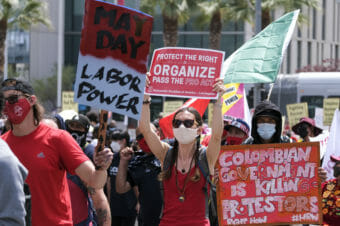
May Day demonstrators march through downtown Los Angeles last year. Thousands of people took to the streets across the nation that May 1 in rallies calling for immigration reform, workers’ rights and police accountability. (Photo by Ringo H.W. Chiu/AP)

May Day, celebrated by workers across the globe as International Labor Day, falls on May 1.

But you’d be forgiven if that’s news to you. While the day traces its origins to an American laborers’ fight for a shorter work day, the U.S. does not officially recognize International Labor Day.

Like other countries that mark Labor Days on different dates, the U.S. and Canada celebrate their Labor Day in September.

U.S. resistance to celebrate International Labor Day — also called International Workers’ Day — in May stems from a resistance to emboldening worldwide working-class unity, historians say.

“The ruling class did not want to have a very active labor force connected internationally,” said Peter Linebaugh, author of The Incomplete, True, Authentic, and Wonderful History of May Day. “The principle of national patriotism was used against the principle of working-class unity or trade union unity.”

That hasn’t stopped American workers from commemorating the day, which in recent years has ranged from marching for labor rights to reading literature about Marxism.

“The meaning of that day keeps changing,” Linebaugh said.

Before we consider how May Day has evolved in the U.S., let’s dive into how it all began.

The traditional May Day is an ancient European export

If you instead associate May Day with baskets of flowers, dancing around maypoles, or simply, the start of summer, those May Day celebrations recall the holiday’s much earlier origins. Before May Day was adopted as a day to champion workers, its roots belonged to pagan tradition.

The springtime tradition was inherited from pagan tribes in Ireland and Scandinavia, said Linebaugh, borrowing ancient Roman practices celebrating the Earth’s flowering season. When the first Europeans came to North America and erected a maypole in Quincy, Mass., they imbibed copious amounts of beer and danced with the Indigenous people, he said.

“The Puritans of Boston put an end to it by military force,” Linebaugh said. “And yet this tradition of May Day as a time of dancing and play and pleasure persisted right into many parts of the U.S. today.”

At the end of the day, no matter your version of May Day, it remains a time meant to celebrate togetherness. Inevitably, history shows, that May Day comradery has been met with suppression.

May Day in America has bloody origins

May Day in America was born out of the 8-hour workday movement in 19th-century Chicago. At the time, as the capitalist system gained a foothold in industrial-era America, working-class conditions had worsened. A 16-hour shift wasn’t unusual for workers at the time.

Decades before the 8-hour work-day became the country’s norm, the organization now known as the American Federation of Labor set May 1, 1886, as the date that workers nationwide should go on strike to demand the 8-hour workday.

“The reason was that the decade before there had been terrible unemployment … and yet new technology had made the employer richer,” Bill Edelman, a professor of labor studies, previously recounted on Talk of the Nation.

The workers followed through. On that May date, anarchists and labor activists in Chicago began a multi-day strike in what became known as the Haymarket affair of 1886. By May 3, the protests turned violent when police — “which were basically the armed force of the capitalist masters,” according to historian Linebaugh — attacked workers demonstrating near the McCormick Reaper plant. The following day, a meeting held in the city’s Haymarket Square turned even bloodier. Again, the police intervened, said Linebaugh, triggering clashes that killed both officers and civilians.

A bomb exploded among police ranks in the melee, but historians say it’s unclear whether it was intended for the police or the crowd of civilians.

“There was a trial of eight men who were found guilty of conspiracy to murder,” Linebaugh said. “Even though no evidence was ever produced that any of them had any relationship to this bomb, and four of them were eventually hanged despite a worldwide campaign in England, Europe, Mexico to save their lives.”

Linebaugh points to the influential words of August Spies, one of the convicted men, who just before his execution cried out the famous words: “There will come a time when our silence will be more powerful than the voices you strangle today.”

His words “swept the globe,” Linebaugh said. “Throughout Latin America, throughout Europe and in North America, to many, the day became this holiday to celebrate working people.”

To honor the Chicago workers, the International Socialist Conference in 1889 named May Day a labor holiday, birthing what many nations now call International Workers’ Day.

But in the U.S., anti-communist attitudes during the Cold War, as well as opposition to working-class unity, led authorities to suppress May Day’s association with labor movements.

President Dwight D. Eisenhower instead declared May 1 “Law Day” — dedicated to the principles of government under law — and Labor Day is now celebrated in September.

It’s not just a “communist” holiday

Despite International Labor Day’s U.S. origins, said Linebaugh, many Americans, still view May Day as strictly a holiday enjoyed by “communist countries.”

In the former Soviet Union, May Day was an occasion to honor workers’ contributions with giant parades in Red Square, a tradition that has dwindled in the decades since — a fading remnant of the Bolshevik Revolution that’s lost its meaning in modern Russia.

“Some of the workers of Czarist Russia also celebrated May Day, but quickly within 10 years, say by the 1930s, it becomes [for] the Soviet Union a day to display military hardware, military weapons,” Linebaugh said.

As for Americans this year, he mused, “How it will be celebrated this day?”

“I’m not sure. I think it’ll be exciting to pay attention to see the ways in which its history is remembered.”

For a day that celebrates reform and revolution, political discussions and petitions, said Linebaugh, there’s something in it for everyone. Well, maybe not.

“There’s nothing in it for the capitalist class,” he said.

Copyright 2022 NPR. To see more, visit https://www.npr.org.

Moderna asks FDA to authorize first COVID-19 vaccine for very young children

""
Moderna says its vaccine appears to be about 51 percent effective for children ages 6 months to less than 2 years, and 37 percent effective for those ages 2 to less than 6 years. (Photo by Ole Spata/dpa picture alliance via Getty Images)

Moderna announced Thursday that the company has asked the Food and Drug Administration to authorize a low-dose version of its COVID-19 vaccine as the first vaccine for children younger than age 5.

In a study involving about 6,700 children, the company said two doses of the vaccine administered 28 days apart to children ages 6 months to less than 6 years triggered levels of antibodies equivalent to what has protected older children and adults.

“We are proud to share that we have submitted for authorization for our COVID-19 vaccine for young children,” said Stéphane Bancel, Moderna’s chief executive officer, in a statement. “We believe [the vaccine] will be able to safely protect these children against SARS-CoV-2, which is so important in our continued fight against COVID-19, and will be especially welcomed by parents and caregivers.”

The vaccine appears to be about 51 percent effective for children ages 6 months to less than 2 years, and 37 percent effective for those ages 2 to less than 6 years, the company says.

“That means that you’re going to reduce your chances of getting disease by about a half. That’s very important for these kids,” Dr. Paul Burton, Moderna’s chief medical officer, told NPR in an interview.

While that level of effectiveness is lower than many had hoped, it’s not surprising given the study was conducted when omicron was the dominant variant, company officials and others say. Omicron can evade immunity better than previous variants, resulting in more “breakthrough” infections among vaccinated older children and adults.

But “the levels of antibodies that we see clearly shows that we should have very good protection against severe disease and hospitalization, which obviously is what counts most,” Burton said.

The FDA will probably convene a committee of outside advisers to consider the request. The FDA is also awaiting data from Pfizer and BioNTech about the effectiveness of three doses of a low-dose version of their vaccine in children younger than age 5. Two doses proved ineffective, disappointing parents of young children eager to vaccinate their children.

While officials had hoped to make a vaccine available for this age group by the end of April, the FDA is now expecting to consider it in June once all the data have been submitted, according to an official familiar with the issue who is not authorized to speak publicly.

The possibility of a delay has angered many parents of young children, who are frustrated and anxious that they haven’t been able to vaccinate their children even as mask requirements have been dropped and infections are creeping up.

Some lawmakers have urged the FDA to act more quickly.

But it remains to be seen how much demand there will be for the vaccine. Only about a third of parents of children ages 5 to 11 have vaccinated their children even though they’ve been eligible for months.

“We have very reassuring data. This is an unmet need here for these young children. They have no other opportunity for protection right now. So I would be hopeful that the FDA will take the data, do their normal very thorough but excellent review, and approve this as soon as possible,” Burton said.

The Centers for Disease Control and Prevention and many independent infectious disease specialists have been urging more parents to vaccinate and boost their children. Even though the omicron surge has receded, and children are less likely to get severely ill, the virus can still pose a serious health risk, they say.

Copyright 2022 NPR. To see more, visit https://www.npr.org.

Most Americans have been infected with the COVID-19 virus, the CDC reports

""
People arrive at a COVID-19 testing station in Houston, Texas, on Jan. 7. Texans were rushing to get tested as the state experienced an unprecedented spike in infections from the omicron variant. (Photo by Francois Picard/AFP via Getty Images)

Most people in the United States, including most children, have now been infected with the coronavirus, according to a new study from the Centers for Disease Control and Prevention.

At a briefing for reporters on Tuesday, the CDC’s Dr. Kristie Clarke said so many people caught omicron over the winter that almost 60% of everyone in the U.S. now have antibodies to the virus in their blood.

That number is even higher for children — almost 75% of children 11 and younger have antibodies to the virus.

Clarke said the finding means many people have at least some immunity to the virus. But CDC officials stressed that people should still get vaccinated, because vaccination provides the strongest, broadest protection against getting seriously ill. Immunity provided by previous infection may or may not be as protective against severe disease.

The CDC also said that cases of COVID-19 continue to rise, going up 23% last week to 44,416 a day. Deaths continue a months-long decline to 314 a day, or 13% less than the week before. Hospitalizations are on the uptick at 1,629 a day, up 7% over the previous week, according to CDC Director Rochelle Walensky.

About 1.5% of the U.S. population lives in communities where there is a high prevalence of COVID at the present time, with 6.5% in medium prevalence areas and the rest (92%) in communities with low levels of COVID.

Copyright 2022 NPR. To see more, visit https://www.npr.org.

Site notifications
Update notification options
Subscribe to notifications