Nation & World

A big 32-hour workweek test is underway. Supporters think it could help productivity

People walking across a bridge with skyscrapers in the background
More than 3,300 workers in the U.K. are participating in the largest pilot of the four-day workweek. The experiment will last six months as researchers track how people respond to having an extra day off. (Photo by Justin Tallis/AFP via Getty Images)

For the next six months, thousands of people across the U.K. will be working 32 hours a week in the largest four-day workweek pilot the world has ever seen.

The experiment includes more than 3,300 people across 70 companies in industries ranging from health care to local fish and chip shops. It’s being put on by 4 Day Week Global, the 4 Day Week Campaign, the U.K.-based think tank Autonomy, and researchers at Cambridge University, Oxford University and Boston College.

The idea is pretty simple. Workers make the same amount of money they would for a 40-hour workweek, but they only work 80% of the time. In exchange for fewer hours, workers commit to maintaining the productivity they would in a five-day workweek.

Calls for a 32-hour workweek have increased, especially as many people around the world are facing burnout from the pandemic.

“As we emerge from the pandemic, more and more companies are recognizing that the new frontier for competition is quality of life, and that reduced-hour, output-focused working is the vehicle to give them a competitive edge,” Joe O’Connor, CEO of 4 Day Week Global, said in a statement.

“The impact of the ‘great resignation’ is now proving that workers from a diverse range of industries can produce better outcomes while working shorter and smarter,” he said.

The outcomes of a 32-hour workweek are something that Will Stronge, director of research at Autonomy, focuses on. Stronge, who is also the co-author of Overtime: “Why We Need A Shorter Working Week,” told NPR’s Life Kit podcast last year that in some ways the five-day workweek is outdated and leads to something he calls the creep of overtime into our personal lives.

“Our working culture has changed to be one where it’s much more about going above and beyond — working beyond your hours either for better career prospects or simply because it is demanded of you by your boss,” he said. “Now, during the pandemic, you’re in your living room with your laptop. So it’s hard to switch off this creep which has infiltrated our working lives.”

People walking in London in casual summer clothes
If people were given an extra day off, Stronge said many say they would take care of personal tasks or spend more time with family and friends. (Photo by Tolga Akmen/AFP via Getty Images)

Stronge has argued that a shorter workweek would be better for people’s mental health and could even increase productivity.

“For many organizations, what you lose in labor time, you gain in greater productivity on the job,” he said. “We can’t concentrate all the time, particularly if you’re overworked and you have burnout. And so reducing the working week has reaped dividends in terms of productivity and worker well-being, which means they come to work refreshed. They come to work liking their job a bit more and wanting to kind of get the work done so that they can have a nice weekend and so on.”

Researchers will measure any changes in productivity

As the large U.K. pilot gets underway, productivity is one area researchers will focus on.

“We’ll be analyzing how employees respond to having an extra day off, in terms of stress and burnout, job and life satisfaction, health, sleep, energy use, travel and many other aspects of life,” Juliet Schor, professor of sociology at Boston College, said in a statement.

While it will be at least six months before final results from the U.K. pilot are revealed, a similar experiment by Microsoft Japan in 2019 resulted in a 40% increase in productivity. Earlier, a New Zealand company testing four-day weeks announced a 20% boost in employee productivity in 2018.

Trials in Iceland of some 2,500 workers between 2015 and 2019 found that productivity remained the same or improved in most cases.

And as for the extra weekend day people pick up, Stronge said many people say they would use the extra day off for getting personal tasks done or spending more time with their friends and family.

“It does make a huge difference,” Stronge said. “And so I think it should — it would be a bit of a game-changer.”

Copyright 2022 NPR. To see more, visit https://www.npr.org.

Abbott’s baby formula plant is reopening in a step that could soon ease the shortage

A photo of a factory
The Abbott manufacturing facility in Sturgis, Mich., is reopening, allowing supplies of baby formula to head to consumers starting later this month, the company said Saturday. (Photo by Jeff Kowalsky/AFP via Getty Images)

Abbott says it’s restarting the production of infant formula at its Sturgis, Michigan, plant in a step that could ease a nationwide formula shortage in the coming weeks.

The facility was forced to close in February after a bacterial contamination was found in the company’s formula products. Several babies were sickened and two died after consuming formula made at the plant.

The closure intensified ongoing supply shortages of baby formula in the U.S. To help alleviate the scarcity, the Biden administration has been importing formula from abroad in recent weeks.

Abbott’s specialty formula EleCare will be available to consumers beginning on or about June 20, the company says. EleCare is formulated for infants with allergies to cow milk.

Abbott, one of the largest of the few formula makers in the U.S., was cleared to restart production the Michigan facility after meeting initial FDA requirements.

“We understand the urgent need for formula and our top priority is getting high-quality, safe formula into the hands of families across America,” Abbott said in a statement on Saturday.

“We will ramp production as quickly as we can while meeting all requirements,” the company added. “We’re committed to safety and quality and will do everything we can to re-earn the trust parents, caregivers and health care providers have placed in us for 130 years.”

The Food and Drug Administration has been working “around-the-clock” to alleviate the supply shortages, an agency spokesperson said in a statement to NPR. The FDA expects the resumption of production at the Michigan plant “will mean more and more infant formula is either on the way to or already on store shelves moving forward,” the spokesperson added.

Copyright 2022 NPR. To see more, visit https://www.npr.org.

So an Alaskan and a possum walk into a bar…

A woman holding a possum by the scruff of its neck in some hipster bar in Greenpoint, Brooklyn
Sara Fulton, born and raised in Alaska, scruffs a possum in Temkin’s bar in Brooklyn. (Screengrab from Greenpointers account on Instagram)

An Alaskan living in New York City has become somewhat internet famous for wrangling a possum out of a local bar.

Yeah. That’s right. An Alaskan versus a possum. And it was caught on video.

Sara Fulton is originally from Anchorage and manages a cafe-bistro called Stowaway in Brooklyn’s Greenpoint neighborhood. Next door to Stowaway is a bar named Temkin’s. And, as she sometimes does, Fulton stopped in after work last Thursday for a drink with a friend.

Fulton recently spoke with Alaska News Nightly Host Casey Grove about what happened next.

Listen:

The following transcript has been lightly edited for clarity. The embedded video contains some bad language, as you would expect.

Sara Fulton: And I was playing pinball because they have pinball. So I was just there playing pinball and having a good time, just, you know, your normal night at Temkin’s. But before it all happened, I was outside talking with a friend. And that’s when we saw a critter run into the bar.

Casey Grove: A possum runs into a bar…

Sara Fulton: Yeah, so the possum runs in, and we’re like, “What was that?” And I was like, “I swear to God, I think that’s a possum.” And we run in, everybody is on the other side of the bar freaking out. And it was just like me and my friend. He grabbed a bunch of stools and cornered the possum to the corner of the bar. And then I looked around, and I was like, “Well, I guess I’m the calmest one here.” And I just said, “Hold my phone. I’m from Alaska. I got this.”

Casey Grove: There’s a couple of things I need to unpack there. So why you? And why did you say, “I’m an Alaskan. I got this?”

Sara Fulton: Yeah, because, I don’t know. I think it’s just because it’s like, you know, they’re all a bunch of New Yorkers. It’s like what we deal with are cockroaches and rats. And then I was like, “Oh, a possum, that’s nothing compared to a moose or bear.” I was like, “This is nothing.” It was me trying to justify why I could handle it, so nobody could question me, and I’d just take care of the possum.

Casey Grove: And it sounds like that worked. Nobody questioned you over that.

Sara Fulton: No, and they’re just like, “Oh, OK, she’s from Alaska. Let her handle it.” You know, New York is great, but so is Alaska. Alaska breeds badass people. I don’t know if I can say that. But, I mean, Alaska creates, like it has the most amazing people. And everyone needs to know that.

Casey Grove: That’s awesome. So what did you actually do to get it out the door?

Sara Fulton: I scruffed him. I went up to him. I grabbed him by the back of his neck, and then carried him out and tried to figure out the safest spot for him to be released. And that was on the sidewalk, and I put him down and he ran away.

Casey Grove: So in the video that has been widely circulated now, you kind of like dusted your hands off after.

Sara Fulton: Oh yeah. I mean, come on. I was just like, “Alright. And we’re done.” At that moment, I was feeling very, “Alright, cool. That was pretty neat. I didn’t get bit.” So I was happy.


View this post on Instagram


A post shared by greenpointers (@greenpointers)

Casey Grove: What was the reaction from from everyone else there?

Sara Fulton: Everyone was flipping out. But then after I did it, you know, they’re like, “You’re a hero! You saved us!” And then it was just a line of shots of tequila for me down the bar. And I was just like, “Oh, Lord.” It was nuts.

Casey Grove: It seems like it just blew up here recently. Tell me about that. I mean, you’re sort of like an internet celebrity at the moment.

Sara Fulton: Yeah, I’m shook. I was like, “Oh, maybe it will get like 100 likes or whatever.” But then our local Instagram of the neighborhood, called Greenpointers, shared it. And then it just blew up from there. And, you know, unexpected. Like, I just did an interview with CNN today. Like, what? That’s so weird.

Casey Grove: Yeah. It’s like the story is a story more because you’re from Alaska. That’s a big part of it, right?

Sara Fulton: Yeah. And I’m down with that, because it’s like repping Alaska. Because usually everyone knows Alaska from Sarah Palin. So I’m mad stoked that I’m able to like give Alaska a new name. You know?

Casey Grove: Do you see yourself wrangling other animals in New York in the future?

Sara Fulton: Yeah, I was like, “Maybe I should just become the critter control.” Just make this the whole shtick, you know?

As the baby formula crisis worsens, it’s also magnifying disparities in the US

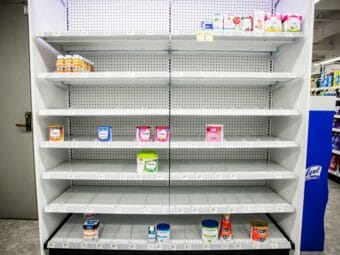
Shelves normally meant for baby formula sit nearly empty
Shelves normally meant for baby formula sit nearly empty at a store in downtown Washington, D.C., on May 22. (Photo by Samuel Corum/AFP via Getty Images)

The mothers Tess Frear works with were already struggling. Most of them are single parents, typically from economically disadvantaged families. Sometimes they’re escaping domestic violence; sometimes they’re as young as 15.

For these new mothers, it was hard enough just trying to get basics such as diapers or clothing. Then came the baby formula shortage.

“There’s definitely desperation,” said Frear, executive director of the baby supply bank Helping Mamas in Knoxville, Tenn. “These mamas are just scared, you know. What are they going to do?”

More than three months since Abbott Nutrition issued a voluntary recall of powder formula manufactured at a Michigan production plant, further stressing pandemic-related strains in the supply chain, that desperation has become more acute. One month ago, the average out-of-stock rate nationwide was about 40%, according to the retail analytics company Datasembly. For the week ending May 28, that rate had surged to 73.6%.

The frustration is being felt practically everywhere. This time last year, the average out-of-stock rate in the U.S. hovered around 6%. Store shelves were practically full all of the time. By the end of the last full week in May, not a single state was below 45%, according to Datasembly. In states such as Arizona, California, Georgia and Mississippi, the rate was creeping toward 95%. Everywhere you look, shelves are nearly bare.

For some, the crisis has been particularly painful. Even though most families will give formula to an infant at some point during their first year, parents from low-income households or from communities of color often depend on it the most.

For some, searching for formula has become a job

The majority of all formula sold in the U.S. is purchased through a federally funded food assistance initiative known as the Special Supplemental Nutrition Program for Women, Infants and Children, or WIC. Somewhere between 50% and 65% of all formula is purchased by WIC families, according to the National WIC Association. That’s enough formula, the group says, to feed an estimated 1.2 million infants.

“This crisis, which is truly a manufacturing sector failure, has impacted all parents of formula-fed infants, but it magnifies the disparities that have long existed,” according to Brian Dittmeier, senior director of public policy at the National WIC Association. “Searching for formula has to an extent become a full-time job, and low-income families that are working two jobs already may not have the bandwidth to fully invest in the search,” he said.

Similarly, the shortage has underscored what are sometimes deep disparities in breastfeeding rates when broken down by race. The American Academy of Pediatrics recommends that infants be exclusively breastfed for about the first six months, with continued breastfeeding while introducing complementary foods for at least 12 months. And while more than 90% of Asian American mothers and 85% of mothers who are white breastfeed their newborns, for Black mothers, the rate is just under 74%, according to data from the Centers for Disease Control and Prevention.

In some places, the rates are far lower. In both Arkansas and Mississippi, for example, less than 53% of mothers who are Black breastfed their babies at birth, according to the CDC.

There are myriad reasons why mothers rely on formula. Some, for example, turn to it after facing issues with lactation or latching. Others might need it because an illness with the mother or the baby makes nursing impossible.

But experts say the ongoing formula shortage also highlights key structural barriers that keep millions of women from breastfeeding. For example, just 51% of employers make it easy for new moms to breastfeed by providing an on-site lactation room, according to the CDC.

Other parents might lack paid family leave at their jobs — once back at work, many breastfeed at lower rates than those with more generous leave policies. One study published last year in the journal Health Equity found 33% of Black women and 25% of Hispanic women received no pay while on leave. For white and Asian American women, the rates were 10% and 13% respectively.

“People are saying, ‘Why don’t they breastfeed?’ Well, maybe they can’t breastfeed at their job or maybe there is some other circumstance where they cannot breastfeed. There’s just a variety of reasons why people cannot,” said Frear.

The U.S. is importing formula to ease the shortage

Last month, the Biden administration invoked the Defense Production Act to speed up domestic production of infant formula. The White House has also worked to import tens of millions of additional bottles of formula from overseas, with more expected to arrive in the coming days. The Abbott plant at the center of the recall is expected to reopen for production in the coming days, but even once the plant resumes operation, it could take another six to eight weeks before formula from the plant is available on grocery shelves.

Until then, Frear said she and her network will keep working as best they can to help as many parents as they can get the formula that they need. But it’s hard work. There are many different kinds of formula on the market, and many of the children they serve have health issues that require a specific type of product.

Sometimes the organization can track it down from one of their followers on Facebook or Instagram. When they can’t, they’ll help pair a new mother with a pediatrician or nutritionist to try to figure out a temporary alternative.

“We just take it one day at a time,” said Frear. “Each day we keep on moving forward and try to help these families be the best that they can be.”

Copyright 2022 NPR. To see more, visit https://www.npr.org.

What does a black hole sound like? NASA has an answer

""
A bounty of black holes surround the Sagittarius A supermassive black hole which lies at the center of our Milky Way Galaxy. (Photo by NASA/CXC/Columbia Univ./C. Hailey et al.)

For the first time in history, earthlings can hear what a black hole sounds like: a low-pitched groaning, as if a very creaky heavy door was being opened again and again.

NASA released a 35-second audio clip of the sound earlier this month using electromagnetic data picked from the Perseus Galaxy Cluster, some 240 million light-years away.

The data had been sitting around since it was gathered nearly 20 years ago by the Chandra X-Ray Observatory. The decision to turn it into sound came only recently, as part of NASA’s effort over the past two years to translate its stunning space photography into something that could be appreciated by the ear.

“I started out the first 10 years of my career really paying attention to only the visual, and just realized that I had done a complete disservice to people who were either not visual learners or for people who are blind or low-vision,” NASA visual scientist Kimberly Arcand told NPR in an interview with Weekend Edition.

While the Perseus audio tries to replicate what a black hole actually sounds like, Arcand’s other “sonifications” are more or less creative renditions of images. In those imaginative interpretations, each type of material — gaseous cloud or star — gets a different sound; elements near the top of images sound higher in tone; brighter spots are louder.

For more examples of NASA’s sonifications, go to the agency’s Universe of Sound web page. Or read on to learn more from Arcand about the venture.

Interview Highlights

On how the black hole audio was made

What we’re listening to is essentially a re-sonification, so a data sonification of an actual sound wave in this cluster of galaxies where there is this supermassive black hole at the core that’s sort of burping and sending out all of these waves, if you will. And the scientists who originally studied the data were able to find out what the note is. And it was essentially a B-flat about 57 octaves below middle C. So we’ve taken that sound that the universe was singing and then just brought it back up into the range of human hearing — because we certainly can’t hear 57 octaves below middle C.

On sonifying an image of the center of the Milky Way Galaxy

So, we actually take the data and we extrapolate the information that we need. We really pay attention to the scientific story to make sure that conversion from light into sound is something that will make sense for people, particularly for people who are blind or low vision. So our Milky Way galaxy — that inner region — that is this really sort of energetic area where there’s just a whole lot of frenetic activity taking place. But if we’re looking at a different galaxy that perhaps is a little bit more calm, a little bit more restive at its core it could sound completely different.

­­­­­­­­On the sonification of the “Pillars of Creation” photograph from the Eagle Nebula in the Serpens constellation:

This is like a baby stellar nursery. These tall columns of gas and dust where stars are forming and you’re listening to the interplay between the X-ray information and the optical information and it’s really trying to give you a bit of the text.

These soundscapes that are being created can really bring a bit of emotion to data that could seem pretty esoteric and abstract otherwise.

Copyright 2022 NPR. To see more, visit https://www.npr.org.

The U.S. Has Spent More Than $2 Billion on a Plan to Save Salmon. The Fish Are Vanishing Anyway.

Tens of thousands of juvenile king salmon are kept in cold water tanks at DIPAC’s largest hatchery in Juneau. The hatchery has had to move its fry out to net pens earlier than ever this year because of warmer water flowing from reservoirs. (Photo by Jacob Resneck/CoastAlaska)
Tens of thousands of juvenile king salmon are kept in cold water tanks at DIPAC’s largest hatchery in Juneau. (Photo by Jacob Resneck/CoastAlaska)

ProPublica is a Pulitzer Prize-winning investigative newsroom. Sign up for The Big Story newsletter to receive stories like this one in your inbox.

The fish were on their way to be executed. One minute, they were swimming around a concrete pond. The next, they were being dumped onto a stainless steel table set on an incline. Hook-nosed and wide-eyed, they thrashed and thumped their way down the table toward an air-powered guillotine.

Hoses hanging from steel girders flushed blood through the grated metal floor. Hatchery workers in splattered chest waders gutted globs of bright orange eggs from the dead females and dropped them into buckets, then doused them first with a stream of sperm taken from the dead males and then with an iodine disinfectant.

The fertilized eggs were trucked around the corner to an incubation building where over 200 stacked plastic trays held more than a million salmon eggs. Once hatched, they would fatten and mature in rectangular concrete tanks sunk into the ground, safe from the perils of the wild, until it was time to make their journey to the ocean.

The Carson National Fish Hatchery was among the first hatcheries funded by Congress over 80 years ago to be part of the salvation of salmon, facilities created specifically to replace the vast numbers of wild salmon killed by the building of dozens of hydroelectric dams along the Northwest’s mightiest river, the Columbia. Tucked beside a river in the woods about 60 miles northeast of Portland, Carson has 50 tanks and ponds surrounded by chain-link fencing. They sit among wood-frame fish nursery buildings and a half-dozen cottages built for hatchery workers in the 1930s.

Today, there are hundreds of hatcheries in the Northwest run by federal, state and tribal governments, employing thousands and welcoming the community with visitor centers and gift shops. The fish they send to the Pacific Ocean have allowed restaurants and grocery seafood counters to offer “wild-caught” Chinook salmon even as the fish became endangered.

The hatcheries were supposed to stop the decline of salmon. They haven’t. The numbers of each of the six salmon species native to the Columbia basin have dropped to a fraction of what they once were, and 13 distinct populations are now considered threatened or endangered. Nearly 250 million young salmon, most of them from hatcheries, head to the ocean each year — roughly three times as many as before any dams were built. But the return rate today is less than one-fifth of what it was decades ago. Out of the million salmon eggs fertilized at Carson, only a few thousand will survive their journey to the ocean and return upriver as adults, where they can provide food and income for fishermen or give birth to a new generation.

Federal officials have propped up aging hatcheries despite their known failures, pouring more than $2.2 billion over the past 20 years into keeping them going instead of investing in new hatcheries and habitat restorations that could sustain salmon for the long term. At the largest cluster of federally subsidized hatcheries on the Columbia, the government spends between $250 and $650 for every salmon that returns to the river. So few fish survive that the network of hatcheries responsible for 80% of all the salmon in the Columbia River is at risk of collapse, unable to keep producing fish at meaningful levels, an investigation by Oregon Public Broadcasting and ProPublica has found.

These failures are all the more important because hatcheries represent the U.S. government’s best effort to fulfill a promise to the Northwest’s Indigenous people. The government and tribes signed treaties in the 1850s promising that the tribes’ access to salmon, and their way of life, would be preserved. Those treaties enshrined their right to fish in their “usual and accustomed places.” The pacts between sovereign nations did not stop the U.S. from moving forward with a massive decades-long construction project in the middle of the 20th century: the building of 18 dams that transformed a free-flowing river into a machine of irrigation, shipping and hydroelectric power.

The dams meet nearly 40% of today’s regional electricity needs. But they decimated wild salmon.

Many species of salmon are at or near their lowest numbers on record. Native fishermen say their way of life has been stolen from them and from future generations. But the government didn’t invest in making hatcheries better equipped to grow more resilient and abundant stocks. Instead, officials ushered in endangered species restrictions. They knew that hatchery fish were genetically weaker than wild salmon, so they put limits on the number of hatchery fish that could be released into rivers, where they might spawn with wild fish and weaken the gene pool. These restrictions hampered the productivity of the hatcheries, squeezing tribal fishing even more.

In recent years, salmon survival has dropped to some of the worst rates on record. The numbers of returning adult salmon have been so low that dozens of hatcheries have struggled to collect enough fish for breeding, putting future fishing seasons in jeopardy.

Each passing year of poor returns worsens the outlook for salmon. While salmon runs fluctuate from year to year and this year’s returns have been higher than those of the past few years, human-caused climate change continues to warm the ocean and rivers, and the failure to improve salmon survival rates has left the region’s tribes facing a future without either wild or hatchery fish. Federal scientists project that salmon survival will decline by as much as 90% over the next 40 years.

The federal agencies responsible for more than 200 hatchery programs — including the National Oceanic and Atmospheric Administration, the U.S. Fish and Wildlife Service and the Northwest Power and Conservation Council — have failed to implement recommendations from their own scientists about how to improve outcomes at the hatcheries they support.

Allyson Purcell is the director of West Coast hatcheries for NOAA, which oversees endangered salmon recovery, sets regulations for hatcheries and funds roughly a third of all Columbia River hatchery production. In an interview, she conceded that federal hatchery reform efforts have historically focused on saving wild salmon, but said that her agency is now researching ways to create more resilient hatchery fish.

“As soon as we have actionable science, we will implement changes,” Purcell said. She also acknowledged that hatcheries will need to change to sustain fish populations as the climate continues to change.

“We want to stay nimble,” she said. “In some cases you may want to change the goal of the hatchery. If you find that you need to rely on it to keep a population from going extinct, you’re going to operate that hatchery program differently.”

People like John Sirois, a former chair of the Confederated Tribes of the Colville Reservation in northeast Washington, have been waiting a long time for changes. Nearly a decade ago, he cut the ribbon at the opening of the Chief Joseph Hatchery, 545 miles upriver from the mouth of the Columbia. That hatchery, one of 23 facilities overseen by the Northwest Power and Conservation Council, opened in 2013.

But it is now struggling to return enough fish, and the upper Columbia’s spring Chinook population has fallen to one of its lowest levels on record. Last year the Colville Tribes, whose diet was once as much as 60% salmon, caught less than one fish for each of its 10,000 people.

“Despite all the efforts that we’ve done, the salmon run is looking pretty on the ropes.” Sirois said. “If it’s more difficult for hatcheries to produce salmon, it is the beginning of the end.”

“A Finger in a Dike”

There are many reasons that Columbia River salmon die, whether they were born in the wild or in hatcheries. Millions don’t survive their trip down the river, which has become a gantlet of dams and slackwater reservoirs, hot and polluted waters, and invasive predators. Millions more die in the ocean or get snared by commercial fishing ships, ending up as grocery fillets or pet food before they can return upriver toward their spawning grounds.

Some die-off is natural. But the dismal survival rates of salmon bred on the Columbia today are neither natural nor sustainable.

Oregon Public Broadcasting and ProPublica examined the yearly survival of eight Columbia River Basin hatchery populations of vulnerable salmon and steelhead trout, detected at a federal dam on their way out to sea as juveniles and on their way back upriver as adults. This dam-to-dam measure provides one of the only consistent indexes of how well salmon are surviving. But it’s a high-end estimate, because it only measures how well they’re surviving in the ocean. These numbers don’t account for the millions of juvenile fish that die migrating downriver before they’re counted at the dam or the many adults who pass the dam but die before reaching their destination upriver. Our analysis of the publicly available data provides a high-level and easily understandable snapshot of hatchery performance; previously, assessing the health of the hatchery system would have required combing through thousands of pages of government reports and academic research.

Even with this generous estimate, however, the survival rates of these hatchery fish have been well short of the established goals for rebuilding salmon populations, according to the Oregon Public Broadcasting and ProPublica analysis.

According to our analysis, salmon populations released from 2014 to 2018, the most recent years for which complete data was available, had some of the worst survival rates on record. In that time period, none of the eight populations had average returns exceeding 4%, the threshold necessary for a population to recover, which was adopted by the Northwest Power and Conservation Council and vetted by independent panels of experts. But even in the previous six years, when ocean conditions were favorable for salmon, only two achieved average returns above 4%.

That 4% goal was established for wild populations, but in a 2015 report to Congress, 17 scientists recommended that survival rates of hatchery fish would have to be high relative to wild fish “to effectively contribute to harvest and/or conservation.”

Most hatcheries, however, aren’t even aiming to meet the council’s recovery goals. Some aim to get less than half a percent of their fish back. But lately, they aren’t even getting that.

“It’s not self-sustaining. We don’t have the numbers,” said Aaron Penney, a member of the Nez Perce who spent more than 20 years managing his tribe’s hatchery on the Clearwater River in Idaho. Penney, now a biologist for the Coeur d’Alene Tribe in northern Idaho, says raising hatchery fish in worsening river and ocean habitat is like “putting a finger in a dike to stop a leak.”

Records obtained from NOAA show that over the past five years, dozens of hatchery programs have fallen short of their typical production levels, some by more than half. Some have tried to address that shortfall by capturing more wild fish to breed. Others used eggs that were shared by nearby hatcheries.

But major shortages across the Columbia basin in 2018 and 2019 left hatcheries scrambling to find enough egg-bearing female fish. Tribal hatcheries, which are located farther upriver where salmon face a longer, harder journey, bore the brunt. They’ve been planning for shortages to become commonplace as rivers and the Pacific Ocean get hotter.

In 2019, Idaho’s Nez Perce Tribe needed an influx of hundreds of fish from hatcheries 300 miles away in Washington to keep breeding salmon. Staff at the time called it a “dire emergency.”

In central Washington, the Yakama Nation’s share of eggs was so small that its hatchery on the Klickitat River was down to 30% of the number of fish it usually raises.

“It’s impacting the Indians a lot, man,” said Shane Patterson, a member of the Yakama Nation who fishes the Klickitat and works as a catch monitor for the tribe. “The seasons ain’t as long as they used to be, they’re smaller runs, everything.”

Between spring and fall, Patterson and his friend and fellow tribe member Chance Fiander spend evenings atop plywood scaffolds built into the rock face of the Klickitat River canyon, plunging dip nets 30 feet into the waters, awaiting the jolt of a salmon fighting its way upstream.

The Klickitat hatchery provides Patterson and Fiander fish to catch for their families and for the tribe’s longhouses, spiritual gathering centers that need salmon for weekly ceremonies, annual feasts, funerals and coming-of-age ceremonies known as name givings.

This April, there were so few spring Chinook salmon for the annual spring feast Patterson attended — held to honor the first foods of the new year — that it took donated bags of frozen salmon to feed everyone at the longhouse that day.

“That defeats the purpose. That ceremony was for that first food coming up the river,” Patterson said. “It’s just … kinda backwards.”

Power and Fish

From the very start, federal agencies had evidence of hatcheries’ failures. But they didn’t leave themselves any other solutions.

Within two decades of enshrining in treaties the right of Northwest tribes to fish for salmon as they always had, the United States government had let commercial fishing deplete salmon runs to the point that the nation’s fish commissioner was devising ways to produce more of them.

In 1872, Spencer Baird, the founder of the agency now known as NOAA Fisheries, built the West Coast’s first salmon hatchery in California and three years later recommended the same solution for the Columbia River’s problems with habitat loss and overfishing.

Baird told fishermen and cannery operators that artificial production would “maintain the present numbers indefinitely, and even … increase them.” Oregon fishing commissioners seized on the idea, declaring that salmon required less labor and care to raise than vegetables.

But the early hatchery efforts faded. By the 1920s, the first analysis of hatcheries at the time found “no evidence” to suggest hatcheries had effectively conserved salmon. Similar research reached the federal Department of Fisheries, a precursor to what is now NOAA Fisheries, in 1929. Amid the poor results and the Great Depression, state and federal fisheries agencies largely abandoned costly large-scale efforts to breed salmon.

Overfishing was the first blow to salmon populations. Dams were the biggest. Between 1933 and 1975, 18 dams were built on the Columbia and Snake rivers. Nearly half of all salmon habitat in the Columbia basin was completely blocked; the rest was drastically altered as humans turned a free-flowing river system into a series of reservoirs and built farms and communities.

The dams destroyed the river’s most important tribal fishing sites and pushed many populations of wild salmon nearly to the point of extinction or wiped them out entirely. But despite the hatcheries’ failures in the early days, the federal government turned to them after damming up the Columbia and the Snake. It was the best offer officials made to the tribes that depended on salmon.

The federal government laid out its position in a 1947 memo, signed by the secretary of the interior: “The overall benefits to the Pacific Northwest from a thorough-going development of the Snake and Columbia are such that the present salmon run must be sacrificed. Efforts should be directed toward ameliorating the impact of this development upon the injured interests and not toward a vain attempt to hold still the hands of the clock.”

Biologists for the Fish and Wildlife Service knew at the time there was no evidence to suggest hatcheries could make up for the impact. But four of those scientists, including the author of the 1920s research casting doubt on hatcheries, suggested hatcheries anyway; after seeing the government’s plans for dam construction, biologists knew that preserving existing salmon runs would be essentially impossible.

Hatcheries again failed to offset the damage. By the late 1970s, hatcheries were releasing three times more juvenile salmon than scientists estimate the wild fish ever produced themselves. But fish counts at federal dams showed that while tens of millions more juvenile salmon were heading downriver each year, the number of returning adult salmon kept dropping.

Part of the problem was how the fish were bred. Salmon have lasted millions of years, across multiple ice ages, because of the diversity in their populations. But in the hatcheries, that diversity started to disappear and fish developed traits that make it harder for them to survive in the wild.

Rob Jones, the former head of NOAA’s hatchery division, said the agencies running hatcheries have known this for as long as he can remember, which is why they have always depended on wild populations to bolster their stocks.

“Without infusing hatcheries, from time to time, with better-fit fish,” Jones said, “hatchery fish might taper off and not return anymore. Because their fitness is just so poor.”

In the early 1990s, several salmon populations landed on the endangered species list. Scientists and environmental advocates began to argue that hatchery fish posed a threat to wild salmon recovery.

“Fisheries scientists, by promoting hatchery technology and giving hatchery tours, have misled the public into thinking that hatcheries are necessary and can truly compensate for habitat loss,” Ray Hilborn, a prominent fisheries scientist at the University of Washington, wrote in a 1992 paper. “Hatchery programs that attempt to add additional fish to existing healthy wild stocks are ill advised and highly dangerous.”

By the end of the 1990s, a panel of scientists for the Northwest Power and Conservation Council concluded that hatcheries had failed in their objective to mitigate habitat damage and were harming wild populations by competing for food and spreading weaker genes. And, they noted, other scientific reviews had reached the same conclusion.

“Scientists and fish culturists should be concerned about the findings of three independent scientific panels that concluded hatcheries have generally failed to meet their objectives,” they wrote.

Congress created a task force to reform hatcheries in 2000, aiming to minimize competition between wild and hatchery fish and to keep weaker hatchery-fish genes out of the wild. Soon, hatcheries faced limits on which fish they could breed, how many wild fish they could capture, how many fish they could release, and how many of their fish were allowed to escape to spawn in the wild. Each hatchery program now requires a genetics management plan.

“There was a lot of work on genetics the past couple of decades, and that’s because that’s probably where our biggest concern was,” said Purcell, who succeeded Jones as head of NOAA hatcheries.

But as it focused on wild genetics, NOAA’s reforms largely ignored how hatcheries grow and release their fish. The agency did not require updates to outdated facilities, nor did it order changes to how hatchery fish were penned, fed or released.

Tribes had begun experimenting with new methods of breeding in their own hatcheries. At its hatchery in Cle Elum, Washington, the Yakama Nation painted concrete tanks to match streambeds, tried filling them with woody debris found in streams, and used underwater feeding tubes so fish didn’t get used to being fed at the surface by humans. They bred captured wild fish instead of hatchery stock and used a collection of earthen ponds to acclimate fish to the wild before they’re released. They documented some success at increasing abundance while minimizing the harm to wild genetics.

But endangered species regulations and environmental lawsuits alleged that releases of hatchery fish were threatening wild salmon and compromising their recovery. Tribes found that their only tool for putting fish back into rivers — and for exercising their treaty rights — was under threat.

The National Congress of American Indians in 2015 issued a resolution calling for the protection and maximization of hatchery production. In it, the tribes said that salmon production had been “reduced, restricted, and threatened” by endangered species protections, lack of funding and inaction by NOAA, adding that “a disproportionate burden of conservation” had been “placed on the tribal harvest and hatchery requirements.”

Purcell said NOAA has for many years been backlogged in reviewing hatcheries to make sure their breeding programs adequately protected wild fish. Those delays left hatcheries exposed to lawsuits from environmental groups that have blocked or reduced releases of hatchery fish. Purcell said the agency to date has reviewed about 75% of hatchery programs across Oregon, Washington, California and Idaho.

Purcell acknowledged concern for wild fish has led to some hatchery reductions, but said the agency has tried to avoid that when possible for the sake of tribes.

“NOAA Fisheries understands how important hatchery programs are to the tribes,” she said, “so we work hard to find solutions that work for all involved.”

“It’s Not Hopeless”

When salmon return each June to north-central Washington’s Icicle Creek, Sirois, the former chair of the Colville Tribes, drives with a rod and tackle box to the Leavenworth Fish Hatchery, where he sleeps in his car so he can be there when the sun comes up.

He’ll spend a weekend casting for salmon from Icicle Creek. During last June’s run, Sirois fished beside his cousin, with his young nephew perched atop a concrete bridge, watching from above. Across the water, his friend Jason Whalawitsa was fishing with his son atop scaffolds they had built.

The Wenatchi people, part of 12 bands making up the Colville Tribes, spent decades battling in court to reclaim their legal right to fish for salmon in Icicle Creek.

Now, they worry how long the supply of fish will last.

“Our warmer ocean waters don’t allow our fish to get here,” Whalawitsa said.

Salmon numbers have always fluctuated, but salmon biologists say the latest downturn is different: Climate change is making temperatures increasingly inhospitable to salmon, which need cold water. They’ve died by the hundreds of thousands in unusually hot rivers. And in warmer oceans, fish starve without adequate food.

A 2021 study led by NOAA ecologist Lisa Crozier found that warming ocean temperatures could cause salmon survival to decline by roughly 90% within the next 40 years.

“We can imagine all kinds of new situations that could occur. Unfortunately, most of them don’t seem to be favorable for salmon,” Crozier said.

The obstacles to saving salmon are myriad. Large swaths of the Columbia River Basin remain impaired by the effects of excessive heat and chemical pollution, and biologists say habitat restoration efforts are far behind what is needed to give salmon a real chance of rebounding. Advocates of removing the four dams on the lower Snake River to save salmon have gotten the attention of elected officials, but that would only benefit one subset of the basin’s salmon. It wouldn’t help the Wenatchi on the upper Columbia. And salmon there and elsewhere would still need a major boost in fitness to survive the ocean journey.

But Crozier’s study also recommended “desperately needed” actions to restore freshwater habitat, improve river flows and change hatchery practices to give salmon a better chance in the ocean.

“My biggest concern about publishing that paper was that people would say, ‘Oh, salmon are doomed. Let’s give up on them,’” Crozier said. “It’s not hopeless.”

Barry Berejikian, the top hatchery scientist at NOAA’s Northwest Fisheries Science Center, agrees. He points to changes in fish tanks, water temperature and feeding schedules that can all increase hatchery fish’s survival odds. Facilities could also adjust how many fish are released and when: Longtime hatchery philosophy has been to flood the river with fish. But scientists have found that overloading the environment with too many fish can slow population growth, and that varying release times gives fish a better chance of survival.

As climate change damages the habitats of wild salmon, hatchery fish become all the more important.

“As we increasingly rely on them, we need to do them better,” Berejikian said of hatcheries. “Right now, the emphasis is not there.”

Officials at federal agencies governing hatcheries said they know salmon survival needs to improve, but demurred when asked about adopting the strategies Berejikian mentioned.

Most production at the 13 hatcheries run by the Fish and Wildlife Service is governed by legal agreements or settlements, giving the agency little flexibility, spokesperson Brent Lawrence said. He touted the agency’s success in keeping fish alive while they’re at the hatchery and said that fish survival in the wild is largely outside the agency’s control.

“We strive to release the healthiest salmon possible from our hatcheries to give the fish the best chance of survival,” Lawrence said.

Guy Norman, chair of the Northwest Power and Conservation Council, acknowledged changes are needed at hatcheries to produce stronger fish. But the council’s latest program called for no such changes. Norman said the council would help facilitate research and improvements, but that it has a limited role in prescribing operations at the state and tribal hatcheries in its program. However, the council has ordered changes in the past, such as stipulating that all hatcheries funded through its program needed to follow recommendations for protecting wild salmon.

Purcell, the NOAA hatcheries official, said her agency is limited in what it can require of hatcheries if the changes aren’t directly impacting an endangered population. And, because most of the region’s hatchery facilities are between 40 and 100 years old, she said recommended improvements like more natural rearing conditions “are not an option without a major rebuild.”

According to documents obtained from NOAA, much of the Columbia River Basin’s hatchery tanks and rearing facilities are near the end of their lifespans, and the basin’s capacity for hatchery production has diminished as failing infrastructure has been decommissioned or put into limited operation.

“That creates a lot of limitations to what we can implement,” Purcell said.

Existing operations at Northwest hatcheries are already underfunded by hundreds of millions of dollars, and in some cases parts of their infrastructure have literally crumbled and killed thousands of fish in the process.

At the Lookingglass Hatchery in northeast Oregon, outdated concrete “fish ladders” meant to help salmon escape upstream to spawn are instead blocking them, but the hatchery doesn’t have the $3.4 million needed to fix the problem. Meanwhile, the Lyons Ferry Hatchery in southeast Washington lost 250,000 fish this year because of a crumbling rubber gasket. Last year, it spent more than $5 million on a burst pipe and a pump failure.

In all, records show staff at federally funded hatcheries have identified more than $320 million in repairs and equipment upgrades they can’t make unless the government provides funding.

Congress has kept hatchery funding essentially flat for more than a decade, leaving those needs unaddressed. Sen. Maria Cantwell, a Democrat from Washington, sought to include $400 million for hatcheries as part of President Joe Biden’s Build Back Better plan. It would have been the single largest expenditure on hatcheries ever. That effort failed along with the bill. Cantwell did not respond to requests for comment.

Overhauling hatcheries to withstand climate change will cost hundreds of millions more. For instance, the Fish and Wildlife Service predicts that warming waters will lead to more disease and harm the growth of its fish, and that droughts could lead to water shortages on site. The agency has not yet requested additional funding to address what it calls “climate vulnerabilities” at Leavenworth or elsewhere.

More than a decade ago, Whalawitsa and his son Chris began fishing beside the Leavenworth National Fish Hatchery, where the current system only supports about half the promised production levels.

Whalawitsa and Chris fish hook-and-line by day and with traditional dip nets all night, trying to fill orders for tribal elders, family members and sick neighbors to help sustain them through winters on the reservation.

“We’re doing the best we can to keep this alive,” Whalawitsa said. “All I can do is pray and hope that this gets better because I want to see my grandchildren fish this.”

When they first started, they’d easily fill five coolers in a single trip and end up racing back and forth to the reservation to make room for more.

Now, they say, they’re lucky to fill one.

About the Data: How We Analyzed Salmon and Steelhead Trout Survival

Oregon Public Broadcasting and ProPublica obtained data from Columbia Basin Research at the University of Washington describing fish in several salmon and steelhead trout populations that were embedded with electronic tags. Tagged fish can be detected by special technology, often at dams, and tag data can provide a window into fish migration and survival. Our approach took a basin-wide view of the hatchery program to create a meaningful, accessible and representative picture of hatchery efforts to support vulnerable salmon and steelhead populations in the region.

We focused our analysis on eight fish populations, all of them Columbia River Basin stocks that are highly vulnerable and monitored by the National Oceanic and Atmospheric Administration with the goal of restoring populations to healthy and harvestable levels. Focusing on fish populations that originated in the middle and upper Columbia and Snake rivers had two benefits: First, these were areas that were significantly impacted by the building of hydropower dams in the basin, and second, these were regions for which data was available. The upper Columbia River spring Chinook and Snake River sockeye populations are listed as endangered under the 1973 Endangered Species Act. The Snake River fall Chinook, Snake River spring/summer Chinook, Snake River steelhead and upper Columbia River steelhead populations are listed as threatened. The Mid-Columbia Coho Restoration Program includes all coho released in the Wenatchee and Methow basins, and the population was considered by NOAA for designation as threatened or endangered, as were upper Columbia River summer/fall Chinook; though these populations ultimately were not listed, they are still monitored by Columbia Basin Research and NOAA. These eight monitored populations are supported by more than 30 artificial propagation programs along the Columbia River and its tributaries.

The University of Washington’s Columbia Basin Research center provides data about these eight populations at any one of three federal dams: Bonneville Dam, Lower Granite Dam and McNary Dam. The tags, called passive integrated transponders, help generate data including the number of tagged juveniles released each year on their outbound journey downriver and the number of fish from each release year that were later detected as adults returning upriver from the ocean. Comparing these two quantities taken at Bonneville Dam, the nearest dam to the ocean on the Columbia River, provides an estimate of how many fish survived the ocean.

We calculated survival rates across two time periods: 2008-2013 and 2014-2018. During the first period, coastal conditions and climate conditions in the Pacific Ocean were particularly favorable for salmon and steelhead trout. Conditions changed around 2014, the beginning of our most recent span of data. Though Chinook, coho, sockeye and steelhead trout all mature at different times and follow distinct migration patterns, the majority of adult fish from these species return to fresh water to spawn after four years in the ocean, which is why we ended our analysis with the 2018 population: Any juveniles released after that may not yet have had time to return as adults, so that was the most recent population for which data was reliable.

We compared survival rates to benchmarks established by the Northwest Power and Conservation Council. In 2003, the council set a goal of 4%, on average, of all juvenile salmon who headed for the ocean would return to fresh water as adults, although it allowed for a range of between 2% and 6% annually. According to the council, these rates should be sufficient to ensure the recovery of the salmon species that are listed as endangered and to help reach the council’s goal of 5 million total salmon and steelhead returning to the Columbia and its tributaries each year. We used this approach for a couple key reasons. While individual hatcheries assess their programs using a variety of measures, we found that these assessments aren’t standardized and very few people are looking at the overall success of the hatchery system; the 4% benchmark allows us to look at the health of the system as a whole. We also listened to the advice of experts in looking at the data across multiple years because the results from any given year are too volatile to be meaningful.

In 2008-2013, only two of the eight populations we examined had average returns exceeding 4%: mid-Columbia coho and Snake River fall Chinook. In 2014-2018, none of the populations had average returns exceeding 4%. For the statistically minded, some further notes: To characterize the uncertainty in average survival rates for the two time periods, we ran bootstrapping experiments on the data using 1,000 trials within each time period to calculate 95th percentile confidence intervals around the bootstrap mean. The confidence intervals for three additional populations (Snake River spring/summer Chinook, upper Columbia River summer/fall Chinook and upper Columbia River steelhead) included the 4% recovery goal between 2008 and 2013. Between 2014 and 2018, the confidence interval for one population, the mid-Columbia coho, included the 4% minimum threshold.

It is important to note that fish biologists evaluate salmon and trout using a variety of performance indicators and metrics, with ocean survival being only one of them. Other metrics include the total number of juvenile fish released by hatcheries, the total number of adult fish returning to fresh water, the proportion of adult returns that started as hatchery juveniles, the state of local habitats, and even fish genetics. However, many of these measures are complex and difficult to compare across a variety of fish management practices, geographies and fish populations. By contrast, estimates of survival are readily available and offer a relatively holistic picture of how a population is doing. They also allow us to see the return on investment of the resources that have been allocated to hatcheries programs — a crucial measure given the limited amount of money available for this effort.

This estimate of ocean survival has some caveats. Only a portion of the salmon released each year are tagged. Furthermore, only a fraction of juvenile salmon survive the journey from release sites far upstream of Bonneville to the dam, and not all adult salmon that make it to Bonneville on the return trip will survive the full freshwater journey back through the hydropower system. That means the estimates drawn from these numbers are generous — the highest that they’ll be on the journey upriver. Nevertheless, these ratios of adult to juvenile tag detection can be considered an index that reflects the trends in populations that can be compared across species, migration patterns and release sites.


Site notifications
Update notification options
Subscribe to notifications